
E.L. Doctorow
History based known novels of American writer Edgar Laurence Doctorow. His works of fiction include Homer & Langley, The March, Billy Bathgate, Ragtime, The Book of Daniel, City of God, Welcome to Hard Times, Loon Lake, World’s Fair, The Waterworks, and All the Time in the World. Among his honors are the National Book Award, three National Book Critics Circle Awards, two PEN Faulkner Awards, The Edith Wharton Citation for Fiction, and the presidentially conferred National Humanities Medal. In 2009 he was short listed for the Man Booker International Prize honoring a writer’s lifetime achievement in fiction, and in 2012 he won the PEN Saul Bellow Award given to an author whose “scale of achievement over a sustained career places him in the highest rank of American Literature.” In 2013 the American Academy of Arts and Letters awarded him the Gold Medal for Fiction.
29 Books Written

One rainy morning in 1871 in lower Manhattan, Martin Pemberton a freelance writer, sees in a passing stagecoach several elderly men, one of whom he recognizes as his supposedly dead and buried father. While trying to unravel the mystery, Pemberton disappears, sending McIlvaine, his employer, the editor of an evening paper, in pursuit of the truth behind his freelancer’s fate. Layer by layer, McIlvaine reveals a modern metropolis surging with primordial urges and sins, where the Tweed Ring operates the city for its own profit and a conspicuously self-satisfied nouveau-riche ignores the poverty and squalor that surrounds them.
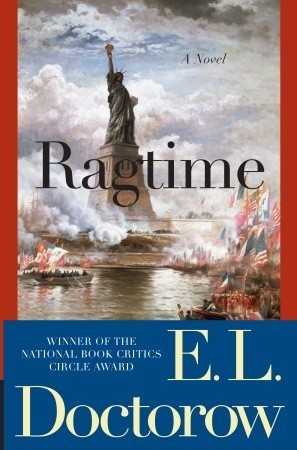
Published in 1975, Ragtime changed our very concept of what a novel could be. An extraordinary tapestry, Ragtime captures the spirit of America in the era between the turn of the century & the First World War. The story opens in 1906 in New Rochelle, NY, at the home of an affluent American family. One lazy Sunday afternoon, the famous escape artist Harry Houdini swerves his car into a telephone pole outside their house. Almost magically, the line between fantasy & historical fact, between real & imaginary characters, disappears. Henry Ford, Emma Goldman, J.P. Morgan, Evelyn Nesbit, Sigmund Freud & Emiliano Zapata slip in & out of the tale, crossing paths with Doctorow's imagined family & other fictional characters, including an immigrant peddler & a ragtime musician from Harlem whose insistence on a point of justice drives him to revolutionary violence.

In 1864, Union general William Tecumseh Sherman marched his sixty thousand troops through Georgia to the sea, and then up into the Carolinas. The army fought off Confederate forces, demolished cities, and accumulated a borne-along population of freed blacks and white refugees until all that remained was the dangerous transient life of the dispossessed and the triumphant. In E. L. Doctorow’s hands the great march becomes a floating world, a nomadic consciousness, and an unforgettable reading experience with awesome relevance to our own times.--back cover

From Ragtime and Billy Bathgate to The Book of Daniel, World’s Fair, and The March, the novels of E. L. Doctorow comprise one of the most substantive achievements of modern American fiction. Now, with Homer & Langley, this master novelist has once again created an unforgettable work.Homer and Langley Collyer are brothers – the one blind and deeply intuitive, the other damaged into madness, or perhaps greatness, by mustard gas in the Great War. They live as recluses in their once grand Fifth Avenue mansion, scavenging the city streets for things they think they can use, hoarding the daily newspapers as research for Langley’s proposed dateless newspaper whose reportage will be as prophecy. Yet the epic events of the century play out in the lives of the two brothers – wars, political movements, technological advances – and even though they want nothing more than to shut out the world, history seems to pass through their cluttered house in the persons of immigrants, prostitutes, society women, government agents, gangsters, jazz musicians... and their housebound lives are fraught with odyssean peril as they struggle to survive and create meaning for themselves. Brilliantly conceived, gorgeously written, this mesmerizing narrative, a free imaginative rendering of the lives of New York’s fabled Collyer brothers, is a family story with the resonance of myth, an astonishing masterwork unlike any that have come before from this great writer.

Open this book and enter through his own words the perilous, thrilling world of Billy Bathgate, the brazen boy who has insinuated himself into the inner circle of the notorious Dutch Schultz gang to become good-luck charm, apprentice and finally protege to one of the great murdering gangsters of his time.Meet the low-browed gunman Lulu Rosenkrantz; the fastidious Irving, precise in everything he does, from mixing drinks to disposing of dead men; the financial genius Abbadabba Berman, who invents a way to change the day's winning number at the last moment; and of course the kid who was once known to the Bronx as Arthur Flegenheimer, the man now known to the world as Dutch Schultz. Like an urban Tom Sawyer in a world of horrors, Billy has come down from the tenement streets of the East Bronx to live in the glamorously evil Depression underworld that Schultz has created. It is a world of storm-tossed tugboat rides through the dark night of New York Harbor as a gang member is about to be ceremonially drowned, his feet in a bucket of setting cement; of Seventh Avenue window washers falling mysteriously from their scaffolds; of three-day parties in West Side brothels and visits to the blue-lit nightclubs that are the beat of Broadway columnists. It is a world of elegant socialites, cunning Tammany ward heelers, mobsters, bankers, lawyers, and men of the cloth. Black Packards cruise the streets and not even infants in their carriages are safe from the bullets of warring gunmen.In a prose that astonishes with its lyric intensity, Billy makes us intimates of his fateful adventures within the world of Dutch Schultz. As we move with him into ever deeper dimensions of horror and exhilaration, as he offers up his soul ever more recklessly, Billy reveals this world to us as the brutal, eroticized, farcical, and morally startling place that it is.The luminous transformation of fact into fiction that became E.L. Doctorow's trademark with Ragtime, the eerie evocations of collective dreams that haunted Loon Lake and World's Fair, come to triumphant fruition in Billy Bathgate. Here is Doctorow's masterpiece, combining with stunning force his tremendous powers, illuminating history as myth and transforming the half-understood, hauntingly remembered materials of our culture into brilliant art. The result is one of those rare shocks of recognition that tell us how we have become what we are.Billy Bathgate, a "capable boy," in the words of Dutch Schultz, will live in the minds of E.L. Doctorow's readers for many years to come, a fixed star in the American universe, as poignant and mysterious as American life itself.

In 1967, Daniel, the son of two convicted spies executed by their own country, ponders his life, his sister's radicalism, his appreciation for his wife and son, and the hypocrisy of the moralistic ideals upon which this country was based. Reprint.

The astonishing novel of a young boy's life in the New York City of the 1930s, a stunning recreation of the sights, sounds, aromas and emotions of a time when the streets were safe, families stuck together through thick and thin, and all the promises of a generation culminate in a single great World's Fair . . .

This brilliant new novel by an American master, the author of Ragtime, The Book of Daniel, Billy Bathgate, and The March, takes us on a radical trip into the mind of a man who, more than once in his life, has been an inadvertent agent of disaster. Speaking from an unknown place and to an unknown interlocutor, Andrew is thinking, Andrew is talking, Andrew is telling the story of his life, his loves, and the tragedies that have led him to this place and point in time. And as he confesses, peeling back the layers of his strange story, we are led to question what we know about truth and memory, brain and mind, personality and fate, about one another and ourselves.

Daringly poised at the junction of the sacred and the profane, and filled with the sights and sounds of New York - a narrative of the twentieth century written for the twenty-first.In his workbook, a New York City novelist records the contents of his teeming brain--sketches for stories, accounts of his love affairs, riffs on the meanings of popular songs, ideas for movies, obsessions with cosmic processes. He is a virtual repository of the predominant ideas and historical disasters of the age. But now he has found a story he thinks may be-come his next novel: The large brass cross that hung behind the altar of St. Timothy's, a run-down Episcopal church in lower Manhattan, has disappeared...and even more mysteriously reappeared on the roof of the Synagogue for Evolutionary Judaism, on the Upper West Side. The church's maverick rector and the young woman rabbi who leads the synagogue are trying to learn who committed this strange double act of desecration and why. Befriending them, the novelist finds that their struggles with their respective traditions are relevant to the case. Into his workbook go his taped interviews, insights, preliminary drafts...and as he joins the clerics in pursuit of the mystery, it broadens to implicate a large cast of vividly drawn characters - including scientists, war veterans, prelates, Holocaust survivors, cabinet members, theologians, New York Times reporters, filmmakers, and crooners - in what proves to be a quest for an authentic spirituality at the end of this tortured century.Daringly poised at the junction of the sacred and the profane, and filled with the sights and sounds of New York, this dazzlingly inventive masterwork emerges as the American novel readers have been thirsting for a defining document of our times, a narrative of the twentieth century written for the twenty-first.

Hard Times is the name of a town in the barren hills of the Dakota Territory. To this town there comes one day one of the reckless sociopaths who wander the West to kill and rape and pillage. By the time he is through and has ridden off, Hard Times is a smoking ruin. The de facto mayor, Blue, takes in two survivors of the carnage–a boy, Jimmy, and a prostitute, Molly, who has suffered unspeakably–and makes them his provisional family. Blue begins to rebuild Hard Times, welcoming new settlers, while Molly waits with vengeance in her heart for the return of the outlaw. Here is E. L. Doctorow’s debut novel, a searing allegory of frontier life that sets the stage for his subsequent classics.
It is America in the great depression, and he is a child of that time, that place. He runs away from home in Paterson, New Jersey, to New York City and learns the bare bones of life before he hits the road with a traveling carnival. Then one icy night in the Adirondacks, the young man sees a private train roar by. In its lit windows, he spies an industrial tycoon, a poet, a gangster, and a heartbreakingly beautiful girl. He follows them, as one follows a dream, to an isolated private estate on Loon Lake.Thus the stage is set for a spellbinding tale of mystery and menace, greed and ambition, harsh lust and tender love, that lays bare the darkest depths of the human heart and the nightmarish underside of the American dream. E. L. Doctorow has written a novel aglow with poetry and passion, lit by the burning fire of humanity and history, terror and truth.

One of America’s premier writers, the bestselling author of Ragtime, Billy Bathgate, The Book of Daniel, and World’s Fair turns his astonishing narrative powers to the short story in five dazzling explorations of who we are as a people and how we live.Ranging over the American continent from Alaska to Washington, D.C., these superb short works are crafted with all the weight and resonance of the novels for which E. L. Doctorow is famous. You will find yourself set down in a mysterious redbrick townhouse in rural Illinois (“A House on the Plains”), working things out with a baby-kidnapping couple in California (“Baby Wilson”), living on a religious-cult commune in Kansas (“Walter John Harmon”), and sharing the heartrending cross-country journey of a young woman navigating her way through three bad marriages to a kind of bruised but resolute independence (“ A Life”). And in the stunning “Child, Dead, in the Rose Garden,” you will witness a special agent of the FBI finding himself at a personal crossroads while investigating a grave breach of White House security.Two of these stories have already won awards as the best fiction of the year published in American periodicals, and two have been chosen for annual best-story anthologies.Composed in a variety of moods and voices, these remarkable portrayals of the American spiritual landscape show a modern master at the height of his powers.

From Ragtime and Billy Bathgate to World’s Fair, The March, and Homer & Langley , the fiction of E. L. Doctorow comprises a towering achievement in modern American letters. Now Doctorow returns with an enthralling collection of brilliant, startling short fiction about people who, as the author notes in his Preface, are somehow “distinct from their surroundings—people in some sort of contest with the prevailing world”.A man at the end of an ordinary workday, extracts himself from his upper-middle-class life and turns to foraging in the same affluent suburb where he once lived with his family.A college graduate takes a dishwasher’s job on a whim, and becomes entangled in a criminal enterprise after agreeing to marry a beautiful immigrant for money.A husband and wife’s tense relationship is exacerbated when a stranger enters their home and claims to have grown up there.An urbanite out on his morning run suspects that the city in which he’s lived all his life has transmogrified into another city altogether.These are among the wide-ranging creations in this stunning collection, resonant with the mystery, tension, and moral investigation that distinguish the fiction of E. L. Doctorow. Containing six unforgettable stories that have never appeared in book form, and a selection of previous Doctorow classics, All the Time in the World affords us another opportunity to savor the genius of this American master.

An introspective narrative of the activities, attitudes, and concerns of a writer in his fiftieth year is accompanied by stories that address the same artistic and personal preoccupations

A superb collection of fifteen great stories by an American master, E. L. Doctorow—the author of Ragtime, The March, The Book of Daniel, and Billy BathgateIn “A House on the Plains,” a mother has a plan for financial independence, which may include murder. In “Walter John Harmon,” a man starts a cult using subterfuge and seduction. “Jolene: A Life” follows a teenager who escapes her home for Hollywood on a perilous quest for success. “Heist,” the account of an Episcopal priest coping with a crisis of faith, was expanded into the bestseller City of God. “The Water Works,” about the underbelly of 1870s New York, grew into a brilliant novel. “Liner Notes: The Songs of Billy Bathgate” is a corollary to the renowned novel and includes Doctorow’s revisions. These fifteen brilliant stories, written from the 1960s to the early twenty-first century, and selected, revised, and placed in order by the author himself shortly before he died in 2015, are a testament to the genius of E. L. Doctorow.

E. L. Doctorow is acclaimed internationally for such novels as Ragtime, Billy Bathgate, and The March . Now here are Doctorow’s rich, revelatory essays on the nature of imaginative thought. In Creationists , Doctorow considers creativity in its many from the literary (Melville and Mark Twain) to the comic (Harpo Marx) to the cosmic (Genesis and Einstein). As he wrestles with the subjects that have teased and fired his own imagination, Doctorow affirms the idea that “we know by what we create.”Just what is Melville doing in Moby-Dick ? And how did The Adventures of Tom Sawyer impel Mark Twain to radically rewrite what we know as Huckleberry Finn ? Can we ever trust what novelists say about their own work? How could Franz Kafka have written a book called Amerika without ever leaving Europe? In posing such questions, Doctorow grapples with literary creation not as a critic or as a scholar–but as one working writer frankly contemplating the work of another. It’s a perspective that affords him both protean grace and profound insight.Among the essays collected here are Doctorow’s musings on the very different Spanish Civil War novels of Ernest Hemingway and André Malraux; a candid assessment of Edgar Allan Poe as our “greatest bad writer”; a bracing analysis of the story of Genesis in which God figures as the most complex and riveting character. Whether he is considering how Harpo Marx opened our eyes to surrealism, the haunting photos with which the late German writer W. G. Sebald illustrated his texts, or the innovations of suchliterary icons as Heinrich von Kleist, Harriet Beecher Stowe, and Sinclair Lewis, Doctorow is unfailingly generous, shrewd, attentive, surprising, and precise.In examining the creative works of different times and disciplines, Doctorow also reveals the source and nature of his own artistry. Rich in aphorism and anecdote, steeped in history and psychology, informed by a lifetime of reading and writing, Creationists opens a magnificent window into one of the great creative minds of our time.

The long-unavailable work by one of America's most eminent writers. Drinks Before Dinner is E. L. Doctorow's only play, originally produced by Joseph Papp at the New York Shakespeare Festival, directed by Mike Nichols and Christopher Plummer in the lead role of Edgar. A tour-de-force of language and ideas concerning the individual's role in and response to contemporary America, Drinks Before Dinner revolves around a dinner party for the economically privileged. As Doctorow writes in his introduction, "[This play] deals in general statements about the most common circumstances of our lives, the numbers of us, the cars we drive, the television we watch, the cities we live in, our contraception and our armaments, and our underlying sense of the apocalypse..."

Over the years, one of America s most acclaimed novelists has quietly produced some of the best essays in the land. In these 16 reflections upon American texts, Doctorow shows us the hidden connections between our poets & our presidents, our classic literary works & the lyrics of popular songs, the ways of 19th-century New York & the way we live now. Each one carries with it the remarkable talents of the novelist & suggests that the proper practice of letters knows no bounds. This selection of essays is preeminently concerned with the character of America -- who we are & why we are this way.

"The writer," according to Emerson, "believes all that can be thought can be written...In his eyes a man is the faculty of reporting, and the universe is the possibility of being reported." And what writer worth his name, E. L. Doctorow asks, will not seriously, however furtively, take on the universe? Human consciousness, personal history, American literature, religion, and politics--these are the far-flung coordinates of the universe that Doctorow reports here, a universe that uniquely and brilliantly reflects our contemporary scene.

A collection of three novels by the best-selling author of Ragtime and the winner of the 1989 PEN/Faulkner Award for Fiction includes Billy Bathgate, World's Fair, and Loon Lake.

This novel presents a "what if" scenario. One day the people of New York City awake two find a couple of 2000-foot-tall figures standing in the harbor. The story describes the various ways that people cope with this event over the course of the next twelve months. I think that what Doctorow was going for is the idea that death looms over all of us, and is its own type of monstrosity, even though most of us going about our daily lives are unaware of the impending doom. Or something like that, anyway. Overall, I was a bit disappointed. "I don't know if it's courage," Red said. He was squinting to keep Wallace in focus. "There's no choice. You just believe that if you work hard and go for what you want, if you have any talent the order of the world will reward you. I don't think there's any other choice. You make believe, that's what. You make believe that there is some order and that what will happen is up to you"

E. L. Doctorow has been hailed as “a writer of dazzling gifts and boundless imaginative energy” (Joyce Carol Oates, The New Yorker), “a virtuosic storyteller with enormous range” (People), and “a national treasure” (George Saunders). He has achieved a distinguished standing in American letters with his profound fiction, novels of great inventive power. The three bestsellers in this eBook bundle are classic Doctorow. From the defining moments of the Civil War to the heady days of the young twentieth century, the subjects and themes herein span, in the words of Don DeLillo, “the reach of American possibility, in which plain lives take on the cadences of history.” RAGTIME “An extraordinarily deft, lyrical, rich novel that catches the spirit of the country . . . in a fluid musical way that is as original as it is satisfying.”—The New Yorker One lazy Sunday afternoon in 1906 in New Rochelle, New York, the famous escape artist Harry Houdini swerves his car into a telephone pole outside the home of an affluent American family. Almost magically, the line between fact and fiction, between real and invented characters, disappears. Henry Ford, Emma Goldman, J. P. Morgan, Evelyn Nesbit, Sigmund Freud, and Emiliano Zapata slip in and out of the tale, crossing paths with Doctorow’s brilliant fictional creations, including an immigrant Jewish peddler and a ragtime pianist from Harlem whose insistence on a point of justice brings this shimmering masterpiece to a shocking climax. THE MARCH “Spellbinding . . . a ferocious re-imagining of the past that returns it to us as something powerful and strange.”—Time In 1864, Union general William Tecumseh Sherman marched his sixty thousand troops through Georgia to the sea, and then up into the Carolinas. The army fought off Confederate forces, demolished cities, and accumulated a borne-along population of freed blacks and white refugees until all that remained was the dangerous transient life of the dispossessed and the triumphant. In Doctorow’s hands the great march becomes a floating world, a nomadic consciousness, and an unforgettable reading experience with awesome relevance to our own times. HOMER & LANGLEY “Beautiful and haunting . . . one of literature’s most unlikely picaresques, a road novel in which the rogue heroes can’t seem to leave home.”—The Boston Globe Homer and Langley Collyer are brothers—the one blind and deeply intuitive, the other damaged into madness by mustard gas in the Great War. They live as recluses in their once grand Fifth Avenue mansion, hoarding the daily newspapers as research for Langley’s proposed dateless newspaper whose reportage will be as prophecy. Even though they want nothing more than to shut out the world, history seems to pass through their cluttered house in the persons of immigrants, prostitutes, society women, government agents, gangsters, jazz musicians . . . and their housebound lives are fraught with odyssean peril as they struggle to survive and create meaning for themselves.

In Conversations with E. L. Doctorow Christopher D. Morris has gathered over twenty of the most revelatory interviews with the acclaimed author of Ragtime, World's Fair, Billy Bathgate, The Book of Daniel, and other novels, plays, and short stories. In his work the American dream and the values his characters try to live by turn to madness and ashes.. "Within this collection Doctorow explores the themes of his work not only in the contexts of national and literary history but also in terms of disturbing trends in contemporary American culture. Talking about style, he discusses his experiments with shifting points of view and unreliable narrators as a part of the modernist heritage to which readers have become accustomed. But he stresses that these techniques are always subordinate to the telling of a good story and the creation of memorable characters. "My portrait of J. P. Morgan in Ragtime is truer to the man's soul and the substance of his life than his authorized biography," he says. Doctorow's critical and popular success comes from the creation and re-creation of such great characters and the telling of captivating stories in which the writer serves as an independent witness to both the ideals and the corruptions that have driven our history. Christopher D. Morris has been the Charles A. Dana Professor of English at Norwich University in Northfield, Vermont, since 1996. He is also the author of Models of Misrepresentation: On the Fiction of E. L. Doctorow and regularly publishes in journals like The Ohio Review, Critique, and Film Criticism.


The novelist E.L. Doctorow, who died in 2015, will long be remembered for his highly imaginative historical fiction. In intricate and profound works like Ragtime, Billy Bathgate, The March and many others, Doctorow helped redefine American fiction by subverting our received ideas about the past and offering a radical critique of contemporary culture.Yet Doctorow often saved his most daring and charged prose for his non-fiction, especially his numerous essays published over four decades in The Nation, a journal of which he was a longtime supporter. Collected here for the first time—with an afterword by longtime Nation editor Victor Navasky—Doctorow’s Nation essays show a brilliant writer probing through the detritus of American politics and culture for glimpses of intact American ideals. Often he finds them; sometimes, painfully, he does not.Whether paying homage to a literary ancestor, F. Scott Fitzgerald, or celebrating art as "a natural resource as critical to us and our identity and our survival as are our oil, our coal, our timber," the essays collected in Citizen Doctorow are an unforgettable account of the American scene as understood by one of its most penetrating observers. Together, they offer a conclusive proof that, as Faulkner, one of Doctorow’s greatest influences, once put it, “The past is never dead. It’s not even past.”

E. L. Doctorow is one of America's most accomplished and acclaimed living writers. Winner of the National Book Award, the National Book Critics Circle Award (twice), the PEN/Faulkner Award, and the National Humanities Medal, he is the author of nine novels that have explored the drama of American life from the late nineteenth century to the present. Doctorow has also played an active role in transforming his novels into films, writing screenplay adaptations of three of his works― The Book of Daniel , Ragtime , and Loon Lake . Published here for the first time, his scripts reveal a new aspect of this writer's remarkable talents and offer film students and other cineastes unique insight into the complex relationship of literature and motion pictures. Each of these screenplays has undergone a different fate. Doctorow's script for Daniel was made into a feature film by director Sidney Lumet in 1983. The monumental Ragtime screenplay he wrote for director Robert Altman was to have been filmed as either a six-hour feature film or a ten-hour television series. When Altman was replaced on the project by Milos Forman, a shorter, more conventional script was commissioned from another writer. In 1981, Doctorow adapted Loon Lake , but this challenging work has yet to be filmed. For this book, Doctorow has revised his dazzling Ragtime screenplay, making clear how different the film might have been, and has written a preface about the art of screenwriting. In addition, editor Paul Levine provides a general introduction to Doctorow's fiction and specific introductions to each screenplay; interviews Lumet about making Daniel ; and talks with Doctorow about his abiding interest in the art and craft of cinema.

Ruderg text accompanies photographs of posters for the missing put up around New York City following 9/11. It is a personal reflection on the people of the city and the special bond that gives them strength.

This collection reflects on writers such as Jack London and Theodore Dreiser, the meaning of the United States Constitution, the writer's role in society, 19th-century New York, and contemporary American economic and cultural ailments.

Este volumen reúne todos los relatos que Doctorow publicó en distintas antologías, imprescindibles si queremos descubrir a uno de los autores que mejor supo reflejar la historia de los Estados Unidos. En su faceta como cuentista, Doctorow desarrolló un registro más intimo, más próximo a la pequeña existencia de los personajes que a la gran historia global que imponen las culturas y los países. Nuestra edición será la primera (no existe otra en ningún país) en recoger todos los relatos de Doctorow en un solo volumen y este hecho ya la convierte en singular. La idea surgió del propio autor, que se implicó directamente en la edición. Lamentablemente, Doctorow murió mientras se corregían las pruebas de este volumen y ya no podrá recibirlo