Loading genres...
Explore the best books about Death genre.


"A wonderful introduction the Japanese tradition of jisei , this volume is crammed with exquisite, spontaneous verse and pithy, often hilarious, descriptions of the eccentric and committed monastics who wrote the poems." — The Buddhist ReviewAlthough the consciousness of death is, in most cultures, very much a part of life, this is perhaps nowhere more true than in Japan, where the approach of death has given rise to a centuries-old tradition of writing jisei , or the "death poem." Such a poem is often written in the very last moments of the poet's life.Hundreds of Japanese death poems, many with a commentary describing the circumstances of the poet's death, have been translated into English here, the vast majority of them for the first time. Compiler Yoel Hoffmann explores the attitudes and customs surrounding death in historical and present-day Japan and gives examples of how these have been reflected in the nation's literature in general. The development of writing jisei is then examined—from the longing poems of the early nobility and the more "masculine" verses of the samurai to the satirical death poems of later centuries.Zen Buddhist ideas about death are also described as a preface to the collection of Chinese death poems by Zen monks that are also included. Finally, the last section contains three hundred twenty haiku, some of which have never been assembled before, in translated English and romanized Japanese.

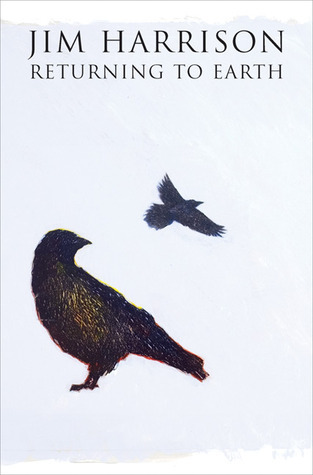
Hailed by The New York Times Book Review as “a master … who makes the ordinary extraordinary, the unnamable unforgettable,” beloved author Jim Harrison returns with a masterpiece—a tender, profound, and magnificent novel about life, death, and finding redemption in unlikely places. Slowly dying of Lou Gehrig’s Disease, Donald, a middle-aged Chippewa-Finnish man, begins dictating family stories he has never shared with anyone, hoping to preserve history for his children. The dignity of Donald’s death and his legacy encourages his loved ones to find a way to redeem—and let go of—the past, whether through his daughter’s emersion in Chippewa religious ideas or his mourning wife’s attempt to escape the malevolent influence of her own father. A deeply moving book about origins and endings, and how to live with honor for the dead, Returning to Earth is one of the finest novels of Harrison’s long, storied career, and will confirm his standing as one of the most important American writers now working.

Some people are born to lead and destined to teach by the example of living life to the fullest, and facing death with uncommon honesty and courage. Peter Barton was that kind of person. Driven by the ideals that sparked a generation, he became an overachieving Everyman, a risk-taker who showed others what was possible. Then, in the prime of his life—hugely successful, happily married, and the father of three children—Peter faced the greatest of all challenges. Diagnosed with cancer, he began a journey that was not only frightening and appalling but also full of wonder and discovery. With unflinching candor and even surprising humor, Not Fade Away finds meaning and solace in Peter's confrontation with mortality. Celebrating life as it dares to stare down death, Peter's story addresses universal hopes and fears, and redefines the quietly heroic tasks of seeking clarity in the midst of pain, of breaking through to personal faith, and of achieving peace after bold and sincere questioning.

From the Pulitzer Prize-winning author of The Denial of Death, a penetrating and insightful perspective on the source of evil in our world."A profound, nourishing book…absolutely essential to the understanding of our troubled times." —Anais Nin"An urgent essay that bears all the marks of a final philosophical raging against the dying of the light." —Newsweek

"[Thich Nhat Hanh] shows us the connection between personal, inner peace and peace on earth." --His Holiness The Dalai LamaNominated by Martin Luther King, Jr. for a Nobel Peace Prize, Thich Nhat Hanh is one of today’s leading sources of wisdom, peace, compassion and comfort.With hard-won wisdom and refreshing insight, Thich Nhat Hanh confronts a subject that has been contemplated by Buddhist monks and nuns for twenty-five-hundred years— and a question that has been pondered by almost anyone who has ever What is death?In No Death, No Fear , the acclaimed teacher and poet examines our concepts of death, fear, and the very nature of existence. Through Zen parables, guided meditations, and personal stories, he explodes traditional myths of how we live and die. Thich Nhat Hanh shows us a way to live a life unfettered by fear.

Thomas Nagel's Mortal Questions explores some fundamental issues concerning the meaning, nature and value of human life. Questions about our attitudes to death, sexual behaviour, social inequality, war and political power are shown to lead to more obviously philosophical problems about personal identity, consciousness, freedom, and value. This original and illuminating book aims at a form of understanding that is both theoretical and personal in its lively engagement with what are literally issues of life and death.

In Salthill-on-Hudson, a half-hour train ride from Manhattan, everyone is rich, beautiful, and -- though they look much younger -- middle-aged. But when Adam Berendt, a charismatic, mysterious sculptor, dies suddenly in a brash act of heroism, shock waves rock the town. But who was Adam Berendt? Was he in fact a hero, or someone more flawed and human?

"Death is an imposition on the human race, and no longer acceptable," reads the first sentence of this extraordinary book. Within the last few years "[W]e have circled the moon, harnessed nuclear energy, artificially reproduced DNA, and now have the biochemical means to control birth; why should death itself, the Last Enemy, be considered sacred and beyond conquest?

'An act of consummate literary bravery, a writer known for her clarity allowing us to watch her mind as it becomes clouded with grief.'From one of America's iconic writers, a stunning book of electric honesty and passion. Joan Didion explores an intensely personal yet universal experience: a portrait of a marriage–and a life, in good times and bad–that will speak to anyone who has ever loved a husband or wife or child.Several days before Christmas 2003, John Gregory Dunne and Joan Didion saw their only daughter, Quintana, fall ill with what seemed at first flu, then pneumonia, then complete septic shock. She was put into an induced coma and placed on life support. Days later–the night before New Year's Eve–the Dunnes were just sitting down to dinner after visiting the hospital when John Gregory Dunne suffered a massive and fatal coronary. In a second, this close, symbiotic partnership of forty years was over. Four weeks later, their daughter pulled through. Two months after that, arriving at LAX, she collapsed and underwent six hours of brain surgery at UCLA Medical Center to relieve a massive hematoma.This powerful book is Didion's attempt to make sense of the "weeks and then months that cut loose any fixed idea I ever had about death, about illness . . . about marriage and children and memory . . . about the shallowness of sanity, about life itself."

"Suicide," writes the notes English poet and critic A. Alvarez, "has permeated Western culture like a dye that cannot be washed out." Although the aims of this compelling, compassionate work are broadly cultural and literary, the narrative is rooted in personal experience: it begins with a long memoir of Sylvia Plath, and ends with an account of the author's own suicide attempt. Within this dramatic framework, Alvarez launches his enquiry into the final taboo of human behavior, and traces changing attitudes towards suicide from the perspective of literature. He follows the black thread leading from Dante through Donne and the romantic agony, to the Savage God at the heart of modern literature.

Two years after the best-selling Arthur & George, Julian Barnes gives us a memoir on mortality that touches on faith and science and family as well as a rich array of exemplary figures who over the centuries have confronted the same questions he now poses about the most basic fact of life: its inevitable extinction.If the fear of death is “the most rational thing in the world,” how does one contend with it? An atheist at twenty, an agnostic at sixty, Barnes looks into the various arguments for and against and with God, and at the bloodline whose archivist, following his parents’ death, he has become—another realm of mystery, wherein a drawer of mementos and his own memories (not to mention those of his philosopher brother) often fail to connect. There are other ancestors, too: the writers—“most of them dead, and quite a few of them French"—who are his daily companions, supplemented by composers and theologians and scientists whose similar explorations are woven into this account with an exhilarating breadth of intellect and felicity of spirit.Deadly serious, masterfully playful, and surprisingly hilarious, Nothing to Be Frightened Of is a riveting display of how this supremely gifted writer goes about his business and a highly personal tour of the human condition and what might follow the final diagnosis.

Discusses the variety of reactions that people experience because of the loss of a love and provides numerous recommendations for coping with pain and achieving comfort

Unlike anything Joyce Carol Oates has written before, A Widow’s Story is the universally acclaimed author's poignant, intimate memoir about the unexpected death of Raymond Smith, her husband of forty-six years, and its wrenching, surprising aftermath. A recent recipient of National Book Critics Circle Ivan Sandrof Lifetime Achievement Award, Oates, whose novels (Blonde, The Gravedigger’s Daughter, Little Bird of Heaven, etc.) rank among the very finest in contemporary American fiction, offers an achingly personal story of love and loss. A Widow’s Story is a literary memoir on a par with The Year of Magical Thinking by Joan Didion and Calvin Trillin’s About Alice.

The first complete translation of a classic Buddhist text on the journey through living and dying. Graced with opening words by His Holiness The Dalai Lama, the Penguin Deluxe Edition of The Tibetan Book of the Dead is "immaculately rendered in an English both graceful and precise." Translated with the close support of leading contemporary masters and hailed as “a tremendous accomplishment,” this book faithfully presents the insights and intentions of the original work. It includes one of the most detailed and compelling descriptions of the after-death state in world literature, practices that can transform our experience of daily life, guidance on helping those who are dying, and an inspirational perspective on coping with bereavement.

From Pulitzer Prize winner Amanda Bennett comes a moving, eye-opening, and beautifully written memoir—a love story of two unusual people, their complex marriage and deep devotion, and finally, Bennett’s quest to save her husband’s life. When Wall Street Journal reporter Amanda Bennett meets the eccentric, infuriating, yet somehow irresistible Terence Bryan Foley while on assignment in China, the last thing she expects is to marry him. They are so different—classic and bohemian, bow ties and batik, quirky and sensible. But Terence is persistent. “You are going to be somebody,” he tells her. “You’re going to need somebody to take care of you.” Though initially as combative as their courtship, their marriage brings with it stormy passion, deep love and respect, two beloved children, and a life together over two decades. Then comes illness, and the fight to win a longer life for Terence. The Cost of Hope chronicles the extraordinary measures Amanda and Terence take to preserve not only Terence’s life but also the life of their family. After his death, Bennett uses her skills as a veteran investigative reporter to determine the cost of their mission of hope. What she discovers raises important questions many people face, and vital issues about the intricacies of America’s healthcare system. Rich in humor, insight, and candor, The Cost of Hope is an unforgettable memoir, an inspiring personal story that sheds light on one of the most important turning points in life.

The inspiring story of a son and his dying mother, who form a "book club" that brings them together as her life comes to a close. Mary Anne Schwalbe is waiting for her chemotherapy treatments when Will casually asks her what she's reading. The conversation they have grows into tradition: soon they are reading the same books so they can have something to talk about in the hospital waiting room. The ones they choose range from classic to popular, from fantastic to spiritual, and we hear their passion for reading and their love for each other in their intimate and searching discussions. A profoundly moving testament to the power of love between a child and parent, and the power of reading in our lives.

Why are we afraid of death? What is acceptance in the face of cancer? How do I decide whose advice to take? How to relax in the certainty of death? Ought we to tell someone when they are dying or not? Is the theory of reincarnation true? What is happening around the dying? How best to support a dying person? My young daughter is asking about death: what do I tell her? How can I celebrate death as you suggest? Osho responds to these questions and many others from those who find themselves inexplicably attracted to the subject, as well as from those who are facing imminent death and from their carers. He does not simply show how our fear of death is based on a misunderstanding of its nature; he also shows how dying is a tremendous opportunity for inner growth and how death is the most sacred of mysteries. Death is not an event but a process, and one that begins with birth. Each exhalation is a small death; each inhalation, a rebirth. When life is lived consciously and totally, death is not a catastrophe but a joyous climax.

It begins as an assignment for English class: Write a letter to a dead person. Laurel chooses Kurt Cobain because her sister, May, loved him. And he died young, just like May did. Soon, Laurel has a notebook full of letters to people like Janis Joplin, Amy Winehouse, Amelia Earhart, Heath Ledger, and more -- though she never gives a single one of them to her teacher. She writes about starting high school, navigating new friendships, falling in love for the first time, learning to live with her splintering family. And, finally, about the abuse she suffered while May was supposed to be looking out for her. Only then, once Laurel has written down the truth about what happened to herself, can she truly begin to accept what happened to May. And only when Laurel has begun to see her sister as the person she was -- lovely and amazing and deeply flawed -- can she begin to discover her own path in this stunning debut from Ava Dellaira, Love Letters to the Dead.

Cory Taylor is one of Australia’s celebrated novelists, the author of the brilliant Me and Mr Booker (winner of the Commonwealth Writers Prize, Pacific region), and My Beautiful Enemy (shortlisted for the Miles Franklin Award).At the age of sixty, she is dying of melanoma-related brain cancer. Her illness is no longer treatable. As she tells us in her remarkable last book, Dying: A Memoir, she now weighs less than her neighbour’s retriever.Written in the space of a few weeks, in a tremendous creative surge, this powerful and beautifully written book is a clear-eyed account of what dying has taught Cory: she describes the tangle of her feelings, she reflects on her life, and she remembers the lives and deaths of her parents. She tells us why she would like to be able to choose the circumstances of her own death.Dying: A Memoir is a breathtaking book about vulnerability and strength, courage and humility, anger and acceptance. It is a deeply affecting meditation on dying, but it is also a funny and wise tribute to life.

An inspiring memoir of life, love, loss, and new beginnings by the widower of bestselling children’s author and filmmaker Amy Krouse Rosenthal, whose last of act of love before her death was setting the stage for her husband’s life without her in the viral New York Times Modern Love column, “You May Want to Marry My Husband.”On March 3, 2017, Amy Krouse Rosenthal penned an op-ed piece for the New York Times’ “Modern Love” column —”You May Want to Marry My Husband.” It appeared ten days before her death from ovarian cancer. A heartbreaking, wry, brutally honest, and creative play on a personal ad—in which a dying wife encouraged her husband to go on and find happiness after her demise—the column quickly went viral, reaching more than five million people worldwide.In My Wife Said You May Want to Marry Me, Jason describes what came next: his commitment to respecting Amy’s wish, even as he struggled with her loss. Surveying his life before, with, and after Amy, Jason ruminates on love, the pain of watching a loved one suffer, and what it means to heal—how he and their three children, despite their profound sorrow, went on. Jason’s emotional journey offers insights on dying and death and the excruciating pain of losing a soulmate, and illuminates the lessons he learned.As he reflects on Amy’s gift to him—a fresh start to fill his empty space with a new story—Jason describes how he continues to honor Amy’s life and her last wish, and how he seeks to appreciate every day and live in the moment while trying to help others coping with loss. My Wife Said You May Want to Marry Me is the poignant, unreserved, and inspiring story of a great love, the aftermath of a marriage ended too soon, and how a surviving partner eventually found a new perspective on life’s joys in the wake of tremendous loss.

On bookshelves around the world, surrounded by ordinary books bound in paper and leather, rest other volumes of a distinctly strange and grisly sort: those bound in human skin. Would you know one if you held it in your hand?In Dark Archives, Megan Rosenbloom seeks out the historic and scientific truths behind anthropodermic bibliopegy--the practice of binding books in this most intimate covering. Dozens of such books live on in the world's most famous libraries and museums. Dark Archives exhumes their origins and brings to life the doctors, murderers, innocents, and indigents whose lives are sewn together in this disquieting collection. Along the way, Rosenbloom tells the story of how her team of scientists, curators, and librarians test rumored anthropodermic books, untangling the myths around their creation and reckoning with the ethics of their custodianship.A librarian and journalist, Rosenbloom is a member of The Order of the Good Death and a cofounder of their Death Salon, a community that encourages conversations, scholarship, and art about mortality and mourning. In Dark Archives--captivating and macabre in all the right ways--she has crafted a narrative that is equal parts detective work, academic intrigue, history, and medical curiosity: a book as rare and thrilling as its subject.

The world's leading expert on near-death experiences reveals his journey toward rethinking the nature of death, life, and the continuity of consciousness.Cases of remarkable experiences on the threshold of death have been reported since ancient times, and are described today by 10% of people whose hearts stop. The medical world has generally ignored these “near-death experiences,” dismissing them as “tricks of the brain” or wishful thinking. But after his patients started describing events that he could not just sweep under the rug, Dr. Bruce Greyson began to investigate.As a physician without a religious belief system, he approached near-death experiences from a scientific perspective. In After, he shares the transformative lessons he has learned over four decades of research. Our culture has tended to view dying as the end of our consciousness, the end of our existence—a dreaded prospect that for many people evokes fear and anxiety.But Dr. Greyson shows how scientific revelations about the dying process can support an alternative theory. Dying could be the threshold between one form of consciousness and another, not an ending but a transition. This new perspective on the nature of death can transform the fear of dying that pervades our culture into a healthy view of it as one more milestone in the course of our lives. After challenges us to open our minds to these experiences and to what they can teach us, and in so doing, expand our understanding of consciousness and of what it means to be human.

Who knows you better than your best friend? Who knows your secrets, your fears, your desires, your strange imperfect self? Edi and Ash have been best friends for over forty years. Since childhood they have seen each other through life's milestones: stealing vodka from their parents, the Madonna phase, REM concerts, unexpected wakes, marriages, infertility, children. As Ash notes, 'Edi's memory is like the back-up hard drive for mine.'So when Edi is diagnosed with terminal cancer, Ash's world reshapes around the rhythms of Edi's care, from chipped ice and watermelon cubes to music therapy; from snack smuggling to impromptu excursions into the frozen winter night. Because life is about squeezing the joy out of every moment, about building a powerhouse of memories, about learning when to hold on, and when to let go.