
Julian Barnes
Julian Patrick Barnes is an English writer. He won the Man Booker Prize in 2011 with The Sense of an Ending, having been shortlisted three times previously with Flaubert's Parrot, England, England, and Arthur & George. Barnes has also written crime fiction under the pseudonym Dan Kavanagh (having married Pat Kavanagh). In addition to novels, Barnes has published collections of essays and short stories. In 2004 he became a Commandeur of L'Ordre des Arts et des Lettres. His honours also include the Somerset Maugham Award and the Geoffrey Faber Memorial Prize. He was awarded the 2021 Jerusalem Prize.
30 Books Written

NATIONAL BESTSELLER • From the bestselling, Booker Prize-winning author of Sense of an Ending, “an elegant memoir and meditation” ( The New York Times Book Review ) that grapples with the most natural thing in the the fear of death.A memoir on mortality as only Julian Barnes can write it, one that touches on faith and science and family as well as a rich array of exemplary figures who over the centuries have confronted the same questions he now poses about the most basic fact of its inevitable extinction. If the fear of death is “the most rational thing in the world,” how does one contend with it? An atheist at twenty and an agnostic at sixty, Barnes looks into the various arguments for, against, and with God, and at his own bloodline, which has become, following his parents’ death, another realm of mystery.Deadly serious, masterfully playful, and surprisingly hilarious, Nothing to Be Frightened Of is a riveting display of how this supremely gifted writer goes about his business and a highly personal tour of the human condition and what might follow the final diagnosis.

An alternative cover edition for this ISBN can be found hereBy an acclaimed writer at the height of his powers, The Sense of an Ending extends a streak of extraordinary books that began with the best-selling Arthur & George and continued with Nothing to Be Frightened Of and, most recently, Pulse. This intense novel follows a middle-aged man as he contends with a past he has never much thought about - until his closest childhood friends return with a vengeance, one of them from the grave, another maddeningly present. Tony Webster thought he'd left all this behind as he built a life for himself, and by now his marriage and family and career have fallen into an amicable divorce and retirement. But he is then presented with a mysterious legacy that obliges him to reconsider a variety of things he thought he'd understood all along, and to revise his estimation of his own nature and place in the world. A novel so compelling that it begs to be read in a single sitting, with stunning psychological and emotional depth and sophistication, The Sense of an Ending is a brilliant new chapter in Julian Barnes's oeuvre.
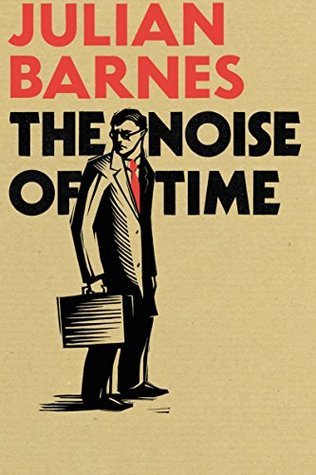
A compact masterpiece dedicated to the Russian composer Dmitri Shostakovich: Julian Barnes’s first novel since his best-selling, Man Booker Prize–winning The Sense of an Ending. In 1936, Shostakovitch, just thirty, fears for his livelihood and his life. Stalin, hitherto a distant figure, has taken a sudden interest in his work and denounced his latest opera. Now, certain he will be exiled to Siberia (or, more likely, executed on the spot), Shostakovitch reflects on his predicament, his personal history, his parents, various women and wives, his children—and all who are still alive themselves hang in the balance of his fate. And though a stroke of luck prevents him from becoming yet another casualty of the Great Terror, for decades to come he will be held fast under the thumb of despotism: made to represent Soviet values at a cultural conference in New York City, forced into joining the Party and compelled, constantly, to weigh appeasing those in power against the integrity of his music. Barnes elegantly guides us through the trajectory of Shostakovitch's career, at the same time illuminating the tumultuous evolution of the Soviet Union. The result is both a stunning portrait of a relentlessly fascinating man and a brilliant exploration of the meaning of art and its place in society.

Would you rather love the more, and suffer the more; or love the less, and suffer the less? That is, I think, finally, the only real question.First love has lifelong consequences, but Paul doesn’t know anything about that at nineteen. At nineteen, he’s proud of the fact his relationship flies in the face of social convention.As he grows older, the demands placed on Paul by love become far greater than he could possibly have foreseen.Tender and profound, The Only Story is an achingly beautiful novel by one of fiction’s greatest mappers of the human heart.

NATIONAL BESTSELLER • BOOKER PRIZE FINALIST • From the bestselling author of The Sense of an Ending comes an “extraordinary … first rate” novel ( The New York Times Book Review ) that follows the lives of two very different British men and explores the grand tapestry of late-Victorian Britain.As boys, George, the son of a Midlands vicar, and Arthur, living in shabby genteel Edinburgh, find themselves in a vast and complex world at the heart of the British Empire. Years later—one struggling with his identity in a world hostile to his ancestry, the other creating the world’s most famous detective while in love with a woman who is not his wife—their fates become inextricably connected.

Beginning with an unlikely stowaway's account of life on board Noah's Ark, A History of the World in 10½ Chapters presents a surprising, subversive, fictional history of earth told from several kaleidoscopic perspectives. Noah disembarks from his ark but he and his Voyage are not forgotten: they are revisited in on other centuries and other climes - by a Victorian spinster mourning her father, by an American astronaut on an obsessive personal mission. We journey to the Titanic, to the Amazon, to the raft of the Medusa, and to an ecclesiastical court in medieval France where a bizarre case is about to begin...This is no ordinary history, but something stranger, a challenge and a delight for the reader's imagination. Ambitious yet accessible, witty and playfully serious, this is the work of a brilliant novelist.

Flaubert's Parrot deals with Flaubert, parrots, bears and railways; with our sense of the past and our sense of abroad; with France and England, life and art, sex and death, George Sand and Louise Colet, aesthetics and redcurrant jam; and with its enigmatic narrator, a retired English doctor, whose life and secrets are slowly revealed.A compelling weave of fiction and imaginatively ordered fact, Flaubert's Parrot is by turns moving and entertaining, witty and scholarly, and a tour de force of seductive originality

Julian Barnes's new book is about ballooning, photography, love and grief; about putting two things, and two people, together, and about tearing them apart."You put together two things that have not been put together before. And the world is changed..." One of the judges who awarded him the 2011 Man Booker Prize described him as "an unparalleled magus of the heart." This book confirms that opinion.

"Talking It Over" is the story of three Londoners: one woman, two men, all near the age of thirty (give or take a few years), who, despite their basic differences - Gillian is reserved, Stuart is a bit pedantic, Oliver leans toward flamboyance - mark the three corners of an orderly triangle: Gillian and Stuart have just been married, Stuart and Oliver are longtime friends, Oliver and Gillian get along fine. Straightforward and simple. Everyone in their places, getting along, going along...Until everything goes wrong.When it does, Gillian, Stuart and Oliver decide that it's time to talk it all over. Because although they'd all agree that the orderliness of their lives has suddenly mutated into chaos - the alarming fluctuations of love being the chief culprit - that's about all they'd agree on ("One bit of information and people are immediately off into their theories," says Stuart, a bit pedantically). And each of them is determined to be heard.What we hear are three wonderfully realized voices telling three wildly different versions of one story - presenting the protean facts of disintegrating and escalating affections, laying blame, taking blame, talking about themselves, about each other, across each other, behind each other's backs, all in an attempt to get at the endlessly elusive truth. And what they reveal is the sometimes hilarious, sometimes heartrending process of selective memory that deeply colors the (more or less) fine art of eyewitnessing.Once again, the brilliant author of "Flaubert's Parrot", "Staring at the Sun" and "A History of the World in 10-and-1/2 Chapters" gives us a dazzling work of imagination: witty, wry, playful and, in the end, honed to a razor-sharp emotional edge.

From the award-winning novelist, a compact narrative that centers on the presence of a vivid and particular woman, whose loss becomes the occasion for a man's deeper examination of love, friendship, and biographyThis beautiful, spare novel of platonic unrequited love springs into being around the singular character of the stoic, exacting Professor Elizabeth Finch. Neil, the narrator, takes her class on Culture and Civilization, taught not for undergraduates but for adults of all ages; we are drawn into his intellectual crush on this private, withholding yet commanding woman. While other personal relationships and even his family drift from Neil's grasp, Elizabeth's application of her material to the matter of daily living remains important to him, even after her death, in a way that nothing else does. In Elizabeth Finch, we are treated to everything we cherish in Barnes: his eye for the unorthodox forms love can take between two people, a compelling swerve into nonfictional material (this time, through Neil's obsessive study of Julian the Apostate, following on notes Elizabeth left for him to discover after her death), and the forcefully moving undercurrent of history, and biography in particular, as nourishment and guide in our current lives.

Jerry Batson, qui se définit comme un « accoucheur d'idées », va en vendre une assez sensationnelle à sir Jack Pitman, un excentrique milliardaire : créer sur l'île de Wight une sorte de gigantesque parc d'attractions rassemblant tout ce qu'il y a de plus typique, de plus connu en Angleterre. Cela va des blanches falaises de Douvres à Manchester United, de Buckingham Palace à Stonehenge, du mausolée de la princesse Diana au théâtre de Shakespeare.Le projet est monstrueux, hautement risqué, et voilà qu'il se révèle être un énorme succès. La copie va-t-elle surpasser l'original ? Et qu'adviendra-t-il si c'est elle que les touristes préfèrent visiter ?Férocement drôle, drôlement impitoyable, impitoyablement au vitriol, voilà un portrait de l'Angleterre comme on n'en avait encore jamais vu.

Twice shortlisted for the Booker Prize, Julian Barnes continues to reinvigorate the novel with his pyrotechnic verbal skill and playful manipulation of plot and character. In Love, etc. he uses all the surprising, sophisticated ingredients of a delightful farce to create a tragicomedy of human frailties and needs. After spending a decade in America as a successful businessman, Stuart returns to London and decides to look up his ex-wife Gillian. Their relationship had ended years before when Stuart’s witty, feckless, former best friend Oliver stole her away. But now Stuart finds that the intervening years have left Oliver’s artistic ambitions in ruins and his relationship with Gillian on less than solid footing. When Stuart begins to suspect that he may be able to undo the results of their betrayal, he resolves to act. Written as an intimate series of crosscutting monologues that allow each character to whisper their secrets and interpretations directly to the reader, Love, etc. is an unsettling examination of confessional culture and a profound refection on the power of perspective.

The Man Booker Prize-winning author of The Sense of an Ending takes us on a rich, witty tour of Belle Epoque Paris, via the life story of the pioneering surgeon Samuel PozziIn the summer of 1885, three Frenchmen arrived in London for a few days’ shopping. One was a Prince, one was a Count, and the third was a commoner with an Italian name, who four years earlier had been the subject of one of John Singer Sargent’s greatest portraits. The commoner was Samuel Pozzi, society doctor, pioneer gynaecologist and free-thinker – a rational and scientific man with a famously complicated private life.Pozzi's life played out against the backdrop of the Parisian Belle Epoque. The beautiful age of glamour and pleasure more often showed its ugly side: hysterical, narcissistic, decadent and violent, a time of rampant prejudice and blood-and-soil nativism, with more parallels to our own age than we might imagine.The Man in the Red Coat is at once a fresh and original portrait of the Belle Epoque – its heroes and villains, its writers, artists and thinkers – and a life of a man ahead of his time. Witty, surprising and deeply researched, the new book from Julian Barnes illuminates the fruitful and longstanding exchange of ideas between Britain and France, and makes a compelling case for keeping that exchange alive.

From the bestselling, Booker Prize-winning author of A Sense of an Ending comes a comedy of sexual awakening in the 1960s that is “wonderfully fresh, crackling with nostalgic irreverence” ( Vogue ).Only the author of Flaubert's Parrot could give us a novel that is at once a note-perfect rendition of the angsts and attitudes of English adolescence, a giddy comedy of sexual awakening, and a portrait of the accommodations that some of us call "growing up" and others "selling out.

In his widely acclaimed new collection of stories, Julian Barnes addresses what is perhaps the most poignant aspect of the human condition: growing old. The characters in The Lemon Table are facing the ends of their lives–some with bitter regret, others with resignation, and others still with defiant rage. Their circumstances are just as varied as their responses. In 19th-century Sweden, three brief conversations provide the basis for a lifetime of longing. In today’s England, a retired army major heads into the city for his regimental dinner–and his annual appointment with a professional lady named Babs. Somewhere nearby, a devoted wife calms (or perhaps torments) her ailing husband by reading him recipes. In stories brimming with life and our desire to hang on to it one way or another, Barnes proves himself by turns wise, funny, clever, and profound–a writer of astonishing powers of empathy and invention.

Graham was an he was meant to be an expert on the past. But there were aspects of it, he discovered, that couldn’t be subdued, that simply carried on, lively and painful, as if they were the present. He began to mind. He minded very much indeed. While those around him look on – with concern, with contempt, with amusement – Graham’s meticulous passion gradually begins to run out of control. Julian Barnes presents an unnerving version of sexual jealousy and shows it to be not just living, but reasonable, ordinary, funny, dangerous and consuming.

After the best-selling Arthur & George and Nothing to Be Frightened Of, Julian Barnes returns with fourteen stories about longing and loss, friendship and love, whose mysterious natures he examines with his trademark wit and observant eye. From an imperial capital in the eighteenth century to Garibaldi's adventures in the nineteenth, from the vineyards of Italy to the English seaside in our time, he finds the "stages, transitions, arguments" that define us. A newly divorced real estate agent can't resist invading his reticent girlfriend's privacy, but the information he finds reveals only his callously shallow curiosity. A couple come together through an illicit cigarette and a song shared over the din of a Chinese restaurant. A widower revisiting the Scottish island he'd treasured with his wife learns how difficult it is to purge oneself of grief. And throughout, friends gather regularly at dinner parties and perfect the art of cerebral, sometimes bawdy banter about the world passing before them.Whether domestic or extraordinary, each story pulses with the resonance, spark, and poignant humor for which Barnes is justly heralded.

The Pedant in the Kitchen is a perfect comfort for anyone who has ever been defeated by a cookbook. The Pedant's ambition is simple. He wants to cook tasty, nutritious food; he wants not to poison his friends; and he wants to expand, slowly and with pleasure, his culinary repertoire

A fighter pilot, high above the English Channel in 1941, watches the sun rise; he descends 10,000 feet and then, to his amazement, finds the sun beginning to rise again. With this haunting image Julian Barnes’ novel begins. It charts the life of Jean Serjeant, from her beginnings as a naïve, carefree country girl before the war through to her wry and trenchant old age in the year 2020. We follow her bruising experience in marriage, her questioning of male truths, her adventures in motherhood and in China; we learnt the questions she asks of life and the often unsatisfactory answers it provides.

The bestselling, Booker Prize-winning author of The Sense of an Ending trains his laser-bright prose on the collapse of Communism in Eastern Europe.Stoyo Petkanov, the deposed Party leader, is placed on trial for crimes that range from corruption to political murder. Petkanov's guilt—and the righteousness of his opponents—would seem to be self-evident. But, as brilliantly imagined by Barnes, the trial of this cunning and unrepentant dictator illuminates the shadowy frontier between the rusted myths of the Communist past and a capitalist future in which everything is up for grabs.

Лауреат Букеровской премии Джулиан Барнс — один из самых ярких и оригинальных прозаиков современной Британии, автор таких международных бестселлеров, как «Шум времени», «Предчувствие конца», «Артур и Джордж», «История мира в 10½ главах», «Попугай Флобера» и многих других.Своим первым опытом в жанре эссе об искусстве Джулиан Барнс называет главу нашумевшего романа-антиутопии «История мира в 10½ главах» (1989), посвященную картине Теодора Жерико «Плот „Медузы“». Именно поэтому, уже как самостоятельное произведение, в сборнике «Открой глаза» она оказывается первой из увлекательных коротких историй о художниках и их работах, приглашающих читателя проследить путь изобразительного искусства от начала XIX века до современности.В этих эссе есть все, что традиционно присуще прозе Барнса: великолепное чувство стиля, виртуозное равновесие едкой иронии и утонченного лиризма, сарказма на грани цинизма и веселого озорства. Но еще это собрание тонких, остроумных и порой неожиданных наблюдений, дарящих не только литературное удовольствие, но и богатую пищу для ума.В настоящее издание включены семь новых эссе об искусстве XIX века, которые впервые публикуются в русском переводе.

No one has a better perspective to see things from both sides of the Channel than Julian Barnes. He is not only one of the premier writers in Britain but his prize-winning work has long been admired and recognized in France. In these exquisitely crafted and turned stories spanning several centuries, Julian Barnes takes as his universal theme the British in France, our fascination with the country, our various and mixed reasons for being there and our sometimes ambiguous reception.

Bestselling author Julian Barnes illuminates the process of how minds are changed—about politics, books, words, memories, and more—in this wise and fascinating new book.“We always believe that changing our mind is an improvement, bringing a greater truthfulness to our dealings with the world and other people. It puts an end to vacillation, uncertainty, weak-mindedness. It seems to make us stronger and more mature. Well, we would think that, wouldn't we?”In this engaging and erudite essay, critically acclaimed writer Julian Barnes explores what is involved when we change our about words, about politics, about books; about memories, age, and time.

When it comes to death, is there ever a best case scenario? In this disarmingly witty book, Julian Barnes confronts our unending obsession with the end. He reflects on what it means to miss God, whether death can be good for our careers and why we eventually turn into our parents. Barnes is the perfect guide to the weirdness of the only thing that binds us all.Selected from the book Nothing to be Frightened Of by Julian BarnesVINTAGE MINIS: GREAT MINDS. BIG IDEAS. LITTLE BOOKS.A series of short books by the world’s greatest writers on the experiences that make us humanAlso in the Vintage Minis series:Calm by Tim ParksDrinking by John CheeverBabies by Anne EnrightPsychedelics by Aldous Huxley
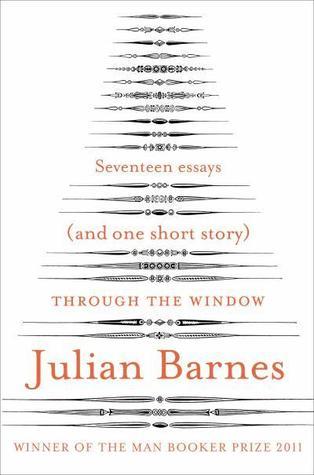
From the Man Booker Prize-winning author of The Sense of an Ending and one of Britain’s greatest a brilliant collection of essays on the books and authors that have meant the most to him throughout his illustrious career. In these seventeen essays (plus a short story and a special preface, “A Life with Books”), Julian Barnes examines the British, French and American writers who have shaped his writing, as well as the cross-currents and overlappings of their different cultures. From the deceptiveness of Penelope Fitzgerald to the directness of Hemingway, from Kipling’s view of France to the French view of Kipling, from the many translations of Madame Bovary to the fabulations of Ford Madox Ford, from the National Treasure status of George Orwell to the despair of Michel Houellebecq, Julian Barnes considers what fiction is, and what it can do. As he writes, “Novels tell us the most truth about what it is, how we live it, what it might be for, how we enjoy and value it, and how we lose it.”

A sparkling collection of essays that illustrates the infinite variety of contemporary life in London—from the bestselling, Booker Prize-winning author of The Sense of an Ending, "an exceptionally accomplished [and] ingenious stylist" ( The New York Review of Books )."A splended collection of journalism ... uniformly fine, closely observed and informative." — The Wall Street JournalWith brilliant wit, idiosyncratic intelligence, and a bold grasp of intricate political realities, the celebrated author of Flaubert's Parrot turns his satiric glance homeward to England.

Julian Barnes's long and passionate relationship with la belle France began more than forty years ago, and in these essays on the country and the culture he combines a keen appreciation, a seemingly infinite sphere of reference, and prose as stylish as classic haute couture.Barnes's vision of France-"The Land Without Brussels Sprouts"-embraces its vanishing peasantry; its vanished hyper-literate pop singers, Georges Brassens, Boris Vian, and Jacques Brel ("[he] sang at the world as if it… could be saved from its follies and brutalities by his vocal embrace"); and the gleeful iconoclasm of its nouvelle vague cinema ("'The Underpass in Modern French Film' is a thesis waiting to be written").He describes the elegant tour of France that Henry James and Edith Wharton made in 1907, and the orgy of drugs and suffering of the Tour de France in our own time. An unparalleled connoisseur of French writing and writers, Barnes gives us his thoughts on the prolific and priapic Simenon, on Sand, Baudelaire, and Mallarmé ("If literature is a spectrum, and Hugo hogs the rainbow, then Mallarmé is working in ultra-violet").In several dazzling excursions into the prickly genius of Flaubert, Barnes discusses his letters; his lover Louise Colet; and his biographers (Sartre's The Family Idiot, "an intense, unfinished, three-volume growl at Flaubert, is mad, of course"). He delves into Flaubert's friendship with Turgenev; looks at the "faithful betrayal" of Claude Chabrol's film version of Madame Bovary; and reveals the importance of the pharmacist's assistant, the most major minor character in Flaubert's great "if Madame Bovary were a mansion, Justin would be the handle to the back door; but great architects have the design of door-furniture in mind even as they lay out the west wing."For lovers of France and all things French-and of Julian Barnes's singular wit and intelligence-Something to Declare is an unadulterated joy to read.

Julian Barnes, one of Britain’s most distinguished novelists, is also an acclaimed essayist. A Life with Books is an essay specially commissioned for Independent Booksellers Week, supplied exclusively to independent bookshops. In it, Julian Barnes writes about his early awareness of books and about his obsessive book-collecting and time spent in second-hand bookshops around the country. He ends by praising the physical book and expressing the confident hope that it will survive.A Life with Books is published as a pamphlet, with cover art by Suzanne Dean, the renowned designer responsible for the cover of Julian Barnes’ Man Booker-winning The Sense of an Ending.

Natalia Ginzburg hace un inventario íntimo de la vida en pareja. Eduardo Milán traza los paralelismos entre la poesía y el impulso amoroso. Nélida Piñon escribe una carta que no sabe si enviará. Mark Vernon descubre que el amor ha sido borrado de la memoria colectiva. Carmen Boullosa se adentra en un verso ardiente de Silvina Ocampo. Elvira Hernández se pregunta si el amor realmente existe. Raúl Zurita encuentra el grafiti más bello del mundo. Leonardo Padura enuncia las razones para amar la isla en la que nació. George Steiner advierte que la amistad es la asesina del amor. Para exponer el sentido del amor, bell hooks explora sus manifestaciones en la vida cotidiana. Julian Barnes se adentra en los recuerdos del amor más allá de la muerte.¿Cómo se percibe el amor luego de experimentarlo por décadas? ¿Cómo acercarse a una idea tan trascendental y elusiva? ¿Es una relación generacional o universal? Entre el ensayo y el eco poético, doce voces exploran los caminos que, lejos de la búsqueda de una definición rígida, se acercan o rodean el tema desde la vivencia y la memoria tamizadas por los años. De esa tentativa surge, de pronto, un inventario de anécdotas, nociones, murmullos, a veces panorámicos, a veces particulares, que muestran la intensidad y complejidad de las emociones que abarca este sentimiento y la incapacidad de apresarlas de manera definitiva.Este libro no pregunta qué es el amor en sí, sino cómo es la experiencia del amor. Sin embargo, lo que lo hace tan actual no es exactamente eso, sino algo un poco más raro; a saber, que la experiencia que le interesa no es la que el diccionario define como «Situación o emoción que alguien vive o siente», sino aquella que define como «Conocimiento al que se llega después de muchos años de vida». —Francisco SegoviaNo es la edad la determinante del encuentro amoroso. Si se tiene presente la estructura regular de la vida humana y su desastroso rodar por los siglos, la aparición del amor es un regalo delicado, de excepción e intemporal. ¿De dónde viene? No es de naturaleza atrapable. Es libre. Trasvuela. Desaparece, como nosotros. —Elvira HernándezA través de singulares libros polifónicos, la colección Disertaciones de Gris Tormenta explora conceptos con relevancia contemporánea que no siempre pueden definirse —y propone la observación panorámica, quizá utópica, de lo que muchas veces es inobservable. Este es el título 11 de la colección.

Evermore is a short story written by Julian Barnes with six original etchings by Howard Hodgkin.