
Osho
Rajneesh (born Chandra Mohan Jain, 11 December 1931 – 19 January 1990) and latter rebranded as Osho was leader of the Rajneesh movement. During his lifetime he was viewed as a controversial new religious movement leader and mystic. In the 1960s he traveled throughout India as a public speaker and was a vocal critic of socialism, Mahatma Gandhi, and Hindu religious orthodoxy. Rajneesh emphasized the importance of meditation, mindfulness, love, celebration, courage, creativity and humor—qualities that he viewed as being suppressed by adherence to static belief systems, religious tradition and socialization. In advocating a more open attitude to human sexuality he caused controversy in India during the late 1960s and became known as "the sex guru". In 1970, Rajneesh spent time in Mumbai initiating followers known as "neo-sannyasins". During this period he expanded his spiritual teachings and commented extensively in discourses on the writings of religious traditions, mystics, and philosophers from around the world. In 1974 Rajneesh relocated to Pune, where an ashram was established and a variety of therapies, incorporating methods first developed by the Human Potential Movement, were offered to a growing Western following. By the late 1970s, the tension between the ruling Janata Party government of Morarji Desai and the movement led to a curbing of the ashram's development and a back taxes claim estimated at $5 million. In 1981, the Rajneesh movement's efforts refocused on activities in the United States and Rajneesh relocated to a facility known as Rajneeshpuram in Wasco County, Oregon. Almost immediately the movement ran into conflict with county residents and the state government, and a succession of legal battles concerning the ashram's construction and continued development curtailed its success. In 1985, in the wake of a series of serious crimes by his followers, including a mass food poisoning attack with Salmonella bacteria and an aborted assassination plot to murder U.S. Attorney Charles H. Turner, Rajneesh alleged that his personal secretary Ma Anand Sheela and her close supporters had been responsible. He was later deported from the United States in accordance with an Alford plea bargain.[ After his deportation, 21 countries denied him entry. He ultimately returned to India and a revived Pune ashram, where he died in 1990. Rajneesh's ashram, now known as OSHO International Meditation Resort and all associated intellectual property, is managed by the Zurich registered Osho International Foundation (formerly Rajneesh International Foundation). Rajneesh's teachings have had a notable impact on Western New Age thought, and their popularity has increased markedly since his death.
32 Books Written

The Art of Living and Dying: Celebrating Life and Celebrating Death
by Osho
Rating: 4.0 ⭐
• 2 recommendations ❤️
Why are we afraid of death? What is acceptance in the face of cancer? How do I decide whose advice to take? How to relax in the certainty of death? Ought we to tell someone when they are dying or not? Is the theory of reincarnation true? What is happening around the dying? How best to support a dying person? My young daughter is asking about death: what do I tell her? How can I celebrate death as you suggest? Osho responds to these questions and many others from those who find themselves inexplicably attracted to the subject, as well as from those who are facing imminent death and from their carers. He does not simply show how our fear of death is based on a misunderstanding of its nature; he also shows how dying is a tremendous opportunity for inner growth and how death is the most sacred of mysteries. Death is not an event but a process, and one that begins with birth. Each exhalation is a small death; each inhalation, a rebirth. When life is lived consciously and totally, death is not a catastrophe but a joyous climax.

Courage is not the absence of fear, says Osho. It is, rather, the total presence of fear, with the courage to face it. This book provides a bird's-eye view of the whole terrain--where fears originate, how to understand them, and how to find the courage to face them. In the process, Osho proposes that whenever we are faced with uncertainty and change in our lives, it is actually a cause for celebration. Instead of trying to hang on to the familiar and the known, we can learn to enjoy these situations as opportunities for adventure and for deepening our understanding of ourselves and the world around us.The book begins with an in-depth exploration of the meaning of courage and how it is expressed in the everyday life of the individual. Unlike books that focus on heroic acts of courage in exceptional circumstances, the focus here is on developing the inner courage that enables us to lead authentic and fulfilling lives on a day-to-day basis. This is the courage to change when change is needed, the courage to stand up for our own truth, even against the opinions of others, and the courage to embrace the unknown in spite of our fears-in our relationships, in our careers, or in the ongoing journey of understanding who we are and why we are here.Courage also features a number of meditation techniques specifically designed by Osho to help people deal with their fears.

An indispensable work for understanding the life and teachings of one of the most unusual mystics and philosophers of our time.Ten years have past since, in the words of his attending physician, Osho prepared for his departure from the body that had served him for fifty-nine years "as calmly as though he were packing for a weekend in the country." This volume is recognition that the time has come to provide a historical and biographical context for understanding Osho and his work. Who was this man, known as the Sex Guru, the "self-appointed bhagwan" (Rajneesh), the Rolls-Royce Guru, the Rich Man's Guru, and simply the Master?Drawn from nearly five thousand hours of Osho's recorded talks, this is the story of his youth and education, his life as a professor of philosophy and years of travel teaching the importance of meditation, and the true legacy he sought to leave behind: a religionless religion centered on individual awareness and responsibility and the teaching of "Zorba the Buddha," a celebration of the whole human being.

Moving beyond the usual interpretations of this classic Chinese text — that of using it as an indicator of what to do next or attempting to predict the future — Osho is using the Tao Te Ching as Lao Tzu to ignite the flame of individual awareness and insight.His commentaries on these seven verses burn through every idea we may hold about ourselves until we can see with the same crystal clear light as Lao Tzu.

In today's world, freedom is our basic condition, and until we learn to live with that freedom, and learn to live by ourselves and with ourselves, we are denying ourselves the possibility of finding love and happiness with someone else.Love can only happen through freedom and in conjunction with a deep respect for ourselves and the other. Is it possible to be alone and not lonely? Where are the boundaries that define "lust" versus "love"...and can lust ever grow into love? In Love, Freedom, Aloneness you will find unique, radical, and intelligent perspectives on these and other essential questions. In our post-ideological world, where old moralities are out of date, we have a golden opportunity to redefine and revitalize the very foundations of our lives. We have the chance to start afresh with ourselves, our relationships to others, and to find fulfillment and success for the individual and for society as a whole.

Intuition deals with the difference between the intellectual, logical mind and the more encompassing realm of spirit. Logic is how the mind knows reality, intuition is how the spirit experiences reality. Osho's discussion of these matters is wonderfully lucid, occasionally funny, and thoroughly engrossing.All people have a natural capacity for intuition, but often social conditioning and formal education work against it. People are taught to ignore their instincts rather than to understand and use them as a foundation for individual growth and development-and in the process they undermine the very roots of the innate wisdom that is meant to flower into intuition. In this volume, Osho pinpoints exactly what intuition is and gives guidelines for how to identify its functioning in others and ourselves. You will learn to distinguish between genuine intuitive insight and the "wishful thinking" that can often lead to mistaken choices and unwanted consequences. Includes many specific exercises and meditations designed to nourish and support each individual's natural intuitive gifts. OSHO challenges readers to examine and break free of the conditioned belief systems and prejudices that limit their capacity to experience life in all its richness. He has been described by the Sunday Times of London as one of the "1000 Makers of the 20th Century" and by Sunday Mid-Day (India) as one of the ten people-along with Gandhi, Nehru, and Buddha-who have changed the destiny of India. More than a decade after his death in 1990, the influence of his teachings continues to expand, reaching seekers of all ages in virtually every country of the world.Intuition deals with the difference between the intellectual, logical mind and the more encompassing realm of spirit. Logic is how the mind knows reality, intuition is how the spirit experiences reality. Osho's discussion of these matters is wonderfully lucid, occasionally funny, and thoroughly engrossing. All people have a natural capacity for intuition, but often social conditioning and formal education work against it. People are taught to ignore their instincts rather than to understand and use them as a foundation for individual growth and development-and in the process they undermine the very roots of the innate wisdom that is meant to flower into intuition. In this volume, Osho pinpoints exactly what intuition is and gives guidelines for how to identify its functioning in others and ourselves. You will learn to distinguish between genuine intuitive insight and the "wishful thinking" that can often lead to mistaken choices and unwanted consequences. Includes many specific exercises and meditations designed to nourish and support each individual's natural intuitive gifts.

Learn how to set yourself free with the philosophies of one of the twentieth century’s greatest spiritual teachers in The Courage to Be Yourself .In Freedom , Osho outlines three stages of freedom. The first is “freedom from,” which is a freedom that comes from breaking out of what he calls the “psychological slavery” imposed by outside forces such as parents, society, or religion. The next stage is “freedom for,” a positive freedom that comes from embracing and creating something―a fulfilling relationship, for example, or an artistic or humanitarian vision. And lastly there is “just freedom,” the highest and ultimate freedom. This last freedom is more than being for or against something; it is the freedom of simply being oneself and responding truthfully to each moment.This book helps readers to identify the obstacles to their freedom, both circumstantial and self-imposed, to choose their battles wisely, and to find the courage to be true to themselves.Osho challenges readers to examine and break free of the conditioned belief systems and prejudices that limit their capacity to enjoy life in all its richness. He has been described by the Sunday Times of London as one of the “1000 Makers of the 20th Century” and by Sunday Mid-Day (India) as one of the ten people―along with Gandhi, Nehru, and Buddha―who have changed the destiny of India. Since his death in 1990, the influence of his teachings continues to expand, reaching seekers of all ages in virtually every country of the world.

In this comprehensive and practical guide, the secrets of the ancient science of Tantra become available to a contemporary audience for the first time. Confined to small, hidden mystery schools for centuries, and often misunderstood and misinterpreted today. Tantra is not just a collection of techniques to enhance sexual experience. As Osho shows in these pages, it is a complete science of self-realizatoin, based on the cumulative wisdom of centuries of exploration into the meaning of life and consciousness. Tantra-the very word means "technique"-is a set of powerful, transformative tools that can be used to bring new meaning andjoy to every aspect of our daily lives.

With complete frankness Osho (a disgraced cult leader) discusses the three stages of sex - physical, psychological and spiritual - and provides guidance on how this raw energy can be transformed into the realization of ultimate consciousness. He explains that when we repress our basic nature, sex takes roots in the unconscious, creating an unnatural obsession. It is this psychic state that has produced much mental sickness and the widespread perversity of society today. "Sex is man's most vibrant energy," Osho says," but it should not be an end unto itself: sex should lead man to his soul."
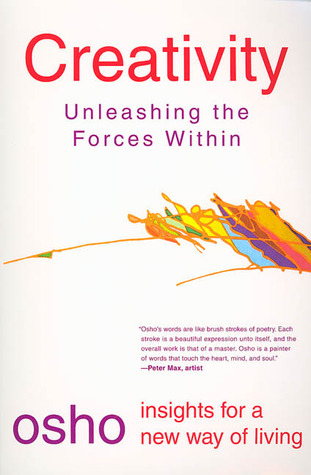
As Osho points out in the foreward to this book, historically, the creative person has been all but forced to rebel against the society.But nowadays, the situation has dramatically changed. In today's world, the ability to respond creatively to new challenges is demanded of everybody, from corporate CEOs to "soccer moms." Those whose toolbox for dealing with life includes only what they have learned in the past from their parents and their teachers are at a distinct disadvantage both in their relationships and in their careers. Making a switch from imitative and rule-bound behavior to creative innovation and flexibility requires a profound change in our attitudes about ourselves and our capabilities.Creativity is a handbook for those who understand the need to bring more creativity, playfulness, and flexibility to their lives. It's a manual for thinking "outside the box"-and learning to live there as well.

Underlying all meditation techniques, including martial arts-and in fact underlying all great athletic performances-is a quality of being awake and present to the moment, a quality that Osho calls awareness. Once we can identify and understand what this quality of awareness is, we have the key to self-mastery in virtually every area of our lives.According to great masters like Lao Tzu or Buddha, most of us move through our lives like sleepwalkers. Never really present in what we are doing, never fully alert to our environment, and not even aware of what motivates us to do and say the things we do.At the same time, all of us have experienced moments of awareness-or awakening, to use another-in extraordinary circumstances. On the road, in a sudden and unexpected accident, time seems to stop and one is suddenly aware of every movement, every sound, every thought. Or in moments that touch us deeply-welcoming a new baby into the world for the first time, or being with someone at the moment of death.Awareness, says Osho, is the key to being self-directed, centered, and free in every aspect of our lives. In this book, Osho teaches how to live life more attentively, mindfully, and meditatively, with love, caring and consciousness.OSHO challenges readers to examine and break free of the conditioned belief systems and prejudices that limit their capacity to life in all its richness. He has been described by the Sunday Times of London as one of the "1000 Makers of the 20th Century" and by Sunday Mid-Day (India) as one of the ten people-along with Gandhi, Nehru, and Buddha-who have changed the destiny of India. More than a decade after his death in 1990, the influence of his teachings continues to expand, reaching seekers of all ages in virtually every country of the world.

"Hit-and-run" relationships have become common in our society as it has grown more rootless, less tied to traditional family structures, and more accepting of casual sex. But at the same time, there arises an undercurrent of feeling that something is missing-a quality of intimacy.This quality has very little to do with the physical, though sex is certainly one possible door. Far more important is a willingness to expose our deepest feelings and vulnerabilities, with the trust that the other person will treat them with care. Ultimately, the willingness to take the risk of intimacy has to be grounded in an inner strength that knows that even if the other remains closed, even if that trust is betrayed, we will not suffer any permanent damage.In this gentle and compassionate guide, Osho takes his readers step-by-step through what makes people afraid of intimacy, how to encounter those fears and go beyond them, and what they can do to nourish themselves and their relationships to support more openness and trust.OSHO challenges readers to examine and break free of the conditioned belief systems and prejudices that limit their capacity to life in all its richness. He has been described by the Sunday Times of London as one of the "1000 Makers of the 20th Century" and by Sunday Mid-Day (India) as one of the ten people-along with Gandhi, Nehru, and Buddha-who have changed the destiny of India. More than a decade after his death in 1990, the influence of his teachings continues to expand, reaching seekers of all ages in virtually every country of the world.

The Book of Woman describes what it means to be a woman and explores the feminine aspect of human beings. Topics covered include sexuality, love, work, and politics. Osho has been a writer for The Sunday Times of London and is one of the top ten people who have changed India's destiny.

What Is Love?In this thoughtful, provocative work, Osho—one of the most revolutionary thinkers of our time—challenges us to question what we think we know about love and opens us to the possibility of a love that is natural, fulfilling, and free of possessiveness and jealousy.With his characteristic wit, humor, and understanding, Osho dares us to resist the unhealthy relationship patterns we’ve learned from those around us, and to rediscover the meaning of love for ourselves. “By the time you are ready to explore the world of love, you are filled with so much rubbish about love that there is not much hope for you to be able to find the authentic and discard the false.”By answering the questions that so many lovers face, Osho shares new ways to love that will forever change how you relate to others, including how to:• Love without clinging• Let go of expectations, rules, and demands• Free yourself from the fear of being alone• Be fully present in your relationships• Keep your love fresh and alive• Become a life partner with whom someone could continue to grow and change• Surrender your ego so you can surrender to loveBeing in Love will inspire you to welcome love into your life anew and experience the joy of being truly alive by sharing it.

In Joy , Osho posits that to be joyful is the basic nature of life. Joy is the spiritual dimension of happiness, in which one begins to understand one's intrinsic value and place in the universe. Accepting joy is a decision to "go with the flow," to be grateful to be alive and for all the challenges and opportunities in life, rather than setting conditions or demands for happiness.The Insight for a New Way of Living series aims to shine light on beliefs and attitudes that prevent individuals from being their true selves. The text is an artful mix of compassion and humor, and readers are encouraged to confront what they would most like to avoid, which in turns provides the key to true insight and power.Joy is a wondrous investigation into the source and importance of joyfulness in our lives.

The first upgrade to meditation since Buddha's timeIn this essential meditation handbook for the 21st century, Osho turns the traditional notion of meditation practice on its head. Meditation: The First and Last Freedom shows that meditation is not a spiritual discipline separate from everyday life in the real world. In essence, it is simply the art of being aware of what is going on inside and around us. As we acquire the knack, meditation can be our companion wherever we are-at work, at play, at rest.Meditation contains practical, step-by-step guides to a wide variety of meditation techniques selected by and/or created by Osho, including the unique OSHO Active Meditations which deal with the special tensions of contemporary life. Recognizing that it's almost impossible for most people these days just to stop and sit silently, these meditations - including the Osho Dynamic Meditation and Osho Kundalini Meditation - begin with one or more stages of vigorous physical activity. This brings our physical and mental energies to a peak, so that the following silence is easy -- leaving us alert, refreshed, and newly energized.Newly revised and resized into a handy portable format, Meditation is the perfect text to begin or continue exploring the joys of meditation.

A journey through what makes human beings afraid, into a new relationship with our fearsIn Fear: Understanding and Accepting the Insecurities of Life, Osho takes the reader step by step over the range of what makes human beings afraid—from the reflexive "fight or flight" response to physical danger to the rational and irrational fears of the mind and its psychology. Only by bringing the light of understanding into fear's dark corners, he says, airing out closets and opening windows, and looking under the bed to see if a monster is really living there, can we begin to venture outside the boundaries of our comfort zone and learn to live with, and even enjoy, the fundamental insecurity of being alive.Fear ends with a series of meditation experiments designed to help readers experience a new relationship with fear and to begin to see fears not as stumbling blocks, but as stepping stones to greater self-awareness and trust.

One of the greatest spiritual leaders of the twentieth century encourages us to embrace the qualities of life our advancing years grant us in The Responsibility of Being Oneself .In a culture infatuated with youth and determined to avoid old age at all costs, this book dares to raise a question that has been all but forgotten in the age of Viagra and cosmetic surgery. What benefits might lie in accepting the aging process as natural, rather than trying to hold on to youth and its pleasures all the way to the grave?Osho takes us back to the roots of what it means to grow up rather than just to grow old. Both in our relationships with others, and in the fulfillment of our own individual destinies, he reminds us of the pleasures that only true maturity can bring. He outlines the ten major growth cycles in human life, from the self-centered universe of the preschooler to the flowering of wisdom and compassion in old age.Osho’s sly sense of humor runs like a red thread through the book, along with a profound compassion and understanding of how easy it is to be distracted from the deeper meaning and purpose of our lives―which is, ultimately, to flower into our own individual uniqueness and maturity with an attitude of celebration and joy.Osho challenges readers to examine and break free of the conditioned belief systems and prejudices that limit their capacity to enjoy life in all its richness. He has been described by the Sunday Times of London as one of the “1000 Makers of the 20th Century” and by Sunday Mid-Day (India) as one of the ten people―along with Gandhi, Nehru, and Buddha―who have changed the destiny of India. Since his death in 1990, the influence of his teachings continues to expand, reaching seekers of all ages in virtually every country of the world.

How do we reconcile our need to express our emotions with our desire to protect others? Far too often we find ourselves trapped in this dilemma of expression versus repression. We fear that by expressing our true feelings, we will hurt and alienate those close to us. But by repressing our emotions—even in the benevolent guise of “self-control”—we only risk hurting ourselves. Osho, one of the most provocative and inspiring spiritual teachers of our time, provides here a practical and comprehensive approach to dealing with this conflict effectively. Incorporating new, never-before-published material, Emotional Wellness leads us to understand the roots of our emotions, to react to situations in a way that can teach us more about ourselves and others, and to respond to life’s inevitable ups and downs with far greater confidence and equilibrium. Discover: • The impact that fear, anger, and jealousy have on our lives• How emotions like guilt, insecurity, and fear are used to manipulate us• How to break out of unhealthy responses to strong emotions• How to transform destructive emotions into creative energy• The role of society and culture on our individual emotional styles Osho’s unique insight into the human mind and heart goes far beyond conventional psychology. He teaches us to experience our emotions fully and to deal with them creatively in order to achieve a richer, fuller life.

Help in Understanding the Strong emotions that we don't know how to handle effectively lie at the core of so many difficulties in the life of the individual. They can affect our relationships with loved ones, and how we function in our work. They play a profound role in how we feel about ourselves, and can even affect our physical health. And we are too often trapped in the dilemma of "expression" versus "repression." Expressing our emotions can often hurt others, but by repressing them – even in the benevolent guise of "self-control" – we risk hurting ourselves.Osho offers a third alternative, which is to understand the roots of our emotions and to develop the knack of watching them and learning from them as they arise, rather than being "taken over" by them. Eventually we find that even the most challenging and difficult situations no longer have the power to provoke us and cause us pain.Osho's unique insights goe far beyond the understandings of conventional psychology.Includes video excerpts from OSHO - Nobody Teaches You About Hate- If Somebody Creates Anger In You- How Best to Deal With Fear- Love and Hate Are One- Life is a Very Mysterious Phenomenon

In Intelligence, Osho challenges the common conception that the best way to promote intelligence is to train the intellect. Intellect is logical, he says; intelligence is paradoxical. Intellect takes things apart to see how they work; intelligence puts things together to see the functioning of the whole. Osho posits that when our education systems put too much emphasis on developing intellect, an imbalance is created and both the individual and the society suffer. It is only through intelligence that we can respond creatively to the challenges of a changing world. The Insights for a New Way of Living series aims to shine light on beliefs and attitudes that prevent individuals from being their true selves. The text is an artful mix of compassion and humor, and readers are encouraged to confront what they would most like to avoid, which in turn provides the key to true insight and power.By exploring the distinction between intellect and intelligence, Intelligence encourages readers to be more aware of how they approach problems---logical, emotional, and practical---and how they solve them.Osho challenges the idea that the best way to promote intelligence is to train the intellect. Intellect is logical, he says, intelligence is paradoxical. Intellect takes things apart to see how they work; intelligence puts things together to see the functioning of the whole. When our education systems put too much emphasis on developing intellect, an imbalance is created and both the individual and the society suffer. It is only through intelligence that we can respond creatively to the challenges of a changing world. By exploring the distinctions between intellect and intelligence, the book encourages readers to be more aware of how they approach problems - logical, emotional, and practical - and how they resolve them.

The Book of Men describes what it means to be a man and explores the masculine aspect of human beings. Topics covered include sexuality, love, work, and politics. Osho has been a writer for The Sunday Times of London and is one of the top ten people who have changed India’s destiny.

79-card deck and 192-page book. When life seems to be full of doubt and uncertainty we tend to look for a source of what will happen in the future? What about my health, the children? What will happen if I make this decision and not that one? This is how the traditional tarot is often used, to satisfy a longing to know about the past and future. This Osho Zen Tarot focuses instead on gaining an understanding of the here and now. It is a system based on the wisdom of Zen, a wisdom that says events in the outer world simply reflect in the outer world simply reflect our own thoughts and feelings, even though we ourselves might be unclear about what those thoughts and feelings are. So it helps us to turn our attention away from outside events so we can find a new clarity of understanding in our innermost hearts. The conditions and states of mind portrayed by the contemporary images on the cards are all shown as being essentially transitional and transformative. The text in the accompanying book helps to interpret and understand the images in the simple, straightforward and down to earth language of Zen. The traditional Tarot is often used to satisfy a longing to know about the past and future. The Osho Zen Tarot instead focuses on gaining an understanding of the here and now. It is a system based on the wisdom of Zen, a wisdom that says events in the outer world simply reflect our own thoughts and feelings, even though we ourselves may be unclear about what those thoughts and feelings are. We are helped to turn our attention away from outside events in order to find a new clarity of understanding about what is happening in our own hearts. Contains a 79 card full-color deck plus instruction book.

Tantra: The Supreme Understanding - Discourses on the Tantric Way of Tilopa's Song of Mahamudra
by Osho
Rating: 4.3 ⭐
Nothing much is known about the 11th century Indian master Tilopa, yet his mystical insight into Tantra in the form of a song passed on to his disciple Naropa, has lived for the past ten centuries. In these talks Osho explains many significant meditation techniques that are as helpful and powerful today as when Tilopa first sang his song.
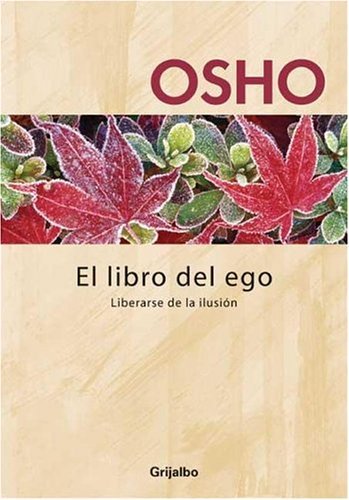
En esta obra, Osho vuelve a dar vida al mensaje de autorrealizacion de la enseñanza taoista, que cuenta con mas de tres mil años de antiguedad. Para ello se sirve de once anecdotas atribuidas al mistico chino Chuang Tse. A traves de ellas nos habla del estado de ausencia del ego, al que demonina el bote vacio, nos habla de la espontaneidad, de los sueños y de la totalidad, de como vivir la vida en un estado de no eleccion y de como enfrentarnos con la muerte con la misma ecuanimidad.

In The Pathless Path , Osho, one of the greatest spiritual teachers of the twentieth century, comments on five parables from the Leih Tzu, bringing a fresh and contemporary interpretation to the ancient wisdom of Tao. Leih Tzu was a well-known Taoist master in the fourth century B.C., and his sly critiques of a Confucius provide abundant opportunities for the reader to explore the contrasts between the rational and irrational, the male and female, the structured and the spontaneous. “Who Is Really Happy” uses the discovery of a human skull on the roadside to probe into the question of immortality and how misery arises out of the existence of the ego. “A Man Who Knows How to Console Himself” looks beneath the apparent cheerfulness of a wandering monk and asks if there is really a happiness that endures through life’s ups and downs. “No Regrets” is a parable about the difference between the knowledge that is gathered from the outside and the “knowing” that arises from within. “No Rest for the Living” uses a dialogue between a despondent seeker and his master to reveal the limits of philosophy and the crippling consequences of living for the sake of some future goal. “Best Be Still, Best Be Empty” discusses the difference between the path of the will, the via affirmitiva of Christianity, Judaism, and Islam, versus the path of the mystic, the via negativa of Buddha and Lao Tzu. The Pathless Path also features a Q&A section that addresses how Taoist understanding applies to everyday life in concrete, practical terms. Osho challenges readers to examine and break free of the conditioned belief systems and prejudices that limit their capacity to enjoy life in all its richness. He has been described by the Sunday Times of London as one of the “1000 Makers of the 20th Century” and by Sunday Mid-Day (India) as one of the ten people―along with Gandhi, Nehru, and Buddha―who have changed the destiny of India. Since his death in 1990, the influence of his teachings continues to expand, reaching seekers of all ages in virtually every country of the world.

The mind, says Osho, has the potential to be enormously creative in dealing with the challenges of everyday life, and the problems of the world in which we live. The difficulty, however, is that instead of using the mind as a helpful servant we have largely allowed it to become the master of our lives. Its ambitions, belief systems, and interpretations rule our days and our nights—bringing us into conflict with minds that are different from ours, keeping us awake at night rehashing those conflicts or planning the conflicts of tomorrow, and disturbing our sleep and our dreams. If only there was a way to switch it off and give it a rest! Finding the switch that can silence the mind—not by force or performing some exotic ritual, but through understanding, watchfulness, and a healthy sense of humor—is meditation. A sharper, more relaxed and creative mind—one that can function at the peak of its unique intelligence—is the potential.The book will include a link to tutorials on OSHO Nadabrahma Meditation.

White contains all the colors of the spectrum yet it seems to be colourless; it contains all these colours in such synthesis that they all disappear.

The path to freedom is filled with questions and uncertainty. Is it possible to truly know who we are? Do our lives have a purpose, or are we just accidental? What are we meant to contribute? What are we meant to become, to create, and to share? In The Book of Understanding, Osho, one of the most provocative thinkers of our time, challenges us to understand our world and ourselves in a new and radical way. The first step toward understanding, he says, is to question and doubt all that we have been taught to believe.All our lives we’ve been handed so-called truths by countless others—beliefs we learned to accept without reason. It is only in questioning our beliefs, assumptions, and prejudices that we can begin to uncover our own unique voice and heal the divisions within us and without.Once we discover our authentic self, we can embrace all aspects of the human experience—from the earthy, pleasure-loving qualities that characterize Zorba the Greek to the watchful, silent qualities of Gautam the Buddha. We can become whole and live with integrity, able to respond with creativity and compassion to the religious, political, and cultural divides that currently plague our society.In this groundbreaking work, Osho identifies, loosens, and ultimately helps to untie the knots of fear and misunderstanding that restrict us—leaving us free to discover and create our own individual path to freedom.Doubt—because doubt is not a sin, it is the sign of your intelligence.You are not responsible to any nation, to any church, to any God. You are responsible only for one thing, and that is self-knowledge. And the miracle is, if you can fulfill this responsibility, you will be able to fulfill many other responsibilities without any effort. The moment you come to your own being, a revolution happens in your vision. Your whole outlook about life goes through a radical change. You start feeling new responsibilities—not as something to be done, not as duty to be fulfilled, but as a joy to do. —OSHOFrom the Hardcover edition.

In this collection of reflections, Osho's inspiring and loving stories go far beyond the usual chicken-soup fare. Life, Love, Laughter establishes a new genre of reflective and inspirational text stripped of all platitudes and clichés, and absolutely in tune with the realities of the 21st century. In this artful work, Osho mixes entertainment and inspiration, ancient Zen stories and contemporary jokes to help us to find love, laughter, and ultimately, happiness.Life, Love, Laughter includes an original talk by Osho on DVD. This visual component enables the reader to experience the direct wisdom and humor of Osho straight from the source.

Many everyday discomforts and tensions arise from the fact that we are alienated from our bodies. With the help of Body Mind Balancing, readers will learn to talk to and reconnect with their bodies. After just a short time, readers will begin to appreciate how much the body has been working for them and supporting them, and from this new perspective one can find new ways to work with the body and create a more harmonious balance of body and mind.The guided meditation and relaxation process, "Reminding Yourself of the Forgotten Language of Talking to Your BodyMind" is a CD that accompanies the text. Developed by Osho, this meditative therapy guides the listener in reconnecting with his or her body and creating a new and greater sense of well-being.The voice on the CD belongs to meditation teacher Anando Hefley.

Compassion: The Ultimate Flowering Of Love (insights For A New Way Of Living Series)
by Osho
Rating: 4.1 ⭐
In this tenth volume of the popular Insights for a New Way of Living series, Osho examines the nature of compassion from a radically different perspective. He points out that "passion" lies at the root of the word, and then proceeds to challenge assumptions about what compassion really is. Many so-called acts of compassion, he says, are tainted by a subtle sense of self-importance and desire for recognition. Others are based in the desire not really to help others but to force them to change. Using stories from the lives of Jesus and Buddha and the world of Zen, Osho shows how the path to authentic compassion arises from within, beginning with a deep acceptance and love of oneself. Only then, says Osho, does compassion flower into a healing force, rooted in the unconditional acceptance of the other as he or she is.Compassion includes an original, 120-minute talk by Osho on DVD. This visual component enables the reader to experience the direct wisdom and humor of Osho straight from the source.