Loading genres...
Explore the best books about Crafts genre.
Credited with sparking the current memoir explosion, Mary Karr’s The Liars’ Club spent more than a year at the top of the New York Times list. She followed with two other smash bestsellers: Cherry and Lit, which were critical hits as well.For thirty years Karr has also taught the form, winning graduate teaching prizes for her highly selective seminar at Syracuse, where she mentored such future hit authors as Cheryl Strayed, Keith Gessen, and Koren Zailckas. In The Art of Memoir, she synthesizes her expertise as professor and therapy patient, writer and spiritual seeker, recovered alcoholic and “black belt sinner,” providing a unique window into the mechanics and art of the form that is as irreverent, insightful, and entertaining as her own work in the genre.Anchored by excerpts from her favorite memoirs and anecdotes from fellow writers’ experience, The Art of Memoir lays bare Karr’s own process. (Plus all those inside stories about how she dealt with family and friends get told— and the dark spaces in her own skull probed in depth.) As she breaks down the key elements of great literary memoir, she breaks open our concepts of memory and identity, and illuminates the cathartic power of reflecting on the past; anybody with an inner life or complicated history, whether writer or reader, will relate.Joining such classics as Stephen King’s On Writing and Anne Lamott’s Bird by Bird, The Art of Memoir is an elegant and accessible exploration of one of today’s most popular literary forms—a tour de force from an accomplished master pulling back the curtain on her craft.

A generation of screenwriters has used Syd Field’s bestselling books to ignite successful careers in film. Now the celebrated producer, lecturer, teacher, and bestselling author has updated his classic guide for a new generation of filmmakers, offering a fresh insider’s perspective on the film industry today. From concept to character, from opening scene to finished script, here are easily understood guidelines to help aspiring screenwriters—from novices to practiced writers—hone their craft. Filled with updated material—including all-new personal anecdotes and insights, guidelines on marketing and collaboration, plus analyses of recent films, from American Beauty to Lord of the Rings—Screenplay presents a step-by-step, comprehensive technique for writing the screenplay that will succeed in Hollywood. Discover:•Why the first ten pages of your script are crucially important•How to visually “grab” the reader from page one, word one •Why structure and character are the essential foundation of your screenplay•How to adapt a novel, a play, or an article into a screenplay•Tips on protecting your work—three legal ways to claim ownership of your screenplay•The essentials of writing great dialogue, creating character, building a story line, overcoming writer’s block, getting an agent, and much more.With this newly updated edition of his bestselling classic, Syd Field proves yet again why he is revered as the master of the screenplay—and why his celebrated guide has become the industry’s gold standard for successful screenwriting.

From Pulitzer Prize-winning Annie Dillard, a collection that illuminates the dedication and daring that characterizes a writer's life.In these short essays, Annie Dillard—the author of Pilgrim at Tinker Creek and An American Childhood—illuminates the dedication, absurdity, and daring that characterize the existence of a writer. A moving account of Dillard’s own experiences while writing her works, The Writing Life offers deep insight into one of the most mysterious professions.

For more than twenty years Natalie Goldberg has been challenging and cheering on writers with her books and workshops. In her groundbreaking first book, she brings together Zen meditation and writing in a new way. Writing practice, as she calls it, is no different from other forms of Zen practice—"it is backed by two thousand years of studying the mind." This edition includes a new preface and an interview with the author.

Writing for science fiction and fantasy audiences can be the most exciting writing you've ever done. Your readers are curious and want you to take them beyond ""The Fields We Know,"" to help them explore the infinite boundaries of the worlds you create.Here, science fiction great Orson Scott Card shares his expertise in these genres. You'll learn:- What is and isn't science fiction and fantasy, and by whose standards -- and where your work fits in.- How to build, populate, and dramatize a credible, inviting world your readers will want to explore.- How to use the MICE quotient -- milieu, idea, character, event -- to structure a successful story.- Where the markets are and how to reach them to get published.The knowledge and skills you gain through this book will help you effectively lead your readers into the strangeness you create -- one tantalizing step at a time.

Craft an Engaging PlotHow does plot influence story structure? What's the difference between plotting for commercial and literary fiction? How do you revise a plot or structure that's gone off course?With "Write Great Fiction: Plot & Structure," you'll discover the answers to these questions and more. Award-winning author James Scott Bell offers clear, concise information that will help you create a believable and memorable plot, including: Techniques for crafting strong beginnings, middles, and endsEasy-to-understand plotting diagrams and chartsBrainstorming techniques for original plot ideasThought-provoking exercises at the end of each chapterStory structure models and methods for all genresTips and tools for correcting common plot problemsFilled with plot examples from popular novels, comprehensive checklists, and practical hands-on guidance, "Write Great Fiction: Plot & Structure" gives you the skills you need to approach plot and structure like an experienced pro.

Story provides insight and inspiration for screen and television writers, novelists, playwrights, journalists - anyone with a story to tell.'In difficult periods of writing, particularly with structure, I often turn to Robert McKee's wonderful book, Story, for guidance.' -- Dominic Dunne, novelist of Another City, Not My Own, The Two Mrs Grenvilles.'...stimulating, innovative, refreshingly practical.' -- Lawrence Kasdan, screenwriter/director of The Accidental Tourist, The Big Chill, Body Heat, The Empire Strikes Back'McKee is the arch defender of story; his book is a revelation.' -- Griffin Dunne, screenwriter/director/producer of After Hours, Addicted To Love, Running On Empty, Chilly Scenes Of Winter'An amazingly important course.' -- John Cleese'Since I first attended Robert McKee's course, I have sold four screenplays and two novels. I could not have done so without the wisdom and inspiration he provided.' -- Tim Willocks, novelist/screenwriter of Bad City Blues, Green River Rising, Swept From The Sea

One of America's most influential writing teachers offers a toolbox from which writers of all kinds can draw practical inspiration."Writing is a craft you can learn," says Roy Peter Clark. "You need tools, not rules." His book distills decades of experience into 50 tools that will help any writer become more fluent and effective. WRITING TOOLS covers everything from the most basic ("Tool 5: Watch those adverbs") to the more complex ("Tool 34: Turn your notebook into a camera") and provides more than 200 examples from literature and journalism to illustrate the concepts. For students, aspiring novelists, and writers of memos, e-mails, PowerPoint presentations, and love letters, here are 50 indispensable, memorable, and usable tools. "Pull out a favorite novel or short story, and read it with the guidance of Clark's ideas. . . . Readers will find new worlds in familiar places. And writers will be inspired to pick up their pens." -Boston Globe"For all the aspiring writers out there-whether you're writing a novel or a technical report-a respected scholar pulls back the curtain on the art." -Atlanta Journal-Constitution"This is a useful tool for writers at all levels of experience, and it's entertainingly written, with plenty of helpful examples." -Booklist

Among the many "how-to" playwriting books that have appeared over the years, there have been few that attempt to analyze the mysteries of play construction. Lajos Egri's classic, The Art of Dramatic Writing, does just that, with instruction that can be applied equally well to a short story, novel, or screenplay. Examining a play from the inside out, Egri starts with the heart of any drama: its characters. All good dramatic writing hinges on people and their relationships, which serve to move the story forward and give it life, as well as an understanding of human motives - why people act the way that they do. Using examples from everything from William Shakespeare's Romeo and Juliet to Henrik Ibsen's A Doll's House, Egri shows how it is essential for the author to have a basic premise - a thesis, demonstrated in terms of human behavior - and to develop the dramatic conflict on the basis of that behavior.Using Egri's ABCs of premise, character, and conflict, The Art of Dramatic Writing is a direct, jargon-free approach to the problem of achieving truth in writing.

Internationally-renowned directing coach Weston demonstrates what constitutes a good performance, what actors want from a director, what directors do wrong, script analysis and preparation, how actors work, and shares insights into the director/actor relationship.

As its title implies, this book deals with revising, not with original composition. Stressing the importance of the single sentence, The Paramedic Method of revision provides an easily learned method of revision to combat the obscurities of meaning that plague The Official Style, and demonstrates how to revise this stilted, dense prose into plain English. This book has been used with success wherever extensive writing is required, and also at every level of higher education. Addresses the specific stylistic patterns that characterize most bad writing and gives an eight-step revision method called The Paramedic Method to break those patterns and improve writing. Helps with writing tasks in business, government, and the university, where The Official Style is rampant, and provides an indispensable guide to revising in every writing context. For anyone interested in revising, specifically at the sentence level.

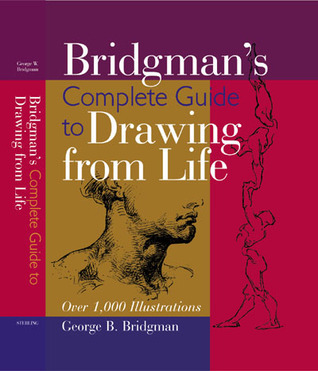
“An indispensable volume...published for the first time in paperback....More than 200 illustrations of hands and hundreds of images of arms, shoulders, heads, torsos, legs, knees, and feet.” — Library Journal. “It will...meet a deeply felt need to draw the human figure from a vantage point of understanding and visual acuity.”— Arts & Activities.

Most of what you think you know about writing is useless. It’s the harmful debris of your education—a mixture of half-truths, myths, and false assumptions that prevents you from writing well. Drawing on years of experience as a writer and teacher of writing, Verlyn Klinkenborg offers an approach to writing that will change the way you work and think. There is no gospel, no orthodoxy, no dogma in this book. What you’ll find here isn’t the way to write. Instead, you’ll find a way to clear your mind of illusions about writing and discover how you write. Several Short Sentences About Writing is a book of first steps and experiments. They will revolutionize the way you think and perceive, and they will change forever the sense of your own authority as a writer. This is a book full of learning, but it’s also a book full of unlearning—a way to recover the vivid, rhythmic, poetic sense of language you once possessed. An indispensable and unique book that will give you a clear understanding of how to think about what you do when you write and how to improve the quality of your writing.

Good Prose is an inspiring book about writing—about the creation of good prose—and the record of a warm and productive literary friendship. The story begins in 1973, in the offices of The Atlantic Monthly, in Boston, where a young freelance writer named Tracy Kidder came looking for an assignment. Richard Todd was the editor who encouraged him. From that article grew a lifelong association. Before long, Kidder’s The Soul of a New Machine, the first book the two worked on together, had won the Pulitzer Prize. It was a heady moment, but for Kidder and Todd it was only the beginning of an education in the art of nonfiction.Good Prose explores three major nonfiction forms: narratives, essays, and memoirs. Kidder and Todd draw candidly, sometimes comically, on their own experience—their mistakes as well as accomplishments—to demonstrate the pragmatic ways in which creative problems get solved. They also turn to the works of a wide range of writers, novelists as well as nonfiction writers, for models and instruction. They talk about narrative strategies (and about how to find a story, sometimes in surprising places), about the ethical challenges of nonfiction, and about the realities of making a living as a writer. They offer some tart and emphatic opinions on the current state of language. And they take a clear stand against playing loose with the facts. Their advice is always grounded in the practical world of writing and publishing.Good Prose—like Strunk and White’s The Elements of Style—is a succinct, authoritative, and entertaining arbiter of standards in contemporary writing, offering guidance for the professional writer and the beginner alike. This wise and useful book is the perfect companion for anyone who loves to read good books and longs to write one.

A long-awaited new book on personal writing from Phillip Lopate—celebrated essayist, the director of Columbia University’s nonfiction program, and editor of The Art of the Personal Essay .Distinguished author Phillip Lopate, editor of the celebrated anthology The Art of the Personal Essay, is universally acclaimed as “one of our best personal essayists” ( Dallas Morning News ).Here, combining more than forty years of lessons from his storied career as a writer and professor, he brings us this highly anticipated nuts-and-bolts guide to writing literary nonfiction.A phenomenal master class shaped by Lopate’s informative, accessible tone and immense gift for storytelling, To Show and To Tell reads like a long walk with a favorite professor—refreshing, insightful, and encouraging in often unexpected ways.

“A beautiful, intricate meditation on creativity and discovery, on fire and rebirth.” —Elizabeth Gilbert Awestruck at the sight of a Grinling Gibbons carving in a London church, David Esterly chose to dedicate his life to woodcarving—its physical rhythms, intricate beauty, and intellectual demands. Forty years later, he is the foremost practitioner of Gibbons’s forgotten technique, which revolutionized ornamental sculpture in the late 1600s with its spectacular cascades of flowers, fruits, and foliage. After a disastrous fire at Henry VIII’s Hampton Court Palace, Esterly was asked to replace the Gibbons masterpiece destroyed by the flames. It turned out to be the most challenging year in Esterly’s life, forcing him to question his abilities and delve deeply into what it means to make a thing well. Written with a philosopher’s intellect and a poet’s grace, The Lost Carving explores the connection between creativity and physical work and illuminates the passionate pursuit of a vocation that unites head and hand and heart.

This national bestseller from celebrated novelist and memoirist Dani Shapiro is an intimate and eloquent companion to living a creative life. Through a blend of memoir, meditation on the artistic process, and advice on craft, Shapiro offers her gift to writers a guide of hard-won wisdom and advice for staying the course. In the ten years since the first edition, Still Writing has become a mainstay of creative writing classes as well as a lodestar for writers just starting out, and above all, an indispensable almanac for modern writers.

WHAT IS THE STORY GRID? The Story Grid is a tool developed by editor Shawn Coyne to analyze stories and provide helpful editorial comments. It's like a CT Scan that takes a photo of the global story and tells the editor or writer what is working, what is not, and what must be done to make what works better and fix what's not. The Story Grid breaks down the component parts of stories to identify the problems. And finding the problems in a story is almost as difficult as the writing of the story itself (maybe even more difficult.) The Story Grid is a tool with many 1. It will tell a writer if a Story "works" or "doesn't work." 2. It pinpoints story problems but does not emotionally abuse the writer, revealing exactly where a Story (not the person creating the Story...the Story) has failed. 3. It will tell the writer the specific work necessary to fix that Story's problems. 4. It is a tool to re-envision and resuscitate a seemingly irredeemable pile of paper stuck in an attic drawer. 5. It is a tool that can inspire an original creation. Shawn Coyne is a twenty-five year book-publishing veteran. He's acquired, edited, published or represented works from James Bamford, John Brenkus, James Lee Burke, Barbara Bush, Dick Butkus, Harlan Coben, Nellie Connally, Michael Connelly, Robert Crais, Ben Crenshaw, Catherine Crier, Brett Favre, David Feherty, John Feinstein, Tyler Florence, Jim Gant, Col. David H. Hackworth, Jamie Harrison, Mo Hayder, William Hjortsberg, Stephen Graham Jones, Jon Krakauer, David Leadbetter, Alan Lomax, David Mamet, Troon McAllister, Robert McKee, Matthew Modine, Bill Murray, Joe Namath, John J. Nance, Jack Olsen, Scott Patterson, Steven Pressfield, Matthew Quirk, Anita Raghavan, Ian Rankin, Ruth Rendell, Jerry Rice, Giora Romm, Tim Rosaforte, William Safire, Dava Sobel, Michael Thomas, Nick Tosches, Ann Scott Tyson, Minette Walters, Betty White, Randy Wayne White, Steven White, and Don Winslow among many others. During his years as an editor at the Big Five publishing houses, as an independent publisher, as a literary agent both at a major Hollywood talent agency and as head of Genre Management Inc., and as a bestselling co-writer and ghostwriter, Coyne created a methodology called The Story Grid to teach the editing craft.

A collection of essays on life and literature, from one of the most iconic authors and astute critics in contemporary letters.Words Are My Matter is essential reading: a collection of talks, essays, and criticism by Ursula K. Le Guin, a literary legend and unparalleled voice of our social conscience. Here she investigates the depth and breadth of contemporary fiction—and, through the lens of literature, gives us a way of exploring the world around us. In “Freedom,” Le Guin notes: “Hard times are coming, when we’ll be wanting the voices of writers who can see alternatives to how we live now … to other ways of being, and even imagine real grounds for hope. We’ll need writers who can remember freedom—poets, visionaries—realists of a larger reality.” Le Guin was one of those authors and in Words Are My Matter she gives us just that: a vision of a better reality, fueled by the power and might and hope of language and literature.

In her 93 remarkable years, Brenda Ueland published six million words. She said she had two rules she followed absolutely: to tell the truth, and not to do anything she didn't want to do. Her integrity shines throughout If You Want to Write, her best-selling classic on the process of writing that has already inspired thousands to find their own creative center. Carl Sandburg called this book "The best book ever written about how to write." Yet Ueland reminds us that "Whenever I say 'writing' in this book, I also mean anything that you love and want to do or to make." Ueland's writing and her teaching are made compelling by her feisty spirit of independence and joy.

From the creator of the worldwide bestsellers Secret Garden and Enchanted Forest, a beautiful new coloring book that takes you on a magical journey beneath the waves.With Lost Ocean, Johanna Basford invites color-inners of all ages to discover an enchanting underwater world hidden in the depths of the sea. Through intricate pen and ink illustrations to complete, color, and embellish, readers will meet shoals of exotic fish, curious octopi, and delicately penned seahorses. Visit coral reefs and barnacle-studded shipwrecks, discover intricate shells and pirate treasure. Secret Garden and Enchanted Forest fans and newcomers alike will welcome this creative journey into an inky new world.

A groundbreaking resource for fiction writers, teachers, and students, this manifesto and practical guide challenges current models of craft and the writing workshop by showing how they fail marginalized writers, and how cultural expectations inform storytelling. The traditional writing workshop was established with white male writers in mind; what we call craft is informed by their cultural values. In this bold and original examination of elements of writing—including plot, character, conflict, structure, and believability—and aspects of workshop—including the silenced writer and the imagined reader—Matthew Salesses asks questions to invigorate these familiar concepts. He upends Western notions of how a story must progress. How can we rethink craft, and the teaching of it, to better reach writers with diverse backgrounds? How can we invite diverse storytelling traditions into literary spaces?Drawing from examples including One Thousand and One Nights, Curious George, Ursula K. Le Guin's A Wizard of Earthsea, and the Asian American classic No-No Boy, Salesses asks us to reimagine craft and the workshop. In the pages of exercises included here, teachers will find suggestions for building syllabi, grading, and introducing new methods to the classroom; students will find revision and editing guidance, as well as a new lens for reading their work. Salesses shows that we need to interrogate the lack of diversity at the core of published fiction: how we teach and write it. After all, as he reminds us, "When we write fiction, we write the world."

Olympic gold medal–winning diver and beloved LGBTQ icon Tom Daley offers thirty exclusive knitting and crocheting patterns to enjoy and share.During the Tokyo Olympics, British diver Tom Daley was often spotted calming his nerves with knitting needles in hand. His new favorite hobby, which he picked up during the Covid lockdown, combined with his gold medal performance, won him a new legion of fans. In fact, his Olympic inspired cardigan, made just before he left for Japan, grabbed nearly as many headlines as his win. In his native England, Daley is beloved as a four-time Olympic medalist, well-known television personality, and activist in the LGBTQ space. In addition, Daley and his husband, the Oscar-winning screenwriter Dustin Lance Black, are the parents of a toddler son, and many of Tom’s projects are adorable toys or clothes for Robbie. Now Tom has created thirty original projects for this book, sharing his joy of knitting and crocheting as a calming and creative outlet alongside his charming, witty personality. Full color and totally bespoke for this book, these projects run the gamut from toys to clothing for adults and kids to home décor. Full of color, full of joy, and Made with Love™ (the name of Tom’s online store, selling projects, patterns and branded merchandise) this is yarn crafts made very cool.