Loading themes...
Explore the best books about Victorian theme.

With an Introduction and Notes by Dr Carole Jones, freelance writer and researcher.George Eliot's final novel, Daniel Deronda (1876), follows the intertwining lives of the beautiful but spoiled and selfish Gwendolene Harleth and the selfless yet alienated Daniel Deronda, as they search for personal and vocational fulfilment and sympathetic relationship.Set largely in the degenerate English aristocratic society of the 1860s, Daniel Deronda charts their search for meaningful lives against a background of imperialism, the oppression of women, and racial and religious prejudice. Gwendolen's attempts to escape a sadistic relationship and atone for past actions catalyse her friendship with Deronda, while his search for origins leads him, via Judaism, to a quest for moral growth.Eliot's radical dual narrative constantly challenges all solutions and ensures that the novel is as controversial now, as when it first appeared.
In New Grub Street George Gissing re-created a microcosm of London's literary society as he had experienced it. His novel is at once a major social document and a story that draws us irresistibly into the twilit world of Edwin Reardon, a struggling novelist, and his friends and acquaintances in Grub Street including Jasper Milvain, an ambitious journalist, and Alfred Yule, an embittered critic. Here Gissing brings to life the bitter battles (fought out in obscure garrets or in the Reading Room of the British Museum) between integrity and the dictates of the market place, the miseries of genteel poverty and the damage that failure and hardship do to human personality and relationships.

At six years of age, Robert Cecil, the 3rd Marquess of Salisbury, was sent to a brutal boarding school he likened to “an existence among devils.” By 23, he was a member of the British Parliament. And before his death at age 73 in 1903, he would spend nearly two decades as Britain’s Prime Minister, single-mindedly driving the British Empire to extend its iron grip to five continents. This multiple award-winning biography sheds uncompromising light on Lord Salisbury’s troubled family life, his transformational experiences in Australia, India, and Africa, and his dogged pursuit of political power in the court of Queen Victoria.

This brilliant and evocative book is now widely regarded as the greatest single study of the age in any language. The late George Kitson Clark characterized it as "an historical essay of unique interest and importance." Though the book deserves to rank as a classic, its allusive style makes it rather difficult fare for the general reader. In less than two hundred pages Young paints a picture so subtle and compact that only the specialist in Victorian history can fully appreciate the value of his vivid narrative. The allusive nature of the Portrait recently sent a few dozen scholars scurrying under the guidance of Kitson Clark, to hunt down and verify its numerous references and quotations. Their exhaustive efforts have unearthed a few minor blemishes, but these fail to detract from the book's overall brilliance. Thought the Portrait is esteemed by scholars, few have noted how much the book is a reflection of its time and of the abiding cultural concerns of Young's intellectual life. In print continuously since its first appearance in 1936, this study of the Victorian era from 1837-1901 is regarded as the greatest history of that time ever written. G. M Young's remarkable survey has outstanding clarity, delicious wit, and penetrating scholarship. "An immortal classic, the greatest long essay ever written."--Simon Schama. "A magnificent piece."--Punch. "Every page is delightful reading."--Guardian. "[A] breathtaking range of scholarship, richness and aptness of language, and acid sharpness of wit."--Country Life.

First published in 1894, the story of the diva Trilby O'Ferrall and her mentor, Svengali, has entered the mythology of that period alongside Dracula and Sherlock Holmes. Immensely popular for years, the novel led to a hit play, a series of popular films, Trilby products from hats to ice cream, and streets in Florida named after characters in the book. The setting reflects Du Maurier's bohemian years as an art student in Paris before he went to London to make a career in journalism. A celebrated caricaturist for Punch magazine, Du Maurier's drawings for the novel formed a large part of its appeal.

The complex story of a notorious law-suit in which love and inheritance are set against the classic urban background of 19th-century London, where fog on the river, seeping into the very bones of the characters, symbolizes the corruption of the legal system and the society which supports it.“Jarndyce and Jarndyce” is an infamous lawsuit that has been in process for generations. Nobody can remember exactly how the case started but many different individuals have found their fortunes caught up in it. Esther Summerson watches as her friends and neighbours are consumed by their hopes and disappointments with the proceedings. But while the intricate puzzles of the lawsuit are being debated by lawyers, other more dramatic mysteries are unfolding that involve heartbreak, lost children, blackmail and murder.The fog and cold that permeate Bleak House mirror a Victorian England mired in spiritual insolvency. Dickens brought all his passion, brilliance, and narrative verve to this huge novel of lives entangled in a multi-generational lawsuit—and through it, he achieved, at age 41, a stature almost Shakespearean.

The Warden centers on Mr. Harding, a clergyman of great personal integrity who is nevertheless in possession of an income from a charity far in excess of the sum devoted to the purposes of the foundation. On discovering this, young John Bold turns his reforming zeal to exposing what he regards as an abuse of privilege, despite the fact that he is in love with Mr. Harding's daughter Eleanor. It was a highly topical novel (a case regarding the misapplication of church funds was the scandalous subject of contemporary debate), but like other great Victorian novelists, Trollope uses the specific case to explore and illuminate the universal complexities of human motivation and social morality

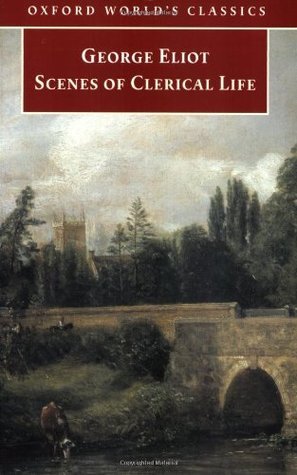
A collection of three stories. The Stories take place in and around the fictional town of Milby in the English Midlands. Each of the Scenes concerns a different Anglican clergyman, but is not necessarily centred upon him. Eliot examines, among other things, the effects of religious reform and the tension between the Established and the Dissenting Churches on the clergymen and their congregations, and draws attention to various social issues, such as poverty, alcoholism, and domestic violence.This book has 387 pages and originally published in 1857.

Daisy Miller is a fascinating portrait of a young woman from Schenectady, New York, who, traveling in Europe, runs afoul of the socially pretentious American expatriate community in Rome. First published in 1878, the novella brought American novelist Henry James (1843-1916), then living in London, his first international success. Like many of James's early works, it portrays a venturesome American girl in the treacherous waters of European society - a theme that would culminate in his 1881 masterpiece, The Portrait of a Lady. On the surface, Daisy Miller unfolds a simple story of a young American girl's willful yet innocent flirtation with a young Italian, and its unfortunate consequences. But throughout the narrative, James contrasts American customs and values with European manners and morals in a tale rich in psychological and social insight. A vivid portrayal of Americans abroad and a telling encounter between the values of the Old and New Worlds, Daisy Miller is an ideal introduction to the work of one of America's greatest writers of fiction.

Robert Browning's poetic scope was broad, ranging from the beguiling magic of The Pied Piper of Hamelin to the epic book-length poem The Ring and the Book . This comprehensive selection includes over eighty of his shorter poems, amongst them his most famous and best-loved dramatic monologues, as well as the complete text of many of his longer poems. It contains three books from The Ring and the Book and Browning's critical writing, Essay on Shelley . This edition also selects generously from the love letters between Browning and Elizabeth Barrett, as well as from Browning's more general correspondence--letters that cast a unique light upon the poems themselves and poetry in general. The book represents a unique combination of Browning's poetry and prose chosen from the whole range of his career to give the essence of his work and thinking.

This dramatically illustrated collector's edition marks the centenary of Oscar Wilde's release from prison in 1898 and the publication of his anguished poetic masterpiece. One hundred years after his release from Reading Gaol, the life and work of Oscar Wilde has lost none of its fascination. In his day, his wit and writings enchanted and scandalized society in equal measure; his downfall came at the height of his powers. Devastated by his notorious trial for indecency, imprisoned for ``homosexual offenses,'' he was to spend two ruinous years in solitary confinement. As he was later to tell Andre Gide, Reading Gaol ``was not fit for dogs. I thought I would go mad.'' The Ballad was written from personal experience, and there was to be no more writing after this. As Wilde observed: ``Something is killed in me.'' Bankrupt, disgraced, and in exile, Wilde was to die not long after his release at the age of 46. His final resting place is the cemetery of Pere Lachaise in Paris. His tomb bears an inscription from The Ballad of Reading Gaol: ``And alien tears will fill for him/Pity's long broken urn/For his mourners will be outcast men/And outcasts always mourn.'' This commemorative edition of the poem is illustrated with the powerfully moving wood engravings of Garrick Palmer. 48 pp 5 x 8 8 wood engravings

Although Tennyson (1809-1892) has often seemed to personify the Victorian Age, he was a poet before it began and his poems endure to speak clearly to this modern one. His mastery of a great variety of poetic forms and moods enables him to communicate such extremes of feeling as ‘calm despair and wild unrest’; rapturous love: ‘the soul of the rose went into my blood’; and noble resolve:…One equal temper of heroic hearts / Made weak by time and fate, but strong in will.