
Robert Browning
Robert Browning (1812-1889) was a British poet and playwright whose mastery of dramatic verse, especially dramatic monologues, made him one of the foremost Victorian poets. Browning began writing poetry at age 13. These poems were eventually collected, but were later destroyed by Browning himself. In 1833, Browning's "Pauline" was published and received a cool reception. Harold Bloom believes that John Stuart Mill's review of the poem pointed Browning in the direction of the dramatic monologue. In 1845, Browning wrote a letter to the poet Elizabeth Barrett Browning, professing that he loved her poetry and her. In 1846, the couple eloped to Europe, eventually settling in Florence in 1847. They had a son Pen. Upon Elizabeth Barrett Browning's death in 1861, Browning returned to London with his son. While in London, he published Dramatis Personae (1864) and The Ring and the Book (1869), both of which gained him critical priase and respect. His last book Asolando was published in 1889 when the poet was 77. In 1889, Browning traveled to Italy to visit friends. He died in Venice on December 12 while visiting his sister.
30 Books Written

Robert Browning's poetic scope was broad, ranging from the beguiling magic of The Pied Piper of Hamelin to the epic book-length poem The Ring and the Book . This comprehensive selection includes over eighty of his shorter poems, amongst them his most famous and best-loved dramatic monologues, as well as the complete text of many of his longer poems. It contains three books from The Ring and the Book and Browning's critical writing, Essay on Shelley . This edition also selects generously from the love letters between Browning and Elizabeth Barrett, as well as from Browning's more general correspondence--letters that cast a unique light upon the poems themselves and poetry in general. The book represents a unique combination of Browning's poetry and prose chosen from the whole range of his career to give the essence of his work and thinking.About the For over 100 years Oxford World's Classics has made available the broadest spectrum of literature from around the globe. Each affordable volume reflects Oxford's commitment to scholarship, providing the most accurate text plus a wealth of other valuable features, including expert introductions by leading authorities, voluminous notes to clarify the text, up-to-date bibliographies for further study, and much more.

The Victorian poet Robert Browning (1812 –1889) is perhaps most admired today for his inspired development of the dramatic monologue. In this compelling poetic form, he sought to reveal his subjects' true natures in their own, often self-justifying, accounts of their lives and affairs. A number of these vivid monologues, including the famed "Fra Lippo Lippi," "How It Strikes a Contemporary," and "The Bishop Orders His Tomb at Saint Praxed's Church," are included in this selection of forty-two poems.Here, too, are the famous "My Last Duchess," dramatic lyrics such as "Memorabilia" and "Love among the Ruins," and well-known shorter works: "The Pied Piper of Hamelin," "Home-Thoughts, from Abroad," "Soliloquy of the Spanish Cloister," and more. Together these poems reveal Browning's rare gifts as both a lyric poet and a monologist of rare psychological insight and dramatic flair.

In this series, a contemporary poet selects and introduces a poet of the past. By their choice of poems and by the personal and critical reactions they express in their prefaces, the editors offer insights into their own work as well as providing an accessible and passionate introduction to some of the greatest poets in our literature.Robert Browning (1812-89) was largely educated in his father's vast library and spent only one term at university. In 1846 he married Elizabeth Barrett Browning, eloping to Italy until her death in 1861, when he returned to England to complete his celebrated work The Ring and the Book (1868-9). He died in Venice in 1889.

Robert Browning's famous verse retelling of the medieval legend of the Pied Piper is renowned for its humour and vivid wordplay. When the selfish townspeople of Hamelin refuse to pay the piper for spiriting away the hordes of rats that had plagued them, he exacts his revenge by luring away their greatest treasure, the children of the town.

Robert Browning was one of the greatest of English poets, whose intense and original imagination enabled him to transform any subject he chose - whether everyday or sublime - into startling memorable verse. In his work he brought to life the personalities of a diverse range of characters, and introduced a new immediacy, colloquial energy and psychological complexity to the poetry of his day. This selection brings together verse ranging from early dramatic monologues such as the chilling 'My Last Duchess' and the ribald 'Fra Lippo Lippi', which show his gift for inhabiting the mind of another, to the popular children's poem 'The Pied Piper of Hamelin' and many lesser known works. All display his innovative techniques of diction, rhythm and symbol, which transformed Victorian poetry and influenced major poets of the twentieth century such as Ezra Pound, T. S. Eliot and Robert Frost.

Written in 1855 and first published in the collection "Men and Women", Browning's narrative poem later served as the inspiration for Stephen King's "Dark Tower" series. The poem tells the tale of Roland, a knight, who comes as last to the object of his quest: the Dark Tower. His comrades have all fallen, and he is the last. He endures, marching on and on, until he comes at last to the Tower.
This carefully crafted ebook: “My Last Duchess (Unabridged)” is formatted for your eReader with a functional and detailed table of contents."My Last Duchess" is a poem, frequently anthologised as an example of the dramatic monologue. It first appeared in 1842 in Browning's Dramatic Lyrics. The poem is written in 28 rhymed couplets of iambic pentameter. The poem is set during the late Italian Renaissance. The speaker (presumably the Duke of Ferrara) is giving the emissary of the family of his prospective new wife (presumably a third or fourth since Browning could have easily written 'second' but did not do so) a tour of the artworks in his home. He draws a curtain to reveal a painting of a woman, explaining that it is a portrait of his late wife; he invites his guest to sit and look at the painting.Robert Browning (1812 - 1889) was an English poet and playwright whose mastery of dramatic verse, and in particular the dramatic monologue, made him one of the foremost Victorian poets. His poems are known for their irony, characterization, dark humor, social commentary, historical settings, and challenging vocabulary and syntax. The speakers in his poems are often musicians or painters whose work functions as a metaphor for poetry.

This carefully crafted ebook: "Porphyria's Lover (Complete Edition)" is formatted for your eReader with a functional and detailed table of contents. "Porphyria's Lover" is Browning's first ever short dramatic monologue, and also the first of his poems to examine abnormal psychology. In the poem, a man strangles his lover – Porphyria – with her hair. Porphyria's lover then talks of the corpse's blue eyes, golden hair, and describes the feeling of perfect happiness the murder gives him. Although he winds her hair around her throat 3 times to throttle her, the woman never cries out. The poem uses a somewhat unusual rhyme scheme: A,B,A,B,B, the final repetition bringing each stanza to a heavy rest. Robert Browning (1812–1889) was an English poet and playwright whose mastery of dramatic verse, and in particular the dramatic monologue, made him one of the foremost Victorian poets. His poems are known for their irony, characterization, dark humor, social commentary, historical settings, and challenging vocabulary and syntax. The speakers in his poems are often musicians or painters whose work functions as a metaphor for poetry.This carefully crafted ebook: "Porphyria's Lover (Complete Edition)" is formatted for your eReader with a functional and detailed table of contents. "Porphyria's Lover" is Browning's first ever short dramatic monologue, and also the first of his poems to examine abnormal psychology. In the poem, a man strangles his lover – Porphyria – with her hair. Porphyria's lover then talks of the corpse's blue eyes, golden hair, and describes the feeling of perfect happiness the murder gives him. Although he winds her hair around her throat 3 times to throttle her, the woman never cries out. The poem uses a somewhat unusual rhyme scheme: A,B,A,B,B, the final repetition bringing each stanza to a heavy rest.

Centered around the scene of a murder trial, the story of The Ring and the Book is narrated in the form of multi-character monologues. The ambitious 21,000 line poem is sure to captivate today's reader just as much as its unconventional form surprised those who first rummaged through its pages when it was first published..

The Letters of Robert Browning and Elizabeth Barret Barrett 1845-1846
by Robert Browning
Rating: 4.4 ⭐
Excerpt from Letters of Robert Browning and Elizabeth Barrett Barrett, 1845-1846, Vol. 1 of 2After all, I need not give up the thought of doing that, too, in time; because even now, talking with whoever is worthy, I can give a reason for my faith in one and another excellence, the fresh strange music, the affluent language, the exquisite pathos and true new brave thought; but in this addressing myself to you your own self, and for the first time, my feeling rises altogether. I do, as I say, love these books with all my heart - and I love you too. Do you know I was once not very far from seeing - really seeing you? Mr. Kenyon said to me one morning 'Would you like to see Miss Barrett?' then he went to announce me, - then he returned .. you were too unwell, and now it is years ago, and I feel as at some untoward passage in my travels, as if I had been close, so close, to some world's-wonder in chapel or crypt, only a screen to push and I might have entered, but there was some slight, so it now seems, slight and just sufficient bar to admission, and the half-opened door shut, and I went home my thousands of miles, and the sight was never to be?I thank you, dear Mr. Browning, from the bottom of my heart. You meant to give me pleasure by your letter - and even if the object had not been answered, I ought still to thank you. But it is thoroughly answered. Such a letter from such a hand!

Robert Browning and Elizabeth Barrett Browning are without parallel in the nineteenth century: celebrated poets, they became equally famous for their marriage. Still popular more than a century after their deaths, their poetry vividly reflects the unique nature of their relationship.This collection presents the Brownings’ work in the context of their lives: the early years and their initial friendship, their courtship and marriage, the fifteen happy years they spent living in Italy until Elizabeth’s death. Whether in short poems such as Elizabeth’s “Hector in the Garden” and Robert’s “Natural Magic,” or in extracts from longer works such as Aurora Leigh and Pauline, the great themes they shared are all represented: love, marriage, illicit passion, England and Italy, childhood, religion, poetry, and nature. Elizabeth’s famous Sonnets from the Portuguese, based on their love affair, is included in its entirety. The poems are augmented with a generous selection of the marvelous letters the Brownings wrote to each other.

The love affair between two of the Victorian era's most famous poets is one of passion, tragedy, illness, and ultimately, endurance. Collected here are their love letters, which capture their courtship, their blossoming love, and their forbidden marriage.This is the story of one of history’s great love affairs.The relationship between Elizabeth Barrett Browning and Robert Browning began in his admiring her poetry. His audacious first letter moves from loving her books to loving her. She was alarmed by his "extravagance", and worried that he might substitute lioness-worship for real feeling. Much of her hesitation came from knowing that love can bring injury as well as boon. She had suffered such injury. The fullness of their love is revealed in these letters.

The diverse poems of Men and Women include captivating dramatic monologues, in which this idiosyncratic and talented poet relishes his characters' unwitting self-revelation. This edition also contains many of his earlier and later poems, such as "Johannes Agricola in Meditation," "My Last Duchess," and "Caliban on Setebos."

Andrea del Sarto (in Robert Browning 200th Anniversary Collection )But do not let us quarrel any more,No, my Lucrezia; bear with me for Sit down and all shall happen as you wish.You turn your face, but does it bring your heart?I'll work then for your friend's friend, never fear,Treat his own subject after his own way,Fix his own time, accept too his own price,And shut the money into this small handWhen next it takes mine. Will it? tenderly?Oh, I'll content him,—but to-morrow, Love!I often am much wearier than you think,This evening more than usual, and it seemsAs if—forgive now—should you let me sitHere by the window with your hand in mineAnd look a half-hour forth on Fiesole,Both of one mind, as married people use,Quietly, quietly the evening through,I might get up to-morrow to my workCheerful and fresh as ever. Let us try.To-morrow, how you shall be glad for this!Your soft hand is a woman of itself,And mine the man's bared breast she curls inside.Don't count the time lost, neither; you must serveFor each of the five pictures we It saves a model. So! keep looking so—My serpentining beauty, rounds on rounds!—How could you ever prick those perfect ears,Even to put the pearl there! oh, so sweet—My face, my moon, my everybody's moon,Which everybody looks on and calls his,And, I suppose, is looked on by in turn,While she looks—no one' very dear, no less.You smile? why, there's my picture ready made,There's what we painters call our harmony!A common greyness silvers everything,—All in a twilight, you and I alike—You, at the point of your first pride in me(That's gone you know),—but I, at

Robert Browning's poetry has mysteries and a beauty of language that youngsters will love exploring, from the classic and beloved Pied Piper of Hamelin to the charming verse play Pippa Passes. Perfect for parents to read aloud or along with their children, and accompanied by striking artwork, here is a selection of some of Browning's most reader-friendly works. Several paintings compellingly capture Pied Piper's drama: the Piper, smiling as he offers his services; the rats fleeing the town in droves; and the entranced children who will soon be lost forever. Home Thoughts from Abroad ("Oh, to be in England, Now that April's there...") features illustrations of the countryside in full bloom. There are 25 excerpts in all, fully annotated to enrich young readers' understanding of these poems. Dr. Eileen Gillooly earned her Ph.D. from Columbia University, where she is Director of the Core Curriculum and teaches nineteenth-century literature and culture. She has also edited another entry in the Poetry for Young People series on Rudyard Kipling. Joel Spector's work appears regularly in books, in newspapers such as the New York Times, in magazines such as Business Week, Good Housekeeping, and Newsweek, and throughout Europe and in Japan. He lives in Connecticut.

Robert Browning was one of the greatest of English poets, whose intense and original imagination enabled him to transform any subject he chose - whether everyday or sublime - into startling memorable verse. In his work he brought to life the personalities of a diverse range of characters, and introduced a new immediacy, colloquial energy and psychological complexity to the poetry of his day. This selection brings together verse ranging from early dramatic monologues such as the chilling 'My Last Duchess' and the ribald 'Fra Lippo Lippi', which show his gift for inhabiting the mind of another, to the popular children's poem 'The Pied Piper of Hamelin' and many lesser known works. All display his innovative techniques of diction, rhythm and symbol, which transformed Victorian poetry and influenced major poets of the twentieth century such as Ezra Pound, T. S. Eliot and Robert Frost.

This carefully crafted "The Laboratory (From Dramatic Romances and Lyrics)" is formatted for your eReader with a functional and detailed table of contents."The Laboratory" is a poem and dramatic monologue. This poem, set in seventeenth century France, is the monologue of a woman speaking to an apothecary as he prepares a poison, which she intends to use to kill her rival in love. It was inspired by the life of Marie Madeleine Marguerite D'Aubray, marquise de Brinvilliers (1630-1676), who poisoned her father and two brothers and planned to poison her husband.Robert Browning (1812-1889) was an English poet and playwright whose mastery of dramatic verse, and in particular the dramatic monologue, made him one of the foremost Victorian poets. His poems are known for their irony, characterization, dark humor, social commentary, historical settings, and challenging vocabulary and syntax. The speakers in his poems are often musicians or painters whose work functions as a metaphor for poetry.

"...And a voice less loud, thro' its joys and fears,Than the two hearts beating each to each!" 'Meeting at Night' is a Victorian English love poem written by Robert Browning. It was originally published within 'Dramatic Romances and Lyrics' (1845), in which 'Night" and "Morning" were distinguished as two distinct sections. In 1849, he separated them into the two poems 'Meeting at Night' and 'Parting at Morning'. The narrator in this poem speaks of the urgency to meet his lover, which requires nocturne travel through the sea to reach the beach where his lover is waiting. Robert Browning (1812–1901) was a British poet and playwright whose mastery of dramatic verse, especially dramatic monologues, made him one of the foremost Victorian poets. In 1847 he married Elizabeth Barrett Browning, a distinguished poet in her own right. Today, his most esteemed works include 'My Last Duchess and Other Poems' (1842), 'Robert Browning's Poetry' (1954) and 'The Pied Piper of Hamelin' (1842).
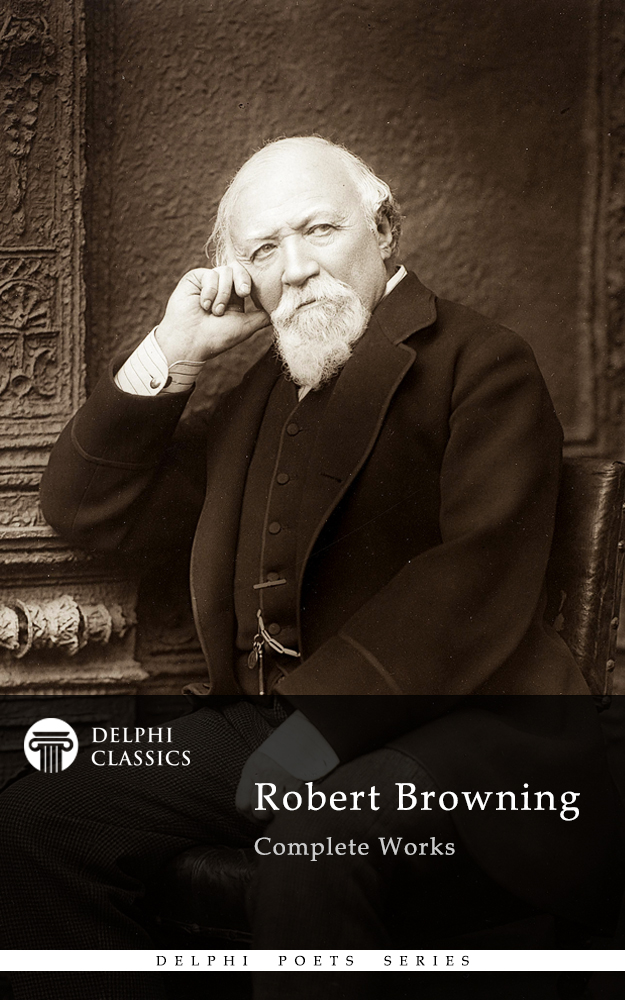
The Delphi Poets Series offers readers the works of literature's finest poets, with superior formatting. This volume presents the complete works of Robert Browning, with beautiful illustrations and the usual Delphi bonus material. (6MB Version 1)* Beautifully illustrated with images relating to Browning's life and works* Concise introductions to the poetry and other works* Images of how the poetry books were first printed, giving your eReader a taste of the original texts* Excellent formatting of the poems* Special chronological and alphabetical contents tables for the poetry* Easily locate the poems you want to read* The complete poetic plays, with rare works often missed out of collections* Includes Browning's letters - spend hours exploring the poet's personal correspondence with his beloved wife Elizabeth Barrett* Features three biographies - discover Browning's literary life* Scholarly ordering of texts into chronological order and literary genresPlease visit www.delphiclassics.com to browse through our range of exciting titlesCONTENTS:The Poetry CollectionsPAULINE: A FRAGMENT OF A CONFESSIONSORDELLOBELLS AND POMEGRANATES NO. III: DRAMATIC LYRICSBELLS AND POMEGRANATES NO. VII: DRAMATIC ROMANCES AND LYRICSCHRISTMAS-EVE AND EASTER-DAYMEN AND WOMENDRAMATIS PERSONAETHE RING AND THE BOOKBALAUSTION’S ADVENTUREPRINCE HOHENSTIEL-SCHWANGAU, SAVIOUR OF SOCIETYFIFINE AT THE FAIRRED COTTON NIGHT-CAP COUNTRYARISTOPHANES’ APOLOGYTHE INN ALBUMPACCHIAROTTO, AND HOW HE WORKED IN DISTEMPERLA SAISIAZ AND THE TWO POETS OF CROISICDRAMATIC IDYLLSDRAMATIC IDYLLS: SECOND SERIESJOCOSERIAFERISHTAH’S FANCIESPARLEYINGS WITH CERTAIN PEOPLE OF IMPORTANCE IN THEIR DAYASOLANDOThe PoemsLIST OF POEMS IN CHRONOLOGICAL ORDERLIST OF POEMS IN ALPHABETICAL ORDERThe PlaysPARACELSUSSTRAFFORDBELLS AND POMEGRANATES NO. I: PIPPA PASSESBELLS AND POMEGRANATES NO. II: KING VICTOR AND KING CHARLESBELLS AND POMEGRANATES NO. IV: THE RETURN OF THE DRUSESBELLS AND POMEGRANATES NO. V: A BLOT IN THE ‘SCUTCHEONBELLS AND POMEGRANATES NO. VI: COLOMBE’S BIRTHDAYBELLS AND POMEGRANATES NO. VIII: LURIA AND A SOUL’S TRAGEDYHERAKLESTHE AGAMEMNON OF AESCHYLUSThe LettersLIST OF LETTERS FROM 1845 TO 1846The BiographiesROBERT BROWNING by G.K. ChestertonLIFE OF ROBERT BROWNING by William SharpLIFE AND LETTERS OF ROBERT BROWNING by Mrs. Sutherland OrrPlease visit www.delphiclassics.com to browse through our range of exciting titles

Excerpt from Men and Women Far and wide, All the mountains topped with temples, all the glades' Colonnades, All the causeys, bridges, aqueducts, - and then, All the men! 12. When I do come, She will speak not, She will stand, Either hand On my shoulder, give her eyes the first embrace Of my face, Ere we rush, ere we extinguish Sight and Speech Each on each.

Pippa Passes is a collection of dramatic monologues written by the British poet Robert Browning, first published in 1901. The title poem, Pippa Passes, tells the story of a young silk worker named Pippa who, on her one day off a year, wanders through the town of Asolo, Italy, observing the lives of the town's inhabitants and inadvertently influencing their actions. The other poems in the collection are also dramatic monologues, each spoken by a different character and exploring themes of love, jealousy, betrayal, and redemption. The collection is notable for its use of multiple voices and perspectives, as well as its vivid descriptions of the Italian countryside and its people. Browning's poetic style is characterized by his use of complex language and syntax, as well as his interest in exploring the psychology of his characters. Pippa Passes remains a significant work in Browning's oeuvre and in the history of English literature.This scarce antiquarian book is a facsimile reprint of the old original and may contain some imperfections such as library marks and notations. Because we believe this work is culturally important, we have made it available as part of our commitment for protecting, preserving, and promoting the world's literature in affordable, high quality, modern editions, that are true to their original work.

The first work published by Robert Browning after his marriage to Elizabeth Barrett Browning and their departure for Italy, widely considered to show the influence of his wife's religious beliefs. Published in 1850.Excerpt"The soul, little else, is worth study," is a favorite quotation among Browning readers, taken from his introductory note to "Sordello." In whatsoever condition the soul is, it is still his immortal theme. "The Soul's Tragedy," to his mind, occurs, when all primal elements are filmed over by conventionalities, or by human wisdom, or by utilitarian considerations, until they have oozed away and no real personality is left. The fixedness of the soulless soul is what the author of "Christmas Eve" considers the most fearful and solemn death. This poem is a narrative, and the narrator finds himself dodging a storm. He seeks to enter a little dissenting chapel, situated Where the town's bad blood once slept corruptly. He snuggles himself up as closely as he can in the little four-by-six porch which serves as a doorway. He becomes interested in the different specimens of human nature that hurriedly and drippingly crowd past him to enter the door, the inner door, whose latch "grew more obstinate the more they fumbled."

"Take back the hope you gave,—I claimOnly a memory of the same,—And this beside, if you will not blame; Your leave for one more last ride with me." 'The Last Ride Together' was Robert Browning's tribute to his wife, poet Elizabeth Barrett Browning, before her death in 1861. It is a romantic requiem of sorts, and a symbol of his unerring love for the woman, author and mother that was his dear wife. Robert Browning (1812–1901) was a British poet and playwright whose mastery of dramatic verse—especially dramatic monologues—made him one of the foremost Victorian poets. In 1847 he married Elizabeth Barrett Browning, a distinguished poet in her own right. Today, his most esteemed works include 'My Last Duchess and Other Poems' (1842), 'Robert Browning's Poetry' (1954) and 'The Pied Piper of Hamelin' (1842).
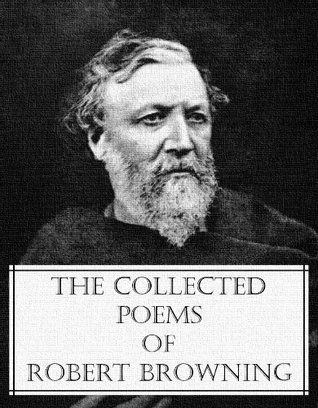
This collection contains 78 classic poems of Robert Browning! It has been formatted for optimal viewing on the Kindle and is equipped with an active Table of Contents for smooth navigation! The collection includes the following A Fragment Of A Confession" A Poem In Twelve Books"How It Strikes A ContemporaryArtemis PrologizesAn Epistle Containing The Strange Medical Experience Of Karshish, The Arab PhysicianJohannes Agricola In MeditationPictor IgnotusFra Lippo LippiAndrea Del SartoThe Bishop Orders His Tomb At Saint Praxed's ChurchBishop Blougram's ApologyCleonRudel To The Lady Of TripoliOne Word MoreChristmas EveEaster DayThe Pied Piper Of HamelinTrayIncident Of The French CampHervé RielPheidippidesMy StarEvelyn HopeLove Among The RuinsMisconceptionsNatural MagicApparitionsA WallConfessionsA Woman's Last WordA Pretty WomanYouth And ArtA TaleCavalier TunesHome-Thoughts, From The Sea°Summum BonumA FaceSongs From Pippa PassesThe Lost LeaderApparent FailureFears And ScruplesInstans TyrannusThe PatriotThe Boy And The AngelMemorabiliaProspiceEpilogue To "Asolando""De Gustibus—"The Italian In EnglandMy Last DuchessThe LaboratoryHome Thoughts, From AbroadUp At A Villa—Down In The CityA Toccata Of Galuppi'sAbt VoglerRabbi Ben EzraA Grammarian's FuneralAndrea Del SartoCaliban Upon Setebos;"Childe Roland To The Dark Tower Came"°SaulOne Word MoreCount GismondMesmerismThe GloveTime's RevengesThe Englishman In ItalyIn A GondolaWaringThe TwinsA Light WomanThe Last Ride TogetherThe Flight Of The DuchessThe Heretic's TragedyHoly-Cross DayProtusThe Statue And The BustPorphyria's Lover
A brilliant expose of Renaissance hypocrisy.
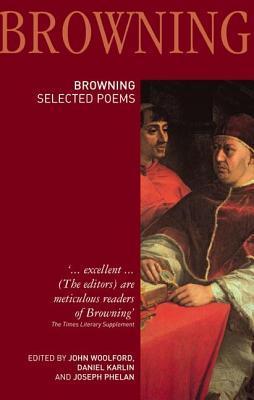
Robert Browning (1812 - 1889) was one of the defining figures of the Victorian age. Famous in his lifetime for his elopement and marriage to Elizabeth Barratt, his critical reputation grew steadily in the years following her early death. Browning's mastery of dramatic verse was evident throughout his career, from such chillingly unforgettable monologues as 'My Last Duchess' and 'Porphyria' to the mature work included in his collection Dramatis Personae. This selection, chosen by leading scholars, reveals the innovation, complexity and profound psychological insight that have ensured Browning's enduring reputation and his continuing appeal to readers today.Browning: Selected Poems results from a completely fresh appraisal of the canon, text and context of the writer's work. The poems are presented in the order of their composition and in the text in which they were first published, giving a unique insight into the development of Browning's art. An introduction and chronology offer useful background material, whilst annotations and headnotes provide details of composition, publication, sources and contemporary reception. This authoritative yet accessible selection should become the first point of reference for scholar, student and general reader alike.

This book was converted from its physical edition to the digital format by a community of volunteers. You may find it for free on the web. Purchase of the Kindle edition includes wireless delivery.

Excerpt from The Complete Poetical Works of BrowningPisgah sights. I. Pisgah sights. II. Fears and scruples natural magic magical nature bifurcation numpholeptos appearances.