Loading themes...
Explore the best books about Chemistry theme.


Anybody who is not shocked by quantum theory has not understood it. Niels Bohr's dictum bears witness to the bewildering impact of quantum theory, flying in the face of classical physics and dramatically transforming scientists' outlook on our relationship with the material world. In this book Paul Davies interviews eight physicists involved in debating and testing the theory, with radically different views of its significance.
Hervé This (pronounced "Teess") is an internationally renowned chemist, a popular French television personality, a bestselling cookbook author, a longtime collaborator with the famed French chef Pierre Gagnaire, and the only person to hold a doctorate in molecular gastronomy, a cutting-edge field he pioneered. Bringing the instruments and experimental techniques of the laboratory into the kitchen, This uses recent research in the chemistry, physics, and biology of food to challenge traditional ideas about cooking and eating. What he discovers will entertain, instruct, and intrigue cooks, gourmets, and scientists alike.Molecular Gastronomy, This's first work to appear in English, is filled with practical tips, provocative suggestions, and penetrating insights. This begins by reexamining and debunking a variety of time-honored rules and dictums about cooking and presents new and improved ways of preparing a variety of dishes from quiches and quenelles to steak and hard-boiled eggs. He goes on to discuss the physiology of flavor and explores how the brain perceives tastes, how chewing affects food, and how the tongue reacts to various stimuli. Examining the molecular properties of bread, ham, foie gras, and champagne, the book analyzes what happens as they are baked, cured, cooked, and chilled.Looking to the future, Herv' This imagines new cooking methods and proposes novel dishes. A chocolate mousse without eggs? A flourless chocolate cake baked in the microwave? Molecular Gastronomy explains how to make them. This also shows us how to cook perfect French fries, why a souffl' rises and falls, how long to cool champagne, when to season a steak, the right way to cook pasta, how the shape of a wine glass affects the taste of wine, why chocolate turns white, and how salt modifies tastes.

J. E. Gordon's classic introduction to the properties of materials used in engineering answers some fascinating and fundamental questions about how the structural world around us works. Gordon focuses on so-called strong materials--such as metals, wood, ceramics, glass, and bone--explaining in engaging and accessible terms the unique physical and chemical basis for their inherent structural qualities. He also shows how an in-depth understanding of these materials’ intrinsic strengths--and weaknesses--guides our engineering choices, allowing us to build the structures that support our society. This work is an enduring example of first-rate scientific communication. Philip Ball's introduction describes Gordon's career and the impact of his innovations in materials research, while also discussing how the field has evolved since Gordon wrote this enduring example of first-rate scientific communication.

Ignition! is the inside story of the Cold War era search for a rocket propellant that could be trusted to take man into space. A favorite of Tesla and SpaceX founder Elon Musk, listeners will want to tune into this "really good book on rocket[s]," available for the first time in audio.Ignition! is the story of the search for a rocket propellant which could be trusted to take man into space. This search was a hazardous enterprise carried out by rival labs who worked against the known laws of nature, with no guarantee of success or safety.Acclaimed scientist and sci-fi author John Drury Clark writes with irreverent and eyewitness immediacy about the development of the explosive fuels strong enough to negate the relentless restraints of gravity. The resulting volume is as much a memoir as a work of history, sharing a behind-the-scenes view of an enterprise that eventually took men to the moon, missiles to the planets, and satellites to outer space. A classic work in the history of science, listeners will want to get their hands on this influential classic, available for the first time in decades.

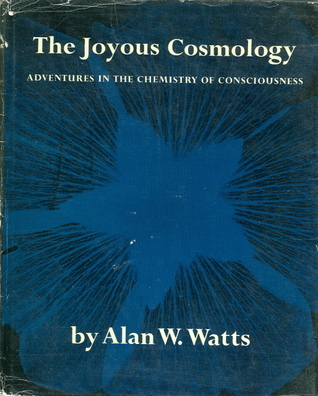
The Joyous Cosmology is Alan Watts’s exploration of the insight that the consciousness-changing drugs LSD, mescaline & psilocybin can facilitate “when accompanied with sustained philosophical reflection by a person who is in search, not of kicks, but of understanding.” More than an artifact, it is both a riveting memoir of Watts’s personal experiments & a profound meditation on our perennial questions about the nature of existence & the existence of the sacred.

In Uncle Tungsten Sacks evokes, with warmth and wit, his upbringing in wartime England. He tells of the large science-steeped family who fostered his early fascination with chemistry. There follow his years at boarding school where, though unhappy, he developed the intellectual curiosity that would shape his later life. And we hear of his return to London, an emotionally bereft ten-year-old who found solace in his passion for learning. Uncle Tungsten radiates all the delight and wonder of a boy’s adventures, and is an unforgettable portrait of an extraordinary young mind.

All natural change is subject to one law. It's the second law of thermodynamics. In this volume, the acclaimed chemist and science writer P. W. Atkins shows how this single, simple principle of energy transformation accounts for all natural change. Moving from the steam engine to the nuclear age, the narrative is full of vivid examples, ideas, and images--but virtually no mathematics.

From the bestselling author of Where Good Ideas Come From, The Ghost Map and Everything Bad Is Good for You, a new national bestseller: the “exhilarating”( Los Angeles Times) story of Joseph Priestley, “a founding father long forgotten”(Newsweek) and a brilliant man who embodied the relationship between science, religion, and politics for America's Founding Fathers. In The Invention of Air, national bestselling author Steven Johnson tells the fascinating story of Joseph Priestley—scientist and theologian, protégé of Benjamin Franklin, friend of Thomas Jefferson—an eighteenth-century radical thinker who played pivotal roles in the invention of ecosystem science, the discovery of oxygen, the uses of oxygen, scientific experimentation, the founding of the Unitarian Church, and the intellectual development of the United States. As he did so masterfully in The Ghost Map, Steven Johnson uses a dramatic historical story to explore themes that have long engaged him: innovative strategies, intellectual models, and the way new ideas emerge and spread, and the environments that foster these breakthroughs.

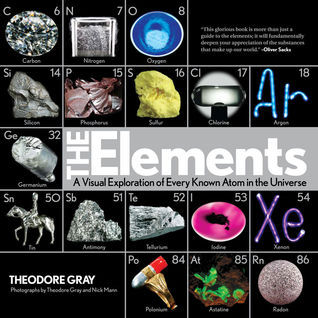
With more than 1 million copies sold worldwide, The Elements is the most entertaining, comprehensive, and visually arresting book on all 118 elements in the periodic table.Includes a poster of Theodore Gray's iconic photographic periodic table of the elements!Based on seven years of research and photography by Theodore Gray and Nick Mann, The Elements presents the most complete and visually arresting representation available to the naked eye of every atom in the universe. Organized sequentially by atomic number, every element is visualized by a big beautiful photograph that most closely represents it in its purest form. Several additional photographs show each element in slightly altered forms or as used in various practical ways. Also included are fascinating stories of the elements, told in Theo Grays inimitable style, as well as data on the properties of each, including atomic number, atomic symbol, atomic weight, density, atomic radius, as well as scales for electron filling order, state of matter, and an atomic emission spectrum.This work of solid science and stunning artistic photographs is the perfect gift book for every sentient creature in the universe.

The laws of thermodynamics drive everything that happens in the universe. From the sudden expansion of a cloud of gas to the cooling of hot metal--everything is moved or restrained by four simple laws. Written by Peter Atkins, one of the world's leading authorities on thermodynamics, this powerful and compact introduction explains what these four laws are and how they work, using accessible language and virtually no mathematics. Guiding the reader a step at a time, Atkins begins with Zeroth (so named because the first two laws were well established before scientists realized that a third law, relating to temperature, should precede them--hence the jocular name zeroth), and proceeds through the First, Second, and Third Laws, offering a clear account of concepts such as the availability of work and the conservation of energy. Atkins ranges from the fascinating theory of entropy (revealing how its unstoppable rise constitutes the engine of the universe), through the concept of free energy, and to the brink, and then beyond the brink, of absolute zero. About the Series: Combining authority with wit, accessibility, and style, Very Short Introductions offer an introduction to some of life's most interesting topics. Written by experts for the newcomer, they demonstrate the finest contemporary thinking about the central problems and issues in hundreds of key topics, from philosophy to Freud, quantum theory to Islam.

The Nature of History, Pharmacology, and Social Impact, Volume 1, presents lectures from Alexander “Sasha” Shulgin’s popular course on what drugs are, how they work, how they are processed by the body, and how they affect our society. Transcribed from the original lectures recorded at San Francisco State University in 1987, The Nature of Drugs series highlights Shulgin’s engaging lecture style peppered with illuminating anecdotes and amusing asides. Ostensibly taught as an introductory course on drugs and biochemistry, these books serve as both a historical record of Shulgin’s teaching style and the culmination of his philosophy on drugs, psychopharmacology, states of consciousness, and societal and individual freedoms pertaining to their use, both medicinal and exploratory. The Nature of Drugs, Volume 1 features course lectures 1 through 8 and offers Shulgin’s view on the origin of drugs, the history of U.S. drug law enforcement, human anatomy, the nervous system, the range of drug administrations, varieties of drug actions, memory and states of consciousness, and research methods. It lays the groundwork for Shulgin’s philosophy on psychopharmacology and society. The Nature of Drugs series presents the story of humanity’s relationship with psychoactive substances from the perspective of a master psychopharmacologist and beloved luminary in the study of chemistry, pharmacology and consciousness. Audiobook The Nature of Drugs, Volume 1 audiobook contains portions of the original 1987 recordings of Shulgin himself conducting his course and interacting with his students. Those original clips are interlaced with newly recorded narration that fills in portions with more optimal audio quality.