Loading themes...
Explore the best books about Americana theme.

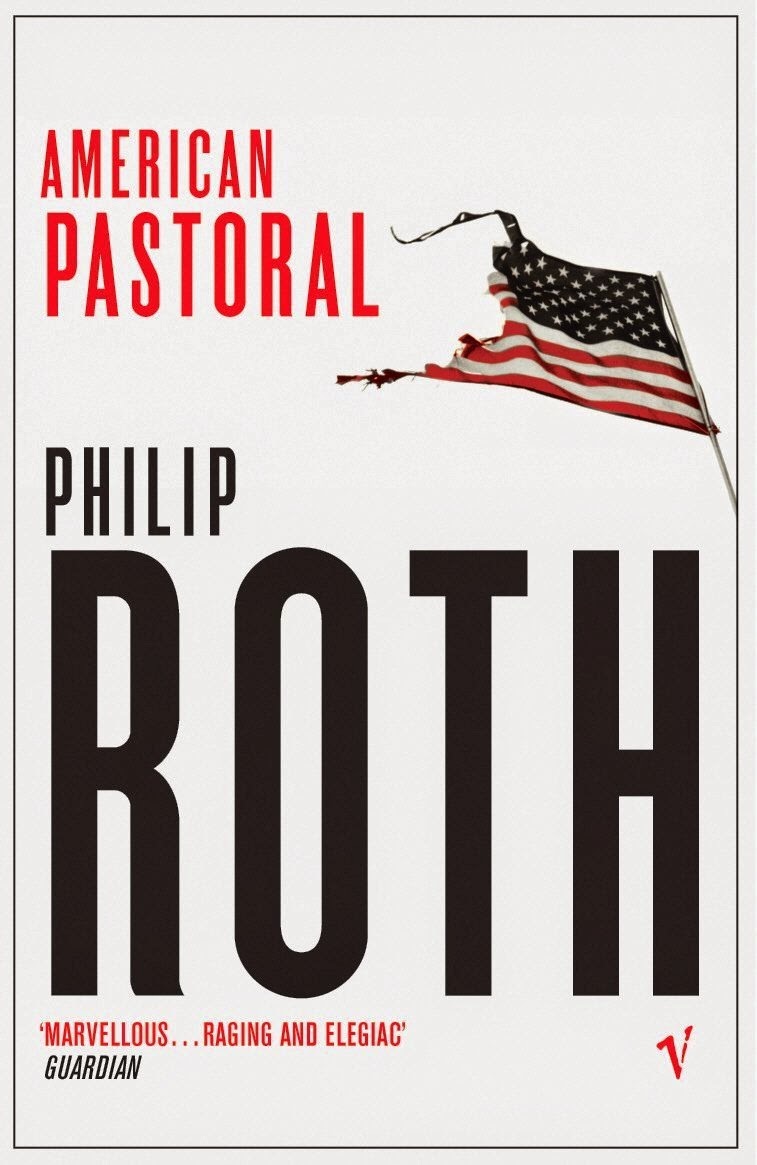
Pulitzer Prize Winner (1998)In American Pastoral, Philip Roth gives us a novel of unqualified greatness that is an elegy for all the twentieth century's promises of prosperity, civic order, and domestic bliss. Roth's protagonist is Seymour 'Swede' Levov—a legendary high school athlete, a devoted family man, a hard worker, the prosperous inheritor of his father's Newark glove factory—comes of age in thriving, triumphant post-war America. And then one day in 1968, Swede's beautiful American luck deserts him.For Swede's adored daughter, Merry, has grown from a loving, quick-witted girl into a sullen, fanatical teenager—a teenager capable of an outlandishly savage act of political terrorism. And overnight Swede is wrenched out of the longed-for American pastoral and into the indigenous American berserk. Compulsively readable, propelled by sorrow, rage, and a deep compassion for its characters, this is Roth's masterpiece.
With this, his first collection, Carver breathed new life into the short story. In the pared-down style that has since become his hallmark, Carver showed us how humour and tragedy dwelt in the hearts of ordinary people, and won a readership that grew with every subsequent brilliant collection of stories, poems and essays that appeared in the last eleven years of his life.

In The Easter Parade, first published in 1976, we meet sisters Sarah and Emily Grimes when they are still the children of divorced parents. We observe the sisters over four decades, watching them grow into two very different women. Sarah is stable and stalwart, settling into an unhappy marriage. Emily is precocious and independent, struggling with one unsatisfactory love affair after another. Richard Yates's classic novel is about how both women struggle to overcome their tarnished family's past, and how both finally reach for some semblance of renewal.

Raised within the confines of a system that has done nothing but provide him with pain, Alex Hamilton's frustration and anger are completely natural--and inherently dangerous.Since his parents split up, Alex has been constantly running from foster homes and institutions, yearning to be with his father, a broken man who cannot give his son the home he desperately needs. The only constant in Alex's life is no-good, criminally-minded peers, who are all too ready to plant illegal ideas in an intelligent mind. Bunker writes, "His unique potential would develop into unique destructiveness."

Peter Bogdanovich, known primarily as a director, film historian and critic, has been working with professional actors all his life. He started out as an actor (he debuted on the stage in his sixth-grade production of Finian’s Rainbow ); he watched actors work (he went to the theater every week from the age of thirteen and saw every important show on, or off, Broadway for the next decade); he studied acting, starting at sixteen, with Stella Adler (his work with her became the foundation for all he would ever do as an actor and a director).Now, in his new book, Who the Hell’s in It, Bogdanovich draws upon a lifetime of experience, observation and understanding of the art to write about the actors he came to know along the way; actors he admired from afar; actors he worked with, directed, befriended. Among Lauren Bacall, Humphrey Bogart, James Cagney, John Cassavetes, Charlie Chaplin, Montgomery Clift, Marlene Dietrich, Henry Fonda, Ben Gazzara, Audrey Hepburn, Boris Karloff, Dean Martin, Marilyn Monroe, River Phoenix, Sidney Poitier, Frank Sinatra, and James Stewart.Bogdanovich captures—in their words and his—their work, their individual styles, what made them who they were, what gave them their appeal and why they’ve continued to be America’s iconic actors.On Lillian “the first virgin hearth goddess of the screen . . . a valiant and courageous symbol of fortitude and love through all distress.”On Marlon “He challenged himself never to be the same from picture to picture, refusing to become the kind of film star the studio system had invented and thrived upon—the recognizable human commodity each new film was built around . . . The funny thing is that Brando’s charismatic screen persona was vividly apparent despite the multiplicity of his guises . . . Brando always remains recognizable, a star-actor in spite of himself. ”Jerry Lewis to Bogdanovich on the first laugh Lewis ever got “I was five years old. My mom and dad had a tux made—I worked in the borscht circuit with them—and I came out and I sang, ‘Brother, Can You Spare a Dime?’ the big hit at the time . . . It was 1931, and I stopped the show—naturally—a five-year-old in a tuxedo is not going to stop the show? And I took a bow and my foot slipped and hit one of the floodlights and it exploded and the smoke and the sound scared me so I started to cry. The audience laughed—they were hysterical . . . So I knew I had to get the rest of my laughs the rest of my life, breaking, sitting, falling, spinning.”John Wayne to Bogdanovich, on the early years of Wayne’s career when he was working as a prop “Well, I’ve naturally studied John Ford professionally as well as loving the man. Ever since the first time I walked down his set as a goose-herder in 1927. They needed somebody from the prop department to keep the geese from getting under a fake hill they had for Mother Machree at Fox. I’d been hired because Tom Mix wanted a box seat for the USC football games, and so they promised jobs to Don Williams and myself and a couple of the players. They buried us over in the properties department, and Mr. Ford’s need for a goose-herder just seemed to fit my pistol.”These twenty-six portraits and conversations are unsurpassed in their evocation of a certain kind of great movie star that has vanished. Bogdanovich’s book is a celebration and a farewell.

Since the end of the Cold War so-called experts have been predicting the eclipse of America's "special relationship" with Britain. But as events have shown, especially in the wake of 9/11, the political and cultural ties between America and Britain have grown stronger. Blood, Class and Empire examines the dynamics of this relationship, its many cultural manifestations -- the James Bond series, PBS "brit Kitsch," Rudyard Kipling -- and explains why it still persists. Contrarian, essayist and polemicist Christopher Hitchens notes that while the relationship is usually presented as a matter of tradition, manners, and common culture, sanctified by wartime alliance, the special ingredient is empire; transmitted from an ancien regime that has tried to preserve and renew itself thereby. England has attempted to play Greece to the American Rome, but ironically having encouraged the United States to become an equal partner in the business of empire, Britain found itself supplanted.

With this volume, "The Complete Carl Barks Disney Library" loops back to Barks's earlier days, collecting the entirety of Barks's (astounding) 1948 output.The title story, "The Old Castle's Secret," is notable not just for being the first full-length 32-page adventure instigated by Scrooge McDuck (in his second-ever appearance), but for featuring some of Barks's spookiest, lushest settings in old Clan McDuck castle of Dismal Downs. The other long story, "The Sheriff of Bullet Valley," plunks Donald and the nephews in the Wild West, with Donald as an overconfident deputy having to deal with some high-tech rustlers. The book also includes the less-known "In Darkest Africa," originally published in a giveaway and unreleased for decades.This volume also features an even 10 of Barks's dynamic "Walt Disney’s Comics and Stories" 10-pagers, including "Wintertime Wager" (the first appearance of a not-yet-lucky-but-still-obnoxious Gladstone Gander); "Spoil the Rod" (in which the exquisitely named educational professor Pulpheart Clabberhead is brought in to help tame the nephews); "Rocket Race to the Moon" (a rare full-on adventure — interplanetary, no less — in the short form); "Gladstone Returns" and "Links Highjinks" (two more Gladstone yarns); and five more stories... plus a half-dozen hilarious one-page gags.Of course, once again all the stories have been shot from crisp originals, then re-colored (and printed) to match, for the first time since their original release over 60 years ago, the colorful yet soft hues of the originals — and of course the book is rounded off with essays about Barks, the Ducks, and these specific stories by Barks experts from all over the world.

Written with the raw honesty and poignant insight that were the hallmarks of her acclaimed bestseller A Widow’s Story, an affecting and observant memoir of growing up from one of our finest and most beloved literary masters The Lost Landscape is Joyce Carol Oates’ vivid chronicle of her hardscrabble childhood in rural western New York State. From memories of her relatives, to those of a charming bond with a special red hen on her family farm; from her first friendships to her earliest experiences with death, The Lost Landscape is a powerful evocation of the romance of childhood, and its indelible influence on the woman and the writer she would become.In this exceptionally candid, moving, and richly reflective account, Oates explores the world through the eyes of her younger self, an imaginative girl eager to tell stories about the world and the people she meets. While reading Alice in Wonderland changed a young Joyce forever and inspired her to view life as a series of endless adventures, growing up on a farm taught her harsh lessons about sacrifice, hard work, and loss. With searing detail and an acutely perceptive eye, Oates renders her memories and emotions with exquisite precision, transporting us to a forgotten place and time—the lost landscape of her youth, reminding us of the forgotten landscapes of our own earliest lives.

Que raconte White, première expérience de « non-fiction » pour Bret Easton Ellis ? Tout et rien. « Tout dire sur rien et ne rien dire surtout » pourrait être la formule impossible, à la Warhol, susceptible de condenser ce livre, d’en exprimer les contradictions, d’en camoufler les intentions. White est aussi ironique que Moins que zéro, aussi glaçant qu’American Psycho, aussi menaçant que Glamorama, aussi labyrinthique que Lunar Park, aussi implacable que Suite(s) impériale(s). Loin des clichés toujours mieux partagés, plus masqué que jamais, Bret Easton Ellis poursuit son analyse décapante des États-Unis d’Amérique, d’une façon, comme il le dit lui-même, « ludique et provocatrice, réelle et fausse, facile à lire et difficile à déchiffrer, et, chose tout à fait importante, à ne pas prendre trop au sérieux ».Que raconte White en ayant l’air à la fois de toucher à tout et de ne rien dire ? Peut-être que le fil à suivre est celui du curieux destin d’American Psycho, roman d’horreur en 1991 métamorphosé en comédie musicale à Broadway vingt-cinq ans plus tard. Ellis a dit autrefois : « Patrick Bateman, c’est moi. » Il ne le dit plus. Et si Patrick Bateman était devenu président ?