Loading genres...
Explore the best books about Native American genre.

For the first time, Tom Brown, Jr.--America's most acclaimed outdoorsman--shares the unique meditation exercises used by students of his personal Tracker classes. These techniques for finding inner peace and harmony with nature are based on the wisdom of his greatest teacher, a native American called Grandfather. Now all of us can learn these spiritual lessons of life through the earth around us--and deep within ourselves. "This book may challenge the very core of your belief systems and shake up your personal philosophy, but that is not my intent. What I set forth in this book is meant to enhance and magnify your beliefs. Simply, the techniques and skills can be easily integrated into all philosophies, religions, and belief systems. After all, Grandfather considered these techniques the common thread that runs through all things..." Tom Brown, Jr. Awakening Spirits includes advanced methods of relaxation, insight, healing, and communication with nature and spirits. Through the dynamic meditation called Sacred Silence, the reader can experience the joys of self-discovery--and the power of a personal Vision Quest.


The Ghost Dance: The Origins of Religion by Weston La Barre (1915-1996) is a classic search for the origins of religion, employing psychology and anthropology to explain elements of Greek, Egyptian, Jewish, Christian, shamanic and Native American religion.The Ghost Dance offers a fascinating exploration of the history and origins of religious belief from earliest times to the present day. The Ghost Dance takes its place beside other great studies of religion, such as those by Sigmund Freud, Geza Roheim or Mircea Eliade. It draws together his explorations of shamanism, world religion, Native American culture, altered states of consciousness and the use of drugs in belief systems.

From mountain shrines to lowland oases, ethnobiologist Gary Nabhan takes us on a series of journeys with contemporary Papago Indians, the Tohono O'odham, or "Desert People." From these journeys we discover how much the Desert People know about the dynamics of their arid homeland in Arizona and Sonora, Mexico. The Desert Smells Like Rain offers insights into the natural history of desert plants and animals as it documents a dying agricultural tradition that has enriched the biological diversity of the Papago's seemingly harsh environment. Drawing on his extensive scientific research and study of Papago folklore, as well as his years of work among the Desert People in village gardening and nutrition programs, Nabhan portrays a desert-adapted way of life that has persisted despite the pressures of modern civilization.

Here is a story of the Lenape Indians who lived in what is now New Jersey and eastern Pennsylvania. It describes their culture, crafts, and language as no other book has done. Hunters, fishers, artisans of flint and skins and basketry, tellers of traditional tales, dwellers in a region of hills and barrens, of rivers and forests, they had developed a way of life adjusted to the world around them.In presenting the lore and heritage of the Lenapes, Dr. M.R. Harrington does so through the eyes of a shipwrecked English boy who became a captive of the Indians, and was eventually adopted into the tribe. The narrative is lively reading, and the facts on which it is based are accurate. With the accompanying Clarence Ellsworth line drawings, the reader can understand and even reproduce many of the objects the author the Lenape bows and arrows, muccasins and mats, baskets and bowls.This new edition is a reissue of an often asked for an unavailable New Jersey classic, first published in 1938.

American expansion, says Richard Drinnon, is characterized by repression and racism. In his reinterpretation of "winning" the West, Drinnon links racism with colonialism and traces this interrelationship from the Pequot War in New England, through American expansion westward to the Pacific, and beyond to the Phillippines and Vietnam. He cites parrallels between the slaughter of bison on the Great Plains and the defoliation of Vietnam and notes similarities in the language of aggression used in the American West, the Philippines, and Southeast Asia.

A Magnificent History of How the West Was Really Won - a Sweeping Tale of Shame and GloryIn the fall of 1846 the venerable Navajo warrior Narbona, greatest of his people’s chieftains, looked down upon the small town of Santa Fe, the stronghold of the Mexican settlers he had been fighting his whole long life. He had come to see if the rumors were true—if an army of blue-suited soldiers had swept in from the East and utterly defeated his ancestral enemies. As Narbona gazed down on the battlements and cannons of a mighty fort the invaders had built, he realized his foes had been vanquished—but what did the arrival of these “New Men” portend for the Navajo?Narbona could not have known that “The Army of the West,” in the midst of the longest march in American military history, was merely the vanguard of an inexorable tide fueled by a self-righteous ideology now known as “Manifest Destiny.” For twenty years the Navajo, elusive lords of a huge swath of mountainous desert and pasturelands, would ferociously resist the flood of soldiers and settlers who wished to change their ancient way of life or destroy them.

Thirty years ago, Alfred Crosby published a small work that illuminated a simple point, that the most important changes brought on by the voyages of Columbus were not social or political, but biological in nature. The book told the story of how 1492 sparked the movement of organisms, both large and small, in both directions across the Atlantic. This Columbian exchange, between the Old World and the New, changed the history of our planet drastically and forever.The book The Columbian Exchange changed the field of history drastically and forever as well. It has become one of the foundational works in the burgeoning field of environmental history, and it remains one of the canonical texts for the study of world history. This 30th anniversary edition of The Columbian Exchange includes a new preface from the author, reflecting on the book and its creation, and a new foreword by J. R. McNeill that demonstrates how Crosby established a brand new perspective for understanding ecological and social events. As the foreword indicates, The Columbian Exchange remains a vital book, a small work that contains within the inspiration for future examinations into what happens when two peoples, separated by time and space, finally meet.

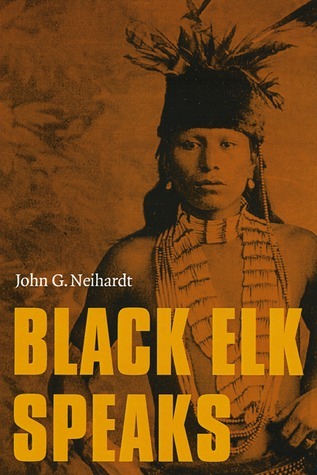
"Black Elk Speaks," the story of the Oglala Lakota visionary and healer Nicholas Black Elk (1863-1950) and his people during momentous twilight years of the nineteenth century, offers readers much more than a precious glimpse of a vanished time. Black Elk's searing visions of the unity of humanity and Earth, conveyed by John G. Neihardt, have made this book a classic that crosses multiple genres. Whether appreciated as the poignant tale of a Lakota life, as a history of a Native nation, or as an enduring spiritual testament, Black Elk Speaks is unforgettable.Black Elk met the distinguished poet, writer, and critic John G. Neihardt in 1930 on the Pine Ridge Reservation in South Dakota and asked Neihardt to share his story with the world. Neihardt understood and conveyed Black Elk's experiences in this powerful and inspirational message for all humankind.

Lewis "Shoe" Blake is used to the joys and difficulties of life on the Tuscarora Indian reservation in 1975: the joking, the Fireball games, the snow blowing through his roof. What he's not used to is white people being nice to him -- people like George Haddonfield, whose family recently moved to town with the Air Force. As the boys connect through their mutual passion for music, especially the Beatles, Lewis has to lie more and more to hide the reality of his family's poverty from George. He also has to deal with the vicious Evan Reininger, who makes Lewis the special target of his wrath. But when everyone else is on Evan's side, how can he be defeated? And if George finds out the truth about Lewis's home -- will he still be his friend?Acclaimed adult author Eric Gansworth makes his YA debut with this wry and powerful novel about friendship, memory, and the joy of rock 'n' roll.

Unpacks the twenty-one most common myths and misconceptions about Native AmericansIn this enlightening book, scholars and activists Roxanne Dunbar-Ortiz and Dina Gilio-Whitaker tackle a wide range of myths about Native American culture and history that have misinformed generations. Tracing how these ideas evolved, and drawing from history, the authors disrupt long-held and enduring myths such as:"Columbus Discovered America""Thanksgiving Proves the Indians Welcomed Pilgrims""Indians Were Savage and Warlike""Europeans Brought Civilization to Backward Indians""The United States Did Not Have a Policy of Genocide""Sports Mascots Honor Native Americans""Most Indians Are on Government Welfare""Indian Casinos Make Them All Rich""Indians Are Naturally Predisposed to Alcohol"Each chapter deftly shows how these myths are rooted in the fears and prejudice of European settlers and in the larger political agendas of a settler state aimed at acquiring Indigenous land and tied to narratives of erasure and disappearance. Accessibly written and revelatory, "All the Real Indians Died Off" challenges readers to rethink what they have been taught about Native Americans and history.

Winner of the Society of American Historians' Francis Parkman PrizeWinner of the PEN / Jacqueline Bograd Weld Award for BiographyBest Biography of 2016, True West magazine Winner of the Western Writers of America 2017 Spur Award, Best Western BiographyFinalist, National Book Critics Circle Award for BiographyLong-listed for the Cundill History PrizeOne of the Best Books of 2016, The Boston GlobeThe epic life story of the Native American holy man who has inspired millions around the worldBlack Elk, the Native American holy man, is known to millions of readers around the world from his 1932 testimonial Black Elk Speaks. Adapted by the poet John G. Neihardt from a series of interviews with Black Elk and other elders at the Pine Ridge Reservation in South Dakota, Black Elk Speaks is one of the most widely read and admired works of American Indian literature. Cryptic and deeply personal, it has been read as a spiritual guide, a philosophical manifesto, and a text to be deconstructed—while the historical Black Elk has faded from view.In this sweeping book, Joe Jackson provides the definitive biographical account of a figure whose dramatic life converged with some of the most momentous events in the history of the American West. Born in an era of rising violence between the Sioux, white settlers, and U.S. government troops, Black Elk killed his first man at the Little Bighorn, witnessed the death of his second cousin Crazy Horse, and traveled to Europe with Buffalo Bill’s Wild West show. Upon his return, he was swept up in the traditionalist Ghost Dance movement and shaken by the Massacre at Wounded Knee. But Black Elk was not a warrior, instead accepting the path of a healer and holy man, motivated by a powerful prophetic vision that he struggled to understand. Although Black Elk embraced Catholicism in his later years, he continued to practice the old ways clandestinely and never refrained from seeking meaning in the visions that both haunted and inspired him.In Black Elk, Jackson has crafted a true American epic, restoring to its subject the richness of his times and gorgeously portraying a life of heroism and tragedy, adaptation and endurance, in an era of permanent crisis on the Great Plains.

’All around, the Indians began jumping up, running forward, dodging down, jumping up again, down again, all the time going toward the soldiers.’ The story of Custer’s last battle is rarely told from the Native American perspective, despite the fact that there were no white survivors. Stories about the Battle of Little Bighorn are therefore often more myth than truth. In 1922, Thomas B. Marquis decided to uncover the true story of Custer’s Last Stand by speaking to someone who had actually fought against him. For hour after hour Marquis spoke to Wooden Leg and pieced together the narrative of the battle. Yet, Marquis’ studies cover much more than the final demise of Custer. Through his interviews with Wooden Leg, who was a young man at the time of Little Bighorn, he was able to uncover fascinating details about the everyday life of Cheyenne Indians and their practices. Their hunting practices, their conflicts with the Crows, how they were given names, their religion, their marriage customs, and other details of their way of life are all covered. As the relations between American soldiers and Native Americans grew more tense Wooden Leg and his Cheyenne people were drawn into conflict. Wooden Leg provides a fascinating account of how the Native American tribes were drawn together in a loose alliance to repel the oppression to which they had been subjected. Though the Native Americans won the battle, they certainly did not win the war. Wooden Leg’s account of the years after Little Bighorn demonstrates how many Native Americans struggled with life on the reservations and how they longed to be on the plains once again. Wooden Leg’s memoirs interpreted by Thomas B. Marquis give a fascinating insight into Native American life in the late-nineteenth century. “[A] deeply interesting story.” The New York Times After entering a reservation Wooden Leg worked as a scout, messenger and sentry. He was part of the 1913 delegation sent to Washington to speak about the Cheyenne tribe. Later he became a judge on the reservation and died in 1940.

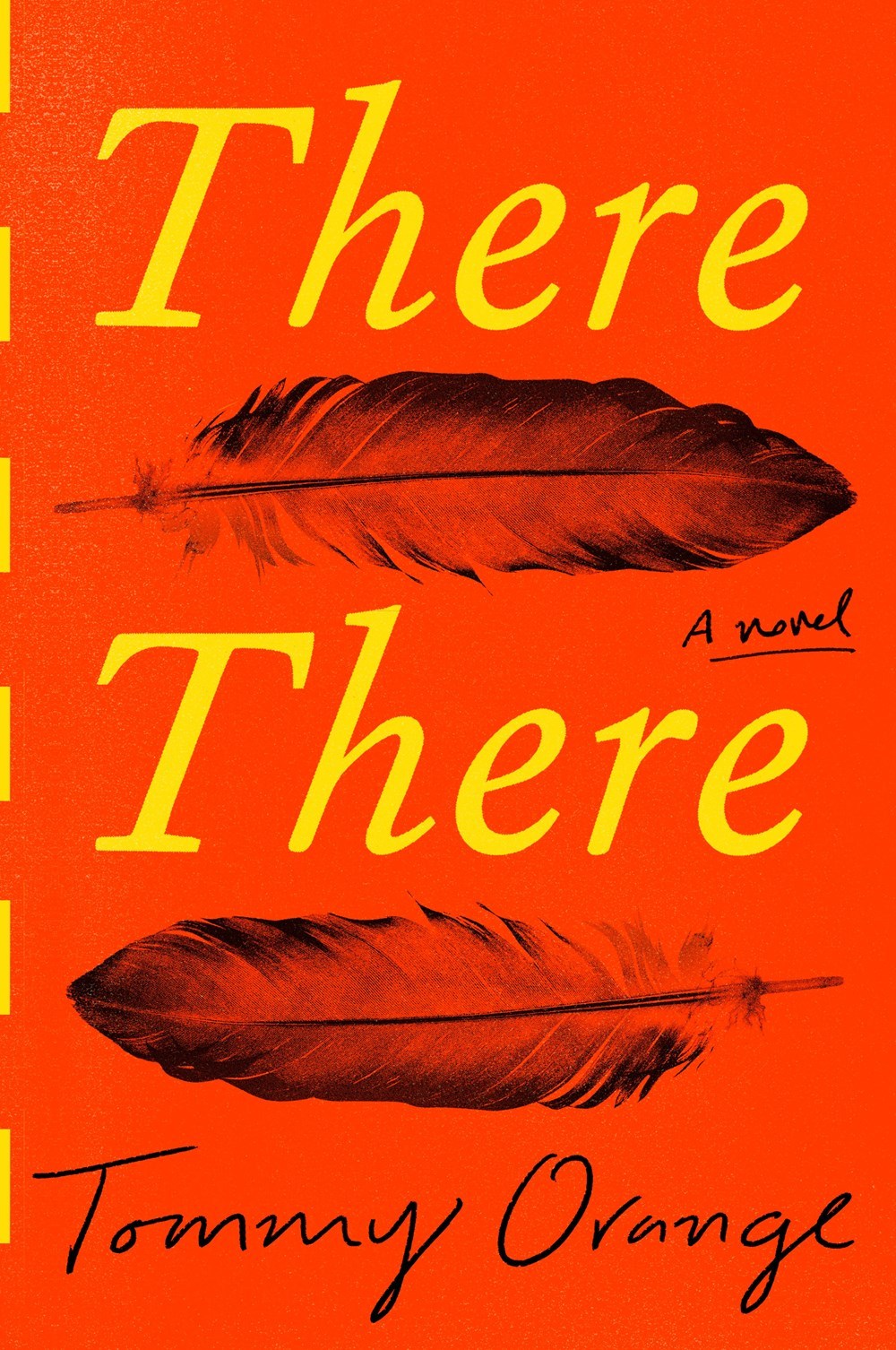
Alternate cover edition of ISBN 9780525520375.Tommy Orange's wondrous and shattering novel follows twelve characters from Native communities: all traveling to the Big Oakland Powwow, all connected to one another in ways they may not yet realize.Among them is Jacquie Red Feather, newly sober and trying to make it back to the family she left behind. Dene Oxendene, pulling his life together after his uncle's death and working at the powwow to honor his memory. Fourteen-year-old Orvil, coming to perform traditional dance for the very first time. Together, this chorus of voices tells of the plight of the urban Native American--grappling with a complex and painful history, with an inheritance of beauty and spirituality, with communion and sacrifice and heroism. Hailed as an instant classic, There There is at once poignant and unflinching, utterly contemporary and truly unforgettable.

LONGLISTED FOR THE 2020 ANDREW CARNEGIE MEDAL FOR EXCELLENCEA sweeping history—and counter-narrative—of Native American life from the Wounded Knee massacre to the present.The received idea of Native American history—as promulgated by books like Dee Brown's mega-bestselling 1970 Bury My Heart at Wounded Knee—has been that American Indian history essentially ended with the 1890 massacre at Wounded Knee. Not only did one hundred fifty Sioux die at the hands of the U. S. Cavalry, the sense was, but Native civilization did as well. Growing up Ojibwe on a reservation in Minnesota, training as an anthropologist, and researching Native life past and present for his nonfiction and novels, David Treuer has uncovered a different narrative. Because they did not disappear—and not despite but rather because of their intense struggles to preserve their language, their traditions, their families, and their very existence—the story of American Indians since the end of the nineteenth century to the present is one of unprecedented resourcefulness and reinvention. In The Heartbeat of Wounded Knee, Treuer melds history with reportage and memoir. Tracing the tribes' distinctive cultures from first contact, he explores how the depredations of each era spawned new modes of survival. The devastating seizures of land gave rise to increasingly sophisticated legal and political maneuvering that put the lie to the myth that Indians don't know or care about property. The forced assimilation of their children at government-run boarding schools incubated a unifying Native identity. Conscription in the US military and the pull of urban life brought Indians into the mainstream and modern times, even as it steered the emerging shape of self-rule and spawned a new generation of resistance. The Heartbeat of Wounded Knee is the essential, intimate story of a resilient people in a transformative era.

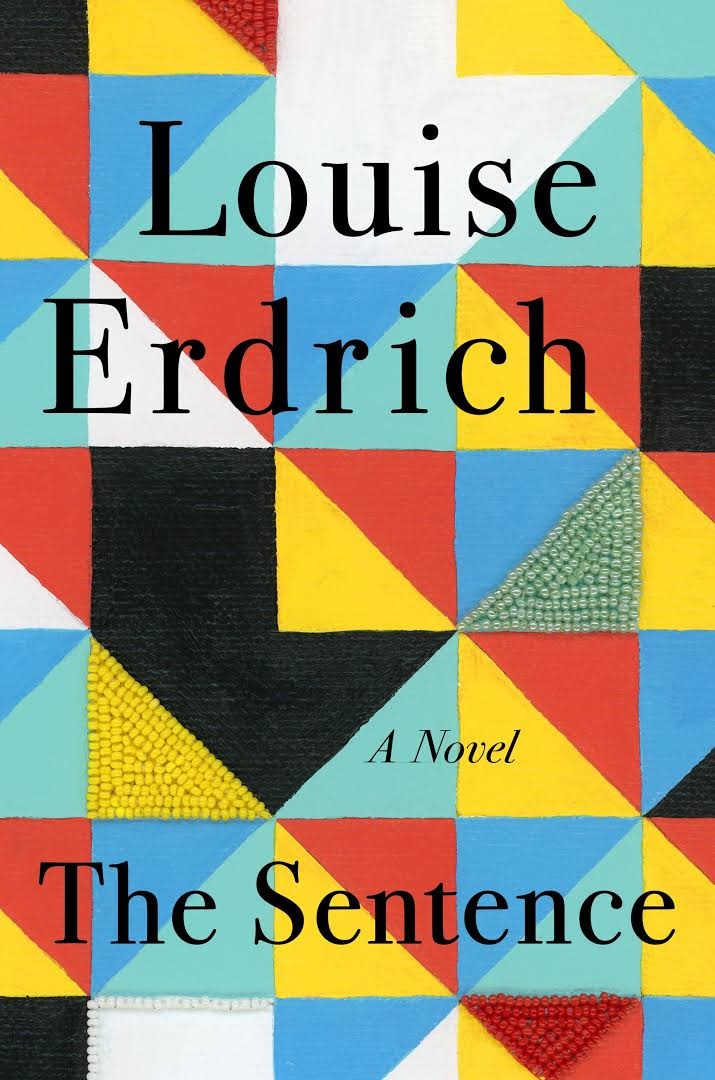
In this stunning and timely novel, Pulitzer Prize and National Book Award-winning author Louise Erdrich creates a wickedly funny ghost story, a tale of passion, of a complex marriage, and of a woman's relentless errors.Louise Erdrich's latest novel, The Sentence, asks what we owe to the living, the dead, to the reader and to the book. A small independent bookstore in Minneapolis is haunted from November 2019 to November 2020 by the store's most annoying customer. Flora dies on All Souls' Day, but she simply won't leave the store. Tookie, who has landed a job selling books after years of incarceration that she survived by reading with murderous attention, must solve the mystery of this haunting while at the same time trying to understand all that occurs in Minneapolis during a year of grief, astonishment, isolation, and furious reckoning.The Sentence begins on All Souls' Day 2019 and ends on All Souls' Day 2020. Its mystery and proliferating ghost stories during this one year propel a narrative as rich, emotional, and profound as anything Louise Erdrich has written