Loading genres...
Explore the best books about Mental Illness genre.


A harrowing story of breakdowns, suicide attempts, drug therapy, and an eventual journey back to living, this poignant and often hilarious book gives voice to the high incidence of depression among America's youth. A collective cry for help from a generation who have come of age entrenched in the culture of divorce, economic instability, and AIDS, here is the intensely personal story of a young girl full of promise, whose mood swings have risen and fallen like the lines of a sad ballad.

In 1967, after a session with a psychiatrist she'd never seen before, eighteen-year-old Susanna Kaysen was put in a taxi and sent to McLean Hospital. She spent most of the next two years on the ward for teenage girls in a psychiatric hospital as renowned for its famous clientele--Sylvia Plath, Robert Lowell, James Taylor, and Ray Charles--as for its progressive methods of treating those who could afford its sanctuary. Kaysen's memoir encompasses horror and razor-edged perception while providing vivid portraits of her fellow patients and their keepers. It is a brilliant evocation of a "parallel universe" set within the kaleidoscopically shifting landscape of the late sixties. "Girl, Interrupted" is a clear-sighted, unflinching document that gives lasting and specific dimension to our definitions of sane and insane, mental illness, and recovery.

A classic work that has revolutionized thinking throughout the Western world about the nature of the psychiatric profession and the moral implications of its practices. "Bold and often brilliant.”—Science "It is no exaggeration to state that Szasz's work raises major social issues which deserve the attention of policy makers and indeed of all informed and socially conscious Americans...Quite probably he has done more than any other man to alert the American public to the potential dangers of an excessively psychiatrized society.”—Edwin M. Schur, Atlantic

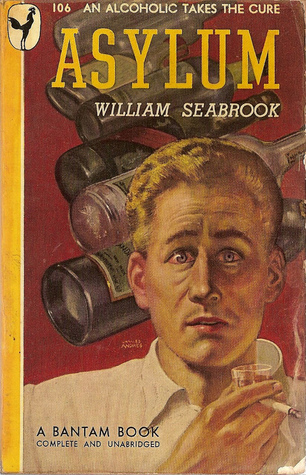
In 1934, William Seabrook was one of the most famous journalists in the world. He was also an alcoholic. But there was no treatment for his disease. So he checked himself into an insane asylum. There, from the perspective of a travel writer, he described his own journey through this strange and foreign place. Today, you can’t read a page in the book without seeing him bump, unknowingly, into the basic principles of 12-step groups and then thwarted by well meaning doctors (like the one who decides he’s cured and can start drinking again). On a regular basis, he says things so clear, so self-aware that you’re stunned an addict could have written it–shocked that this book isn’t a classic American text.

America started a grand experiment in the 1960 deinstitutionalization of the mentally ill. The consequences were very homelessness; a degradation of urban life; increases in violent crime rates; increasing death rates for the mentally ill. My Brother Ron tells the story of deinstitutionalization from two points of what happened to the author's older brother, part of the first generation of those who became mentally ill after deinstitutionalization, and a detailed history of how and why America went down this path. My Brother Ron examines the multiple strands that came together to create the perfect storm that was a well-meaning concern about the poor conditions of many state mental hospitals; a giddy optimism by the psychiatric profession in the ability of new drugs to cure the mentally ill; a rigid ideological approach to due process that ignored that the beneficiaries would end up starving to death or dying of exposure.

JOHN GREEN, the acclaimed author of Looking for Alaska and The Fault in Our Stars, returns with a story of shattering, unflinching clarity in this brilliant novel of love, resilience, and the power of lifelong friendship.Aza Holmes never intended to pursue the disappearance of fugitive billionaire Russell Pickett, but there’s a hundred-thousand-dollar reward at stake and her Best and Most Fearless Friend, Daisy, is eager to investigate. So together, they navigate the short distance and broad divides that separate them from Pickett’s son Davis. Aza is trying. She is trying to be a good daughter, a good friend, a good student, and maybe even a good detective, while also living within the ever-tightening spiral of her own thoughts.

Have you ever had a strange urge to jump from a tall building, or steer your car into oncoming traffic? You are not alone. In this captivating fusion of science, history and personal memoir, writer David Adam explores the weird thoughts that exist within every mind, and how they drive millions of us towards obsessions and compulsions.David has suffered from OCD for twenty years, and The Man Who Couldn’t Stop is his unflinchingly honest attempt to understand the condition and his experiences. What might lead an Ethiopian schoolgirl to eat a wall of her house, piece by piece; or a pair of brothers to die beneath an avalanche of household junk that they had compulsively hoarded? At what point does a harmless idea, a snowflake in a clear summer sky, become a blinding blizzard of unwanted thoughts? Drawing on the latest research on the brain, as well as historical accounts of patients and their treatments, this is a book that will challenge the way you think about what is normal, and what is mental illness.Told with fierce clarity, humour and urgent lyricism, this extraordinary book is both the haunting story of a personal nightmare, and a fascinating doorway into the darkest corners of our minds.

Named one of the top health and wellness books for 2016 by MindBodyGreenDepression is not a disease. It is a symptom.Recent years have seen a shocking increase in antidepressant use the world over, with 1 in 4 women starting their day with medication. These drugs have steadily become the panacea for everything from grief, irritability, panic attacks, to insomnia, PMS, and stress. But the truth is, what women really need can’t be found at a pharmacy.According to Dr. Kelly Brogan, antidepressants not only overpromise and underdeliver, but their use may permanently disable the body’s self-healing potential. We need a new paradigm: The best way to heal the mind is to heal the whole body.In this groundbreaking, science-based and holistic approach, Dr. Brogan shatters the mythology conventional medicine has built around the causes and treatment of depression. Based on her expert interpretation of published medical findings, combined with years of experience from her clinical practice, Dr. Brogan illuminates the true cause of depression: it is not simply a chemical imbalance, but a lifestyle crisis that demands a reset. It is a signal that the interconnected systems in the body are out of balance – from blood sugar, to gut health, to thyroid function– and inflammation is at the root.A Mind of Your Own offers an achievable, step-by-step 30-day action plan—including powerful dietary interventions, targeted nutrient support, detoxification, sleep, and stress reframing techniques—women can use to heal their bodies, alleviate inflammation, and feel like themselves again without a single prescription.Bold, brave, and revolutionary, A Mind of Your Own takes readers on a journey of self-empowerment for radical transformation that goes far beyond symptom relief.

Melissa Broder always struggled with anxiety. In the fall of 2012, she went through a harrowing cycle of panic attacks and dread that wouldn't abate for months. So she began @sosadtoday, an anonymous Twitter feed that allowed her to express her darkest feelings, and which quickly gained a dedicated following. In So Sad Today, Broder delves deeper into the existential themes she explores on Twitter, grappling with sex, death, love, low self-esteem, addiction, and the drama of waiting for the universe to text you back. With insights as sharp as her humor, Broder explores—in prose that is both gutsy and beautiful, aggressively colloquial and achingly poetic—questions most of us are afraid to even acknowledge, let alone answer, in order to discover what it really means to be a person in this modern world.

The heartrending story of a midcentury American family with twelve children, six of them diagnosed with schizophrenia, that became science's great hope in the quest to understand the disease.Don and Mimi Galvin seemed to be living the American dream. After World War II, Don's work with the Air Force brought them to Colorado, where their twelve children perfectly spanned the baby boom: the oldest born in 1945, the youngest in 1965. In those years, there was an established script for a family like the Galvins—aspiration, hard work, upward mobility, domestic harmony—and they worked hard to play their parts. But behind the scenes was a different story: psychological breakdown, sudden shocking violence, hidden abuse. By the mid-1970s, six of the ten Galvin boys, one after another, were diagnosed as schizophrenic. How could all this happen to one family?What took place inside the house on Hidden Valley Road was so extraordinary that the Galvins became one of the first families to be studied by the National Institute of Mental Health. Their story offers a shadow history of the science of schizophrenia, from the era of institutionalization, lobotomy, and the schizophrenogenic mother to the search for genetic markers for the disease, always amid profound disagreements about the nature of the illness itself. And unbeknownst to the Galvins, samples of their DNA informed decades of genetic research that continues today, offering paths to treatment, prediction, and even eradication of the disease for future generations.With clarity and compassion, bestselling and award-winning author Robert Kolker uncovers one family's unforgettable legacy of suffering, love, and hope.

This novel is about a woman called Martha. She knows there is something wrong with her but she doesn't know what it is. Her husband Patrick thinks she is fine. He says everyone has something, the thing is just to keep going.Martha told Patrick before they got married that she didn't want to have children. He said he didn't mind either way because he has loved her since he was fourteen and making her happy is all that matters, although he does not seem able to do it.By the time Martha finds out what is wrong, it doesn't really matter anymore. It is too late to get the only thing she has ever wanted. Or maybe it will turn out that you can stop loving someone and start again from nothing - if you can find something else to want.