Loading genres...
Explore the best books about Gay genre.

The Persian Boy traces the last years of Alexander’s life through the eyes of his lover, Bagoas. Abducted and gelded as a boy, Bagoas was sold as a courtesan to King Darius of Persia, but found freedom with Alexander after the Macedon army conquered his homeland.Their relationship sustains Alexander as he weathers assassination plots, the demands of two foreign wives, a sometimes-mutinous army, and his own ferocious temper. After Alexander’s mysterious death, we are left wondering if this Persian boy understood the great warrior and his ambitions better than anyone.
Dante can swim. Ari can't. Dante is articulate and self-assured. Ari has a hard time with words and suffers from self-doubt. Dante gets lost in poetry and art. Ari gets lost in thoughts of his older brother who is in prison. Dante is fair skinned. Ari's features are much darker. It seems that a boy like Dante, with his open and unique perspective on life, would be the last person to break down the walls that Ari has built around himself. But against all odds, when Ari and Dante meet, they develop a special bond that will teach them the most important truths of their lives, and help define the people they want to be. But there are big hurdles in their way, and only by believing in each other—and the power of their friendship—can Ari and Dante emerge stronger on the other side.

The charm and humor of To All the Boys I've Loved Before meets Dumplin' in this body-positive YA love story between two boys who must spend 15 days living with each other over school break.What would you do if you had to spend the next 15 days with your lifelong crush?Felipe gets it -- he's fat. Not chubby. Not big-boned. Fat. And he doesn't need anyone to remind him, which is, of course, what everyone does. That's why he's been waiting for this moment ever since the school year began: school break. Finally, he'll be able to spend some time far away from school and the classmates who tease him incessantly. His plans include catching up on his favorite TV shows, finishing his to-be-read pile, and watching YouTube tutorials on skills he'll never actually put into practice.But things get a little out of hand when Felipe's mom informs him that Caio, the neighbor kid from apartment 57, will be spending the next 15 days with them while his parents are on vacation. Felipe is distraught because A) he's had a crush on Caio since, well, forever, and B) Felipe has a list of body image insecurities and absolutely NO idea how he's going to entertain his neighbor for two full weeks.Suddenly, the days ahead of him that once promised rest and relaxation (not to mention some epic Netflix bingeing) end up bringing a whirlwind of feelings, forcing Felipe to dive head-first into every unresolved issue he has had with himself -- but maybe, just maybe, he'll manage to win over Caio, too.

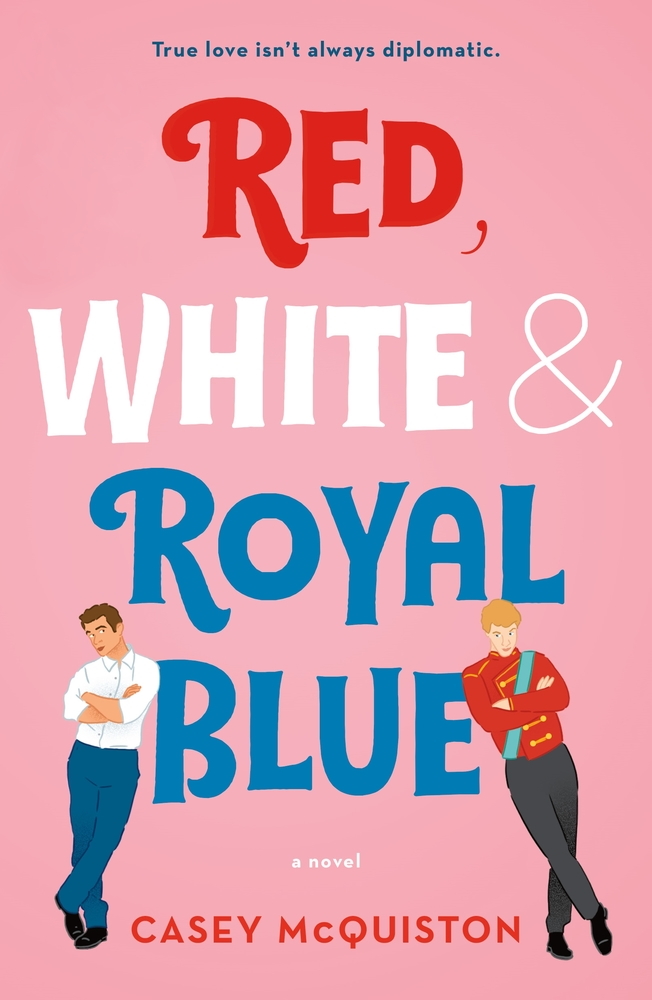
First Son Alex Claremont-Diaz is the closest thing to a prince this side of the Atlantic. With his intrepid sister and the Veep’s genius granddaughter, they’re the White House Trio, a beautiful millennial marketing strategy for his mother, President Ellen Claremont. International socialite duties do have downsides—namely, when photos of a confrontation with his longtime nemesis Prince Henry at a royal wedding leak to the tabloids and threaten American/British relations. The plan for damage control: staging a fake friendship between the First Son and the Prince. As President Claremont kicks off her reelection bid, Alex finds himself hurtling into a secret relationship with Henry that could derail the campaign and upend two nations. What is worth the sacrifice? How do you do all the good you can do? And, most importantly, how will history remember you?

Charlie, a highly-strung, openly gay over-thinker, and Nick, a cheerful, soft-hearted rugby player, meet at a British all-boys grammar school. Friendship blooms quickly, but could there be something more...?Charlie Spring is in Year 10 at Truham Grammar School for Boys. The past year hasn't been too great, but at least he's not being bullied anymore. Nick Nelson is in Year 11 and on the school rugby team. He's heard a little about Charlie - the kid who was outed last year and bullied for a few months - but he's never had the opportunity to talk to him.They quickly become friends, and soon Charlie is falling hard for Nick, even though he doesn't think he has a chance. But love works in surprising ways, and sometimes good things are waiting just around the corner...

Stories of a young man finding his place among family and community in Houston, from a powerful, emerging American voice. In the city of Houston—a sprawling, diverse microcosm of America—the son of a black mother and a Latino father is coming of age. He's working at his family's restaurant, weathering his brother's blows, resenting his older sister's absence. And discovering he likes boys. This boy and his family experience the tumult of living in the margins, the heartbreak of ghosts, and the braveries of the human heart. The stories of others living and thriving and dying across Houston's myriad neighborhoods are woven throughout to reveal a young woman's affair detonating across an apartment complex, a rag-tag baseball team, a group of young hustlers, the aftermath of Hurricane Harvey, a local drug dealer who takes a Guatemalan teen under his wing, and a reluctant chupacabra. Bryan Washington's brilliant, viscerally drawn world leaps off the page with energy, wit, and the infinite longing of people searching for home. With soulful insight into what makes a community, a family, and a life, Lot is about love in all its unsparing and unsteady forms. Lockwood --Alief --610 North, 610 West --Shepherd --Wayside --Bayou --Lot --South Congress --Navigation --Peggy Park --Fannin --Waugh --Elgin

The untold story of Dr. Oliver Sacks, his own most singular patient"[An] engrossing biographical memoir. This is Sacks at full on endless ward rounds, observing his post-encephalitic patients . . . exulting over horseshoe crabs and chunks of Iceland spar." ―Barbara Kiser, NatureThe author Lawrence Weschler began spending time with Oliver Sacks in the early 1980s, when he set out to profile the neurologist for his own new employer, The New Yorker . Almost a decade earlier, Dr. Sacks had published his masterpiece Awakenings― the account of his long-dormant patients’ miraculous but troubling return to life in a Bronx hospital ward. But the book had hardly been an immediate success, and the rumpled clinician was still largely unknown. Over the ensuing four years, the two men worked closely together until, for wracking personal reasons, Sacks asked Weschler to abandon the profile, a request to which Weschler acceded. The two remained close friends, however, across the next thirty years and then, just as Sacks was dying, he urged Weschler to take up the project once again. This book is the result of that entreaty.Weschler sets Sacks’s brilliant table talk and extravagant personality in vivid relief, casting himself as a beanpole Sancho to Sacks’s capacious Quixote. We see Sacks rowing and ranting and caring deeply; composing the essays that would form The Man Who Mistook His Wife for a Hat ; recalling his turbulent drug-fueled younger days; helping his patients and exhausting his friends; and waging intellectual war against a medical and scientific establishment that failed to address his greatest the spontaneous specificity of the individual human soul. And all the while he is pouring out a stream of glorious, ribald, hilarious, and often profound conversation that establishes him as one of the great talkers of the age. Here is the definitive portrait of Sacks as our preeminent romantic scientist, a self-described “clinical ontologist” whose entire practice revolved around the single fundamental question he effectively asked each of his How are you? Which is to say, How do you be ?A question which Weschler, with this book, turns back on the good doctor himself.

In this poignant and urgent love letter to his son, award-winning Broadway, TV and film producer Richie Jackson reflects on his experiences as a gay man in America and the progress and setbacks of the LGBTQ community over the last 50 years.“My son is kind, responsible, and hardworking. He is ready for college. He is not ready to be a gay man living in America.”When Jackson's 18-year-old son born through surrogacy came out to him, the successful producer, now in his 50s, was compelled to reflect on his experiences and share his wisdom on life for LGBTQ Americans over the past half-century.Gay Like Me is a celebration of gay identity and parenting, and a powerful warning for his son, other gay men and the world. Jackson looks back at his own journey as a gay man coming of age through decades of political and cultural turmoil.Jackson's son lives in a seemingly more liberated America, and Jackson beautifully lays out how far we’ve come since Stonewall -- the increased visibility of gay people in society, the legal right to marry, and the existence of a drug to prevent HIV. But bigotry is on the rise, ignited by a president who has declared war on the gay community and fanned the flames of homophobia. A newly constituted Supreme Court with a conservative tilt is poised to overturn equality laws and set the clock back decades. Being gay is a gift, Jackson writes, but with their gains in jeopardy the gay community must not be complacent.As Ta-Nehisi Coates awakened us to the continued pervasiveness of racism in America in Between the World and Me, Jackson’s rallying cry in Gay Like Me is an eye-opening indictment to straight-lash in America. This book is an intimate, personal exploration of our uncertain times and most troubling questions and profound concerns about issues as fundamental as dignity, equality, and justice.Gay Like Me is a blueprint for our time that bridges the knowledge gap of what it’s like to be gay in America. This is a cultural manifesto that will stand the test of time. Angry, proud, fierce, tender, it is powerful letter of love from a father to a son that holds lasting insight for us all.

In this tender, nuanced coming-of-age love story, two boys—one who is cis and one who is trans—have been guarding their hearts to protect themselves, until their feelings for each other give them a reason to stand up to their fears.Two boys are starting at a new school.Jules is just figuring out what it means to be gay and hasn’t totally decided whether he wants to be out at his new school. His parents and friends have all kinds of opinions, but for his part, Jules just wants to make the basketball team and keep his head down.Jack is trying to start over after a best friend break-up. He followed his actor father clear across the country to LA, but he’s also totally ready to leave his past behind. Maybe this new school where no one knows him is exactly what he needs.When the two boys meet, the sparks are undeniable. But then a video surfaces linking Jack to a pair of popular transgender vloggers, and the revelations about Jack’s past thrust both Jack and Jules into the spotlight they’ve been trying to avoid. Suddenly both boys have a choice to make—between lying low where it’s easier or following their hearts.

An irreverent, sensitive, and inimitable look at gay dysfunction through the eyes of a cult hero It's like that saying, 'Where god closes a door, he opens a window, ' but in this particular case the window was on the fifth floor and the house was on fire.Transgressive, foulmouthed, and devastatingly funny, Brontez Purnell's 100 Boyfriends is a revelatory spiral into the imperfect lives of queer men desperately fighting--and often losing--the urge to self-sabotage. His characters solicit sex on their lunch breaks, expose themselves to racist neighbors, sleep with their coworker's husbands, rub Preparation H on their hungover eyes, and, in an uproarious epilogue, take a punk band on a disastrous tour of Europe. They also travel to claim inheritances, push past personal trauma, and cultivate community while living on the margins of a white supremacist, heteronormative society.Armed with a deadpan wit that finds humor in even the lowest of nadirs, Brontez Purnell--a widely acclaimed underground writer, filmmaker, musician, and performance artist--writes with the peerless zeal, insight, and horniness of a gay punk messiah. From dirty warehouses and gentrified bars in Oakland to desolate farm towns in Alabama, Purnell indexes desire, desperation, race, and loneliness with a startling blend of levity and vulnerability. Together, the slice-of-life tales that writhe within 100 Boyfriends are a singular and uncompromising vision of an unexposed queer underbelly. Holding them together is the vision of an iconoclastic storyteller, as fearless as he is human.

From Booker-prizewinner Douglas Stuart an extraordinary, page-turning second novel, a vivid portrayal of working-class life and a highly suspenseful story of the dangerous first love of two young men: Mungo and James.Born under different stars, Protestant Mungo and Catholic James live in the hyper-masculine and violently sectarian world of Glasgow's housing estates. They should be sworn enemies if they're to be seen as men at all, and yet they become best friends as they find a sanctuary in the pigeon dovecote that James has built for his prize racing birds. As they find themselves falling in love, they dream of escaping the grey city, and Mungo works especially hard to hide his true self from all those around him, especially from his elder brother Hamish, a local gang leader with a brutal reputation to uphold.But the threat of discovery is constant and the punishment unspeakable. When Mungo's mother sends him on a fishing trip to a loch in Western Scotland with two strange men whose drunken banter belies murky pasts, he will need to summon all his inner strength and courage to get back to a place of safety, a place where he and James might still have a future.Imbuing the everyday world of its characters with rich lyricism and giving full voice to people rarely acknowledged in literary fiction, Douglas Stuart's Young Mungo is a gripping and revealing story about the bounds of masculinity, the push and pull of family, the violence faced by so many queer people, and the dangers of loving someone too much.

Le temps d'une nuit à bord d'un train-couchettes, une dizaine de passagers, qui n'auraient jamais dû se rencontrer, font connaissance, sans se douter que certains n'arriveront jamais à destination. Un roman aussi captivant qu'émouvant, qui dit l'importance de l'instant et la fragilité de nos vies.Rien ne relie les passagers montés à bord du train de nuit no 5789. À la faveur d'un huis clos imposé, tandis qu'ils sillonnent des territoires endormis, ils sont une dizaine à nouer des liens, laissant l'intimité et la confiance naître, les mots s'échanger, et les secrets aussi. Derrière les apparences se révèlent des êtres vulnérables, victimes de maux ordinaires ou de la violence de l'époque, des voyageurs tentant d'échapper à leur solitude, leur routine ou leurs mensonges. Ils l'ignorent encore, mais à l'aube, certains auront trouvé la mort.Ce roman au suspense redoutable nous rappelle que nul ne maîtrise son destin. Par la délicatesse et la justesse de ses observations, Paris-Briançon célèbre le miracle des rencontres fortuites, et la grâce des instants suspendus, où toutes les vérités peuvent enfin se dire.

Two Victorian marriages, two dangerous love affairs, one extraordinary partnership . . . London, 1894. After a lifetime spent navigating his desires, John Addington, married to Catherine, has met Frank, a working-class printer.Meanwhile Henry Ellis's wife Edith has fallen in love with Angelica - and Angelica wants Edith all to herself.When in 1894 John and Henry decide to write a revolutionary book together, intended to challenge convention and the law, they are both caught in relationships stalked by guilt and shame. Yet they share a vision of a better world, one that will expand possibilities for men and women everywhere.Their daring book threatens to throw John and Henry, and all those around them, into danger. How far should they go to win personal freedoms? And how high a price are they willing to pay for a new way of living?