
Mary Renault
Mary Renault was an English writer best known for her historical novels set in Ancient Greece. In addition to vivid fictional portrayals of Theseus, Socrates, Plato and Alexander the Great, she wrote a non-fiction biography of Alexander. Her historical novels are all set in ancient Greece. They include a pair of novels about the mythological hero Theseus and a trilogy about the career of Alexander the Great. In a sense, The Charioteer (1953), the story of two young gay servicemen in the 1940s who try to model their relationship on the ideals expressed in Plato's Phaedrus and Symposium, is a warm-up for Renault's historical novels. By turning away from the 20th century and focusing on stories about male lovers in the warrior societies of ancient Greece, Renault no longer had to deal with homosexuality and anti-gay prejudice as social "problems". Instead she was free to focus on larger ethical and philosophical concerns, while examining the nature of love and leadership. The Charioteer could not be published in the U.S. until 1959, after the success of The Last of the Wine proved that American readers and critics would accept a serious gay love story.
22 Books Written

The Persian Boy traces the last years of Alexander’s life through the eyes of his lover, Bagoas. Abducted and gelded as a boy, Bagoas was sold as a courtesan to King Darius of Persia, but found freedom with Alexander after the Macedon army conquered his homeland.Their relationship sustains Alexander as he weathers assassination plots, the demands of two foreign wives, a sometimes-mutinous army, and his own ferocious temper. After Alexander’s mysterious death, we are left wondering if this Persian boy understood the great warrior and his ambitions better than anyone.

“Mary Renault is a shining light to both historical novelists and their readers. She does not pretend the past is like the present, or that the people of ancient Greece were just like us. She shows us their strangeness; discerning, sure-footed, challenging our values, piquing our curiosity, she leads us through an alien landscape that moves and delights us.” —Hilary MantelIn myth, Theseus was the slayer of the child-devouring Minotaur in Crete. What the founder-hero might have been in real life is another question, brilliantly explored in The King Must Die. Drawing on modern scholarship and archaeological findings at Knossos, Mary Renault’s Theseus is an utterly lifelike figure—a king of immense charisma, whose boundless strivings flow from strength and weakness—but also one steered by implacable prophecy.The story follows Theseus’s adventures from Troizen to Eleusis, where the death in the book’s title is to take place, and from Athens to Crete, where he learns to jump bulls and is named king of the victims. Richly imbued with the spirit of its time, this is a page-turner as well as a daring act of imagination.Renault’s story of Theseus continues with the sequel The Bull from the Sea.This ebook features an illustrated biography of Mary Renault including rare images of the author.

Alexander the Great died at the age of thirty-three, leaving behind an empire that stretched from Greece and Egypt to India and a new cosmopolitan model for western civilisation. In Alexander's childhood, his defiant character was molded into the makings of a king. His mother, Olympias, and his father, King Philip of Macedon, fought each other for their son's loyalty, teaching Alexander politics and vengeance from the cradle. His love for the youth Hephaistion, on whom he depended for he rest of his life, taught him trust, whilst Aristotle's tutoring provoked his mind and Homer's Iliad fuelled his aspirations. He killed his first man in battle at the age of twelve and became the commander of Macedon's cavalry at eighteen - by the time his father was murdered and he acceded to the throne, Alexander's skills had grown to match his fiery ambition.

After enduring an injury at Dunkirk during World War II, Laurie Odell is sent to a rural veterans’ hospital in England to convalesce. There he befriends the young, bright Andrew, a conscientious objector serving as an orderly. As they find solace and companionship together in the idyllic surroundings of the hospital, their friendship blooms into a discreet, chaste romance. Then one day, Ralph Lanyon, a mentor from Laurie’s schoolboy days, suddenly reappears in Laurie’s life, and draws him into a tight-knit social circle of world-weary gay men. Laurie is forced to choose between the sweet ideals of innocence and the distinct pleasures of experience. Originally published in the United States in 1959, The Charioteer is a bold, unapologetic portrayal of male homosexuality during World War II that stands with Gore Vidal’s The City and the Pillar and Christopher Isherwood’s Berlin Stories as a monumental work in gay literature.

In The Last of the Wine , two young Athenians, Alexias and Lysis, compete in the palaestra, journey to the Olympic games, fight in the wars against Sparta, and study under Socrates. As their relationship develops, Renault expertly conveys Greek culture, showing the impact of this supreme philosopher whose influence spans epochs.

The Bull From The Sea Renault, Mary
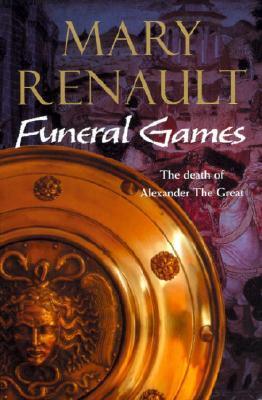
As Funeral Games opens, Alexander the Great lies dying. Around his body gather the generals, the provincial satraps and the royal wives, already competing for the prizes of power and land. Only Bagoas, the Persian boy mourning in the shadows, wants nothing. Tracing the events of the fifteen years following Alexander's death, Funeral Games sees his mighty empire disintegrate, and brings Mary Renault's Alexander trilogy to a dramatic close.

Set in fourth-century B.C. Greece, The Mask of Apollo is narrated by Nikeratos, a tragic actor who takes with him on all his travels a gold mask of Apollo, a relic of the theater's golden age, which is now past. At first his mascot, the mask gradually becomes his conscience, and he refers to it his gravest decisions, when he finds himself at the center of a political crisis in which the philosopher Plato is also involved. Much of the action is set in Syracuse, where Plato's friend Dion is trying to persuade the young tyrant Dionysios the Younger to accept the rule of law. Through Nikeratos' eyes, the reader watches as the clash between the two looses all the pent-up violence in the city.

In the story of the great lyric poet Simonides, Mary Renault brings alive a time in Greece when tyrants kept an unsteady rule and poetry, music, and royal patronage combined to produce a flowering of the arts.Born into a stern farming family on the island of Keos, Simonides escapes his harsh childhood through a lucky apprenticeship with a renowned Ionian singer. As they travel through 5th century B.C. Greece, Simonides learns not only how to play the kithara and compose poetry, but also how to navigate the shifting alliances surrounding his rich patrons. He is witness to the Persian invasion of Ionia, to the decadent reign of the Samian pirate king Polykrates, and to the fall of the Pisistratids in the Athenian court. Along the way, he encounters artists, statesmen, athletes, thinkers, and lovers, including the likes of Pythagoras and Aischylos. Using the singer's unique perspective, Renault combines her vibrant imagination and her formidable knowledge of history to establish a sweeping, resilient vision of a golden century.

The acclaimed biography of Alexander the Great.

This is Mary Renault's masterly evocation of ancient Greece and Alexander the conqueror, beautiful, beloved - and flawed. Now published for the first time in one volume.In Fire From Heaven a young Alexander unravels the mysteries of a violent adult world and discovers the divinity deep within him. Later, as he conquers ever eastwards, the love between him and Bagoas is immortalised in The Persian Boy. Then, as death comes to Alexander in Funeral Games, the human vultures gather round.

Set in 1937, The Friendly Young Ladies is a romantic comedy of off-Bloomsbury bohemia. Sheltered, naïve, and just eighteen, Elsie leaves the stifling environment of her parents’ home in Cornwall to seek out her sister, Leo, who had run away nine years earlier. She finds Leo sharing a houseboat, and a bed, with the beautiful, fair-haired Helen. While Elsie’s arrival seems innocent enough, it is the first of a series of events that will turn Helen and Leo’s contented life inside out. Soon a randy young doctor is chasing after all three women at once, a neighborly friendship begins to show an erotic tinge, and long-quiet ghosts from Leo’s past begin to surface. Before long, no one is sure just who feels what for whom.Mary Renault wrote this delightfully provocative novel in the early 1940s, creating characters that are lighthearted, charming, and free-spirited partly in answer to the despair characteristic of Radclyffe Hall’s The Well of Loneliness or Lillian Hellman’s The Children’s Hour. The result is a witty and stylish story that offers exceptional insight into the world of upcoming writers and artists of in 1930s London, chronicling their rejection of society’s established sexual mores and their heroic pursuits of art and life.

This is two books in one, The King Must Die & The Bull from the Sea Mary Renault retells the myth of Theseus in The King Must Die and The Bull from the Sea,

They had found each other in the tight-woven hospital world, where all day, every day, doctors and nurses fought errant nature. Even hospital rules could not restrain their passion.Could the people who had come before – her brother Jan, the arrestingly beautiful amoral nurse, the seductive sophisticated doctor – snatch away their happiness?Or would her faltering heart, unused to love, betray her now?

From the First UK Edition dust jacketRenault's fourth novel concerns a woman doctor of thirty-four, and her gifted young lover, some ten years her junior, whose will has been sapped, and his ambition crushed, by the remote antagonism of his mother. The story describes the doctor's struggle to release him from his mother's influence, and to restore his broken will, if need be at the cost of his love, and once at the risk of her own life. The two lovers are, in effect, the only characters in the book, which is made entirely enthralling by the author's subtle, penetrating, and wholly candid observation of the sexes, her unique command of dialogue, and ability to convey an intimate mental atmosphere."Return to Night" has been awarded the annual Metro-Goldwyn-Mayer prize of [$150,000], as the outstanding novel of the year, and will shortly be filmed.

The Lion in the Gateway: The Heroic Battles of the Greeks and Persians at Marathon, Salamis and Thermopylae
by Mary Renault
Rating: 4.0 ⭐
The heroic battles of the Greeks and Persians at Marathon, Salamis, and the Thermopylae

Kit Anderson is married to Janet, a beautiful but narcissistic woman who seems more shallow to him as time goes by. Their relationship has become strained and cold. Immersing himself in his work as a doctor, Anderson takes consolation in his career.Then, one night he is called out to a dying patient, and meets Christie, who is taking care of her aunt. Warm and vivacious, Christie stands in stark contrast to Janet, providing the passion and intimacy that has been missing from his life. How long can their affair be kept secret and does Kit want what is best for Christie, or only for himself?In this assured, vivid novel, Mary Renault showcases the talents that would make her one of the twentieth century's most beloved novelists.


5 MARY RENAULT Novels
by Mary Renault
This rare and vintage book is a perfect addition to any bibliophile's collection
Purposes of Love
by Mary Renault
Please Note The individual books included in this listing will be dispatched as per the original UK ISBN and UK edition cover image Virago Modern Classics 3 Books Collection Set By Mary Renault (Fire from Heaven, Funeral Games & The Persian Boy):Fire from In the first novel of her stunning trilogy, Mary Renault vividly imagines the life of Alexander the Great, the charismatic leader whose drive and ambition created a legend. Alexander's beauty, strength and defiance were apparent from birth, but his boyhood honed those gifts into the makings of a king. His mother, Olympias, and his father, King Philip of Macedon, fought each other for their son's loyalty, teaching Alexander politics and vengeance from the cradle. Funeral The Alexander Trilogy contains some of Renault's finest writing. Lyrical, wise, the novels are a wonderful imaginative feat' SARAH WATERS In the final novel of her stunning trilogy, Mary Renault vividly imagines the life of Alexander the Great, the charismatic leader whose drive and ambition created a legend. Alexander the Great died at the age of thirty-three, leaving behind an empire that stretched from Greece and Egypt to India. After Alexander's death in 323 B.C. his only direct heirs were two unborn sons and a simpleton half-brother.The Persian In the second novel of her stunning trilogy, Mary Renault vividly imagines the life of Alexander the Great, the charismatic leader whose drive and ambition created a legend. The Persian Boy traces the last years of Alexander's life through the eyes of his lover, Bagoas. Abducted and gelded as a boy, Bagoas is sold as a courtesan to King Darius of Persia, but finds freedom with Alexander the Great after the Macedon army conquers his homeland. Their relationship sustains Alexander as he weathers assassination plots.9781844089574/9781844089598/9781844089581