
Benjamin Alire Sáenz
Benjamin Alire Sáenz (born 16 August 1954) is an award-winning American poet, novelist and writer of children's books. He was born at Old Picacho, New Mexico, the fourth of seven children, and was raised on a small farm near Mesilla, New Mexico. He graduated from Las Cruces High School in 1972. That fall, he entered St. Thomas Seminary in Denver, Colorado where he received a B.A. degree in Humanities and Philosophy in 1977. He studied Theology at the University of Louvain in Leuven, Belgium from 1977 to 1981. He was a priest for a few years in El Paso, Texas before leaving the order. In 1985, he returned to school, and studied English and Creative Writing at the University of Texas at El Paso where he earned an M.A. degree in Creative Writing. He then spent a year at the University of Iowa as a PhD student in American Literature. A year later, he was awarded a Wallace E. Stegner fellowship. While at Stanford University under the guidance of Denise Levertov, he completed his first book of poems, Calendar of Dust, which won an American Book Award in 1992. He entered the Ph.D. program at Stanford and continued his studies for two more years. Before completing his Ph.D., he moved back to the border and began teaching at the University of Texas at El Paso in the bilingual MFA program. His first novel, Carry Me Like Water was a saga that brought together the Victorian novel and the Latin American tradition of magic realism and received much critical attention. In The Book of What Remains (Copper Canyon Press, 2010), his fifth book of poems, he writes to the core truth of life's ever-shifting memories. Set along the Mexican border, the contrast between the desert's austere beauty and the brutality of border politics mirrors humanity's capacity for both generosity and cruelty. In 2005, he curated a show of photographs by Julian Cardona. He continues to teach in the Creative Writing Department at the University of Texas at El Paso.
30 Books Written

Aristotle and Dante Discover the Secrets of the Universe
by Benjamin Alire Sáenz
Rating: 4.3 ⭐
• 2 recommendations ❤️
Dante can swim. Ari can't. Dante is articulate and self-assured. Ari has a hard time with words and suffers from self-doubt. Dante gets lost in poetry and art. Ari gets lost in thoughts of his older brother who is in prison. Dante is fair skinned. Ari's features are much darker. It seems that a boy like Dante, with his open and unique perspective on life, would be the last person to break down the walls that Ari has built around himself. But against all odds, when Ari and Dante meet, they develop a special bond that will teach them the most important truths of their lives, and help define the people they want to be. But there are big hurdles in their way, and only by believing in each other—and the power of their friendship—can Ari and Dante emerge stronger on the other side.
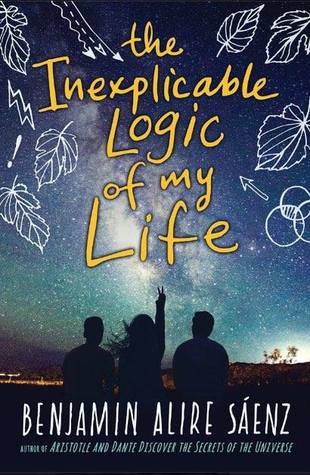
A warmly humane look at universal questions of belonging, infused with humour, from the bestselling author of Aristotle and Dante Discover the Secrets of the Universe. Sal used to know his place with his adoptive gay father, their loving Mexican American family, and his best friend, Samantha. But it’s senior year, and suddenly Sal is throwing punches, questioning everything, and realizing he no longer knows himself. If Sal’s not who he thought he was, who is he?
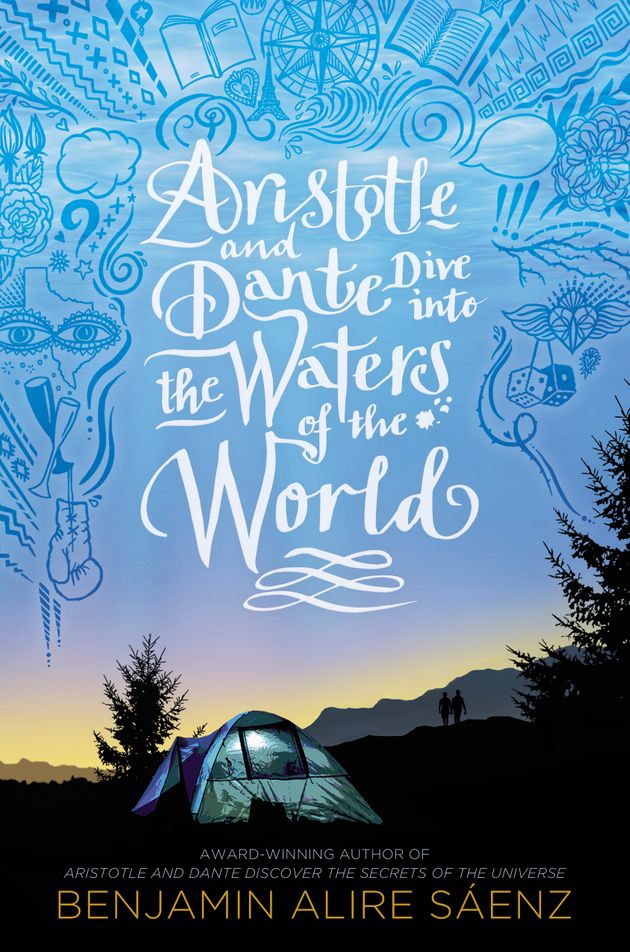
In Aristotle and Dante Discover the Secrets of the Universe, two boys in a border town fell in love. Now, they must discover what it means to stay in love and build a relationship in a world that seems to challenge their very existence. Ari has spent all of high school burying who he really is, staying silent and invisible. He expected his senior year to be the same. But something in him cracked open when he fell in love with Dante, and he can’t go back. Suddenly he finds himself reaching out to new friends, standing up to bullies of all kinds, and making his voice heard. And, always, there is Dante, dreamy, witty Dante, who can get on Ari’s nerves and fill him with desire all at once. The boys are determined to forge a path for themselves in a world that doesn’t understand them. But when Ari is faced with a shocking loss, he’ll have to fight like never before to create a life that is truthfully, joyfully his own.The highly anticipated sequel to the critically acclaimed, multiple award-winning novel Aristotle and Dante Discover the Secrets of the Universe is an achingly romantic, tender tale sure to captivate fans of Adam Silvera and Mary H.K. Choi.

Zach is eighteen. He is bright and articulate. He's also an alcoholic and in rehab instead of high school, but he doesn't remember how he got there. He's not sure he wants to remember. Something bad must have happened. Something really, really bad. Remembering sucks and being alive - well, what's up with that? I have it in my head that when we're born, God writes things down on our hearts. See, on some people's hearts he writes Happy and on some people's hearts he writes Sad and on some people's hearts he writes Crazy on some people's hearts he writes Genius and on some people's hearts he writes Angry and on some people's hearts he writes Winner and on some people's hearts he writes Loser. It's all like a game to him. Him. God. And it's all pretty much random. He takes out his pen and starts writing on our blank hearts. When it came to my turn, he wrote Sad. I don't like God very much. Apparently he doesn't like me very much either.

Winner of the 2013 PEN/Faulkner Award for Fiction!Benjamin Alire Sáenz's stories reveal how all borders—real, imagined, sexual, human, the line between dark and light, addict and straight—entangle those who live on either side. Take, for instance, the Kentucky Club on Avenida Juárez two blocks south of the Rio Grande. It's a touchstone for each of Sáenz's stories. His characters walk by, they might go in for a drink or to score, or they might just stay there for a while and let their story be told. Sáenz knows that the Kentucky Club, like special watering holes in all cities, is the contrary to borders. It welcomes Spanish and English, Mexicans and gringos, poor and rich, gay and straight, drug addicts and drunks, laughter and sadness, and even despair. It's a place of rich history and good drinks and cold beer and a long polished mahogany bar. Some days it smells like piss. "I'm going home to the other side." That's a strange statement, but you hear it all the time at the Kentucky Club.Benjamin Alire Sáenz is a highly regarded writer of fiction, poetry, and children's literature. Like these stories, his writing crosses borders and lands in our collective psyche. Poets & Writers Magazine named him one of the fifty most inspiring writers in the world. He's been a finalist for the Los Angeles Times Book Prize and PEN Center's prestigious award for young adult fiction. Sáenz is the chair of the creative writing department of University of Texas at El Paso.Awards:PEN/Faulkner Award for FictionLambda Literary AwardSouthwest Book Award
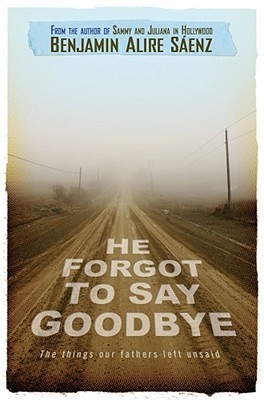
"I mean, it's not as if I want a father. I have a father. It's just that I don't know who he is or where he is. But I have one."Ramiro Lopez and Jake Upthegrove don't appear to have much in common. Ram lives in the Mexican-American working-class barrio of El Paso called "Dizzy Land." His brother is sinking into a world of drugs, wreaking havoc in their household. Jake is a rich West Side white boy who has developed a problem managing his anger. An only child, he is a misfit in his mother's shallow and materialistic world. But Ram and Jake do have one thing in They are lost boys who have never met their fathers. This sad fact has left both of them undeniably scarred and obsessed with the men who abandoned them. As Jake and Ram overcome their suspicions of each other, they begin to move away from their loner existences and realize that they are capable of reaching out beyond their wounds and the neighborhoods that they grew up in. Their friendship becomes a healing in a world of hurt.San Antonio Express-News wrote, "Benjamin Alire Sáenz exquisitely captures the mood and voice of a community, a culture, and a generation"; that is proven again in this beautifully crafted novel.

The Hollywood where Sammy Santos lives is not one of glitz and glitter, but a barrio at the edge of a small New Mexico town. In the summer before his senior year, Sammy falls in love with the beautiful, independent, and intensely vulnerable Juliana. Sammy's chronicle of his senior year is both a love story and a litany of loss, the tale of his love not only for Juliana but for their friends, a generation from a barrio: tough, innocent, humorous, and determined to survive.

Diego, the deaf-mute son of Mexican migrant workers, and his pseudo-yuppie sister, Helen, find their lives transformed when Helen's roommate, a dedicated AIDS nurse, discovers she has the ability for out-of-body travel

From award-winning poet Benjamin Alire Sáenz comes In Perfect Light, a haunting novel depicting the cruelties of cultural displacement and the resilience of those who are left in its aftermath.In Perfect Light is the story of two strong-willed people who are forever altered by a single tragedy. After Andés Segovia's parents are killed in a car accident when he is still a young boy, his older brother decides to steal the family away to Juárez, Mexico. That decision, made with the best intentions, sets into motion the unraveling of an American family.Years later, his family destroyed, Andés is left to make sense of the chaos -- but he is ill-equipped to make sense of his life. He begins a dark journey toward self-destruction, his talent and brilliance brought down by the weight of a burden too frightening and maddening to bear alone. The manifestation of this frustration is a singular rage that finds an outlet in a dark and seedy El Paso bar -- leading him improbably to Grace Delgado.Recently confronted with her own sense of isolation and mortality, Grace is an unlikely angel, a therapist who agrees to treat Andés after he is arrested in the United States. The two are suspicious of each other, yet they slowly arrive at a tentative working relationship that allows each of them to examine his and her own fragile and damaged past. Andés begins to confront what lies behind his own violence, and Grace begins to understand how she has contributed to her own self-exile and isolation. What begins as an intriguing favor to a friend becomes Grace's lifeline -- even as secrets surrounding the death of Andés' parents threaten to strain the connection irreparably.With the urgent, unflinching vision of a true storyteller and the precise, arresting language of a poet, Sáenz's In Perfect Light bears witness to the cruelty of circumstance and, more than offering escape, the novel offers the possibility of salvation.
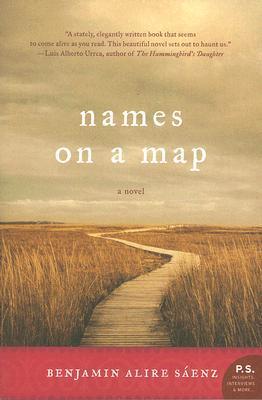
The Espejo family of El Paso, Texas, is like so many others in America in 1967, trying to make sense of a rapidly escalating war they feel does not concern them. But when the eldest son, Gustavo, a complex and errant rebel, receives a certified letter ordering him to report to basic training, he chooses to flee instead to Mexico. Retreating back to the land of his grandfather—a foreign country to which he is no longer culturally connected—Gustavo sets into motion a series of events that will have catastrophic consequences on the fragile bonds holding the family together.Told with raw power and searing bluntness, and filled with important themes as immediate as today’s headlines, Names on a Map is arguably the most important work to date of a major American literary artist.

“To write well about your life, you need to have a life worth writing about. On that score, Sáenz hits pay dirt.” —Booklist “A former Catholic priest, this poet creates prayerful verse that is at once mystical and utterly human.” —The Washington Post Poet, novelist, and popular YA writer Benjamin Alire Sáenz writes to the core truth of life’s ever-shifting memories. Set along the Mexican border, the contrast between the desert’s austere beauty and the brutality of border politics mirrors humanity’s capacity for both generosity and cruelty. In his numbered series “Meditation on Living in the Desert,” Sáenz turns to memory, heritage, and a host of literary progenitors as he directly confronts matters of faith, civil rights, and contemporary politics—always with the unrelenting moral urge to speak truth and do something. I am looking at a book of photographs.The photographs document the exodus of Mexicans crossing the desert.I am staring at the face of a woman who is more a girl than a woman.She is handing her documents to a government official. I know and you know and we all know that the documents are forged.The official is not in the photograph. Only the frightened eyes of a girl. A former Catholic priest who worked with Mother Teresa, Benjamin Alire Sáenz has published five books of poetry, four novels, a collection of short stories, and two bilingual children’s books. He received the American Book Award and teaches in the bilingual MFA program at University of Texas, El Paso.

The Aristotle and Dante Collection (Boxed Set): Aristotle and Dante Discover the Secrets of the Universe; Aristotle and Dante Dive into the Waters of the World
by Benjamin Alire Sáenz
Rating: 4.5 ⭐
Both the critically acclaimed, multiple award-winning Aristotle and Dante Discover the Secrets of the Universe and its highly anticipated sequel Aristotle and Dante Dive into the Waters of the World in one collectible hardcover boxed set.When Aristotle and Dante met that one summer at their local swimming pool, they had no way of knowing they would change each other’s lives forever. Together, they discover that they share a special bond—the kind that changes lives and lasts a lifetime—and tackle the most important truths about themselves and the kind of people they want to be.After opening themselves up to love, they must learn what it means to stay in love—and to build their relationship against the backdrop of the AIDS epidemic in 1980s America, in a world that doesn’t seem to want them to exist. To Ari, tragedy feels like his destiny, but can he forge his own path and create a life where he can not only survive, but thrive?This achingly honest boxed set Aristotle and Dante Discover the Secrets of the UniverseAristotle and Dante Dive into the Waters of the World

At seven, Gloria Santos accepts a ride with a charming stranger--and loses the only world she has ever known. Abducted and kept hidden by a respected academic for twenty long years, Gloria is raised in the shadow of her captor's dark, disturbed mind. She enters womanhood believing that life demands servitude, love means obsession, and fear is all-encompassing. Driven to violence to free herself, Gloria is caught between a world she hates and one she does not know. Now she must find the strength to bury her twisted past--or risk losing her newfound freedom forever. . . .

A major Latino writer’s intimate but healing journey through addiction, human desire and broken love.From "He Leaves a Message in the Middle of the Night"He loved beerand crack. He loved heroin, ecstasy, the sad musicof the bars. He said he loved you too. You arethinking of the night you met him. Late October night, the breeze as soft as his black eyes. He wasso hungry for trouble. You were so hungryfor anything that resembled love. Your fingertracing the tattoos on his chest, you dreamedof living in the prison of his arms. But you refusedto live in the prison of his deadly nights. Youcan’t survive without the morninglight. You repeat this again and again:He’s a man, not an illness. Tattoos and prison.Novels and poems. A bird can love a fish but they can’tlive in your apartment. He called again last nightand left a message that was meant to wound.He said: I want to know what you meant whenyou said I love you. You said: I love you. I meant I love you.He said: I want to know what you meant whenyou said goodbye. You said: Goodbye. I meant goodbye.You whispered his name in the dark.Benjamin Alire Sáenz in 2013 won the Pen/Faulkner Award and the Lambda Award for his book Everything Begins and Ends at the Kentucky Club. His young adult novel Dante and Aristotle in Paradise was a 2013 Printz Honoree. He lives in El Paso, Texas.

Leseprobe - Aristoteles und Dante entdecken die Geheimnisse des Universums
by Benjamin Alire Sáenz
Rating: 4.4 ⭐
Die LESEPROBE zum E-Book "Aristoteles und Dante entdecken die Geheimnisse des Universums" von Benjamin Alire Sáenz! Mit Textauszügen, einer Titelinfo und der Autorenvita. Das komplette E-Book ist unter der ISBN 978-3-522-62113-7 erhältlich.Dante kann schwimmen. Ari nicht. Dante kann sich ausdrücken und ist selbstsicher. Ari fallen Worte schwer und er leidet an Selbstzweifeln. Dante geht auf in Poesie und Kunst. Ari verliert sich in Gedanken über seinen älteren Bruder, der im Gefängnis sitzt. Mit seiner offenen und einzigartigen Lebensansicht schafft es Dante, die Mauern einzureißen, die Ari um sich herum gebaut hat. Ari und Dante werden Freunde. Sie teilen Bücher, Gedanken, Träume und lachen gemeinsam. Sie beginnen die Welt des jeweils anderen neu zu definieren. Und entdecken, dass das Universum ein großer und komplizierter Ort ist, an dem manchmal auch erhebliche Hindernisse überwunden werden müssen, um glücklich zu werden! In atemberaubender Prosa erzählt Sáenz die Geschichte zweier Jungen, die Loyalität, Freundschaft, Vertrauen, Liebe – und andere kleine und große Geheimnisse des Universums entdecken.

This gripping suite of twelve dreams, infused with the conflict along the border of Mexico and the United States, traces humanity’s addiction to violence and killing—from boys stepping on ants to men shooting animals, men shooting women, men shooting enemies. The Dreams begin in a desert landscape where poverty and wealth grate against each other, and the ever present war becomes “as invisible as the desert sands we trample on.” The dreams, however, move toward a greater peace with Sáenz providing an unforgettable reading experience. From “The Fourth Families and Flags and Revenge”: I don’t believe a flagis importantenough to kiss—or even burn. Some men would hate meenough to kill meif they read these words. “Rage,” Sáenz said in an interview, “must be a component of any writer’s life. But this rage must also be contained—otherwise our very bodies will become chaos—our minds will become chaos. We need order.” Sáenz finds that order in poems, transforming his rage into something “more beautiful and gracious and forgiving.” Poet and novelist Benjamin Sáenz has written 10 books of poetry and prose, most recently In Perfect Light (HarperCollins). He was a Catholic priest, doing missionary and charity work in London, Tanzania, and the barrio parishes of El Paso, Texas. Upon leaving the priesthood, he was awarded a Stegner Fellowship at Stanford University. He teaches in the MFA program at University of Texas, El Paso.

Benjamin Saenz writes, "In the desert, we live in a desert of translation." That is exactly what he sets out to do, in this, his third book of poems—translate experience into words. He writes of history and learning and death. He writes of loss and knowledge and the difficulties of coming to terms with the harsh and untamable landscape of the border. Ultimately, his elegies are "stones that praise the lives" of those who have given him words. In the tradition of Latin American literature, Saenz believes that poetry should be part of the public discourse and not shunted aside as irrelevant to our country's larger issues. Here he maps out personal, political and spiritual histories. He speaks about political and literary heroes, anti-heroes and everyday people, and he remembers his growing up Chicano in the Catholic world of the U.S./Mexico Border. From these elements, he creates a philosophy of speaking publicly as poet.

"The story's rhythmic, repetitive structure makes it an excellent read-aloud. . . . Meanwhile, [Esau Andrade] Valencia's bright oil paintings evoke the joy of dreams and imagination. . . . Children of all backgrounds will enjoy it."—School Library JournalNinety-two-year-old Octavio Rivera is a beautiful dreamer. And lately he has been visited by some very interesting dreams—dreams about piñatas that spill their treasures before him, revealing kissing turtles, winged pigs, hitchhiking armadillos and many more fantastic things! Octavio doesn’t tell anyone about his dreams except his young granddaughter Regina because she alone understands beautiful and fantastic dreams. On the ninth afternoon Octavio prepares for his siesta hoping to be blessed with one last lovely dream. That afternoon he dreams of a sky full of sweet and perfect hummingbirds calling his name over and over again…Like Margaret Wild’s marvelous book Old Pig, A Perfect Season for Dreaming unfolds the sweet possibilities in relationships between the very old and the very young.Benjamin Alire Sáenz—novelist, poet, essayist and writer of children’s books—is at the forefront of the emerging Latino literatures. He has received the Wallace Stegner Fellowship and the Lannan Fellowship and an American Book Award. He teaches at the University of Texas at El Paso, and considers himself a fronterizo, a person of the border.Esau Andrade Valencia, born in Mexico, comes from a family of folk artists. Although still young, he is increasingly recognized as a master artist in the tradition of the great painters such as Diego Rivera and Rufino Tamayo, in whose footsteps he follows. Esau's paintings are included in the collection of The Museum of Latin American Art in Long Beach as well as in the Downey Museum of Art in California.

Sensitively told and true to the experience of many Mexican Americans, this bilingual picture book bridges the borders that separate all families who must live far apart from their loved ones.- Booklist"...accompanied by innovative illustrations, originally modeled with clay. Reminiscent of Mexican folk art, they fit the story especially well, conveying its warmth and poignancy."- Kirkus Reviews"A tender love story of a book...a kiss on the forehead at bedtime!"--Naomi Shihab Nye"A stylist in both poetry and prose, Saenz has now taken his magic of flight to younger readers. This is his gift to them. Parents, snuggle up to your children at night and read this delightful tale of Dieguito."-Gary Soto"La traduccion al espanol es buena y el diseno del libro es atractivo."- People en Espanol"The tender story in A Gift From Papa Diego / Un regalo de Papa Diego by Benjamin Alire Saenz is sprinkled with Spanish expressions throughout the English version, adding to the flavor of this bilingual tale. A glossary of the terms used is provided at the end of the book. In addition, a complete Spanish text is printed on each half page. Illustrations of wonderful clay figures painted with bright colors highlight the narrative and provide an attractive graphic border. This paperback original is a debut into the world of children's books for Mr. Saenz, and he has succeeded in writing a poignant read-aloud book for young children - at once entertaining and comforting."- Barbara Bonds ThomasBenjamin Alire Saenz was born in his grandmother's house in Picacho, New Mexico-a farming village 40 miles north of the border between Mexico and the United States. Ben's parents spoke mostly Spanish at home and his grandparents spoke only Spanish, so Ben learned much of his English from his brothers and sisters, his friends, and by watching cartoons on television. When he was a little boy, he was a passionate reader of comic books-Superman, Spiderman, Batman, and all the rest of the Super Heros. Ben thought it was cool that Superman could fly.Growing up, Ben discovered that he liked to write. He liked to draw and paint, too. He decided that he wanted

The Dog Who Loved Tortillas / La perrita que le encantaban las tortillas
by Benjamin Alire Sáenz
Rating: 3.2 ⭐
This is a bilingual book for kids and dogs and even their parents. Like all kids, Little Diego and his big sister Gabriela argue over their new dog Sofie. She belongs to me, says Diego. No, she’s mine, says Gabriela. It’s only when Sofie gets really sick that they find out who their tortilla-loving pup really belongs to. Once again, Benjamin Alire Sáenz shows he understands the chemistry and dynamics of family, this time with a dog stirring up the recipe. The illustrations for The Dog Who Loved Tortillas are by Geronimo Garcia, who created the characters of Little Diego and Gabriela first introduced in Sáenz’s early best-selling title A Gift from Papá Diego (sixty thousand copies in print).Benjamin Alire Sáenz received three starred Publishers Weekly reviews in 2008—one for his young adult novel He Forgot to Say Goodbye (Simon & Schuster) and two for his illustrated book A Perfect Season for Dreaming (Cinco Puntos Press). Long at the forefront of the emerging Latino literature in the United States, he has received both the Wallace Stegner and Lannan fellowships, and he is a recipient of the American Book Award. His young adult novel Sammy & Juliana in Hollywood was named one of the Top Ten Best Books for Young Adults in 2005. Saenz lives in El Paso, Texas.Geronimo Garcia is a highly successful and internationally recognized graphic designer. He lives in El Paso, Texas.


Saenz' poetry has always been centered in the geography and cultures of the desert Southwest. Dark and Perfect Angels moves deeper into that territory, exploring the difficult braiding of Mexican, Indian and European traditions of his heritage, the struggles and complications of family life, the visceral nature of religious faith in Mexico "where any saint worth praying to must be adorned with blood as well as gold," a priest's anointing of a young man dying from gunshot, the shedding of the priest's robes and the secular quest for faith.

a new collection of stories by this Chicano writer

Grandma Fina and Her Wonderful Umbrellas: La Abuelita Fina y sus sombrillas maravillosas
by Benjamin Alire Sáenz
Rating: 3.3 ⭐
Grandma Fina is walking through her neighborhood with her wonderful yellow umbrella. She loves her yellow umbrella! She stops to greet everyone she sees. Each one secretly thinks that Grandma Fina's ragged umbrella needs to be replaced with a new one.
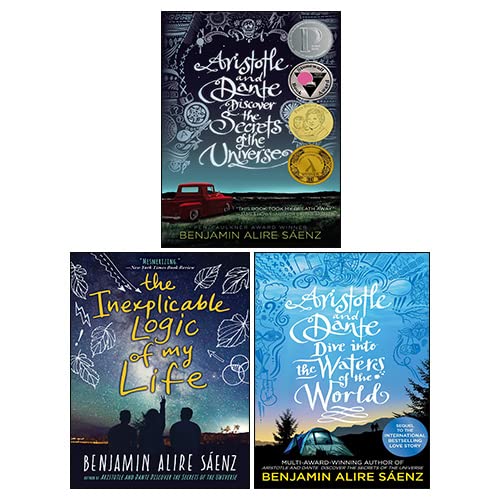
Aristotle and Dante Discover the Secrets of the Universe, The Inexplicable Logic of My Life, Aristotle and Dante Dive Into the Waters of the World By Benjamin Alire Sáenz 3 Books Collection Set
by Benjamin Alire Sáenz
Rating: 4.6 ⭐
Please Note That The Following Individual Books As Per Original ISBN and Cover Image In this Listing shall be DispatchedAristotle and Dante Discover the Secrets of the Universe, The Inexplicable Logic of My Life, Aristotle and Dante Dive Into the Waters of the World By Benjamin Alire Sáenz 3 Books CollectionAristotle and Dante Discover the Secrets of theAristotle is an angry teen with a brother in prison. Dante is a know-it-all who has an unusual way of looking at the world. When the two meet at the swimming pool, they seem to have nothing in common. But as the loners start spending time together, they discover that they share a special friendship—the kind that changes lives and lasts a lifetime.The Inexplicable Logic of MyA “mesmerizing, poetic exploration of family, friendship, love and loss” from the acclaimed author of Aristotle and Dante Discover the Secrets of the Universe. (New York Times Book Review) Sal used to know his place with his adoptive gay father, their loving Mexican American family, and his best friend, Samantha. But it’s senior year, and suddenly Sal is throwing punches, questioning everything, and realizing he no longer knows himself. If Sal’s not who he thought he was, who is he?Aristotle and Dante Dive Into the Waters of the

American Book Award-winning poet (Calendar of Dust) and novelist (Carry Me Like Water) examines this elusive but vital element of writing. Saenz explores how to aim for the emotional truth through fiction and how to use specific language to strive for clarity, mystery and immediacy. Assume people don't care; make them care with language, he says. Norelco

Poet, novelist, essayist, and children’s book author, Benjamin Alire Sáenz grew up on a cotton farm in New Mexico speaking only Spanish until he started elementary school. Although his education eventually took him to Denver, Belguim, Iowa, and California, Sáenz settled in the border region between Texas and New Mexico — an area that remains central to his writing.

Aristóteles y Dante se sumergen en las aguas del mundo / Aristotle and Dante Dive Into the Waters of the World
by Benjamin Alire Sáenz
Rating: 4.0 ⭐

Who is Me? Five-year-old Sam is Me, that’s who. He likes flowers and he likes to sit under a shady tree in the summertime. Max the Bear is Sam’s best buddy. Except when his best friend Emilio comes to visit. Max doesn’t like that. Sam also has a dog named Coffee because she looks like coffee and cream. Sam’s dad likes coffee with cream. Yuck! says Sam. Yuck! says Max. Sam and Max like to read books together. Max spells better than Sam. How can that be? And is it true that Max is a poet? Well, Sam’s mother doesn’t get along with Max, poet or no poet. And she makes wonderful tacos. Sam can eat two, but his father can eat up to five! And did I tell you that Sam and Coffee, along with Max, want to jump over the moon. Why should cows have all the fun?

Julian Cardona. October 20-December 3, 2005
by Benjamin Alire Sáenz