Loading genres...
Explore the best books about Culinary genre.
Hervé This (pronounced "Teess") is an internationally renowned chemist, a popular French television personality, a bestselling cookbook author, a longtime collaborator with the famed French chef Pierre Gagnaire, and the only person to hold a doctorate in molecular gastronomy, a cutting-edge field he pioneered. Bringing the instruments and experimental techniques of the laboratory into the kitchen, This uses recent research in the chemistry, physics, and biology of food to challenge traditional ideas about cooking and eating. What he discovers will entertain, instruct, and intrigue cooks, gourmets, and scientists alike.Molecular Gastronomy, This's first work to appear in English, is filled with practical tips, provocative suggestions, and penetrating insights. This begins by reexamining and debunking a variety of time-honored rules and dictums about cooking and presents new and improved ways of preparing a variety of dishes from quiches and quenelles to steak and hard-boiled eggs. He goes on to discuss the physiology of flavor and explores how the brain perceives tastes, how chewing affects food, and how the tongue reacts to various stimuli. Examining the molecular properties of bread, ham, foie gras, and champagne, the book analyzes what happens as they are baked, cured, cooked, and chilled.Looking to the future, Herv' This imagines new cooking methods and proposes novel dishes. A chocolate mousse without eggs? A flourless chocolate cake baked in the microwave? Molecular Gastronomy explains how to make them. This also shows us how to cook perfect French fries, why a souffl' rises and falls, how long to cool champagne, when to season a steak, the right way to cook pasta, how the shape of a wine glass affects the taste of wine, why chocolate turns white, and how salt modifies tastes.

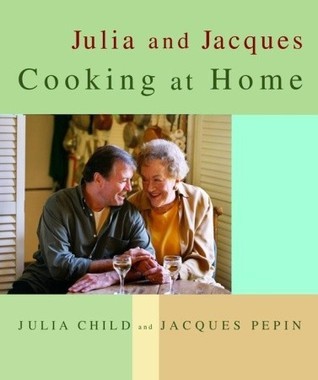
Two legendary cooks invite us into their kitchen and show us the basics of good home cooking.Julia Child and Jacques Pépin are synonymous with good food, and in these pages they demonstrate techniques (on which they don’t always agree), discuss ingredients, improvise, balance flavors to round out a meal, and conjure up new dishes from leftovers. Center stage are carefully spelled-out recipes flanked by Julia’s and Jacques’s comments—the accumulated wisdom of two lifetimes of honing their cooking skills. Nothing is written in stone, they imply. And that is one of the most important lessons for every good cook.So sharpen your knives and join in the fun as you learn to make: • Appetizers: from traditional and instant gravlax to your own sausage in brioche and a country pâté• Soups: from New England chicken chowder and onion soup gratinée to Mediterranean seafood stew and that creamy essence of mussels, billi-bi• Eggs: omelets and “tortillas”; scrambled, poached, and coddled eggs; eggs as a liaison for sauces and as the puffing power for soufflés• Salads and Sandwiches: basic green and near-Niçoise salads; a crusty round seafood-stuffed bread, a lobster roll, and a pan bagnat• Potatoes: baked, mashed, hash-browned, scalloped, souffléd, and French-fried• Vegetables: the favorites from artichokes to tomatoes, blanched, steamed, sautéed, braised, glazed, and gratinéed• Fish: familiar varieties whole and filleted (with step-by-step instructions for preparing your own), steamed en papillote, grilled, seared, roasted, and poached, plus a classic sole meunière and the essentials of lobster cookery• Poultry: the perfect roast chicken (Julia’s way and Jacques’s way); holiday turkey, Julia’s deconstructed and Jacques’s galantine; their two novel approaches to duck• Meat: the right technique for each cut of meat (along with lessons in cutting up), from steaks and hamburger to boeuf bourguignon and roast leg of lamb • Desserts: crème caramel, profiteroles, chocolate roulade, free-form apple tart—as you make them you’ll learn all the important building blocks for handling dough, cooking custards, preparing fillings and frostings• And much, much more . . .Throughout this richly illustrated book you’ll see Julia’s and Jacques’s hands at work, and you’ll sense the pleasure the two are having cooking together, tasting, exchanging ideas, and raising a glass to savor the fruits of their labor. Again and again they demonstrate that cooking is endlessly fascinating and challenging and, while ultimately personal, it is a joy to be shared.

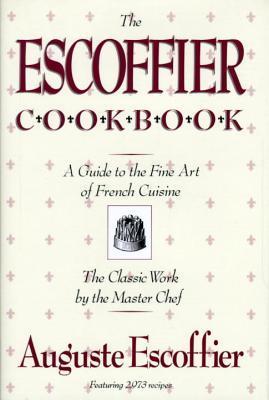
The American translation of the monumental Guide Culinaire, Auguste Escoffier’s indispensable guide to fine cooking originally published in 1903, with nearly 3,000 recipes for sauces, soups, roasts, desserts, and moreIn The Escoffier Cookbook, Auguste Escoffier, regarded as one of the greatest chefs of all time, presents 2,973 dishes, clearly and simply outlines the methods of preparation for each, and shows how to achieve perfection in delicious flavor.In Part I: The Fundamental Elements of Cooking, he explains the importance of flawless stocks and guides the reader through making them at home. He then moves on to the sauces—Espagnole, Velouté, Bechamel, Tomato, and Hollandaise—that form the foundation of French cooking. Next, Escoffier explores the Aspics and Jellies; the Court Bouillons (or short broths); Elementary Preparations (seasoning, condiments, garnishes, stuffings, and the like); and finally Leading Culinary Operations (braising, poaching, sauteing, roasting, grilling, frying, gratinating, and glazing, among others).In Part II: Recipes and Methods of Procedure, Escoffier offers nearly 3,000 recipes that show the incredible range of classic French cuisine. All the familiar standards are here—Coquilles Saint-Jacques, Crepes Suzette, Cassoulet, Charlotte Russe, Lobster Newburg, and Potatoes Dauphinoise, plus thousands of not-so-familiar standards.Featuring a comprehensive glossary and a collection of sample menus, The Escoffier Cookbook is an invaluable resource for connoisseurs, gourmets, and those who appreciate excellence in food preparation. Bon appétit!

An earlier edition of ISBN 0897331346 is available here.There were, and still are, great restaurants all over Europe, but the greater part of Blue Trout and Black Truffles is devoted to the eating places and vineyards of France. It is a vicarious experience to read about the culinary wonders of the notable establishments of another era that have become the last epicurean haven in this materialistic, mechanized world of fast-food chains and frozen-food dinners. Mr. Wechsberg reaches back to the twilight days of the Habsburg monarchy, when those splendid monuments to the haute cuisine in central Europe, Meissl and Schadn of Vienna and Gundel's of Budapest, were in their prime.

In this classic Southern cookbook, the “first lady of Southern cooking” (NPR) shares the seasonal recipes from a childhood spent in a small farming community settled by freed slaves. She shows us how to recreate these timeless dishes in our own kitchens—using natural ingredients, embracing the seasons, and cultivating community. With a preface by Judith Jones and foreword by Alice Waters.With menus for the four seasons, Miss Lewis (as she was almost universally known) shares the ways her family prepared and enjoyed food, savoring the delights of each special time of year.From the fresh taste of spring—the first wild mushrooms and field greens—to the feasts of summer—garden-ripe vegetables and fresh blackberry cobbler—and from the harvest of fall—baked country ham and roasted newly dug sweet potatoes—to the hearty fare of winter—stews, soups, and baked beans—Lewis sets down these marvelous dishes in loving detail.Here are recipes for Corn Pone and Crispy Biscuits, Sweet Potato Casserole and Hot Buttered Beets, Pan-Braised Spareribs, Chicken with Dumplings, Rhubarb Pie, and Brandied Peaches. Dishes are organized into more than 30 seasonal menus, such as A Late Spring Lunch After Wild-Mushroom Picking, A Midsummer Sunday Breakfast, A Christmas Eve Supper, and an Emancipation Day Dinner.In this seminal work, Edna Lewis shows us precisely how to recover, in our own country or city or suburban kitchens, the taste of the fresh, good, and distinctly American cooking that she grew up with.

This book is perhaps the jewel in Prospect Book's crown. Within a few months of its first appearance in 1986 it was hailed as a modern classic. Fiona MacCarthy wrote in The Times that, 'the book is a large and grandiose life history, a passionate narrative of extremes of experience.'; Jeremy Round called Patience Gray 'he high priestess of cooking';, whose book pushes the form of the cookery book as far as it can go. Angela Carter remarked that it was less a cookery book that a summing-up of the genre of the late-modern British cookery book. The work has attracted a cult following in the United States, where passages have been read out at great length on the radio; and it has been anthologized by Paul Levy in The Penguin Book of Food and Drink. It was given a special award by the Andre Simon Book Prize committee in 1987.

This is my guide to making you a better cook and it's the biggest book I've ever done! I think it looks beautiful and is full of simple and accessible recipes (160 of them!) that will blow the socks off your family and any guests you might have round for dinner. And that's not all - there’s information on the equipment that I think you should have in your kitchen, advice on how to recognize and cook loads of different cuts of meat, as well as on how to get the best value and quality when you’re out shopping. With Britain consuming more processed food than the rest of Europe put together, it’s a sad fact that most people just aren’t confident enough to cook any more. I'm hoping that with this new book, everyone will get stuck in and reclaim our fantastic cooking heritage!

This extraordinary cookbook, Classic Indian Cooking , amounts to a complete course in Indian cuisine. Elucidated by over 100 line drawings, it systematically introduces the properties of all the basic spices and special ingredients of Indian food, then explains the techniques employed in using them, always with the help of comparisons to familiar Western methods. It is immediately obvious that Indian food is rich and varied, yet not difficult to prepare. The cooking principles are basic and wellknown. The utensils needed are few and simple. As Julie Sahni says, "If you know how to fry, there are few tricks to Indian food." Every recipe has been especially designed for the American kitchen -- practically all the ingredients can be found in any American supermarket and there are scores of time-saving shortcuts with the food processor and handy directions for ahead-of-time preparation. Following a lively and absorbing introduction to the history of India's classic Moghul cuisine, Julie guides the cook through the individual components that make up an Indian meal. She begins with delicious appetizers like Crab Malabar and Hyderabad lime soup; continues through main courses, both nonvegetarian and vegetarian (this book is a treasure trove for the non-meat eater); goes on to all the side dishes and traditional accompaniments, from spinach raita and lentils with garlic butter to saffron pilaf and whole wheat flaky bread; and ends with the glorious desserts, like Ras Malai , sweetmeats, and beverages. Clear, illustrated, step-by-step instructions accompany the cook through every stage, even for making the many wondrous Indian breads, both by hand and with the food processor. And at the end of each recipe are balanced serving suggestions for every kind of meal, Among the many special features are ideas for appropriate wines, a useful spice chart, a complete glossary (which might also come in handy when ordering in Indian restaurants), and a mailorder shopping guide that will make Indian spices accessible anywhere. Most important, Julie Sahni imparts the secrets to mastering the art of Indian cooking. Even the beginner will quickly learn to move within the classic tradition and improvise with sureness and ease. Julie Sahni has written a masterpiece of culinary instruction, as readable as it is usable, a joy to cook from, a fascination to read.

Melanie Dunea meets Heat in this award-winning photographer's stunning celebration of world-famous chefs and their final meals.Chefs have been playing the "My Last Supper" game among themselves for decades, if not centuries, but it had always been kept within the profession until now. Melanie Dunea came up with the ingenious idea to ask fifty of the world's famous chefs to let her in on this insider's game and tell her what their final meals would be. My Last Supper showcases their fascinating answers alongside stunning Vanity Fair -style portraits. Their responses are surprising, refreshing, and as distinct from each other as the chefs themselves. The portraits--gorgeous, intimate, and playful--are informed by their answers and reveal the passions and personalities of the most respected names in the business. Lastly, one recipe from each landmark meal is included in the back of the book. With My Last Supper , Dunea found a way into the typically harried, hidden minds of the people who have turned preparing food into an art. Who wouldn't want to know where Alain Ducasse would like his supper to be? And who would prepare Daniel Boulud's final meal? What would Anthony Bourdain's guest list look like? As the clock ticked, what album would Gordon Ramsay be listening to? And just what would Mario Batali eat for the last time? Ferrán Adrià, José Andrés, Dan Barber, Lidia Bastianich, Mario Batali, Rick Bayless, Michelle Bernstein, Daniel Boulud, Anthony Bourdain, Scott Conant, Gary Danko, Hélène Darroze, Alain Ducasse, Wylie Dufresne, Suzanne Goin, Gabrielle Hamilton, Fergus Henderson, Thomas Keller, Giorgio Locatelli, Masa Kobayashi, Nobu, Jamie Oliver, Jacques Pepin, Gordon Ramsay, Michel Richard, Eric Ripert, Marcus Samuelsson, Charlie Trotter, Jean-Georges Vongerichten and more…

In this updated and greatly enlarged edition of her Book of Middle Eastern Food, Claudia Roden re-creates a classic. The book was originally published here in 1972 and was hailed by James Beard as "a landmark in the field of cookery"; this new version represents the accumulation of the author's thirty years of further extensive travel throughout the ever-changing landscape of the Middle East, gathering recipes and stories.Now Ms. Roden gives us more than 800 recipes, including the aromatic variations that accent a dish and define the country of origin: fried garlic and cumin and coriander from Egypt, cinnamon and allspice from Turkey, sumac and tamarind from Syria and Lebanon, pomegranate syrup from Iran, preserved lemon and harissa from North Africa. She has worked out simpler approaches to traditional dishes, using healthier ingredients and time-saving methods without ever sacrificing any of the extraordinary flavor, freshness, and texture that distinguish the cooking of this part of the world.Throughout these pages she draws on all four of the region's major cooking styles: - The refined haute cuisine of Iran, based on rice exquisitely prepared and embellished with a range of meats, vegetables, fruits, and nuts - Arab cooking from Syria, Lebanon, and Jordan--at its finest today, and a good source for vegetable and bulgur wheat dishes - The legendary Turkish cuisine, with its kebabs, wheat and rice dishes, yogurt salads, savory pies, and syrupy pastries - North African cooking, particularly the splendid fare of Morocco, with its heady mix of hot and sweet, orchestrated to perfection in its couscous dishes and taginesFrom the tantalizing mezze--those succulent bites of filled fillo crescents and cigars, chopped salads, and stuffed morsels, as well as tahina, chickpeas, and eggplant in their many guises--to the skewered meats and savory stews and hearty grain and vegetable dishes, here is a rich array of the cooking that Americans embrace today. No longer considered exotic--all the essential ingredients are now available in supermarkets, and the more rare can be obtained through mail order sources (readily available on the Internet)--the foods of the Middle East are a boon to the home cook looking for healthy, inexpensive, flavorful, and wonderfully satisfying dishes, both for everyday eating and for special occasions.
![The Flavor Bible: The Essential Guide to Culinary Creativity, Based on the Wisdom of America's Most Imaginative Chefs [Hardcover]](https://m.media-amazon.com/images/S/compressed.photo.goodreads.com/books/1699817696i/163120162.jpg)
Winner of the 2009 James Beard Book Award for Best Book: Reference and ScholarshipGreat cooking goes beyond following a recipe--it's knowing how to season ingredients to coax the greatest possible flavor from them. Drawing on dozens of leading chefs' combined experience in top restaurants across the country, Karen Page and Andrew Dornenburg present the definitive guide to creating "deliciousness" in any dish. Thousands of ingredient entries, organized alphabetically and cross-referenced, provide a treasure trove of spectacular flavor combinations. Readers will learn to work more intuitively and effectively with ingredients; experiment with temperature and texture; excite the nose and palate with herbs, spices, and other seasonings; and balance the sensual, emotional, and spiritual elements of an extraordinary meal.Seasoned with tips, anecdotes, and signature dishes from America's most imaginative chefs, THE FLAVOR BIBLE is an essential reference for every kitchen.

With his fabulous restaurants and bestselling Ottolenghi Cookbook, Yotam Ottolenghi has established himself as one of the most exciting talents in the world of cookery and food writing. This exclusive collection of vegetarian recipes is drawn from his column 'The New Vegetarian' for the Guardian's Weekend magazine, and features both brand-new recipes and dishes first devised for that column.Yotam's food inspiration comes from his strong Mediterranean background and his unapologetic love of ingredients. Not a vegetarian himself, his approach to vegetable dishes is wholly original and innovative, based on strong flavours and stunning, fresh combinations. With sections devoted to cooking greens, aubergines, brassicas, rice and cereals, pasta and couscous, pulses, roots, squashes, onions, fruit, mushrooms and tomatoes, the breadth of colours, tastes and textures is extraordinary.Featuring vibrant, evocative food photography from acclaimed photographer Jonathan Lovekin, and with Yotam's voice and personality shining through, Plenty is a must-have for meat-eaters and vegetarians alike.

"One of America's great chefs" (Vogue) shares how his drive to cook immaculate food won him international renown-and fueled his miraculous triumph over tongue cancer. In 2007, chef Grant Achatz seemingly had it made. He had been named one of the best new chefs in America by Food & Wine in 2002, received the James Beard Foundation Rising Star Chef of the Year Award in 2003, and in 2005 he and Nick Kokonas opened the conceptually radical restaurant Alinea, which was named Best Restaurant in America by Gourmet magazine. Then, positioned firmly in the world's culinary spotlight, Achatz was diagnosed with stage IV squamous cell carcinoma-tongue cancer. The prognosis was grim, and doctors agreed the only course of action was to remove the cancerous tissue, which included his entire tongue. Desperate to preserve his quality of life, Grant undertook an alternative treatment of aggressive chemotherapy and radiation. But the choice came at a cost. Skin peeled from the inside of Grant's mouth and throat, he rapidly lost weight, and most alarmingly, he lost his sense of taste. Tapping into the discipline, passion, and focus of being a chef, Grant rarely missed a day of work. He trained his chefs to mimic his palate and learned how to cook with his other senses. As Kokonas was able to attest: The food was never better. Five months later, Grant was declared cancer-free, and just a few months following, he received the James Beard Foundation Outstanding Chef in America Award. Life, on the Line tells the story of a culinary trailblazer's love affair with cooking, but it is also a book about survival, about nurturing creativity, and about profound friendship. Already much- anticipated by followers of progressive cuisine, Grant and Nick's gripping narrative is filled with stories from the world's most renowned kitchens-The French Laundry, Charlie Trotter's, el Bulli- and sure to expand the audience that made Alinea the number-one selling restaurant cookbook in America last year.

Reviving the inspiring message of M. F. K. Fisher’s How to Cook a Wolf — written in 1942 during wartime shortages— An Everlasting Meal shows that cooking is the path to better eating.Through the insightful essays in An Everlasting Meal, Tamar Adler issues a rallying cry to home cooks.In chapters about boiling water, cooking eggs and beans, and summoning respectable meals from empty cupboards, Tamar weaves philosophy and instruction into approachable lessons on instinctive cooking. Tamar shows how to make the most of everything you buy, demonstrating what the world’s great chefs that great meals rely on the bones and peels and ends of meals before them.She explains how to smarten up simple food and gives advice for fixing dishes gone awry. She recommends turning to neglected onions, celery, and potatoes for inexpensive meals that taste full of fresh vegetables, and cooking meat and fish resourcefully.By wresting cooking from doctrine and doldrums, Tamar encourages readers to begin from wherever they are, with whatever they have. An Everlasting Meal is elegant testimony to the value of cooking and an empowering, indispensable tool for eaters today.

With Jerusalem, Ottolenghi re-teams with his friend and co-owner of his restaurants, Sami Tamimi. Both men were born in Jerusalem in the same Tamimi on the Arab east side and Ottolenghi in the Jewish west. In this book they explore the vibrant cuisine of their home city together, and present an authentic collection of recipes that reflects the city's melting pot of Muslim, Jewish, Arab, Christian and Armenian communities. From their unique cross-cultural perspectives, Ottolenghi and Tamimi share 120 authentic from soups (Frikkeh, Chicken with Kneidelach), to meat and fish (Chicken with Cardamom Rice; Sharmula Bream with Rose Petals), to vegetables and salads (Chargrilled Squash with Labneh and Pickled Walnut Salsa), pulses and grains (Beetroot and SaffronRice); and cakes and desserts (Fig and Arak Trifle; Clementine and Almond Cake). Their cookbook is illustrated with 130 full-colour photographs, showcasing their sumptuous dishes in the dazzling setting of Jerusalem city. Ottolenghi and Tamimi have five bustling restaurants in London, UK. Ottolenghi is one of the most respected chefs in the world; his latest cookbook, Plenty , was a New York Times bestseller and one of the most lauded cookbooks of 2011. Jerusalem is his most personal, original and beautiful cookbook yet.

The hotly anticipated follow-up to London chef Yotam Ottolenghi’s bestselling and award-winning cookbook Plenty , featuring more than 150 vegetarian dishes organized by cooking method.Yotam Ottolenghi is one of the world’s most beloved culinary talents. In this follow-up to his bestselling Plenty , he continues to explore the diverse realm of vegetarian food with a wholly original approach. Organized by cooking method, more than 150 dazzling recipes emphasize spices, seasonality, and bold flavors. From inspired salads to hearty main dishes and luscious desserts, Plenty More is a must-have for vegetarians and omnivores alike. This visually stunning collection will change the way you cook and eat vegetables

The ultimate gift for the food lover. In the same way that 1,000 Places to See Before You Die reinvented the travel book, 1,000 Foods to Eat Before You Die is a joyous, informative, dazzling, mouthwatering life list of the world’s best food. The long-awaited new book in the phenomenal 1,000 . . . Before You Die series, it’s the marriage of an irresistible subject with the perfect writer, Mimi Sheraton―award-winning cookbook author, grande dame of food journalism, and former restaurant critic for The New York Times .1,000 Foods fully delivers on the promise of its title, selecting from the best cuisines around the world (French, Italian, Chinese, of course, but also Senegalese, Lebanese, Mongolian, Peruvian, and many more)―the tastes, ingredients, dishes, and restaurants that every reader should experience and dream about, whether it’s dinner at Chicago’s Alinea or the perfect empanada. In more than 1,000 pages and over 550 full-color photographs, it celebrates haute and snack, comforting and exotic, hyper-local and the universally a Tuscan plate of Fritto Misto. Saffron Buns for breakfast in downtown Stockholm. Bird’s Nest Soup. A frozen Milky Way. Black truffles from Le Périgord.Mimi Sheraton is highly opinionated, and has a gift for supporting her recommendations with smart, sensuous descriptions―you can almost taste what she’s tasted. You’ll want to eat your way through the book (after searching first for what you have already tried, and comparing notes). Then, following the romance, the where to taste the dish or find the ingredient, and where to go for the best recipes, websites included.

A 25th anniversary edition of the collection of classic recipes from the 'enfant terrible' of theUK restaurant scene, featuring striking photographs of his kitchen and his cooking.Once in a blue moon a book is published that changes irrevocably the face of things. WhiteHeat is one such book. Since it w as originally produced in 1990, it has gone on to becomeone of the most enduring classic cook books of our time. With its unique blend of outspokenopinion, recipes, and dramatic photographs, White Heat captures the magic and spirit ofMarco Pierre White in the heat of his kitchen.Marco Pierre White, the original 'enfant terrible', has earned his place in British culinaryhistory as much for his strong temperament as for his unique talent as a chef. Theyoungest chef ever to earn three Michelin stars, he has become not only a star chef ofinternational renown and food icon of our time, but also a multimillionaire entrepreneur.'White Heat is an edifying read ... a book that breaks new ground.' - Time Out'Wonderfully illustrated with photographs by Bob Carlos Clarke...this will sit equally wellon your coffee table or kitchen worktop.' - GQ'Amazingly religious experience' - Anthony Bourdain'White Heat is as unlike any previously published cook book as Marco is unlike any run of-the-mill chef.' - Sunday Telegraph

The best Indian food is cooked (and eaten) at home.Real Indian food is fresh, simple, and packed with flavor. In Made In India , Meera Sodha introduces you to the food she grew up eating every day. Unlike the fare you get at your local Indian takeout joint, her food is vibrant and surprisingly quick and easy to make.Meera serves up a feast of over 130 delicious recipes collected from three generations of her family. On the menu is everything from hot chapatis to street food (chili paneer; beet and feta samosas), fragrant curries (spinach and salmon, or perfect cinnamon lamb curry) to colorful side dishes (pomegranate and mint raita; kachumbar salad), and mouthwatering desserts (mango, lime, and passion fruit jello; pistachio and saffron kulfi). Made In India will change the way you cook, eat, and think about Indian food forever.

Ever wondered how to pan-fry a steak with a charred crust and an interior that's perfectly medium-rare from edge to edge when you cut into it? How to make homemade mac 'n' cheese that is as satisfyingly gooey and velvety-smooth as the blue box stuff, but far tastier? How to roast a succulent, moist turkey (forget about brining!)—and use a foolproof method that works every time?As Serious Eats's culinary nerd-in-residence, J. Kenji López-Alt has pondered all these questions and more. In The Food Lab, Kenji focuses on the science behind beloved American dishes, delving into the interactions between heat, energy, and molecules that create great food. Kenji shows that often, conventional methods don’t work that well, and home cooks can achieve far better results using new—but simple—techniques. In hundreds of easy-to-make recipes with over 1,000 full-color images, you will find out how to make foolproof Hollandaise sauce in just two minutes, how to transform one simple tomato sauce into a half dozen dishes, how to make the crispiest, creamiest potato casserole ever conceived, and much more.

Questlove is a drummer, producer, musical director, culinary entrepreneur, and New York Times best-selling author. What unites all of his work is a profound interest in creativity. In somethingtofoodabout, Questlove applies his boundless curiosity to the world of food. In conversations with ten innovative chefs in America, he explores what makes their creativity tick, how they see the world through their cooking and how their cooking teaches them to see the world. The conversations begin with food but they end wherever food takes them. Food is fuel. Food is culture. Food is history. And food is food for thought. Featuring conversations Nathan Myhrvold, Modernist Cuisine Lab, Seattle; Daniel Humm, Eleven Madison Park, and NoMad, NYC; Michael Solomonov, Zahav, Philadelphia; Ludo Lefebvre, Trois Mec, L.A.; Dave Beran, Next, Chicago; Donald Link, Cochon, New Orleans; Dominque Crenn, Atelier Crenn, San Francisco; Daniel Patterson, Coi and Loco'l, San Francisco; Jesse Griffiths, Dai Due, Austin; and Ryan Roadhouse, Nodoguro, PortlandFrom the Hardcover edition.

Maybe she’s on a photo shoot in Zanzibar. Maybe she’s making people laugh on TV. But all Chrissy Teigen really wants to do is talk about dinner. Or breakfast. Lunch gets some love, too.For years, she’s been collecting, cooking, and Instagramming her favorite recipes, and here they are: from breakfast all day to John’s famous fried chicken with spicy honey butter to her mom’s Thai classics. Salty, spicy, saucy, and fun as sin (that’s the food, but that’s Chrissy, too), these dishes are for family, for date night at home, for party time, and for a few life-sucks moments (salads). You’ll learn the importance of chili peppers, the secret to cheesy-cheeseless eggs, and life tips like how to use bacon as a home fragrance, the single best way to wake up in the morning, and how not to overthink men or Brussels sprouts. Because for Chrissy Teigen, cooking, eating, life, and love are one and the same.

From his bid to become Eudora Welty's lawn boy to the time George Plimpton offered to punch him in the nose, lineage has always been important to Rick Bass. Now at a turning point--in his midfifties, with his long marriage dissolved and his grown daughters out of the house--Bass strikes out on a journey of thanksgiving. His aim: to make a memorable meal for each of his mentors, to express his gratitude for the way they have shaped not only his writing but his life. The result, an odyssey to some of America's most iconic writers, is also a record of self-transformation as Bass seeks to recapture the fire that drove him as a young man. Along the way we join in escapades involving smuggled contraband, an exploding grill, a trail of blood through Heathrow airport, an episode of dog-watching with Amy Hempel in Central Park, and a near run-in with plague-ridden prairie dogs on the way to see Lorrie Moore, as well as heartwarming and bittersweet final meals with the late Peter Matthiessen, John Berger, and Denis Johnson.