Loading genres...
Explore the best books about Anti Racist genre.


A groundbreaking work of feminist history and theory analyzing the complex relations between various forms of oppression. Ain't I a Woman examines the impact of sexism on black women during slavery, the historic devaluation of black womanhood, black male sexism, racism within the recent women's movement, and black women's involvement with feminism.

A provocative meditation on race, Claudia Rankine's long-awaited follow up to her groundbreaking book Don't Let Me Be Lonely: An American Lyric.Claudia Rankine's bold new book recounts mounting racial aggressions in ongoing encounters in twenty-first-century daily life and in the media. Some of these encounters are slights, seeming slips of the tongue, and some are intentional offensives in the classroom, at the supermarket, at home, on the tennis court with Serena Williams and the soccer field with Zinedine Zidane, online, on TV-everywhere, all the time. The accumulative stresses come to bear on a person's ability to speak, perform, and stay alive. Our addressability is tied to the state of our belonging, Rankine argues, as are our assumptions and expectations of citizenship. In essay, image, and poetry, Citizen is a powerful testament to the individual and collective effects of racism in our contemporary, often named "post-race" society.

In these newly collected essays, interviews, and speeches, world-renowned activist and scholar Angela Y. Davis illuminates the connections between struggles against state violence and oppression throughout history and around the world.Reflecting on the importance of black feminism, intersectionality, and prison abolitionism for today's struggles, Davis discusses the legacies of previous liberation struggles, from the Black Freedom Movement to the South African anti-Apartheid movement. She highlights connections and analyzes today's struggles against state terror, from Ferguson to Palestine.Facing a world of outrageous injustice, Davis challenges us to imagine and build the movement for human liberation. And in doing so, she reminds us that "Freedom is a constant struggle."

National Book Award winner Jesmyn Ward takes James Baldwin’s 1963 examination of race in America, The Fire Next Time, as a jumping off point for this groundbreaking collection of essays and poems about race from the most important voices of her generation and our time.In light of recent tragedies and widespread protests across the nation, The Progressive magazine republished one of its most famous pieces: James Baldwin’s 1962 “Letter to My Nephew,” which was later published in his landmark book, The Fire Next Time. Addressing his fifteen-year-old namesake on the one hundredth anniversary of the Emancipation Proclamation, Baldwin wrote: “You know and I know, that the country is celebrating one hundred years of freedom one hundred years too soon.”Award-winning author Jesmyn Ward knows that Baldwin’s words ring as true as ever today. In response, she has gathered short essays, memoir, and a few essential poems to engage the question of race in the United States. And she has turned to some of her generation’s most original thinkers and writers to give voice to their concerns.The Fire This Time is divided into three parts that shine a light on the darkest corners of our history, wrestle with our current predicament, and envision a better future. Of the eighteen pieces, ten were written specifically for this volume.In the fifty-odd years since Baldwin’s essay was published, entire generations have dared everything and made significant progress. But the idea that we are living in the post-Civil Rights era, that we are a “postracial” society, is an inaccurate and harmful reflection of a truth the country must confront. Baldwin’s “fire next time” is now upon us, and it needs to be talked about.

In Heavy, Laymon writes eloquently and honestly about growing up a hard-headed black son to a complicated and brilliant black mother in Jackson, Mississippi. From his early experiences of sexual violence, to his suspension from college, to time in New York as a college professor, Laymon charts his complex relationship with his mother, grandmother, anorexia, obesity, sex, writing, and ultimately gambling. Heavy is a “gorgeous, gutting…generous” (The New York Times) memoir that combines personal stories with piercing intellect to reflect both on the strife of American society and on Laymon’s experiences with abuse. By attempting to name secrets and lies he and his mother spent a lifetime avoiding, he asks us to confront the terrifying possibility that few in this nation actually know how to responsibly love, and even fewer want to live under the weight of actually becoming free.Defiant yet vulnerable, an insightful, often comical exploration of weight, identity, art, friendship, and family through years of haunting implosions and long reverberations.

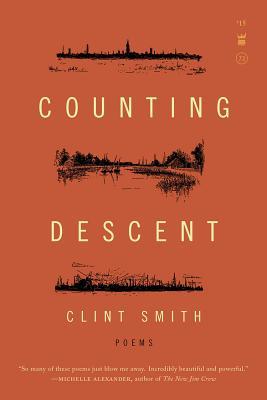
Clint Smith's debut poetry collection, Counting Descent, is a coming of age story that seeks to complicate our conception of lineage and tradition. Smith explores the cognitive dissonance that results from belonging to a community that unapologetically celebrates black humanity while living in a world that often renders blackness a caricature of fear. His poems move fluidly across personal and political histories, all the while reflecting on the social construction of our lived experiences. Smith brings the reader on a powerful journey forcing us to reflect on all that we learn growing up, and all that we seek to unlearn moving forward.

In 2014, award-winning journalist Reni Eddo-Lodge wrote about her frustration with the way that discussions of race and racism in Britain were being led by those who weren't affected by it. She posted a piece on her blog, entitled: 'Why I'm No Longer Talking to White People About Race' that led to this book.Exploring issues from eradicated black history to the political purpose of white dominance, whitewashed feminism to the inextricable link between class and race, Reni Eddo-Lodge offers a timely and essential new framework for how to see, acknowledge and counter racism. It is a searing, illuminating, absolutely necessary exploration of what it is to be a person of colour in Britain today.

An original and consequential argument about race, crime, and the lawToday, Americans are debating our criminal justice system with new urgency. Mass incarceration and aggressive police tactics—and their impact on people of color—are feeding outrage and a consensus that something must be done.But what if we only know half the story? In Locking Up Our Own, the Yale legal scholar and former public defender James Forman Jr. weighs the tragic role that some African Americans themselves played in escalating the war on crime. As Forman shows, the first substantial cohort of black mayors, judges, and police chiefs took office around the country amid a surge in crime. Many came to believe that tough measures—such as stringent drug and gun laws and “pretext traffic stops” in poor African American neighborhoods—were needed to secure a stable future for black communities. Some politicians and activists saw criminals as a “cancer” that had to be cut away from the rest of black America. Others supported harsh measures more reluctantly, believing they had no other choice in the face of a public safety emergency.Drawing on his experience as a public defender and focusing on Washington, D.C., Forman writes with compassion for individuals trapped in terrible dilemmas—from the young men and women he defended to officials struggling to cope with an impossible situation. The result is an original view of our justice system as well as a moving portrait of the human beings caught in its coils.

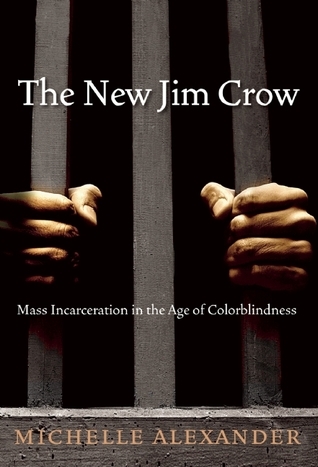
THE INSTANT NEW YORK TIMES BESTSELLER.New York Times Editor’s Pick.Library Journal Best Books of 2019.TIME Magazine's "Best Memoirs of 2018 So Far."O , Oprah’s Magazine’s “10 Titles to Pick Up Now.”Politics & Current Events 2018 O.W.L. Book Awards WinnerThe Root Best of 2018"This remarkable book reveals what inspired Patrisse's visionary and courageous activism and forces us to face the consequence of the choices our nation made when we criminalized a generation. This book is a must-read for all of us." - Michelle Alexander, New York Times bestselling author of The New Jim CrowA poetic and powerful memoir about what it means to be a Black woman in America―and the co-founding of a movement that demands justice for all in the land of the free.Raised by a single mother in an impoverished neighborhood in Los Angeles, Patrisse Khan-Cullors experienced firsthand the prejudice and persecution Black Americans endure at the hands of law enforcement. For Patrisse, the most vulnerable people in the country are Black people. Deliberately and ruthlessly targeted by a criminal justice system serving a white privilege agenda, Black people are subjected to unjustifiable racial profiling and police brutality. In 2013, when Trayvon Martin’s killer went free, Patrisse’s outrage led her to co-found Black Lives Matter with Alicia Garza and Opal Tometi.Condemned as terrorists and as a threat to America, these loving women founded a hashtag that birthed the movement to demand accountability from the authorities who continually turn a blind eye to the injustices inflicted upon people of Black and Brown skin.Championing human rights in the face of violent racism, Patrisse is a survivor. She transformed her personal pain into political power, giving voice to a people suffering inequality and a movement fueled by her strength and love to tell the country―and the world―that Black Lives Matter.When They Call You a Terrorist is Patrisse Khan-Cullors and asha bandele’s reflection on humanity. It is an empowering account of survival, strength and resilience and a call to action to change the culture that declares innocent Black life expendable.

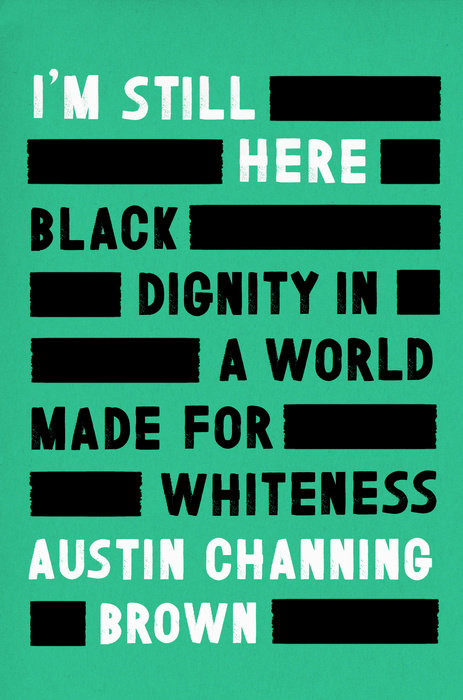
From a powerful new voice on racial justice, an eye-opening account of growing up Black, Christian, and female in middle-class white America. Austin Channing Brown's first encounter with a racialized America came at age 7, when she discovered her parents named her Austin to deceive future employers into thinking she was a white man. Growing up in majority-white schools, organizations, and churches, Austin writes, "I had to learn what it means to love blackness," a journey that led to a lifetime spent navigating America's racial divide as a writer, speaker and expert who helps organizations practice genuine inclusion.In a time when nearly all institutions (schools, churches, universities, businesses) claim to value "diversity" in their mission statements, I'm Still Here is a powerful account of how and why our actions so often fall short of our words. Austin writes in breathtaking detail about her journey to self-worth and the pitfalls that kill our attempts at racial justice, in stories that bear witness to the complexity of America's social fabric--from Black Cleveland neighborhoods to private schools in the middle-class suburbs, from prison walls to the boardrooms at majority-white organizations.For readers who have engaged with America's legacy on race through the writing of Ta-Nehisi Coates and Michael Eric Dyson, I'm Still Here is an illuminating look at how white, middle-class, Evangelicalism has participated in an era of rising racial hostility, inviting the reader to confront apathy, recognize God's ongoing work in the world, and discover how blackness--if we let it--can save us all.

Black students' minds and bodies are under attack. We're fighting back."Again the folks at Rethinking Schools have stepped out to produce a timely volume that should become a central staple in how we understand race and the radical imaginary in K-12 classrooms. The heft and depth of Teaching for Black Lives stands as a revolutionary tool in the resistance against racist, fascist, white nationalist ideology in education." - David Stovall, Professor of African American Studies and Educational Policy Studies, University of Illinois Chicago.CONTENTSSection 1 — Making Black Lives Matter in Our SchoolsSection 2 — Enslavement, Civil Rights, and Black LiberationSection 3 — Gentrification, Displacement, and Anti-BlacknessSection 4 — Discipline, the Schools-to-Prison Pipeline, and Mass IncarcerationSection 5 — Teaching Blackness, Loving Blackness, and Exploring Identity

From one of the world's leading experts on unconscious racial bias, a personal examination of one of the central controversies and culturally powerful issues of our time, and its influence on contemporary race relations and criminal justice.We do not have to be racist to be biased. With a perspective that is scientific, investigative, and personal, Jennifer L. Eberhardt offers a reasoned look into the effects of implicit racial bias, ranging from the subtle to the dramatic. Racial bias can lead to disparities in education, employment, housing, and the criminal justice system--and then those very disparities further reinforce the problem. In Biased, Eberhardt reveals how even when we are not aware of bias and genuinely wish to treat all people equally, ingrained stereotypes infect our visual perception, attention, memory, and behavior.Eberhardt's extensive work as a consultant to law enforcement, as well as a researcher with unprecedented access to data, including footage from police officers' body-worn cameras, informs every aspect of her book and makes it much more than a work of social psychology. Her research occurs not just in the laboratory but in police departments, courtrooms, prisons, boardrooms, and on the street. Interviews are interwoven with memories and stories from Eberhardt's own life and family. She offers practical suggestions for reform, and takes the reader behind the scenes to police departments implementing her suggestions. Refusing to shy away from the tragic consequences of prejudice, Eberhardt addresses how racial bias is not the fault of, or restricted to, a few "bad apples" in police departments or other institutions. We can see evidence of bias at all levels of society in media, education, and business practices. In Biased, Eberhardt reminds us that racial bias is a human problem--one all people can play a role in solving.
A physician reveals how right-wing backlash policies have mortal consequences—even for the white voters they promise to help. In the era of Donald Trump, many lower- and middle-class white Americans are drawn to politicians who pledge to make their lives great again. But as Dying of Whiteness shows, the policies that result actually place white Americans at ever-greater risk of sickness and death.Physician Jonathan M. Metzl's quest to understand the health implications of "backlash governance" leads him across America's heartland. Interviewing a range of everyday Americans, he examines how racial resentment has fueled pro-gun laws in Missouri, resistance to the Affordable Care Act in Tennessee, and cuts to schools and social services in Kansas. And he shows these policies' costs: increasing deaths by gun suicide, rising dropout rates, and falling life expectancies. White Americans, Metzl argues, must reject the racial hierarchies that promise to aid them but in fact lead our nation to demise.

Praise for Katherine Franke’s The Perils of Marriage Equality : “A persuasive and provocative addition to scholarship on the history and the influence of marriage.” ― Women’s Review of Books “Rigorous, historical.” ― Los Angeles Review of Books Katherine Franke makes a powerful case for reparations for Black Americans by amplifying the stories of former slaves and calling for repairing the damage caused by America’s legacy of slavery. Building on the case started by Ta’Nehisi Coates, Repair invites readers to explore the historical context for reparations, offering a detailed account of the circumstances that surrounded the emancipation of enslaved African Americans in two unique contexts, the Sea Islands of South Carolina and Davis Bend, Jefferson Davis’s former plantation outside Vicksburg, Mississippi. Through these two critical historical examples, Franke unpacks the systemic racism and white privilege at the heart of American society and argues that reparations for slavery are both urgent and possible. Katherine Franke , professor at Columbia Law School, is one of the nation’s leading scholars writing on law, racial justice, African American history, and sexuality. She is a board member of Jewish Voice for Peace and chair of the Center for Constitutional Rights. Her first book was The Perils of Marriage Equality .

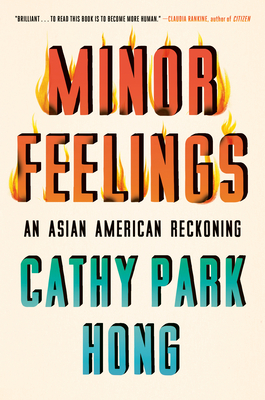
Poet and essayist Cathy Park Hong blends memoir, cultural criticism, and history to expose the truth of racialized consciousness in America. Binding these essays together is Hong's theory of "minor feelings." As the daughter of Korean immigrants, Cathy Park Hong grew up steeped in shame, suspicion, and melancholy. She would later understand that these "minor feelings" occur when American optimism contradicts your own reality—when you believe the lies you're told about your own racial identity.Hong uses her own story as a portal into a deeper examination of racial consciousness in America today. This book traces her relationship to the English language, to shame and depression, to poetry and artmaking, and to family and female friendship in a search to both uncover and speak the truth.

A remix of the National Book Award-winning Stamped from the Beginning for ages 12 and up.A timely, crucial, and empowering exploration of racism--and antiracism--in America.This is NOT a history book.This is a book about the here and now.A book to help us better understand why we are where we are.A book about race.The construct of race has always been used to gain and keep power, to create dynamics that separate and silence. This is a remarkable reimagining of Dr. Ibram X. Kendi's Stamped from the Beginning, winner of a National Book Award. It reveals the history of racist ideas in America and inspires hope for an antiracist future.Stamped takes you on a race journey from then to now, shows you why we feel how we feel, and why the poison of racism lingers. It also proves that while racist ideas have always been easy to fabricate and distribute, they can also be discredited.Through a gripping, fast-paced, and energizing narrative, Jason Reynolds shines a light on the many insidious forms of racist ideas--and on ways readers can identify and stamp out racist thoughts in their daily lives.

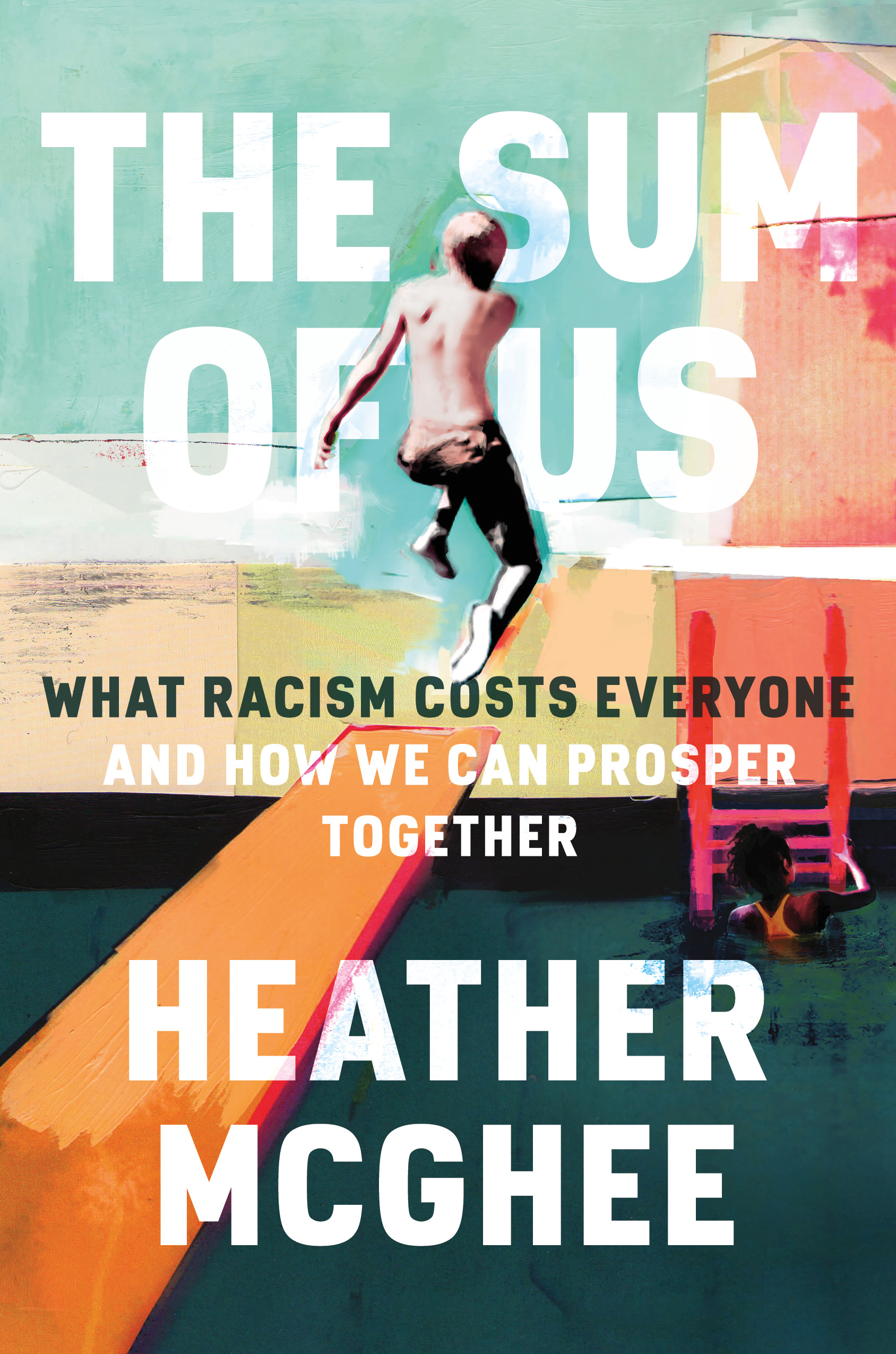
Heather McGhee's specialty is the American economy--and the mystery of why it so often fails the American public. From the financial crisis to rising student debt to collapsing public infrastructure, she found a common root problem: racism. But not just in the most obvious indignities for people of color. Racism has costs for white people, too. It is the common denominator of our most vexing public problems, the core dysfunction of our democracy and constitutive of the spiritual and moral crises that grip us all. But how did this happen? And is there a way out?McGhee embarks on a deeply personal journey across the country from Maine to Mississippi to California, tallying what we lose when we buy into the zero-sum paradigm--the idea that progress for some of us must come at the expense of others. Along the way, she meets white people who confide in her about losing their homes, their dreams, and their shot at better jobs to the toxic mix of American racism and greed. This is the story of how public goods in this country--from parks and pools to functioning schools--have become private luxuries; of how unions collapsed, wages stagnated, and inequality increased; and of how this country, unique among the world's advanced economies, has thwarted universal healthcare.But in unlikely places of worship and work, McGhee finds proof of what she calls the Solidarity Dividend: gains that come when people come together across race, to accomplish what we simply can't do on our own.McGhee marshals economic and sociological research to paint a story of racism's costs, but at the heart of the book are the humble stories of people yearning to be part of a better America, including white supremacy's collateral victims: white people themselves. With startling empathy, this heartfelt message from a Black woman to a multiracial America leaves us with a new vision for a future in which we finally realize that life can be more than a zero-sum game.

An essential guide to building transformative movements to address the challenges of our time, from one of the country’s leading organizers and a co-creator of Black Lives Matter “Excellent and provocative . . . a gateway [to] urgent debates.”—Keeanga-Yamahtta Taylor, The New YorkerNAMED ONE OF THE BEST BOOK OF THE YEAR BY Time • Marie Claire • Kirkus ReviewsIn 2013, Alicia Garza wrote what she called “a love letter to Black people” on Facebook, in the aftermath of the acquittal of the man who murdered seventeen-year-old Trayvon Martin. Garza Black people. I love you. I love us. Our lives matter. With the speed and networking capacities of social media, #BlackLivesMatter became the hashtag heard ’round the world. But Garza knew even then that hashtags don’t start movements—people do. Long before #BlackLivesMatter became a rallying cry for this generation, Garza had spent the better part of two decades learning and unlearning some hard lessons about organizing. The lessons she offers are different from the “rules for radicals” that animated earlier generations of activists, and diverge from the charismatic, patriarchal model of the American civil rights movement. She reflects instead on how making room amongst the woke for those who are still awakening can inspire and activate more people to fight for the world we all deserve. This is the story of one woman’s lessons through years of bringing people together to create change. Most of all, it is a new paradigm for change for a new generation of changemakers, from the mind and heart behind one of the most important movements of our time.