
Jonathan M. Metzl
Professor and Director of the Center for Medicine, Health, and Society at Vanderbilt University; a Psychiatrist; and the Research Director of The Safe Tennessee Project, a non-partisan, volunteer-based organization that is concerned with gun-related injuries and fatalities in America and in Tennessee.
7 Books Written

Dying of Whiteness: How the Politics of Racial Resentment Is Killing America's Heartland
by Jonathan M. Metzl
Rating: 4.2 ⭐
• 2 recommendations ❤️
A physician's "remarkable" account of how right-wing backlash policies have mortal consequences (Minneapolis Star Tribune) -- even for the white voters they promise to help.In election after election, conservative white Americans have embraced politicians who pledge to make their lives great again. But as physician Jonathan M. Metzl shows in Dying of Whiteness shows, the policies that result actually place white Americans at ever-greater risk of sickness and death. Interviewing a range of everyday Americans, Metzl examines how racial resentment has fueled progun laws in Missouri, resistance to the Affordable Care Act in Tennessee, and cuts to schools and social services in Kansas. e shows these policies' costs: increasing deaths by gun suicide, falling life expectancies, and rising dropout rates. Now updated with a new afterword, Dying of Whiteness demonstrates how much white America would benefit by emphasizing cooperation rather than chasing false promises of supremacy.

A powerful account of how cultural anxieties about race shaped American notions of mental illness The civil rights era is largely remembered as a time of sit-ins, boycotts, and riots. But a very different civil rights history evolved at the Ionia State Hospital for the Criminally Insane in Ionia, Michigan. In The Protest Psychosis, psychiatrist and cultural critic Jonathan Metzl tells the shocking story of how schizophrenia became the diagnostic term overwhelmingly applied to African American protesters at Ionia—for political reasons as well as clinical ones. Expertly sifting through a vast array of cultural documents, Metzl shows how associations between schizophrenia and blackness emerged during the tumultuous decades of the 1960s and 1970s—and he provides a cautionary tale of how anxieties about race continue to impact doctor-patient interactions in our seemingly postracial America.From the Trade Paperback edition.
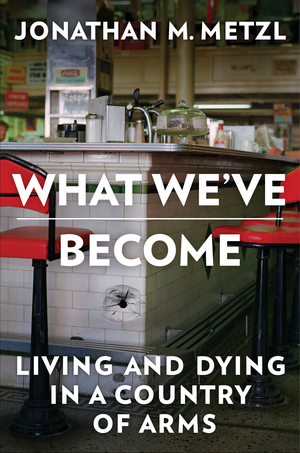
A searing reflection on the broken promise of safety in America. When a naked, mentally ill white man with an AR-15 killed four young adults of color at a nearby Waffle House, Nashville-based physician and gun policy scholar Dr. Jonathan M. Metzl once again advocated for commonsense gun reform. But as he peeled back evidence surrounding the racially charged mass shooting, a shocking question Did the approach he championed have it all wrong? Long a leading expert at the forefront of a movement advocating for gun reform as a matter of public health, Dr. Metzl has been on constant media call in the aftermath of fatal shootings. But the 2018 Nashville killings led him on a path toward recognizing the limitations of biomedical frameworks for fully diagnosing or treating the impassioned complexities of American gun politics. Increasingly, as Dr. Metzl came to understand it, public health is a harder sell in a nation that fundamentally disagrees about what it means to be safe, healthy, or free. This brilliant, piercing analysis shows mass shootings as a symptom of our most unresolved national conflicts. What We've Become ultimately sets us on the path of alliance-forging, racial-reckoning, and political power-brokering we must take to put things right.

Pills replaced the couch; neuroscience took the place of talk therapy; and as psychoanalysis faded from the scene, so did the castrating mothers and hysteric spinsters of Freudian theory. Or so the story goes. In Prozac on the Couch , psychiatrist Jonathan Michel Metzl boldly challenges recent psychiatric history, showing that there’s a lot of Dr. Freud encapsulated in late-twentieth-century psychotropic medications. Providing a cultural history of treatments for depression, anxiety, and other mental illnesses through a look at the professional and popular reception of three “wonder drugs”—Miltown, Valium, and Prozac—Metzl explains the surprising ways Freudian gender categories and popular gender roles have shaped understandings of these drugs. Prozac on the Couch traces the notion of “pills for everyday worries” from the 1950s to the early twenty-first century, through psychiatric and medical journals, popular magazine articles, pharmaceutical advertisements, and popular autobiographical "Prozac narratives.” Metzl shows how clinical and popular talk about these medications often reproduces all the cultural and social baggage associated with psychoanalytic paradigms—whether in a 1956 Cosmopolitan article about research into tranquilizers to “cure” frigid women; a 1970s American Journal of Psychiatry ad introducing Jan, a lesbian who “needs” Valium to find a man; or Peter Kramer’s description of how his patient “Mrs. Prozac” meets her husband after beginning treatment. Prozac on the Couch locates the origins of psychiatry’s “biological revolution” not in the Valiumania of the 1970s but in American popular culture of the 1950s. It was in the 1950s, Metzl points out, that traditional psychoanalysis had the most sway over the American imagination. As the number of Miltown prescriptions soared (reaching 35 million, or nearly one per second, in 1957), advertisements featuring uncertain brides and unfaithful wives miraculously cured by the “new” psychiatric medicines filled popular magazines. Metzl writes without nostalgia for the bygone days of Freudian psychoanalysis and without contempt for psychotropic drugs, which he himself regularly prescribes to his patients. What he urges is an increased self-awareness within the psychiatric community of the ways that Freudian ideas about gender are entangled in Prozac and each new generation of wonder drugs. He encourages, too, an understanding of how ideas about psychotropic medications have suffused popular culture and profoundly altered the relationship between doctors and patients.

What We've Become: Living and Dying in a Country of Arms - Library Edition
by Jonathan M. Metzl
Rating: 1.0 ⭐

Étouffer la révolte. La psychiatrie contre les Civils Rights, une histoire du contrôle social
by Jonathan M. Metzl
Alors que le mouvement des droits civiques commence à embraser l’Amérique des années 1950, les hôpitaux psychiatriques attestent d’une étrange évolution du diagnostic de la schizophrénie : jusque-là réservée aux intellectuels et aux femmes au foyer blanches, la maladie devient soudain l’apanage d’une nouvelle catégorie d’individus – majoritairement des hommes noirs et en colère. C’est en se plongeant dans les archives de l’hôpital d’État d’Ionia (Michigan) que le psychiatre Jonathan Metzl a fait cette découverte stupéfiante. D’inhibés qu’ils étaient, les « nouveaux» schizophrènes se voient qualifiés de belliqueux ou de paranoïaques et, parallèlement, sous la plume des grands psychiatres de l’époque, la schizophrénie devient une « psychose de révolte ». Plus encore, l’abus diagnostique s’immisce dans le langage courant au point que même Martin Luther King ou Stokely Carmichael le reprendront à leur compte, faisant de la schizophrénie une image de l’identité afro-américaine scindée en deux par l’hégémonisme blanc. Dans cet ouvrage passionnant, J. Metzl met au jour un racisme institutionnel d’un genre nouveau : l’instrumentalisation de la psychiatrie à des fins de domination des populations. Un ouvrage plus que jamais nécessaire, à l’heure où l’urgence de déconstruire toute forme de racialisation apparaît de façon toujours plus éclatante.

What We've Become: Living and Dying in a Country of Arms
by Jonathan M. Metzl