
Jay Earley
Jay Earley, Ph.D., is a transformational psychologist, group leader, psychotherapist, coach, author, teacher, and theorist. Jay is trained in Internal Family Systems Therapy and assists with professional trainings in IFS. He leads IFS Classes for the general public which teach IFS as a practice for self-help and peer counseling. He is active in the IFS community and has presented a number of workshops at IFS annual conferences. He also teaches classes on Communication from the Heart, based on IFS, interactive groups, and the Pattern System. He is nationally known for his innovation in the group psychotherapy field. His book, Interactive Group Therapy: Integrating Interpersonal, Action-Oriented, and Psychodynamic Approaches, Brunner/Mazel, describes his group therapy method in which people learn interpersonal relationship skills by working directly on their relationships with each other. During his ten years on the east coast, Jay was Director of the Group Therapy Center of Long Island, where he trained group therapists in this method. He has written a number of articles on interactive groups and made numerous presentations at regional and national psychotherapy conferences. He continues to lead interactive therapy groups in the Bay Area. Jay offers Life Purpose Coaching and Change Agent Coaching, on finding your life purpose and making a difference in the world. He has been writing about and leading workshops on Life Purpose since 1984. He has collected his writings on life purpose into an ebook Finding Your Life Purpose. Jay has created the Pattern System, a method for understanding interpersonal behavior and its underlying psychological issues, which is compatible with IFS. It is used for personal growth, understanding relationships, and interpersonal assessment and treatment in psychotherapy. In Jay's work with people, he is known for his empathy and his ability to understand a client's feelings, issues, and world view without imposing his own personality or agenda. His insight into human motivation and psychological patterns enables him to help people understand both their strengths and how they block themselves from getting what they want. Because of his own life-long journey of personal growth, his interest in the nature of human consciousness, and his success in creating a passionate and satisfying life for himself, his clients trust him to understand their struggles and spiritual longings, and to support their search for excitement and meaning in life. Jay has a Ph.D. in psychology from Saybrook Graduate School and is a graduate of the Gestalt Institute of San Francisco. He is a licensed psychologist in California (PSY6973) and a Certified Group Therapist. He has been in private practice as a psychotherapist working with individuals, couples, and groups since 1973. Jay's commitment to his own personal development has led him to participate in a wide variety of therapeutic and growth endeavors over the years. He has a loving, successful 20 year marriage and professional partnership with Bonnie Weiss. He has studied with Richard Olney, Jean Houston, Joanna Macy, and Richard Schwartz. He is a long-time student of the Diamond Approach of A. H. Almaas, a spiritual path that integrates psychotherapy insights and techniques with wisdom traditions in a unique Western approach to spiritual realization. As a result of his research on human social evolution and its relationship to our current global predicament, Jay has published a number of articles plus the book, Transforming Human Culture: Social Evolution and the Planetary Crisis, SUNY Press. During the 1980's, Jay studied with both Jean Houston and Joanna Macy. He was active in the peace movement as a member of Interhelp and Psychotherapists for Social Responsibility, where he led workshops which integrated psychological, spiritual, and planetary concerns. Study of the process by which people discover and actualize their life purpose led Jay to wri
30 Books Written

Self-Therapy: A Step-by-Step Guide to Creating Wholeness Using IFS, A Cutting-Edge Psychotherapy, 3rd Edition
by Jay Earley
Rating: 4.6 ⭐
• 1 recommendation ❤️
Understand your psyche in a clear and comprehensive way, and resolve deep-seated emotional issues. Self-Therapy makes the power of a cutting-edge psychotherapy approach accessible to everyone. Internal Family Systems Therapy (IFS) has been spreading rapidly across the country and the world. It is incredibly effective on a wide variety of life issues, such as self-esteem, procrastination, depression, and relationship issues. IFS is also user-friendly; it helps you to comprehend the complexity of your psyche. Dr. Earley shows how IFS is a complete method for psychological healing that you can use on your own.Self-Therapy is also helpful for therapists because it presents the IFS model in such detail that it is a manual for the method.

Self-Therapy: A Step-By-Step Guide to Creating Inner Wholeness Using IFS, a New, Cutting-Edge Therapy
by Jay Earley
Rating: 4.2 ⭐
Understand your psyche in a clear and comprehensive way, and resolve deep-seated emotional issues. Self-Therapy makes the power of a cutting-edge psychotherapy approach accessible to everyone. Internal Family Systems Therapy (IFS) has been spreading rapidly across the country in the past decade. It is incredibly effective on a wide variety of life issues, such as self-esteem, procrastination, depression, and relationship issues. IFS is also user-friendly; it helps you to comprehend the complexity of your psyche. Dr. Earley shows how IFS is a complete method for psychological healing that you can use on your own.Self-Therapy is also helpful for therapists because it presents the IFS model in such detail that it is a manual for the method.Many times in the past I used to say to friends, "I am at least two people." I often found myself doing something I really did not want to do, thinking things that I did not want to think, and feeling emotions I did not want to feel and over which I felt I did not have control. It seemed like there was another person inside me. On reading Self Therapy, I was so excited to find out what was going on. Many things I could not previously figure out quickly fell into place. For me it was a very exciting experience--finding out so much about myself. Not only that but this book also taught me how to 'rehabilitate' the 'other me'--or many other 'me's!Reading this book was one of the most enlightening experiences I have had. It is very well written and the author's attitude comes across very clearly and powerfully. There is no doubt but it written with a kind and altruistic heart and with the purpose of really helping individuals to understand and help themselves and integrate all their part. Self Therapy takes its place among the most treasured books on my bookshelves.-- Paddy Linehan, ThailandSelf-Therapy was a big help to me in the beginning when I didn't have muchknowledge of IFS or myself. The transcripts were intriguing because I looked atother people's experience in the book and recognized my parts. This helped meto realize that I'm not the only one with these difficult feelings. In my journal Iwrote out the answers to each of the questions for my parts, and this brought it alltogether for me.-- Mindy Lamberson, Des Moines, Iowa

We've all heard the voice of the inner critic―that part of us that judges us, shames us, and makes us feel inadequate. "You don't want to give in to the Critic, and it doesn't really work to fight against it," explains Dr. Jay Earley. "But there is a way to transform it into an invaluable ally." With Freedom from Your Inner Critic , Dr. Earley and psychotherapist Bonnie Weiss present a self-therapy approach for uncovering the psychological roots of our self-sabotaging inner voices and restoring our sense of worthiness. Filled with insights, case studies, and practical self-therapy exercises, this breakthrough book How to connect with your Inner Critic through the groundbreaking approach of Internal Family Systems (IFS) Therapy• The seven varieties of the Inner Critic and their positive intent• Healing your Criticized Child that is hurt by your Inner Critic• Awakening your Inner Champion―the antidote to the influence of your Inner Critic• How to transform your Inner Critic and learn to love yourself• How our self-confidence, motivation, and courage improve when we are free from our Inner Critics"Self-esteem is our birthright," says Dr. Earley. "And even the most intractable Inner Critic can learn to let go and allow you to blossom." Freedom from Your Inner Critic offers a solution to one of our greatest psychological challenges―so you can reclaim your confidence, freedom, and joy in life.

Self-Therapy : A Step-by-Step Guide to Creating Wholeness Using IFS, A Cutting-Edge Psychotherapy, 3rd Edition
by Jay Earley
Rating: 4.6 ⭐
Understand your psyche in a clear and comprehensive way, and resolve deep-seated emotional issues. Self-Therapy makes the power of a cutting-edge psychotherapy approach accessible to everyone. Internal Family Systems Therapy (IFS) has been spreading rapidly across the country and the world. It is incredibly effective on a wide variety of life issues, such as self-esteem, procrastination, depression, and relationship issues. IFS is also user-friendly; it helps you to comprehend the complexity of your psyche. Dr. Earley shows how IFS is a complete method for psychological healing that you can use on your own.Self-Therapy is also helpful for therapists because it presents the IFS model in such detail that it is a manual for the method.

Self-Therapy, Vol. 2: A Step-by-Step Guide to Advanced IFS Techniques for Working with Protectors
by Jay Earley
Rating: 4.3 ⭐
Self-Therapy brought Internal Family Systems Therapy to both therapists and the general public. It shows how working with parts can be user-friendly, respectful, and powerful. Self-Therapy, Vol. 2 takes the next step by describing advanced IFS techniques and insights related to staying in your true Self and working with protectors (defenses). If you have been using IFS with your clients or in your own inner work, this book will help you work through difficulties that may have arisen so your work can be even more healing and transformative. Learn when to switch parts, how to track your work, negotiate for Self-leadership, and work with polarization, Self-like parts, managers, and firefighters.
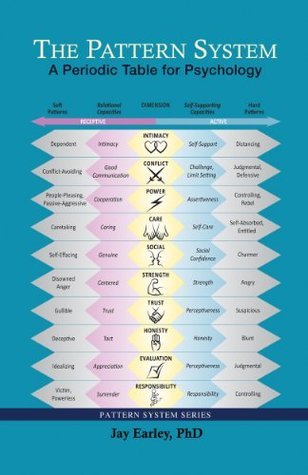
Do you wonder... Why do my partner and I get into so many fights? What is going on to keep me stuck in life? What am I doing to turn people off? Why am I attracted to the wrong people? Why is my partner acting that way? How can I understand my personality?The Pattern System is a breakthrough in understanding personality that is oriented toward psychological healing and personal growth.It also helps you to understand other people--why they respond as they do, whatmakes them tick. Once your have understood the Pattern System and exploredyourself according to its model, you will have a comprehensive map of yourpsyche. You will be able to see Your strengths Your defenses What drives your behavior Why you feel bad about yourself Your underlying emotional pain How you compensate for that Your inner conflicts The leading edge of your growthIf you are a therapist, coach, or other professional, do youask yourself... How can I understand my clients' personalities in a fuller way? Why is that client's therapy not moving? What is going on in my relationship with that client? What is the primary issue for that client? What are the psychodynamics underlying that behavior?The Pattern APeriodic Table for Psychology can help you answer these questions. You canfully understand your clients' personality patterns--not just their "type" butthe detailed structure of their psychology. The Pattern System doesn't just focus narrowly onpsychopathology. It doesn't even just focus on dysfunctional patterns. It alsohelps you to understand functional behavior and healthy capacities. This meansthat you can see your strengths and those capacities you need to develop toreach your personal goals.The Pattern System is different from the usual systems ofcharacter types, such as the Enneagram or the DISC, because these systemsattempt to capture a person's entire character in one type, even though they doallow for somewhat more complexity. The Pattern System recognizes and reflectsthe complexity of the human psyche. In the Pattern System, each dysfunctional pattern and healthy capacity describes just one aspect of a client's personality, andeach person will have many of them. In fact, the richness of the Pattern Systemfosters an attitude of looking deeply in order to understand the uniqueness andmultifaceted features of each individual's personality.One of the important aspects of the Pattern System is that aperson's profile can change over time. In fact, the distinction betweenproblematic patterns and healthy capacities gives you explicit informationabout those aspects of the psyche that can change through therapy, coaching, orother personal growth work--specifically how patterns can
Resolving Inner Conflict: Working Through Polarization Using Internal Family Systems Therapy
by Jay Earley
Rating: 4.1 ⭐
This book is a detailed treatment of how to work with inner conflict in Internal Family Systems Therapy, including transcripts of actual sessions to show exactly how the technique works. Though written for psychotherapists, it isalso accessible to people who want to deepen their IFS work on themselves.

The Inner Critic is the part of you that judges you, demeans you, and tells you who you should be. It undermines your self-confidence and makes you feel bad about yourself. Self-Therapy for Your Inner Critic shows how to convert your Inner Critic into an ally using Internal Family Systems Therapy (IFS), a powerful new approach. It is a follow-up to Self-Therapy, a widely-used IFS self-help book, showing how to apply IFS to transforming the Inner Critic. The authors identify seven types of Inner Critics and how to work with each one. You also learn how to evoke your Inner Champion, which is a magic bullet for dealing with the effects of Inner Critic attacks.In my work with people in a contemplative context, I have found self-judgment and harsh self-criticism to be pervasive, and often paralyzing and debilitating. Jay Earley and Bonnie Weiss have given us a detailed and elegant, yet down-to-earth, framework to help transform such inner criticism. What particularly distinguishes this very helpful book from many others is their understanding of the protective function of the inner critic in its many forms, how the inner critic is not ultimately the "enemy," but can rather, with inner work, become an inner "champion" and mentor. With numerous examples of individuals' successful work with the inner critic, sparkling insights throughout the book, and their clear charting of a path of healing and transformation, Earley and Weiss have provided a very valuable and accessible resource, one that I will recommend to my students.-- Donald Rothberg, Ph.D., Spirit Rock Meditation Center, Woodacre, CaliforniaJay and Bonnie have pioneered in bringing IFS out of therapy offices and into people's daily lives. This book contains key guideposts for the inner explorer in terms of what to expect when engaging inner critics... I can fully endorse this most recent contribution to their important project of popularizing IFS.-- Richard Schwartz, PhD, creator of IFS

Self-Therapy, Vol. 3: A Step-by-Step Guide to Using IFS for Eating Issues, Procrastination, the Inner Critic, Depression, Perfectionism, Anger, Communication, and More
by Jay Earley
Rating: 4.3 ⭐
The first book in this series, Self-Therapy, brought Internal Family Systems Therapy (IFS) to both therapists and the general public. IFS is a powerful and user-friendly method of therapy, which can be done on your own. Self-Therapy, Vol. 3 shows how IFS can be used to transform a variety of important psychological issues. You don’t need to have read Vol 2. If you have been using IFS with your clients or in your own inner work, this book will help you to heal and transform eating issues, procrastination, the inner critic, depression, perfectionism, anger, communication, and more.

Anger can arise in various ways in Internal Family Systems Therapy (IFS), depending on which part holds the anger, what function the anger serves, and whether the anger is disowned. Each situation requires a different type of therapeutic intervention as part of the IFS process. This professional booklet discusses these various circumstances and the approach that is most effective in each. It includes a transcript of an IFS session that illustrates some of these points.

Self-Therapy, Vol. 3: A Step-by-Step Guide to Using IFS for Eating Issues, Procrastination, the Inner Critic, Depression, Perfectionism, Anger, Communication, and More
by Jay Earley
Rating: 4.3 ⭐
The first book in this series, Self-Therapy, brought Internal Family Systems Therapy (IFS) to both therapists and the general public. IFS is a powerful and user-friendly method of therapy, which can be done on your own. Self-Therapy, Vol. 3 shows how IFS can be used to transform a variety of important psychological issues. You don’t need to have read Vol 2. If you have been using IFS with your clients or in your own inner work, this book will help you to heal and transform eating issues, procrastination, the inner critic, depression, perfectionism, anger, communication, and more.

Self-Therapy: Transform Stuck Parts of Yourself into Inner Resources of Strength, Love, and Freedom
by Jay Earley
Rating: 3.8 ⭐
The foundation of psychotherapy is dialogue between the therapist and patient but can you have an effective healing dialogue with yourself? Because our minds are actually a home to many sub-personalities, Dr. Jay Earley explains, we have the ability to heal ourselves by engaging directly with the many aspects of our psyche. With Self-Therapy, Dr. Earley offers a complete audio training course in a revolutionary therapy called Internal Family Systems (IFS), a powerful psychological tool for finding freedom from chronic emotional issues, relieving such conditions as depression and anxiety, and accessing the true Self that is the source of all healing.

This professional booklet describes a method of helping an IFS protector to let go of its role that doesn’t depend on first healing the exile it is protecting. You negotiate with the protector to allow the client to lead from Self in an upcoming life situation.

The Inner Critic judges you, demeans you, and tells you who you should be. It undermines your self-confidence and makes you feel bad about yourself. This book identifies seven types of Inner Critics, each of which judges you about something different. There is a quiz to help you understand which types of Critic are a problem for you, how they operate, and their underlying reasons for attacking you. Most important, this book will help you develop an aspect of yourself that we call the Inner Champion, which supports and encourages you. It is a magic bullet for dealing with the negative impacts of your Inner Critics. There is a different type of Inner Champion for each of the seven Critics. This book will help you awaken your Inner Champion and then practice activating it in your life whenever you need it. Activating Your Inner Champion is more than a book. It includes * An online workbook * An online quiz * Recorded guided meditations * An online community

Do you feel that the work you produce is never good enough? Do you work endlessly on projects or run them right up to the deadline? Is it hard for you to even start on a project because you fear it won't be good enough? Do you sit staring at your computer, unable to get going? Do you feel that your appearance, your home, or your children must be perfect or else you are a failure? Do you believe that making a mistake is the worst thing you can do? If you answered yes to some of these questions, you may be one of the many people suffering from Perfectionism. If so, you have a need to be perfect that goes far beyond what is actually required for excellence. This overblown demand on yourself can get in the way of your getting jobs done on time because you spend far too much time on them. Alternatively, it can lead you to procrastinate and avoid working on projects. Perfectionism can cause you to be uptight and worried much of the time. It can keep you from being relaxed and having fun and joy in life. It can unbalance your life because you spend far too much time on work or other attempts to be perfect, leaving little time for family, friends, love, and creativity. Your need for perfection is probably based on fears are unconscious and come from unresolved childhood pain. Letting Go of Perfectionism will help you to understand and work through these fears. It will help you set up a practice for overcoming perfectionism so you can be more at ease. As a result, you will be more present in each moment and less anxious about the outcome of your work. You'll be able to discriminate when your work feels "good enough" and allow it to come to a natural completion without forcing it to be perfect. The book will help you do your work in a way that flows, so you can feel more pleasure and lightness. You'll go through your life in a more relaxed way, without pushing, yet still make progress with your work. By letting go of the struggle to be perfect, you will find time for your other needs, such as socializing, relaxation, fun, and personal health. In the end, you will be much more at ease as you produce excellent work, while having a balanced, relaxed, and happy life. This book is based on the Pattern System, a comprehensive and detailed map of the human psyche.Letting Go of Perfectionism is more than a book. It includes* An online workbook* An online quiz* Recorded guided meditations* An online community

Do you wonder...Conflict, Care, and Love will help you understand your relationship patterns and your partner's. For example, are you Dependent, People-Pleasing, or Conflict-Avoiding? Is your partner controlling, Passive-Aggressive, or Distancing?You will learn how to transform your relationship patternsso you can... Conflict, Care, and Love is based on the Pattern System, which is a systematic approach to understanding personality that is oriented toward psychological healing and personal development.This book covers the four main dimensions of the Pattern System that influence our love relationships--Intimacy, Conflict, Power, and Care.Once you have explored yourself and your partner according to these dimension, you will understand what is working and what isn't working in your relationship, and what to do about it.Therapists, coaches, and other helping professionals can use Conflict, Care, and Love to understand the detailed psychological structure and dynamics behind their clients' relationships issues.The book shows how you and your partner can use Internal Family Systems Therapy, a powerful, user-friendly therapy method, to work on yourself to transform your patterns so your relationship can reach its potential.

Meine innere Welt verstehen: Selbsttherapie mit Persönlichkeitsanteilen. Mit einem Vorwort von Richard C. Schwartz, Begründer der IFS-Therapie
by Jay Earley
Rating: 4.1 ⭐
»Faust beklagte, er habe zwei Seelen in seiner Brust. Ich habe eine ganze sich zankende Menge«, meinte Bismarck. Tatsächlich beherbergt unsere Psyche viele Teilpersönlichkeiten, so der Psychologe Jay Earley. Indem wir mit ihnen in direkten Kontakt treten, können wir unsere emotionale Heilung selbst in die Hand zu nehmen. Dieses Buch ermöglicht erstmals praktischen Zugang zur hocheffektiven IFS-Therapie. Anhand der detaillierten Anleitungen können selbst extreme Verhaltensmuster transformiert werden.Psychotherapie funktioniert durch einen Dialog zwischen Therapeut und Klient – aber was, wenn jeder von uns einen effektiven heilenden Dialog mit sich selbst anfangen könnte? „Weil unsere Psyche tatsächlich viele Subpersönlichkeiten beherbergt“, erklärt der Psychologe Jay Earley, „haben wir die Möglichkeit, unsere emotionale Heilung selbst in die Hand zu nehmen, indem wir in direkten Kontakt mit unseren inneren Anteilen treten.“ Mit seinem Buch ermöglicht Dr. Earley erstmals praktischen Zugang zu der hoch effektiven und wegweisenden therapeutischen Methode namens Internal Family Systems- oder kurz IFS-Therapie, (»Systemische Arbeit mit der inneren Familie«). Diese weltweit anerkannte Therapieform macht endlich nachvollziehbar, warum wir oft Dinge tun, die wir doch gar nicht wollen, und anderes, was wir uns fest vornehmen, scheinbar selbst sabotieren. Denn unsere „innere WG“ liegt häufig miteinander im Clinch. Lähmung und inneres Hin-und-Her-gerissen-Sein ist die Folge.Anhand der Übungen und Schritt-für-Schritt-Anleitungen des Buches können selbst tiefe emotionale Wunden transformiert werden. Sie ermöglichen auch therapeutisch unerfahrenen Lesern einen gangbaren und nachhaltigen Weg aus chronischen emotionalen Belastungen – das ist die besondere Stärke von IFS. Die hohe Effektivität entsteht dadurch, dass diese Therapieform auf wertschätzende Art und Weise mit allen inneren Kräften arbeitet – auch denen, die Therapieversuche üblicherweise unterlaufen. Innere kritische Stimmen, die unseren Selbstwert untergraben, oder Teile, die uns dazu bringen, uns selbst z.B. mit übermäßigem Essen, endlosem Aufschieben oder schmerzlichen Beziehungsdynamiken zu schaden, können ihre destruktiven Verhaltensweisen aufgeben und sich in positive Kräfte verwandeln.Mit innerlich widerstreitenden Persönlichkeitsanteilen umgehenDas Selbsthilfemanual zur erfolgreichen IFS-MethodeSchritt-für-Schritt-Anleitungen für die emotionale Selbstheilung

The Professionals’ Guide to Self-Therapy Journey: Enhance Your Clients’ Psychological Healing and Personal Growth with This Web Program
by Jay Earley
Rating: 3.6 ⭐
Self-Therapy Journey (STJ) is the first of its kind—a general-purpose web program for psychological work. It is not intended to be a substitute for psychotherapy or counseling. You can think of it as a very sophisticated and interactive set of self-help books, plus guided meditations and customized reports. Though it is designed for users to explore on their own, STJ is especially useful as an adjunct to psychotherapy or coaching.What can STJ help your clients do?• Resolve problems like procrastination, shyness, or depression• Transform behavior patterns like dependency, controlling, or people-pleasing• Navigate through defenses• Heal emotional wounds• Create a complete psychological profile for themselvesHow does STJ work?• It provides recorded guided meditations for deep exploration.• It generates a customized report for each of their patterns.• It guides clients in creating homework practices.• It transforms problems into healthy capacities.• It helps clients track their progress.This booklet will help you understand how STJ works, what your clients can get from it, and how you can support them in that process.

Self-Therapy: A Step-By-Step Guide to Creating Wholeness and Healing Your Inner Child Using IFS, A New, Cutting-Edge Psychotherapy, 2nd Edition
by Jay Earley
Rating: 4.0 ⭐
Understand your psyche in a clear and comprehensive way, and resolve deep-seated emotional issues. Self-Therapy makes the power of a cutting-edge psychotherapy approach accessible to everyone. Internal Family Systems Therapy (IFS) has been spreading rapidly across the country in the past decade. It is incredibly effective on a wide variety of life issues, such as self-esteem, procrastination, depression, and relationship issues. IFS is also user-friendly; it helps you to comprehend the complexity of your psyche. Dr. Earley shows how IFS is a complete method for psychological healing that you can use on your own.Self-Therapy is also helpful for therapists because it presents the IFS model in such detail that it is a manual for the method.

Do you find yourself avoiding important tasks? Is it hard for you to make decisions and take action to move your life ahead? This book shows how to work through the psychological issues that drive Procrastination so you can take action and accomplish your goals.You will learn about the different types of Procrastination, the fears that drive them, and the childhood wounds behind them. You will learn how to work through your fears and practice overcoming procrastination so you can achieve your dreams.This book is based on the Pattern System, a comprehensive and detailed map of the human psyche.Taking Action is more than a book. It includes:* An online workbook* An online quiz* Recorded guided meditations* An online communityDo you find yourself avoiding important tasks?Learn about the part of you that doesn't want to do them.When you are faced with a project that must be completed, do you get distracted or busy with other tasks?Uncover the fears that are behind this avoidance.Do you decide to do something and then forget about it?Explore the childhood origins of your fears about taking action.Is it difficult for you to discipline yourself to exercise, meditate, or eat well?Understand the part of you that may rebel against your best intentions.Is it hard for you to make decisions and take action to move your life ahead?Work through your fears so you can move forward with confidence.Do you want more self-confidence and success?Create a practice for overcoming procrastination and accomplishing your goals.

Interactive Group Therapy is a complete guide to group psychotherapy based on the author's unique integrated approach. Dr. Earley integrates from interpersonal group therapy a focus on the feeling reactions and relationships among group members, from psychodynamic approaches, an appreciation of unconscious processes and childhood origins, and from Gestalt therapy, the importance of awareness, contact, and experimentation. The book develops an action-oriented leadership style for group-centered groups and a new interpersonal understanding of the therapeutic change process in group therapy, leading to an approach that has impressive depth and creativity. It covers both short-term and long-term groups, making it a valuable book for those interested in brief therapies.The primary focus of Interactive Group Therapy is to provide practical guidelines for leading groups. It offers detailed suggestions for structuring groups, creating a therapeutic group climate, promoting interpersonal work, and helping group members develop awareness and responsibility. It discusses how to handle conflict, foster therapeutic change, work with difficult clients, adopt the best leadership attitude, understand group process, and a host of other clinical issues. In addition to rich clinical examples and case histories, this book also presents transcripts of group sessions, annotated to illustrate both theory and technique. The author's thorough presentation of his approach, its theoretical underpinnings, and its application to actual groups make this a valuable resource for graduate students in the mental health professions and psychotherapists of all levels of experience.

Using Self-Therapy Journey to Stop Overeating: End Emotional Eating and Lose Weight with this Interactive Online Tool for Psychological Healing and Personal Growth
by Jay Earley
Rating: 4.0 ⭐
• Do you overeat to soothe yourself when you are upset? • When you diet, do you always gain back the weight? • Is food the only love you get? • When you intend to eat just a couple cookies, do you finish the whole box? • Is most of your day spent obsessing about food? • Do you feel ashamed of yourself after going on a binge? This is most likely because of emotional eating. There is good news! You can transform this pattern and develop healthy eating habits. Self-Therapy Journey is an interactive online tool for psychological healing and transformation, which has a module for overeating. With Self-Therapy Journey you can… • Stop eating when you are full. • Know the difference between your hunger and your other needs. • Eat a healthy diet. • Lose weight -- and keep it off! • Be relaxed about food. • Be slim, healthy, and attractive Using Self-Therapy Journey to Stop Overeating show how this online tool works and how to use it to change your eating—for good!

Self-thérapie: Développez votre Self leadership pour guérir et harmoniser votre monde intérieur grâce à l'IFS, une approche novatrice en psychologie. (Collection ... Les Clés de l'IFS t. 1)
by Jay Earley
Rating: 5.0 ⭐
Avez-vous une voix dans votre tête qui vous dit que vous n’êtes pas assez bon, ou que ce n’est même pas la peine d’essayer puisque vous allez échouer de toute façon ? Rassurez-vous, du point de vue de l’ IFS ce n’est pas toute la vérité sur vous : c’est juste une partie de vous qui dit cela. Comme la partie de vous qui se présente au bureau et essaie de faire du bon travail est différente de la partie de vous qui élève vos enfants ou écoute votre mère. Ce sont toutes des parties de nous : de petites "sous-personnalités" qui vivent dans notre tête, et semblent avoir leur propre esprit et leur propre vie… Elles nous structurent de façon plus ou moins équilibrée et saine.Cet ouvrage présente une nouvelle façon de comprendre votre monde intérieur. Il s’appuie sur une forme puissante de psychothérapie systémique appelée thérapie du Système Familial Intérieur (IFS) , développée par le Dr Richard Schwartz dans les années 1980. Lorsque vous comprenez la composition de la psyché humaine du point de vue de l’IFS, que vous percevez comment les innombrables émotions, pensées, croyances limitantes, ou comportements parfois exagérés et répétitifs, structurent votre système psychique, cela vous ouvre une toute nouvelle voie pour résoudre vos difficultés psychologiques et relationnelles. Cette approche vous permet de trouver l’harmonie intérieure en faisant la connaissance de vos parties.Le livre de Jay Earley fait de l’IFS une méthode facile à utiliser pour se familiariser avec soi-même et développer son Self leadership intérieur. C’est un outil de changement puissant et convivial — avec des exemples vécus, des exercices, et de nombreuses illustrations — qui vous permet de pratiquer seul, à deux, ou avec un professionnel. de l'IFS.Ce livre est la traduction en français de la 2e édition de A Step-By-Step Guide to Creating Wholeness and Healing Your Inner Child Using IFS, publiée avec succès aux USA.

Transforming Human Culture: Social Evolution and the Planetary Crisis (Constructive Postmod Tht
by Jay Earley
Rating: 4.5 ⭐
Explains how human social evolution has led both to worthwhile achievements and moral horrors and provides perspective on today's planetary crisis by viewing it as a transition within the larger picture of social evolution.

If your love relationship is lacking intimacy, this book shows how to work through the psychological issues you may have that are keeping you distant from your partner. You can also learn about why your partner may be avoiding intimacy, and what to do about it. If you’ve had blocks to intimacy in past relationships, the book will help you prepare to have greater closeness in future ones. You will learn about the different patterns of avoiding intimacy, the fears that drive them, and the childhood wounds behind them. You will learn how to work through your unconscious fears of closeness. You will identify the aspects of intimacy you want to develop, and you can engage in a life practice for embracing them. There is an online community for people who are reading the book where you can find a buddy to support you in following through on this practice. This includes online discussions and phone meetings where you can share your struggles and triumphs with others who are dealing with the same issues. The book includes an online workbook for setting up this practice and tracking it as you engage in it with your partner. It also includes a recorded guided meditation and online quizzes to help you determine your patterns.

Befreiung vom Inneren Kritiker: Konstruktive innere Dialoge führen. Systemische Therapie mit der Inneren Familie
by Jay Earley
Rating: 3.0 ⭐
Wir alle kennen sie, die Stimme des Inneren Kritikers – des Teils von uns, der uns verurteilt, beschämt und dafür sorgt, d wir uns unzulänglich fühlen. Statt ihn zum Schweigen zu bringen, zu bekämpfen oder seinen Forderungen nachzugeben, könnten wir versuchen, unseren Inneren Kritiker als Verbündeten zu gewinnen. Als methodischen Ansatz nutzen die Autoren die von Richard Schwartz entwickelte Systemische Therapie mit der Inneren Familie (IFS). Die Leserinnen und Leser lernen, wie sie Ursachen selbstsabotierenden Verhaltens entdecken und ein verbessertes Selbstwertgefühl aufbauen können.

Do you always go along with what other people want and try to make them happy? Are you afraid to assert yourself or set limits? This book shows how to work through the psychological issues that drive People Pleasing so you can let go of this pattern. You will learn to exercise your personal power.You will learn about the different types of People Pleasing, the fears that drive them, and the childhood wounds behind them. You will learn how to work through your fears, identify the aspects of assertiveness you want to develop, and engage in a life practice to embrace them.This book is based on the Pattern System, a comprehensive and detailed map of the human psyche.A Pleaser No More is more than a book. It includes* An online workbook* An online quiz* Recorded guided meditations* An online community

Inner Journeys: A Guide to Personal and Social Transformation Based on the Work of Jean Houston
by Jay Earley
Rating: 3.0 ⭐
rare

Self-Therapy Journey: An Interactive Online Tool for Psychological Healing and Personal Growth
by Jay Earley
Rating: 5.0 ⭐
Self-Therapy Journey is a powerful tool for transforming your psychological issues and enhancing your self-confidence and functioning. It provides the life-changing power of psychotherapy for a tiny fraction of the cost. What can you do? • Understand yourself psychologically • Resolve problems like procrastination, shyness, or anger • Gain self-confidence, strength, openness • Transform behavior patterns, such as dependency or people-pleasing • Achieve intimacy, success, contentment How does it work? • You take charge of your growth, in private, at your convenience • There are guided meditations for healing your emotional wounds • You get a customized report for each pattern, wound, and capacity • You engage in homework practices to change your behavior • You systematically work on your issues and track your progress This booklet will help you understand how STJ works, what you can get from it, and how to navigate through it for best results.

Beyond Caretaking: Balancing Giving with Self-Care
by Jay Earley
Do you find yourself always concerned about other people’s needs? Do you feel that your needs don’t really count? Do you feel as though you have to take care of other people’s feelings, but no one seems to care about yours? Are you surrounded by people who need you? Is your self-worth dependent on being needed? If you answered yes to some of these questions, you are one of the many people struggling with the Caretaking Pattern. Of course, it’s a good thing to be caring and helpful to people and make them feel good, but maybe you go overboard in this direction. Do you go out of your way to make sure that you don’t cause anyone discomfort? Do you find yourself trying to help someone with an addiction, but you just enable them to continue? Do you believe that you know better than other people how they should run their lives? Your urge to take care of people may come more from a need for self-esteem or a fear of being rejected or judged than from simple, heartfelt caring. You may be completely ignoring your own needs in favor of everyone else’s. You may not really be helping the people you care about. You might even be infantilizing someone by not believing that they can handle their own life. If you are tired of this pattern and would like to make a change, this book is for you. It will help you understand the fears and needs that are behind your Caretaking. These fears are usually unconscious and come from unresolved childhood pain. This book will help you to work through your fears so you can learn to take care of yourself. It will help you set up a practice for letting go of caretaking. It will help you learn how to become more attentive to your own needs and trust other people to take care of themselves. You can make this change without giving up your genuine caring for people. This book will help you to know what you need and to take initiative to get it, while still being attentive to other people’s needs. You will have an equal say in what happens, and people will take you seriously. This doesn’t mean that you will stop caring about other people and wanting the best for them. However, you won’t be doing this from a place of fear or need. When you do care for people and help them to feel good, it will come purely from a loving place in you. You will care for yourself and your needs as well, and you’ll also be respecting other people’s ability to take care of themselves. You will develop the ability to look out for yourself while still being a kind and loving person. This book is based on the Pattern System, a comprehensive and detailed map of the human psyche. Beyond Caretaking is more than a book. It includes * An online workbook * An online quiz * Recorded guided meditations * An online community