Loading themes...
Explore the best books about Italian Literature theme.

“Two years before leaving home my father said to my mother that I was very ugly. The sentence was uttered under his breath, in the apartment that my parents, newly married, had bought in Rione Alto, at the top of Via San Giacomo dei Capri. Everything—the spaces of Naples, the blue light of a very cold February, those words—remained fixed. But I slipped away, and am still slipping away, within these lines that are intended to give me a story, while in fact I am nothing, nothing of my own, nothing that has really begun or really been brought to completion: only a tangled knot, and nobody, not even the one who at this moment is writing, knows if it contains the right thread for a story or is merely a snarled confusion of suffering, without redemption.”

Few figures in intellectual history have proved as notorious and ambiguous as Niccolò Machiavelli. But while his treatise The Prince made his name synonymous with autocratic ruthlessness and cynical manipulation, The Discourses (c. 1517) shows a radically different outlook on the world of politics. In this carefully argued commentary on Livy's history of republican Rome, Machiavelli proposed a system of government that would uphold civic freedom and security by instilling the virtues of active citizenship, and that would also encourage citizens to put the needs of the state above selfish, personal interests. Ambitious in scope, but also clear-eyed and pragmatic, The Discourses creates a modern theory of republic politics.Leslie J. Walker's translation, revised by Brian Richardson, is accompanied by an introduction by Bernard Crick, which illuminates Machiavelli's historical context and his new theories of politics. This edition also includes suggestions for further reading and notes.

Un uomo è il romanzo sulla vita di Alekos Panagulis, che nel 1968 fu condannato a morte nella Grecia dei colonnelli per l'attentato a Georgios Papadopulos, il militare a capo del regime. Segregato per cinque anni in un carcere dove subirà le più atroci torture, restituito brevemente alla libertà, conosce l'esilio, torna in patria quando la dittatura si sgretola, è eletto deputato in Parlamento e inutilmente cerca di dimostrare che gli stessi uomini della deposta Giunta continuano a occupare posizioni di potere. Perde la vita in un misterioso incidente d'auto nel 1976. Oriana Fallaci incontra Panagulis nel 1973 quando, graziato di una grazia che non aveva chiesto, ma che il mondo intero reclamava per lui, esce dal carcere. Lei lo affianca e ne condivide una lotta mai paga. "Il poeta ribelle, l'eroe solitario, è un individuo senza seguaci: non trascina le masse in piazza, non provoca le rivoluzioni. Però le prepara. Anche se non combina nulla di immediato e di pratico, anche se si esprime attraverso bravate o follie, anche se viene respinto e offeso, egli muove le acque dello stagno che tace, incrina le dighe del conformismo che frena, disturba il potere che opprime".

Excerpt from Dei Delitti e Delle PeneAlcuni avanzi di leggi di: un antico popolo conquistatore fatte compilare da 'un principei. Che dodici secoli fa regnava in Constantinopoli, frammischi'ate poscia co' riti Longobardi, ed invoice in farraginosi volumi di privati ed oscuri interpetri, for mano quella tradizione di opi nioni, che da' una gran parte dell' europa ha tuttavia il nome di leggi; ed e cosa funesta quanto.About the PublisherForgotten Books publishes hundreds of thousands of rare and classic books. Find more at www.forgottenbooks.comThis book is a reproduction of an important historical work. Forgotten Books uses state-of-the-art technology to digitally reconstruct the work, preserving the original format whilst repairing imperfections present in the aged copy. In rare cases, an imperfection in the original, such as a blemish or missing page, may be replicated in our edition. We do, however, repair the vast majority of imperfections successfully; any imperfections that remain are intentionally left to preserve the state of such historical works.

Here's a book for lovers of all things Italian. This city on the Adriatic has always tantalized Jan Morris with its moodiness and changeability. After visiting Trieste for more than half a century, she has come to see it as a touchstone for her interests and preoccupations: cities, seas, empires. It has even come to reflect her own life in its loves, disillusionments, and memories. Her meditation on the place is characteristically layered with history and sprinkled with stories of famous visitors from James Joyce to Sigmund Freud. A lyrical travelogue, Trieste and the Meaning of Nowhere is also superb cultural history and the culmination of a singular career-"an elegant and bittersweet farewell" (Boston Globe).

Combining engrossing detail and magisterial overview, Venice, A Maritime Republic traces the history of Venice from its origins in the sixth century through its rise and decline as the first modern empire of Europe. "Among the many cities men have made," Frederic C. Lane writes, "Venice stands out as a symbol of beauty, of wise government, and of communally controlled capitalism." Drawing on a lifetime of study and reflection, the author shows how that resplendent city came to have the institutions, the buildings, and the pattern of urban life that make it unique.

The Decameron (c.1351) is an entertaining series of one hundred stories written in the wake of the Black Death. The stories are told in a country villa outside the city of Florence by ten young noble men and women who are seeking to escape the ravages of the plague. Boccaccio's skill as a dramatist is masterfully displayed in these vivid portraits of people from all stations in life, with plots that revel in a bewildering variety of human reactions.Translated with an Introduction and Notes by G. H. McWilliam

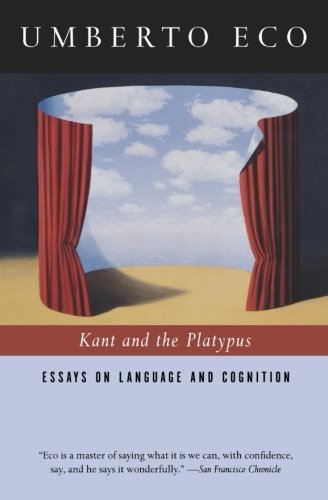
How do we know a cat is a cat? And why do we call it a cat? How much of our perception of things is based on cognitive ability, and how much on linguistic resources? Here, in six remarkable essays, Umberto Eco explores in depth questions of reality, perception, and experience. Basing his ideas on common sense, Eco shares a vast wealth of literary and historical knowledge, touching on issues that affect us every day. At once philosophical and amusing, Kant and the Platypus is a tour of the world of our senses, told by a master of knowing what is real and what is not.

Un adolescente, enardecido por la lectura de Moby Dick, aprovecha las vacaciones de verano para embarcarse, en los confines australes de América, allí donde se termina el mundo, en un ballenero que por primera vez le llevará por esos mares donde todavía navegan legendarios héroes de verdad y de mentira. Muchos años después, el joven chileno, ya convertido en adulto y residente en el otro extremo del planeta, periodista y miembro activo del movimiento Greenpeace, vuelve inesperadamente a los lejanos parajes de su escapada juvenil por una razón muy distinta, pero tal vez igualmente romántica: barcos piratas están depredando la fauna marítima ue habita las gélidas e impolutas aguas del mundo del fin del mundo. Hay que seguir las huellas sanguinarias del feroz capitán Tanifuji, encontrar pruebas, denunciarlo, impedir la barbarie y salvar a Sarita, atrapada en una enmarañada red de oscuros intereses internacionales.

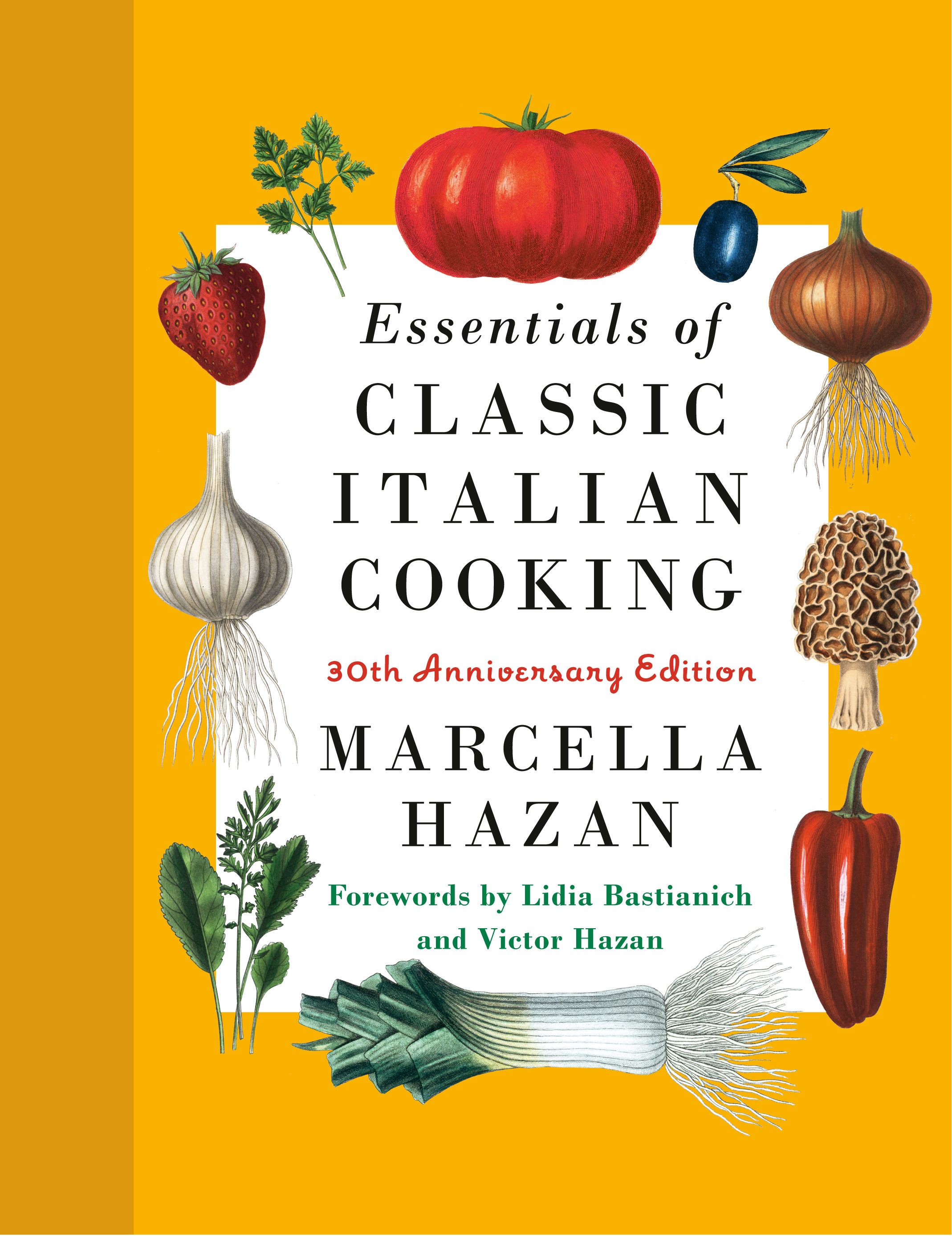
Recipes for antipasto, soup, pasta, main dishes, and sweets are accompanied by descriptions of the people, customs, and scenery typical of Italy's major gastronomic regions

Marco Polo (1254-1329) has achieved an almost archetypal status as a traveller, and his Travels is one of the first great travel books of Western literature, outside the ancient world. The Travels recounts Polo's journey to the eastern court of Kublai Khan, the chieftain of the Mongol empire which covered the Asian continent, but which was almost unknown to Polo's contemporaries. Encompassing a twenty-four year period from 1271, Polo's account details his travels in the service of the empire, from Beijing to northern India and ends with the remarkable story of Polo's return voyage from the Chinese port of Amoy to the Persian Gulf. Alternately factual and fantastic, Polo's prose at once reveals the medieval imagination's limits, and captures the wonder of subsequent travel writers when faced with the unfamiliar, the exotic or the unknown.

This haunting, suspenseful tale of love and vengeance by the author of the international bestseller Silk surges with the hypnotic power of the ocean sea. In Ocean Sea, Alessandro Baricco presents a hypnotizing postmodern fable of human malady--psychological, existential, erotic--and the sea as a means of deliverance. At the Almayer Inn, a remote shoreline hotel, an artist dips his brush in a cup of ocean water to paint a portrait of the sea. A scientist pens love letters to a woman he has yet to meet. An adulteress searches for relief from her proclivity to fall in love. And a sixteen-year-old girl seeks a cure from a mysterious condition which science has failed to remedy. When these people meet, their fates begin to interact as if by design. Enter a mighty tempest and a ghostly mariner with a thirst for vengeance, and the Inn becomes a place where destiny and desire battle for the upper hand. Playful, provocative, and ultimately profound, Ocean Sea is a novel of striking originality and wisdom.

L’Agostino deixa de ser un nen l’estiu en què la seva mare s’enamora d’un home. Aquella deessa que ell sempre havia imaginat dedicada i intocable és també una dona. Decebut i ressentit per aquesta descoberta, el protagonista malda per alliberar-se de la figura materna i comença a freqüentar amistats dubtoses que el portaran a deixar enrere la innocència. La brutalitat d’aquests nous amics l’espanta però també hi ha alguna cosa d’ells que el fascina, una atracció deliciosa i cruel que l’atrapa i el repulsa alhora. Moravia explora amb precisió la dolorosa i incerta aventura de l’adolescent que es veu atrapat entre dues edats. Més enllà de la descripció d’una etapa difícil i plena de turments, en aquesta història hi podem llegir els símptomes d’una altra crisi que se situa en el centre de tota l’obra de l’autor: el desajustament entre la consciència i la realitat. Nascut a Roma el 1907, Alberto Moravia va escriure la seva primera novel·la, Els indiferents, quan tenia poc menys de vint anys en un sanatori del nord d’Itàlia on es refeia d’una tuberculosi que no li va deixar acabar els estudis. Durant la Segona Guerra Mundial, va ser perseguit pels feixistes per haver escrit una sàtira política. Després del final de la guerra, torna a Roma i gaudeix d’una gran popularitat. La seva obra està conformada per una trentena de títols entre els quals destaquen El conformista, El menyspreu i La camperola. Algunes de les seves novel·les han estat adaptades al cinema per directors com ara Vittorio De Sica o Jean-Luc Godard. Agostino també va ser duta al cinema el 1962. Va morir a Roma el setembre del 1990.

Dorothy L. Sayers's landmark translation follows Dante's terza rima stanza's and brings his poetry vividly to life. Her work was completed after her death by Barbara Reynolds, who provides a foreword on the importance of the translation and an introduction on Dante's view of Heaven. This edition also includes a new foreword, updated further reading, notes, appendices, a glossary, diagrams and genealogical tables.

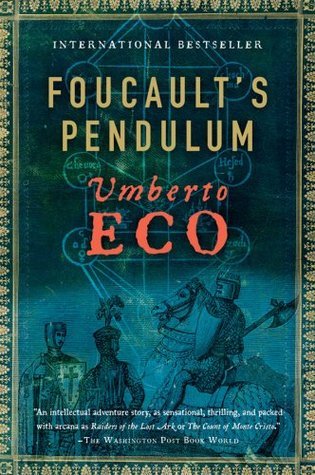
International bestselling and award-winning author Umberto Eco's Foucault's Pendulum is "an intellectual adventure story, as sensational, thrilling, and packed with arcana as Raiders of the Lost Ark or The Count of Monte Cristo" (The Washington Post Book World).Bored with their work, three Milanese editors cook up "the Plan," a hoax that connects the medieval Knights Templar with other occult groups from ancient to modern times. This produces a map indicating the geographical point from which all the powers of the earth can be controlled — a point located in Paris, France, at Foucault’s Pendulum. But in a fateful turn the joke becomes all too real, and when occult groups, including Satanists, get wind of the Plan, they go so far as to kill one of the editors in their quest to gain control of the earth.Orchestrating these and other diverse characters into his multilayered semiotic adventure, Eco has created a superb cerebral entertainment.

All the beauty of modern physics in fewer than a hundred pages.This is a book about the joy of discovery. A playful, entertaining, and mind-bending introduction to modern physics, it's already a major bestseller in Italy and the United Kingdom. Carlo Rovelli offers surprising—and surprisingly easy to grasp—explanations of general relativity, quantum mechanics, elementary particles, gravity, black holes, the complex architecture of the universe, and the role humans play in this weird and wonderful world. He takes us to the frontiers of our knowledge: to the most minute reaches of the fabric of space, back to the origins of the cosmos, and into the workings of our minds. “Here, on the edge of what we know, in contact with the ocean of the unknown, shines the mystery and the beauty of the world,” Rovelli writes. “And it’s breathtaking.”

A painter and architect in his own right, Giorgio Vasari (1511-74) achieved immortality for this book on the lives of his fellow Renaissance artists, first published in Florence in 1550. Although he based his work on a long tradition of biographical writing, Vasari infused these literary portraits with a decidedly modern form of critical judgment. The result is a work that remains to this day the cornerstone of art historical scholarship. Spanning the period from the thirteenth century to Vasari's own time, the Lives opens a window on the greatest personalities of the period, including Giotto, Brunelleschi, Mantegna, Leonardo, Raphael, Michelangelo, and Titian. This Modern Library edition, abridged from the original text with notes drawn from earlier commentaries, as well as current research, reminds us why The Lives of the Most Excellent Painters, Sculptors, and Architects is indispensable to any student interested in Renaissance art. "From the Trade Paperback edition."

An authoritative and comprehensive intellectual biography of the author of the Divine ComedyFor all that has been written about the author of the Divine Comedy, Dante Alighieri (1265-1321) remains the best guide to his own life and work. Dante's writings are therefore never far away in this authoritative and comprehensive intellectual biography, which offers a fresh account of the medieval Florentine poet's life and thought before and after his exile in 1302.Beginning with the often violent circumstances of Dante's life, the book examines his successive works as testimony to the course of his passionate humanity: his lyric poetry through to the Vita nova as the great work of his first period; the Convivio, De vulgari eloquentia and the poems of his early years in exile; and the Monarchia and the Commedia as the product of his maturity. Describing as it does a journey of the mind, the book confirms the nature of Dante's undertaking as an exploration of what he himself speaks of as "maturity in the flame of love."The result is an original synthesis of Dante's life and work.

Often likened to Kafka's The Castle, The Tartar Steppe is both a scathing critique of military life and a meditation on the human thirst for glory. It tells of young Giovanni Drogo, who is posted to a distant fort overlooking the vast Tartar steppe. Although not intending to stay, Giovanni suddenly finds that years have passed, as, almost without his noticing, he has come to share the others' wait for a foreign invasion that never happens. Over time the fort is downgraded and Giovanni's ambitions fade until the day the enemy begins massing on the desolate steppe...