Loading themes...
Explore the best books about Art Design theme.

"Visions of Japan: Kawase Hasui's masterpieces brings together in a single volume one hundred of the artist's most celebrated prints. Fully illustrated, this publication includes annotated descriptions for each work, as well as two essays on Hasui's life and work by Dr. Kendall H. Brown." Kawase Hasui (1883-1957) is considered the foremost Japanese landscape print artist of the 20th century, and he is most closely associated with the pioneering Shin-hanga (New prints) publisher Watanabe Shozaburo (1885-1962). Hasui's work became hugely popular, not only in his native Japan but also in the West, especially in the United States. His valuable contribution to the woodblock print medium was acknowledged in 1956, a year before his death, when he was honoured with the distinction of 'Living National Treasure'.
Science and art have in common intense seeing, the wide-eyed observing that generates visual information. Beautiful Evidence is about how seeing turns into showing, how data and evidence turn into explanation. The book identifies excellent and effective methods for showing nearly every kind of information, suggests many new designs (including sparklines), and provides analytical tools for assessing the credibility of evidence presentations (which are seen from both sides: how to produce and how to consume presentations). For alert consumers of presentations, there are chapters on diagnosing evidence corruption and PowerPoint pitches. Beautiful Evidence concludes with two chapters that leave the world of pixel and paper flatland representations - and move onto seeing and thinking in space land, the real-land of three-space and time.

Traces the life and career of the California artist, who currently works with pure light and the subtle modulation of empty space

The organization of letters on a blank sheet—or screen—is the most basic challenge facing anyone who practices design. What type of font to use? How big? How should those letters, words, and paragraphs be aligned, spaced, ordered, shaped, and otherwise manipulated? In this groundbreaking new primer, leading design educator and historian Ellen Lupton provides clear and concise guidance for anyone learning or brushing up on their typographic skills. Thinking with Type is divided into three sections: letter, text, and grid. Each section begins with an easy-to-grasp essay that reviews historical, technological, and theoretical concepts, and is then followed by a set of practical exercises that bring the material covered to life. Sections conclude with examples of work by leading practitioners that demonstrate creative possibilities (along with some classic no-no's to avoid).

Depicts drawings by an artist better known for her sculpture, and features interviews and comments by the artist

THE BRAND GAP is the first book to present a unified theory of brand-building. Whereas most books on branding are weighted toward either a strategic or creative approach, this book shows how both ways of thinking can unite to produce a “charismatic brand”―a brand that customers feel is essential to their lives. In an entertaining two-hour read you’ll learn:• the new definition of brand• the five essential disciplines of brand-building• how branding is changing the dynamics of competition• the three most powerful questions to ask about any brand• why collaboration is the key to brand-building• how design determines a customer’s experience• how to test brand concepts quickly and cheaply• the importance of managing brands from the inside• 220-word brand glossaryFrom the back cover:Not since McLuhan’s THE MEDIUM IS THE MESSAGE has a book compressed so many ideas into so few pages. Using the visual language of the boardroom, Neumeier presents the first unified theory of branding―a set of five disciplines to help companies bridge the gap between brand strategy and customer experience. Those with a grasp of branding will be inspired by the new perspectives they find here, and those who would like to understand it better will suddenly “get it.” This deceptively simple book offers everyone in the company access to “the most powerful business tool since the spreadsheet.”

Explains what type is, demonstrates how to select it, and examines its use in printed communication.

Take a peek inside the heads of some of the world’s greatest living graphic designers. How do they think, how do they connect to others, what special skills do they have? In honest and revealing interviews, nineteen designers, including Stefan Sagmeister, Michael Beirut, David Carson, and Milton Glaser, share their approaches, processes, opinions, and thoughts about their work with noted brand designer Debbie Millman. The internet radio talk host of Design Matters, Millman persuades the greatest graphic designers of our time to speak frankly and openly about their work. How to Think Like a Great GraphicDesigners offers a rare opportunity to observe and understand the giants of the industry. Designers interviewed —Milton Glaser —Stefan Sagmeister —David Carson —Paula Scher —Abbott Miler —Lucille Tenazas —Paul Sahre —Emily Oberman and Bonnie Siegler —Chip Kidd —James Victore —Carin Goldberg —Michael Bierut —Seymour Chwast —Jessica Helfand and William Drenttel —Steff Geissbuhler —John MaedaAllworth Press, an imprint of Skyhorse Publishing, publishes a broad range of books on the visual and performing arts, with emphasis on the business of art. Our titles cover subjects such as graphic design, theater, branding, fine art, photography, interior design, writing, acting, film, how to start careers, business and legal forms, business practices, and more. While we don't aspire to publish a New York Times bestseller or a national bestseller, we are deeply committed to quality books that help creative professionals succeed and thrive. We often publish in areas overlooked by other publishers and welcome the author whose expertise can help our audience of readers.

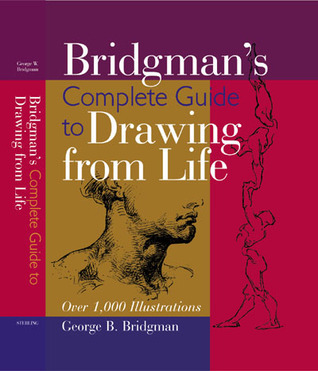
“An indispensable volume...published for the first time in paperback....More than 200 illustrations of hands and hundreds of images of arms, shoulders, heads, torsos, legs, knees, and feet.” — Library Journal. “It will...meet a deeply felt need to draw the human figure from a vantage point of understanding and visual acuity.”— Arts & Activities.

"Ideas move mountains, especially in turbulent times. Lovemarks is the product of the fertile-iconoclast mind of Kevin Roberts, CEO Worldwide of Saatchi & Saatchi. Roberts argues vociferously, and with a ton of data to support him, that traditional branding practices have become stultified. What's needed are customer Love affairs. Roberts lays out his grand scheme for mystery, magic, sensuality, and the like in his gloriously designed book Lovemarks."-Tom PetersTom Peters, one of the most influential business thinkers of all time, described the first edition of Lovemarks: the future beyond brands as "brilliant." He also announced it as the "Best Business Book" published in the first five years of this century. Now translated into fourteen languages, with more than 150,000 copies in print, Lovemarks is back in a revised edition featuring a new chapter on the peculiarly human experience of shopping. The new chapter, "Diamonds in the Mine," is an insightful collection of ideas for producers and consumers, for owners of small stores and operators of superstores. So forget making lists! Shopping, says Kevin Roberts, is an emotional event. With this as a starting point, he looks at the history of shopping and how it has changed so dramatically over the last ten years. Using the Lovemark elements of Mystery, Sensuality, and Intimacy, Roberts delves into the secrets of success that can be used to create the ultimate shopping experience.

Maira Kalman paints her highly personal worldview in this inimitable combination of image and textAn irresistible invitation to experience life through a beloved artist's psyche, The Principles of Uncertainty is a compilation of Maira Kalman's New York Times columns. Part personal narrative, part documentary, part travelogue, part chapbook, and all Kalman, these brilliant, whimsical paintings, ideas, and images - which initially appear random - ultimately form an intricately interconnected worldview, an idiosyncratic inner monologue.

Renowned typographer and poet Robert Bringhurst brings clarity to the art of typography with this masterful style guide. Combining practical, theoretical, and historical, this book is a must for graphic artists, editors, or anyone working with the printed page using digital or traditional methods.Having established itself as a standard in its field The Elements of Typographic Style is house manual at most American university presses, a standard university text, and a reference work in studios of designers around the world. It has been translated into italian and greek, and dutch.

Tibor Perverse Optimist is the definitive and exuberant document of the late Tibor Kalman's work and ideas. This full-color, oversize title reveals Kalman's thoughts on magazines, advertising, sex, bookstores, food, and the design profession. Product designs, stills and storyboards from his film and video projects, and spreads from his book and magazine work are included. The impressive list of contributors includes Kurt Andersen, Paola Antonelli, David Byrne, Jay Chiat, Steven Heller, Isaac Mizrahi, Chee Pearlman, Rick Poynor, and Ingrid Sischy.

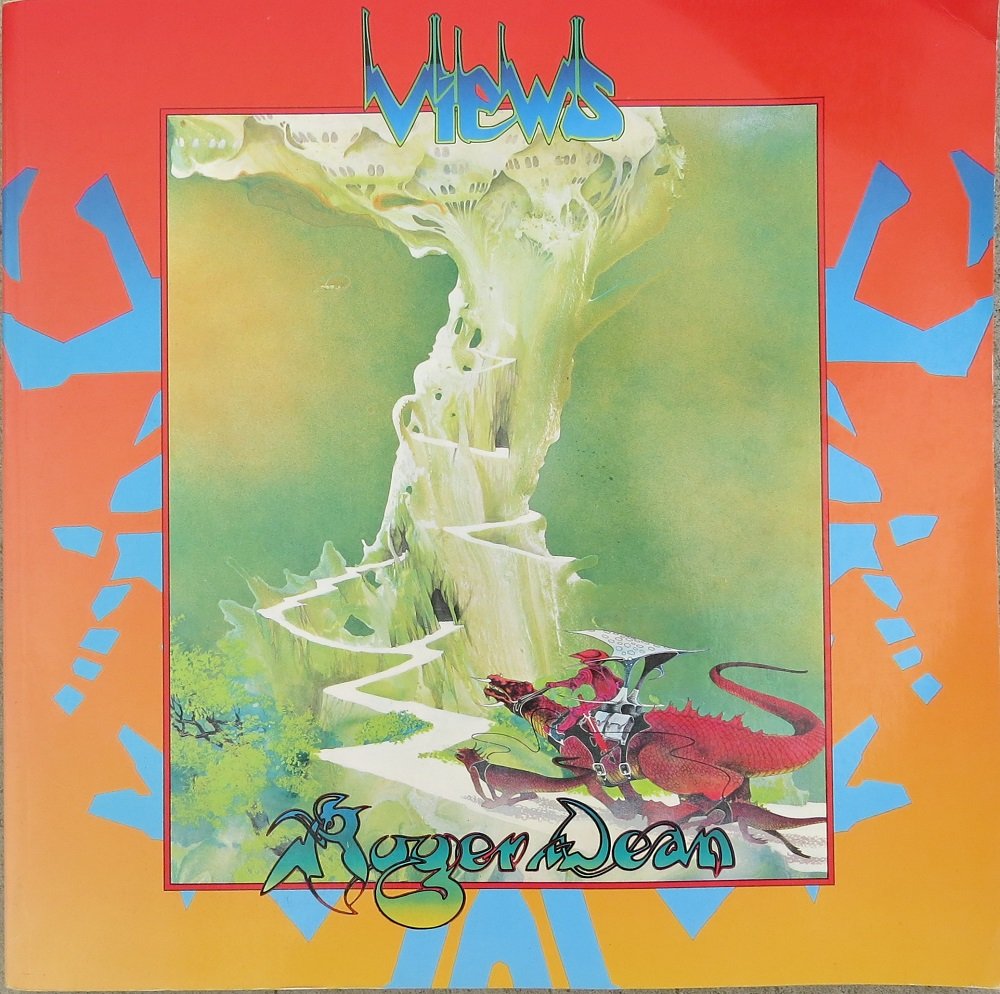
The first two volumes chronicling the unique art and design of Roger Dean met with huge critical and popular success. Views (1975) went straight to number one in the Sunday Times bestseller list and went on to sell over a million copies. Magnetic Storm (1984) sold over 650,000 copies. These new editions, reworked to accompany the publication of the third book in the trilogy, Dragon's Dream, showcase the instantly recognizable work of Roger Dean.Views showcases the first seven years of Roger Dean's work after his graduation from the Royal College of Art in 1968. It includes paintings and graphics; branding such as the Yes typography and the first Virgin Records logo; groundbreaking stage sets; and album art including iconic early Yes covers such as the award-winning Tales From Topographic Oceans. The new edition streamlines the original square format and retains the combination of concept sketches and brilliantly displayed finished work. Featuring a new foreword, revised typography, and graphic openers and identifying icons, Views showcases and celebrates the art that defined an era.

When Drawing on the Right Side of the Brain was first published in 1979, it hit the New York Times bestseller list within two weeks and stayed there for more than a year. In 1989, when Dr. Betty Edwards revised the book, it went straight to the Times list again. Now Dr. Edwards celebrates the twentieth anniversary of her classic book with a second revised edition.Over the last decade, Dr. Edwards has refined her material through teaching hundreds of workshops and seminars. Truly The New Drawing on the Right Side of the Brain, this edition includes:the very latest developments in brain researchnew material on using drawing techniques in the corporate world and in educationinstruction on self-expression through drawingan updated section on using colordetailed information on using the five basic skills of drawing for problem solving

Arguably the most influential, imaginative, and provocative designer of his generation, Alexander McQueen both challenged and expanded fashion conventions to express ideas about race, class, sexuality, religion, and the environment. Alexander McQueen: Savage Beauty examines the full breadth of the designer’s career, from the start of his fledgling label to the triumphs of his own world-renowned London house. It features his most iconic and radical designs, revealing how McQueen adapted and combined the fundamentals of Savile Row tailoring, the specialized techniques of haute couture, and technological innovation to achieve his distinctive aesthetic. It also focuses on the highly sophisticated narrative structures underpinning his collections and extravagant runway presentations, with their echoes of avant-garde installation and performance art.Published to coincide with an exhibition at The Metropolitan Museum of Art organized by The Costume Institute, this stunning book includes a preface by Andrew Bolton; an introduction by Susannah Frankel; an interview by Tim Blanks with Sarah Burton, creative director of the house of Alexander McQueen; illuminating quotes from the designer himself; provocative and captivating new photography by renowned photographer Sølve Sundsbø; and a lenticular cover by Gary James McQueen.Alexander McQueen: Savage Beauty celebrates the astounding creativity and originality of a designer who relentlessly questioned and confronted the requisites of fashion.

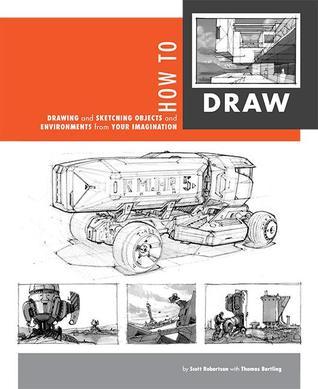
How to Draw is for artists, architects and designers. It is useful to the novice, the student and the professional. You will learn how to draw any object or environment from your imagination, starting with the most basic perspective drawing skills.Early chapters explain how to draw accurate perspective grids and ellipses that in later chapters provide the foundation for more complex forms. The research and design processes used to generate visual concepts are demonstrated, making it much easier for you to draw things never-before-seen!Best of all, more than 25 pages can be scanned via a smartphone or tablet using the new Design Studio Press app, which link to video tutorials for that section of the book!With a combined 26 years of teaching experience, Scott Robertson and Thomas Bertling bring you the lessons and techniques they have used to help thousands of their students become professional artists and designers.This book is indispensable for anyone who wants to learn, or teaches others, how to draw.

Copublished with the Los Angeles County Museum of Art for the major touring retrospective and concurrent exhibitions at the Solomon R. Guggenheim Museum, New York and The Museum of Fine Arts, Houston, this comprehensive volume illuminates the origins and motivations of James Turrell's incredibly diverse and exciting body of work--from his Mendota studio days to his monumental work-in-progress Roden Crater. Whether he's projecting shapes on a flat wall or into the corner of a gallery space, James Turrell is perpetually asking us to "go inside and greet the light"--evoking his Quaker upbringing. In fact, all of Turrell's work has been influenced by his life experiences with aviation, science, and psychology, and as a key player in Los Angeles's exploding art scene of the 1960s. Enhanced by thoughtful essays and an illuminating interview with the artist, this monograph explores every aspect of Turrell's career to date--from his early geometric light projections, prints, and drawings, through his installations exploring sensory deprivation and seemingly unmodulated fields of colored light, to recent two-dimensional experiments with holograms. It also features an in-depth look at Roden Crater, a site-specific intervention into the landscape near Flagstaff, Arizona, which will be presented through models, plans, photographs, and drawings. Fans of this highly influential artist will find much to savor in this wide-ranging and beautiful book, featuring specially commissioned new photography by Florian Holzherr. 250 color illustrations

What is art for? In the engaging, lively, and controversial new book, bestselling philosopher Alain de Botton, with art historian John Armstrong, proposes a new way of looking at art, suggesting that it can be useful, relevant, and - above all else - therapeutic for its audiences.De Botton argues that certain great works of art offer clues on managing the tensions and confusions of everyday life. Art as Therapy is packed with 150 examples of outstanding art, with chapters on Love, Nature, Money, and Politics outlining how these works can help with common difficulties. For example, Vermeer's Girl Reading a Letter helps us focus on what we want to be loved for; Serra's Fernando Passoa reminds us of the importance of dignity in suffering; and Manet's Bunch of Asparagus teaches us how to preserve and value our long-term partners.De Botton demonstrates how art can guide and console us, and along the way, help us to better understand both art and ourselves.

Advice, strong opinions, and personal revelations by the world's greatest artists - exclusively researched for this book. Featuring the most inspirational and insightful collection of quotes by artists through the ages and across the globe, this exquisite keepsake is the ideal book for artists, collectors, and armchair enthusiasts. As painters, sculptors, photographers, and other visual artists see and experience the world through a unique lens, Art Is the Highest Form of Hope & Other Quotes by Artists shows that their life lessons, private revelations, and frank, often irreverent, opinions can guide us all. This unique and carefully curated book, packed with totally original research, is a go-to resource for revealing thoughts and personal advice on subjects as diverse as beauty, colour, light, sex, chance, discipline, money troubles, originality, fear of failure, danger of success, the creative process, and more – all messages transmitted from the artistic trenches.

A few years ago curator Sarah Urist Green left her office in the basement of an art museum to travel and visit a diverse range of artists, asking them to share prompts that relate to their own ways of working. The result is You Are an Artist, a journey of creation through which you'll invent imaginary friends, sort books, declare a cause, construct a landscape, find your band, and become someone else (or at least try). Your challenge is to filter these assignments through the lens of your own experience and make art that reflects the world as you see it.You don't have to know how to draw well, stretch a canvas, or mix a paint colour that perfectly matches that of a mountain stream. This book is for anyone who wants to make art, regardless of experience level. The only materials you'll need are what you already have on hand or can source for free.You Are an Artist brings together more than 50 assignments gathered from some of the most innovative creators working today, including Sonya Clark, Michelle Grabner, The Guerrilla Girls, Fritz Haeg, Pablo Helguera, Nina Katchadourian, Toyin Ojih Odutola, J. Morgan Puett, Dread Scott, Alec Soth, Gillian Wearing, and many others.