Loading genres...
Explore the best books about The World genre.

Never before in English, Armenian Golgotha is the most dramatic and comprehensive eyewitness account of the first modern genocide.On April 24, 1915, the priest Grigoris Balakian was arrested along with some 250 other intellectuals and leaders of Constantinople’s Armenian community. It was the beginning of the Ottoman Turkish government’s systematic attempt to eliminate the Armenian people from Turkey; it was a campaign that continued through World War I and the fall of the Ottoman Empire, by which time more than a million Armenians had been annihilated and expunged from their historic homeland. For Grigoris Balakian, himself condemned, it was also the beginning of a four-year ordeal during which he would bear witness to a seemingly endless caravan of blood.Balakian sees his countrymen sent in carts, on donkeys, or on foot to face certain death in the desert of northern Syria. Many would not even survive the journey, suffering starvation, disease, mutilation, and rape, among other tortures, before being slaughtered en route. In these pages, he brings to life the words and deeds of survivors, foreign witnesses, and Turkish officials involved in the massacre process, and also of those few brave, righteous Turks, who, with some of their German allies working for the Baghdad Railway, resisted orders calling for the death of the Armenians. Miraculously, Balakian manages to escape, and his flight—through forest and over mountain, in disguise as a railroad worker and then as a German soldier—is a suspenseful, harrowing odyssey that makes possible his singular testimony.Full of shrewd insights into the political, historical, and cultural context of the Armenian genocide—the template for the subsequent mass killings that have cast a shadow across the twentieth century and beyond—this memoir is destined to become a classic of survivor literature. Armenian Golgotha is sure to deepen our understanding of a catastrophic crime that the Turkish government, the Ottomans’ successor, denies to this day.

As the income gap between developed and developing nations grows, so grows the cacophony of voices claiming that the quest to find a simple recipe for economic growth has failed. Getting Better, in sharp contrast, reports the good news about global progress. Economist Charles Kenny argues against development naysayers by pointing to the evidence of widespread improvements in health, education, peace, liberty--and even happiness.Kenny shows how the spread of cheap technologies, such as vaccines and bed nets, and ideas, such as political rights, has transformed the world. He also shows that by understanding this transformation, we can make the world an even better place to live.That's not to say that life is grand for everyone, or that we don't have a long way to go. But improvements have spread far, and, according to Kenny, they can spread even further.

December 1941: 31 Days that Changed America and Saved the World traces, day-by-day, the most important 31 days in the history of America's participation in WWII, which snuffed out the lives of millions and changed history forever. From December 1, 1941, until the morning of December 7, 1941, America was at peace and-with the exception of the stubborn and persistent high unemployment of the Great Depression-was a relatively happy country. By the afternoon of the December 7 attack on Pearl Harbor, America was a radically changed country, forever. Its isolationist impulses evaporated, and both major political parties became more or less internationalist. The month also introduced food and gas rationing, Victory Gardens, scrap drives, a military draft, and the conversion of Detroit into an "arsenal of democracy." From the moment of America's entry into World War II, people of all kinds, but mostly women looking for work, flooded into the city. Instant apartment buildings sprang up, as did eating and drinking salons, all to the advantage of the massive increase in spending generated by the federal government. December 1941 is a fascinating and meticulously researched look at the American home front-her people, faith, economy, government, and culture-during a month that radically changed the American way of life.

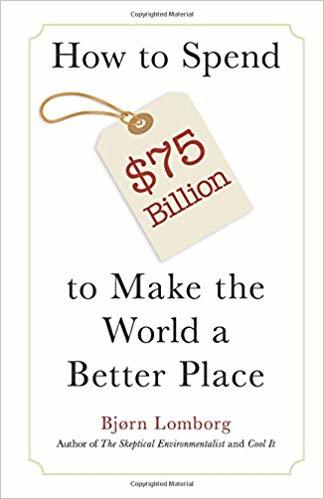
the world faces myriad challenges - yet we are constrained by scarce resources. In the 21st Century, how do we deal with natural disasters, tackle global warming, achieve better nutrition, educate children...and address countless other urgent global issues?If you want to change the world, this inspiring and enlightening book is for you. Bjørn Lomborg presents the costs and benefits of the smartest solutions to twelve global problems. By prioritizing the top solutions, this helps us better spend $75 billion to do the most good.Featuring the cutting edge research of more than sixty eminent economists, including four Nobel Laureates, produced for the Copenhagen Consensus, this book with inform, enlighten and motivate actions to make our world a better place.

Why did the size of the U.S. economy increase by 3 percent on one day in mid-2013--or Ghana's balloon by 60 percent overnight in 2010? Why did the U.K. financial industry show its fastest expansion ever at the end of 2008--just as the world's financial system went into meltdown? And why was Greece's chief statistician charged with treason in 2013 for apparently doing nothing more than trying to accurately report the size of his country's economy? The answers to all these questions lie in the way we define and measure national economies around the world: Gross Domestic Product. This entertaining and informative book tells the story of GDP, making sense of a statistic that appears constantly in the news, business, and politics, and that seems to rule our lives--but that hardly anyone actually understands.Diane Coyle traces the history of this artificial, abstract, complex, but exceedingly important statistic from its eighteenth- and nineteenth-century precursors through its invention in the 1940s and its postwar golden age, and then through the Great Crash up to today. The reader learns why this standard measure of the size of a country's economy was invented, how it has changed over the decades, and what its strengths and weaknesses are. The book explains why even small changes in GDP can decide elections, influence major political decisions, and determine whether countries can keep borrowing or be thrown into recession. The book ends by making the case that GDP was a good measure for the twentieth century but is increasingly inappropriate for a twenty-first-century economy driven by innovation, services, and intangible goods.

International Bestseller"Quite simply the best guide to the global economy today." ―Fareed Zakaria Shaped by his twenty-five years traveling the world, and enlivened by encounters with villagers from Rio to Beijing, tycoons, and presidents, Ruchir Sharma’s The Rise and Fall of Nations rethinks the "dismal science" of economics as a practical art. Narrowing the thousands of factors that can shape a country’s fortunes to ten clear rules, Sharma explains how to spot political, economic, and social changes in real time. He shows how to read political headlines, black markets, the price of onions, and billionaire rankings as signals of booms, busts, and protests. Set in a post-crisis age that has turned the world upside down, replacing fast growth with slow growth and political calm with revolt, Sharma’s pioneering book is an entertaining field guide to understanding change in this era or any era. A Library Journal Best Book of 2016

At once intimate and wide-ranging, and as enthralling, surprising, and vivid as the place itself, this is a uniquely eye-opening tour of one of the great metropolises of the world, and its largest Spanish-speaking city. Horizontal Vertigo: The title refers to the fear of ever-impending earthquakes that led Mexicans to build their capital city outward rather than upward. With the perspicacity of a keenly observant flaneur, Juan Villoro wanders through Mexico City seemingly without a plan, describing people, places, and things while brilliantly drawing connections among them. In so doing he reveals, in all its multitudinous glory, the vicissitudes and triumphs of the city ’s cultural, political, and social history: from indigenous antiquity to the Aztec period, from the Spanish conquest to Mexico City today—one of the world’s leading cultural and financial centers. In this deeply iconoclastic book, Villoro organizes his text around a recurring series of topics: “Living in the City,” “City Characters,” “Shocks,” “Crossings,” and “Ceremonies.” What he achieves, miraculously, is a stunning, intriguingly coherent meditation on Mexico City’s genius loci, its spirit of place.