
Diane Coyle
Dame Diane Coyle is a British economist, academic and writer. Since March 2018, she has been the Bennett Professor of Public Policy at the University of Cambridge, co-directing the Bennett Institute. Coyle's early career as an economist was followed by a period in journalism including being economics editor at The Independent from 1993 to 2001. She was professor of economics at University of Manchester from 2014 to 2018. She was vice-chair of the BBC Trust from 2011 to 2016 and a member of the UK Competition Commission from 2001 until 2009. Coyle has written nine books on economics.
18 Books Written

横扫各类财经图书殊荣。《华尔街日报》年度十大好书/《金融时报》及麦肯锡年度商业类佳作/世界商业图书Axiom Business大奖/《Choice》年度商业杰作…… 全球政商界精英连袖推荐。经济合合与发展组织秘书长安赫尔·古里亚,前英国央行行长默文·金,前美国白宫经济政策主任托德·布赫霍尔茨,美国经济学泰斗泰勒·柯文,高收益债券教头马丁·弗里德森,发展经济学先驱赛尔奎因,日本经济研究中心特别顾问、前任会长小岛明,《卧底经济学》作者蒂姆·哈福德,英国经济学家约翰·凯,投资分析专家约翰·莫尔丁等。强烈推荐 英国经济学巨擘、BBC副主席黛安娜·科伊尔力透纸背之作 一天读完300年发展史,让你透彻洞悉GDP如何深度影响每个人的生活随着中国经济体积的日益庞大,GDP的增长速度日益进入“L”型轨道。历史上有哪些国家曾经历过这种类似的局面,其政府...(展开全部)
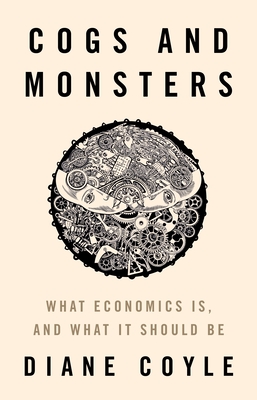
How economics needs to change to keep pace with the twenty-first century and the digital economyDigital technology, big data, big tech, machine learning, and AI are revolutionizing both the tools of economics and the phenomena it seeks to measure, understand, and shape. In Cogs and Monsters , Diane Coyle explores the enormous problems―but also opportunities―facing economics today and examines what it must do to help policymakers solve the world’s crises, from pandemic recovery and inequality to slow growth and the climate emergency.Mainstream economics, Coyle says, still assumes people are “cogs”―self-interested, calculating, independent agents interacting in defined contexts. But the digital economy is much more characterized by “monsters”―untethered, snowballing, and socially influenced unknowns. What is worse, by treating people as cogs, economics is creating its own monsters, leaving itself without the tools to understand the new problems it faces. In response, Coyle asks whether economic individualism is still valid in the digital economy, whether we need to measure growth and progress in new ways, and whether economics can ever be objective, since it influences what it analyzes. Just as important, the discipline needs to correct its striking lack of diversity and inclusion if it is to be able to offer new solutions to new problems.Filled with original insights, Cogs and Monsters offers a road map for how economics can adapt to the rewiring of society, including by digital technologies, and realize its potential to play a hugely positive role in the twenty-first century.

A refreshing look at economics with topics ranging from sex, drugs, arms and music to energy, movies and farming, the Internet and Aids, Diane Coyle plunges herself and the reader into some of the world’s most contentious political and social issues. Diane Coyle shows how economic principles apply to headline issues in an entertaining, humane and highly intelligent way. Harvard-educated Coyle is an economist and award-winning writer specializing in business, technology and global economics.

Why our economy is cheating the future--and what we can do about itThe world's leading economies are facing not just one but many crises. The financial meltdown may not be over, climate change threatens major global disruption, economic inequality has reached extremes not seen for a century, and government and business are widely distrusted. At the same time, many people regret the consumerism and social corrosion of modern life. What these crises have in common, Diane Coyle argues, is a reckless disregard for the future--especially in the way the economy is run. How can we achieve the financial growth we need today without sacrificing a decent future for our children, our societies, and our planet? How can we realize what Coyle calls "the Economics of Enough"?Running the economy for tomorrow as well as today will require a wide range of policy changes. The top priority must be ensuring that we get a true picture of long-term economic prospects, with the development of official statistics on national wealth in its broadest sense, including natural and human resources. Saving and investment will need to be encouraged over current consumption. Above all, governments will need to engage citizens in a process of debate about the difficult choices that lie ahead and rebuild a shared commitment to the future of our societies.Creating a sustainable economy--having enough to be happy without cheating the future--won't be easy. But The Economics of Enough starts a profoundly important conversation about how we can begin--and the first steps we need to take.

To many, Thomas Carlyle's put-down of economics as "the dismal science" is as fitting now as it was 150 years ago. But Diane Coyle argues that economics today is more soulful than dismal, a more practical and human science than ever before. Building on the popularity of books such as Freakonomics that have applied economic thinking to the paradoxes of everyday life, The Soulful Science describes the remarkable creative renaissance in how economics is addressing the most fundamental questions--and how it is starting to help solve problems such as poverty and global warming. A lively and entertaining tour of the most exciting new economic thinking about big-picture problems, The Soulful Science uncovers the hidden humanization of economics over the past two decades. Coyle shows how better data, increased computing power, and techniques such as game theory have transformed economic theory and practice in recent years, enabling economists to make huge strides in understanding real human behavior. Using insights from psychology, evolution, and complexity, economists are revolutionizing efforts to solve the world's most serious problems by giving policymakers a new and vastly more accurate picture of human society than ever before. They are also building our capacity to understand how what we do today shapes what the world will look like tomorrow. And the consequences of these developments for human life, for governments, and for businesses are only now starting to be realized--in areas such as resource auctions, pollution-credit trading, and monetary policy. The Soulful Science tells us how economics got its soul back--and how it just might help save the planet's.

Why do we use eighty-year-old metrics to understand today’s economy?The ways that statisticians and governments measure the economy were developed in the 1940s, when the urgent economic problems were entirely different from those of today. In The Measure of Progress, Diane Coyle argues that the framework underpinning today’s economic statistics is so outdated that it functions as a distorting lens, or even a set of blinkers. When policymakers rely on such an antiquated conceptual tool, how can they measure, understand, and respond with any precision to what is happening in today’s digital economy? Coyle makes the case for a new framework, one that takes into consideration current economic realities.Coyle explains why economic statistics matter. They are essential for guiding better economic policies; they involve questions of freedom, justice, life, and death. Governments use statistics that affect people’s lives in ways large and small. The metrics for economic growth were developed when a lack of physical rather than natural capital was the binding constraint on growth, intangible value was less important, and the pressing economic policy challenge was managing demand rather than supply. Today’s challenges are different. Growth in living standards in rich economies has slowed, despite remarkable innovation, particularly in digital technologies. As a result, politics is contentious and democracy strained.Coyle argues that to understand the current economy, we need different data collected in a different framework of categories and definitions, and she offers some suggestions about what this would entail. Only with a new approach to measurement will we be able to achieve the right kind of growth for the benefit of all.

A textbook that examines how societies reach decisions about the use and allocation of economic resourcesWhile economic research emphasizes the importance of governmental institutions for growth and progress, conventional public policy textbooks tend to focus on macroeconomic policies and on tax-and-spend decisions. Markets, State, and People stresses the basics of welfare economics and the interplay between individual and collective choices. It fills a gap by showing how economic theory relates to current policy questions, with a look at incentives, institutions, and efficiency. How should resources in society be allocated for the most economically efficient outcomes, and how does this sit with society's sense of fairness?Diane Coyle illustrates the ways economic ideas are the product of their historical context, and how events in turn shape economic thought. She includes many real-world examples of policies, both good and bad. Readers will learn that there are no panaceas for policy problems, but there is a practical set of theories and empirical findings that can help policymakers navigate dilemmas and trade-offs. The decisions faced by officials or politicians are never easy, but economic insights can clarify the choices to be made and the evidence that informs those choices. Coyle covers issues such as digital markets and competition policy, environmental policy, regulatory assessments, public-private partnerships, nudge policies, universal basic income, and much more.Markets, State, and People offers a new way of approaching public economics.A focus on markets and institutionsPolicy ideas in historical contextReal-world examplesHow economic theory helps policymakers tackle dilemmas and choices

A call to develop a new politics for the age of the digital economy—when currency and goods literally have no weight. The Weightless World is the first book to map an economic world that has been turned upside down by digital technology and global business. How will our careers, businesses, and governments change in a world where bytes are the only currency and where the goods that shape our lives—global financial transactions, computer code, and cyberspace commerce—literally have no weight? Addressing such problems as economic inequity and unemployment, Diane Coyle calls on individuals and governments to develop a new politics of weightlessness so that the economic benefits can be shared fairly. She proposes the creation of a radical center as the way to a new era of human creativity and economic prosperity.

Diane Coyle brings us a book about why the New Economy with its prospect of improved productivity, faster growth, greater riches and full employment is causing an anti-globalization and anti-capitalism revolution. Political consequences of a new technological framework will undermine certain power elites just as the Industrial Revolution undermined the landed aristocracy. Furthermore, and paradoxically, it was the 1990s boom and affluence that led to peopleÂ's anxiety and insecurity and propelled them to protest. For the first time in nearly 40 years, young people were taking to the streets in mass anti-globalization riots. Local people were stopping projects led by multinationals.

The NEXT Series …making it easy to teach what’s next! New software applications with the potential to transform our everyday lives are constantly emerging onto the market. With this in mind, Introduction to Web 2.0 provides innovative instructors an opportunity to incorporate more than just the basic Office applications into their course. As part of an academic series written on alternative technology, this text presents key information on Web 2.0 and encourages hands-on learning throughout the material.

PKB. Krotka, lecz emocjonujaca historia

The global financial crisis of 1997-8 revealed that emerging market nations as well as the developed economies are vulnerable to the forces of globalization. It highlighted the need for the governance of the world economy to catch up with the pace and degree of integration through trade and financial markets.This book argues passionately in favour of the benefits of free markets, despite the crisis. Coyle argues that the freedom to exchange and invest is valuable in itself, like other freedoms, and that it is also the only sure route to economic development. Further liberalization of trade and investment, appropriately regulated, is essential if developing countries are to attain higher living standards. Economic growth, in turn, will slow population growth and create a constituency for environmental action in the developing world.Coyle also makes the case for a reassessment of the role and capabilities of the international financial institutions. She argues that these need to reflect a more even balance of power, despite the dominance of the US in today's world economy, and that they need to live up to their own rhetoric of transparency and accountability. Chapters on trade and financial markets look in particular at the role of the WTO and IMF, the key villains on the world stage in the eyes of many progressive development campaigners. The book also addresses the shifting political economy of international governance, looking at the way information technology has led to the development of a global opposition to the inter-governmental organizations.This book will be read by students of economics and politics, and all those interested in debates about the nature and trajectory of the world economy.

Digital technology, big data, big tech, machine learning, and AI are revolutionizing both the tools of economics and the phenomena it seeks to measure, understand, and shape. In Cogs and Monsters, Diane Coyle explores the enormous problems--but also opportunities--facing economics today if it is to respond effectively to these dizzying changes and help policymakers solve the world's crises. Mainstream economics, Coyle says, still assumes people are cogs--self-interested, calculating, independent agents interacting in defined contexts. But the digital economy is much more characterized by monsters--untethered, snowballing, and socially influenced unknowns. What is worse, by treating people as cogs, economics is creating its own monsters, leaving itself without the tools to understand the new problems it faces. In response, Coyle asks whether economic individualism is still valid in the digital economy, whether we need to measure growth and progress in new ways, and whether economics can ever be objective, since it influences what it analyzes. Filled with original insights, Cogs and Monsters offers a road map for how economics can adapt to the rewiring of society, including by digital technologies, and realize its potential to play a hugely positive role in the twenty-first century.

ソウルフルな経済学―格闘する最新経済学が1冊でわかる
by Diane Coyle

GDP: A Brief but Affectionate History by Diane Coyle
by Diane Coyle

Sex, Drugs And Economics by Diane Coyle
by Diane Coyle

By Diane Senerth AP Spanish Language with Audio CDs (Advanced Placement (AP) Test Preparation)
by Diane Coyle
Britain's Urban Boom: The New Economics of Cities
by Diane Coyle