Loading genres...
Explore the best books about Poverty genre.


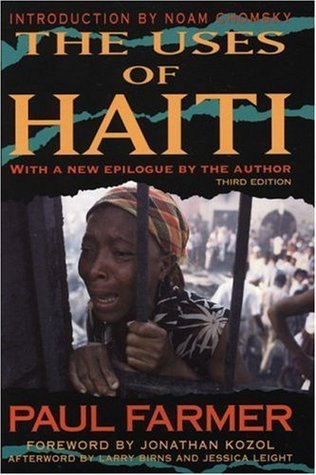
The Uses of Haiti tells the truth about uncomfortable matters—uncomfortable, that is, for the structures of power and the doctrinal framework that protects them from scrutiny. It tells the truth about what has been happening in Haiti, and the US role in its bitter fate .—Noam Chomsky, from the introduction In this third edition of the classic The Uses of Haiti , Paul Farmer looks at what has happened to the health of the poor in Haiti since the coup. Winner of a McArthur Genius Award, Paul Farmer is a physician and anthropologist who has worked for 25 years in Haiti, where he serves as medical director of a hospital serving the rural poor. He is the subject of the Tracy Kidder biography, Mountains Beyond Mountains .

The landmark exploration of economic prosperity and how the world can escape from extreme poverty for the world's poorest citizens, from one of the world's most renowned economists Hailed by Time as one of the world's hundred most influential people, Jeffrey D. Sachs is renowned for his work around the globe advising economies in crisis. Now a classic of its genre, The End of Poverty distills more than thirty years of experience to offer a uniquely informed vision of the steps that can transform impoverished countries into prosperous ones. Marrying vivid storytelling with rigorous analysis, Sachs lays out a clear conceptual map of the world economy. Explaining his own work in Bolivia, Russia, India, China, and Africa, he offers an integrated set of solutions to the interwoven economic, political, environmental, and social problems that challenge the world's poorest countries. Ten years after its initial publication, The End of Poverty remains an indispensible and influential work. In this 10th anniversary edition, Sachs presents an extensive new foreword assessing the progress of the past decade, the work that remains to be done, and how each of us can help. He also looks ahead across the next fifteen years to 2030, the United Nations' target date for ending extreme poverty, offering new insights and recommendations.

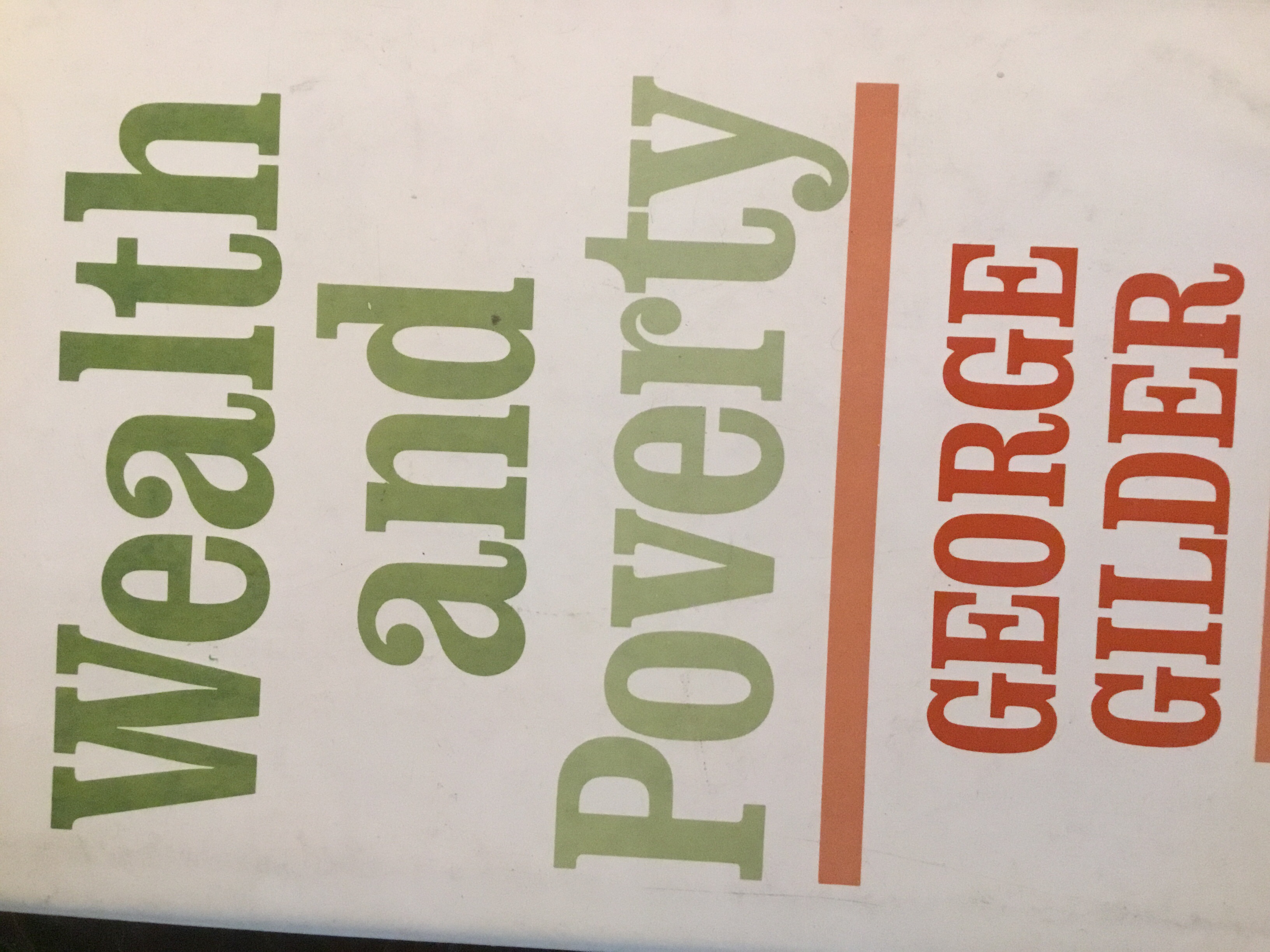
In this acclaimed work, Gilder offers an illuminating discussion of how to increase wealth and curtail poverty, arguing that most welfare programs only serve to keep the poor in poverty as victims of welfare dependency. 9 cassettes.

The extraordinary gifts for evocation and insight and the stunning talent for storytelling that earned Rick Bragg a Pulitzer Prize for feature writing in 1996 are here brought to bear on the wrenching story of his own family's life. It is the story of a violent, war-haunted, alcoholic father and a strong-willed, loving mother who struggled to protect her three sons from the effects of poverty and ignorance that had tainted her own life. It is the story of the life Bragg was able to carve out for himself on the strength of his mother's encouragement and belief.

It is 2021 and the world has experienced unimaginable suffering, death and despair. The pandemic has had a devastating effect on global extreme poverty and harrowing scenes from around the world continue to leave us shocked. As the pandemic rages on, it’s natural to ask: how can I help? Peter Singer – often considered to be the world’s most influential living philosopher– answers this question in The 10th Anniversary Edition of his seminal book, The Life You Can Save. This book will inspire and empower readers to ACT NOW and SAVE LIVES. Moreover, the ebook and the audiobook (narrated by mission–aligned celebrities including Stephen Fry, Kristen Bell, Paul Simon and Michael Schur!) is available to all readers for FREE on The Life You Can Save website. In The Life You Can Save, Peter Singer compellingly lays out the case for why and how we can take action to provide immense benefit to others, at minimal cost to ourselves. Using ethical arguments, illuminating examples, and case studies of charitable giving, he shows that our current response to world poverty is not only insufficient but morally indefensible. And he provides practical recommendations of charities proven to dramatically improve, and even save, the lives of children, women and men living in extreme poverty. The Life You Can Save teaches us to be a part of the solution, helping others as we help ourselves.

Nearly forty percent of humanity lives on an average of two dollars a day or less. If you've never had to survive on an income so small, it is hard to imagine. How would you put food on the table, afford a home, and educate your children? How would you handle emergencies and old age? Every day, more than a billion people around the world must answer these questions. Portfolios of the Poor is the first book to systematically explain how the poor find solutions to their everyday financial problems.The authors conducted year-long interviews with impoverished villagers and slum dwellers in Bangladesh, India, and South Africa--records that track penny by penny how specific households manage their money. The stories of these families are often surprising and inspiring. Most poor households do not live hand to mouth, spending what they earn in a desperate bid to keep afloat. Instead, they employ financial tools, many linked to informal networks and family ties. They push money into savings for reserves, squeeze money out of creditors whenever possible, run sophisticated savings clubs, and use microfinancing wherever available. Their experiences reveal new methods to fight poverty and ways to envision the next generation of banks for the "bottom billion."Indispensable for those in development studies, economics, and microfinance, Portfolios of the Poor will appeal to anyone interested in knowing more about poverty and what can be done about it.

Why do the poor borrow to save? Why do they miss out on free life-saving immunizations, but pay for unnecessary drugs? In Poor Economics, Abhijit V. Banerjee and Esther Duflo, two practical visionaries working toward ending world poverty, answer these questions from the ground. In a book the Wall Street Journal called “marvelous, rewarding,” the authors tell how the stress of living on less than 99 cents per day encourages the poor to make questionable decisions that feed—not fight—poverty. The result is a radical rethinking of the economics of poverty that offers a ringside view of the lives of the world’s poorest, and shows that creating a world without poverty begins with understanding the daily decisions facing the poor.

Hunger is a daily reality for a billion people. More than six decades after the technological discoveries that led to the Green Revolution aimed at ending world hunger, regular food shortages, malnutrition, and poverty still plague vast swaths of the world. And with increasing food prices, climate change, resource inequality, and an ever-increasing global population, the future holds further challenges. In One Billion Hungry, Sir Gordon Conway, one of the world's foremost experts on global food needs, explains the many interrelated issues critical to our global food supply from the science of agricultural advances to the politics of food security. He expands the discussion begun in his influential The Doubly Green Revolution: Food for All in the Twenty-First Century, emphasizing the essential combination of increased food production, environmental stability, and poverty reduction necessary to end endemic hunger on our planet. Conway addresses a series of urgent questions about global hunger:• How we will feed a growing global population in the face of a wide range of adverse factors, including climate change?• What contributions can the social and natural sciences make in finding solutions?• And how can we engage both government and the private sector to apply these solutions and achieve significant impact in the lives of the poor?Conway succeeds in sharing his informed optimism about our collective ability to address these fundamental challenges if we use technology paired with sustainable practices and strategic planning. Beginning with a definition of hunger and how it is calculated, and moving through issues topically both detailed and comprehensive, each chapter focuses on specific challenges and solutions, ranging in scope from the farmer's daily life to the global movement of food, money, and ideas. Drawing on the latest scientific research and the results of projects around the world, Conway addresses the concepts and realities of our global food needs: the legacy of the Green Revolution; the impact of market forces on food availability; the promise and perils of genetically modified foods; agricultural innovation in regard to crops, livestock, pest control, soil, and water; and the need to both adapt to and slow the rate of climate change. One Billion Hungry will be welcomed by all readers seeking a multifaceted understanding of our global food supply, food security, international agricultural development, and sustainability.

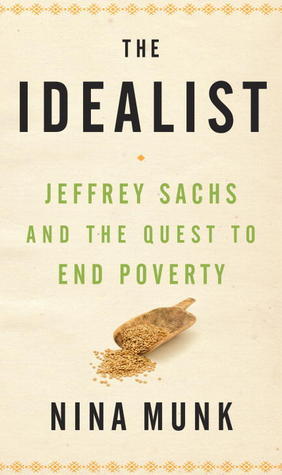
A powerful portrayal of Jeffrey Sachs's ambitious quest to end global poverty "The poor you will always have with you," to cite the Gospel of Matthew 26:11. Jeffrey Sachs—celebrated economist, special advisor to the Secretary General of the United Nations, and author of the influential bestseller The End of Poverty —disagrees. In his view, poverty is a problem that can be solved. With single-minded determination he has attempted to put into practice his theories about ending extreme poverty, to prove that the world's most destitute people can be lifted onto "the ladder of development." In 2006, Sachs launched the Millennium Villages Project, a daring five-year experiment designed to test his theories in Africa. The first Millennium village was in Sauri, a remote cluster of farming communities in western Kenya. The initial results were encouraging. With his first taste of success, and backed by one hundred twenty million dollars from George Soros and other likeminded donors, Sachs rolled out a dozen model villages in ten sub-Saharan countries. Once his approach was validated it would be scaled up across the entire continent. At least that was the idea. For the past six years, Nina Munk has reported deeply on the Millennium Villages Project, accompanying Sachs on his official trips to Africa and listening in on conversations with heads-of-state, humanitarian organizations, rival economists, and development experts. She has immersed herself in the lives of people in two Millennium Ruhiira, in southwest Uganda, and Dertu, in the arid borderland between Kenya and Somalia. Accepting the hospitality of camel herders and small-hold farmers, and witnessing their struggle to survive, Munk came to understand the real-life issues that challenge Sachs's formula for ending global poverty. The Idealist is the profound and moving story of what happens when the abstract theories of a brilliant, driven man meet the reality of human life.

Find Me Unafraid tells the uncommon love story between two uncommon people whose collaboration sparked a successful movement to transform the lives of vulnerable girls and the urban poor. With a Foreword by Nicholas Kristof.This is the story of two young people from completely different worlds: Kennedy Odede from Kibera, the largest slum in Africa, and Jessica Posner from Denver, Colorado. Kennedy foraged for food, lived on the street, and taught himself to read with old newspapers. When an American volunteer gave him the work of Mandela, Garvey, and King, teenaged Kennedy decided he was going to change his life and his community. He bought a soccer ball and started a youth empowerment group he called Shining Hope for Communities (SHOFCO). Then in 2007, Wesleyan undergraduate Jessica Posner spent a semester abroad in Kenya working with SHOFCO. Breaking all convention, she decided to live in Kibera with Kennedy, and they fell in love.Their connection persisted, and Jessica helped Kennedy to escape political violence and fulfill his lifelong dream of an education, at Wesleyan University.The alchemy of their remarkable union has drawn the support of community members and celebrities alike—The Clintons, Mia Farrow, and Nicholas Kristof are among their fans—and their work has changed the lives of many of Kibera’s most vulnerable population: its girls. Jess and Kennedy founded Kibera’s first tuition-free school for girls, a large, bright blue building, which stands as a bastion of hope in what once felt like a hopeless place. But Jessica and Kennedy are just getting started—they have expanded their model to connect essential services like health care, clean water, and economic empowerment programs. They’ve opened an identical project in Mathare, Kenya’s second largest slum, and intend to expand their remarkably successful program for change.Ultimately this is a love story about a fight against poverty and hopelessness, the transformation made possible by a true love, and the power of young people to have a deep impact on the world.

People from deprived communities all around Britain feel misunderstood and unheard. Darren McGarvey, aka 'Loki' gives voice to their feelings and concerns, and the anger that is spilling over. Anger he says we will have to get used to, unless things change. He invites you to come on a Safari of sorts. A Poverty Safari. But not the sort where the indigenous species is surveyed from a safe distance for a time, before the window on the community closes and everyone gradually forgets about it.

At 28, Stephanie Land’s plans of breaking free from the roots of her hometown in the Pacific Northwest to chase her dreams of attending a university and becoming a writer, were cut short when a summer fling turned into an unexpected pregnancy. She turned to housekeeping to make ends meet, and with a tenacious grip on her dream to provide her daughter the very best life possible, Stephanie worked days and took classes online to earn a college degree, and began to write relentlessly. Maid explores the underbelly of upper-middle class America and the reality of what it’s like to be in service to them. “I’d become a nameless ghost,” Stephanie writes about her relationship with her clients, many of whom do not know her from any other cleaner, but who she learns plenty about. As she begins to discover more about her clients’ lives-their sadness and love, too-she begins to find hope in her own path. Her writing as a journalist gives voice to the "servant" worker, and those pursuing the American Dream from below the poverty line. Maid is Stephanie’s story, but it’s not her alone..An alternate cover edition of ISBN 9780316505116 can be found here.