Loading genres...
Explore the best books about Outdoors genre.
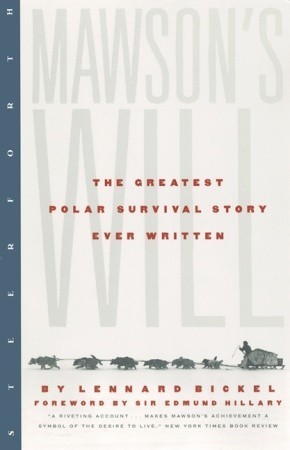
The dramatic story of explorer Douglas Mawson and "the most outstanding solo journey ever recorded in Antarctic history" (Sir Edmund Hillary, mountaineer and explorer) For weeks in Antarctica, Douglas Mawson faced some of the most daunting conditions ever known to blistering wind, snow, and cold; the loss of his companion, dogs, supplies, and even the skin on his hands and feet. But despite constant thirst, starvation, disease, and snow blindness—he survived.Sir Douglas Mawson is remembered as the young Australian who would not go to the South Pole with Robert Scott in 1911. Instead, he chose to lead his own expedition on the less glamorous mission of charting nearly 1,500 miles of Antarctic coastline and claiming its resources for the British Crown. His party of three set out through the mountains across glaciers in 60-mile-per-hour winds. Six weeks and 320 miles out, one man fell into a crevasse—along with the tent, most of the equipment, the dogs' food, and all except a week's supply of the men's provisions.Mawson's Will is the unforgettable story of one man's ingenious practicality, unbreakable spirit, and how he continued his meticulous scientific observations even in the face of death. When the expedition was over, Mawson had added more territory to the Antarctic map than anyone else of his time. Thanks to Bickel's moving account, Mawson can be remembered for the vision and dedication that make him one of the world's great explorers.
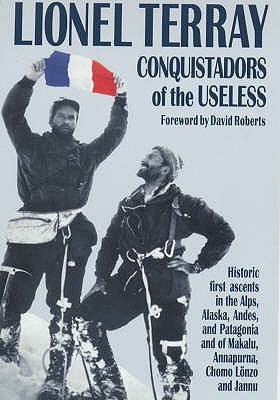
Un grand classique de la littérature alpine enfin réimprimé dans sa version illustrée à l'occasion des 25 ans de Guérin. Lionel Terray signe la plus admirable et la plus sincère autobiographie d'alpiniste.Préface de Jean-Christophe Rufin.

A combination memoir, cookbook, and travelogue describes one man's efforts to live on the land while attempting to re-create the recipes from Escoffier's 1903 magnum opus Le Guide Culinaire and searching for the frequently esoteric ingredients called for in the various dishes. Reprint.

When Desert Solitaire was first published in 1968, it became the focus of a nationwide cult. Rude and sensitive. Thought-provoking and mystical. Angry and loving. Both Abbey and this book are all of these and more. Here, the legendary author of The Monkey Wrench Gang, Abbey's Road and many other critically acclaimed books vividly captures the essence of his life during three seasons as a park ranger in southeastern Utah. This is a rare view of a quest to experience nature in its purest form--the silence, the struggle, the overwhelming beauty. But this is also the gripping, anguished cry of a man of character who challenges the growing exploitation of the wilderness by oil and mining interests, as well as by the tourist industry.Abbey's observations and challenges remain as relevant now as the day he wrote them. Today, Desert Solitaire asks if any of our incalculable natural treasures can be saved before the bulldozers strike again.

The Long Way is Bernard Moitessier's own incredible story of his participation in the first Golden Globe Race, a solo, non-stop circumnavigation rounding the three great Capes of Good Hope, Leeuwin, and the Horn. For seven months, the veteran seafarer battled storms, doldrums, gear-failures, knock-downs, as well as overwhelming fatigue and loneliness. Then, nearing the finish, Moitessier pulled out of the race and sailed on for another three months before ending his 37,455-mile journey in Tahiti. Not once had he touched land.

On 12/14/1911, the classical age of polar exploration ended when Norway's Roald Amundsen conquered the South Pole. His competitor for the prize, Britain's Robert Scott, arrived a month later--but died on the return with four of his men only 11 miles from their next cache of supplies. But it was Scott, ironically, who became the legend, Britain's heroic failure, "a monument to sheer ambition & bull-headed persistence. His achievement was to perpetuate the romantic myth of the explorer as martyr, &...to glorify suffering & self-sacrifice as ends in themselves." The world promptly forgot about Amundsen. Biographer Huntford's attempt to restore Amundsen to glory was 1st published in 1979 under the title Scott & Amundsen. The Last Place on Earth is a complex account of the race for this last great terrestrial goal. It's pointedly geared toward demythologizing Scott. Tho this was the age of the amateur explorer, Amundsen was a professional. He left little to chance, apprenticed with Eskimos & obsessed over every detail. While Scott clung fast to the British rule of "No skis, no dogs," Amundsen understood that both were vital to survival. They clearly won him the Pole. Amundsen in Huntford's view is the "last great Viking" & Scott his bungling "stupid...recklessly incompetent," & irresponsible in the extreme--failings that cost him & his teammates their lives. Yet for all of Scott's real or exaggerated faults, he understood far better than Amundsen the power of a well-crafted sentence. Scott's diaries were recovered & widely published. If the world insisted on lionizing Scott, it was partly because he told a better story. Huntford's bias aside, it's clear that both Scott & Amundsen were valiant & deeply flawed. "Scott...had set out to be an heroic example. Amundsen merely wanted to be 1st at the pole. Both had their prayers answered."--Svenja Soldovieri (edited)

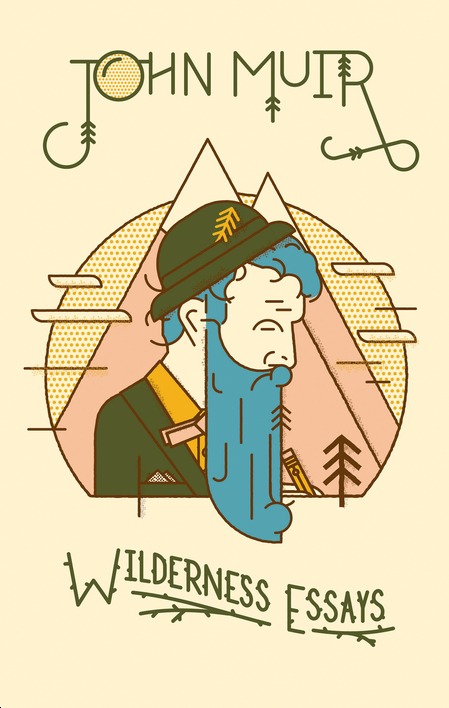
John Muir was one of our first and finest writers on the wilderness of the American West. Part of Muir's attractiveness to modern readers is the fact that he was an activist. He not only explored the West and wrote about its beauties-- he fought for their preservation. His successes dot the landscape in all the natural features that bear his name: forests, lakes, trails, glaciers. Here collected are some of his finest wilderness essays, ranging from Alaska to Yellowstone, from Oregon to the Range of Light-- the High Sierra. This series celebrates the tradition of literary naturalists-- writers who embrace the natural world as the setting for some of our most euphoric and serious experiences. Their literary terrain maps the intimate connections between the human and natural worlds, a subject defined by Mary Austin in 1920 as "a third thing... the sum of what passed between me and the Land." Literary naturalists transcend political boundaries, social concerns, and historical milieus; they speak for what Henry Beston called the "other nations" of the planet. Their message acquires more weight and urgency as wild places become increasingly scarce. This series, then, celebrates both a wonderful body of work and a fundamental truth: that nature counts as a model, a guide to how we can live in the world.

The story of Daniel Boone is the story of America—its ideals, its promise, its romance, and its destiny. Bestselling, critically acclaimed author Robert Morgan reveals the complex character of a frontiersman whose heroic life was far stranger and more fascinating than the myths that surround him.This rich, authoritative biography offers a wholly new perspective on a man who has been an American icon for more than two hundred years—a hero as important to American history as his more political contemporaries George Washington and Benjamin Franklin. Extensive endnotes, cultural and historical background material, and maps and illustrations underscore the scope of this distinguished and immensely entertaining work.

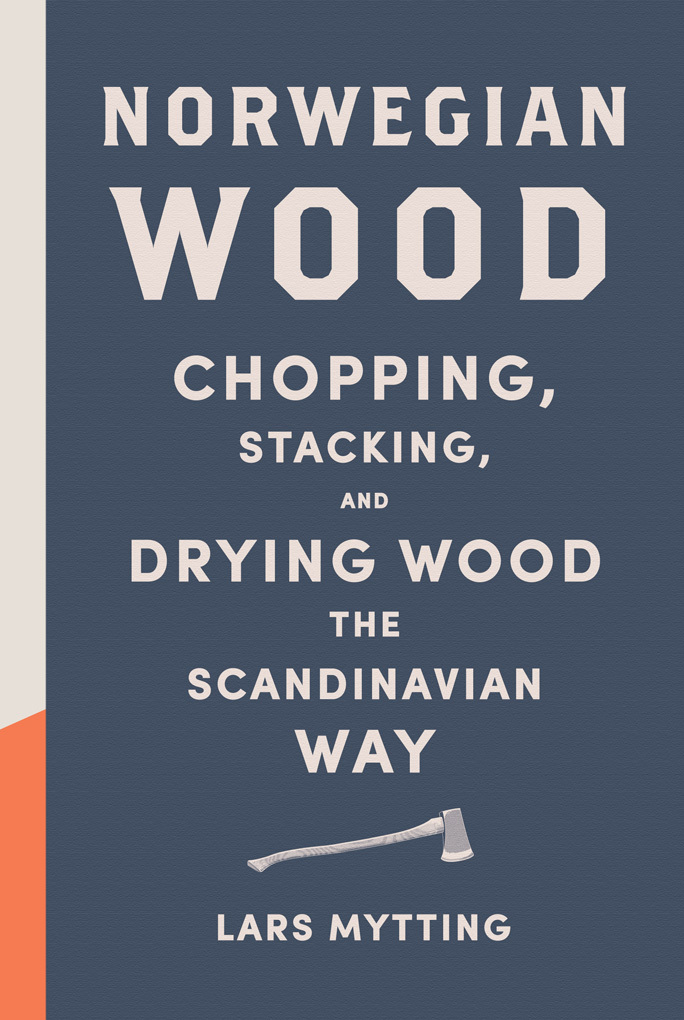
The latest Scandinavian publishing phenomenon is not a Stieg Larsson thriller, and it’s not the comfort of Danish Hygge. It’s Lars Mytting’s Norwegian Wood , a full-color practical book about the art and craft of handling wood for heating that has become an international bestseller, selling over 200,000 copies in Norway and Sweden.“You don’t need to have a wood-burning stove or fireplace to be captivated by the craft and lore surrounding a Stone Age method of creating heat.” ― Boston GlobeNorwegian Wood provides useful advice on the rustic hows and whys of taking care of your heating needs, but it’s also a thoughtful attempt to understand man’s age-old predilection for stacking wood and passion for open fires. Chapters The author, Lars Mytting, writes, “The factual material in this book represents the distilled wisdom of encounters with people who are passionate about wood, enthusiasts as well as professional researchers. I have benefitted greatly from my conversations with experts in the fields of combustion and silviculture. . . . Along the way I’ve tried out most of the techniques I’ve been introduced to. I’ve dried finely chopped oak in our kitchen oven, struggled to build a beehive woodpile, miscalculated the trajectory of a felled pine. And I’ve been on a quest to discover the soul of the wood fire.” With his help, you’ll begin your quest to discover the joys of wood and wood fire.An intriguing window into the exoticism of Scandinavian culture, the book also features enough inherently interesting facts and anecdotes and inspired prose to make it universally appealing. The US edition is a fully updated version of the Norwegian original and includes an appendix of US-based resources and contacts.

America’s national parks are breathing spaces in a world in which such spaces are steadily disappearing, which is why more than 300 million people visit the parks each year. Now Terry Tempest Williams, the author of the environmental classic Refuge and the beloved memoir When Women Were Birds, returns with The Hour of Land, a literary celebration of our national parks, an exploration of what they mean to us and what we mean to them.From the Grand Tetons in Wyoming to Acadia in Maine to Big Bend in Texas and more, Williams creates a series of lyrical portraits that illuminate the unique grandeur of each place while delving into what it means to shape a landscape with its own evolutionary history into something of our own making. Part memoir, part natural history, and part social critique, The Hour of Land is a meditation and a manifesto on why wild lands matter to the soul of America.

In 2009, while thru-hiking the Appalachian Trail, Robert Moor began to wonder about the paths that lie beneath our feet: How do they form? Why do some improve over time while others fade? What makes us follow or strike off on our own? Over the course of the next seven years, Moor traveled the globe, exploring trails of all kinds, from the miniscule to the massive. He learned the tricks of master trail-builders, hunted down long-lost Cherokee trails, and traced the origins of our road networks and the Internet. In each chapter, Moor interweaves his adventures with findings from science, history, philosophy, and nature writing—combining the nomadic joys of Peter Matthiessen with the eclectic wisdom of Lewis Hyde’s The Gift.Throughout, Moor reveals how this single topic—the oft-overlooked trail—sheds new light on a wealth of age-old questions: How does order emerge out of chaos? How did animals first crawl forth from the seas and spread across continents? How has humanity’s relationship with nature and technology shaped world around us? And, ultimately, how does each of us pick a path through life?Moor has the essayist’s gift for making new connections, the adventurer’s love for paths untaken, and the philosopher’s knack for asking big questions. With a breathtaking arc that spans from the dawn of animal life to the digital era, On Trails is a book that makes us see our world, our history, our species, and our ways of life anew.

NEW YORK TIMES BESTSELLER • An indispensable guide to surviving everything from an extended wilderness exploration to a day-long boat trip, with hard-earned advice from the host of the show MeatEater as seen on NetflixFor anyone planning to spend time outside, The MeatEater Guide to Wilderness Skills and Survival is the perfect antidote to the sensationalism of the modern survival genre. Informed by the real-life experiences of renowned outdoorsman Steven Rinella, its pages are packed with tried-and-true tips, techniques, and gear recommendations. Among other skills, readers will learn about old-school navigation and essential satellite tools, how to build a basic first-aid kit and apply tourniquets, and how to effectively purify water using everything from ancient methods to cutting-edge technologies. This essential guide delivers hard-won insights and know-how garnered from Rinella’s own experiences and mistakes and from his trusted crew of expert hunters, anglers, emergency-room doctors, climbers, paddlers, and wilderness guides—with the goal of making any reader feel comfortable and competent while out in the wild.