
Terry Tempest Williams
Terry Tempest Williams is an American author, conservationist and activist. Williams’ writing is rooted in the American West and has been significantly influenced by the arid landscape of her native Utah in which she was raised. Her work ranges from issues of ecology and wilderness preservation, to women's health, to exploring our relationship to culture and nature. She has testified before Congress on women’s health, committed acts of civil disobedience in the years 1987 - 1992 in protest against nuclear testing in the Nevada Desert, and again, in March, 2003 in Washington, D.C., with Code Pink, against the Iraq War. She has been a guest at the White House, has camped in the remote regions of the Utah and Alaska wildernesses and worked as "a barefoot artist" in Rwanda. Williams is the author of Refuge: An Unnatural History of Family and Place; An Unspoken Hunger: Stories from the Field; Desert Quartet; Leap; Red: Patience and Passion in the Desert; and The Open Space of Democracy. Her book Finding Beauty in a Broken World was published in 2008 by Pantheon Books. In 2006, Williams received the Robert Marshall Award from The Wilderness Society, their highest honor given to an American citizen. She also received the Distinguished Achievement Award from the Western American Literature Association and the Wallace Stegner Award given by The Center for the American West. She is the recipient of a Lannan Literary Award for Nonfictionand a John Simon Guggenheim Fellowship in creative nonfiction. Williams was featured in Ken Burns' PBS series The National Parks: America's Best Idea (2009). In 2011, she received the 18th International Peace Award given by the Community of Christ Church. Williams is currently the Annie Clark Tanner Scholar in Environmental Humanities at the University of Utah and a columnist for the magazine The Progressive. She has been a Montgomery Fellow at Dartmouth College where she continues to teach. She divides her time between Wilson, Wyoming and Castle Valley, Utah, where her husband Brooke is field coordinator for the Southern Utah Wilderness Alliance.
27 Books Written

The Hour of Land: A Personal Topography of America's National Parks
by Terry Tempest Williams
Rating: 4.2 ⭐
• 2 recommendations ❤️
Longlisted for an Andrew Carnegie Medal for ExcellenceA Washington Post Notable Book of the YearAmerica’s national parks are breathing spaces in a world in which such spaces are steadily disappearing, which is why more than 300 million people visit the parks each year. Now Terry Tempest Williams, the New York Times bestselling author of the environmental classic Refuge and the beloved memoir When Women Were Birds , returns with The Hour of Land , a literary celebration of our national parks and an exploration of what they mean to us and what we mean to them.From the Grand Tetons in Wyoming to Acadia in Maine to Big Bend in Texas, Williams creates a series of lyrical portraits that illuminate the unique grandeur of each place while delving into what it means to shape a landscape with its own evolutionary history into something of our own making. Part memoir, part natural history, and part social critique, The Hour of Land is a meditation and a manifesto on why wild lands matter to the soul of America.

In the spring of 1983 Terry Tempest Williams learned that her mother was dying of cancer. That same season, The Great Salt Lake began to rise to record heights, threatening the herons, owls, and snowy egrets that Williams, a poet and naturalist, had come to gauge her life by. One event was nature at its most random, the other a by-product of rogue technology: Terry's mother, and Terry herself, had been exposed to the fallout of atomic bomb tests in the 1950s. As it interweaves these narratives of dying and accommodation, Refuge transforms tragedy into a document of renewal and spiritual grace, resulting in a work that has become a classic.

The beloved author of Refuge returns with a work that explodes and startles, illuminates and celebratesTerry Tempest Williams’s mother told her: “I am leaving you all my journals, but you must promise me you won’t look at them until after I’m gone.”Readers of Williams’s iconic and unconventional memoir, Refuge, well remember that mother. She was one of a large Mormon clan in northern Utah who developed cancer as a result of the nuclear testing in nearby Nevada. It was a shock to Williams to discover that her mother had kept journals. But not as much of a shock as what she found when the time came to read them. “They were exactly where she said they would be: three shelves of beautiful cloth-bound books . . . I opened the first journal. It was empty. I opened the second journal. It was empty. I opened the third. It too was empty . . . Shelf after shelf after shelf, all of my mother’s journals were blank.” What did Williams’s mother mean by that? In fifty-four chapters that unfold like a series of yoga poses, each with its own logic and beauty, Williams creates a lyrical and caring meditation of the mystery of her mother's journals. When Women Were Birds is a kaleidoscope that keeps turning around the question “What does it mean to have a voice?”
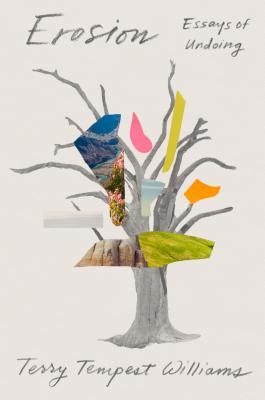
Fierce, timely, and unsettling essays from an important and beloved writer and conservationist Terry Tempest Williams's fierce, spirited, and magnificent essays are a howl in the desert. She sizes up the continuing assaults on America's public lands and the erosion of our commitment to the open space of democracy. She asks: "How do we find the strength to not look away from all that is breaking our hearts?"We know the elements of erosion: wind, water, and time. They have shaped the spectacular physical landscape of our nation. Here, Williams bravely and brilliantly explores the many forms of erosion we face: of democracy, science, compassion, and trust. She examines the dire cultural and environmental implications of the gutting of Bear Ears National Monument—sacred lands to Native Peoples of the American Southwest; of the undermining of the Endangered Species Act; of the relentless press by the fossil fuel industry that has led to a panorama in which "oil rigs light up the horizon." And she testifies that the climate crisis is not an abstraction, offering as evidence the drought outside her door and, at times, within herself.These essays are Williams's call to action, blazing a way forward through difficult and dispiriting times. We will find new territory—emotional, geographical, communal. The erosion of desert lands exposes the truth of chnage. What has been weathered, worn, and whittled away is as powerful as what remains. Our undoing is also our becoming.Erosion is a book for this moment, political and spiritual at once, written by one of our greatest naturalists, essayists, and defenders of the environment. She reminds us that beauty is its own form of resistance, and that water can crack stone.Preface: The turquoise triangle --Map of Bears Ears and Grand Staircase-Escalante National Monuments --The cutting edge of time: erosion of home --What love looks like: erosion of safety --This moment: erosion of democracy --Boom: erosion of belief --Coda: The liturgy of home

The beloved author of Refuge, Terry Tempest Williams is one of the country's most eloquent and imaginative writers. The desert is her blood. In this potent collage of stories, essays, and testimony, Red makes a stirring case for the preservation of America's Redrock Wilderness in the canyon country of southern Utah.As passionate as she is persuasive, Williams writes lyrically about the desert's power and vulnerability, describing wonders that range from an ancient Puebloan sash of macaw feathers found in Canyonlands National Park to the desert tortoise—an animal that can "teach us the slow art of revolutionary patience" as it extends our notion of kinship with all life. She examines the civil war being waged in the West today over public and private uses of land—an issue that divides even her own family. With grace, humor, and compassionate intelligence, Williams reminds us that the preservation of wildness is not simply a political process but a spiritual one."Lush elegies to the wilderness.... Earthy, spiritual, evocative." —The Boston Globe"Erotic, scientific, literary.... Her intimacy with this landscape is complex and passionate." —Los Angeles Times Book Review"Her finest writing... Use[s] pure language in the face of laws that need to be changed and lawmakers and citizens who need to understand that there is another way to see." —Portland Oregonian

The acclaimed author of Refuge here weaves together a resonant and often rhapsodic manifesto on behalf of the landscapes she loves, combining the power of her observations in the field with her personal experience—as a woman, a Mormon, and a Westerner. Through the grace of her stories we come to see how a lack of intimacy with the natural world has initiated a lack of intimacy with each other.Williams shadows lions on the Serengeti and spots night herons in the Bronx. She pays homage to the rogue spirits of Edward Abbey and Georgia O’Keeffe, contemplates the unfathomable wildness of bears, and directs us to a politics of place. The result is an utterly persuasive book—one that has the power to change the way we live upon the earth.

In her most original, provocative, and eloquently moving book since Refuge , Terry Tempest Williams gives us a luminous chronicle of finding beauty in a broken world. Always an impassioned and far-sighted advocate for a just relationship between the natural world and humankind, Williams has broadened her concerns over the past several years to include a reconfiguration of family and community in her search for a deeper understanding of what it means to be human in an era of physical and spiritual fragmentation.Williams begins in Ravenna, Italy, where “jeweled ceilings became lavish tales” through the art of mosaic. She discovers that mosaic is not just an art form but a form of integration, and when she returns to the American Southwest, her physical and spiritual home, and observes a clan of prairie dogs on the brink of extinction, she apprehends an ecological mosaic created by a remarkable species in the sagebrush steppes of the Colorado Plateau. And, finally, Williams travels to a small village in Rwanda, where, along with fellow artists, she joins survivors of the 1994 genocide and builds a memorial literally from the rubble of war, an act that becomes a spark for social change and healing.A singular meditation on how the natural and human worlds both collide and connect in violence and beauty, this is a work of uncommon perceptions that dares to find intersections between arrogance and empathy, tumult and peace, constructing a narrative of hopeful acts by taking that which is broken and creating something whole.

Terry Tempest Williams presents a sharp-edged perspective on the ethics and politics of place, spiritual democracy, and the responsibilities of citizen engagement. By turns elegiac, inspiring, and passionate, The Open Space of Democracy offers a fresh perspective on the critical questions of our time.

With Leap , Terry Tempest Williams, award-winning author of Refuge , offers a sustained meditation on passion, faith, and creativity-based upon her transcendental encounter with Hieronymus Bosch's medieval masterpiece The Garden of Delights .Williams examines this vibrant landscape with unprecedented acuity, recognizing parallels between the artist's prophetic vision and her own personal experiences as a Mormon and a naturalist. Searing in its spiritual, intellectual, and emotional courage, Williams's divine journey enables her to realize the full extent of her faith and through her exquisite imagination opens our eyes to the splendor of the world.

This unusual book is an introduction to Navajo culture by a storyteller. Steeped in the lore of the Navajo reservation, where she worked as a teacher, the author came to see Navajo legend and ritual as touchstones for evaluating her own experience. She presents them here as a means for all people to locate their own history, traditions, and sense of how to live well."To know the oral tradition of Native American people is to feel the sensitivity and sensuality of language in its clearest motion and light, and this Williams has achieved in her appreciation of that tradition."--Simon Ortiz" Pieces of White Shell is vibrant--full of risk, gentleness, wonder, and humility."--Barry Lopez"This book is both informative and enormously evocative. Exposition and description are powerfully reinforced by recurrent passages in the mode of poetry and drama."--Brewster Ghiselin

Beautifully illuminated with drawings and paintings by noted artist Mary Frank, Williams, one of the West's most intense and lyrical writers, invokes the lure and drama of the landscape. This is an incandescent meditation--in word and image--on the physical vastness and beauty of the desert and the spiritual place one woman finds for herself there.

In twenty short books, Penguin brings you the classics of the environmental movement.With honesty, passion and heart, Terry Tempest Williams's essays explore the impact of nuclear testing, the vital importance of environmental legislation, and the guiding spirit of conservation.Over the past 75 years, a new canon has emerged. As life on Earth has become irrevocably altered by humans, visionary thinkers around the world have raised their voices to defend the planet, and affirm our place at the heart of its restoration. Their words have endured through the decades, becoming the classics of a movement. Together, these books show the richness of environmental thought, and point the way to a fairer, saner, greener world.

This is Coyote's country--a landscape of the imagination, where nothing is as it appears.

A Voice in the Wilderness: Conversations with Terry Tempest Williams
by Terry Tempest Williams
Rating: 4.2 ⭐
With her distinctive, impassioned voice and familiar felicity of language, Terry Tempest Williams talks about wilderness and wildlife, place and eroticism, art and literature, democracy and politics, family and heritage, Mormonism and religion, writing and creativity, and other subjects that engage her agile mind—in a set of interviews gathered and introduced by Michael Austin to represent the span of her career as a naturalist, author, and activist.

Examines over a dozen different types of snow and snowy conditions through the vocabulary of the Inuit people of Alaska. Discusses the physical properties and formation of the snow and how it affects the plants, animals, and people of the Arctic.

The Illuminated Desert is a stunning dialogue in painting and prose by two daughters of the Colorado Plateau: Terry Tempest Williams and Chloe Hedden. This is more than an abecedarian, or alphabet book. It is an exquisite rendering of life in the red rock canyons of Southern Utah and the natural history that evokes a poetry of place. The audience for this book is the audience of the desert itself, from children to adults who share in discovery and delight.

A simple introduction to the plant and animal life that flourishes in a marsh.

In eloquent language and stories, members of the LDS faith relate personal experiences with the natural world. Drawing on scripture and Mormon tradition, they tell of peacefull times and of times in nature that changed their lives, as well as current conflicts over the use of public lands in the West. These essays of inspiration and courage illuminate the spiritual qualities inherent in the land. We offer this unprecedented volume of Mormon environmental thought to the growing ecological consciousness of religion's responsibility toward the earth. ***See Table of Contents for a list of authors.

A Burning Testament presents text by the writer and environmental activist Terry Tempest Williams with illustrations by the artist Mary Frank. It is the newest and most urgent in a long line of collaborations between these two brilliant artists. A Burning Testament is a passionate plea and a manifesto in defense of the earth, and specifically Williams’s American West, written in the midst of the unprecedented, deadly, and widespread fires of this past fall. Williams’s text inspired an outpouring of resonant images from Mary Frank, which are brought together in this modest format – something like a secular prayer book from the cathedral of nature.A portion of this text appeared in a special episode of The Daily, a New York Times podcast, on September 18, 2020, hosted and produced by Bianca Giaever.“Let this be a humble tribute, an exaltation, an homage, and an open-hearted eulogy to all we are losing to fire, to floods, to hurricanes and tornadoes and the invisible virus that has called us all home and brought us to our knees. We are not the only species that lives and loves and breathes on this miraculous planet called Earth.” –Terry Tempest Williams

When artist Tom Curry first moved to Maine, his house overlooked a small, uninhabited island in Eggemoggin Reach. One day, while rowing across to the island, his boyhood fear of water came crashing in on him. So he decided to explore his fear head-on, and began painting the island “as a way to delve into my own darkness and seek a way back to the surface.” That series of paintings, capturing the island in all lights, weathers, and moods, forms the basis of this book. But the whole is much more than the sum of its parts. These paintings represent an ongoing “island as escape and entrapment, island as longing and memory, island as sanctuary, island as self in a sea of turmoil.” The paintings are accompanied by essays by Terry Tempest Williams, exploring Curry’s spirit of place, and Carl Little, establishing Curry’s art within the field of landscape painting.


A collection of nine audio essays by naturalists from all walks of life exploring the diversity, beauty and fragility of our planet.

Un classique du nature writing, où s'entrelacent le destin des oiseaux menacés et celui des hommes et des femmes.Utah, 1983.La montée des eaux du Grand Lac Salé menace le Refuge des oiseaux migrateurs. Hérons, chouettes et aigrettes neigeuses, dont l'étude rythme l'existence de Terry Tempest Williams, en sont les premières victimes.Au printemps, Terry apprend que sa mère est atteinte d'un cancer, comme huit femmes de sa famille avant elle. Bouleversée par la douleur de celle qu'elle accompagne dans la maladie, Terry entame une enquête pour comprendre les raisons de ce drame.Remarquable étude naturaliste et chronique familiale saisissante, Refuge entrelace le destin des oiseaux sauvages et celui des êtres humains, frappés comme eux par les drames écologiques.

“Williams is a master . . . She gives us a reason to follow her refusing to look away from the degradation, in hopes of preserving the wild places we have left.”— Outside Magazine From the acclaimed nature writer and New York Times bestselling author, a revelatory work of narrative nonfiction exploring beauty, climate change, and transformative moments of hope in a world beset by uncertaintyWhether we believe it or not, rapid change is upon us. I am searching for grace.In this time of political fragility, climate chaos, and seeking hope wherever we can find its glimmer, Terry Tempest Williams introduces us to the Glorians. They are not distant deities, but the ordinary, often overlooked presences—animal, plant, memory, moment—that reveal our shared vulnerability and interconnectedness with the natural world. The Glorians can be as small as an ant ferrying a coyote willow blossom to its queen or as commonplace as the night sky. But what they can collectively teach us—about the radical act of attending to beauty and carrying forward against all odds—is immense.Journeying through encounters with the Glorians in the red rock desert of Utah during the pandemic to Harvard University where she teaches in the Divinity School, Williams weaves a story of astonishing personal and societal insight. As she grapples with the unsettled state of the world, she turns not to despair but to deep reflection. She sees how the Glorians are calling us all to attention, not as an army, but as fellow inhabitants of our sacred, threatened home. They remind us of the power of contact between species and the profound courage—and awareness—it will take to dream a more cohesive future into being.Wise and lyrical, The Glorians is a testament to the power of witness, a field guide to finding grace in the unexpected, and a moving invitation to engage with one another and our surroundings with renewed intention. In a modern world filled with increasing noise and anxiety, Terry Tempest Williams offers honest sustenance for the mind and spirit and distinguishes herself again as a trusted voice to whom we can turn to more fully understand our times.

A Long-Lost Field Guide for the Soul Rediscover an ecstatic
by Terry Tempest Williams

Fancy Free
by Terry Tempest Williams
Fancy Free is a wonderful collection of pictures. Some are word-pictures in the form of poems; some are exciting colour photographs which reflect the moods and feelings of the poems. The whole forms a lively new combination of poems and pictures which may inspire you to write your own.