Loading genres...
Explore the best books about Modern Classics genre.

🎧Run Time = 15 hours and 38 minutesA modernist classic from the author of Brave New World, who was hailed as “a genius” (The New Yorker): Cynical socialite Anthony Beavis searches for meaning in life — and his worldview is dramatically transformed after he joins the Mexican Revolution. “An important book” (The New York Times Book Review) performed by an Earphones Award–winning narrator!Though somewhat overshadowed by Brave New World and The Doors of Perception, Huxley’s modernist novel Eyeless in Gaza (1936) is often regarded as his finest work. The writer and historian Simon Heffer dubbed it, unequivocally, ‘his only great novel.’The plot centres on Anthony Beavis, a dilettante social theorist, a man inclined to recoil from life. The pleasures of the physical world disgust him and the universe of ideas is but a poor refuge. Having long lost the art of intimacy, he betrays friendships and toys with the affections of women. But as Beavis approaches middle age, his world of perfect detachment begins to lose its appeal. Finally realising that his withdrawal from life has been motivated not by intellectual honesty but by moral cowardice, Beavis, devastated and at crisis point, meets the remarkable and redoubtable Dr Miller.The novel’s style and setting create a unique atmosphere. Placed mainly in the inter-war years of the 20th century, the story is told in short, dated sections without following strict chronology: we encounter characters and events through fractured time, forward and backward, resulting in an unusual perspective. Eyeless in Gaza – a quotation from Milton’s Samson Agonistes – will come as an exciting, enriching surprise to many who know only the more popular Huxley. Especially in this persuasive recording by Jamie Parker.

This controversial portrayal of Viennese artistic circles begins as the writer-narrator arrives at an 'artistic dinner' given by a composer and his society wife—a couple that the writer once admired but has now come to loathe. The guest of honor, an actor from the Burgtheater, is late. As the other guests wait impatiently, they are seen through the critical eye of the narrator, who begins a silent but frenzied, sometimes maniacal, and often ambivalent tirade against these former friends, most of whom were brought together by the woman whom they had buried that day. Reflections on Joana's life and suicide are mixed with these denunciations until the famous actor arrives, bringing a culmination to the evening for which the narrator had not even thought to hope."Mr. Bernhard's portrait of a society in dissolution has a Scandinavian darkness reminiscent of Ibsen and Strindberg, but it is filtered through with a minimalist prose. . . . Woodcutters offers an unusually strange, intense, engrossing literary experience."—Mark Anderson, New York Times Book Review"Musical, dramatic and set in Vienna, Woodcutters. . . .resembles a Strauss operetta with a libretto by Beckett."—Joseph Costes, Chicago Tribune"Thomas Bernhard, the great pessimist-rhapsodist of German literature . . . never compromises, never makes peace with life. . . . Only in the pure, fierce isolation of his art can he get justice."—Michael Feingold, Village Voice"In typical Bernhardian fashion the narrator is moved by hatred and affection for a society that he believes destroys the very artistic genius it purports to glorify. A superb translation."—Library Journal

A collection of "uncommonly good stories" ( The Chicago Tribune ) from a true American master of the short story—disturbing, comic, and moving takes that find deeper meanings in ordinary domestic life.With unforgettable characters, places, and events—a young divorcee, a shared summer home, a troubled family, a wedding, the death of a pet—Williams takes her readers on journey after journey, as only she can.

Kitty Vandervane, the wife of a philandering orchestra conductor, asks Douglas Yandell, a music writer and family friend, to find out who is the current flame

Follows the life of a strong Hindu woman who must adjust to an arranged marriage to a foolish man

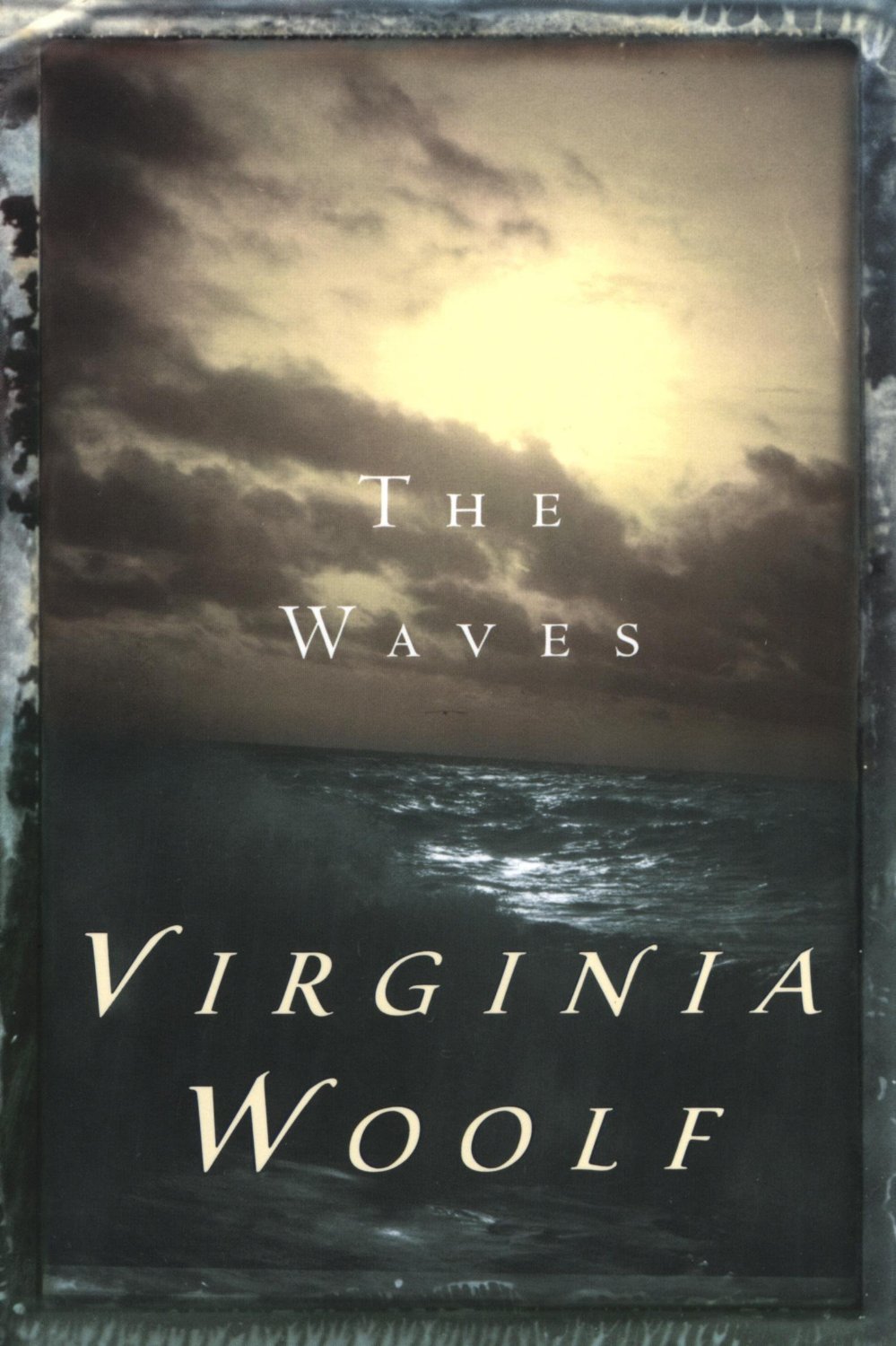
Set on the coast of England against the vivid background of the sea, The Waves introduces six characters—three men and three women—who are grappling with the death of a beloved friend, Percival. Instead of describing their outward expressions of grief, Virginia Woolf draws her characters from the inside, revealing them through their thoughts and interior soliloquies. As their understanding of nature’s trials grows, the chorus of narrative voices blends together in miraculous harmony, remarking not only on the inevitable death of individuals but on the eternal connection of everyone. The novel that most epitomizes Virginia Woolf’s theories of fiction in the working form, The Waves is an amazing book very much ahead of its time. It is a poetic dreamscape, visual, experimental, and thrilling.

This version has the last three volumes of the Kolyma Stories: IV - Sketches of the Criminal WorldV - The Resurrection of the LarchVI - The Glove, or, Kolyma Stories IIThe astonishing follow-up to 2018's Kolyma Stories.In 1936, Varlam Shalamov, a journalist and writer, was arrested for counterrevolutionary activities and sent to the Soviet Gulag. He survived fifteen years in the prison camps and returned from the Far North to write one of the masterpieces of twentieth-century literature, an epic array of short fictional tales reflecting the years he spent in the Gulag. Sketches of the Criminal World is the second of two volumes (the first, Kolyma Stories, was published by NYRB Classics in 2018) that together constitute the first complete English translation of Shalamov’s stories and the only one to be based on the authorized Russian text. In this second volume, Shalamov sets out to answer the fundamental moral questions that plagued him in the camps where he encountered firsthand the criminal world as a real place, far more evil than Dostoyevsky’s underground: “How does someone stop being human?” and “How are criminals made?” By 1972, when he was writing his last stories, the camps were being demolished, the guard towers and barracks razed. “Did we exist?” Shalamov asks, then answers without hesitation, “I reply, ‘We did.’”