Loading genres...
Explore the best books about Medieval History genre.

This scarce antiquarian book is a selection from Kessinger Publishing's Legacy Reprint Series. Due to its age, it may contain imperfections such as marks, notations, marginalia and flawed pages. Because we believe this work is culturally important, we have made it available as part of our commitment to protecting, preserving, and promoting the world's literature. Kessinger Publishing is the place to find hundreds of thousands of rare and hard-to-find books with something of interest for everyone!
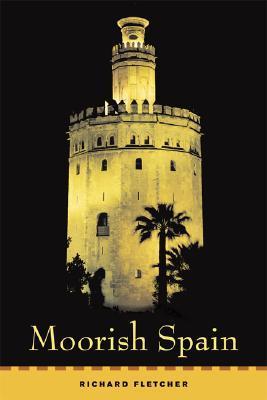
Beginning in the year 711 and continuing for nearly a thousand years, the Islamic presence survived in Spain, at times flourishing, and at other times dwindling into warring fiefdoms. But the culture and science thereby brought to Spain, including long-buried knowledge from Greece, largely forgotten during Europe’s Dark Ages, was to have an enduring impact on the country as it emerged into the modern era. In this gracefully written history, Richard Fletcher reveals the Moorish culture in all its fascinating disparity and gives us history at its best: here is vivid storytelling by a renowned scholar.

As a veteran campaigner, the Byzantine emperor Maurice (582-602) compiled a unique and influential handbook intended for the field commander. In this first complete English translation, the Strategikon is an invaluable source not only for early Byzantine history but for the general history of the art of war. Describing in detail weaponry and armor, daily life on the march or in camp, clothing, food, medical care, military law, and titles of the Byzantine army of the seventh century, the Strategikon offers insights into the Byzantine military ethos. In language contemporary, down-to-earth, and practical, the text also provides important data for the historian, and even the ethnologist, including eyewitness accounts of the Persians, Slavs, Lombards, and Avars at the frontier of the Empire.

From our twentieth-century perspective, we tend to think of the Europe of the past as a colonizer, a series of empires that conquered lands beyond their borders and forced European cultural values on other peoples. This provocative book shows that Europe in the Middle Ages was as much a product of a process of conquest and colonization as it was later a colonizer.

Paperback book.

Combining engrossing detail and magisterial overview, Venice, A Maritime Republic traces the history of Venice from its origins in the sixth century through its rise and decline as the first modern empire of Europe. "Among the many cities men have made," Frederic C. Lane writes, "Venice stands out as a symbol of beauty, of wise government, and of communally controlled capitalism." Drawing on a lifetime of study and reflection, the author shows how that resplendent city came to have the institutions, the buildings, and the pattern of urban life that make it unique.

The Third Edition includes substantial revisions and new material throughout the book that will secure its standing as the most useful history available of preindustrial Europe.During the seven hundred years before the Industrial Revolution, the stage was set for Europe's transformation from a backward agrarian society to a powerful industrialized society. An economic historian of international reputation, Carlo M. Cipolla explores the process that made this transformation possible. In so doing, he sheds light not only on the economic factors but on the culture surrounding them.

In this pioneering work Jacques Le Goff examines both the creation of the medieval universities in the great cities of the European High Middle Ages, and the linked origins of the intellectuals – the first Europeans since the Classic Age to owe their livelihoods to their teaching and accumulation of knowledge.The author′s argument is that the intellectuals, Abelard most typically, were a new category of person (neither monk nor knight) with a new method (scholastic dialectic) and a new objective (knowledge for its own sake). For the first time in Spain, France, England and Germany the luxury of thinking and learning ceased to be the limited preserve of the higher echelons of the Church and the Court. The effect, the author shows, was to bring about an irreversible shift in European culture.This intellectual history of medieval Europe (translated from the revised French edition of 1984) will be widely welcomed by students and scholars of the Middle Ages throughout the English–speaking world.

This classic account shows how the fall of Constantinople in May 1453, after a siege of several weeks, came as a bitter shock to Western Christendom. The city's plight had been neglected, and negligible help was sent in this crisis. To the Turks, victory not only brought a new imperial capital, but guaranteed that their empire would last. To the Greeks, the conquest meant the end of the civilisation of Byzantium, and led to the exodus of scholars stimulating the tremendous expansion of Greek studies in the European Renaissance."... an excellent tale, full of suspense and pathos... He [Sir Steven Runciman] tells the story and, as always, tells it very elegantly."- History"This is a marvel of learning lightly worn..."- The Guardian

In this fresh approach to the history of the Black Death, world-renowned scholar John Hatcher re-creates everyday life in a mid-fourteenth century rural English village. By focusing on the experiences of ordinary villagers as they lived-and died-during the Black Death (1345-50), Hatcher vividly places the reader directly inside those tumultuous times and describes in fascinating detail the day-to-day existence of people struggling with the tragic effects of the plague. Dramatic scenes portray how contemporaries must have felt and thought about these momentous events: what they knew and didn't know about the horrors of the disease, what they believed about death and God's vengeance, and how they tried to make sense of it all despite frantic rumors, frightening tales, and fearful sermons.

A magisterial work of gripping history, City of Fortune tells the story of the Venetian ascent from lagoon dwellers to the greatest power in the Mediterranean - an epic five hundred year voyage that encompassed crusade and trade, plague, sea battles and colonial adventure. In Venice, the path to empire unfolded in a series of extraordinary contests - the sacking of Constantinople in 1204, the fight to the finish with Genoa and a desperate defence against the Turks. Under the lion banner of St Mark, she created an empire of ports and naval bases which funnelled the goods of the world through its wharfs. In the process the city became the richest place on earth - a brilliant mosaic fashioned from what it bought, traded, borrowed and stole.Based on first hand accounts of trade and warfare, seafaring and piracy and the places where Venetians sailed and died, City of Fortune is narrative history at its finest. Beginning on Ascension Day in the year 1000 and ending with an explosion off the coast of Greece - and the calamitous news that the Portuguese had pioneered a sea route to India - it will fascinate anyone who loves Venice and the Mediterranean world.

A definitive new history of the Vikings The Viking Age -- between 750 and 1050 -- saw an unprecedented expansion of the Scandinavian peoples. As traders and raiders, explorers and colonists, they reshaped the world between eastern North America and the Asian steppe. For a millennium, though, their history has largely been filtered through the writings of their victims. Based on the latest archaeological and textual evidence, Children of Ash and Elm tells the story of the Vikings on their own terms: their politics, their cosmology, their art and culture. From Björn Ironside, who led an expedition to sack Rome, to Gudrid Thorbjarnardóttir, the most traveled woman in the world, Price shows us the real Vikings, not the caricatures they've become in popular culture and history.

Meesterverteller Bart Van Loo neemt de lezer op sleeptouw langs duizend jaar Europese geschiedenis. Zijn zoektocht voert hem naar het ontstaan van de Nederlanden in de vijftiende eeuw. En wat blijkt? De Lage Landen zijn een Bourgondische uitvinding.De Bourgondiërs vertelt de geschiedenis van de vroege Nederlandse eenwording. Het is een wonderlijk relaas van ontbolsterende steden, ontwakend individualisme en uitstervende ridderidealen. Van schizofrene koningen, doortastende hertogen en geniale kunstenaars. Terwijl de Bourgondische hertogen met veldslagen, huwelijken en hervormingen de versnipperde Lage Landen tot één geheel smeedden, ontstonden onder hun impuls de onvergetelijke werken van Klaas Sluter, Jan van Eyck en Rogier van der Weyden.Bart Van Loo’s even spannende als leerrijke verkenning van de middeleeuwen groeit gaandeweg uit tot een indrukwekkende cultuurgeschiedenis. Meeslepend en erudiet vertelt hij waar wij vandaan komen.

The Story of Civilization, Volume A history of medieval civilization—Christian, Islamic, and Judaic—from Constantine to A.D. 325-1300. This is the fourth volume of the classic, Pulitzer Prize-winning series.