Loading genres...
Explore the best books about Indigenous genre.


From mountain shrines to lowland oases, ethnobiologist Gary Nabhan takes us on a series of journeys with contemporary Papago Indians, the Tohono O'odham, or "Desert People." From these journeys we discover how much the Desert People know about the dynamics of their arid homeland in Arizona and Sonora, Mexico. The Desert Smells Like Rain offers insights into the natural history of desert plants and animals as it documents a dying agricultural tradition that has enriched the biological diversity of the Papago's seemingly harsh environment. Drawing on his extensive scientific research and study of Papago folklore, as well as his years of work among the Desert People in village gardening and nutrition programs, Nabhan portrays a desert-adapted way of life that has persisted despite the pressures of modern civilization.

The glaciers creepLike snakes that watch their prey, from their far fountains,Slow rolling on.- Percy Shelley, "Mont Blanc," 1816Glaciers in America's far northwest figure prominently in indigenous oral traditions, early travelers' journals, and the work of geophysical scientists. By following such stories across three centuries, this book explores local knowledge, colonial encounters, and environmental change.Do Glaciers Listen? examines conflicting depictions of glaciers to show how natural and social histories are entangled. During late stages of the Little Ice Age, significant geophysical changes coincided with dramatic social upheaval in the Saint Elias Mountains. European visitors brought conceptions of Nature as sublime, as spiritual, or as a resource for human progress. They saw glaciers as inanimate, subject to empirical investigation and measurement. Aboriginal responses were strikingly different. From their perspectives, glaciers were sentient, animate, and quick to respond to human behaviour. In each case, experiences and ideas surrounding glaciers were incorporated into interpretations of social relations.Focusing on these contrasting views, Julie Cruikshank demonstrates how local knowledge is produced, rather than "discovered," through such encounters, and how oral histories conjoin social and biophysical processes. She traces how divergent views continue to weave through contemporary debates about protected areas, parks and the new World Heritage site that encompasses the area where Alaska, British Columbia, and the Yukon Territory now meet. Students and scholars of Native studies and anthropology as well as readers interested in northern studies and colonial encounters will find Do Glaciers Listen? a fascinating read and a rich addition to circumpolar literature.Winner of the Victor Turner Prize for Ethnographic Writing, 2006

American expansion, says Richard Drinnon, is characterized by repression and racism. In his reinterpretation of "winning" the West, Drinnon links racism with colonialism and traces this interrelationship from the Pequot War in New England, through American expansion westward to the Pacific, and beyond to the Phillippines and Vietnam. He cites parrallels between the slaughter of bison on the Great Plains and the defoliation of Vietnam and notes similarities in the language of aggression used in the American West, the Philippines, and Southeast Asia.

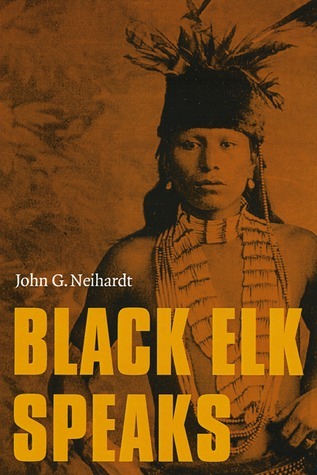
"Black Elk Speaks," the story of the Oglala Lakota visionary and healer Nicholas Black Elk (1863-1950) and his people during momentous twilight years of the nineteenth century, offers readers much more than a precious glimpse of a vanished time. Black Elk's searing visions of the unity of humanity and Earth, conveyed by John G. Neihardt, have made this book a classic that crosses multiple genres. Whether appreciated as the poignant tale of a Lakota life, as a history of a Native nation, or as an enduring spiritual testament, Black Elk Speaks is unforgettable.Black Elk met the distinguished poet, writer, and critic John G. Neihardt in 1930 on the Pine Ridge Reservation in South Dakota and asked Neihardt to share his story with the world. Neihardt understood and conveyed Black Elk's experiences in this powerful and inspirational message for all humankind.

Every culture is a unique answer to a fundamental question: What does it mean to be human and alive? In The Wayfinders, renowned anthropologist, winner of the prestigious Samuel Johnson Prize, and National Geographic Explorer-in-Residence Wade Davis leads us on a thrilling journey to celebrate the wisdom of the world's indigenous cultures. In Polynesia we set sail with navigators whose ancestors settled the Pacific ten centuries before Christ. In the Amazon we meet the descendants of a true lost civilization, the Peoples of the Anaconda. In the Andes we discover that the earth really is alive, while in Australia we experience Dreamtime, the all-embracing philosophy of the first humans to walk out of Africa. We then travel to Nepal, where we encounter a wisdom hero, a Bodhisattva, who emerges from forty-five years of Buddhist retreat and solitude. And finally we settle in Borneo, where the last rain forest nomads struggle to survive. Understanding the lessons of this journey will be our mission for the next century. For at risk is the human legacy--a vast archive of knowledge and expertise, a catalog of the imagination. Rediscovering a new appreciation for the diversity of the human spirit, as expressed by culture, is among the central challenges of our time.

Lewis "Shoe" Blake is used to the joys and difficulties of life on the Tuscarora Indian reservation in 1975: the joking, the Fireball games, the snow blowing through his roof. What he's not used to is white people being nice to him -- people like George Haddonfield, whose family recently moved to town with the Air Force. As the boys connect through their mutual passion for music, especially the Beatles, Lewis has to lie more and more to hide the reality of his family's poverty from George. He also has to deal with the vicious Evan Reininger, who makes Lewis the special target of his wrath. But when everyone else is on Evan's side, how can he be defeated? And if George finds out the truth about Lewis's home -- will he still be his friend?Acclaimed adult author Eric Gansworth makes his YA debut with this wry and powerful novel about friendship, memory, and the joy of rock 'n' roll.

As a botanist, Robin Wall Kimmerer has been trained to ask questions of nature with the tools of science. As a member of the Citizen Potawatomi Nation, she embraces the notion that plants and animals are our oldest teachers. In Braiding Sweetgrass, Kimmerer brings these lenses of knowledge together to show that the awakening of a wider ecological consciousness requires the acknowledgment and celebration of our reciprocal relationship with the rest of the living world. For only when we can hear the languages of other beings are we capable of understanding the generosity of the earth, and learning to give our own gifts in return.

Unpacks the twenty-one most common myths and misconceptions about Native AmericansIn this enlightening book, scholars and activists Roxanne Dunbar-Ortiz and Dina Gilio-Whitaker tackle a wide range of myths about Native American culture and history that have misinformed generations. Tracing how these ideas evolved, and drawing from history, the authors disrupt long-held and enduring myths such as:"Columbus Discovered America""Thanksgiving Proves the Indians Welcomed Pilgrims""Indians Were Savage and Warlike""Europeans Brought Civilization to Backward Indians""The United States Did Not Have a Policy of Genocide""Sports Mascots Honor Native Americans""Most Indians Are on Government Welfare""Indian Casinos Make Them All Rich""Indians Are Naturally Predisposed to Alcohol"Each chapter deftly shows how these myths are rooted in the fears and prejudice of European settlers and in the larger political agendas of a settler state aimed at acquiring Indigenous land and tied to narratives of erasure and disappearance. Accessibly written and revelatory, "All the Real Indians Died Off" challenges readers to rethink what they have been taught about Native Americans and history.

Winner of the Society of American Historians' Francis Parkman PrizeWinner of the PEN / Jacqueline Bograd Weld Award for BiographyBest Biography of 2016, True West magazine Winner of the Western Writers of America 2017 Spur Award, Best Western BiographyFinalist, National Book Critics Circle Award for BiographyLong-listed for the Cundill History PrizeOne of the Best Books of 2016, The Boston GlobeThe epic life story of the Native American holy man who has inspired millions around the worldBlack Elk, the Native American holy man, is known to millions of readers around the world from his 1932 testimonial Black Elk Speaks. Adapted by the poet John G. Neihardt from a series of interviews with Black Elk and other elders at the Pine Ridge Reservation in South Dakota, Black Elk Speaks is one of the most widely read and admired works of American Indian literature. Cryptic and deeply personal, it has been read as a spiritual guide, a philosophical manifesto, and a text to be deconstructed—while the historical Black Elk has faded from view.In this sweeping book, Joe Jackson provides the definitive biographical account of a figure whose dramatic life converged with some of the most momentous events in the history of the American West. Born in an era of rising violence between the Sioux, white settlers, and U.S. government troops, Black Elk killed his first man at the Little Bighorn, witnessed the death of his second cousin Crazy Horse, and traveled to Europe with Buffalo Bill’s Wild West show. Upon his return, he was swept up in the traditionalist Ghost Dance movement and shaken by the Massacre at Wounded Knee. But Black Elk was not a warrior, instead accepting the path of a healer and holy man, motivated by a powerful prophetic vision that he struggled to understand. Although Black Elk embraced Catholicism in his later years, he continued to practice the old ways clandestinely and never refrained from seeking meaning in the visions that both haunted and inspired him.In Black Elk, Jackson has crafted a true American epic, restoring to its subject the richness of his times and gorgeously portraying a life of heroism and tragedy, adaptation and endurance, in an era of permanent crisis on the Great Plains.

Inspired by artists such as Ansel Adams, Alfred Stieglitz and Henri Cartier-Bresson, who wrote that great photographs come about in the decisive moment when the head, heart and eye find perfect alignment in an axis of the spirit, celebrated anthropologist and photographer Wade Davis has travelled the world in pursuit of the wonder of the human imagination as brought into being by culture.In Wade Davis: Photographs, Davis selects 150 of his favourite photographs from the thousands he has taken in the course of his forty-year career. Intimate portraits of family and community life, they are universal in feel, although they represent an enormous diversity of geographical locations and cultural backgrounds. Each one captures a rich story about the human condition, and invites the viewer to experience scenes of family, magic, love and tradition.Throughout his career, Davis's central aim has been to convey a visceral sense of the mystery and wealth of human culture, the embodiment of all that we are and all that we have created as a species. Through his words and photographs, he sheds light on the great peril that many traditions face, and the danger of losing forever the rich cultural heritages that have sustained us for thousands of years.

’All around, the Indians began jumping up, running forward, dodging down, jumping up again, down again, all the time going toward the soldiers.’ The story of Custer’s last battle is rarely told from the Native American perspective, despite the fact that there were no white survivors. Stories about the Battle of Little Bighorn are therefore often more myth than truth. In 1922, Thomas B. Marquis decided to uncover the true story of Custer’s Last Stand by speaking to someone who had actually fought against him. For hour after hour Marquis spoke to Wooden Leg and pieced together the narrative of the battle. Yet, Marquis’ studies cover much more than the final demise of Custer. Through his interviews with Wooden Leg, who was a young man at the time of Little Bighorn, he was able to uncover fascinating details about the everyday life of Cheyenne Indians and their practices. Their hunting practices, their conflicts with the Crows, how they were given names, their religion, their marriage customs, and other details of their way of life are all covered. As the relations between American soldiers and Native Americans grew more tense Wooden Leg and his Cheyenne people were drawn into conflict. Wooden Leg provides a fascinating account of how the Native American tribes were drawn together in a loose alliance to repel the oppression to which they had been subjected. Though the Native Americans won the battle, they certainly did not win the war. Wooden Leg’s account of the years after Little Bighorn demonstrates how many Native Americans struggled with life on the reservations and how they longed to be on the plains once again. Wooden Leg’s memoirs interpreted by Thomas B. Marquis give a fascinating insight into Native American life in the late-nineteenth century. “[A] deeply interesting story.” The New York Times After entering a reservation Wooden Leg worked as a scout, messenger and sentry. He was part of the 1913 delegation sent to Washington to speak about the Cheyenne tribe. Later he became a judge on the reservation and died in 1940.

Alternate cover edition of ISBN 9780525520375.Tommy Orange's wondrous and shattering novel follows twelve characters from Native communities: all traveling to the Big Oakland Powwow, all connected to one another in ways they may not yet realize.Among them is Jacquie Red Feather, newly sober and trying to make it back to the family she left behind. Dene Oxendene, pulling his life together after his uncle's death and working at the powwow to honor his memory. Fourteen-year-old Orvil, coming to perform traditional dance for the very first time. Together, this chorus of voices tells of the plight of the urban Native American--grappling with a complex and painful history, with an inheritance of beauty and spirituality, with communion and sacrifice and heroism. Hailed as an instant classic, There There is at once poignant and unflinching, utterly contemporary and truly unforgettable.

LONGLISTED FOR THE 2020 ANDREW CARNEGIE MEDAL FOR EXCELLENCEA sweeping history—and counter-narrative—of Native American life from the Wounded Knee massacre to the present.The received idea of Native American history—as promulgated by books like Dee Brown's mega-bestselling 1970 Bury My Heart at Wounded Knee—has been that American Indian history essentially ended with the 1890 massacre at Wounded Knee. Not only did one hundred fifty Sioux die at the hands of the U. S. Cavalry, the sense was, but Native civilization did as well. Growing up Ojibwe on a reservation in Minnesota, training as an anthropologist, and researching Native life past and present for his nonfiction and novels, David Treuer has uncovered a different narrative. Because they did not disappear—and not despite but rather because of their intense struggles to preserve their language, their traditions, their families, and their very existence—the story of American Indians since the end of the nineteenth century to the present is one of unprecedented resourcefulness and reinvention. In The Heartbeat of Wounded Knee, Treuer melds history with reportage and memoir. Tracing the tribes' distinctive cultures from first contact, he explores how the depredations of each era spawned new modes of survival. The devastating seizures of land gave rise to increasingly sophisticated legal and political maneuvering that put the lie to the myth that Indians don't know or care about property. The forced assimilation of their children at government-run boarding schools incubated a unifying Native identity. Conscription in the US military and the pull of urban life brought Indians into the mainstream and modern times, even as it steered the emerging shape of self-rule and spawned a new generation of resistance. The Heartbeat of Wounded Knee is the essential, intimate story of a resilient people in a transformative era.

“Françoise Bourzat has written an authoritative book on guided psychedelic therapy with important lessons for anyone thinking of either guiding or being guided.” —Michael Pollan via TwitterA comprehensive guide to the safe and ethical application of expanded states of consciousness for therapists, healing practitioners, and sincere explorers Psychedelic medicines also known as entheogens are entering the mainstream. And it’s no wonder: despite having access to the latest wellness trends and advances in technology, we’re no healthier, happier, or more meaningfully connected. Psilocybin mushrooms, ayahuasca, and LSD—as well as other time-tested techniques with the power to shift consciousness such as drumming, meditation, and vision quests—are now being recognized as potent catalysts for change and healing. But how do we ensure that we’re approaching them effectively? Françoise Bourzat—a counselor and experienced guide with sanctioned training in the Mazatec and other indigenous traditions—and healer Kristina Hunter introduce a holistic model focusing on the threefold process of preparation, journey, and integration. Drawing from more than thirty years of experience, Bourzat’s skillful and heartfelt approach presents the therapeutic application of expanded states, without divorcing them from their traditional contexts. Consciousness Medicine delivers a coherent map for navigating nonordinary states of consciousness, offering an invaluable contribution to the field of healing and transformation.

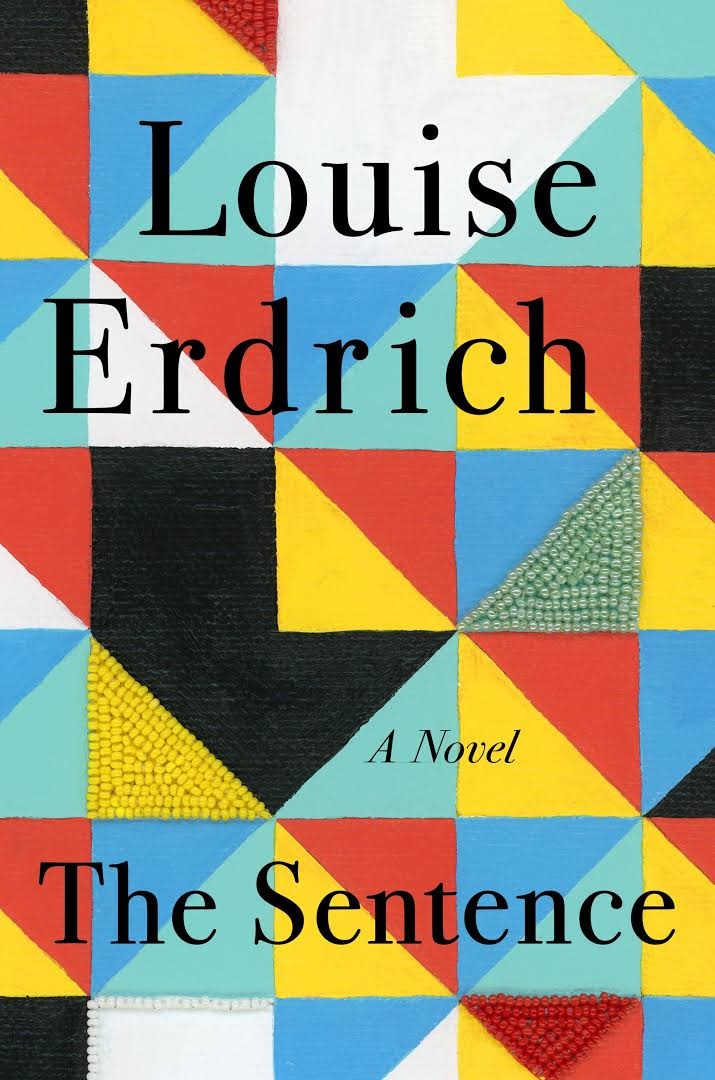
In this stunning and timely novel, Pulitzer Prize and National Book Award-winning author Louise Erdrich creates a wickedly funny ghost story, a tale of passion, of a complex marriage, and of a woman's relentless errors.Louise Erdrich's latest novel, The Sentence, asks what we owe to the living, the dead, to the reader and to the book. A small independent bookstore in Minneapolis is haunted from November 2019 to November 2020 by the store's most annoying customer. Flora dies on All Souls' Day, but she simply won't leave the store. Tookie, who has landed a job selling books after years of incarceration that she survived by reading with murderous attention, must solve the mystery of this haunting while at the same time trying to understand all that occurs in Minneapolis during a year of grief, astonishment, isolation, and furious reckoning.The Sentence begins on All Souls' Day 2019 and ends on All Souls' Day 2020. Its mystery and proliferating ghost stories during this one year propel a narrative as rich, emotional, and profound as anything Louise Erdrich has written