Loading genres...
Explore the best books about Grief genre.


The debut novel from the internationally acclaimed author of Wild weaves a searing and luminous tale of a family's grief after unexpected loss. • "A deeply honest novel of life after catastrophe, of intimacy lost and found." — O, The Oprah Magazine"Work hard. Do good. Be incredible!" is the advice Teresa Rae Wood shares with the listeners of her local radio show, Modern Pioneers , and the advice she strives to live by every day. She has fled a bad marriage and rebuilta life with her children, Claire and Joshua, and their caring stepfather, Bruce. Their love for each other binds them as a family through the daily struggles of making ends meet. But when they received unexpected news that Teresa, only 38, is dying of cancer, their lives all begin to unravel and drift apart. Strayed's intimate portraits of these fully human characters in a time of crisis show the varying truths of grief, forgiveness, and the beautiful terrors of learning how to keep living.
Finding Faith in a Time of SorrowBeloved author Henri Nouwen reflects on the spiritual significance of death and life in this moving meditation dedicated to "all those who suffer the pain that death can bring and who search for new life."

Written with love, humility, and faith, this brief but poignant volume was first published in 1961 and concerns the death of C. S. Lewis's wife, the American-born poet Joy Davidman. In her introduction to this new edition, Madeleine L'Engle writes: "I am grateful to Lewis for having the courage to yell, to doubt, to kick at God in angry violence. This is a part of a healthy grief which is not often encouraged. It is helpful indeed that C. S. Lewis, who has been such a successful apologist for Christianity, should have the courage to admit doubt about what he has so superbly proclaimed. It gives us permission to admit our own doubts, our own angers and anguishes, and to know that they are part of the soul's growth."Written in longhand in notebooks that Lewis found in his home, A Grief Observed probes the "mad midnight moments" of Lewis's mourning and loss, moments in which he questioned what he had previously believed about life and death, marriage, and even God. Indecision and self-pity assailed Lewis. "We are under the harrow and can't escape," he writes. "I know that the thing I want is exactly the thing I can never get. The old life, the jokes, the drinks, the arguments, the lovemaking, the tiny, heartbreaking commonplace." Writing A Grief Observed as "a defense against total collapse, a safety valve," he came to recognize that "bereavement is a universal and integral part of our experience of love."Lewis writes his statement of faith with precision, humor, and grace. Yet neither is Lewis reluctant to confess his continuing doubts and his awareness of his own human frailty. This is precisely the quality which suggests that A Grief Observed may become "among the great devotional books of our age."

'An act of consummate literary bravery, a writer known for her clarity allowing us to watch her mind as it becomes clouded with grief.'From one of America's iconic writers, a stunning book of electric honesty and passion. Joan Didion explores an intensely personal yet universal experience: a portrait of a marriage–and a life, in good times and bad–that will speak to anyone who has ever loved a husband or wife or child.Several days before Christmas 2003, John Gregory Dunne and Joan Didion saw their only daughter, Quintana, fall ill with what seemed at first flu, then pneumonia, then complete septic shock. She was put into an induced coma and placed on life support. Days later–the night before New Year's Eve–the Dunnes were just sitting down to dinner after visiting the hospital when John Gregory Dunne suffered a massive and fatal coronary. In a second, this close, symbiotic partnership of forty years was over. Four weeks later, their daughter pulled through. Two months after that, arriving at LAX, she collapsed and underwent six hours of brain surgery at UCLA Medical Center to relieve a massive hematoma.This powerful book is Didion's attempt to make sense of the "weeks and then months that cut loose any fixed idea I ever had about death, about illness . . . about marriage and children and memory . . . about the shallowness of sanity, about life itself."

NEW YORK TIMES BESTSELLER • This inspiring guide to healing and growth illuminates the richness and potential of every life, even in the face of loss and adversity —now updated with additional toolbox materials and a new preface by the authorIn the more than twenty-five years since she co-founded Omega Institute—now the world’s largest center for spiritual retreat and personal growth—Elizabeth Lesser has been an intimate witness to the ways in which people weather change and transition. In a beautifully crafted blend of moving stories, humorous insights, practical guidance, and personal memoir, she offers tools to help us make the choice we all face in times of challenge: Will we be broken down and defeated, or broken open and transformed? Lesser shares tales of ordinary people who have risen from the ashes of illness, divorce, loss of a job or a loved one—stronger, wiser, and more in touch with their purpose and passion. And she draws on the world’s great spiritual and psychological traditions to support us as we too learn to break open and blossom into who we were meant to be.

Discusses the variety of reactions that people experience because of the loss of a love and provides numerous recommendations for coping with pain and achieving comfort

Unlike anything Joyce Carol Oates has written before, A Widow’s Story is the universally acclaimed author's poignant, intimate memoir about the unexpected death of Raymond Smith, her husband of forty-six years, and its wrenching, surprising aftermath. A recent recipient of National Book Critics Circle Ivan Sandrof Lifetime Achievement Award, Oates, whose novels (Blonde, The Gravedigger’s Daughter, Little Bird of Heaven, etc.) rank among the very finest in contemporary American fiction, offers an achingly personal story of love and loss. A Widow’s Story is a literary memoir on a par with The Year of Magical Thinking by Joan Didion and Calvin Trillin’s About Alice.

As a child, Helen Macdonald was determined to become a falconer. She learned the arcane terminology and read all the classic books, including T.H. White's tortured masterpiece, "The Goshawk," which describes White's struggle to train a hawk as a spiritual contest.When her father dies and she is knocked sideways by grief, she becomes obsessed with the idea of training her own goshawk. She buys Mabel for £800 on a Scottish quayside and takes her home to Cambridge. Then she fills the freezer with hawk food and unplugs the phone, ready to embark on the long, strange business of trying to train this wildest of animals.Destined to be a classic of nature writing, "H is for Hawk" is a record of a spiritual journey - an unflinchingly honest account of Macdonald's struggle with grief during the difficult process of the hawk's taming and her own untaming. At the same time, it's a kaleidoscopic biography of the brilliant and troubled novelist T. H. White, best known for "The Once and Future King." It's a book about memory, nature and nation, and how it might be possible to try to reconcile death with life and love.

Cory Taylor is one of Australia’s celebrated novelists, the author of the brilliant Me and Mr Booker (winner of the Commonwealth Writers Prize, Pacific region), and My Beautiful Enemy (shortlisted for the Miles Franklin Award).At the age of sixty, she is dying of melanoma-related brain cancer. Her illness is no longer treatable. As she tells us in her remarkable last book, Dying: A Memoir, she now weighs less than her neighbour’s retriever.Written in the space of a few weeks, in a tremendous creative surge, this powerful and beautifully written book is a clear-eyed account of what dying has taught Cory: she describes the tangle of her feelings, she reflects on her life, and she remembers the lives and deaths of her parents. She tells us why she would like to be able to choose the circumstances of her own death.Dying: A Memoir is a breathtaking book about vulnerability and strength, courage and humility, anger and acceptance. It is a deeply affecting meditation on dying, but it is also a funny and wise tribute to life.

Clover Stroud's idyllic childhood in rural England was shattered when a horrific riding accident left her mother permanently brain-damaged.Just sixteen, she embarked on a journey to find the sense of home that had been so savagely broken. Travelling from gypsy camps in Ireland, to the rodeos of west Texas and then to Russia's war-torn Caucasus, Clover eventually found her way back to England's lyrical Vale of the White Horse.The Wild Other is a grippingly honest account of love, loss, family and the healing strength of nature. Powerful and deeply emotional, this is the story of an extraordinary life lived at its fullest.

An acclaimed documentary filmmaker comes to terms with her larger-than-life father, the late New York Times journalist David Carr, in this fierce memoir of love, addiction, and family. Dad: What will set you apart is not talent, but will and a certain kind of humility. A willingness to let the world show you things that you play back as you grow as an artist. Talent is cheap. Me: ok i will ponder these things. I am a carr.Dad: that should matter quite a bit, actually not the name but the guts of what that name means.A celebrated journalist, bestselling author, and recovering addict, David Carr was in the prime of his career when he collapsed in the newsroom of The New York Times in 2015. Shattered by his death, his daughter Erin Lee Carr, an up-and-coming documentary filmmaker at age twenty-seven, began combing through the entirety of their shared correspondence--1,936 items in total.What started as an exercise in grief quickly grew into an active investigation: Did her father's writings contain the answers to the questions of how to move forward in life and work without your biggest champion by your side? How could she fill the space left behind by a man who had come to embody journalistic integrity, rigor, and hard reporting, whose mentorship meant everything not just to her, but to the many who served alongside him?In All That You Leave Behind, David Carr's legacy is a lens through which Erin comes to understand her own workplace missteps, existential crises, relationship fails, and toxic relationship with alcohol. Featuring photographs and emails from the author's personal collection, this coming-of-age memoir unpacks the complex relationship between a daughter and her father, their mutual addictions and challenges with sobriety, and the powerful sense of work and family that comes to define them.

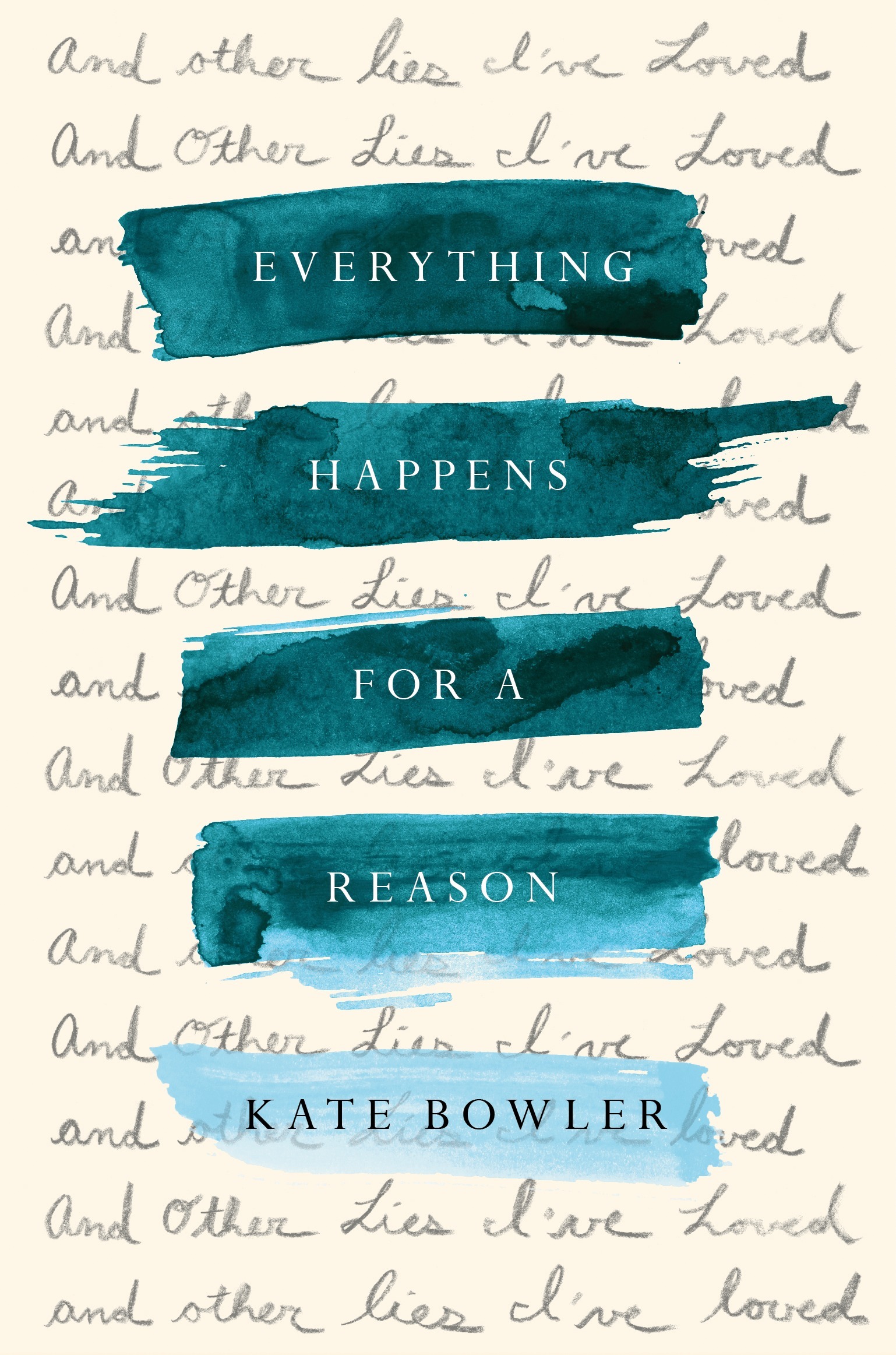
A divinity professor and young mother with a Stage IV cancer diagnosis explores the pain and joy of living without certainty.Thirty-five-year-old Kate Bowler was a professor at the school of divinity at Duke, and had finally had a baby with her childhood sweetheart after years of trying, when she began to feel jabbing pains in her stomach. She lost thirty pounds, chugged antacid, and visited doctors for three months before she was finally diagnosed with Stage IV colon cancer.As she navigates the aftermath of her diagnosis, Kate pulls the reader deeply into her life, which is populated with a colorful, often hilarious collection of friends, pastors, parents, and doctors, and shares her laser-sharp reflections on faith, friendship, love, and death. She wonders why suffering makes her feel like a loser and explores the burden of positivity. Trying to relish the time she still has with her son and husband, she realizes she must change her habit of skipping to the end and planning the next move. A historian of the "American prosperity gospel"--the creed of the mega-churches that promises believers a cure for tragedy, if they just want it badly enough--Bowler finds that, in the wake of her diagnosis, she craves these same "outrageous certainties." She wants to know why it's so hard to surrender control over that which you have no control. She contends with the terrifying fact that, even for her husband and child, she is not the lynchpin of existence, and that even without her, life will go on.On the page, Kate Bowler is warm, witty, and ruthless, and, like Paul Kalanithi, one of the talented, courageous few who can articulate the grief she feels as she contemplates her own mortality.

Imagine if we treated broken hearts with the same respect and concern we have for broken arms? Psychologist Guy Winch urges us to rethink the way we deal with emotional pain, offering warm, wise, and witty advice for the broken-hearted.Real heartbreak is unmistakable. We think of nothing else. We feel nothing else. We care about nothing else. Yet while we wouldn’t expect someone to return to daily activities immediately after suffering a broken limb, heartbroken people are expected to function normally in their lives, despite the emotional pain they feel. Now psychologist Guy Winch imagines how different things would be if we paid more attention to this unique emotion—if only we can understand how heartbreak works, we can begin to fix it.Through compelling research and new scientific studies, Winch reveals how and why heartbreak impacts our brain and our behavior in dramatic and unexpected ways, regardless of our age. Emotional pain lowers our ability to reason, to think creatively, to problem solve, and to function at our best. In How to Fix a Broken Heart he focuses on two types of emotional pain—romantic heartbreak and the heartbreak that results from the loss of a cherished pet. These experiences are both accompanied by severe grief responses, yet they are not deemed as important as, for example, a formal divorce or the loss of a close relative. As a result, we are often deprived of the recognition, support, and compassion afforded to those whose heartbreak is considered more significant.Our heart might be broken, but we do not have to break with it. Winch reveals that recovering from heartbreak always starts with a decision, a determination to move on when our mind is fighting to keep us stuck. We can take control of our lives and our minds and put ourselves on the path to healing. Winch offers a toolkit on how to handle and cope with a broken heart and how to, eventually, move on.

NEW YORK TIMES BESTSELLER - A renowned psychic medium teaches us how to recognize and interpret the life-changing messages from loved ones and spirit guides on the Other Side.Laura Lynne Jackson is a psychic medium and the author of the New York Times bestseller The Light Between Us. She possesses an incredible gift: the ability to communicate with loved ones who have passed, convey messages of love and healing, and impart a greater understanding of our interconnectedness. Though her abilities are exceptional, they are not unique, and that is the message at the core of this book. Understanding "the secret language of the universe" is a gift available to all. As we learn to ask for and recognize signs from the other side, we will start to find meaning where before there was only confusion, and see light in the darkness. We may decide to change paths, push toward love, pursue joy, and engage with life in a whole new way.In Signs, Jackson is able to bring the mystical into the everyday. She relates stories of people who have experienced uncanny revelations and instances of unexplained synchronicity, as well as others drawn from her own experience. There's the lost child who appears to his mother as a deer that approaches her unhesitatingly at a highway rest stop; the name written on a dollar bill that lets a terrified wife know that her husband will be okay; the Elvis Presley song that arrives at the exact moment of Jackson's own father's passing; and many others. This is a book that is inspiring and practical, deeply comforting and wonderfully motivational, in asking us to see beyond ourselves to a more magnificent universal design.

An inspiring memoir of life, love, loss, and new beginnings by the widower of bestselling children’s author and filmmaker Amy Krouse Rosenthal, whose last of act of love before her death was setting the stage for her husband’s life without her in the viral New York Times Modern Love column, “You May Want to Marry My Husband.”On March 3, 2017, Amy Krouse Rosenthal penned an op-ed piece for the New York Times’ “Modern Love” column —”You May Want to Marry My Husband.” It appeared ten days before her death from ovarian cancer. A heartbreaking, wry, brutally honest, and creative play on a personal ad—in which a dying wife encouraged her husband to go on and find happiness after her demise—the column quickly went viral, reaching more than five million people worldwide.In My Wife Said You May Want to Marry Me, Jason describes what came next: his commitment to respecting Amy’s wish, even as he struggled with her loss. Surveying his life before, with, and after Amy, Jason ruminates on love, the pain of watching a loved one suffer, and what it means to heal—how he and their three children, despite their profound sorrow, went on. Jason’s emotional journey offers insights on dying and death and the excruciating pain of losing a soulmate, and illuminates the lessons he learned.As he reflects on Amy’s gift to him—a fresh start to fill his empty space with a new story—Jason describes how he continues to honor Amy’s life and her last wish, and how he seeks to appreciate every day and live in the moment while trying to help others coping with loss. My Wife Said You May Want to Marry Me is the poignant, unreserved, and inspiring story of a great love, the aftermath of a marriage ended too soon, and how a surviving partner eventually found a new perspective on life’s joys in the wake of tremendous loss.

He will be allowed to visit his mother soon. His mother who is terminally ill, his mother who he has been barred from seeing as he recovers from his own bout of pneumonia.Until then, with the help of his physiotherapist Freya, he must navigate his increasingly empty and isolated existence: his father, who finds solace in the bottom of a glass; his Nana Q, whose betting-slip confetti litters her handbag; his friends, who simply wouldn’t understand.Time passes with the promise of soon, but one hundred and fifty-two days later the boy will come face to face with his grief, and move beyond to a world full of possibility, hope and love.

The national bestseller From the author of the bestselling More Beautiful Than Before comes an inspiring book about loss based on his most popular sermon.As the senior rabbi of one of the largest synagogues in the world, Steve Leder has learned over and over again the many ways death teaches us how to live and love more deeply by showing us not only what is gone but also the beauty of what remains.This inspiring and comforting book takes us on a journey through the experience of loss that is fundamental to everyone. Yet even after having sat beside thousands of deathbeds, Steve Leder the rabbi was not fully prepared for the loss of his own father. It was only then that Steve Leder the son truly learned how loss makes life beautiful by giving it meaning and touching us with love that we had not felt before.Enriched by Rabbi Leder's irreverence, vulnerability, and wicked sense of humor, this heartfelt narrative is filled with laughter and tears, the wisdom of millennia and modernity, and, most of all, an unfolding of the profound and simple truth that in loss we gain more than we ever imagined.

Who knows you better than your best friend? Who knows your secrets, your fears, your desires, your strange imperfect self? Edi and Ash have been best friends for over forty years. Since childhood they have seen each other through life's milestones: stealing vodka from their parents, the Madonna phase, REM concerts, unexpected wakes, marriages, infertility, children. As Ash notes, 'Edi's memory is like the back-up hard drive for mine.'So when Edi is diagnosed with terminal cancer, Ash's world reshapes around the rhythms of Edi's care, from chipped ice and watermelon cubes to music therapy; from snack smuggling to impromptu excursions into the frozen winter night. Because life is about squeezing the joy out of every moment, about building a powerhouse of memories, about learning when to hold on, and when to let go.

Born in Swaziland in 1957, Richard E. Grant moved to the UK to pursue his acting career, and has been a fixture on our screens since his breakout role in Withnail and I in 1987. When his beloved wife Joan died in 2021 after almost forty years together, she set him a challenge: to find a pocketful of happiness in every day.The result is this book.Set between the present day and flashbacks to delightfully indiscreet diary entries recalling landmarks from his remarkable life and glittering career, this is an immensely personal and profound memoir that celebrates and cherishes life’s unexpected joys.Funny, moving and perceptive, A Pocketful of Happiness is an insight into the life of a much loved British actor.