Loading genres...
Explore the best books about Cities genre.


Perceptive, funny, and nostalgic, E.B. White's stroll around Manhattan remains the quintessential love letter to the city, written by one of America's foremost literary figures. The New York Times has named Here is New York one of the ten best books ever written about the metropolis, and The New Yorker calls it "the wittiest essay, and one of the most perceptive, ever done on the city.
Why is it that in the ’90s, business in California’s Silicon Valley flourished, while along Route 128 in Massachusetts it declined? The answer, Annalee Saxenian suggests, has to do with the fact that despite similar histories and technologies, Silicon Valley developed a decentralized but cooperative industrial system while Route 128 came to be dominated by independent, self-sufficient corporations. The result of more than one hundred interviews, this compelling analysis highlights the importance of local sources of competitive advantage in a volatile world economy.

Packed With Magnificent Material On Southern California's Galaxy of Person Alities, This Book Provides Insights Into Subjects Ranging From The Origins Hollywood To The Flowering of International-Style Architecture. and It Does That By Looking At Personalities As Diverse As Helen Hunt Jackson To Aimee Semple McPherson, Huntington The Finan- Cier To Hatfield The Rainmaker.

Sparkling with irrepressible wit, City of Djinns peels back the layers of Delhi's centuries-old history, revealing an extraordinary array of characters along the way—from eunuchs to descendants of great Moguls. With refreshingly open-minded curiosity, William Dalrymple explores the seven "dead" cities of Delhi as well as the eighth city—today's Delhi. Underlying his quest is the legend of the djinns, fire-formed spirits that are said to assure the city's Phoenix-like regeneration no matter how many times it is destroyed. Entertaining, fascinating, and informative, City of Djinns is an irresistible blend of research and adventure.

The epic of Chicago is the story of the emergence of modern America. Here, witness Chicago's growth from a desolate fur-trading post in the 1830s to one of the world's most explosively alive cities by 1900.Donald Miller's powerful narrative embraces it all: Chicago's wild beginnings, its reckless growth, its natural calamities (especially the Great Fire of 1871), its raucous politics, its empire-building businessmen, its world-transforming architecture, its rich mix of cultures, its community of young writers and journalists, and its staggering engineering projects -- which included the reversal of the Chicago River and raising the entire city from prairie mud to save it from devastating cholera epidemics. The saga of Chicago's unresolved struggle between order and freedom, growth and control, capitalism and community, remains instructive for our time, as we seek ways to build and maintain cities that retain their humanity without losing their energy. City of the Century throbs with the pulse of the great city it brilliantly brings to life.

Central Europe has always been richly endowed with a variety of migrants and settlers, and repeatedly been the scene of nomadic invasions, mixed settlements and military conquests. As a result, the area has witnessed a profusion of languages, cultures, religions and nationalities.The history of Silesia's main city can be seen as a fascinating tale in its own right, but it is more than that. It embodies all the experiences that have made Central Europe what it is -- the rich mixture of nationalities and cultures; the German settlement and the reflux of the Slavs; a Jewish presence of exceptional distinction; a turbulent succession of Imperial rules; and the shattering exposure to both Nazis and Stalinists. In short, it is a Central European microcosm.The third largest German city of the mid-nineteenth century, Breslau's population reached one million in 1945, before the bitter German defence of the city against the Soviets wrought almost total destruction. Transferred to Poland after the war, Breslau has risen from ruins and is again a thriving economic and cultural centre of the region.

Here's a book for lovers of all things Italian. This city on the Adriatic has always tantalized Jan Morris with its moodiness and changeability. After visiting Trieste for more than half a century, she has come to see it as a touchstone for her interests and preoccupations: cities, seas, empires. It has even come to reflect her own life in its loves, disillusionments, and memories. Her meditation on the place is characteristically layered with history and sprinkled with stories of famous visitors from James Joyce to Sigmund Freud. A lyrical travelogue, Trieste and the Meaning of Nowhere is also superb cultural history and the culmination of a singular career-"an elegant and bittersweet farewell" (Boston Globe).

The classic work that introduced the concept of the Garden City. Originally published in 1898 as A Peaceful Path to Real Reform and reissued in 1902 under its present title, Garden Cities of To-Morrow holds a unique place in town planning literature. The book led directly to two experiments in town-founding that have had a profound influence on practical urban development around the world. The book was also responsible for the introduction of the term Garden City, and set into motion ideas that helped transform town planning.

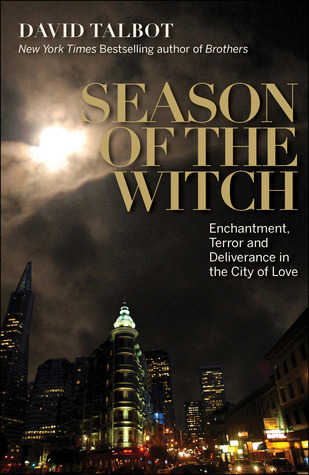
In a kaleidoscopic narrative, bestselling David Talbot recounts the gripping story of San Francisco in the turbulent years between 1967 & 1982—& of the extraordinary persons who led to the city’s ultimate rebirth & triumph. Season of the Witch is the first book to fully capture the dark magic of San Francisco in this breathtaking period, when the city radically changed itself & then revolutionized the world. The cool gray city of love was the epicenter of the 60s cultural revolution. But by the early 70s, San Francisco’s ecstatic experiment came crashing down from its starry heights. The city was rocked by savage murder sprees, mysterious terror campaigns, political assassinations, street riots & finally a terrifying sexual epidemic. No other city endured so many calamities in such a short time span. Talbot goes deep into the riveting story of his city’s ascent, decline & heroic recovery. He draws intimate portraits of San Francisco’s legendary demons & saviors: Charles Manson, Patty Hearst & the Symbionese Liberation Army, Jerry Garcia, Janis Joplin, Bill Graham, Herb Caen, the Cockettes, Harvey Milk, Jim Jones & the Peoples Temple, Joe Montana & the Super Bowl 49ers. He reveals how the city emerged from the trials of this period with a new brand of “San Francisco values,” including gay marriage, medical marijuana, immigration sanctuary, universal health care, recycling, renewable energy, consumer safety & a living wage mandate. Considered radical when they were first introduced, these ideas have become the bedrock of decent society in many parts of the country & exemplify the ways that the city now inspires a live-and-let-live tolerance, a shared sense of humanity & an openness to change. As a new generation of activists & dreamers seeks its own path to a more enlightened future, Season of the Witch—with its epic tale of the wild & bloody birth of San Francisco values—offers both inspiration & cautionary wisdom.

Charles Montgomery’s Happy City will revolutionize the way we think about urban life.After decades of unchecked sprawl, more people than ever are moving back to the city. Dense urban living has been prescribed as a panacea for the environmental and resource crises of our time. But is it better or worse for our happiness? Are subways, sidewalks and condo towers an improvement on the car-dependence of sprawl?The award-winning journalist Charles Montgomery finds answers to such questions at the intersection between urban design and the emerging science of happiness, during an exhilarating journey through some of the world’s most dynamic cities. He meets the visionary mayor who introduced a “sexy” bus to ease status anxiety in Bogotá; the architect who brought the lessons of medieval Tuscan hill towns to modern-day New York City; the activist who turned Paris’s urban freeways into beaches; and an army of American suburbanites who have hacked the design of their own streets and neighborhoods.Rich with new insights from psychology, neuroscience and Montgomery’s own urban experiments, Happy City reveals how our cities can shape our thoughts as well as our behavior. The message is as surprising as it is hopeful: by retrofitting cities and our own lives for happiness, we can tackle the urgent challenges of our age. The happy city can save the world--and all of us can help build it.

Jeff Speck has dedicated his career to determining what makes cities thrive. And he has boiled it down to one key factor: walkability. The very idea of a modern metropolis evokes visions of bustling sidewalks, vital mass transit, and a vibrant, pedestrian-friendly urban core. But in the typical American city, the car is still king, and downtown is a place that's easy to drive to but often not worth arriving at. Making walkability happen is relatively easy and cheap; seeing exactly what needs to be done is the trick. In this essential new book, Speck reveals the invisible workings of the city, how simple decisions have cascading effects, and how we can all make the right choices for our communities. Bursting with sharp observations and real-world examples, giving key insight into what urban planners actually do and how places can and do change, Walkable City lays out a practical, necessary, and eminently achievable vision of how to make our normal American cities great again.

Generation Priced Out is a call to action on one of the most talked-about issues of our time: how skyrocketing rents and home values are pricing the working and middle classes out of urban America. Randy Shaw tells the powerful stories of tenants, politicians, homeowner groups, developers, and activists in over a dozen cities impacted by the national housing crisis. From San Francisco to New York, Seattle to Denver, and Los Angeles to Austin, Generation Priced Out challenges progressive cities to reverse rising economic and racial inequality.Shaw exposes how boomer homeowners restrict millennials' access to housing in big cities, a generational divide that increasingly dominates city politics. Shaw also demonstrates that neighborhood gentrification is not inevitable and presents proven measures for cities to preserve and expand their working- and middle-class populations and achieve more equitable and inclusive outcomes. Generation Priced Out is a must-read for anyone concerned about the future of urban America.

An argument that operational urban planning can be improved by the application of the tools of urban economics to the design of regulations and infrastructure. Urban planning is a craft learned through practice. Planners make rapid decisions that have an immediate impact on the ground—the width of streets, the minimum size of land parcels, the heights of buildings. The language they use to describe their objectives is qualitative—“sustainable,” “livable,” “resilient”—often with no link to measurable outcomes. Urban economics, on the other hand, is a quantitative science, based on theories, models, and empirical evidence largely developed in academic settings. In this book, the eminent urban planner Alain Bertaud argues that applying the theories of urban economics to the practice of urban planning would greatly improve both the productivity of cities and the welfare of urban citizens. Bertaud explains that markets provide the indispensable mechanism for cities' development. He cites the experience of cities without markets for land or labor in pre-reform China and Russia; this “urban planners' dream” created inefficiencies and waste. Drawing on five decades of urban planning experience in forty cities around the world, Bertaud links cities' productivity to the size of their labor markets; argues that the design of infrastructure and markets can complement each other; examines the spatial distribution of land prices and densities; stresses the importance of mobility and affordability; and critiques the land use regulations in a number of cities that aim at redesigning existing cities instead of just trying to alleviate clear negative externalities. Bertaud concludes by describing the new role that joint teams of urban planners and economists could play to improve the way cities are managed.

At once intimate and wide-ranging, and as enthralling, surprising, and vivid as the place itself, this is a uniquely eye-opening tour of one of the great metropolises of the world, and its largest Spanish-speaking city. Horizontal Vertigo: The title refers to the fear of ever-impending earthquakes that led Mexicans to build their capital city outward rather than upward. With the perspicacity of a keenly observant flaneur, Juan Villoro wanders through Mexico City seemingly without a plan, describing people, places, and things while brilliantly drawing connections among them. In so doing he reveals, in all its multitudinous glory, the vicissitudes and triumphs of the city ’s cultural, political, and social history: from indigenous antiquity to the Aztec period, from the Spanish conquest to Mexico City today—one of the world’s leading cultural and financial centers. In this deeply iconoclastic book, Villoro organizes his text around a recurring series of topics: “Living in the City,” “City Characters,” “Shocks,” “Crossings,” and “Ceremonies.” What he achieves, miraculously, is a stunning, intriguingly coherent meditation on Mexico City’s genius loci, its spirit of place.

A beautifully designed guidebook to the unnoticed yet essential elements of our cities, from the creators of the wildly popular 99% Invisible podcastHave you ever wondered what those bright, squiggly graffiti marks on the sidewalk mean?Or stopped to consider why you don't see metal fire escapes on new buildings?Or pondered the story behind those dancing inflatable figures in car dealerships?99% Invisible is a big-ideas podcast about small-seeming things, revealing stories baked into the buildings we inhabit, the streets we drive, and the sidewalks we traverse. The show celebrates design and architecture in all of its functional glory and accidental absurdity, with intriguing tales of both designers and the people impacted by their designs.Now, in The 99% Invisible City: A Field Guide to Hidden World of Everyday Design, host Roman Mars and coauthor Kurt Kohlstedt zoom in on the various elements that make our cities work, exploring the origins and other fascinating stories behind everything from power grids and fire escapes to drinking fountains and street signs. With deeply researched entries and beautiful line drawings throughout, The 99% Invisible City will captivate devoted fans of the show and anyone curious about design, urban environments, and the unsung marvels of the world around them.