Loading themes...
Explore the best books about Martial Arts theme.

INSTANT NEW YORK TIMES BESTSELLERFrom decorated Green Beret sniper, UFC headliner, and all around badass, Tim Kennedy, a rollicking, inspirational memoir offering lessons in how to embrace failure and weather storms, in order to unlock the strongest version of yourself.Tim Kennedy has a problem; he only feels alive right before he’s about to die. Kennedy, a Green Beret, decorated Army sniper, and UFC headliner, has tackled a bull with his bare hands, jumped out of airplanes, dove to the depths of the ocean, and traveled the world hunting poachers, human traffickers, and the Taliban.But he’s also the same man who got kicked out of the police department, fire department, and as an EMT, before getting two women pregnant four days apart, and finally, been beaten up by his Special Forces colleagues for, quite simply, “being a selfish asshole.”In Scars and Stripes , Kennedy describes how these failures shaped him into the successful businessman and devoted husband and father he is today. Through unbelievably vivid, wild anecdotes Kennedy reveals all the dumb, violent, embarrassing, and undeniably heroic things he’s done in his life, including multiple combat missions in Afghanistan, building a school in Texas for elementary kids, and creating two-multimillion-dollar businesses. You will learn that failure isn’t the end—rather it’s the first step towards unearthing the best version of yourself and finding success, no matter how overwhelming the setbacks may feel.


Salzman captures post-cultural revolution China through his adventures as a young American English teacher in China and his shifu-tudi (master-student) relationship with China's foremost martial arts teacher.In 1982, Salzman flew off to teach English in Changsha, China. He writes of bureaucrats, students and Cultural Revolution survivors, stripping none of their complexity and humanity. He's gentle with their idiocies, saving his sharpest barbs for himself (it's his pants that split from zipper to waist whilst demonstrating martial arts in Canton). Though dribs of history and drabs of classical lore seep through, this is mostly a personal tale, noted by the Los Angeles Times for "the charmingly unpretentious manner in which it penetrates a China inaccessible to other foreigners."

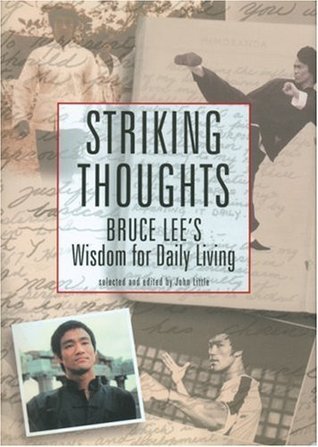
Bruce Lee was more than just a man of action-he was a man of words. A voracious reader, Lee studied text after text, taking meticulous notes to devise his theories-in fighting and in life strategy. Here, for the first time, John Little, who was granted exclusive access to Lee's notebooks, presents Lee's writings on his philosophies of daily living including acting, fatherhood, and the martial arts. As the 60th anniversary of his birth approaches, Bruce Lee is an ever-popular icon of the 20th century-a man truly ahead of his time not just in his mastery of martial arts, but in his forward thinking and his timeless wisdom.

A graphic novel version of this classic collection of martial arts parables, written by Issai Chozanshi, an 18-century samurai, brings these tales alive in a captivating and immediately accessible way. The stories, which feature demons, insects, birds, cats, and numerous other creatures, may seem whimsical, but they contain essential teachings that offer insight into the fundamental principles of the martial arts.Infused with Chozanshi’s deep understanding of Taoism, Buddhism, Confucianism, and Shinto, the tales elucidate the nature of conflict, the importance of following one’s own nature, yin and yang, the cultivation and transformation of ch’i (life energy), and the attainment of mushin (no-mind). Ultimately, the reader learns in a visually exciting way that the path of the sword is a path of self-knowledge and leads to an understanding of life itself.

In great shape

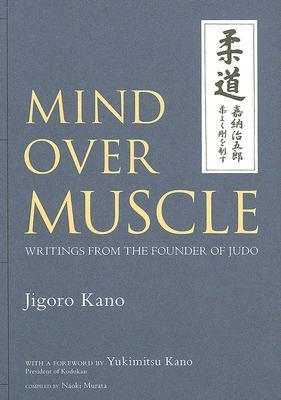
In 1882 Jigoro Kano (1860-1938) founded Kodokan Judo at Eishoji Temple in Tokyo. It was the culmination of a lifelong devotion to the jujutsu of the past, which he reorganized while taking great care to retain its classical traditions. Historically, martial arts were practiced only by the elite in Japan. Kano, a renowned educator as well as a sportsman, is credited with popularizing the martial arts, and in particular, judo, among people in all levels of society.When he was young, Kano studied jujutsu, a martial art practiced in Japan since feudal times, which involved throwing, hitting, kicking, stabbing, slashing, choking, bending and twisting limbs-and defenses against these attacks. After years of studying, he realized that although many different jujutsu techniques were taught, there was no one core value holding them together. Kano identified an all-pervasive principle- to make the most efficient use of mental and physical energy-and combined only those techniques in which this principle was correctly applied into modern judo. "Ju" means gentleness or giving way. "Do" means principle or the way. Judo, therefore is the Way of Gentleness, which implies that first giving way leads to ultimate victory. The Kodokan is literally, "the school for studying the Way." This book is a collection of Kano's essential teachings, selected and compiled from his wealth of writings and lectures spanning a period of fifty-one years. Today the International Judo Federation has 187 member countries and regions. As an official sport of the Olympic Games, judo has inspired young people of all nationalities, and Kodokan is universally recognized as the Mecca of Judo.

Bushido. The Way of the Warrior presents a remarkably faithful mirror of many of the characteristics and habits of modern Japanese civilization, as it represents a tradition that enjoyed great power and prestige for centuries. This work was written to provide practical and moral instruction for warriors, and to outline the parameters of personal, social, and professional conduct characteristic of Bushido, or Way of the Warrior, the Japanese chivalric tradition.Personal responsibilities, family relationships, public duties, education, finances and ethics are treated in this text from the perspective of the spirit of Japanese gentlemen. Even the forms of political incompetence and corruption that Japan currently struggles with are accurately described in this more than 400-year-old book; So deep did the feudal and military modes of government that generated them take their roots in Japanese society. This manual is therefore an essential resource for anyone who wishes to understand Japan and the Japanese people in a realistic way.

In this darkly funny work of literary nonfiction, a bookish young woman insinuates herself into the lives of two cage fighters—one a young prodigy, the other an aging journeyman. Acclaimed essayist Kerry Howley follows these men for three years through the bloody world of mixed martial arts as they starve themselves, break bones, fail their families and form new ones in the quest to rise from remote Midwestern fairgrounds to packed Vegas arenas. With penetrating intelligence and wry humor, Howley exposes the profundities and absurdities of this American subculture.Kerry Howley 's work has appeared in The Paris Review , New York Times Magazine , the Atlantic , Wall Street Journal , Slate , and frequently in Bookforum . She holds an MFA from the University of Iowa's Nonfiction Writing Program.