Loading genres...
Explore the best books about Irish Literature genre.

In 1914, Willie Dunne, barely eighteen years old, leaves behind Dublin, his family, and the girl he plans to marry in order to enlist in the Allied forces and face the Germans on the Western Front. Once there, he encounters a horror of violence and gore he could not have imagined and sustains his spirit with only the words on the pages from home and the camaraderie of the mud-covered Irish boys who fight and die by his side. Dimly aware of the political tensions that have grown in Ireland in his absence, Willie returns on leave to find a world split and ravaged by forces closer to home. Despite the comfort he finds with his family, he knows he must rejoin his regiment and fight until the end. With grace and power, Sebastian Barry vividly renders Willie's personal struggle as well as the overwhelming consequences of war.
Jeannette Haien’s award-winning first novel relates the seemingly simple tale of a parishioner confiding in her priest, but the tangled confession brings secrets to light that provoke a moral quandary for not only the clergyman, but the reader as well. Set in a small town in Ireland, Haien’s intimate novel of conversations and dilemmas—perfect for readers of Paul Harding’s Tinkers , Marilynne Robinson’s Gilead , and Flannery O’Connor’s Wise Blood —is “an elegantly written, compact and often subtle tale of morality and passion that gives voice to an age-old concern in a fresh way” ( New York Times Book Review ).Harper Perennial breathes new life into this 1986 classic in a new edition with an introduction by Ann Patchett.

The Rogue’s March tells the controversial true story of the US Army deserters—the majority of them Irish immigrants—who fought valiantly as a Mexican Army unit during the Mexican War of 1846. It takes a close look at the organized prejudice against Irish Catholic and German immigrants.

Paula Spencer is a thirty-nine-year-old working-class woman struggling to reclaim her dignity after marriage to an abusive husband and a worsening drinking problem. Paula recalls her contented childhood, the audacity she learned as a teenager, the exhilaration of her romance with Charlo, and the marriage to him that left her feeling powerless. Capturing both her vulnerability and her strength, Roddy Doyle gives Paula a voice that is real and unforgettable.

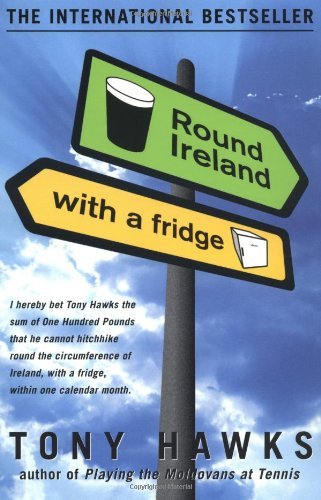
Have you ever made a drunken bet? Worse still, have you ever tried to win one? In attempting to hitchhike round Ireland with a fridge, Tony Hawks did both, and his foolhardiness led him to one of the best experiences of his life. Joined by his trusty traveling companion-cum-domestic appliance, he made his way from Dublin to Donegal, from Sligo through Mayo, Galway, Clare, Kerry, Cork, Wexford, Wicklow--and back again to Dublin. In their month of madness, Tony and his fridge met a real prince, a bogus king, and the fridge got christened. They surfed together, entered a bachelor festival, and one of them had sex without the other knowing. And unexpectedly, the fridge itself became a momentary focus for the people of Ireland.An international bestseller, Round Ireland with a Fridge is a classic travel adventure in the tradition of Bill Bryson with a dash of Dave Barry.

Returning to Ireland to reclaim a painting that is part of his patrimony, a thirty-eight-year-old man commits a ghastly and motiveless murder, which he confesses in a novel-length narrative.

Subtitle: Consisting of Reveries over Childhood and Youth; The Trembling of the Veil; and Dramatis Personae.

The story revolves around two seemingly homeless men simply waiting for someone—or something—named Godot. Vladimir and Estragon wait near a tree, inhabiting a drama spun of their own consciousness. The result is a comical wordplay of poetry, dreamscapes, and nonsense, which has been interpreted as mankind’s inexhaustible search for meaning. Beckett’s language pioneered an expressionistic minimalism that captured the existential post-World War II Europe. His play remains one of the most magical and beautiful allegories of our time.

Kevin Myers was a young, wide-eyed, and naive outsider thrust into the thick of the conflict in Northern Ireland as it teetered on the brink of civil war. Quickly absorbed into the local community and privy to the secrets of both the Protestant and Catholic paramilitaries, Myers gained a unique perspective into both sides of the sectarian violence.Devoid of any political agenda, Myers describes the streets of Belfast at its bloodiest with searing clarity, capturing every inch of the city's disturbing violence. Flirting with death at every turn, Myers comes of age as the world around him falls apart, fueled by the psychotic rage, senseless murder, and unrelenting terror that surround Northern Ireland's loyalist gangs, paratroopers, police force, and, of course, average citizen.Part unofficial history, part personal memoir, Watching the Door is raw, provocative, and darkly funny, offering an unbridled account of sex, death, and violence in Northern Ireland by one of its most dynamic witnesses.

This dramatically illustrated collector's edition marks the centenary of Oscar Wilde's release from prison in 1898 and the publication of his anguished poetic masterpiece. One hundred years after his release from Reading Gaol, the life and work of Oscar Wilde has lost none of its fascination. In his day, his wit and writings enchanted and scandalized society in equal measure; his downfall came at the height of his powers. Devastated by his notorious trial for indecency, imprisoned for ``homosexual offenses,'' he was to spend two ruinous years in solitary confinement. As he was later to tell Andre Gide, Reading Gaol ``was not fit for dogs. I thought I would go mad.'' The Ballad was written from personal experience, and there was to be no more writing after this. As Wilde observed: ``Something is killed in me.'' Bankrupt, disgraced, and in exile, Wilde was to die not long after his release at the age of 46. His final resting place is the cemetery of Pere Lachaise in Paris. His tomb bears an inscription from The Ballad of Reading Gaol: ``And alien tears will fill for him/Pity's long broken urn/For his mourners will be outcast men/And outcasts always mourn.'' This commemorative edition of the poem is illustrated with the powerfully moving wood engravings of Garrick Palmer. 48 pp 5 x 8 8 wood engravings

Revealing, moving, and hilarious, Graham Norton tells the story of his life through the things he loves in a brand new memoirGraham Norton has been entertaining audiences and having fun with some of the world's biggest stars for nearly 20 years. He is loved for his delight in the peculiar and for his ability to find humor and a common ground in all that life brings. Here is Graham's funny and honest memoir on the theme of love. As he shows, it's really the things you love that make you who you are and so Graham tells his story from his Irish childhood to the present day, describing just what and who he loved—and sometimes lost—as a young boy, and his new loves and obsessions—big and small—as he's grown older. It's been 10 years since his last book and being a decade older Graham has come to realize that what makes a life interesting is less what happens to you and more what inspires and drives you, what you love. From Dolly Parton and dogs to wine and Ireland, Graham tells of his life and loves with characteristic humor and outrageous candor.

One messy murder affects the lives of five misfits who exist on the fringes of Ireland's post-crash society. Ryan is a fifteen-year-old drug dealer desperate not to turn out like his alcoholic father Tony, whose obsession with his unhinged next-door neighbour threatens to ruin him and his family. Georgie is a prostitute whose willingness to feign a religious conversion has dangerous repercussions, while Maureen, the accidental murderer, has returned to Cork after forty years in exile to discover that Jimmy, the son she was forced to give up years before, has grown into the most fearsome gangster in the city. In seeking atonement for the murder and a multitude of other perceived sins, Maureen threatens to destroy everything her son has worked so hard for, while her actions risk bringing the intertwined lives of the Irish underworld into the spotlight . . .Biting, moving and darkly funny, The Glorious Heresies explores salvation, shame and the legacy of Ireland's twentieth-century attitudes to sex and family.

In December 1972, Jean McConville, a thirty-eight-year-old mother of ten, was dragged from her Belfast home by masked intruders, her children clinging to her legs. They never saw her again. Her abduction was one of the most notorious episodes of the vicious conflict known as The Troubles. Everyone in the neighborhood knew the I.R.A. was responsible. But in a climate of fear and paranoia, no one would speak of it. In 2003, five years after an accord brought an uneasy peace to Northern Ireland, a set of human bones was discovered on a beach. McConville's children knew it was their mother when they were told a blue safety pin was attached to the dress--with so many kids, she had always kept it handy for diapers or ripped clothes.Patrick Radden Keefe's mesmerizing book on the bitter conflict in Northern Ireland and its aftermath uses the McConville case as a starting point for the tale of a society wracked by a violent guerrilla war, a war whose consequences have never been reckoned with. The brutal violence seared not only people like the McConville children, but also I.R.A. members embittered by a peace that fell far short of the goal of a united Ireland, and left them wondering whether the killings they committed were not justified acts of war, but simple murders.Patrick Radden Keefe writes an intricate narrative about a notorious killing in Northern Ireland and its devastating repercussions.

Retired detective Cal Hooper moves to a remote village in rural Ireland. His plans are to fix up the dilapidated cottage he's bought, to walk the mountains, to put his old police instincts to bed forever.Then a local boy appeals to him for help. His brother is missing, and no one in the village, least of all the police, seems to care. And once again, Cal feels that restless itch.Something is wrong in this community, and he must find out what, even if it brings trouble to his door.

In the seaside town of Tramore, County Waterford, visitors arrive in waves with the tourist season, reliving the best days of their childhoods in its caravan parks, chippers and amusement arcades.Local teenager Helen Grant is indifferent to the charm of her surroundings; she dreams of escaping to art college with her glamorous classmate Stella Swaine and, from there, taking on the world. But leaving Tramore is easier said than done. Though they don't yet know it, Helen and Stella's lives are pulled by tides beyond their control.Following the Grant and Swaine families and their neighbours over three decades, The Amusements is a luminous and unforgettable story about roads taken and not taken - and a brilliantly observed portrait of a small-town community.

Where do secrets live? Carol is a divorced teacher living in a small town in Ireland, her only son now grown. A second chance at love brings her unexpected connection and belonging—and sparks a flurry of speculation. What does a woman like her see in a man like that? What happened to his wife who abandoned him and his children all those years ago? Carol and Declan know their relationship is the talk of the town, but the gossip only serves to bring the couple closer.When Declan becomes ill, their relationship falters. His children are untrusting and cruel, and Carol is forced to leave their beloved home, with its worn oak floors and elegant features, and move back with her parents. Carol’s mother is determined to get to the bottom of things—she won't see her daughter suffer this way. It seems there are secrets in Declan's past, strange rumors that were never confronted, and suddenly the house they shared takes on a more sinister significance that affects them all.

A witty and warm debut novel from a young Irish writer. A story of family, grief, and the ways we come together when all seems lost.'There's been a little incident...'Molly Black has disappeared. She's been a bit flighty since her parents died (sure, hadn't she run off with a tree surgeon that time?) but this time, or so says her hastily written leaving note, she's gone for good.That's why the whole Black clan – from Granny perched on the printer all the way through to Killian on Zoom from Sydney – is huddled together in the back room of Uncle John's semi-D in the Dublin suburbs, arguing over what to do.Cousin Bobby's having a hard enough time of it as it is, convincing his family he's happy single and childless. Lady V reckons this is all much too much fuss over a thirty year old. And Uncle Danny knows all too well how it feels to be lost with no one trying to find you.But Uncle John is determined never to lose anyone again. Especially not his niece, who is more like her mum than she realises.