Loading genres...
Explore the best books about Internet genre.


In just the last few years, traditional collaboration—in a meeting room, a conference call, even a convention center— has been superseded by collaborations on an astronomical scale. Today, encyclopedias, jetliners, operating systems, mutual funds, and many other items are being created by teams numbering in the thousands or even millions. While some leaders fear the heaving growth of these massive online communities, Wikinomics proves this fear is folly. Smart firms can harness collective capability and genius to spur innovation, growth, and success. A brilliant guide to one of the most profound changes of our time, Wikinomics challenges our most deeply-rooted assumptions about business and will prove indispensable to anyone who wants to understand competitiveness in the twenty-first century. Based on a $9 million research project led by bestselling author Don Tapscott, Wikinomics shows how masses of people can participate in the economy like never before. They are creating TV news stories, sequencing the human genome, remixing their favorite music, designing software, finding a cure for disease, editing school texts, inventing new cosmetics, or even building motorcycles. You'll read about: • Rob McEwen, the Goldcorp, Inc. CEO who used open source tactics and an online competition to save his company and breathe new life into an old-fashioned industry. • Flickr, Second Life, YouTube, and other thriving online communities that transcend social networking to pioneer a new form of collaborative production. • Mature companies like Procter & Gamble that cultivate nimble, trust-based relationships with external collaborators to form vibrant business ecosystems. An important look into the future, Wikinomics will be your road map for doing business in the twenty-first century.

A Library Journal Best Book of the Year Tech-guru Brian McCullough delivers a rollicking history of the internet, why it exploded, and how it changed everything. The internet was never intended for you, opines Brian McCullough in this lively narrative of an era that utterly transformed everything we thought we knew about technology. In How the Internet Happened , he chronicles the whole fascinating story for the first time, beginning in a dusty Illinois basement in 1993, when a group of college kids set off a once-in-an-epoch revolution with what would become the first “dotcom.” Depicting the lives of now-famous innovators like Netscape’s Marc Andreessen and Facebook’s Mark Zuckerberg, McCullough also reveals surprising quirks and unknown tales as he tracks both the technology and the culture around the internet’s rise. Cinematic in detail and unprecedented in scope, the result both enlightens and informs as it draws back the curtain on the new rhythm of disruption and innovation the internet fostered, and helps to redefine an era that changed every part of our lives.

In Information Rules, authors Shapiro and Varian reveal that many classic economic concepts can provide the insight and understanding necessary to succeed in the information age. They argue that if managers seriously want to develop effective strategies for competing in the new economy, they must understand the fundamental economics of information technology. Whether information takes the form of software code or recorded music, is published in a book or magazine, or even posted on a website, managers must know how to evaluate the consequences of pricing, protecting, and planning new versions of information products, services, and systems. The first book to distill the economics of information and networks into practical business strategies, Information Rules is a guide to the winning moves that can help business leaders navigate successfully through the tough decisions of the information economy.

When Pierre Omidyar launched a clunky website from a spare bedroom over Labor Day weekend of 1995, he wanted to see if he could use the Internet to create a perfect market. He never guessed his old-computer parts and Beanie Baby exchange would revolutionize the world of commerce.Now, Adam Cohen, the only journalist ever to get full access to the company, tells the remarkable story of eBay's rise. He describes how eBay built the most passionate community ever to form in cyberspace and forged a business that triumphed over larger, better-funded rivals. And he explores the ever-widening array of enlistees in the eBay revolution, from a stay-at-home mom who had to rent a warehouse for her thriving business selling bubble-wrap on eBay to the young MBA who started eBay Motors (which within months of its launch was on track to sell $1 billion in cars a year), to collectors nervously bidding thousands of dollars on antique clothing-irons.Adam Cohen's fascinating look inside eBay is essential reading for anyone trying to figure out what's next. If you want to truly understand the Internet economy, The Perfect Store is indispensable.

“This makes entertaining reading. Many accounts of the birth of personal computing have been written, but this is the first close look at the drug habits of the earliest pioneers.” —New York TimesMost histories of the personal computer industry focus on technology or business. John Markoff’s landmark book is about the culture and consciousness behind the first PCs—the culture being counter– and the consciousness expanded, sometimes chemically. It’s a brilliant evocation of Stanford, California, in the 1960s and ’70s, where a group of visionaries set out to turn computers into a means for freeing minds and information. In these pages one encounters Ken Kesey and the phone hacker Cap’n Crunch, est and LSD, The Whole Earth Catalog and the Homebrew Computer Lab. What the Dormouse Said is a poignant, funny, and inspiring book by one of the smartest technology writers around.

"Perfectly placed to tell us what's really new about [the] second-generation Web."― Los Angeles Times Business visionary and bestselling author David Weinberger charts how as business, politics, science, and media move online, the rules of the physical world―in which everything has a place―are upended. In the digital world, everything has its places, with transformative effects: • Information is now a social asset and should be made public, for anyone to link, organize, and make more valuable. • There's no such thing as "too much" information. More information gives people the hooks to find what they need. • Messiness is a digital virtue, leading to new ideas, efficiency, and social knowledge. • Authorities are less important than buddies. Rather than relying on businesses or reviews for product information, customers trust people like themselves. With the shift to digital music standing as the model for the future in virtually every industry, Everything Is Miscellaneous shows how anyone can reap rewards from the rise of digital knowledge.

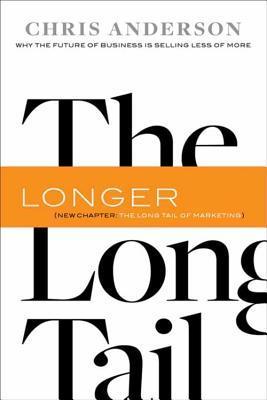
The New York Times bestseller that introduced the business world to a future that's already here--now in paperback with a new chapter about Long Tail Marketing and a new epilogue. Winner of the Gerald Loeb Award for Best Business Book of the Year In the most important business book since The Tipping Point , Chris Anderson shows how the future of commerce and culture isn't in hits, the high-volume head of a traditional demand curve, but in what used to be regarded as misses--the endlessly long tail of that same curve. "It belongs on the shelf between The Tipping Point and Freakonomics ."--Reed Hastings, CEO, Netflix "Anderson's insights . . . continue to influence Google's strategic thinking in a profound way." --Eric Schmidt, CEO, Google "Anyone who cares about media . . . must read this book." --Rob Glaser, CEO, RealNetworks

The definitive guide to the cloud computing revolution.Hailed as "the most influential book so far on the cloud computing movement" (Christian Science Monitor), The Big Switch makes a simple and profound statement: Computing is turning into a utility, and the effects of this transition will ultimately change society as completely as the advent of cheap electricity did. In a new chapter for this edition that brings the story up-to-date, Nicholas Carr revisits the dramatic new world being conjured from the circuits of the "World Wide Computer."

Twenty five years ago, it didn't exist. Today, twenty million people worldwide are surfing the Net. Where Wizards Stay Up Late is the exciting story of the pioneers responsible for creating the most talked about, most influential, and most far-reaching communications breakthrough since the invention of the telephone. In the 1960's, when computers where regarded as mere giant calculators, J.C.R. Licklider at MIT saw them as the ultimate communications devices. With Defense Department funds, he and a band of visionary computer whizzes began work on a nationwide, interlocking network of computers. Taking readers behind the scenes, Where Wizards Stay Up Late captures the hard work, genius, and happy accidents of their daring, stunningly successful venture.

This nationally acclaimed best seller is a spirited, original, and wonderfully irreverent conversation that will challenge, provoke, and forever change your outlook on the digital economy. A rich tapestry of anecdotes, object lessons, parodies, insights, and predictions, The Cluetrain Manifesto illustrates how the Internet has radically reframed the seemingly immutable laws of business--and what business needs to know to weather the seismic aftershocks.

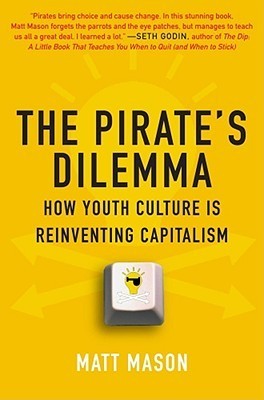
Draws on the insights of an iPod music fan and an IT guru to counsel readers on the social and technological relevance of today's interface between pop culture and innovation, in an account that charts the rise of various youth movements, from pirate radio to remix culture, to track their broader influence on society. 35,000 first printing.

“The amount of knowledge and talent dispersed among the human race has always outstripped our capacity to harness it. Crowdsourcing corrects that—but in doing so, it also unleashes the forces of creative destruction.”—From CrowdsourcingFirst identified by journalist Jeff Howe in a June 2006 Wired article, “crowdsourcing” describes the process by which the power of the many can be leveraged to accomplish feats that were once the province of the specialized few. Howe reveals that the crowd is more than wise—it’s talented, creative, and stunningly productive. Crowdsourcing activates the transformative power of today’s technology, liberating the latent potential within us all. It’s a perfect meritocracy, where age, gender, race, education, and job history no longer matter; the quality of work is all that counts; and every field is open to people of every imaginable background. If you can perform the service, design the product, or solve the problem, you’ve got the job.But crowdsourcing has also triggered a dramatic shift in the way work is organized, talent is employed, research is conducted, and products are made and marketed. As the crowd comes to supplant traditional forms of labor, pain and disruption are inevitable.Jeff Howe delves into both the positive and negative consequences of this intriguing phenomenon. Through extensive reporting from the front lines of this revolution, he employs a brilliant array of stories to look at the economic, cultural, business, and political implications of crowdsourcing. How were a bunch of part-time dabblers in finance able to help an investment company consistently beat the market? Why does Procter & Gamble repeatedly call on enthusiastic amateurs to solve scientific and technical challenges? How can companies as diverse as iStockphoto and Threadless employ just a handful of people, yet generate millions of dollars in revenue every year? The answers lie within these pages.The blueprint for crowdsourcing originated from a handful of computer programmers who showed that a community of like-minded peers could create better products than a corporate behemoth like Microsoft. Jeff Howe tracks the amazing migration of this new model of production, showing the potential of the Internet to create human networks that can divvy up and make quick work of otherwise overwhelming tasks. One of the most intriguing ideas of Crowdsourcing is that the knowledge to solve intractable problems—a cure for cancer, for instance—may already exist within the warp and weave of this infinite and, as yet, largely untapped resource. But first, Howe proposes, we need to banish preconceived notions of how such problems are solved.The very concept of crowdsourcing stands at odds with centuries of practice. Yet, for the digital natives soon to enter the workforce, the technologies and principles behind crowdsourcing are perfectly intuitive. This generation collaborates, shares, remixes, and creates with a fluency and ease the rest of us can hardly understand. Crowdsourcing , just now starting to emerge, will in a short time simply be the way things are done.

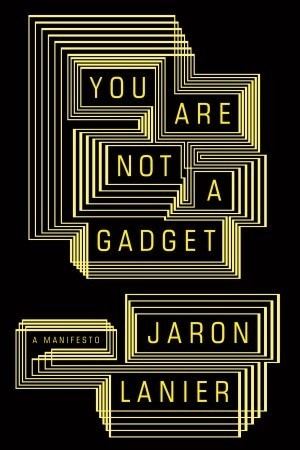
Jaron Lanier, a Silicon Valley visionary since the 1980s, was among the first to predict the revolutionary changes the World Wide Web would bring to commerce and culture. Now, in his first book, written more than two decades after the web was created, Lanier offers this provocative and cautionary look at the way it is transforming our lives for better and for worse.The current design and function of the web have become so familiar that it is easy to forget that they grew out of programming decisions made decades ago. The web’s first designers made crucial choices (such as making one’s presence anonymous) that have had enormous—and often unintended—consequences. What’s more, these designs quickly became “locked in,” a permanent part of the web’s very structure. Lanier discusses the technical and cultural problems that can grow out of poorly considered digital design and warns that our financial markets and sites like Wikipedia, Facebook, and Twitter are elevating the “wisdom” of mobs and computer algorithms over the intelligence and judgment of individuals. Lanier also shows:How 1960s antigovernment paranoia influenced the design of the online world and enabled trolling and trivialization in online discourseHow file sharing is killing the artistic middle class;How a belief in a technological “rapture” motivates some of the most influential technologistsWhy a new humanistic technology is necessary. Controversial and fascinating, You Are Not a Gadget is a deeply felt defense of the individual from an author uniquely qualified to comment on the way technology interacts with our culture.

"The revolution will be Twittered!" declared journalist Andrew Sullivan after protests erupted in Iran in June 2009. Yet for all the talk about the democratizing power of the Internet, regimes in Iran and China are as stable and repressive as ever. In fact, authoritarian governments are effectively using the Internet to suppress free speech, hone their surveillance techniques, disseminate cutting-edge propaganda, and pacify their populations with digital entertainment. Could the recent Western obsession with promoting democracy by digital means backfire?In this spirited book, journalist and social commentator Evgeny Morozov shows that by falling for the supposedly democratizing nature of the Internet, Western do-gooders may have missed how it also entrenches dictators, threatens dissidents, and makes it harder - not easier - to promote democracy. Buzzwords like "21st-century statecraft" sound good in PowerPoint presentations, but the reality is that "digital diplomacy" requires just as much oversight and consideration as any other kind of diplomacy.Marshaling compelling evidence, Morozov shows why we must stop thinking of the Internet and social media as inherently liberating and why ambitious and seemingly noble initiatives like the promotion of "Internet freedom" might have disastrous implications for the future of democracy as a whole.

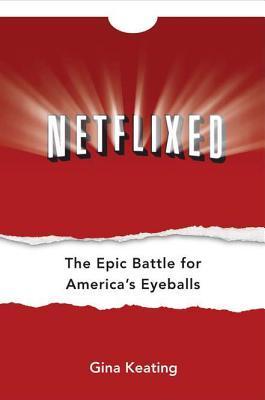
Netflix has come a long way since 1997, when two Silicon Valley entrepreneurs, Marc Randolph and Reed Hastings, decided to start an online DVD store before most people owned a DVD player. They were surprised and elated when launch-day traffic in April 1998 crashed their server and resulted in 150 sales. Today, Netflix has more than 25 million subscribers and annual revenues above $3 billion. Yet long- term success-or even survival-is still far from guaranteed. Journalist Gina Keating recounts the absorbing, fast-paced drama of the company's turbulent rise to the top and its attempt to invent two new kinds of business. First it engaged in a grueling war against video-store behemoth Blockbuster, transforming movie rental forever. Then it jumped into an even bigger battle for online video streaming against Google, Hulu, Amazon, and the big cable companies. Netflix ushered in such innovations as DVD rental by mail, a patented online queue of upcoming rentals, and a recommendation algorithm called Cinematch that proved crucial in its struggle against bigger rivals. Yet for all its success, Netflix is still a polarizing company. Hastings is often heralded as a visionary-he was named Business Person of the Year in 2010 by Fortune-even as he has been called the nation's worst CEO. Netflix also faces disgruntled customers after price increases and other stumbles that could tarnish the brand forever. The quest to become the world's portal for premium video on demand will determine nothing less than the future of entertainment and the Internet. Drawing on extensive new interviews and her years covering Netflix as a financial and entertainment reporter, Keating makes this tale as absorbing as it is important.

Reddit hails itself as “the front page of the Internet.” It’s the fourth most-visited website in the United States–yet, millions of Americans have no idea what it is. We Are the Nerds is a riveting look deep inside this captivating, maddening enterprise–whose army of highly engaged (obsessed?) users have been credited with everything from solving cold case crimes to seeding alt-right fury and helping to land Donald Trump in the White House. We Are the Nerds is a gripping start-up business narrative: the story of how Reddit’s founders, Steve Huffman and Alexis Ohanian, rose up from their suburban childhoods to become millionaires and create an icon of the digital age–before seeing the site engulfed in controversies and nearly losing control of it for good. Based on Christine Lagorio’s exclusive access to founders Alexis Ohanian and Steve Huffman, We Are the Nerds is also a compelling exploration of the way we all communicate today–and how we got here. Reddit and its users have become a mirror of the Internet: it has dingy corners, shiny memes, malicious trolls, and a sometimes heart-melting ability to connect people across cultures, oceans, and ideological divides.

Recent years have seen a revival of the heated culture wars of the 1990s, but this time its battle ground is the internet. On one side the alt right ranges from the once obscure neo-reactionary and white separatist movements, to geeky subcultures like 4chan, to more mainstream manifestations such as the Trump-supporting gay libertarian Milo Yiannopolous. On the other side, a culture of struggle sessions and virtue signalling lurks behind a therapeutic language of trigger warnings and safe spaces. The feminist side of the online culture wars has its equally geeky subcultures right through to its mainstream expression. Kill All Normies explores some of the cultural genealogies and past parallels of these styles and subcultures, drawing from transgressive styles of 60s libertinism and conservative movements, to make the case for a rejection of the perpetual cultural turn.

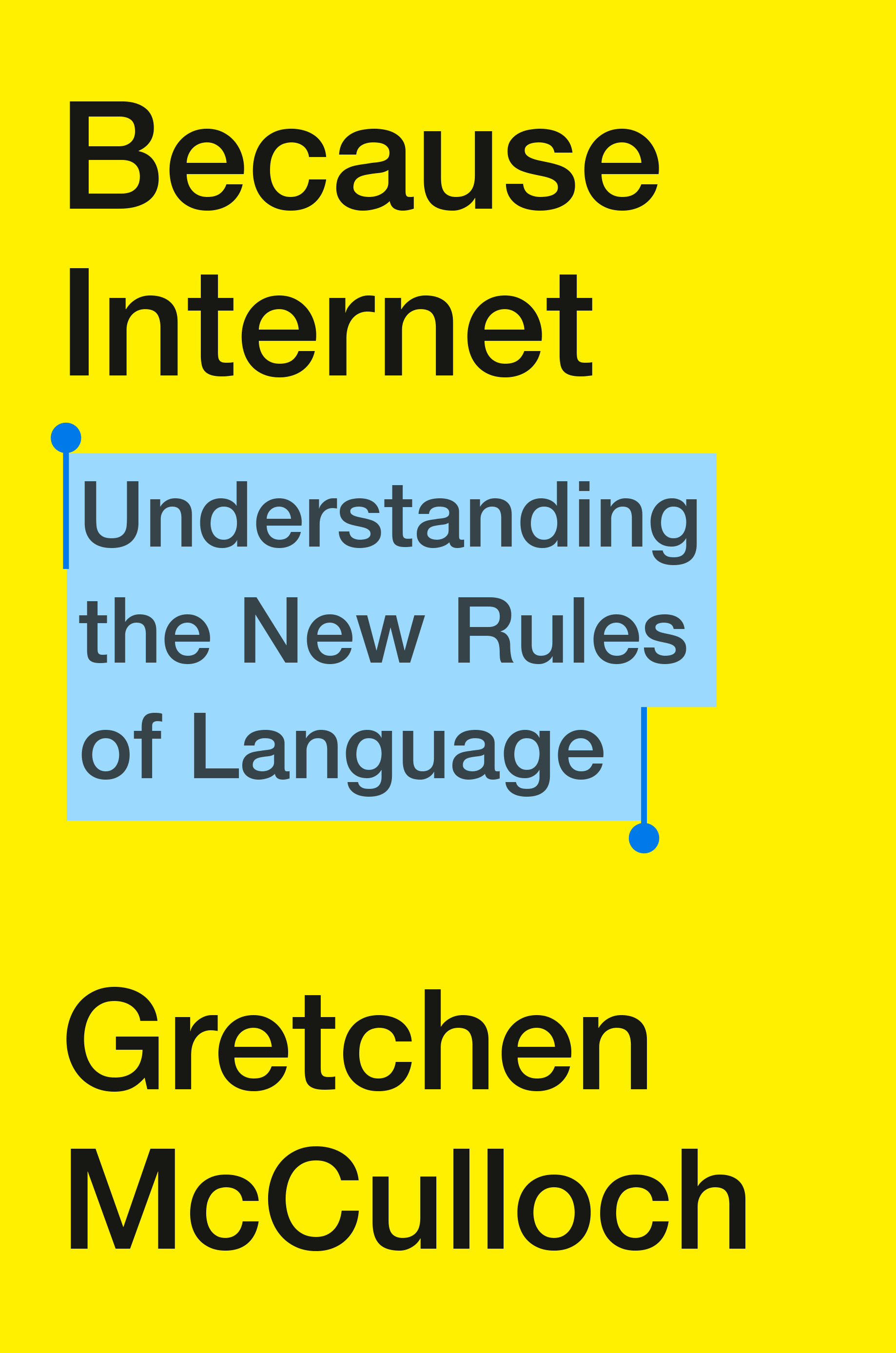
A linguistically informed look at how our digital world is transforming the English language. Language is humanity's most spectacular open-source project, and the internet is making our language change faster and in more interesting ways than ever before. Internet conversations are structured by the shape of our apps and platforms, from the grammar of status updates to the protocols of comments and @replies. Linguistically inventive online communities spread new slang and jargon with dizzying speed. What's more, social media is a vast laboratory of unedited, unfiltered words where we can watch language evolve in real time.Even the most absurd-looking slang has genuine patterns behind it. Internet linguist Gretchen McCulloch explores the deep forces that shape human language and influence the way we communicate with one another. She explains how your first social internet experience influences whether you prefer "LOL" or "lol," why ~sparkly tildes~ succeeded where centuries of proposals for irony punctuation had failed, what emoji have in common with physical gestures, and how the artfully disarrayed language of animal memes like lolcats and doggo made them more likely to spread.Because Internet is essential reading for anyone who's ever puzzled over how to punctuate a text message or wondered where memes come from. It's the perfect book for understanding how the internet is changing the English language, why that's a good thing, and what our online interactions reveal about who we are.

If you wanted to build a machine that would distribute propaganda to millions of people, distract them from important issues, energize hatred and bigotry, erode social trust, undermine respectable journalism, foster doubts about science, and engage in massive surveillance all at once, you would make something a lot like Facebook. Of course, none of that was part of the plan. In this fully updated paperback edition of Antisocial Media , Siva Vaidhyanathan explains how Facebook devolved from an innocent social site hacked together by Harvard students into a force that, while it may make personal life just a little more pleasurable, makes democracy a lot more challenging. It's an account of the hubris of good intentions, a missionary spirit, and an ideology that sees computer code as the universal solvent for all human problems. And it's an indictment of how "social media" has fostered the deterioration of democratic culture around the world, from facilitating Russian meddling in support of Trump's election to the exploitation of the platform by murderous authoritarians in Burma and the Philippines. Both authoritative and trenchant, Antisocial Media shows how Facebook's mission went so wrong.

"Mr. Jurgenson makes a first sortie toward a new understanding of the photograph, wherein artistry or documentary intent have given way to communication and circulation. Like Susan Sontag’s On Photography, to which it self-consciously responds, The Social Photo is slim, hard-bitten and picture-free." – New York Times A set of bold theoretical reflections on how the social photo has remade our world.With the rise of the smart phone and social media, cameras have become ubiquitous, infiltrating nearly every aspect of social life. The glowing camera screen is the lens through which many of us seek to communicate our experience. But our thinking about photography has been slow to catch-up; this major fixture of everyday life is still often treated in the terms of art or journalism. In The Social Photo, social theorist Nathan Jurgenson develops bold new ways of understanding photography in the age of social media and the new kinds of images that have the selfie, the faux-vintage photo, the self-destructing image, the food photo. Jurgenson shows how these devices and platforms have remade the world and our understanding of ourselves within it.

A penetrating indictment of how today’s largest tech companies are hijacking our data, our livelihoods, our social fabric, and our minds—from an acclaimed Financial Times columnist and CNN analyst SHORTLISTED FOR THE PORCHLIGHT BUSINESS BOOK AWARD • NAMED ONE OF THE BEST BOOKS OF THE YEAR BY EVENING STANDARD“Don’t be evil” was enshrined as Google’s original corporate mantra back in its early days, when the company’s cheerful logo still conveyed the utopian vision for a future in which technology would inevitably make the world better, safer, and more prosperous. Unfortunately, it’s been quite a while since Google, or the majority of the Big Tech companies, lived up to this founding philosophy. Today, the utopia they sought to create is looking more dystopian than ever: from digital surveillance and the loss of privacy to the spreading of misinformation and hate speech to predatory algorithms targeting the weak and vulnerable to products that have been engineered to manipulate our desires. How did we get here? How did these once-scrappy and idealistic enterprises become rapacious monopolies with the power to corrupt our elections, co-opt all our data, and control the largest single chunk of corporate wealth—while evading all semblance of regulation and taxes? In Don’t Be Evil, Financial Times global business columnist Rana Foroohar tells the story of how Big Tech lost its soul—and ate our lunch. Through her skilled reporting and unparalleled access—won through nearly thirty years covering business and technology—she shows the true extent to which behemoths like Google, Facebook, Apple, and Amazon are monetizing both our data and our attention, without us seeing a penny of those exorbitant profits. Finally, Foroohar lays out a plan for how we can resist, by creating a framework that fosters innovation while also protecting us from the dark side of digital technology.Praise for Don’t Be Evil “At first sight, Don’t Be Evil looks like it’s doing for Google what muckraking journalist Ida Tarbell did for Standard Oil over a century ago. But this whip-smart, highly readable book’s scope turns out to be much broader. Worried about the monopolistic tendencies of big tech? The addictive apps on your iPhone? The role Facebook played in Donald Trump’s election? Foroohar will leave you even more worried, but a lot better informed.”—Niall Ferguson, Milbank Family Senior Fellow at the Hoover Institution, Stanford, and author of The Square and the Tower

The Wall Street Journal bestseller!Learn the secrets to getting dramatic results on YouTubeDerral Eves has generated over 60 billion views on YouTube and helped 24 channels grow to one million subscribers from zero. In The YouTube Formula: How Anyone Can Unlock the Algorithm to Drive Views, Build an Audience, and Grow Revenue, the owner of the largest YouTube how-to channel provides the secrets to getting the results that every YouTube creator and strategist wants. Eves will reveal what readers can't get anywhere else: the inner workings of the YouTube algorithm that's responsible for determining success on the platform, and how creators can use it to their advantage.Full of actionable advice and concrete strategies, this book teaches readers how to:Launch a channel Create life-changing content Drive rapid view and subscriber growth Build a brand and increase engagement Improve searchability Monetize content and audience Replete with case studies and information from successful YouTube creators, The YouTube Formula is perfect for any creator, entrepreneur, social media strategist, and brand manager who hopes to see real commercial results from their work on the platform.