
Jaron Lanier
Jaron Lanier is a computer scientist, composer, visual artist, and author. In the sciences: Jaron Lanier scientific interests include biomimetic information architectures, user interfaces, heterogeneous scientific simulations, advanced information systems for medicine, and computational approaches to the fundamentals of physics. He collaborates with a wide range of scientists in fields related to these interests. Lanier's name is also often associated with Virtual Reality research. He either coined or popularized the term 'Virtual Reality' and in the early 1980s founded VPL Research, the first company to sell VR products. In the late 1980s he led the team that developed the first implementations of multi-person virtual worlds using head mounted displays, for both local and wide area networks, as well as the first "avatars", or representations of users within such systems. While at VPL, he and his colleagues developed the first implementations of virtual reality applications in surgical simulation, vehicle interior prototyping, virtual sets for television production, and assorted other areas. He led the team that developed the first widely used software platform architecture for immersive virtual reality applications. Sun Microsystems acquired VPL's seminal portfolio of patents related to Virtual Reality and networked 3D graphics in 1999. From 1997 to 2001, Lanier was the Chief Scientist of Advanced Network and Services, which contained the Engineering Office of Internet2, and served as the Lead Scientist of the National Tele-immersion Initiative, a coalition of research universities studying advanced applications for Internet2. The Initiative demonstrated the first prototypes of tele-immersion in 2000 after a three-year development period. From 2001 to 2004 he was Visiting Scientist at Silicon Graphics Inc., where he developed solutions to core problems in telepresence and tele-immersion. He was Scholar at Large for Microsoft from 2006 to 2009, and Partner Architect at Microsoft Research from 2009 forward. Lanier has received honorary doctorates from the New Jersey Institute of Technology and Franklin and Marshall College, was the recipient of CMU's Watson award in 2001, was a finalist for the first Edge of Computation Award in 2005, and received a Lifetime Career Award from the IEEE in 2009 for contributions to Virtual Reality. Punditry: Lanier is a well-known author and speaker. Time Magazine named him one of the 100 most influential people in the world in 2010. His book "You Are Not a Gadget" was released in 2010 and was named one of the 10 best books of the year by Michiko Kakutani in the NY Times. He writes and speaks on numerous topics, including high-technology business, the social impact of technological practices, the philosophy of consciousness and information, Internet politics, and the future of humanism. His lecture client list has included most of the well-known high technology firms as well as many others in the energy, automotive, and financial services industries. His writing has appeared in The New York Times, Discover (where he has been a columnist), The Wall Street Journal, Forbes, Harpers Magazine, The Sciences, Wired Magazine (where he was a founding contributing editor), and Scientific American. He has edited special "future" issues of SPIN and Civilization magazines. He is one of the 100 remarkable people of the Global Business Network. In 2005 Lanier was selected as one of the top one hundred public intellectuals in the world by readers of Prospect and Foreign Policy magazines. Music: As a musician, Lanier has been active in the world of new "classical" music since the late seventies. He is a pianist and a specialist in unusual musical instruments, especially the wind and string instruments of Asia. He maintains one of the largest and most varied collections of actively played rare instruments in the world. Lanier's "Symphony for Amelia," premiered
9 Books Written

A NATIONAL BESTSELLERA programmer, musician, and father of virtual reality technology, Jaron Lanier was a pioneer in digital media, and among the first to predict the revolutionary changes it would bring to our commerce and culture. Now, with the Web influencing virtually every aspect of our lives, he offers this provocative critique of how digital design is shaping society, for better and for worse. Informed by Lanier’s experience and expertise as a computer scientist, You Are Not a Gadget discusses the technical and cultural problems that have unwittingly risen from programming choices—such as the nature of user identity—that were “locked-in” at the birth of digital media and considers what a future based on current design philosophies will bring. With the proliferation of social networks, cloud-based data storage systems, and Web 2.0 designs that elevate the “wisdom” of mobs and computer algorithms over the intelligence and wisdom of individuals, his message has never been more urgent.

Ten Arguments for Deleting Your Social Media Accounts Right Now
by Jaron Lanier
Rating: 3.8 ⭐
• 2 recommendations ❤️
A timely call-to-arms from a Silicon Valley pioneer.You might have trouble imagining life without your social media accounts, but virtual reality pioneer Jaron Lanier insists that we’re better off without them. In Ten Arguments for Deleting Your Social Media Accounts Right Now, Lanier, who participates in no social media, offers powerful and personal reasons for all of us to leave these dangerous online platforms.Lanier’s reasons for freeing ourselves from social media’s poisonous grip include its tendency to bring out the worst in us, to make politics terrifying, to trick us with illusions of popularity and success, to twist our relationship with the truth, to disconnect us from other people even as we are more “connected” than ever, to rob us of our free will with relentless targeted ads. How can we remain autonomous in a world where we are under continual surveillance and are constantly being prodded by algorithms run by some of the richest corporations in history that have no way of making money other than being paid to manipulate our behavior? How could the benefits of social media possibly outweigh the catastrophic losses to our personal dignity, happiness, and freedom? Lanier remains a tech optimist, so while demonstrating the evil that rules social media business models today, he also envisions a humanistic setting for social networking that can direct us toward a richer and fuller way of living and connecting with our world.

As the Internet burgeoned and blossomed through the early to mid-nineties, visionary manifestos about its transformative social, political, and economic potential clogged VAX accounts the world over. After a solid decade of intense commercial development, much go-go nineties prophesying now seems a triumph of Utopian hope over hard reality. Does hope of Internet liberation yet remain? Or has the bright promise of the Internet been dimmed by corporate influence and government regulation? Are ideas like virtual citizenship beyond the nation-state, untraceable electronic currency, and the consciousness expanding powers of radical interconnectivity defunct? Is there untapped revolutionary power waiting to be unleashed?Virtual reality visionary Jaron Lanier will kick off the discussion with a mind-bending lead essay. Commentators John Perry Barlow of the Electronic Frontier Foundation, open source software guru Eric S. Raymond, Glenn “Instapundit” Reynolds, and Yale computer scientist David Gelernter will grapple with Lanier’s vision, and offer their own wisdom on what the Internet still has to offer for the future of freedom.

The “brilliant” and “daringly original” (The New York Times) critique of digital networks from the “David Foster Wallace of tech” (London Evening Standard)—asserting that to fix our economy, we must fix our information economy.Jaron Lanier is the father of virtual reality and one of the world’s most brilliant thinkers. Who Owns the Future? is his visionary reckoning with the most urgent economic and social trend of our age: the poisonous concentration of money and power in our digital networks.Lanier has predicted how technology will transform our humanity for decades, and his insight has never been more urgently needed. He shows how Siren Servers, which exploit big data and the free sharing of information, led our economy into recession, imperiled personal privacy, and hollowed out the middle class. The networks that define our world—including social media, financial institutions, and intelligence agencies—now threaten to destroy it.But there is an alternative. In this provocative, poetic, and deeply humane book, Lanier charts a path toward a brighter future: an information economy that rewards ordinary people for what they do and share on the web.
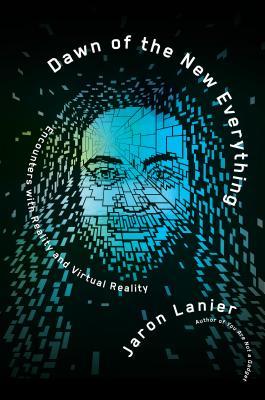
The father of virtual reality explains its dazzling possibilities by reflecting on his own lifelong relationship with technology.Bridging the gap between tech mania and the experience of being inside the human body, Jaron Lanier has written a three-pronged adventure into "virtual reality," by exposing its ability to illuminate and amplify our understanding of our species. An inventive blend of autobiography, science writing, philosophy, and advice, this book tells the wild story of his personal and professional life as a scientist, from his childhood in the UFO territory of New Mexico, to the loss of his mother, the founding of the first start-up, and finally becoming a world-renowned technological guru. Understanding virtual reality as being both a scientific and cultural adventure, Lanier demonstrates it to be a humanistic setting for technology. While his previous books offered a more critical view of social media and other manifestations of technology, in this book he argues that virtual reality can actually make our lives richer and fuller. Dawn of the New Everything is ultimately a look at what it means to be human at a moment of unprecedented technological possibility, giving readers a new perspective on how the brain and body connect to the world.

revised, abridged and updated by the author, published in 1974 by Scholastic Book Services