Loading genres...
Explore the best books about Current Affairs genre.

It's the end of the world as we know it...Someday soon, you might wake up to the call to prayer from a muezzin. Europeans already are. And liberals will still tell you that "diversity is our strength"--while Talibanic enforcers cruise Greenwich Village burning books and barber shops, the Supreme Court decides sharia law doesn't violate the "separation of church and state," and the Hollywood Left decides to give up on gay rights in favor of the much safer charms of polygamy. If you think this can't happen, you haven't been paying attention, as the hilarious, provocative, and brilliant Mark Steyn--the most popular conservative columnist in the English-speaking world--shows to devastating effect. The future, as Steyn shows, belongs to the fecund and the confident. And the Islamists are both, while the West is looking ever more like the ruins of a civilization. But America can survive, prosper, and defend its freedom only if it continues to believe in itself, in the sturdier virtues of self-reliance (not government), in the centrality of family, and in the conviction that our country really is the world's last best hope. Mark Steyn's America Alone is laugh-out-loud funny--but it will also change the way you look at the world.

“A sweeping, straightforward primer on foreign policy that revisits topics including the Middle East, the former Soviet Union, China, Pakistan and beyond.” — Miami Herald The former Secretary of State and New York Times bestselling author offers America’s next leader blunt advice for repairing and reinvigorating America’s standing in the world The next president will face the daunting task of repairing America's core relationships and tarnished credibility after the damage caused during the past eight years. In Memo to the President , former secretary of state Madeleine Albright offers provocative ideas about how to confront the myriad challenges awaiting our newly elected commander-in-chief. Secretary Albright's advice is candid and seasoned with humor and stories from her years in office, blending lessons from the past with forward-looking suggestions about how to make full use of presidential power without repeating the excesses of the Bush administration and how to revive America's commitment to its founding ideals.

A collection of statements Congressman Ron Paul has made over the past 30 years dealing with foreign policy from the date he was first elected to Congress.

“Americans need not be hostile toward China's rise, but they should be wary about its eventual effects. The United States is the only nation with the scale and power to try to set the terms of its interaction with China rather than just succumb. So starting now, Americans need to consider the economic, environmental, political, and social goals they care about defending as Chinese influence grows.” —from “China Makes, the World Takes”Since December 2006, The Atlantic Magazine's James Fallows has been writing some of the most discerning accounts of the economic and political transformation occurring in China. The ten essays collected here cover a wide-range of topics: from visionary tycoons and TV-battling entrepreneurs, to environmental pollution and how China subsidizes our economy. Fallows expertly and lucidly explains the economic, political, social, and cultural forces at work turning China into a world superpower at breakneck speed. This eye-opening and cautionary account is essential reading for all concerned not only with China's but America's future role in the world.

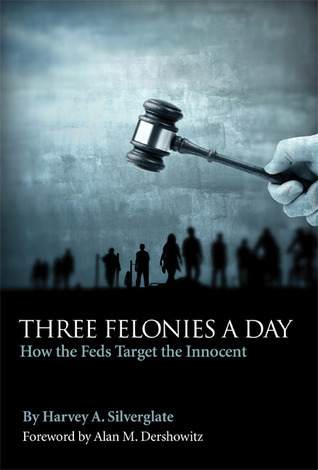
The average professional in this country wakes up in the morning, goes to work, comes home, eats dinner, and then goes to sleep, unaware that he or she has likely committed several federal crimes that day. Why? The answer lies in the very nature of modern federal criminal laws, which have exploded in number but also become impossibly broad and vague. In Three Felonies a Day, Harvey A. Silverglate reveals how federal criminal laws have become dangerously disconnected from the English common law tradition and how prosecutors can pin arguable federal crimes on any one of us, for even the most seemingly innocuous behavior. The volume of federal crimes in recent decades has increased well beyond the statute books and into the morass of the Code of Federal Regulations, handing federal prosecutors an additional trove of vague and exceedingly complex and technical prohibitions to stick on their hapless targets. The dangers spelled out in Three Felonies a Day do not apply solely to “white collar criminals,” state and local politicians, and professionals. No social class or profession is safe from this troubling form of social control by the executive branch, and nothing less than the integrity of our constitutional democracy hangs in the balance.

America is in trouble. We face four major challenges on which our future depends, and we are failing to meet them―and if we delay any longer, soon it will be too late for us to pass along the American dream to future generations.In That Used to Be Us , Thomas L. Friedman, one of our most influential columnists, and Michael Mandelbaum, one of our leading foreign policy thinkers, offer both a wake-up call and a call to collective action. They analyze the four challenges we face―globalization, the revolution in information technology, the nation's chronic deficits, and our pattern of excessive energy consumption―and spell out what we need to do now to sustain the American dream and preserve American power in the world. They explain how the end of the Cold War blinded the nation to the need to address these issues seriously, and how China's educational successes, industrial might, and technological prowess remind us of the ways in which "that used to be us." They explain how the paralysis of our political system and the erosion of key American values have made it impossible for us to carry out the policies the country urgently needs.And yet Friedman and Mandelbaum believe that the recovery of American greatness is within reach. They show how America's history, when properly understood, offers a five-part formula for prosperity that will enable us to cope successfully with the challenges we face. They offer vivid profiles of individuals who have not lost sight of the American habits of bold thought and dramatic action. They propose a clear way out of the trap into which the country has fallen, a way that includes the rediscovery of some of our most vital traditions and the creation of a new thirdparty movement to galvanize the country.That Used to Be Us is both a searching exploration of the American condition today and a rousing manifesto for American renewal.

The world has watched stunned at the bloodshed in Mexico. Thirty thousand murdered since 2006; police chiefs shot within hours of taking office; mass graves comparable to those of civil wars; car bombs shattering storefronts; headless corpses heaped in town squares. And it is all because a few Americans are getting high. Or is it? The United States throws Black Hawk helicopters and drug agents at the problem. But in secret, Washington is confused and divided about what to do. Who are these mysterious figures tearing Mexico apart? they wonder. What is El Narco? El Narco draws the first definitive portrait of Mexico's drug cartels and how they have radically transformed in the last decade. El Narco is not a gang; it is a movement and an industry drawing in hundreds of thousands from bullet-ridden barrios to marijuana-growing mountains. And it has created paramilitary death squads with tens of thousands of men-at-arms from Guatemala to the Texas border. Journalist Ioan Grillo has spent a decade in Mexico reporting on the drug wars from the front lines. This piercing book joins testimonies from inside the cartels with firsthand dispatches and unsparing analysis. The devastation may be south of the Rio Grande, El Narco shows, but America is knee-deep in this conflict.

The Man Without a Face is the chilling account of how a low- level, small-minded KGB operative ascended to the Russian presidency and, in an astonishingly short time, destroyed years of progress and made his country once more a threat to her own people and to the world.Handpicked as a successor by the "family" surrounding an ailing and increasingly unpopular Boris Yeltsin, Vladimir Putin seemed like a perfect choice for the oligarchy to shape according to its own designs. Suddenly the boy who had stood in the shadows, dreaming of ruling the world, was a public figure, and his popularity soared. Russia and an infatuated West were determined to see the progressive leader of their dreams, even as he seized control of media, sent political rivals and critics into exile or to the grave, and smashed the country's fragile electoral system, concentrating power in the hands of his cronies.As a journalist living in Moscow, Masha Gessen experienced this history firsthand, and for The Man Without a Face she has drawn on information and sources no other writer has tapped. Her account of how a "faceless" man maneuvered his way into absolute-and absolutely corrupt-power has the makings of a classic of narrative nonfiction.

Our Divided Political Heart will be the must-read book of the 2012 election campaign. Offering an incisive analysis of how hyper-individualism is poisoning the nation's political atmosphere, E. J. Dionne Jr. argues that Americans can't agree on who we are because we can't agree on who we've been, or what it is, philosophically and spiritually, that makes us Americans. Dionne takes on the Tea Party's distortions of American history and shows that the true American tradition points not to radical individualism, but to a balance between our love of individualism and our devotion to community.Dionne offers both a fascinating tour of American history-from the Founding Fathers to Clay and Lincoln and on to the Populists, the Progressives and the New Dealers-and also an analysis of our current politics that shatters conventional wisdom. The true American idea, far from endorsing government inaction or indifference, has always viewed the federal government as an active and constructive partner with the rest of society in promoting prosperity, opportunity, and American greatness.The ability of the American system to self-correct is its greatest asset and Dionne challenges progressives to embrace the American story. Our fractious but productive past offers us the resources both to rediscover the idea of progress and to put an end to our fears of decline. Our Divided Political Heart will be required reading for all who seek a path out of our current impasse.

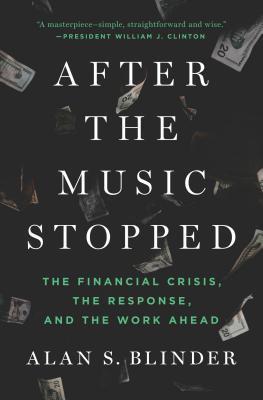
With bracing clarity, Blinder shows us how the U.S. financial system, which had grown far too complex for its own good-and too unregulated for the public good-experienced a perfect storm beginning in 2007. When America's financial structure crumbled, the damage proved to be not only deep, but wide. It took the crisis for the world to discover, to its horror, just how truly interconnected-and fragile-the global financial system is. The second part of the story explains how American and international government intervention kept us from a total meltdown. Many of the U.S. government's actions, particularly the Fed's, were previously unimaginable. And to an amazing-and certainly misunderstood-extent, they worked. The worst did not happen. Blinder offers clear-eyed answers to the questions still before us, even if some of the choices ahead are as divisive as they are unavoidable. After the Music Stopped is an essential history that we cannot afford to forget, because one thing history teaches is that it will happen here again.

One of the New York Times ' 100 Notable Books of 2015One of Financial Times ' Books of the Year, 2015A New York Times Editors' ChoiceA New Statesman [UK] Essential Book of the Year 2015A Times [UK] Book of the Year 2015Shortlisted for the 2015 Samuel Johnson Prize for NonfictionShortlisted for the 2016 Orwell PrizeWhen Emma Sky volunteered to help rebuild Iraq after the overthrow of Saddam Hussein in 2003, she had little idea what she was getting in to. Her assignment was only supposed to last three months. She went on to serve there longer than any other senior military or diplomatic figure, giving her an unrivaled perspective of the entire conflict.As the representative of the Coalition Provisional Authority in Kirkuk in 2003 and then the political advisor to US General Odierno from 2007-2010, Sky was valued for her knowledge of the region and her outspoken voice. She became a tireless witness to American efforts to transform a country traumatized by decades of war, sanctions, and brutal dictatorship; to insurgencies and civil war; to the planning and implementation of the surge and the subsequent drawdown of US troops; to the corrupt political elites who used sectarianism to mobilize support; and to the takeover of a third of the country by the Islamic State.With sharp detail and tremendous empathy, Sky provides unique insights into the US military as well as the complexities, diversity, and evolution of Iraqi society. The Unraveling is an intimate insider's portrait of how and why the Iraq adventure failed and contains a unique analysis of the course of the war. Highlighting how nothing that happened in Iraq after 2003 was inevitable, Sky exposes the failures of the policies of both Republicans and Democrats, and the lessons that must be learned about the limitations of power.

Once you accept that the impossible is really possible, what happens in Russia makes perfect sense “A few pages into David Satter’s truly terrifying book, one realizes that his title is smack-on modern Russia is a frightening member of the world community to an extent of which most persons are blissfully unaware.”—Joseph C. Goulden, Washington Times “Satter . . . persuasively supplies evidence for his claim that a series of residential bombings in 1999 were part of an elaborate conspiracy orchestrated by Vladimir Putin, who used them as a smoke screen to invade Chechnya and catapult himself to the presidency.”— Publisher’s Weekly In December 2013, David Satter became the first American journalist to be expelled from Russia since the Cold War. The Moscow Times said it was not surprising he was expelled, “it was surprising it took so long.” Satter is known in Russia for having written that the apartment bombings in 1999, which were blamed on Chechens and brought Putin to power, were actually carried out by the Russian FSB security police. In this book, Satter tells the story of the apartment bombings and how Boris Yeltsin presided over the criminalization of Russia, why Vladimir Putin was chosen as his successor, and how Putin has suppressed all opposition while retaining the appearance of a pluralist state. As the threat represented by Russia becomes increasingly clear, Satter’s description of where Russia is and how it got there will be of vital interest to anyone concerned about the dangers facing the world today.

The only book to tell the full story of how and why Britain voted to leave the EU.Based on unrivalled access to all the key politicians and their advisors – including Boris Johnson, Michael Gove, George Osborne, Nigel Farage and Dominic Cummings, the mastermind of Vote Leave – Tim Shipman has written a political history that reads like a thriller, and offers a gripping, day-by-day account of what really happened behind-the-scenes in Downing Street, both Leave campaigns, the Labour Party, Ukip and Britain Stronger in Europe.Shipman gives his readers a ringside seat on how decisions were made, mistakes justified and betrayals perpetrated. Filled with stories, anecdotes and juicy leaks the book does not seek to address the rights and wrongs of Brexit but to explore how and why David Cameron chose to take the biggest political gamble of his life and explain why he lost.This is a story of calculation, attempted coups, individuals torn between principles and loyalty. All the events are here – from David Cameron’s pledge to hold a referendum, through to the campaign itself, his resignation as prime minister, the betrayals and rivalries that occurred during the race to find his successor to the arrival of Theresa May in Downing Street as Britain’s second female prime minister.All Out War is a book about leaders and their closest aides, the decisions they make and how and why they make them, as well as how they feel when they turn out to be wrong. It is about men who make decisions that are intellectually consistent and – by their own measure – morally sound that are simultaneously disastrous for themselves and those closest to them. It is about how doing what you know has worked before doesn’t always work again. Most of all it is about asking the question: how far are you prepared to go to win?

A report on the disruption of the news media over the last decade. With the guidance of former Executive Editor of The New York Times Jill Abramson, we follow two legacy (The New York Times and The Washington Post) and two upstart (BuzzFeed and VICE) companies as they plow through a revolution in technology, economics, standards, commitment, and endurance that pits old vs. new media.Merchants of Truth is the groundbreaking and gripping story of the precarious state of the news business told by one of our most eminent journalists.Jill Abramson follows four companies: The New York Times, The Washington Post, BuzzFeed, and VICE Media over a decade of disruption and radical adjustment. The new digital reality nearly kills two venerable newspapers with an aging readership while creating two media behemoths with a ballooning and fickle audience of millennials. We get to know the defenders of the legacy presses as well as the outsized characters who are creating the new speed-driven media competitors. The players include Jeff Bezos and Marty Baron (The Washington Post), Arthur Sulzberger and Dean Baquet (The New York Times), Jonah Peretti (BuzzFeed), and Shane Smith (VICE) as well as their reporters and anxious readers.Merchants of Truth raises crucial questions that concern the well-being of our society. We are facing a crisis in trust that threatens the free press. Abramson’s book points us to the future.

The morning after Trump was elected president, the people who ran the US Department of Energy waited to brief the administration’s transition team on the agency it would soon be running. Nobody appeared. Across all departments the stories were the same: Trump appointees were few and far between; those who did show up were shockingly uninformed about the functions of their new workplace.Michael Lewis’s brilliant narrative of the Trump administration’s botched presidential transition takes us into the engine rooms of a government under attack by its leaders through willful ignorance and greed. The government manages a vast array of critical services that keep us safe and underpin our lives, from ensuring the safety of our food and medications and predicting extreme weather events to tracking and locating black- market uranium before the terrorists do. The Fifth Risk masterfully and vividly unspools the consequences of what happens when the people given control over our government have no idea how it works.

The real collusion in the 2016 election was not between the Trump campaign and the Kremlin. It was between the Clinton campaign and the Obama administration.The media-Democrat "collusion narrative," which paints Donald Trump as cat's paw of Russia, is a studiously crafted illusion.Despite Clinton's commanding lead in the polls, hyper-partisan intelligence officials decided they needed an "insurance policy" against a Trump presidency. Thus was born the collusion narrative, built on an anonymously sourced "dossier," secretly underwritten by the Clinton campaign and compiled by a former British spy. Though acknowledged to be "salacious and unverified" at the FBI's highest level, the dossier was used to build a counterintelligence investigation against Trump's campaign.Miraculously, Trump won anyway. But his political opponents refused to accept the voters' decision. Their collusion narrative was now peddled relentlessly by political operatives, intelligence agents, Justice Department officials, and media ideologues--the vanguard of the "Trump Resistance." Through secret surveillance, high-level intelligence leaking, and tireless news coverage, the public was led to believe that Trump conspired with Russia to steal the election.Not one to sit passively through an onslaught, President Trump fought back in his tumultuous way. Matters came to a head when he fired his FBI director, who had given explosive House testimony suggesting the president was a criminal suspect, despite privately assuring Trump otherwise. The resulting firestorm of partisan protest cowed the Justice Department to appoint a special counsel, whose seemingly limitless investigation bedeviled the administration for two years.Yet as months passed, concrete evidence of collusion failed to materialize. Was the collusion narrative an elaborate fraud? And if so, choreographed by whom? Against media-Democrat caterwauling, a doughty group of lawmakers forced a shift in the spotlight from Trump to his investigators and accusers. This has exposed the depth of politicization within American law-enforcement and intelligence agencies. It is now clear that the institutions on which our nation depends for objective policing and clear-eyed analysis injected themselves scandalously into the divisive politics of the 2016 election.They failed to forge a new Clinton administration. Will they succeed in bringing down President Trump?

In the 19th century, the world was Europeanized. In the 20th century, it was Americanized. Now, in the 21st century, the world is being Asianized.The “Asian Century” is even bigger than you think. Far greater than just China, the new Asian system taking shape is a multi-civilizational order spanning Saudi Arabia to Japan, Russia to Australia, Turkey to Indonesia—linking five billion people through trade, finance, infrastructure, and diplomatic networks that together represent 40 percent of global GDP. China has taken a lead in building the new Silk Roads across Asia, but it will not lead it alone. Rather, Asia is rapidly returning to the centuries-old patterns of commerce, conflict, and cultural exchange that thrived long before European colonialism and American dominance. Asians will determine their own future—and as they collectively assert their interests around the world, they will determine ours as well.There is no more important region of the world for us to better understand than Asia – and thus we cannot afford to keep getting Asia so wrong. Asia’s complexity has led to common Western thinking on Asia conflates the entire region with China, predicts imminent World War III around every corner, and regularly forecasts debt-driven collapse for the region’s major economies. But in reality, the region is experiencing a confident new wave of growth led by younger societies from India to the Philippines, nationalist leaders have put aside territorial disputes in favor of integration, and today’s infrastructure investments are the platform for the next generation of digital innovation.If the nineteenth century featured the Europeanization of the world, and the twentieth century its Americanization, then the twenty-first century is the time of Asianization. From investment portfolios and trade wars to Hollywood movies and university admissions, no aspect of life is immune from Asianization. With America’s tech sector dependent on Asian talent and politicians praising Asia’s glittering cities and efficient governments, Asia is permanently in our nation’s consciousness. We know this will be the Asian century. Now we finally have an accurate picture of what it will look like.

With authoritative reporting honed through nine presidencies, author Bob Woodward reveals in unprecedented detail the harrowing life inside President Donald Trump’s White House and precisely how he makes decisions on major foreign and domestic policies.Fear is the most intimate portrait of a sitting president ever published during the president’s first years in office. The focus is on the explosive debates and the decision-making in the Oval Office, the Situation Room, Air Force One and the White House residence.Woodward draws from hundreds of hours of interviews with firsthand sources, meeting notes, personal diaries, files and documents. Often with day-by-day details, dialogue and documentation, Fear tracks key foreign issues from North Korea, Afghanistan, Iran, the Middle East, NATO, China and Russia. It reports in-depth on Trump’s key domestic issues particularly trade and tariff disputes, immigration, tax legislation, the Paris Climate Accord and the racial violence in Charlottesville in 2017.Fear presents vivid details of the negotiations between Trump’s attorneys and Robert Mueller, the special counsel in the Russia investigation, laying out for the first time the meeting-by-meeting discussions and strategies. It discloses how senior Trump White House officials joined together to steal draft orders from the president’s Oval Office desk so he would not issue directives that would jeopardize top secret intelligence operations.“It was no less than an administrative coup d’état,” Woodward writes, “a nervous breakdown of the executive power of the most powerful country in the world.”

THE INSTANT NEW YORK TIMES BESTSELLER The former governor of Virginia tells the behind-the-scenes story of the violent “Unite the Right” rally in Charlottesville—and shows how we can prevent other Charlottesvilles from happening.When Governor Terry McAuliffe hung up the phone on the afternoon of the violent “Unite the Right” rally in Charlottesville, he was sure Donald Trump would do the right thing as president: condemn the white supremacists who’d descended on the college town and who’d caused McAuliffe to declare a state of emergency that morning. He didn’t. Instead Trump declared there was “hatred, bigotry and violence on many sides.” Trump was condemned from many sides himself, even by many Republicans, but the damage was done. He’d excused and thus egged on the terrorists at the moment when he could have stopped them in their tracks.In Beyond Charlottesville, McAuliffe looks at the forces and events that led to the tragedy in Charlottesville, including the vicious murder of Heather Heyer and the death of two state troopers in a helicopter accident. He doesn’t whitewash Virginia history and discusses a KKK protest over the removal of a statue of Robert E. Lee. He takes a hard real-time behind-the-scenes look at the actions of everyone on that fateful August 12, including himself, to see what could have been done. He lays out what was done afterwards to prevent future Charlottesvilles—and what still needs to be done as America in general and Virginia in particular continue to grapple with their history of racism.Beyond Charlottesville will be the definitive account of an infamous chapter in our history, seared indelibly into memory, sure to be cited for years as a crucial reference point in the long struggle to fight racism, extremism and hate.

The Pulitzer Prize-winning author, professor, and historian offers an expert guide to understanding the appeal of the strongman as a leader and an explanation for why authoritarianism is back with a menacing twenty-first century twist.Across the world today, from the Americas to Europe and beyond, liberal democracy is under siege while populism and nationalism are on the rise. In Twilight of Democracy, prize-winning historian Anne Applebaum offers an unexpected explanation: that there is a deep and inherent appeal to authoritarianism, to strongmen, and, especially, to one-party rule--that is, to political systems that benefit true believers, or loyal soldiers, or simply the friends and distant cousins of the Leader, to the exclusion of everyone else.People, she argues, are not just ideological; they are also practical, pragmatic, opportunistic. They worry about their families, their houses, their careers. Some political systems offer them possibilities, and others don't. In particular, the modern authoritarian parties that have arisen within democracies today offer the possibility of success to people who do not thrive in the meritocratic, democratic, or free-market competition that determines access to wealth and power.Drawing on reporting in Spain, Switzerland, Poland, Hungary, and Brazil; using historical examples including Stalinist central Europe and Nazi Germany; and investigating related phenomena: the modern conspiracy theory, nostalgia for a golden past, political polarization, and meritocracy and its discontents, Anne Applebaum brilliantly illuminates the seduction of totalitarian thinking and the eternal appeal of the one-party state.

Why President Trump has left us with no choice but to remove him from office, as explained by celebrated Supreme Court lawyer and former Acting Solicitor General Neal Katyal.No one is above the law. This belief is as American as freedom of speech and turkey on Thanksgiving—held sacred by Democrats and Republicans alike. But as celebrated Supreme Court lawyer and former Acting Solicitor General Neal Katyal argues in Impeach, if President Trump is not held accountable for repeatedly asking foreign powers to interfere in the 2020 presidential election, this could very well mark the end of our democracy. To quote President George Washington’s Farewell Address: “Foreign influence is one of the most baneful foes of republican government.” Impeachment should always be our last resort, explains Katyal, but our founders, our principles, and our Constitution leave us with no choice but to impeach President Trump—before it’s too late.

MP3 CD Format An explosive and unprecedented inside look at Steve Bannon's entourage of global powerbrokers and the hidden alliances shaping today's geopolitical upheaval. In 2015, Bloomberg News named Steve Bannon ""the most dangerous political operative in America."" Since then, he has grown exponentially more powerful--and not only in the United States. In this groundbreaking and urgent account, award-winning scholar of the radical right Benjamin Teitelbaum takes readers behind-the-scenes of Bannon's global campaign against modernity. Inspired by a radical twentieth-century ideology called Traditionalism, Bannon and a small group of right-wing powerbrokers are planning new political mobilizations on a global scale--discussed and debated in secret meetings organized by Bannon in hotel suites and private apartments in DC, Europe and South America. Their goal? To upend the world order and reorganize geopolitics on the basis of archaic values rather than modern ideals of democracy, freedom, social progress, and human rights. Their strenuous efforts are already producing results, from the fortification of borders throughout the world and the targeting of immigrants, to the undermining of the European Union and United States governments, and the expansion of Russian influence. Drawing from exclusive interviews with Bannon's hidden network of far-right thinkers, years of academic research into the radical right, and with unprecedented access to the esoteric salons where they meet, Teitelbaum exposes their considerable impact on the world and their radical vision for the future.

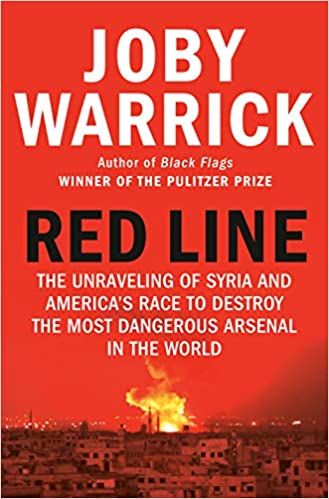
From the Pulitzer Prize–winning author of Black Flags comes the thrilling unknown story of America’s mission in to find and destroy Syria’s chemical weapons and keep them out of the hands of the Islamic State In August 2012, Syrian president Bashar al-Assad was clinging to power in a vicious civil war. When secret intelligence revealed that the dictator might resort to using chemical weapons, President Obama warned that doing so would cross “a red line.” Assad did it anyway, bombing the Damascus suburb of Ghouta with sarin gas, killing hundreds of civilians and forcing Obama to decide if he would mire America in another unpopular Middle Eastern war. When Russia offered to broker the removal of Syria’s chemical weapons, Obama leapt at the out.So begins an electrifying race to find, remove, and destroy 1,300 tons of chemical weapons in the midst of a raging civil war. The extraordinary little-known effort is a triumph for the Americans, but soon Russia’s long game becomes it will do anything to preserve Assad’s rule. As America’s ability to control events in Syria shrinks, the White House learns that ISIS, building its caliphate in Syria’s war-tossed territory, is seeking chemical weapons for itself, with an eye to attacking the West.Red Line is a classic Joby Warrick true-life a character-driven narrative with a cast of heroes and villains, including weapons hunters, politicians, doctors, diplomats, and spies. Drawing on astonishing original reporting, Warrick reveals how the United States embarked on a bold adventure to prevent one catastrophe but could not avoid a tragic chain of events that empowered America’s enemies.

Every major decision governing our diverse, majority-female, and increasingly liberal country bears the stamp of the United States Senate, an institution controlled by people who are almost exclusively white, overwhelmingly male, and disproportionately conservative. Although they do not represent a majority of Americans—and will not for the foreseeable future—today’s Republican senators possess the power to block most legislation. Once known as “the world’s greatest deliberative body,” the Senate has become one of the greatest threats to our democracy. How did this happen?In Kill Switch, Senate insider Adam Jentleson contends that far from reflecting the Framers’ vision, the Senate has been transformed over the decades by a tenacious minority of white conservatives. From John Calhoun in the mid-1800s to Mitch McConnell in the 2010s, their primary weapon has been the filibuster, or the requirement that most legislation secure the support of a supermajority of senators. Yet, as Jentleson reveals, the filibuster was not a feature of the original Senate and, in allowing a determined minority to gridlock the federal government, runs utterly counter to the Framers’ intent.For much of its history, the filibuster was used primarily to prevent civil rights legislation from becoming law. But more recently, Republicans have refined it into a tool for imposing their will on all issues, wielding it to thwart an increasingly progressive American majority represented by Barack Obama’s agenda and appointees. Under Donald Trump, McConnell merged the filibuster with rigid leadership structures initially forged by Lyndon Johnson, in the process surrendering the Senate’s independence and centrality, as infamously shown by its acquiescence in Trump’s impeachment trial. The result is a failed institution and a crippled democracy.Taking us into the Capitol Hill backrooms where the institution’s decline is most evident, Jentleson shows that many of the greatest challenges of our era—partisan polarization, dark money, a media culture built on manufactured outrage—converge within the Senate. Even as he charts the larger forces that have shaped the institution where he served, Jentleson offers incisive portraits of the powerful senators who laid the foundation for the modern Senate, from Calhoun to McConnell to LBJ’s mentor, Richard Russell, to the unapologetic racist Jesse Helms.An essential, revelatory investigation, Kill Switch ultimately makes clear that unless we immediately and drastically reform the Senate’s rules and practices—starting with reforming the filibuster—we face the prospect of permanent minority rule in America.

Civil wars are the biggest danger to world peace today - this book shows us why they happen, and how to avoid them.Most of us don't know it, but we are living in the world's greatest era of civil wars. While violence has declined worldwide, civil wars have increased. This is a new phenomenon. With the exception of a handful of cases - the American and English civil wars, the French Revolution - historically it has been rare for people to organise and fight their governments. This has changed. Since 1946, over 250 armed conflicts have broken out around the world, a number that continues to rise. Major civil wars are now being fought in countries including Iraq, Syria and Libya. Smaller civil wars are being fought in Ukraine, India, and Malaysia. Even countries we thought could never experience another civil war - such as the USA, Sweden and Ireland - are showing signs of unrest.In How Civil Wars Start, acclaimed expert Barbara F. Walter, who has advised on political violence everywhere from the CIA to the U.S. Senate to the United Nations, explains the rise of civil war and the conditions that create it. As democracies across the world backslide and citizens become more polarised, civil wars will become even more widespread and last longer than they have in the past. This urgent and important book shows us a path back toward peace.

"Puritanism: The haunting fear that someone, somewhere, may be happy."-H.L. MenckenThe Left used to be the party of the hippies and the free spirits. Now it's home to woke scolds and humorless idealogues. The New Puritans can judge a person's moral character by their clothes, Netflix queue, fast food favorites, the sports they watch, and the company they keep. No choice is neutral, no sphere is private.Not since the Puritans has a political movement wanted so much power over your thoughts, hobbies, and preferences every minute of your day. In the process, they are sucking the joy out of life.In The Rise of the New Puritans, Noah Rothman explains how, in pursuit of a better world, progressives are ruining the very things which make life worth living. They've created a society full of verbal trip wires and digital witch hunts. Football? Too violent. Fusion food? Appropriation. The nuclear family? Oppressive.Witty, deeply researched, and thorough, The Rise of the New Puritans encourages us to spurn a movement whose primary goal has become limiting happiness. It uncovers the historical roots of the left's war on fun and reminds us of the freedom and personal fulfillment at the heart of the American experiment.

From bestselling author, CNN+ host of No Mercy, No Malice, and NYU business school professor Scott Galloway comes an urgent examination of the future of our nation – and how we got here.We are only just beginning to reckon with our post-pandemic future. As political extremism intensifies, the great resignation affects businesses everywhere, and supply chain issues crush bottom lines, we’re faced with daunting questions – is our democracy under threat? How will Big Tech change our lives? What does job security look like for me? America is on the brink of massive change – change that will disrupt the workings of our economy and drastically impact the financial backbone of our the middle class. In Adrift, Galloway looks to the past – from 1945 to present day – to explain just how America arrived at this precipice. Telling the story of our nation through 100 charts, Galloway demonstrates how crises such as Jim Crow, World War II, and the Stock Market Crash of 2008, as well as the escalating power of technology, an entrenched white patriarchy, and the socio-economic effects of the pandemic, created today’s perfect storm. Adrift attempts to make sense of it all, and offers Galloway’s unique take on where we’re headed and who we’ll become, touching on topics as wide-ranging as online dating to minimum wage to the American dream. Just as in 1945 and 1980, America is once again a nation at a crossroads. This time, what will it take for our nation to keep up with the fast and violent changes to our new world?