
Anne Applebaum
Anne Elizabeth Applebaum is a Polish-American journalist and writer. She has written extensively about Marxism–Leninism and the development of civil society in Central and Eastern Europe. She has worked at The Economist and The Spectator, and was a member of the editorial board of The Washington Post.
19 Books Written

AN ECONOMIST BEST BOOK OF THE YEAR From the author of the Pulitzer Prize-winning Gulag and the National Book Award finalist Iron Curtain, a revelatory history of one of Stalin's greatest crimes--the consequences of which still resonate todayIn 1929 Stalin launched his policy of agricultural collectivization--in effect a second Russian revolution--which forced millions of peasants off their land and onto collective farms. The result was a catastrophic famine, the most lethal in European history. At least five million people died between 1931 and 1933 in the USSR. But instead of sending relief the Soviet state made use of the catastrophe to rid itself of a political problem. In Red Famine, Anne Applebaum argues that more than three million of those dead were Ukrainians who perished not because they were accidental victims of a bad policy but because the state deliberately set out to kill them.Applebaum proves what has long been suspected: after a series of rebellions unsettled the province, Stalin set out to destroy the Ukrainian peasantry. The state sealed the republic's borders and seized all available food. Starvation set in rapidly, and people ate anything: grass, tree bark, dogs, corpses. In some cases, they killed one another for food. Devastating and definitive, Red Famine captures the horror of ordinary people struggling to survive extraordinary evil.Today, Russia, the successor to the Soviet Union, has placed Ukrainian independence in its sights once more. Applebaum's compulsively readable narrative recalls one of the worst crimes of the twentieth century, and shows how it may foreshadow a new threat to the political order in the twenty-first.

Twilight of Democracy: The Seductive Lure of Authoritarianism
by Anne Applebaum
Rating: 4.1 ⭐
• 2 recommendations ❤️
The Pulitzer Prize-winning author, professor, and historian offers an expert guide to understanding the appeal of the strongman as a leader and an explanation for why authoritarianism is back with a menacing twenty-first century twist.Across the world today, from the Americas to Europe and beyond, liberal democracy is under siege while populism and nationalism are on the rise. In Twilight of Democracy, prize-winning historian Anne Applebaum offers an unexpected explanation: that there is a deep and inherent appeal to authoritarianism, strongmen, and, especially, to one-party rule--that is, to political systems that benefit true believers, or loyal soldiers, or simply the friends and distant cousins of the Leader, to the exclusion of everyone else. People, she argues, are not just ideological, they are also practical, pragmatic, opportunist. They worry about their families, their houses, their careers. Some political systems offer them possibilities and others don't. In particular, the modern authoritarian parties that have arisen within democracies today offer the possibility of success to people who do not thrive in the meritocratic, democratic, or free-market competition that determines access to wealth and power. Drawing on reporting in Spain, Switzerland, Poland, Hungary, and Brazil; using historical examples including Stalinist central Europe and Nazi Germany; and investigating related phenomena: the modern conspiracy theory, nostalgia for a golden past, political polarization, and meritocracy and its discontents, Anne Applebaum brilliantly illuminates the seduction of totalitarian thinking and the eternal appeal of the one-party state.

All of us have in our minds a cartoon image of what an autocratic state looks like, with a bad man at the top. But in the 21st century, that cartoon bears little resemblance to reality. Nowadays, autocracies are run not by one bad guy, but by sophisticated networks composed of kleptocratic financial structures, security services and professional propagandists. The members of these networks are connected not only within a given country, but among many countries. The corrupt, state-controlled companies in one dictatorship do business with corrupt, state-controlled companies in another. The police in one country can arm, equip, and train the police in another. The propagandists share resources—the troll farms that promote one dictator’s propaganda can also be used to promote the propaganda of another—and themes, pounding home the same messages about the weakness of democracy and the evil of America. Unlike military or political alliances from other times and places, this group doesn’t operate like a bloc, but rather like an agglomeration of Autocracy, Inc. Their relations are not based on values, but are rather transactional, which is why they operate so easily across ideological, geographical, and cultural lines. In truth, they are in full agreement about only one Their dislike of us, the inhabitants of the democratic world, and their desire to see both our political systems and our values undermined. That shared understanding of the world—where it comes from, why it lasts, how it works, how the democratic world has unwittingly helped to consolidate it, and how we can help bring it down—is the subject of this book.
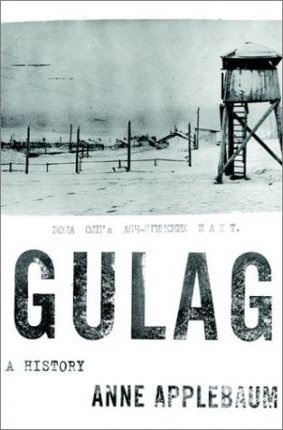
The Gulag—the vast array of Soviet concentration camps—was a system of repression and punishment whose rationalized evil and institutionalized inhumanity were rivaled only by the Holocaust. The Gulag entered the world's historical consciousness in 1972, with the publication of Alexander Solzhenitsyn's epic oral history of the Soviet camps, The Gulag Archipelago. Since the collapse of the Soviet Union, dozens of memoirs and new studies covering aspects of that system have been published in Russia and the West. Using these new resources as well as her own original historical research, Anne Applebaum has now undertaken, for the first time, a fully documented history of the Soviet camp system, from its origins in the Russian Revolution to its collapse in the era of glasnost. It is an epic feat of investigation and moral reckoning that places the Gulag where it belongs: at the center of our understanding of the troubled history of the twentieth century. Anne Applebaum first lays out the chronological history of the camps and the logic behind their creation, enlargement, and maintenance. The Gulag was first put in place in 1918 after the Russian Revolution. In 1929, Stalin personally decided to expand the camp system, both to use forced labor to accelerate Soviet industrialization and to exploit the natural resources of the country's barely habitable far northern regions. By the end of the 1930s, labor camps could be found in all twelve of the Soviet Union's time zones. The system continued to expand throughout the war years, reaching its height only in the early 1950s. From 1929 until the death of Stalin in 1953, some 18 million people passed through this massive system. Of these 18 million, it is estimated that 4.5 million never returned. But the Gulag was not just an economic institution. It also became, over time, a country within a country, almost a separate civilization, with its own laws, customs, literature, folklore, slang, and morality. Topic by topic, Anne Applebaum also examines how life was lived within this shadow country: how prisoners worked, how they ate, where they lived, how they died, how they survived. She examines their guards and their jailers, the horrors of transportation in empty cattle cars, the strange nature of Soviet arrests and trials, the impact of World War II, the relations between different national and religious groups, and the escapes, as well as the extraordinary rebellions that took place in the 1950s. She concludes by examining the disturbing question why the Gulag has remained relatively obscure, in the historical memory of both the former Soviet Union and the West. Gulag: A History will immediately be recognized as a landmark work of historical scholarship and an indelible contribution to the complex, ongoing, necessary quest for truth.
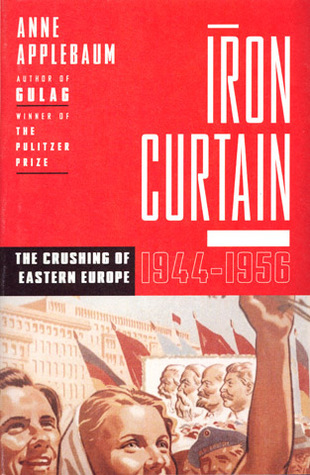
At the end of the Second World War, the Soviet Union unexpectedly found itself in control of a huge swathe of territory in Eastern Europe. Stalin and his secret police set out to convert a dozen radically different countries to a completely new political and moral system: communism. In Iron Curtain, Pulitzer Prize-winning historian Anne Applebaum describes how the Communist regimes of Eastern Europe were created and what daily life was like once they were complete.Applebaum describes in devastating detail how political parties, the church, the media, young people's organizations - the institutions of civil society on every level - were quickly eviscerated. She explains how the secret police services were organized, how the media came to be dominated by communists, and how all forms of opposition were undermined and destroyed. Ranging widely across new archival material and many sources unknown in English, she follows the communists' tactics as they bullied, threatened and murdered their way to power. She also chronicles individual lives to show the choices people had to make - to fight, to flee, or to collaborate.Within a remarkably short period after the end of the war, Eastern Europe had been ruthlessly Stalinized. Iron Curtain is a brilliant history of a brutal period and a haunting reminder of how fragile free societies can be. Today the Soviet Bloc is a lost civilization, one whose cruelty, paranoia, bizarre morality, and strange aesthetics Anne Applebaum captures in the pages of this exceptional work of historical and moral reckoning.

Examines the past and present of the Eastern European borderlands, now emerging from Soviet rule, describing the rich variety of cultures, religions, and national aspirations of the area's inhabitants as they attempt to construct a future based on ancient ancestral legacies.

W naszych burzliwych czasach nie jesteśmy w stanie przewidzieć, jak będzie wyglądało jutro. Lecz wiemy, że jutro zależy od tego, co zrobimy dzisiaj, teraz. Dlatego nie mamy prawa do pesymizmu – mówią Anne Applebaum i Donald Tusk w swoich rozmowach o najważniejszych wyborach, przed jakimi stoją Polska, Europa i świat.Wybór to przede wszystkim książka przeciw poczuciu bezsiły i bezradności a także o powrocie nadziei i wiary w zwycięstwo demokratycznych wartości i demokratycznego świata. Ale to więcej niż apel – to również opowieść o drogach, które do tego prowadzą.Applebaum i Tusk w dwunastu błyskotliwych rozmowach odpowiadają na najgorętsze pytania dotyczące Polski i Europy: Dlaczego Unia Europejska, chociaż jest potęgą, częściej bywa chłopcem do bicia? Na czym polega pakt z diabłem, który podpisali Orban, Kaczyński i inni autorytaryści? Jak podzieliliśmy się na obce sobie plemiona i czy potrafimy mimo to wspólnie żyć? Jak sprawić, by w kryzysie migracyjnym przyzwoitość nie stała się synonimem bezradności a ksenofobia synonimem skuteczności? Dlaczego Polska może stać się państwem frontowym i jakie mogą być tego konsekwencje? Czy patriotyzm nieuchronnie zagarnęli dla siebie nacjonaliści? Dlaczego Rosja chce podzielić Europę? Czy Chiny wygrają cyfrową walkę o kontrolę nad światem? Jak demokraci mają znów wygrywać wybory – nie tylko w Ameryce? Jak bardzo boli hejt?Applebaum i Tusk oprowadzają nas nie tylko po kluczowych problemach współczesnego świata, ale też po kulisach polityki. W ich opowieściach głęboka analiza współczesności przeplata się z fascynującymi opowieściami i anegdotami o Joe Bidenie, Viktorze Orbanie, Borisie Johnsonie, Angeli Merkel, Emmanuelu Macronie, Władimirze Putinie, Jarosławie Kaczyńskim.Te wyjątkowe rozmowy są zderzeniem dwóch uzupełniających się a czasem pozostających w żywym sporze perspektyw: wybitnej publicystki i autorki książek o najnowszej historii oraz wytrawnego praktyka, który poddaje polityczne teorie, również te gorąco przez siebie wyznawane, wielowymiarowej weryfikacji.Donald Tusk: Niezależnie od okoliczności musimy na nowo uwierzyć w swoje siły i w swoje racje. Za dużo było i jest po naszej stronie i w nas samych ponuro zawodzących Kasandr, rozpaczających Priamów, tragicznych Hektorów i pechowych Achillesów, a za mało Odyseuszy, sprytnych, nieustępliwych, szukających rozwiązań nieszablonowych, a przecież odważnych i wiernych. I zwycięskich!Anne Applebaum: Mam mówić moim dzieciom i ich przyjaciołom, że to już koniec, że demokracja się skończyła, a Chiny wygrają? Że Europa skazana jest na rozpad? To nie tylko jest nieodpowiedzialne. To przede wszystkim nieprawda, w każdym razie nie musi być prawda, i naszym obowiązkiem jest nieustannie powtarzać, że historia nie jest zdeterminowana, demokracja powróci, a chiński model nie musi zapanować na całym świecie.

Anna Applebaum światowej sławy dziennikarka, laureatka nagrody Pulitzera za książkę "Gułag" na początku lat 90. zdecydowała, że chce mieszkać w Polsce. Wyszła za mąż za Radosława Sikorskiego, urodziła dwóch synów. Mówi, że jej dom jest w Chobielinie pod Bydgoszczą. Jej publikacje dotąd dotyczyły światowej polityki. W tej książce Applebaum po raz pierwszy opowiada o sobie, swoich przemyśleniach, motywacjach i wyborach życiowych.

From a Polish Country House Kitchen: 90 Recipes for the Ultimate Comfort Food
by Anne Applebaum
Rating: 3.7 ⭐
With more than 150 splendid photographs, headnotes that illuminate Poland's vibrant food culture, and more than 90 recipes for classic and contemporary Polish food, this unique and fascinating cookbook brings an ignored cuisine to light. Pulitzer Prize-winner Anne Applebaum has lived in Poland since before the fall of communism, and this cookbook—nourished by her engagement with the culture and food of her adopted country—offers a tantalizing look into the turbulent history of this beautiful region. In a Polish Country House Kitchen celebrates long-distance friendships with a love of food at the core, bringing the good, sustaining foods of Anne's Polish country home into kitchens the world over.

Back during the Cold War, when the politics of the Kremlin were opaque, journalists and analysts often became obsessed with the personality of the leader of Russia, speculating about his taste in whiskey or suits, tracking his wife’s fashion sense or lack of it, hoping that would give them some clue about his policies. Times have changed, but the personality and beliefs of Vladimir Putin, the current Russian president, still matter just as much as those of his predecessors - if not more. In a state where authority is still vested in personalities, not in institutions, the Russian president’s vision of his country, his understanding of its history, his training as a KGB officer and his personal experience of life in the Soviet Union now have an incalculable impact on Russian political life.

Twilight of Democracy By Anne Applebaum & Democracy for Sale Dark Money and Dirty Politics By Peter Geoghegan 2 Books Collection Set
by Anne Applebaum
Rating: 4.3 ⭐
Please Note That The Following Individual Books As Per Original ISBN and Cover Image In this Listing shall be Dispatched Titles In This Twilight of Democracy [Hardcover] Democracy for Sale Dark Money and Dirty Politics [Paperback] Twilight of Democracy By Anne Applebaum & Democracy for Sale Dark Money and Dirty Politics By Peter Geoghegan 2 Books Collection Twilight of Democracy [Hardcover]: In the years just before and after the fall of the Berlin Wall, people from across the political spectrum in Europe and America celebrated a great achievement, felt a common purpose and, very often, forged personal friendships. Yet over the following decades the euphoria evaporated, the common purpose and centre ground gradually disappeared, extremism rose once more and eventually - as this book compellingly relates - the relationships soured too. Democracy for Sale Dark Money and Dirty Politicians lie gleefully, making wild claims that can be shared instantly with millions of people on social media. Donald Trump, Boris Johnson, Jair Bolsonaro and populists in many other countries are the beneficiaries. Peter Geoghegan is a diligent, brilliant guide through a shadowy world of dark money and digital disinformation stretching from Westminster to Washington, and far beyond.He shows how antiquated electoral laws are broken with impunity.

כדי להחריב דמוקרטיה נדרשת שכבה של משתפי פעולה, קובעת העיתונאית זוכת פרס הפוליצר אן אפלבאום, ונותנת בהם סימנים בשני מאמרים מבריקים המכונסים בהלאומנים החדשים - איך הביאה ההקצנה בימין לקריסת הדמוקרטיה.אפלבאום מראה בצורה מוחשית וסוחפת איך, "בהינתן התנאים המתאימים, כל חברה יכולה להפסיק לתמוך בדמוקרטיה". היא קושרת בין העבר להווה, בין תהליכים היסטוריים לתהליכים אישיים, בין הגוש הסובייטי לאמריקה של טראמפ, בין לוחמי צדק ושוויון לטרולים וחובבי תיאוריות קונספירציה, ובין מאמינים קיצוניים למשתפי פעולה אופורטוניסטים. באחרית הדבר לספר מצביע פרופ' נעם גדרון על תהליכים דומים שהתרחשו בימין הישראלי, ומתאר כיצד, בניגוד למדינות אחרות, בישראל התרחשה ההקצנה גם במפלגת הימין המרכזית.

We think we know what an autocratic state looks There is an all-powerful leader at the top. He controls the police. The police threaten the people with violence. There are evil collaborators, and maybe some brave dissidents. But in the 21st century, that bears little resemblance to reality. Nowadays, autocracies are underpinned not by one dictator, but by sophisticated networks composed of kleptocratic financial structures, surveillance technologies, and professional propagandists, all of which operate across multiple regimes, from China to Russia to Iran. Corrupt companies in one country do business with corrupt companies in another. The police in one country can arm and train the police in another, and propagandists share resources and themes, pounding home the same messages about the weakness of democracy and the evil of America. International condemnation and economic sanctions cannot move the autocrats. Even popular opposition movements, from Venezuela to Hong Kong to Moscow, don't stand a chance. The members of Autocracy, Inc, aren't linked by a unifying ideology, like communism, but rather a common desire for power, wealth, and impunity. In this urgent treatise, which evokes George Kennan's essay calling for "containment" of the Soviet Union, Anne Applebaum calls for the democracies to fundamentally reorient their policies to fight a new kind of threat.

Die Verlockung des Autoritären. Warum antidemokratische Herrschaft so populär geworden ist
by Anne Applebaum
Die Erschütterung der liberalen Demokratien wird oft mit der Schwäche der westlichen Werteordnung erklärt. Anne Applebaum wählt einen anderen Ansatz und Was macht die Rückkehr zu autoritären Herrschaftsformen für viele Menschen so erstrebenswert? An zahlreichen Beispielen – von den Brexiteers bis hin zu den illiberalen Demokratien Osteuropas – zeigt sie, welche Rolle dabei soziale Medien, Verschwörungstheorien und Nostalgie spielen. Ein brillant erzählter, aus persönlicher Erfahrung gespeister Streifzug durch eine westliche Welt, die sich auf erschreckende Weise nach harter Hand und starkem Staat (zurück)sehnt.
Anne Applebaum 4 Books Collection Set
by Anne Applebaum
Please Note The individual books included in this listing will be dispatched as per the original UK ISBN and UK edition cover image shown—are included in the Anne Applebaum 4 Books Collection Set (Autocracy, Inc, Twilight of Democracy, Iron Curtain & Red Famine):📚 Books in This Autocracy, Inc Twilight of Democracy Iron Curtain Red Famine Autocracy, All of us have in our minds a cartoon image of what an autocratic state looks like, with a bad man at the top. But in the 21st century, that cartoon bears little resemblance to reality. Nowadays, autocracies are run not by one bad guy, but by sophisticated networks composed of kleptocratic financial structures.Twilight of In the years just before and after the fall of the Berlin Wall, people from across the political spectrum in Europe and America celebrated a great achievement, felt a common purpose and, very often, forged personal friendships. Yet over the following decades the euphoria evaporated.Iron At the end of the Second World War, the Soviet Union unexpectedly found itself in control of a huge swathe of territory in Eastern Europe. Stalin and his secret police set out to convert a dozen radically different countries to a completely new political and moral Communism.Red In 1932-33, nearly four million Ukrainians died of starvation, having been deliberately deprived of food. It is one of the most devastating episodes in the history of the twentieth century. With unprecedented authority and detail, Red Famine investigates how this happened, who was responsible.

Autocrazie: Chi sono i dittatori che vogliono governare il mondo
by Anne Applebaum
«Abbiamo tutti in mente la tipica immagine di uno stato autocratico. C'è un cattivo al vertice, che controlla l'esercito e la polizia. L'esercito e la polizia minacciano il popolo con la violenza. Ci sono collaboratori malvagi, e magari qualche coraggioso dissidente.»Tuttavia, per Anne Applebaum, saggista e vincitrice del premio Pulitzer, questa convinzione diffusa altro non è che un anacronismo. Nel XXI secolo, infatti, una simile rappresentazione delle "Autocrazie" ha scarsa attinenza con la realtà e per di più ne ignora del tutto l'evoluzione. Al giorno d'oggi, le autocrazie non sono governate da un solo «cattivo», ma da reti sempre più sofisticate, che connettono tra loro strutture finanziarie, servizi di sicurezza - militari, paramilitari e di polizia - di uno o più paesi, ed esperti di tecnologia che forniscono sorveglianza, propaganda e disinformazione. I membri di queste reti condividono risorse e obiettivi, operando come un agglomerato di aziende tenute insieme non dall'ideologia, ma da una spietata e assoluta determinazione a preservare il proprio potere e la propria personale ricchezza e da un nemico il mondo democratico e i suoi valori. Diversamente dalle alleanze militari o politiche di altri tempi e altri luoghi, infatti, non ci sono «blocchi» cui aderire, né Muri di Berlino a segnare netti spartiacque geografici. È una rete che, superando le faglie ideologiche, geografiche e culturali, da Mosca a Pechino, da Teheran a Pyongyang, si sta stringendo sempre di più attorno alle democrazie moderne, disconoscendone i valori, insinuandosi nelle loro crepe e in quei paradossi irrisolti che l'Occidente, troppo convinto di essere nel giusto, non si è mai deciso ad affrontare. Ma l'autocrazia è un sistema politico, non un tratto genetico, e in quanto tale può in questo saggio, Anne Applebaum delinea un resoconto allarmante e al contempo lancia un potente appello su come dovremmo organizzarci per salvare la democrazia.
El ocaso de la democracia: La seducción del autoritarismo
by Anne Applebaum
Barcelona. 23 cm. 194 páginas. Encuadernación en tapa blanda de editorial ilustrada. Colección 'Historia'. Applebaum, Anne 1964-. Twilight of democracy. Traducción de Francisco J. Ramos Mena. Incluye referencias bibliográficas. Democracia. S. XXI. Autoritarismo. Ramos Mena, Francisco J. 1957-. traductor .. Este libro es de segunda mano y tiene o puede tener marcas y señales de su anterior propietario. 9788418056598; 9788418056581

The Wizard of Oz (Phonetic Drawing Version)
by Anne Applebaum
People's Publishing House, Pub Date :2013-07-01 185 Chinese Zhejiang People's Publishing House Happy reading , warm innocence . "Primary teacher REVIEW grow Library & The Wizard of Oz ( phonetic America painted version ) " invited...
Gulag Banner Poster
by Anne Applebaum