Loading genres...
Explore the best books about Agriculture genre.


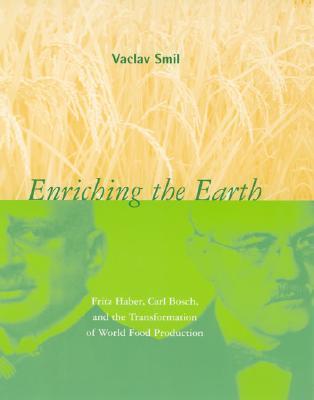
Dr. Smil is the world's authority on nitrogenous fertilizer. The industrial synthesis of ammonia from nitrogen and hydrogen has been of greater fundamental importance to the modern world than the invention of the airplane, nuclear energy, space flight, or television. The expansion of the world's population from 1.6 billion people in 1900 to today's six billion would not have been possible without the synthesis of ammonia. In Enriching the Earth , Vaclav Smil begins with a discussion of nitrogen's unique status in the biosphere, its role in crop production, and traditional means of supplying the nutrient. He then looks at various attempts to expand natural nitrogen flows through mineral and synthetic fertilizers. The core of the book is a detailed narrative of the discovery of ammonia synthesis by Fritz Haber—a discovery scientists had sought for over one hundred years—and its commercialization by Carl Bosch and the chemical company BASF. Smil also examines the emergence of the large-scale nitrogen fertilizer industry and analyzes the extent of global dependence on the Haber-Bosch process and its biospheric consequences. Finally, it looks at the role of nitrogen in civilization and, in a sad coda, describes the lives of Fritz Haber and Carl Bosch after the discovery of ammonia synthesis.

This "luminous, brilliant" meditation on life in the countryside will encourage you to see the natural world -- and our place in it -- anew ( New York Times Book Review ). With an eloquence unmatched by any other living writer, Verlyn Klinkenborg observes the juncture at which our lives and the natural world intersect. His yearlong meditation on the rigors and wonders of country life -- encompassing memories of his family's Iowa homestead, time spent in the wide-open spaces of the American West, and his experiences on the small farm in upstate New York where he lives with his wife -- abounds with vicarious pleasures for the reader as it indelibly records and celebrates the everyday beauty of the world we inhabit. "In a voice reminiscent of E.B. White, Klinkenborg paints a picture of a fading world in colors that are solid and authentic. His joy is evident throughout." -- Los Angeles Times

Only once we understand the long history of human efforts to draw sustenance from the land can we grasp the nature of the crisis that faces humankind today, as hundreds of millions of people are faced with famine or flight from the land. From Neolithic times through the earliest civilizations of the ancient Near East, in savannahs, river valleys and the terraces created by the Incas in the Andean mountains, an increasing range of agricultural techniques have developed in response to very different conditions. These developments are recounted in this book, with detailed attention to the ways in which plants, animals, soil, climate, and society have interacted.Mazoyer and Roudart’s A History of World Agriculture is a path-breaking and panoramic work, beginning with the emergence of agriculture after thousands of years in which human societies had depended on hunting and gathering, showing how agricultural techniques developed in the different regions of the world, and how this extraordinary wealth of knowledge, tradition and natural variety is endangered today by global capitialism, as it forces the unequal agrarian heritages of the world to conform to the norms of profit.During the twentieth century, mechanization, motorization and specialization have brought to a halt the pattern of cultural and environmental responses that characterized the global history of agriculture until then. Today a small number of corporations have the capacity to impose the farming methods on the planet that they find most profitable. Mazoyer and Roudart propose an alternative global strategy that can safegaurd the economies of the poor countries, reinvigorate the global economy, and create a livable future for mankind.

The essays in The Gift of Good Land are as true today as when they were first published in 1981; the problems addressed here are still with us and the solutions no nearer to hand. One of the insistent themes of this book is the interdependence, the wholeness, the oneness of people, the land, weather, animals, and family. To touch one is to tamper with them all. We live in one functioning organism whose separate parts are artificially isolated by our culture.The twenty-four essays in this collection cover a variety of subjects; the author’s journeys to the Peruvian Andes, to the desert of southern Arizona, and to Amish country to study the evolution of ancient native agricultural practices. In “Solving for Pattern,” Mr. Berry lists fourteen critical standards for solving agricultural problems that can just as easily be used as standards for solving personal and family problems. In the title essay, the author examines our Judeo-Christian heritage to discover parallels with the Buddhist doctrine of “right livelihood” or “right occupation.” He develops the compelling argument that the “gift” of good land has strings attached. We have it only on loan and only for as long as we practice good stewardship.

By the year 2050, Earth's population will double. If we continue with current farming practices, vast amounts of wilderness will be lost, millions of birds and billions of insects will die, and the public will lose billions of dollars as a consequence of environmental degradation. Clearly,there must be a better way to meet the need for increased food production.Written as part memoir, part instruction, and part contemplation, Tomorrow's Table argues that a judicious blend of two important strands of agriculture--genetic engineering and organic farming--is key to helping feed the world's growing population in an ecologically balanced manner. PamelaRonald, a geneticist, and her husband, Raoul Adamchak, an organic farmer, take the reader inside their lives for roughly a year, allowing us to look over their shoulders so that we can see what geneticists and organic farmers actually do. The reader sees the problems that farmers face, trying toprovide larger yields without resorting to expensive or environmentally hazardous chemicals, a problem that will loom larger and larger as the century progresses. They learn how organic farmers and geneticists address these problems.This book is for consumers, farmers, and policy decision makers who want to make food choices and policy that will support ecologically responsible farming practices. It is also for anyone who wants accurate information about organic farming, genetic engineering, and their potential impacts onhuman health and the environment.

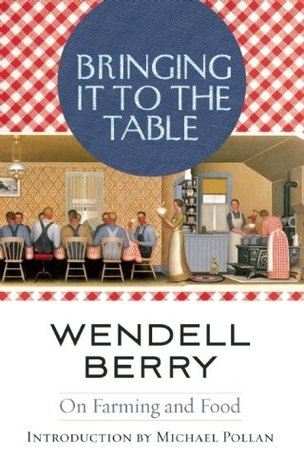
Only a farmer could delve so deeply into the origins of food, and only a writer of Wendell Berry’s caliber could convey it with such conviction and eloquence. Long before Whole Foods organic produce was available at your local supermarket, Berry was farming with the purity of food in mind. For the last five decades, Berry has embodied mindful eating through his land practices and his writing. In recognition of that influence, Michael Pollan here offers an introduction to this wonderful collection.Drawn from over thirty years of work, this collection joins bestsellers The Omnivore’s Dilemma, by Pollan, and Animal, Vegetable, Miracle, by Barbara Kingsolver, as essential reading for anyone who cares about what they eat. The essays address such concerns as: How does organic measure up against locally grown? What are the differences between small and large farms, and how does that affect what you put on your dinner table? What can you do to support sustainable agriculture?A progenitor of the Slow Food movement, Wendell Berry reminds us all to take the time to understand the basics of what we ingest. “Eating is an agriculture act,” he writes. Indeed, we are all players in the food economy.

Hunger is a daily reality for a billion people. More than six decades after the technological discoveries that led to the Green Revolution aimed at ending world hunger, regular food shortages, malnutrition, and poverty still plague vast swaths of the world. And with increasing food prices, climate change, resource inequality, and an ever-increasing global population, the future holds further challenges. In One Billion Hungry, Sir Gordon Conway, one of the world's foremost experts on global food needs, explains the many interrelated issues critical to our global food supply from the science of agricultural advances to the politics of food security. He expands the discussion begun in his influential The Doubly Green Revolution: Food for All in the Twenty-First Century, emphasizing the essential combination of increased food production, environmental stability, and poverty reduction necessary to end endemic hunger on our planet. Conway addresses a series of urgent questions about global hunger:• How we will feed a growing global population in the face of a wide range of adverse factors, including climate change?• What contributions can the social and natural sciences make in finding solutions?• And how can we engage both government and the private sector to apply these solutions and achieve significant impact in the lives of the poor?Conway succeeds in sharing his informed optimism about our collective ability to address these fundamental challenges if we use technology paired with sustainable practices and strategic planning. Beginning with a definition of hunger and how it is calculated, and moving through issues topically both detailed and comprehensive, each chapter focuses on specific challenges and solutions, ranging in scope from the farmer's daily life to the global movement of food, money, and ideas. Drawing on the latest scientific research and the results of projects around the world, Conway addresses the concepts and realities of our global food needs: the legacy of the Green Revolution; the impact of market forces on food availability; the promise and perils of genetically modified foods; agricultural innovation in regard to crops, livestock, pest control, soil, and water; and the need to both adapt to and slow the rate of climate change. One Billion Hungry will be welcomed by all readers seeking a multifaceted understanding of our global food supply, food security, international agricultural development, and sustainability.

An interdisciplinary and quantitative account of human claims on the biosphere's stores of living matter, from prehistoric hunting to modern energy production. The biosphere—the Earth's thin layer of life—dates from nearly four billion years ago, when the first simple organisms appeared. Many species have exerted enormous influence on the biosphere's character and productivity, but none has transformed the Earth in so many ways and on such a scale as Homo sapiens . In Harvesting the Biosphere , Vaclav Smil offers an interdisciplinary and quantitative account of human claims on the biosphere's stores of living matter, from prehistory to the present day. Smil examines all harvests—from prehistoric man's hunting of megafauna to modern crop production—and all uses of harvested biomass, including energy, food, and raw materials. Without harvesting of the biomass, Smil points out, there would be no story of human evolution and advancing civilization; but at the same time, the increasing extent and intensity of present-day biomass harvests are changing the very foundations of civilization's well-being. In his detailed and comprehensive account, Smil presents the best possible quantifications of past and current global losses in order to assess the evolution and extent of biomass harvests. Drawing on the latest work in disciplines ranging from anthropology to environmental science, Smil offers a valuable long-term, planet-wide perspective on human-caused environmental change.

This book is a wide-ranging and interdisciplinary examination and critique of meat consumption by humans, throughout history and around the world. Setting the scene with a chapter on meat's role in human evolution and its growing influence during the development of agricultural practices, the book goes on to examine modern production systems, their costs, efficiencies and outputs. The major global trends of meat consumption are described: what part does meat play in changing modern diets in countries around the world? The heart of the book addresses the consequences of the "massive carnivory" of western diets, looking at the energy costs of meat and the huge impacts of meat production on land, water and the atmosphere. Health impacts are also covered, both positive and negative. In conclusion, the author looks forward at his vision of "rational meat eating," where environmental and health impacts are curbed, animals are treated more humanely, and alternative sources of protein are promoted. Eating Meat is not an ideological tract against carnivorousness but rather a careful evaluation of meat's roles in human diets and the environmental and health consequences of its production and consumption. It will be of interest to a wide readership including professionals and academics in food and agricultural production, human health and nutrition, environmental science and regulatory and policy making bodies around the world.

Written with Howard W. Buffett, and with a foreword by Warren Buffett, 40 Chances is an "inspiring manifesto...both an informative guidebook and a catalyst for igniting real changes" ( Booklist ) in the struggle against world hunger.If someone granted you $3 billion to accomplish something great in the world, what would you do? In 2006, legendary investor Warren Buffett posed this challenge to his son Howard G. Buffett. Howard set out to help the most vulnerable people on earth--nearly a billion individuals who lack basic food security. And Howard gave himself a forty years to put the resources to work on this challenge.40 Finding Hope in a Hungry World captures Howard's journey. Beginning with his love for farming, we join him around the world as he seeks out new approaches to ease the suffering of so many. Each of the forty stories here provides a compelling look at the lessons Howard learned, ranging from his own backyard to some of the most difficult and dangerous places on Earth. But this message goes beyond the pages of this book, it's also a a way of thinking that speaks to every person wanting to make a difference. It's about reasons to hope and actions we can take. 40 Chances "recounts Howard's personal and professional experiences in surprisingly candid and colorful fashion...successfully blending personal stories with a tough look at the struggle to fight domestic food scarcity and world hunger...A satisfying read" ( Publishers Weekly ) that provides inspiration to transform each of our limited chances into opportunities to change the world.

As every day brings urgent reports of growing water shortages around the world, there is no time to lose in the search for solutions.The U.S. government predicts that forty of our fifty states—and 60 percent of the earth's land surface—will soon face alarming gaps between available water and the growing demand for it. Without action, food prices will rise, economic growth will slow, and political instability is likely to follow.Let There Be Water illustrates how Israel can serve as a model for the United States and countries everywhere by showing how to blunt the worst of the coming water calamities. Even with 60 percent of its country made of desert, Israel has not only solved its water problem; it also had an abundance of water. Israel even supplies water to its neighbors—the Palestinians and the Kingdom of Jordan—every day.Based on meticulous research and hundreds of interviews, Let There Be Water reveals the methods and techniques of the often offbeat inventors who enabled Israel to lead the world in cutting-edge water technology.Let There Be Water also tells unknown stories of how cooperation on water systems can forge diplomatic ties and promote unity. Remarkably, not long ago, now-hostile Iran relied on Israel to manage its water systems, and access to Israel's water know-how helped to warm China's frosty relations with Israel.Beautifully written, Let There Be Water is an inspiring account of the vision and sacrifice by a nation and people that have long made water security a top priority. Despite scant natural water resources, a rapidly growing population and economy, and often hostile neighbors, Israel has consistently jumped ahead of the water innovation-curve to assure a dynamic, vital future for itself. Every town, every country, and every reader can benefit from learning what Israel did to overcome daunting challenges and transform itself from a parched land into a water superpower.

As a boy, James Rebanks's grandfather taught him to work the land the old way. Their family farm in the Lake District hills was part of an ancient agricultural landscape: a patchwork of crops and meadows, of pastures grazed with livestock, and hedgerows teeming with wildlife. And yet, by the time James inherited the farm, it was barely recognisable. The men and women had vanished from the fields; the old stone barns had crumbled; the skies had emptied of birds and their wind-blown song.English Pastoral is the story of an inheritance: one that affects us all. It tells of how rural landscapes around the world were brought close to collapse, and the age-old rhythms of work, weather, community and wild things were lost. And yet this elegy from the northern fells is also a song of hope: of how, guided by the past, one farmer began to salvage a tiny corner of England that was now his, doing his best to restore the life that had vanished and to leave a legacy for the future.This is a book about what it means to have love and pride in a place, and how, against all the odds, it may still be possible to build a new pastoral: not a utopia, but somewhere decent for us all.

"This remarkable book, staring curiously down at the soil beneath our feet, points us convincingly in one of the directions we must travel. I learned something on every page." --Bill McKibbenFor the first time since the Neolithic, we have the opportunity to transform not only our food system but our entire relationship to the living world.Farming is the world's greatest cause of environmental destruction - and the one we are least prepared to talk about. We criticise urban sprawl, but farming sprawls across thirty times as much land. We have ploughed, fenced and grazed great tracts of the planet, felling forests, killing wildlife, and poisoning rivers and oceans to feed ourselves. Yet millions still go hungry.Now the food system itself is beginning to falter. But, as George Monbiot shows us in this brilliant, bracingly original new book, we can resolve the biggest of our dilemmas and feed the world without devouring the planet.Regenesis is a breathtaking vision of a new future for food and for humanity. Drawing on astonishing advances in soil ecology, Monbiot reveals how our changing understanding of the world beneath our feet could allow us to grow more food with less farming. He meets the people who are unlocking these methods, from the fruit and vegetable grower revolutionising our understanding of fertility; through breeders of perennial grains, liberating the land from ploughs and poisons; to the scientists pioneering new ways to grow protein and fat. Together, they show how the tiniest life forms could help us make peace with the planet, restore its living systems, and replace the age of extinction with an age of regenesis.