
Wim Hof Recommended Books
Dutch extreme athlete and motivational speaker
7 Books Recommended

This valuable book provides a complete manual for the study and practice of Raja Yoga, the path of concentration and meditation. This new edition of these timeless teachings is a treasure to be read and referred to again and again by seekers treading the spiritual path. The classic Sutras (thought-threads), at least 4,000 years old, cover the yogic teachings on ethics, meditation, and physical postures, and provide directions for dealing with situations in daily life. The Sutras are presented here in the purest form, with the original Sanskrit and with translation, transliteration, and commentary by Sri Swami Satchidananda, one of the most respected and revered contemporary Yoga masters. In this classic context, Sri Swamiji offers practical advice based on his own experience for mastering the mind and achieving physical, mental and emotional harmony.

The Bhagavad Gita is the best known of all the Indian scriptures, and Eknath Easwaran's best-selling translation is reliable, readable, and profound.Easwaran's 55-page introduction places the Bhagavad Gita in its historical setting, and brings out the universality and timelessness of its teachings. Chapter introductions clarify key concepts, and notes and a glossary explain Sanskrit terms.Easwaran grew up in the Hindu tradition in India, and learned Sanskrit from a young age. He was a professor of English literature before coming to the West on a Fulbright scholarship. A gifted teacher, he is recognized as an authority on the Indian classics and world mysticism.The Bhagavad Gita opens, dramatically, on a battlefield, as the warrior Arjuna turns in anguish to his spiritual guide, Sri Krishna, for answers to the fundamental questions of life. Yet, as Easwaran points out, the Gita is not what it seems - it's not a dialogue between two mythical figures at the dawn of Indian history. "The battlefield is a perfect backdrop, but the Gita's subject is the war within, the struggle for self-mastery that every human being must wage if he or she is to emerge from life victorious."Arjuna's struggle in the Bhagavad Gita is acutely modern. He has lost his way on the battlefield of life and turns to find the path again by asking direct, uncompromising questions of his spiritual guide, Sri Krishna, the Lord himself. Krishna replies in 700 verses of sublime instruction on living and dying, loving and working, and the nature of the soul.Easwaran shows the Gita's relevance to us today as we strive, like Arjuna, to do what is right."No one in modern times is more qualified - no, make that 'as qualified' - to translate the epochal Classics of Indian Spirituality than Eknath Easwaran. And the reason is clear. It is impossible to get to the heart of those classics unless you live them, and he did live them. My admiration of the man and his works is boundless." - Huston Smith, author of The World's Religions.

Wear on edges of covers and spine. Bookstore stamp on first page.

Siddhartha : An Indian TaleHermann HESSE (1877 - 1962),Translator: Gunther Olesch, Anke Dreher, Amy Coulter, Stefan Langer and Semyon ChaichenetsSiddhartha is one of the great philosophical novels. Profoundly insightful, it is also a beautifully written story that begins as Siddhartha, son of an Indian Brahman, leaves his family and begins a lifelong journey towards Enlightenment. On the way he faces the entire range of human experience and emotion: he lives with ascetics, meets Gotama the Buddha, learns the art of love from Kamala the courtesan, and is transformed by the simple philosophy of the ferryman Vasudeva whose wisdom comes not from learned teachings but from observing the River. Herman Hesse (1877-1962) was a German-Swiss novelist, poet, and painter. He was awarded the Nobel Prize in Literature in 1946.
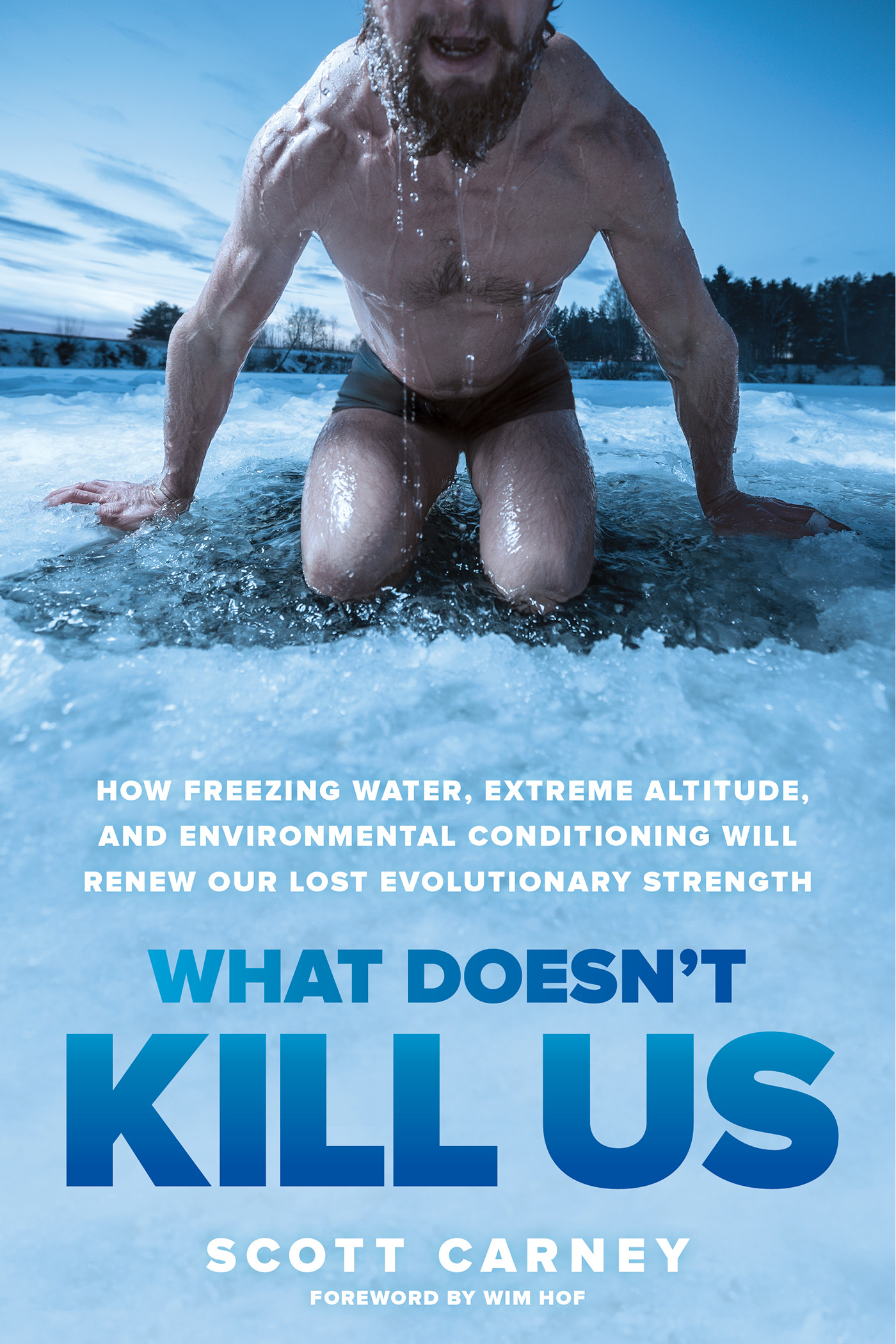
What Doesn't Kill Us: How Freezing Water, Extreme Altitude, and Environmental Conditioning Will Renew Our Lost Evolutionary Strength
by Scott Carney
Rating: 4.0 ⭐
• 8 recommendations ❤️
What Doesn't Kill Us traces our evolutionary journey back to a time when survival depended on how well we adapted to the environment around us. Our ancestors crossed the Alps in animal skins and colonized the New World in loin cloths. They evaded predators and built civilizations with just their raw brainpower and inner grit. But things have changed and now comfort is king. Today we live in the thrall of constant climate control and exercise only when our office schedules permit. The technologies that we use to make us comfortable are so all-encompassing that they sever the biological link to a changing environment. Now we hate the cold and the heat. We suffer from autoimmune diseases. And many of us are chronically overweight. Most of us don't even realize that natural variation—sweating and shivering—is actually good for us. What Doesn't Kill Us uncovers how just about anyone can reclaim a measure of our species' evolutionary strength by tapping into the things that feel uncomfortable. When we slightly reimagine how our body fits into the world, we can condition ourselves to find resilience in unfamiliar environments. The feeling that something is missing from our daily routines is growing and has spawned a movement. Every year, millions of people forgo traditional gyms and push the limits of human endurance by doing boot camp style workouts in raw conditions. These extreme athletes train in CrossFit boxes, compete in Tough Mudders and challenge themselves in Spartan races. They are connecting with their environment and, whether they realize it or not, are changing their bodies. No one exemplifies this better than Dutch fitness guru Wim Hof, whose remarkable ability to control his body temperature in extreme cold has sparked a whirlwind of scientific study. Because of him, scientists in the United States and Europe are just beginning to understand how cold adaptation might help combat autoimmune diseases and chronic pains and, in some cases, even reverse diabetes. Award winning investigative journalist, Scott Carney dives into the fundamental philosophy at the root of this movement in three interlocking narratives. His own journey culminates in a record bending 28-hour climb up to the snowy peak of Mt. Kilimanjaro wearing nothing but a pair of running shorts and sneakers.

The Telomere Effect: A Revolutionary Approach to Living Younger, Healthier, Longer
by Elizabeth Blackburn
Rating: 4.0 ⭐
• 5 recommendations ❤️
The New York Times bestselling book coauthored by the Nobel Prize winner who discovered telomerase and telomeres' role in the aging process and the health psychologist who has done original research into how specific lifestyle and psychological habits can protect telomeres, slowing disease and improving life.Have you wondered why some sixty-year-olds look and feel like forty-year-olds and why some forty-year-olds look and feel like sixty-year-olds? While many factors contribute to aging and illness, Dr. Elizabeth Blackburn discovered a biological indicator called telomerase, the enzyme that replenishes telomeres, which protect our genetic heritage. Dr. Blackburn and Dr. Elissa Epel's research shows that the length and health of one's telomeres are a biological underpinning of the long-hypothesized mind-body connection. They and other scientists have found that changes we can make to our daily habits can protect our telomeres and increase our health spans (the number of years we remain healthy, active, and disease-free).THE TELOMERE EFFECT reveals how Blackburn and Epel's findings, together with research from colleagues around the world, cumulatively show that sleep quality, exercise, aspects of diet, and even certain chemicals profoundly affect our telomeres, and that chronic stress, negative thoughts, strained relationships, and even the wrong neighborhoods can eat away at them. Drawing from this scientific body of knowledge, they share lists of foods and suggest amounts and types of exercise that are healthy for our telomeres, mind tricks you can use to protect yourself from stress, and information about how to protect your children against developing shorter telomeres, from pregnancy through adolescence. And they describe how we can improve our health spans at the community level, with neighborhoods characterized by trust, green spaces, and safe streets. THE TELOMERE EFFECT will make you reassess how you live your life on a day-to-day basis. It is the first book to explain how we age at a cellular level and how we can make simple changes to keep our chromosomes and cells healthy, allowing us to stay disease-free longer and live more vital and meaningful lives.

KJV Holy Bible, Giant Print Standard Size Faux Leather Red Letter Edition - Thumb Index & Ribbon Marker, King James Version, Dark Brown
by Anonymous
Rating: 4.7 ⭐
• 40 recommendations ❤️
New - Holy Bible: KJV Giant Print Thumb Index Edition: Brown (King James Bible). Great for gift or personal study.