
Warren Buffett Recommended Books
American investor, entrepreneur and businessman
36 Books Recommended

Smartest Guys in the Room: The Amazing Rise and Scandalous Fall of Enron
by Bethany McLean
Rating: 4.2 ⭐
• 2 recommendations ❤️
An account of the rise and fall of Enron, written by award-winning Fortune investigative reporters, draws on a wide range of sources while revealing the contributions of lesser-known participants in the scandal. 400,000 first printing. First serial, Fortune.
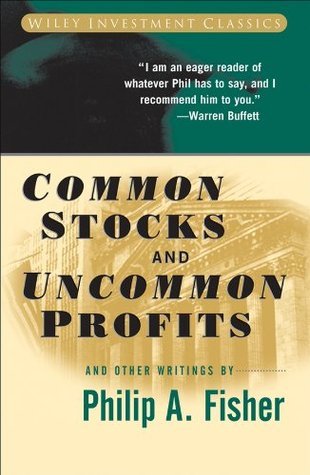
Common Stocks and Uncommon Profits and Other Writings
by Philip A. Fisher
Rating: 4.1 ⭐
• 4 recommendations ❤️
Widely respected and admired, Philip Fisher is among the most influential investors of all time. His investment philosophies, introduced almost forty years ago, are not only studied and applied by today's financiers and investors, but are also regarded by many as gospel. This book is invaluable reading and has been since it was first published in 1958. The updated paperback retains the investment wisdom of the original edition and includes the perspectives of the author's son Ken Fisher, an investment guru in his own right in an expanded preface and introduction "I sought out Phil Fisher after reading his Common Stocks and Uncommon Profits ...A thorough understanding of the business, obtained by using Phil's techniques...enables one to make intelligent investment commitments."― Warren Buffet

Take on the Street: How to Fight for Your Financial Future
by Arthur Levitt
Rating: 3.0 ⭐
• 2 recommendations ❤️
In Take on the Street , Arthur Levitt--Chairman of the Securities and Exchange Commission for eight years under President Clinton--provides the best kind of insider information: the kind that can help honest, small investors protect themselves from the deliberately confusing ways of Wall Street.At a time when investor confidence in Wall Street and corporate America is at an historic low, when many are seriously questioning whether or not they should continue to invest, Levitt offers the benefits of his own experience, both on Wall Street and as its chief regulator. His straight talk about the ways of stockbrokers (they are salesmen, plain and simple), corporate financial statements (the truth is often hidden), mutual fund managers (remember who they really work for), and other aspects of the business will help to arm everyone with the tools they need to protect—and enhance—their financial future.

More than one million hardcovers soldNow available for the first time in paperback!The Classic Text Annotated to Update Graham's Timeless Wisdom for Today's Market ConditionsThe greatest investment advisor of the twentieth century, Benjamin Graham taught and inspired people worldwide. Graham's philosophy of "value investing" -- which shields investors from substantial error and teaches them to develop long-term strategies -- has made The Intelligent Investor the stock market bible ever since its original publication in 1949.Over the years, market developments have proven the wisdom of Graham's strategies. While preserving the integrity of Graham's original text, this revised edition includes updated commentary by noted financial journalist Jason Zweig, whose perspective incorporates the realities of today's market, draws parallels between Graham's examples and today's financial headlines, and gives readers a more thorough understanding of how to apply Graham's principles.Vital and indispensable, this HarperBusiness Essentials edition of The Intelligent Investor is the most important book you will ever read on how to reach your financial goals.

In 1982, the Dow hovered below 1000. Then, the market rose and rapidly gained speed until it peaked above 11,000. Noted journalist and financial reporter Maggie Mahar has written the first book on the remarkable bull market that began in 1982 and ended just in the early 2000s. For almost two decades, a colorful cast of characters such as Abby Joseph Cohen, Mary Meeker, Henry Blodget, and Alan Greenspan came to dominate the market news.This inside look at that 17-year cycle of growth, built upon interviews and unparalleled access to the most important analysts, market observers, and fund managers who eagerly tell the tales of excesses, presents the period with a historical perspective and explains what really happened and why.

The Little Book of Common Sense Investing: The Only Way to Guarantee Your Fair Share of Stock Market Returns
by John C. Bogle
Rating: 4.3 ⭐
• 6 recommendations ❤️
The best-selling investing "bible" offers new information, new insights, and new perspectives The Little Book of Common Sense Investing is the classic guide to getting smart about the market. Legendary mutual fund pioneer John C. Bogle reveals his key to getting more out of investing: low-cost index funds. Bogle describes the simplest and most effective investment strategy for building wealth over the long term: buy and hold, at very low cost, a mutual fund that tracks a broad stock market Index such as the S&P 500.While the stock market has tumbled and then soared since the first edition of Little Book of Common Sense was published in April 2007, Bogle's investment principles have endured and served investors well. This tenth anniversary edition includes updated data and new information but maintains the same long-term perspective as in its predecessor.Bogle has also added two new chapters designed to provide further guidance to investors: one on asset allocation, the other on retirement investing.A portfolio focused on index funds is the only investment that effectively guarantees your fair share of stock market returns. This strategy is favored by Warren Buffett, who said this about Bogle: "If a statue is ever erected to honor the person who has done the most for American investors, the hands-down choice should be Jack Bogle. For decades, Jack has urged investors to invest in ultra-low-cost index funds. . . . Today, however, he has the satisfaction of knowing that he helped millions of investors realize far better returns on their savings than they otherwise would have earned. He is a hero to them and to me."Bogle shows you how to make index investing work for you and help you achieve your financial goals, and finds support from some of the world's best financial minds: not only Warren Buffett, but Benjamin Graham, Paul Samuelson, Burton Malkiel, Yale's David Swensen, Cliff Asness of AQR, and many others.This new edition of The Little Book of Common Sense Investing offers you the same solid strategy as its predecessor for building your financial future.Build a broadly diversified, low-cost portfolio without the risks of individual stocks, manager selection, or sector rotation. Forget the fads and marketing hype, and focus on what works in the real world. Understand that stock returns are generated by three sources (dividend yield, earnings growth, and change in market valuation) in order to establish rational expectations for stock returns over the coming decade. Recognize that in the long run, business reality trumps market expectations. Learn how to harness the magic of compounding returns while avoiding the tyranny of compounding costs. While index investing allows you to sit back and let the market do the work for you, too many investors trade frantically, turning a winner's game into a loser's game. The Little Book of Common Sense Investing is a solid guidebook to your financial future.

"A road map for investing that I have now been following for 57 years."--From the Foreword by Warren E. BuffettFirst published in 1934, "Security Analysis" is one of the most influential financial books ever written. Selling more than one million copies through five editions, it has provided generations of investors with the timeless value investing philosophy and techniques of Benjamin Graham and David L. Dodd.As relevant today as when they first appeared nearly 75 years ago, the teachings of Benjamin Graham, the father of value investing, have withstood the test of time across a wide diversity of market conditions, countries, and asset classes.This new sixth edition, based on the classic 1940 version, is enhanced with 200 additional pages of commentary from some of today s leading Wall Street money managers. These masters of value investing explain why the principles and techniques of Graham and Dodd are still highly relevant even in today s vastly different markets. The contributor list includes: Seth A. Klarman, president of The Baupost Group, L.L.C. and author of "Margin of Safety" James Grant, founder of "Grant's Interest Rate Observer," general partner of Nippon Partners Jeffrey M. Laderman, twenty-five year veteran of "BusinessWeek" Roger Lowenstein, author of "Buffett: The Making of an American Capitalist" and "When America Aged" and Outside Director, Sequoia Fund Howard S. Marks, CFA, Chairman and Co-Founder, Oaktree Capital Management L.P. J. Ezra Merkin, Managing Partner, Gabriel Capital Group . Bruce Berkowitz, Founder, Fairholme Capital Management. Glenn H. Greenberg, Co-Founder and Managing Director, Chieftain Capital Management Bruce Greenwald, Robert Heilbrunn Professor of Finance and Asset Management, Columbia Business School David Abrams, Managing Member, Abrams CapitalFeaturing a foreword by Warren E. Buffett (in which he reveals that he has read the 1940 masterwork at least four times ), this new edition of "Security Analysis" will reacquaint you with the foundations of value investing more relevant than ever in the tumultuous 21st century markets."

“Baseball’s last .400 hitter share[s] his secrets in this primer still used at all levels of the game.” —Paul Dickson, author of Bill Veeck: Baseball’s Greatest Maverick Now fully revised with new illustrations and diagrams, the classic—and still the greatest—book on hitting from the last baseball player to break the magic .400 barrier, Ted Williams.Ted Williams was arguably the greatest pure hitter who ever lived. A lifelong student of hitting, he sought advice from every great hitter—and pitcher—he met. Drawing on that advice, as well as his own legendary life in baseball, Williams produced the all-time batting classic, The Science of Hitting. Using its detailed illustrations, anecdotes, and concise coaching, players of all skill levels will learn how to improve their fundamentals and gain keen insights into the finer points of hitting, including: -How to Think Like a Pitcher and Guess the Pitch -The Three Cardinal Rules for Developing a Smooth Line-Driving Swing -The Secrets of Hip and Wrist Action -Pitch Selection -Bunting -Hitting the Opposite Way The Science of Hitting is a must-read for all baseball players looking to improve their turn at bat and for all coaches and parents teaching the sport.

Where Are the Customers' Yachts?: or A Good Hard Look at Wall Street
by Fred Schwed Jr.
Rating: 3.9 ⭐
• 4 recommendations ❤️
"Once I picked it up I did not put it down until I finished. . . . What Schwed has done is capture fully-in deceptively clean language-the lunacy at the heart of the investment business."-- From the Foreword by Michael Lewis, Bestselling author of Liar's Poker ". . . one of the funniest books ever written about Wall Street."-- Jane Bryant Quinn, The Washington Post "How great to have a reissue of a hilarious classic that proves the more things change the more they stay the same. Only the names have been changed to protect the innocent."-- Michael Bloomberg "It's amazing how well Schwed's book is holding up after fifty-five years. About the only thing that's changed on Wall Street is that computers have replaced pencils and graph paper. Otherwise, the basics are the same. The investor's need to believe somebody is matched by the financial advisor's need to make a nice living. If one of them has to be disappointed, it's bound to be the former."-- John Rothchild, Author, A Fool and His Money , Financial Columnist, Time magazine Humorous and entertaining, this book exposes the folly and hypocrisy of Wall Street. The title refers to a story about a visitor to New York who admired the yachts of the bankers and brokers. Naively, he asked where all the customers' yachts were? Of course, none of the customers could afford yachts, even though they dutifully followed the advice of their bankers and brokers. Full of wise contrarian advice and offering a true look at the world of investing, in which brokers get rich while their customers go broke, this book continues to open the eyes of investors to the reality of Wall Street.
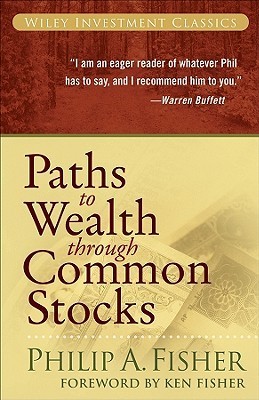
Paths to Wealth through Common Stocks contains one original concept after another, each designed to greatly improve the results of those who self-manage their investments -- while helping those who rely on professional investment advice select the right advisor for their needs.Originally written by investment legend Philip A. Fisher in 1960, this timeless classic is now reintroduced by his well-known and respected son, successful money manager Ken Fisher, in a new Foreword.Filled with in-depth insights and expert advice, Paths to Wealth through Common Stocks expands upon the innovative ideas found in Fisher's highly regarded Common Stocks and Uncommon Profits -- summarizing how worthwhile profits have been and will continue to be made through common stock ownership, and revealing why his method can increase profits while reducing risk. Many of the ideas found here may depart from conventional investment wisdom, but the impressive results produced by these concepts -- which are still relevant in today's market environment -- will quickly remind you why Philip Fisher is considered one of the greatest investment minds of our time.

2012 Reprint of 1932 American Edition. Exact facsimile of the original edition, not reproduced with Optical Recognition Software. The essays in this volume show Keynes's attempts to influence the course of events by public persuasion over the period of 1919-40. In the light of subsequent history, 'Essays in Persuasion' is a remarkably prophetic volume covering a wide range of issues in political economy. In articles on the Versailles Treaty, John Maynard Keynes foresaw all too clearly that excessive Allied demands for reparations and indemnities would lead to the economic collapse of Germany. In Keynes's essays on inflation and deflation, the reader can find ideas that were to become the foundations of his most renowned treatise, 'The General Theory of Employment, Interest and Money' (1936). With startling accuracy Keynes forecast the economic fluctuations that were to beset the economies of Europe and the United States and even proposed measures which, if heeded at the time, might have warded off an era of world-wide depression. His views on Soviet Russia, on the decline of laissez-faire, and the possibilities of economic growth are as relevant today as when Keynes originally set them forth.

The Warren Buffett CEO: Secrets from the Berkshire Hathaway Managers
by Robert P. Miles
Rating: 3.8 ⭐
• 2 recommendations ❤️
"Everyone knows Warren is the greatest investor of our time. . . .This book for the first time captures his genius as a manager."― Jack Welch The first book to reveal the investment and management strategies of the Berkshire Hathaway all-star management team. Much has been written about Warren Buffett and his investment philosophy; little has been made public about the inside management of Berkshire Hathaway. With a market cap exceeding 100 billion , Berkshire Hathaway has a market value surpassing many icons of American business such as Dell, AT&T, Disney, Ford, Gillette, American Express, and GM. Drawing on his personal experiences as well as those of Berkshire's chief executives, officers, and directors interviewed for this book, Berkshire insider Robert P. Miles provides a unique look at the Berkshire Hathaway culture and its management principles.

Nuclear Terrorism: The Ultimate Preventable Catastrophe
by Graham T. Allison
Rating: 3.8 ⭐
• 2 recommendations ❤️
A leading strategist opens our eyes to the greatest terrorist threat of all-and how to prevent it before it's too lateAmericans in the twenty-first century are keenly aware of the many forms of hijackings, biological attacks, chemical weapons. But rarely do we allow ourselves to face squarely the deadliest form of terrorism, because it is almost too scary to think about-a terrorist group exploding a nuclear device in an American city.In this urgent call to action, Graham Allison, one of America's leading experts on nuclear weapons and national security, presents the evidence for two provocative, compelling conclusions. First, if policy makers in Washington keep doing what they are currently doing about the threat, a nuclear terrorist attack on America is likely to occur in the next decade. And if one lengthens the time frame, a nuclear strike is inevitable. Second, the surprising and largely unrecognized good news is that nuclear terrorism is, in fact, preventable. In these pages, Allison offers an ambitious but feasible blueprint for eliminating the possibility of nuclear terrorist attacks.The United States once relied on the threat of mutually assured destruction to deter the Soviet Union from launching a nuclear strike. But in today's fragmented world, a new strategy is needed, especially with nuclear material vulnerable to theft or sale through black-market channels.The choice is to grab this beast by the horns or to be impaled on those horns. We do not have the luxury of hoping the problem will go away, and Allison shows why.

This is the story of Les Schwab and his company. He tells how he started in the tire business and shares with the reader his ideas on building a successful business through building successful employees. Les is a businessman not a writer, but like in business, he gets his points across. He is the undisputed king of the tire business in the Pacific Northwest. His is the largest independent tire business in the world and he makes it look easy. If you are in business or want to be in business you must read this book.

Winner of the 1998 Pulitzer Prize for BiographyAn extraordinarily frank, honest, and generous book by one of America's most famous and admired women, Personal History is, as its title suggests, a book composed of both personal memoir and history.It is the story of Graham's the multimillionaire father who left private business and government service to buy and restore the down-and-out Washington Post, and the formidable, self-absorbed mother who was more interested in her political and charity work, and her passionate friendships with men like Thomas Mann and Adlai Stevenson, than in her children.It is the story of how The Washington Post struggled to succeed -- a fascinating and instructive business history as told from the inside (the paper has been run by Graham herself, her father, her husband, and now her son).It is the story of Phil Graham -- Kay's brilliant, charismatic husband (he clerked for two Supreme Court justices) -- whose plunge into manic-depression, betrayal, and eventual suicide is movingly and charitably recounted.Best of all, it is the story of Kay Graham herself. She was brought up in a family of great wealth, yet she learned and understood nothing about money. She is half-Jewish, yet -- incredibly -- remained unaware of it for many years.She describes herself as having been naive and awkward, yet intelligent and energetic. She married a man she worshipped, and he fascinated and educated her, and then, in his illness, turned from her and abused her. This destruction of her confidence and happiness is a drama in itself, followed by the even more intense drama of her new life as the head of a great newspaper and a great company, a famous (and even feared) woman in her own right. Hers is a life that came into its own with a vengeance -- a success story on every level.Graham's book is populated with a cast of fascinating characters, from fifty years of presidents (and their wives), to Steichen, Brancusi, Felix Frankfurter, Warren Buffett (her great advisor and protector), Robert McNamara, George Schultz (her regular tennis partner), and, of course, the great names from the Post: Woodward, Bernstein, and Graham's editorpartner, Ben Bradlee. She writes of them, and of the most dramatic moments of her stewardship of the Post (including the Pentagon Papers, Watergate, and the pressmen's strike), with acuity, humor, and good judgment. Her book is about learning by doing, about growing and growing up, about Washington, and about a woman liberated by both circumstance and her own great strengths.

This is a captivating "rags to riches" story, as a young boy discovers during the Depression that hard work and sheer perseverance are the keys to living his dreams. First A Dream is filled with practical, easy-to-understand, no-nonsense business lessons that the entrepreneur can apply to his or her own life -- describing the qualities an effective leader must possess, the key methods to inspiring team members, and the development of culture and values that are critical to the success of a small business as well as a multibillion dollar conglomerate.

John Kenneth Galbraith's classic examination of the 1929 financial collapse.Arguing that the 1929 stock market crash was precipitated by rampant speculation in the stock market, Galbraith notes that the common denominator of all speculative episodes is the belief of participants that they can become rich without work. It was Galbraith's belief that a good knowledge of what happened in 1929 was the best safeguard against its recurrence.Atlantic Monthly wrote, "Economic writings are seldom notable for their entertainment value, but this book is. Galbraith's prose has grace and wit, and he distills a good deal of sardonic fun from the whopping errors of the nation's oracles and the wondrous antics of the financial community."

A Piece of the Action: How the Middle Class Joined the Money Class
by Joe Nocera
Rating: 4.4 ⭐
• 4 recommendations ❤️
Now with a new introduction describing the fallout of America’s consumer credit boom, 1994’s wildly acclaimed bestseller A Piece of the Action tells the story of how millions of middle class Americans went from being savers to borrowers and investors through the invention of credit cards, mutual funds, and IRAs—resulting in profound societal change.“America began to change on a mid-September day in 1958, when the Bank of America dropped its first 60,000 credit cards on the unassuming city of Fresno, California.” So begins Joe Nocera’s riveting account of one of the most astonishing revolutions in modern American life—what Nocera labels “the money revolution.” In the decades since, the middle class has gained access to credit cards, to mutual funds, to retirement accounts—and to hundreds of other financial vehicles that have allowed everyone to get “a piece of the action.” In this lively, engaging book, some of the great financial characters of modern times—from Charles Merrill to Charles Schwab to Peter Lynch—strut across the stage as the course of this great financial shift is charted.In an all-new introduction, Nocera takes a look back at the consequences of the money revolution. Were members of the middle class as prepared as the innovators claimed to take control of their financial lives? Or did events like the dot-com and the housing bubbles suggest something that far too many of us lacked the wherewithal to make sound investment decisions?

Hardcover: 272 pages Publisher: Random House Edition 1955 Language: English ISBN-10: 0394424425 Product Dimensions: 9.1 x 6.1 x 1.1 inches Shipping Weight: 1.2 pounds

Bill Bryson describes himself as a reluctant traveller, but even when he stays safely at home he can't contain his curiosity about the world around him. "A Short History of Nearly Everything" is his quest to understand everything that has happened from the Big Bang to the rise of civilisation - how we got from there, being nothing at all, to here, being us. The ultimate eye-opening journey through time and space, revealing the world in a way most of us have never seen it before.

You can go after the job you want—and get it! You can take the job you have—and improve it! You can take any situation—and make it work for you! Dale Carnegie’s rock-solid, time-tested advice has carried countless people up the ladder of success in their business and personal lives. One of the most groundbreaking and timeless bestsellers of all time, How to Win Friends & Influence People will teach you: -Six ways to make people like you -Twelve ways to win people to your way of thinking -Nine ways to change people without arousing resentment And much more! Achieve your maximum potential—a must-read for the twenty-first century with more than 15 million copies sold!

A Harper Perennial Political Classic, The Making of the President 1960 is the groundbreaking national bestseller and Pulitzer Prize-winning account of the 1960 presidential campaign and the election of John F. Kennedy. The Making of the 1960 revolutionized the way modern presidential campaigns are reported. Reporting from within the campaign for the first time on record, White’s extensive research and access to all parties involved set the bar for campaign coverage and remains unparalleled. White conveyed, in magnificent detail and with exquisite pacing, the high-stakes drama; he painted the unforgettable, even mythic, story of JFK versus Nixon; and most of all, he imbued the nation’s presidential election process with a grandeur that later political writers have rarely matched.

Poor Charlie's Almanack: The Wit and Wisdom of Charles T. Munger
by Charles T. Munger
Rating: 4.6 ⭐
• 37 recommendations ❤️
EXPANDED THIRD EDITION includes Charlie's 2007 USC Law School Commencement address. Edited by Peter D. Kaufman. Brand New.
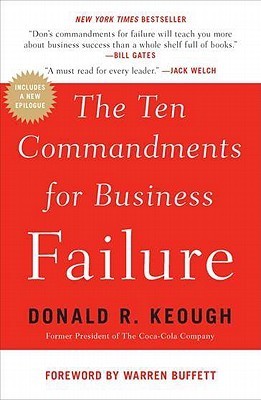
Don Keough—a former top executive at Coca-Cola and now chairman of the elite investment banking firm Allen & Company—has witnessed plenty of failures in his sixty-year career (including New Coke). He has also been friends with some of the most successful people in business history, including Warren Buffett, Bill Gates, Jack Welch, Rupert Murdoch, and Peter Drucker.Now this elder statesman reveals how great enterprises get into trouble. Even the smartest executives can fall into the trap of believing in their own infallibility. When that happens, more bad decisions are sure to follow.This light-hearted “how-not-to” book includes anecdotes from Keough's long career as well as other infamous failures. His commandments for failure include: Quit Taking Risks; Be Inflexible; Assume Infallibility; Put All Your Faith in Experts; Send Mixed Messages; and Be Afraid of the Future.As he writes, “After a lifetime in business I've never been able to develop a step-by-step formula that will guarantee success. What I could do, however, was talk about how to lose. I guarantee that anyone who follows my formula will be a highly successful loser.”

In this candid and riveting memoir, for the first time ever, Nike founder and CEO Phil Knight shares the inside story of the company’s early days as an intrepid start-up and its evolution into one of the world’s most iconic, game-changing, and profitable brands.In 1962, fresh out of business school, Phil Knight borrowed $50 from his father and created a company with a simple mission: import high-quality, low-cost athletic shoes from Japan. Selling the shoes from the trunk of his lime green Plymouth Valiant, Knight grossed $8,000 his first year. Today, Nike’s annual sales top $30 billion. In an age of startups, Nike is the ne plus ultra of all startups, and the swoosh has become a revolutionary, globe-spanning icon, one of the most ubiquitous and recognizable symbols in the world today.But Knight, the man behind the swoosh, has always remained a mystery. Now, for the first time, in a memoir that is candid, humble, gutsy, and wry, he tells his story, beginning with his crossroads moment. At 24, after backpacking around the world, he decided to take the unconventional path, to start his own business—a business that would be dynamic, different.Knight details the many risks and daunting setbacks that stood between him and his dream—along with his early triumphs. Above all, he recalls the formative relationships with his first partners and employees, a ragtag group of misfits and seekers who became a tight-knit band of brothers. Together, harnessing the transcendent power of a shared mission, and a deep belief in the spirit of sport, they built a brand that changed everything.
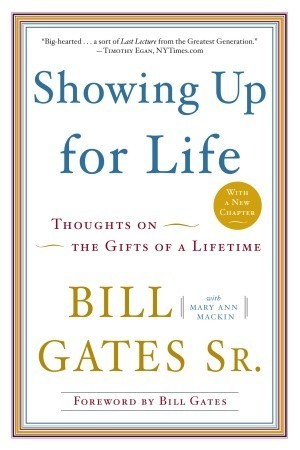
Showing Up for Life: Thoughts on the Gifts of a Lifetime
by Bill Gates Sr.
Rating: 3.9 ⭐
• 4 recommendations ❤️
A heartfelt, deeply personal book that shines a bright light on the values and principles that Bill Gates Sr. has learned over a lifetime of “showing up”: lessons that he learned growing up during the Great Depression, and that he instilled in his children and continues to practice on the world stage as the co-chair of the Bill & Melinda Gates Foundation.Through the course of several dozen narratives arranged in roughly chronological fashion, Gates introduces the people and experiences that influenced his thinking and guided his moral compass. Among the scoutmaster who taught him about teamwork and self reliance; and his famous son, Trey, whose curiosity and passion for computers and software led him to ultimately co-found Microsoft. Through revealing stories of his daughters, Kristi and Libby; his late wife, Mary, and his current wife, Mimi; and his work with Nelson Mandela and Jimmy Carter, among others, he discusses the importance of hard work, getting along, honoring a confidence, speaking out, and much more.Showing Up for Life translates one man’s experiences over fourscore years of living into an inspiring road map for readers everywhere.As Bill Gates Sr. puts "I’m 83 years old. Representing the Bill & Melinda Gates Foundation and everyone who is a part of it has given me the opportunity to see more of the world and its rich possibilities than most people ever do. I never imagined that I’d be working this late in life, or enjoying it so much."

The Most Important Thing: Uncommon Sense for the Thoughtful Investor
by Howard Marks
Rating: 4.3 ⭐
• 10 recommendations ❤️
"This is that rarity, a useful book."--Warren BuffettHoward Marks, the chairman and cofounder of Oaktree Capital Management, is renowned for his insightful assessments of market opportunity and risk. After four decades spent ascending to the top of the investment management profession, he is today sought out by the world's leading value investors, and his client memos brim with insightful commentary and a time-tested, fundamental philosophy. Now for the first time, all readers can benefit from Marks's wisdom, concentrated into a single volume that speaks to both the amateur and seasoned investor.Informed by a lifetime of experience and study, The Most Important Thing explains the keys to successful investment and the pitfalls that can destroy capital or ruin a career. Utilizing passages from his memos to illustrate his ideas, Marks teaches by example, detailing the development of an investment philosophy that fully acknowledges the complexities of investing and the perils of the financial world. Brilliantly applying insight to today's volatile markets, Marks offers a volume that is part memoir, part creed, with a number of broad takeaways.Marks expounds on such concepts as "second-level thinking," the price/value relationship, patient opportunism, and defensive investing. Frankly and honestly assessing his own decisions--and occasional missteps--he provides valuable lessons for critical thinking, risk assessment, and investment strategy. Encouraging investors to be "contrarian," Marks wisely judges market cycles and achieves returns through aggressive yet measured action. Which element is the most essential? Successful investing requires thoughtful attention to many separate aspects, and each of Marks's subjects proves to be the most important thing.

The Outsiders: Eight Unconventional CEOs and Their Radically Rational Blueprint for Success
by William N. Thorndike Jr.
Rating: 4.2 ⭐
• 14 recommendations ❤️
”It is impossible to produce superior performance unless you do something different.” — John TempletonWhat makes a successful CEO? Most people call to mind a familiar definition: a seasoned manager with deep industry expertise. Others might point to the qualities of today’s so-called celebrity CEOs—charisma, virtuoso communication skills, and a confident management style. But what really matters when you run an organization? What is the hallmark of exceptional CEO performance? Quite simply, it is the returns for the shareholders of that company over the long term.In this refreshing, counterintuitive book, author Will Thorndike brings to bear the analytical wisdom of a successful career in investing, closely evaluating the performance of companies and their leaders. You will meet eight individualistic CEOs whose firms’ average returns outperformed the S&P 500 by a factor of twenty—in other words, an investment of $10,000 with each of these CEOs, on average, would have been worth over $1.5 million twenty-five years later. You may not know all their names, but you will recognize their companies: General Cinema, Ralston Purina, The Washington Post Company, Berkshire Hathaway, General Dynamics, Capital Cities Broadcasting, TCI, and Teledyne. In The Outsiders, you’ll learn the traits and methods—striking for their consistency and relentless rationality—that helped these unique leaders achieve such exceptional performance.Humble, unassuming, and often frugal, these "outsiders” shunned Wall Street and the press, and shied away from the hottest new management trends. Instead, they shared specific traits that put them and the companies they led on winning trajectories: a laser-sharp focus on per share value as opposed to earnings or sales growth; an exceptional talent for allocating capital and human resources; and the belief that cash flow, not reported earnings, determines a company’s long-term value.Drawing on years of research and experience, Thorndike tells eye-opening stories, extracting lessons and revealing a compelling alternative model for anyone interested in leading a company or investing in one—and reaping extraordinary returns.

The Clash of the Cultures: Investment vs. Speculation
by John C. Bogle
Rating: 3.8 ⭐
• 4 recommendations ❤️
How speculation has come to dominate investment—a hard-hitting look from the creator of the first index fund.Over the course of his sixty-year career in the mutual fund industry, Vanguard Group founder John C. Bogle has witnessed a massive shift in the culture of the financial sector. The prudent, value-adding culture of long-term investment has been crowded out by an aggressive, value-destroying culture of short-term speculation. Mr. Bogle has not been merely an eye-witness to these changes, but one of the financial sector’s most active participants. In The Clash of the Cultures, he urges a return to the common sense principles of long-term investing.Provocative and refreshingly candid, this book discusses Mr. Bogle's views on the changing culture in the mutual fund industry, how speculation has invaded our national retirement system, the failure of our institutional money managers to effectively participate in corporate governance, and the need for a federal standard of fiduciary duty.Mr. Bogle recounts the history of the index mutual fund, how he created it, and how exchange-traded index funds have altered its original concept of long-term investing. He also presents a first-hand history of Wellington Fund, a real-world case study on the success of investment and the failure of speculation. The book concludes with ten simple rules that will help investors meet their financial goals. Here, he presents a common sense strategy that "may not be the best strategy ever devised. But the number of strategies that are worse is infinite."The Clash of the Cultures: Investment vs. Speculation completes the trilogy of best-selling books, beginning with Bogle on Investing: The First 50 Years (2001) and Don't Count on It! (2011)

A Few Lessons for Investors and Managers From Warren Buffett
by Peter Bevelin
Rating: 4.4 ⭐
• 4 recommendations ❤️
Peter Bevelin begins A Few Lessons for Investors and Managers with Warren Buffett's wisdom, "I am a better investor because I am a businessman and a better businessman because I am an investor." This book is about how managers and investors can increase their chance of success and reduce the chance of harm if managers think more like investors and investors more like businessmen.There are a lot of books about Warren Buffett, but A Few Lessons for Investors and Managers is different. It tells in a short-easy-to-read way about what managers and investors can learn from Buffett. This is a selection of useful and timeless wisdom where Warren Buffett in his own words tells us how to think about business valuation, what is a good and bad business, acquisitions and their traps, yardsticks, compensation issues, how to reduce risk, corporate governance, the importance of trust and the right culture, learning from mistakes, and more.

With a foreword by Warren Buffett, 40 Chances is an “inspiring manifesto…both an informative guidebook and a catalyst for igniting real changes” ( Booklist ) in the struggle against world hunger.If someone granted you $3 billion to accomplish something great in the world, what would you do? In 2006, legendary investor Warren Buffett posed this challenge to his son Howard G. Buffett. Howard set out to help the most vulnerable people on earth—nearly a billion individuals who lack basic food security. And Howard gave himself a deadline: 40 years to put the resources to work on this challenge.40 Chances: Finding Hope in a Hungry World captures Howard’s journey. Beginning with his love for farming, we join him around the world as he seeks out new approaches to ease the suffering of so many. Each of the 40 stories here provides a compelling look at the lessons Howard learned, ranging from his own backyard to some of the most difficult and dangerous places on Earth. But this message goes beyond the pages of this book, it’s also a mindset: a way of thinking that speaks to every person wanting to make a difference. It’s about reasons to hope and actions we can take. 40 Chances “recounts Howard’s personal and professional experiences in surprisingly candid and colorful fashion…successfully blending personal stories with a tough look at the struggle to fight domestic food scarcity and world hunger…A satisfying read” ( Publishers Weekly ) that provides inspiration to transform each of our limited chances into opportunities to change the world.

Stress Test: Reflections on Financial Crises
by Timothy F. Geithner
Rating: 4.1 ⭐
• 6 recommendations ❤️
As president of the Federal Reserve Bank of New York and then as President Barack Obama’s secretary of the Treasury, Timothy F. Geithner helped the United States navigate the worst financial crisis since the Great Depression, from boom to bust to rescue to recovery. In a candid, riveting, and historically illuminating memoir, he takes readers behind the scenes of the crisis, explaining the hard choices and politically unpalatable decisions he made to repair a broken financial system and prevent the collapse of the Main Street economy. This is the inside story of how a small group of policy makers—in a thick fog of uncertainty, with unimaginably high stakes—helped avoid a second depression but lost the American people doing it. Stress Test is also a valuable guide to how governments can better manage financial crises, because this one won’t be the last.Stress Test reveals a side of Secretary Geithner the public has never seen, starting with his childhood as an American abroad. He recounts his early days as a young Treasury official helping to fight the international financial crises of the 1990s, then describes what he saw, what he did, and what he missed at the New York Fed before the Wall Street boom went bust. He takes readers inside the room as the crisis began, intensified, and burned out of control, discussing the most controversial episodes of his tenures at the New York Fed and the Treasury, including the rescue of Bear Stearns; the harrowing weekend when Lehman Brothers failed; the searing crucible of the AIG rescue as well as the furor over the firm’s lavish bonuses; the battles inside the Obama administration over his widely criticized but ultimately successful plan to end the crisis; and the bracing fight for the most sweeping financial reforms in more than seventy years. Secretary Geithner also describes the aftershocks of the crisis, including the administration’s efforts to address high unemployment, a series of brutal political battles over deficits and debt, and the drama over Europe’s repeated flirtations with the economic abyss. Secretary Geithner is not a politician, but he has things to say about politics—the silliness, the nastiness, the toll it took on his family. But in the end, Stress Test is a hopeful story about public service. In this revealing memoir, Tim Geithner explains how America withstood the ultimate stress test of its political and financial systems.

Warren Buffett's Ground Rules: Words of Wisdom from the Partnership Letters of the World's Greatest Investor
by Jeremy C. Miller
Rating: 4.0 ⭐
• 2 recommendations ❤️
Using the letters Warren Buffett wrote to his partners between 1956 and 1970, a veteran financial advisor presents the renowned guru's "ground rules" for investing - guidelines that remain startlingly relevant today.In the 14 years between his time in New York with value-investing guru Benjamin Graham and his start as chairman of Berkshire Hathaway, Warren Buffett managed Buffett Partnership Limited, his first professional investing partnership. Over the course of that time - a period in which he experienced an unprecedented record of success - Buffett wrote semiannual letters to his small but growing group of partners, sharing his thoughts, approaches, and reflections.Compiled for the first time, and with Buffett's permission, the letters spotlight his contrarian diversification strategy, his almost religious celebration of compounding interest, his preference for conservative rather than conventional decision making, and his goal and tactics for bettering market results by at least 10 percent annually. Demonstrating Buffett's intellectual rigor, they provide a framework to the craft of investing that had not existed Buffett built upon the quantitative contributions made by his famous teacher, Benjamin Graham, demonstrating how they could be applied and improved.Jeremy Miller reveals how these letters offer us a rare look into Buffett's mind and offer accessible lessons in control and discipline - effective in bull and bear markets alike and in all types of investing climates - that are the bedrock of his success. Warren Buffett's Ground Rules paints a portrait of the sage as a young investor during a time when he developed the long-term value-oriented strategy that helped him build the foundation of his wealth - rules for success every investor needs today.

First published in 1936, One Thousand Ways to Make $1000 is the long out-of-print book that Warren Buffett's biographers credit with shaping the legendary investor's business acumen and giving him his trademark appreciation of compound interest. After pulling a copy of One Thousand Ways off a library shelf at age eleven and devouring F.C. Minaker's plucky and practical business advice, Buffett declared that he would be a millionaire by the time he was 35. Written in the immediate, conversational style of Dale Carnegie's How to Win Friends and Influence People, this book is full of inventive ideas on how to make money through excellent salesmanship, hard work, and resourcefulness. While some of the ideas may seem quaint today-goat dairying, manufacturing motor-driven chairs, and renting out billiard tables to local establishments are among the money-making ideas presented- the underlying fundamentals of business explained in these pages remain as solid as they were over seventy years ago. Covering a wide spectrum of topics including investing, marketing, merchandising, sales, customer relations, and raising money for charity, One Thousand Ways to Make $1000 is both a durable, classic business book and a fascinating portrait of determined entrepreneurship in Depression-era America. Every effort has been made to reproduce the content exactly as it was originally presented.

Keeping At It: The Quest for Sound Money and Good Government
by Paul A. Volcker
Rating: 3.8 ⭐
• 8 recommendations ❤️
The extraordinary life story of the former chairman of the Federal Reserve, whose absolute integrity provides the inspiration we need as our constitutional system and political tradition are being tested to the breaking point.As chairman of the Federal Reserve (1979-1987), Paul Volcker slayed the inflation dragon that was consuming the American economy and restored the world's faith in central bankers. That extraordinary feat was just one pivotal episode in a decades-long career serving six presidents.Told with wit, humor, and down-to-earth erudition, the narrative of Volcker's career illuminates the changes that have taken place in American life, government, and the economy since World War II. He vibrantly illustrates the crises he managed alongside the world's leading politicians, central bankers, and financiers. Yet he first found his model for competent and ethical governance in his father, the town manager of Teaneck, NJ, who instilled Volcker's dedication to absolute integrity and his "three verities" of stable prices, sound finance, and good government.

The Moment of Lift: How Empowering Women Changes the World
by Melinda French Gates
Rating: 4.3 ⭐
• 10 recommendations ❤️
A debut from Forbes' third most powerful woman in the world, Melinda Gates, a timely and necessary call to action for women's empowerment.For the last twenty years, Melinda Gates has been on a mission. Her goal, as co-chair of the Bill & Melinda Gates Foundation, has been to find solutions for people with the most urgent needs, wherever they live. Throughout this journey, one thing has become increasingly clear to her: If you want to lift a society up, invest in women.In this candid and inspiring book, Gates traces her awakening to the link between women's empowerment and the health of societies. She shows some of the tremendous opportunities that exist right now to “turbo-charge" change. And she provides simple and effective ways each one of us can make a difference.Convinced that all women should be free to decide whether and when to have children, Gates took her first step onto the global stage to make a stand for family planning. That step launched her into further efforts: to ensure women everywhere have access to every kind of job; to encourage men around the globe to share equally in the burdens of household work; to advocate for paid family leave for everyone; to eliminate gender bias in all its forms.Throughout, Gates introduces us to her heroes in the movement towards equality, offers startling data, shares moving conversations she's had with women from all over the world—and shows how we can all get involved.A personal statement of passionate conviction, this book tells of Gates' journey from a partner working behind the scenes to one of the world's foremost advocates for women, driven by the belief that no one should be excluded, all lives have equal value, and gender equity is the lever that lifts everything.