
27 Books Recommended
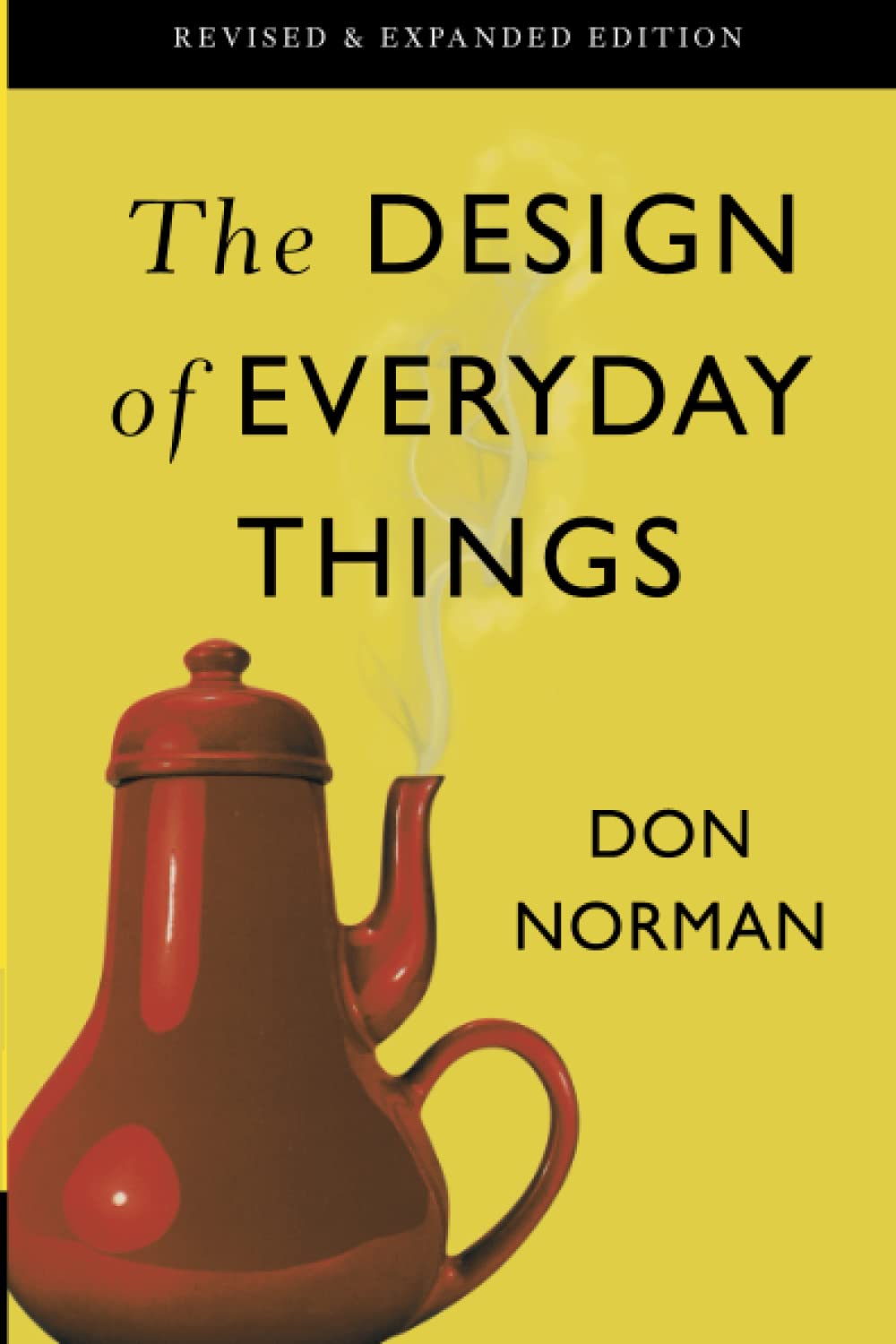
Even the smartest among us can feel inept as we fail to figure out which light switch or oven burner to turn on, or whether to push, pull, or slide a door. The fault, argues this ingenious—even liberating—book, lies not in ourselves, but in product design that ignores the needs of users and the principles of cognitive psychology. The problems range from ambiguous and hidden controls to arbitrary relationships between controls and functions, coupled with a lack of feedback or other assistance and unreasonable demands on memorization. The Design of Everyday Things shows that good, usable design is possible. The rules are simple: make things visible, exploit natural relationships that couple function and control, and make intelligent use of constraints. The goal: guide the user effortlessly to the right action on the right control at the right time.In this entertaining and insightful analysis, cognitive scientist Don Norman hails excellence of design as the most important key to regaining the competitive edge in influencing consumer behavior. Now fully expanded and updated, with a new introduction by the author, The Design of Everyday Things is a powerful primer on how—and why—some products satisfy customers while others only frustrate them.

Influence, the classic book on persuasion, explains the psychology of why people say "yes"—and how to apply these understandings. Dr. Robert Cialdini is the seminal expert in the rapidly expanding field of influence and persuasion. His thirty-five years of rigorous, evidence-based research along with a three-year program of study on what moves people to change behavior has resulted in this highly acclaimed book.You'll learn the six universal principles, how to use them to become a skilled persuader—and how to defend yourself against them. Perfect for people in all walks of life, the principles of Influence will move you toward profound personal change and act as a driving force for your success.

You know the authors' names. You recognize the title. You've probably used this book yourself. This is The Elements of Style, the classic style manual, now in a fourth edition.The revisions to the new edition are purposely kept minimal in order to retain the book's unique tone, wit, and charm. A new Glossary of the grammatical terms used in the book provides a convenient reference for readers. The discussion of pronoun use is revised to reflect the contemporary concern with sexist language. In addition, there are numerous slight revisions in the book itself which implement this advice. A new Foreword by Roger Angell reminds readers that the advice of Strunk & White is as valuable today as when it was first offered.This book has conveyed the principles of English style to millions of readers. Use the fourth edition of “the little book” to make a big impact with writing.FeaturesHow to cut deadwood out of your sentences.How enliven your prose with the active voice.How to put statements in the positive form.New to this EditionA new Glossary of grammatical terms.A new Foreword by Roger Angell.The classic principles of English style.

Всемирно известный психолог Кэрол Дуэк, не одно десятилетие изучающая проблематику успехов и достижений, открыла и научно доказала влияние внутренних установок на личность. Из этой книги вы узнаете, как установка на данность обрекает людей на провал, а установка на рост — открывает путь к самореализации, выстраиванию успешной карьеры и налаживанию счастливых взаимоотношений с окружающими в любом возрасте. А еще — как можно привить такую установку и себе, и другим.Книга будет интересна не только родителям, преподавателям и тренерам, но и всем, кто занимается управлением людьми или нацелен на личностный рост.

Masters of Doom: How Two Guys Created an Empire and Transformed Pop Culture
by David Kushner
Rating: 4.3 ⭐
• 15 recommendations ❤️
Masters of Doom is the amazing true story of the Lennon and McCartney of video John Carmack and John Romero. Together, they ruled big business. They transformed popular culture. And they provoked a national controversy. More than anything, they lived a unique and rollicking American Dream, escaping the broken homes of their youth to co-create the most notoriously successful game franchises in history—Doom and Quake—until the games they made tore them apart.Americans spend more money on video games than on movie tickets. Masters of Doom is the first book to chronicle this industry’s greatest story, written by one of the medium’s leading observers. David Kushner takes readers inside the rags-to-riches adventure of two rebellious entrepreneurs who came of age to shape a generation. The vivid portrait reveals why their games are so violent and why their immersion in their brilliantly designed fantasy worlds offered them solace. And it shows how they channeled their fury and imagination into products that are a formative influence on our culture, from MTV to the Internet to Columbine. This is a story of friendship and betrayal, commerce and artistry—a powerful and compassionate account of what it’s like to be young, driven, and wildly creative.“To my taste, the greatest American myth of cosmogenesis features the maladjusted, antisocial, genius teenage boy who, in the insular laboratory of his own bedroom, invents the universe from scratch. Masters of Doom is a particularly inspired rendition. Dave Kushner chronicles the saga of video game virtuosi Carmack and Romero with terrific brio. This is a page-turning, mythopoeic cyber-soap opera about two glamorous geek geniuses—and it should be read while scarfing down pepperoni pizza and swilling Diet Coke, with Queens of the Stone Age cranked up all the way.”—Mark Leyner, author of I Smell Esther Williams

The Box: How the Shipping Container Made the World Smaller and the World Economy Bigger
by Marc Levinson
Rating: 4.0 ⭐
• 8 recommendations ❤️
In April 1956, a refitted oil tanker carried fifty-eight shipping containers from Newark to Houston. From that modest beginning, container shipping developed into a huge industry that made the boom in global trade possible. "The Box" tells the dramatic story of the container's creation, the decade of struggle before it was widely adopted, and the sweeping economic consequences of the sharp fall in transportation costs that containerization brought about. Published on the fiftieth anniversary of the first container voyage, this is the first comprehensive history of the shipping container. It recounts how the drive and imagination of an iconoclastic entrepreneur, Malcom McLean, turned containerization from an impractical idea into a massive industry that slashed the cost of transporting goods around the world and made the boom in global trade possible. But the container didn't just happen. Its adoption required huge sums of money, both from private investors and from ports that aspired to be on the leading edge of a new technology. It required years of high-stakes bargaining with two of the titans of organized labor, Harry Bridges and Teddy Gleason, as well as delicate negotiations on standards that made it possible for almost any container to travel on any truck or train or ship. Ultimately, it took McLean's success in supplying U.S. forces in Vietnam to persuade the world of the container's potential. Drawing on previously neglected sources, economist Marc Levinson shows how the container transformed economic geography, devastating traditional ports such as New York and London and fueling the growth of previously obscure ones, such as Oakland. By making shipping so cheap that industry could locate factories far from its customers, the container paved the way for Asia to become the world's workshop and brought consumers a previously unimaginable variety of low-cost products from around the globe.

In this legendary business book and Silicon Valley staple, the former chairman and CEO of Intel shares his perspective on how to build and run a company. A practical handbook for navigating real-life business scenarios and a powerful management manifesto with the ability to revolutionize the way we work. The essential skill of creating and maintaining new businesses—the art of the entrepreneur—can be summed up in a single word: managing. Born of Grove’s experiences at one of America’s leading technology companies (as CEO and employee number three at Intel), High Output Management is equally appropriate for sales managers, accountants, consultants, and teachers, as well as CEOs and startup founders. Grove covers techniques for creating highly productive teams, demonstrating methods of motivation that lead to peak performance. "Generous enough with advice and observations to be required reading." — The Wall Street Journal

In reality, Hiro Protagonist delivers pizza for Uncle Enzo's CosoNostra Pizza Inc., but in the Metaverse he's a warrior prince. Plunging headlong into the enigma of a new computer virus that's striking down hackers everywhere, he races along the neon-lit streets on a search-and-destroy mission for the shadowy virtual villain threatening to bring about infocalypse. Snow Crash is a mind-altering romp through a future America so bizarre, so outrageous… you'll recognize it immediately.

Tuxedo Park: A Wall Street Tycoon and the Secret Palace of Science That Changed the Course of World War II
by Jennet Conant
Rating: 3.8 ⭐
• 5 recommendations ❤️
A New York Times bestseller! The untold story of the eccentric Wall Street tycoon and the circle of scientific geniuses who helped build the atomic bomb and defeat the Nazis—changing the course of history.Legendary financier, philanthropist, and society figure Alfred Lee Loomis gathered the most visionary scientific minds of the twentieth century—Albert Einstein, Werner Heisenberg, Niels Bohr, Enrico Fermi, and others—at his state-of-the-art laboratory in Tuxedo Park, New York, in the late 1930s. He established a top-secret defense laboratory at MIT and personally bankrolled pioneering research into new, high-powered radar detection systems that helped defeat the German Air Force and U-boats. With Ernest Lawrence, the Nobel Prize–winning physicist, he pushed Franklin Delano Roosevelt to fund research in nuclear fission, which led to the development of the atomic bomb.Jennet Conant, the granddaughter of James Bryant Conant, one of the leading scientific advisers of World War II, enjoyed unprecedented access to Loomis’ papers, as well as to people intimately involved in his life and work. She pierces through Loomis’ obsessive secrecy and illuminates his role in assuring the Allied victory.
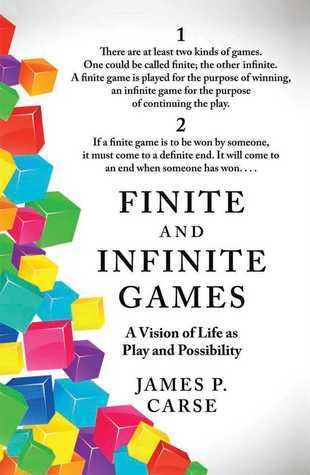
“There are at least two kinds of games,” states James P. Carse as he begins this extraordinary book. “One could be called finite; the other infinite. A finite game is played for the purpose of winning, an infinite game for the purpose of continuing the play.”Finite games are the familiar contests of everyday life; they are played in order to be won, which is when they end. But infinite games are more mysterious. Their object is not winning, but ensuring the continuation of play. The rules may change, the boundaries may change, even the participants may change—as long as the game is never allowed to come to an end.What are infinite games? How do they affect the ways we play our finite games? What are we doing when we play—finitely or infinitely? And how can infinite games affect the ways in which we live our lives?Carse explores these questions with stunning elegance, teasing out of his distinctions a universe of observation and insight, noting where and why and how we play, finitely and infinitely. He surveys our world—from the finite games of the playing field and playing board to the infinite games found in culture and religion—leaving all we think we know illuminated and transformed. Along the way, Carse finds new ways of understanding everything, from how an actress portrays a role to how we engage in sex, from the nature of evil to the nature of science. Finite games, he shows, may offer wealth and status, power and glory, but infinite games offer something far more subtle and far grander.Carse has written a book rich in insight and aphorism. Already an international literary event, Finite and Infinite Games is certain to be argued about and celebrated for years to come. Reading it is the first step in learning to play the infinite game.

Behind every great revolution is a vision and behind perhaps the greatest revolution of our time, personal computing, is the vision of J.C.R. Licklider. He did not design the first personal computers or write the software that ran on them, nor was he involved in the legendary early companies that brought them to the forefront of our everyday experience. He was instead a relentless visionary that saw the potential of the way individuals could interact with computers and software. At a time when computers were a short step removed from mechanical data processors, Licklider was writing treatises on "human-computer symbiosis", "computers as communication devices", and a now not-so-unfamiliar "Intergalactic Network." His ideas became so influential, his passion so contagious, that Waldrop called him "computing's Johnny Appleseed. In a simultaneously compelling personal narrative and comprehensive historical exposition, Waldrop tells the story of the man who not only instigated the work that led to the internet, but also shifted our understanding of what computers were and could be. Included in this edition are also the original texts of Licklider's three most influential writings: 'Man-computer symbiosis' (1960), which outlines the vision that inspired the personal computer revolution of the 1970s; his 'Intergalactic Network' memo (1963), which outlines the vision that inspired the internet; and "The computer as a communication device" (1968, co-authored with Robert Taylor), which amplifies his vision for what the network could become.

With this extraordinary first volume in an epoch-making masterpiece, Neal Stephenson hacks into the secret histories of nations and the private obsessions of men, decrypting with dazzling virtuosity the forces that shaped this century. In 1942, Lawrence Pritchard Waterhouse—mathematical genius and young Captain in the U.S. Navy—is assigned to detachment 2702. It is an outfit so secret that only a handful of people know it exists, and some of those people have names like Churchill and Roosevelt. The mission of Waterhouse and Detachment 2702—commanded by Marine Raider Bobby Shaftoe-is to keep the Nazis ignorant of the fact that Allied Intelligence has cracked the enemy's fabled Enigma code. It is a game, a cryptographic chess match between Waterhouse and his German counterpart, translated into action by the gung-ho Shaftoe and his forces. Fast-forward to the present, where Waterhouse's crypto-hacker grandson, Randy, is attempting to create a "data haven" in Southeast Asia—a place where encrypted data can be stored and exchanged free of repression and scrutiny. As governments and multinationals attack the endeavor, Randy joins forces with Shaftoe's tough-as-nails granddaughter, Amy, to secretly salvage a sunken Nazi submarine that holds the key to keeping the dream of a data haven afloat. But soon their scheme brings to light a massive conspiracy with its roots in Detachment 2702 linked to an unbreakable Nazi code called Arethusa. And it will represent the path to unimaginable riches and a future of personal and digital liberty...or to universal totalitarianism reborn. A breathtaking tour de force, and Neal Stephenson's most accomplished and affecting work to date, Cryptonomicon is profound and prophetic, hypnotic and hyper-driven, as it leaps forward and back between World War II and the World Wide Web, hinting all the while at a dark day-after-tomorrow. It is a work of great art, thought and creative daring; the product of a truly iconoclastic imagination working with white-hot intensity.
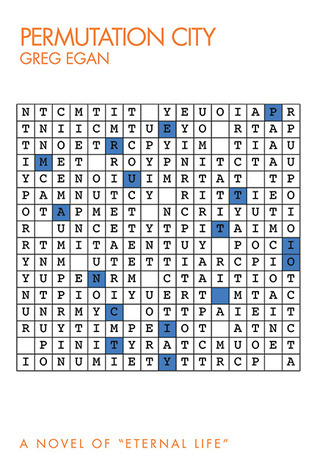
What happens when your digital self overpowers your physical self?A life in Permutation City is unlike any life to which you’re accustomed. You have Eternal Life, the power to live forever. Immortality is a real thing, just not the thing you’d expect.Life is just electronic code. You have been digitized, scanned, and downloaded into a virtual reality program. A Copy of a Copy. For Paul Durham, he keeps making Copies of himself, but the issue is that his Copies keep changing their minds and shutting themselves down.You also have Maria Deluca, who is nothing but an Autoverse addict. She spends every waking minute with the cellular automaton known as the Autoverse, a world that lives by the mathematical “laws of physics.”Paul makes Maria an offer to design and drop a seed into the Autoverse that will allow her to indulge in her obsession. There is, however, one catch: you can no longer terminate, bail out, and remove yourself. You will never be your normal flesh-and-blood life again. The question then becomes: Is this what she really wants? Is this what we really want?From the brilliant mind of Greg Egan, Permutation City, first published in 1994, comes a world of wonder that makes you ask if you are you, or is the Copy of you the real you?
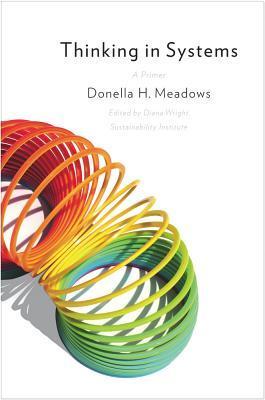
Meadows’ Thinking in Systems, is a concise and crucial book offering insight for problem solving on scales ranging from the personal to the global. Edited by the Sustainability Institute’s Diana Wright, this essential primer brings systems thinking out of the realm of computers and equations and into the tangible world, showing readers how to develop the systems-thinking skills that thought leaders across the globe consider critical for 21st-century life.Some of the biggest problems facing the world—war, hunger, poverty, and environmental degradation—are essentially system failures. They cannot be solved by fixing one piece in isolation from the others, because even seemingly minor details have enormous power to undermine the best efforts of too-narrow thinking.While readers will learn the conceptual tools and methods of systems thinking, the heart of the book is grander than methodology. Donella Meadows was known as much for nurturing positive outcomes as she was for delving into the science behind global dilemmas. She reminds readers to pay attention to what is important, not just what is quantifiable, to stay humble, and to stay a learner.In a world growing ever more complicated, crowded, and interdependent, Thinking in Systems helps readers avoid confusion and helplessness, the first step toward finding proactive and effective solutions.

In this candid and riveting memoir, for the first time ever, Nike founder and CEO Phil Knight shares the inside story of the company’s early days as an intrepid start-up and its evolution into one of the world’s most iconic, game-changing, and profitable brands.In 1962, fresh out of business school, Phil Knight borrowed $50 from his father and created a company with a simple mission: import high-quality, low-cost athletic shoes from Japan. Selling the shoes from the trunk of his lime green Plymouth Valiant, Knight grossed $8,000 his first year. Today, Nike’s annual sales top $30 billion. In an age of startups, Nike is the ne plus ultra of all startups, and the swoosh has become a revolutionary, globe-spanning icon, one of the most ubiquitous and recognizable symbols in the world today.But Knight, the man behind the swoosh, has always remained a mystery. Now, for the first time, in a memoir that is candid, humble, gutsy, and wry, he tells his story, beginning with his crossroads moment. At 24, after backpacking around the world, he decided to take the unconventional path, to start his own business—a business that would be dynamic, different.Knight details the many risks and daunting setbacks that stood between him and his dream—along with his early triumphs. Above all, he recalls the formative relationships with his first partners and employees, a ragtag group of misfits and seekers who became a tight-knit band of brothers. Together, harnessing the transcendent power of a shared mission, and a deep belief in the spirit of sport, they built a brand that changed everything.

A Guide to the Good Life: The Ancient Art of Stoic Joy
by William B. Irvine
Rating: 4.2 ⭐
• 18 recommendations ❤️
One of the great fears many of us face is that despite all our effort and striving, we will discover at the end that we have wasted our life. In A Guide to the Good Life, William B. Irvine plumbs the wisdom of Stoic philosophy, one of the most popular and successful schools of thought in ancient Rome, and shows how its insight and advice are still remarkably applicable to modern lives. In A Guide to the Good Life, Irvine offers a refreshing presentation of Stoicism, showing how this ancient philosophy can still direct us toward a better life. Using the psychological insights and the practical techniques of the Stoics, Irvine offers a roadmap for anyone seeking to avoid the feelings of chronic dissatisfaction that plague so many of us. Irvine looks at various Stoic techniques for attaining tranquility and shows how to put these techniques to work in our own life. As he does so, he describes his own experiences practicing Stoicism and offers valuable first-hand advice for anyone wishing to live better by following in the footsteps of these ancient philosophers. Readers learn how to minimize worry, how to let go of the past and focus our efforts on the things we can control, and how to deal with insults, grief, old age, and the distracting temptations of fame and fortune. We learn from Marcus Aurelius the importance of prizing only things of true value, and from Epictetus we learn how to be more content with what we have. Finally, A Guide to the Good Life shows readers how to become thoughtful observers of their own life. If we watch ourselves as we go about our daily business and later reflect on what we saw, we can better identify the sources of distress and eventually avoid that pain in our life. By doing this, the Stoics thought, we can hope to attain a truly joyful life.
The Talent Code: Greatness Isn't Born. It's Grown. Here's How.
by Daniel Coyle
Rating: 4.2 ⭐
• 14 recommendations ❤️
What is the secret of talent? How do we unlock it? In this groundbreaking work, journalist and New York Times bestselling author Daniel Coyle provides parents, teachers, coaches, businesspeople—and everyone else—with tools they can use to maximize potential in themselves and others.Whether you’re coaching soccer or teaching a child to play the piano, writing a novel or trying to improve your golf swing, this revolutionary book shows you how to grow talent by tapping into a newly discovered brain mechanism.Drawing on cutting-edge neurology and firsthand research gathered on journeys to nine of the world’s talent hotbeds—from the baseball fields of the Caribbean to a classical-music academy in upstate New York—Coyle identifies the three key elements that will allow you to develop your gifts and optimize your performance in sports, art, music, math, or just about anything. • Deep Practice Everyone knows that practice is a key to success. What everyone doesn’t know is that specific kinds of practice can increase skill up to ten times faster than conventional practice.• Ignition We all need a little motivation to get started. But what separates truly high achievers from the rest of the pack? A higher level of commitment—call it passion—born out of our deepest unconscious desires and triggered by certain primal cues. Understanding how these signals work can help you ignite passion and catalyze skill development.• Master Coaching What are the secrets of the world’s most effective teachers, trainers, and coaches? Discover the four virtues that enable these “talent whisperers” to fuel passion, inspire deep practice, and bring out the best in their students.These three elements work together within your brain to form myelin, a microscopic neural substance that adds vast amounts of speed and accuracy to your movements and thoughts. Scientists have discovered that myelin might just be the holy grail: the foundation of all forms of greatness, from Michelangelo’s to Michael Jordan’s. The good news about myelin is that it isn’t fixed at birth; to the contrary, it grows, and like anything that grows, it can be cultivated and nourished. Combining revelatory analysis with illuminating examples of regular people who have achieved greatness, this book will not only change the way you think about talent, but equip you to reach your own highest potential.From the Hardcover edition.

Drive: The Surprising Truth About What Motivates Us
by Daniel H. Pink
Rating: 4.1 ⭐
• 8 recommendations ❤️
The New York Times bestseller that gives readers a paradigm-shattering new way to think about motivation Most people believe that the best way to motivate is with rewards like money—the carrot-and-stick approach. That's a mistake, says Daniel H. Pink (author of To Sell Is Human: The Surprising Truth About Motivating Others). In this provocative and persuasive new book, he asserts that the secret to high performance and satisfaction-at work, at school, and at home—is the deeply human need to direct our own lives, to learn and create new things, and to do better by ourselves and our world.Drawing on four decades of scientific research on human motivation, Pink exposes the mismatch between what science knows and what business does—and how that affects every aspect of life. He examines the three elements of true motivation—autonomy, mastery, and purpose-and offers smart and surprising techniques for putting these into action in a unique book that will change how we think and transform how we live.

— Time The #1 New York Times bestselling author of Anathem , Neal Stephenson is continually rocking the literary world with his brazen and brilliant fictional creations—whether he’s reimagining the past (The Baroque Cycle), inventing the future ( Snow Crash ), or both ( Cryptonomicon ). With Reamde , this visionary author whose mind-stretching fiction has been enthusiastically compared to the work of Thomas Pynchon, Don DeLillo, Kurt Vonnegut, and David Foster Wallace—not to mention William Gibson and Michael Crichton—once again blazes new ground with a high-stakes thriller that will enthrall his loyal audience, science and science fiction, and espionage fiction fans equally. The breathtaking tale of a wealthy tech entrepreneur caught in the very real crossfire of his own online fantasy war game, Reamde is a new high—and a new world—for the remarkable Neal Stephenson.

The Making of Prince of Persia: Journals 1985-1993
by Jordan Mechner
Rating: 4.2 ⭐
• 2 recommendations ❤️
A deep dive into the origins of the epic, best-selling video game, featuring previously unreleased content, in the game creator's own words"Mechner's journey is a universal one for anyone creating something brand new... I'm excited to revisit these journals in newly illustrated form."-- Mike Krieger, co-founder of InstagramThe creator of one of the most innovative and best-selling video games of all time gives an unvarnished look into the process in this one-of-a-kind compilation.Before Prince of Persia was a best-selling video game franchise and a Disney movie, it was an Apple II computer game created and programmed by one person, Jordan Mechner. Mechner's candid and revealing journals from the time capture the journey from his parents’ basement to the forefront of the fast-growing 1980s video game industry... and the creative, technical, and personal struggles that brought the prince into being and ultimately into the homes of millions of people worldwide.Now, on the 30th anniversary of Prince of Persia’s release, Mechner looks back at the journals he kept from 1985 to 1993, offering new insights into the game that established him as a pioneer of cinematic storytelling in the industry. This beautifully illustrated and annotated collector’s edition -- 300 pages of Jordan’s original journals-- Present-day margin notations by Jordan adding explanation, context, and affectionate cartoons of real-life characters-- Archival visuals illustrating the stages of the game’s creation-- Work-in-progress sketches, rotoscoped animation, screen shots, interface design, memos, and more-- A full-color 32-page "Legacy" section in which Jordan and fans share Prince of Persia memories from the past 30 years, including the Ubisoft games and Disney movieThe Making of Prince of Persia is both a tribute to a timeless classic, and an indelible look at the creative process that will resonate with retro-gaming fans, game developers, and writers, artists, and creators of all stripes.
Antifragile: Things That Gain from Disorder
by Nassim Nicholas Taleb
Rating: 4.2 ⭐
• 23 recommendations ❤️
Antifragile is a standalone book in Nassim Nicholas Taleb’s landmark Incerto series, an investigation of opacity, luck, uncertainty, probability, human error, risk, and decision-making in a world we don’t understand. The other books in the series are Fooled by Randomness, The Black Swan, Skin in the Game, and The Bed of Procrustes .Nassim Nicholas Taleb, the bestselling author of The Black Swan and one of the foremost thinkers of our time, reveals how to thrive in an uncertain world.Just as human bones get stronger when subjected to stress and tension, and rumors or riots intensify when someone tries to repress them, many things in life benefit from stress, disorder, volatility, and turmoil. What Taleb has identified and calls “antifragile” is that category of things that not only gain from chaos but need it in order to survive and flourish. In The Black Swan, Taleb showed us that highly improbable and unpredictable events underlie almost everything about our world. In Antifragile, Taleb stands uncertainty on its head, making it desirable, even necessary, and proposes that things be built in an antifragile manner. The antifragile is beyond the resilient or robust. The resilient resists shocks and stays the same; the antifragile gets better and better.Furthermore, the antifragile is immune to prediction errors and protected from adverse events. Why is the city-state better than the nation-state, why is debt bad for you, and why is what we call “efficient” not efficient at all? Why do government responses and social policies protect the strong and hurt the weak? Why should you write your resignation letter before even starting on the job? How did the sinking of the Titanic save lives? The book spans innovation by trial and error, life decisions, politics, urban planning, war, personal finance, economic systems, and medicine. And throughout, in addition to the street wisdom of Fat Tony of Brooklyn, the voices and recipes of ancient wisdom, from Roman, Greek, Semitic, and medieval sources, are loud and clear.Antifragile is a blueprint for living in a Black Swan world.Erudite, witty, and iconoclastic, Taleb’s message is revolutionary: The antifragile, and only the antifragile, will make it.Praise for Antifragile“Ambitious and thought-provoking . . . highly entertaining.” — The Economist“A bold book explaining how and why we should embrace uncertainty, randomness, and error . . . It may just change our lives.” — Newsweek

The Courage to Be Disliked: The Japanese Phenomenon That Shows You How to Change Your Life and Achieve Real Happiness
by Ichiro Kishimi
Rating: 4.0 ⭐
• 14 recommendations ❤️
The Life-Changing Magic of Tidying Up for the mind, The Courage to Be Disliked is the Japanese phenomenon that shows you how to free yourself from the shackles of past experiences and others’ expectations to achieve real happiness.The Courage to Be Disliked, already an enormous bestseller in Asia with more than 3.5 million copies sold, demonstrates how to unlock the power within yourself to be the person you truly want to be. Using the theories of Alfred Adler, one of the three giants of twentieth century psychology, this book follows an illuminating conversation between a philosopher and a young man. The philosopher explains to his pupil how each of us is able to determine our own life, free from the shackles of past experiences, doubts, and the expectations of others. It’s a way of thinking that is deeply liberating, allowing us to develop the courage to change, and to ignore the limitations that we and those around us have placed on ourselves. The result is a book that is both highly accessible and profound in its importance. Millions have already read and benefitted from its wisdom. This is a truly special book in the vein of Marie Kondo’s The Life-Changing Magic of Tidying Up but for the mind. Those ready to embrace the insights and liberation promised by The Courage to Be Disliked will come to a deeper understanding of themselves and others, and find the inspiration to take the reins of their own life.

Losing the Signal: The Untold Story Behind the Extraordinary Rise and Spectacular Fall of BlackBerry
by Jacquie McNish
Rating: 4.0 ⭐
• 6 recommendations ❤️
In 2009, BlackBerry controlled half of the smartphone market. Today that number is less than one percent. What went so wrong?Losing the Signal is a riveting story of a company that toppled global giants before succumbing to the ruthlessly competitive forces of Silicon Valley. This is not a conventional tale of modern business failure by fraud and greed; instead, the rise and fall of BlackBerry reveals the dangerous speed at which innovators race along the information superhighway.With unprecedented access to key players, senior executives, directors, and competitors, Losing the Signal unveils the remarkable rise of a company that started above a bagel store in a small Canadian city and went on to briefly control one half of the smartphone market. At the heart of the story is an unlikely partnership between a visionary engineer, Mike Lazaridis, and an aggressive Harvard Business School grad, Jim Balsillie. Together, they engineered a pioneering pocket e-mail device that became the tool of choice for CEOs and world leaders. The partnership enjoyed only a brief moment on top of the world, however. At the very moment BlackBerry was ranked the world's fastest-growing company, internal feuds and chaotic growth crippled the company as it faced its gravest test: Apple and Google's entry into the mobile phone market.Expertly told by acclaimed journalists Jacquie McNish and Sean Silcoff, this is an entertaining, whirlwind narrative that goes behind the scenes to reveal one of the most compelling business stories of the new century.

In this must-read book for anyone striving to succeed, pioneering psychologist Angela Duckworth shows parents, educators, students, and business people both seasoned and new that the secret to outstanding achievement is not talent but a focused persistence called grit.Why do some people succeed and others fail? Sharing new insights from her landmark research on grit, Angela Duckworth explains why talent is hardly a guarantor of success. Rather, other factors can be even more crucial such as identifying our passions and following through on our commitments.Drawing on her own powerful story as the daughter of a scientist who frequently bemoaned her lack of smarts, Duckworth describes her winding path through teaching, business consulting, and neuroscience, which led to the hypothesis that what really drives success is not genius, but a special blend of passion and long-term perseverance. As a professor at the University of Pennsylvania, Duckworth created her own character lab and set out to test her theory.Here, she takes readers into the field to visit teachers working in some of the toughest schools, cadets struggling through their first days at West Point, and young finalists in the National Spelling Bee. She also mines fascinating insights from history and shows what can be gleaned from modern experiments in peak performance. Finally, she shares what she's learned from interviewing dozens of high achievers; from JP Morgan CEO Jamie Dimon to the cartoon editor of The New Yorker to Seattle Seahawks Coach Pete Carroll.Winningly personal, insightful, and even life-changing, Grit is a book about what goes through your head when you fall down, and how that not talent or luck makes all the difference.

It was early 1993 and id Software was at the top of the PC gaming industry. Wolfenstein 3D had established the First Person Shooter genre and sales of its sequel Spear of Destiny were skyrocketing. The technology and tools id had taken years to develop were no match for their many competitors.It would have been easy for id to coast on their success, but instead they made the audacious decision to throw away everything they had built and start from scratch. Game Engine Black Doom is the story of how they did it.This is a book about history and engineering. Don’t expect much prose (the author’s English has improved since the first book but is still broken). Instead you will find inside extensive descriptions and drawings to better understand all the challenges id Software had to overcome. From the hardware -- the Intel 486 CPU, the Motorola 68040 CPU, and the NeXT workstations -- to the game engine’s revolutionary design, open up to learn how DOOM changed the gaming industry and became a legend among video games.

The Precipice: Existential Risk and the Future of Humanity
by Toby Ord
Rating: 3.9 ⭐
• 4 recommendations ❤️
This urgent and eye-opening book makes the case that protecting humanity's future is the central challenge of our time. If all goes well, human history is just beginning. Our species could survive for billions of years - enough time to end disease, poverty, and injustice, and to flourish in ways unimaginable today. But this vast future is at risk. With the advent of nuclear weapons, humanity entered a new age, where we face existential catastrophes - those from which we could never come back. Since then, these dangers have only multiplied, from climate change to engineered pathogens and artificial intelligence. If we do not act fast to reach a place of safety, it will soon be too late. Drawing on over a decade of research, The Precipice explores the cutting-edge science behind the risks we face. It puts them in the context of the greater story of humanity: showing how ending these risks is among the most pressing moral issues of our time. And it points the way forward, to the actions and strategies that can safeguard humanity. An Oxford philosopher committed to putting ideas into action, Toby Ord has advised the US National Intelligence Council, the UK Prime Minister's Office, and the World Bank on the biggest questions facing humanity. In The Precipice, he offers a startling reassessment of human history, the future we are failing to protect, and the steps we must take to ensure that our generation is not the last.
From the creator of the wildly popular blog Wait But Why, a fun and fascinating deep dive into what the hell is going on in our strange, unprecedented modern times.Between 2013 and 2016, Tim Urban became one of the world’s most popular bloggers, writing dozens of viral, long-form articlesabout everything from AI to colonizing Mars to procrastination. Then, he turned his attention to a new topic: the society around him. Why was everything such a mess? Why was everyone acting like such a baby? When did things get so tribal? Why do humans do this stuff?This massive topic sent Tim tumbling down his deepest rabbit hole yet, through mountains of history, evolutionary psychology, political theory, neuroscience, and modern-day political movements, as he tried to figure out the answer to a simple question: What’s our problem?Six years later, he emerged from the hole holding this book. What’s Our Problem? is a deep and expansive analysis of our modern times, in the classic style of Wait But Why, packed with original concepts, sticky metaphors, and 300 drawings. The book provides an entirely new framework and language for thinking and talking about today’s complex world. Instead of focusing on the usual left-center-right horizontal political axis, which is all about what we think, the book introduces a verticalaxis that explores how we think, as individuals and as groups. Readers will find themselves on a delightful and fascinating journey that will ultimately change the way they see the world around them.Anyway he wanted to say a lot more about all of this but there was a word limit on this book description so just go read the book.