
Tim O'Reilly Recommended Books
Irish-American author and publisher
39 Books Recommended

Vagabonding: An Uncommon Guide to the Art of Long-Term World Travel
by Rolf Potts
Rating: 3.9 ⭐
• 7 recommendations ❤️
Vagabonding is about taking time off from your normal life--from six weeks to four months to two years--to discover and experience the world on your own terms. Veteran shoestring traveler Rolf Potts shows how anyone with an independent spirit can achieve the dream of extended overseas travel. Visit the vagabonding community's hub at www dot vagabonding dot net.

The Tao Te Ching, the esoteric but infinitely practical book written most probably in the sixth century B.C. by Lao Tsu, has been translated more frequently than any work except the Bible. This translation of the Chinese classic, which was first published twenty-five years ago, has sold more copies than any of the others. It offers the essence of each word and makes Lao Tsu's teaching immediate and alive.The philosophy of Lao Tsu is simple: Accept what is in front of you without wanting the situation to be other than it is. Study the natural order of things and work with it rather than against it, for to try to change what is only sets up resistance. Nature provides everything without requiring payment or thanks, and also provides for all without discrimination—therefore let us present the same face to everyone and treat all men as equals, however they may behave. If we watch carefully, we will see that work proceeds more quickly and easily if we stop "trying," if we stop putting in so much extra effort, if we stop looking for results. In the clarity of a still and open mind, truth will be reflected. We will come to appreciate the original meaning of the word "understand," which means "to stand under." We serve whatever or whoever stands before us, without any thought for ourselves. Te—which may be translated as "virtue" or "strength"—lies always in Tao, or" natural law. In other words: Simply be.

Can You Forgive Her? (1864-5) is the first of the six famous Palliser novels which, as a group, provide us with the most extensive and contradictory expose of British life during the period of its greatest prestige. In Can You Forgive Her? Trollope inextricably binds together the issues of parliamentary election and marriage, of politics and privacy. The values and aspirations of the governing stratum of Victorian society are ruthlessly examined and none remain unscathed. Above all Trollope focuses on the predicament of women. 'What should a woman do with her life?' asks Alice Vavasor of herself, and this theme is echoed by every other woman in the novel, from the uncomfortably married Lady Glencora to the coquettish Mrs Greenow and Alice's clear-headed cousin, Kate.

From bestselling author Irv Yalom comes a riveting blend of fact and fiction, a drama of love, fate, and will, played out agains the intellectual ferment of nineteenth-century Vienna on the eve of the birth of psychoanalysis.Friedrich Nietzsche, Europe's greatest philosopher ...Josef Breuer, one of the founding fathers of psychoanalysis ...a secret pact ...a young medical intern named Sigmund Freud: These are the elements that combine to create the unforgettable saga of an imagined relationship between an extraordinary patient and a gifted healer.As the tale opens, the unattainable Lou Salomé begs Breuer to help treat Nietzsche's suicidal despair using his experimental "talking cure." As the eminent physician reluctantly accepts the task, he makes a powerful discovery-only through facing up to his own inner demons can he begin to help his patient.In this compelling novel, two brilliant and enigmatic men plumb the depths of their own romantic obsessions and discover the redemptive power of friendship.

Born in Poland in 1878, educator, physician, and legendary child advocate Janusz Korczak believed that simply understanding children is the key to being able to take care of them. It’s a basic premise too often overlooked. This collection of one hundred quotations and passages from Korczak’s writings provides valuable advice on how to take care of, respect, and love every child. In an inviting gift-book format, this is a heartfelt and helpful reminder of who we were as children and who we might become as parents.

They say if you remember the '60s, you weren't there. But, fortunately, Tom Wolfe was there, notebook in hand, politely declining LSD while Ken Kesey and his Merry Pranksters fomented revolution, turning America on to a dangerously playful way of thinking as their Day-Glo conveyance, Further, made the most influential bus ride since Rosa Parks's. By taking On the Road's hero Neal Cassady as his driver on the cross-country revival tour and drawing on his own training as a magician, Kesey made Further into a bully pulpit, and linked the beat epoch with hippiedom. Paul McCartney's Many Years from Now cites Kesey as a key influence on his trippy Magical Mystery Tour film. Kesey temporarily renounced his literary magic for the cause of "tootling the multitudes"--making a spectacle of himself--and Prankster Robert Stone had to flee Kesey's wild party to get his life's work done. But in those years, Kesey's life was his work, and Wolfe infinitely multiplied the multitudes who got tootled by writing this major literary-journalistic monument to a resonant pop-culture moment.Kesey's theatrical metamorphosis from the distinguished author of One Flew over the Cuckoo's Nest to the abominable shaman of the "Acid Test" soirees that launched The Grateful Dead required Wolfe's Day-Glo prose account to endure (though Kesey's own musings in Demon Box are no slouch either). Even now, Wolfe's book gives what Wolfe clearly got from Kesey: a contact high.

In Information Rules, authors Shapiro and Varian reveal that many classic economic concepts can provide the insight and understanding necessary to succeed in the information age. They argue that if managers seriously want to develop effective strategies for competing in the new economy, they must understand the fundamental economics of information technology. Whether information takes the form of software code or recorded music, is published in a book or magazine, or even posted on a website, managers must know how to evaluate the consequences of pricing, protecting, and planning new versions of information products, services, and systems. The first book to distill the economics of information and networks into practical business strategies, Information Rules is a guide to the winning moves that can help business leaders navigate successfully through the tough decisions of the information economy.

Charlie Chan, the imperturbably ingenious detective with impressive powers of deduction, solves five bizarre mysteries.

The Discovery of the Mind in Greek Philosophy and Literature
by Bruno Snell
Rating: 4.3 ⭐
• 3 recommendations ❤️
The present translation is based on the second edition of Die Entdeckung des Geistes (Claassen und Goverts, Hamburg, 1948), with the addition of the essay which here appears as Ch. 7: Human Knowledge and Divine Knowledge. In this immensely erudite book, German classicist Bruno Snell traces the establishment of a rational view of the nature of man as evidenced in the literature of the Greeks - in the creations of epic and lyric poetry, and in the drama. Here are the crucial stages in the intellectual evolution of the Greek world: the Homeric world view, the rise of the individual in the early Greek lyric, myth and reality in Greek tragedy, Greek ethics, the origin of scientific thought, and Arcadia.

This best-selling text is still the most modern presentation of the subject. The Varian approach gives students tools they can use on exams, in the rest of their classes, and in their careers after graduation.

The Kabir Book: Forty-Four of the Ecstatic Poems of Kabir
by Kabir
Rating: 4.3 ⭐
• 3 recommendations ❤️
Forty-four of the Ecstatic Poems of Kabir"Kabir's poems give off a marvelous radiant intensity. . . . Bly's versions . . . have exactly the luminous depth that permits and invites many rereadings, many studyings-even then they remain as fresh as ever."-The New York Times Book Review

W. B. Yeats was Romantic and Modernist, mystical dreamer and leader of the Irish Literary Revival, Nobel prizewinner, dramatist and, above all, poet. He began writing with the intention of putting his 'very self' into his poems. T. S. Eliot, one of many who proclaimed the Irishman's greatness, described him as 'one of those few whose history is the history of their own time, who are part of the consciousness of an age which cannot be understood without them'. For anyone interested in the literature of the late nineteenth century and the twentieth century, Yeats's work is essential. This volume gathers the full range of his published poetry, from the hauntingly beautiful early lyrics (by which he is still fondly remembered) to the magnificent later poems which put beyond question his status as major poet of modern times. Paradoxical, proud and passionate, Yeats speaks today as eloquently as ever.

The time was the 1980s. The place was Wall Street. The game was called Liar’s Poker. Michael Lewis was fresh out of Princeton and the London School of Economics when he landed a job at Salomon Brothers, one of Wall Street’s premier investment firms. During the next three years, Lewis rose from callow trainee to bond salesman, raking in millions for the firm and cashing in on a modern-day gold rush. Liar’s Poker is the culmination of those heady, frenzied years—a behind-the-scenes look at a unique and turbulent time in American business. From the frat-boy camaraderie of the forty-first-floor trading room to the killer instinct that made ambitious young men gamble everything on a high-stakes game of bluffing and deception, here is Michael Lewis’s knowing and hilarious insider’s account of an unprecedented era of greed, gluttony, and outrageous fortune. .

Austin Tappan Wright left the world a wholly unsuspected legacy. After he died in a tragic accident, among this distinguished legal scholar's papers were found thousands of pages devoted to a staggering feat of literary creationa detailed history of an imagined country complete with geography, genealogy, literature, language and culture. As detailed as J.R.R. Tolkien's middle-earth novels, Islandia has similarly become a classic touchstone for those concerned with the creation of imaginary world.

This revised and expanded edition of The Essential Rumi includes a new introduction by Coleman Barks and more than 80 never-before-published poems.Through his lyrical translations, Coleman Barks has been instrumental in bringing this exquisite literature to a remarkably wide range of readers, making the ecstatic, spiritual poetry of thirteenth-century Sufi Mystic Rumi more popular than ever.The Essential Rumi continues to be the bestselling of all Rumi books, and the definitive selection of his beautiful, mystical poetry.

A comprehensive introduction to the Internet, the international network that includes virtually every major computer site in the world, this book offers access to the Internet's resources: e-mail and news, public archives, databases, and special services ranging from NASA announcements to ski reports. Whether you're a researcher, student, or just someone who likes to send electronic mail to friends, the Internet is a resource of almost unimaginable wealth.

Raimund Gregorius teaches classical languages at a Swiss lycee, and lives a life governed by routine. One day, a chance encounter with a Portuguese woman inspires him to question his life—and leads him to an extraordinary book that will open the possibility of changing it.Inspired by the words of Amadeu de Prado, a doctor whose intelligence and magnetism left a mark on everyone who met him and whose principles led him into a confrontation with Salazar's dictatorship, Gregorius boards a train to Lisbon.As Gregorius becomes fascinated with unlocking the mystery of who Prado was, an extraordinary tale unfolds.

The Innovator's Dilemma: When New Technologies Cause Great Firms to Fail
by Clayton M. Christensen
Rating: 4.1 ⭐
• 39 recommendations ❤️
The bestselling classic on disruptive innovation, by renowned author Clayton M. Christensen. His work is cited by the world’s best-known thought leaders, from Steve Jobs to Malcolm Gladwell. In this classic bestseller—one of the most influential business books of all time—innovation expert Clayton Christensen shows how even the most outstanding companies can do everything right—yet still lose market leadership. Christensen explains why most companies miss out on new waves of innovation. No matter the industry, he says, a successful company with established products will get pushed aside unless managers know how and when to abandon traditional business practices. Offering both successes and failures from leading companies as a guide, The Innovator’s Dilemma gives you a set of rules for capitalizing on the phenomenon of disruptive innovation. Sharp, cogent, and provocative—and consistently noted as one of the most valuable business ideas of all time—The Innovator’s Dilemma is the book no manager, leader, or entrepreneur should be without.

Considered by contemporary critics to be Trollope's greatest novel, The Way We Live Now is a satire of the literary world of nineteenth-century London and a bold indictment of the new power of speculative finance in English life. The story concerns Augustus Melmotte, a French swindler and scoundrel, and his daughter, to whom Felix Carbury, adored son of the authoress Lady Carbury, is induced to propose marriage for the sake of securing a fortune. Trollope's portrait of Lady Carbury, impetuous, unprincipled, and unswervingly devoted to her own self-promotion, is one of his finest satirical achievements. In his kaleidoscopic depiction of a society on the verge of moral bankruptcy, Trollope gives us life as it was lived more than a hundred years ago, while speaking eloquently to some of the governing obsessions of our own age.
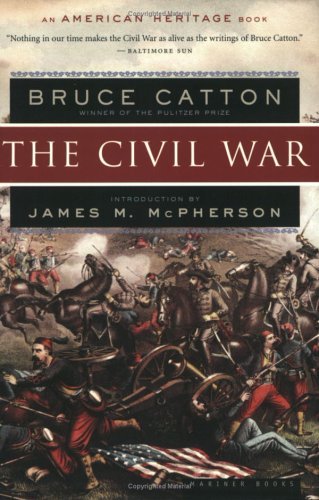
Infinitely readable and absorbing, Bruce Catton’s The Civil War is one of the most widely read general histories of the war available in a single volume. Introduced by the critically acclaimed Civil War historian James M. McPherson, The Civil War vividly traces one of the most moving chapters in American history, from the early division between the North and the South to the final surrender of Confederate troops. Catton's account of battles is a must-read for anyone interested in the war that divided America, carefully weaving details about the political activities of the Union and Confederate armies and diplomatic efforts overseas.

First published in 1894, the story of the diva Trilby O'Ferrall and her mentor, Svengali, has entered the mythology of that period alongside Dracula and Sherlock Holmes. Immensely popular for years, the novel led to a hit play, a series of popular films, Trilby products from hats to ice-cream, and streets in Florida named after characters in the book. The setting reflects Du Maurier's bohemian years as an art student in Paris before he went to London to make a career in journalism. A celebrated caricaturist for Punch magazine, Du Maurier's drawings for the novel--of which his most significant are included here--form a large part of its appeal.

The Collected Poems of Wallace Stevens is the definitive collection from the man Harold Bloom has called “the best and most representative American poet.” Originally published in 1954 to honor Stevens’s seventy-fifth birthday, the book was rushed into print for the occasion and contained scores of errors. These have now been corrected in one place for the first time by Stevens scholars John N. Serio and Christopher Beyers, based on original editions and manuscripts. The Collected Poems is the one volume that Stevens intended to contain all the poems he wished to preserve, presented in the way he wanted. An essential collection for all readers of poetry, it is an enduring monument to his dazzling achievement.

Arguably Zane Grey’s most popular novel and a forerunner of the western genre, Riders of the Purple Sage tells the story of a Mormon woman caught between the persecution of religious zealots and several “Gentile” gunmen seeking to lend her a helping hand. Set in Utah during the nineteenth century, this novel offers an early critique on the practice of polygamy and plural marriage in the Old West.

Since its immediate success in 1813, Pride and Prejudice has remained one of the most popular novels in the English language. Jane Austen called this brilliant work "her own darling child" and its vivacious heroine, Elizabeth Bennet, "as delightful a creature as ever appeared in print." The romantic clash between the opinionated Elizabeth and her proud beau, Mr. Darcy, is a splendid performance of civilized sparring. And Jane Austen's radiant wit sparkles as her characters dance a delicate quadrille of flirtation and intrigue, making this book the most superb comedy of manners of Regency England.Alternate cover edition of ISBN 9780679783268

An alternate cover edition for this ISBN can be found here."The Warden" centers on Mr. Harding, a clergyman of great personal integrity who is nevertheless in possession of an income from a charity far in excess of the sum devoted to the purposes of the foundation. On discovering this, young John Bold turns his reforming zeal to exposing what he regards as an abuse of privilege, despite the fact that he is in love with Mr. Harding's daughter Eleanor. It was a highly topical novel (a case regarding the misapplication of church funds was the scandalous subject of contemporary debate), but like other great Victorian novelists, Trollope uses the specific case to explore and illuminate the universal complexities of human motivation and social morality

The first great adventure story in the Western canon, The Odyssey is a poem about violence and the aftermath of war; about wealth, poverty, and power; about marriage and family; about travelers, hospitality, and the yearning for home.In this fresh, authoritative version--the first English translation of The Odyssey by a woman--this stirring tale of shipwrecks, monsters, and magic comes alive in an entirely new way. Written in iambic pentameter verse and a vivid, contemporary idiom, this engrossing translation matches the number of lines in the Greek original, thus striding at Homer's sprightly pace and singing with a voice that echoes Homer's music.Wilson's Odyssey captures the beauty and enchantment of this ancient poem as well as the suspense and drama of its narrative. Its characters are unforgettable, from the cunning goddess Athena, whose interventions guide and protect the hero, to the awkward teenage son, Telemachus, who struggles to achieve adulthood and find his father; from the cautious, clever, and miserable Penelope, who somehow keeps clamoring suitors at bay during her husband's long absence, to the "complicated" hero himself, a man of many disguises, many tricks, and many moods, who emerges in this translation as a more fully rounded human being than ever before.A fascinating introduction provides an informative overview of the Bronze Age milieu that produced the epic, the major themes of the poem, the controversies about its origins, and the unparalleled scope of its impact and influence. Maps drawn especially for this volume, a pronunciation glossary, and extensive notes and summaries of each book make this an Odyssey that will be treasured by a new generation of scholars, students, and general readers alike.

Book Two in the Magnificent Dune Chronicles—the Bestselling Science Fiction Adventure of All TimeDune Messiah continues the story of Paul Atreides, better known—and feared—as the man christened Muad’Dib. As Emperor of the known universe, he possesses more power than a single man was ever meant to wield. Worshipped as a religious icon by the fanatical Fremen, Paul faces the enmity of the political houses he displaced when he assumed the throne—and a conspiracy conducted within his own sphere of influence.And even as House Atreides begins to crumble around him from the machinations of his enemies, the true threat to Paul comes to his lover, Chani, and the unborn heir to his family’s dynasty...

Librarian's note: There is an Alternate Cover Edition for this edition of this book here.In 1965, after being rejected by more than a dozen publishing houses, a book called "Dune" was brought out by the Chilton Book Company. Its respected author, journalist Frank Herbert, had written "Dune" with nothing more in mind than to entertain his readers with the telling of a particularly complex story, one which had occupied his thoughts for more than six years. No one - not Herbert, not Chilton, not the science fiction community at the time - had any idea that "Dune" would be adopted and read by successive generations with a fervor bordering on cult worship. Or that it would prove to be merely the first of what have now become five international bestsellers about a desert world of the future - the planet Arrakis, called Dune.

John Cowper Powys could never be straightforward or orthodox but here he sets off with a useful purpose. 'The aim of this book,' he declares, 'is to narrow down a vague and somewhat evasive conception, which hitherto, like ''aristocracy'' or ''liberty'', has come to imply a number of contradictory and even paradoxical elements, and to give it, not, of course, a purely logical form, but a concrete, particular, recognizable form, malleable and yielding enough and relative enough, but with a definite and quite unambiguous temper, tone, quality, atmosphere, of its own.' The book is in two Analysis of Culture which deals with, in separate chapters, Philosophy, Literature, Poetry, Painting and Application of Culture which covers Happiness, Love, Nature, The Art of Reading, Human Relations, Destiny and Obstacles to Culture. John Cowper Powys hoped 'that the fine word ''culture'' . . . might lend itself to an easy, humane and liberal discussion - a sort of one-man Platonic symposium - and even turn out to contain, among its various implications, no unworthy clue to the narrow path of the wise upon earth.' He succeeds completely, in his own idiosyncratic way, in achieving that. 'Mr Powys is to be congratulated on having written a book of the kind that most needs writing and most deserves to be read . . . Here in a dozen chapters of glowing and eloquent prose, Mr Powys describes for very reader that citadel which is himself, and explains to him how it may be strengthened and upheld and on what terms it is most worth upholding. . .' Manchester Guardian

Most startups fail. But many of those failures are preventable. The Lean Startup is a new approach being adopted across the globe, changing the way companies are built and new products are launched. Eric Ries defines a startup as an organization dedicated to creating something new under conditions of extreme uncertainty. This is just as true for one person in a garage or a group of seasoned professionals in a Fortune 500 boardroom. What they have in common is a mission to penetrate that fog of uncertainty to discover a successful path to a sustainable business.The Lean Startup approach fosters companies that are both more capital efficient and that leverage human creativity more effectively. Inspired by lessons from lean manufacturing, it relies on "validated learning," rapid scientific experimentation, as well as a number of counter-intuitive practices that shorten product development cycles, measure actual progress without resorting to vanity metrics, and learn what customers really want. It enables a company to shift directions with agility, altering plans inch by inch, minute by minute.Rather than wasting time creating elaborate business plans, The Lean Startup offers entrepreneurs - in companies of all sizes - a way to test their vision continuously, to adapt and adjust before it's too late. Ries provides a scientific approach to creating and managing successful startups in a age when companies need to innovate more than ever.

The notebooks of the late George Simon

Alternate cover edition can be found here.Author of the bestselling Dhalgren and winner of four Nebulas and one Hugo, Samuel R. Delany is one of the most acclaimed writers of speculative fiction. Babel-17, winner of the Nebula Award for best novel of the year, is a fascinating tale of a famous poet bent on deciphering a secret language that is the key to the enemy’s deadly force, a task that requires she travel with a splendidly improbable crew to the site of the next attack. For the first time, Babel-17 is published as the author intended with the short novel Empire Star, the tale of Comet Jo, a simple-minded teen thrust into a complex galaxy when he’s entrusted to carry a vital message to a distant world. Spellbinding and smart, both novels are testimony to Delany’s vast and singular talent.

The Second Machine Age: Work, Progress, and Prosperity in a Time of Brilliant Technologies
by Erik Brynjolfsson
Rating: 3.9 ⭐
• 5 recommendations ❤️
In recent years, Google’s autonomous cars have logged thousands of miles on American highways and IBM’s Watson trounced the best human Jeopardy! players. Digital technologies—with hardware, software, and networks at their core—will in the near future diagnose diseases more accurately than doctors can, apply enormous data sets to transform retailing, and accomplish many tasks once considered uniquely human.In The Second Machine Age MIT’s Erik Brynjolfsson and Andrew McAfee—two thinkers at the forefront of their field—reveal the forces driving the reinvention of our lives and our economy. As the full impact of digital technologies is felt, we will realize immense bounty in the form of dazzling personal technology, advanced infrastructure, and near-boundless access to the cultural items that enrich our lives.Amid this bounty will also be wrenching change. Professions of all kinds—from lawyers to truck drivers—will be forever upended. Companies will be forced to transform or die. Recent economic indicators reflect this shift: fewer people are working, and wages are falling even as productivity and profits soar.Drawing on years of research and up-to-the-minute trends, Brynjolfsson and McAfee identify the best strategies for survival and offer a new path to prosperity. These include revamping education so that it prepares people for the next economy instead of the last one, designing new collaborations that pair brute processing power with human ingenuity, and embracing policies that make sense in a radically transformed landscape.A fundamentally optimistic book, The Second Machine Age alters how we think about issues of technological, societal, and economic progress.

How Adam Smith Can Change Your Life: An Unexpected Guide to Human Nature and Happiness
by Russell "Russ" Roberts
Rating: 3.9 ⭐
• 3 recommendations ❤️
A forgotten book by one of history’s greatest thinkers reveals the surprising connections between happiness, virtue, fame, and fortune.Adam Smith may have become the patron saint of capitalism after he penned his most famous work, The Wealth of Nations. But few people know that when it came to the behavior of individuals—the way we perceive ourselves, the way we treat others, and the decisions we make in pursuit of happiness—the Scottish philosopher had just as much to say. He developed his ideas on human nature in an epic, sprawling work titled The Theory of Moral Sentiments. Most economists have never read it, and for most of his life, Russ Roberts was no exception. But when he finally picked up the book by the founder of his field, he realized he’d stumbled upon what might be the greatest self-help book that almost no one has read.In How Adam Smith Can Change Your Life, Roberts examines Smith’s forgotten masterpiece, and finds a treasure trove of timeless, practical wisdom. Smith’s insights into human nature are just as relevant today as they were three hundred years ago. What does it takes to be truly happy? Should we pursue fame and fortune or the respect of our friends and family? How can we make the world a better place? Smith’s unexpected answers, framed within the rich context of current events, literature, history, and pop culture, are at once profound, counter-intuitive, and highly entertaining. In reinvigorating this neglected classic, this book provides us with an invaluable look at human behavior through the lens of one of history’s greatest minds.

Makers and Takers: How Wall Street Destroyed Main Street
by Rana Foroohar
Rating: 4.0 ⭐
• 3 recommendations ❤️
Is Wall Street bad for Main Street America?In looking at the forces that brought our current administration to power one thing is clear: much of the population believes that our economic system is rigged to enrich the privileged elites at the expense of hard-working Americans. This is a belief held equally on both sides of political spectrum, and it seems only to be gaining momentum.A key reason, says Financial Times columnist Rana Foroohar, is the fact that Wall Street is no longer supporting Main Street businesses that create the jobs for the middle and working class. She draws on in-depth reporting and interviews at the highest rungs of business and government to show how the "financialization of America"--the phenomenon by which finance and its way of thinking have come to dominate every corner of business--is threatening the American Dream.Now updated with new material explaining how our corrupted financial sys-tem propelled Donald Trump to power, Makers and Takers explores the confluence of forces that has led American businesses to favor balance-sheet engineering over the actual kind, greed over growth, and short-term profits over putting people to work. From the cozy relationship between Wall Street and Washington, to a tax code designed to benefit wealthy individuals and corporations, to forty years of bad policy decisions, she shows why so many Americans have lost trust in the sys-tem, and why it matters urgently to us all.Through colorful stories of both "Takers," those stifling job creation while lining their own pockets, and "Makers," businesses serving the real economy, Foroohar shows how we can reverse these trends for a better path forward.

WTF? can be an expression of amazement or an expression of dismay. In today’s economy, we have far too much dismay along with our amazement, and technology bears some of the blame. In this combination of memoir, business strategy guide, and call to action, Tim O'Reilly, Silicon Valley’s leading intellectual and the founder of O’Reilly Media, explores the upside and the potential downsides of today's WTF? technologies. What is the future when an increasing number of jobs can be performed by intelligent machines instead of people, or done only by people in partnership with those machines? What happens to our consumer based societies—to workers and to the companies that depend on their purchasing power? Is income inequality and unemployment an inevitable consequence of technological advancement, or are there paths to a better future? What will happen to business when technology-enabled networks and marketplaces are better at deploying talent than traditional companies? How should companies organize themselves to take advantage of these new tools? What’s the future of education when on-demand learning outperforms traditional institutions? How can individuals continue to adapt and retrain? Will the fundamental social safety nets of the developed world survive the transition, and if not, what will replace them? O'Reilly is "the man who can really can make a whole industry happen," according to Eric Schmidt, Executive Chairman of Alphabet (Google.) His genius over the past four decades has been to identify and to help shape our response to emerging technologies with world shaking potential—the World Wide Web, Open Source Software, Web 2.0, Open Government data, the Maker Movement, Big Data, and now AI. O’Reilly shares the techniques he's used at O’Reilly Media to make sense of and predict past innovation waves and applies those same techniques to provide a framework for thinking about how today’s world-spanning platforms and networks, on-demand services, and artificial intelligence are changing the nature of business, education, government, financial markets, and the economy as a whole. He provides tools for understanding how all the parts of modern digital businesses work together to create marketplace advantage and customer value, and why ultimately, they cannot succeed unless their ecosystem succeeds along with them.The core of the book's call to action is an exhortation to businesses to DO MORE with technology rather than just using it to cut costs and enrich their shareholders. Robots are going to take our jobs, they say. O'Reilly replies, “Only if that’s what we ask them to do! Technology is the solution to human problems, and we won’t run out of work till we run out of problems." Entrepreneurs need to set their sights on how they can use big data, sensors, and AI to create amazing human experiences and the economy of the future, making us all richer in the same way the tools of the first industrial revolution did. Yes, technology can eliminate labor and make things cheaper, but at its best, we use it to do things that were previously unimaginable! What is our poverty of imagination? What are the entrepreneurial leaps that will allow us to use the technology of today to build a better future, not just a more efficient one? Whether technology brings the WTF? of wonder or the WTF? of dismay isn't inevitable. It's up to us!
An intruiging and accessible nonfiction graphic novel about the role wealth and influence play in American democracy.Despite our immense political divisions, Americans are nearly united in our belief that something is wrong with our government: It works for the wealthy and powerful, but not for anyone else. Unrig exposes the twisted roots of our broken democracy and highlights the heroic efforts of those unrigging the system to return power to We the People.This stirring nonfiction graphic novel by democracy reform leader Daniel G. Newman and artist George O’Connor takes readers behind the scenes—from the sweaty cubicles where senators dial corporate CEOs for dollars, to lavish retreats where billionaires boost their favored candidates, to the map rooms where lawmakers scheme to handpick their voters. Unrig also highlights surprising solutions that limit the influence of big money and redraw the lines of political power.If you're overwhelmed by negative news and despairing for the direction of our country, Unrig is a tonic that will restore your faith and reveal the path forward to fix our broken democracy.

Working Backwards: Insights, Stories, and Secrets from Inside Amazon
by Colin Bryar
Rating: 4.2 ⭐
• 8 recommendations ❤️
Working Backwards is an insider's breakdown of Amazon's approach to culture, leadership, and best practices from two long-time, top-level Amazon executives.Colin started at Amazon in 1998; Bill joined in 1999. In Working Backwards, these two long-serving Amazon executives reveal and codify the principles and practices that drive the success of one of the most extraordinary companies the world has ever known. With twenty-seven years of Amazon experience between them, much of it in the early aughts—a period of unmatched innovation that brought products and services including Kindle, Amazon Prime, Amazon Studios, and Amazon Web Services to life—Bryar and Carr offer unprecedented access to the Amazon way as it was refined, articulated, and proven to be repeatable, scalable, and adaptable.With keen analysis and practical steps for applying it at your own company—no matter the size—the authors illuminate how Amazon’s fourteen leadership principles inform decision-making at all levels and reveal how the company’s culture has been defined by four characteristics: customer obsession, long-term thinking, eagerness to invent, and operational excellence. Bryar and Carr explain the set of ground-level practices that ensure these are translated into action and flow through all aspects of the business.Working Backwards is a practical guidebook and a corporate narrative, filled with the authors’ in-the-room recollections of what “Being Amazonian” is like and how it has affected their personal and professional lives. They demonstrate that success on Amazon’s scale is not achieved by the genius of any single leader, but rather through commitment to and execution of a set of well-defined, rigorously-executed principles and practices—shared here for the very first time. A Macmillan Audio production from St. Martin's Press