
74 Books Recommended

The Singularity is Near: When Humans Transcend Biology
by Ray Kurzweil
Rating: 3.9 ⭐
• 16 recommendations ❤️
“Startling in scope and bravado.” —Janet Maslin, The New York Times“Artfully envisions a breathtakingly better world.” — Los Angeles Times“Elaborate, smart and persuasive.” — The Boston Globe“A pleasure to read.” — The Wall Street JournalOne of CBS News ’s Best Fall Books of 2005 • Among St Louis Post-Dispatch ’s Best Nonfiction Books of 2005 • One of Amazon.com’s Best Science Books of 2005A radical and optimistic view of the future course of human development from t he bestselling author of How to Create a Mind and The Singularity is Nearer who Bill Gates calls “the best person I know at predicting the future of artificial intelligence”For over three decades, Ray Kurzweil has been one of the most respected and provocative advocates of the role of technology in our future. In his classic The Age of Spiritual Machines , he argued that computers would soon rival the full range of human intelligence at its best. Now he examines the next step in this inexorable evolutionary the union of human and machine, in which the knowledge and skills embedded in our brains will be combined with the vastly greater capacity, speed, and knowledge-sharing ability of our creations.

The Eternal Frontier: An Ecological History of North America and Its Peoples
by Tim Flannery
Rating: 4.1 ⭐
• 2 recommendations ❤️
In The Eternal Frontier, world-renowned scientist and historian Tim Flannery tells the unforgettable story of the geological and biological evolution of the North American continent, from the time of the asteroid strike that ended the age of dinosaurs 65 million years ago, to the present day. Flannery describes the development of North America's deciduous forests and other flora, and tracks the immigration and emigration of various animals to and from Europe, Asia, and South America, showing how plant and animal species have either adapted or become extinct. The story takes in the massive changes wrought by the ice ages and the coming of the Indians, and continues right up to the present, covering the deforestation of the Northeast, the decimation of the buffalo, and other facets of the enormous impact of frontier settlement and the development of the industrial might of the United States. Natural history on a monumental scale, The Eternal Frontier contains an enormous wealth of fascinating scientific details, and Flannery's accessible and dynamic writing makes the book a delight to read. This is science writing at its very best -- a riveting page-turner that is simultaneously an accessible and scholarly trove of incredible information that is already being hailed by critics as a classic. "Tim Flannery's account ... will fascinate Americans and non-Americans alike." -- Jared Diamond, author of Guns, Germs, and Steel "No one before Flannery ... has been brave enough to tackle the whole pageant of North America." -- David Quammen, the New York Times Book Review "Tim Flannery's book will forever change your perspective on the North American continent ... Exhilarating." -- John Terborgh, The New York Review of Books "Full of engaging and attention-catching information about North America's geology, climate, and paleontology." -- Patricia Nelson Limerick, the Washington Post Book World "Natural history par excellence." -- Kirkus Reviews (starred review) "This gutsy Aussie may have read our landscape and ecological history with greater clarity than any native son." -- David A. Burney, Natural History "A fascinating, current, and insightful look at our familiar history from a larger perspective." -- David Bezanson, Austin-American Statesman "The scope of [Flannery's] story is huge, and his research exhaustive." -- Lauren Gravitz, The Christian Science Monitor

The gift: Imagination and the erotic life of property
by Lewis Hyde
Rating: 4.3 ⭐
• 4 recommendations ❤️
The Gift has come to be regarded as a modern classic. This inspiring examination of the "gift economy" is even more relevant now than when it originally appeared - a brilliantly argued defence of the place of creativity in our increasingly market-orientated society. The Gift takes as its opening premise the idea that a work of art is a gift and not a commodity. Hyde proceeds to show how "the commerce of the creative spirit" functions in the lives of artists and within culture as a whole, backing up his radical thesis with illuminating examples from economics, literature, anthropology and psychology. Whether discussing the circulations of gifts in tribal societies, the ethics of usury, the woman given in marriage or Whitman's Leaves of Grass, this wide-ranging book is as entertaining as it is ground-breaking, a masterful analysis of the creative act in all its manifestations. It is in itself an extraordinary gift to all who discover it.
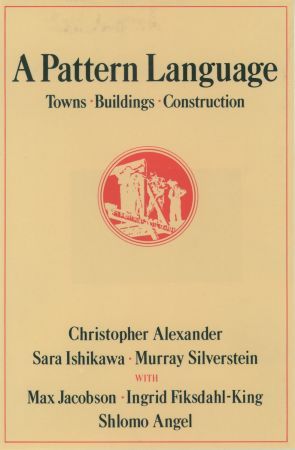
A Pattern Language: Towns, Buildings, Construction
by Christopher W. Alexander
Rating: 4.4 ⭐
• 11 recommendations ❤️
At the core of A Pattern Language is the philosophy that in designing their environments people always rely on certain ‘languages,’ which, like the languages we speak, allow them to articulate and communicate an infinite variety of designs within a formal system which gives them coherence.This book provides a language of this kind. It will enable making a design for almost any kind of building, or any part of the built environment. ‘Patterns,’ the units of this language, are answers to design problems: how high should a window sill be?; how many stories should a building have?; how much space in a neighborhood should be devoted to grass and trees?More than 250 of the patterns in this language are outlined, each consisting of a problem statement, a discussion of the problem with an illustration, and a solution. As the authors say in their introduction, many of the patterns are archetypal, so deeply rooted in the nature of things that it seems likely that they will be a part of human nature and human action as much in five hundred years as they are today.A Pattern Language is related to Alexander’s other works in the Center for Environmental Structure series: The Timeless Way of Building (introductory volume) and The Oregon Experiment.

"It is [a] belief in diversity and pluralism and the uniqueness of each person that underlies all my writings . . . " -from the Preface.Regarded as the most influential and widely read thinker on modern organizations and their management, Peter Drucker has also established himself as an unorthodox and independent analyst of politics, the economy, and society. A man of impressive scope and expertise, he has paved significant inroads in a number of key areas, sharing his knowledge and keen insight on everything from the plight of the employee and the effects of technology to the vicissitudes of the markets and the future of the new world order. Adventures of a Bystander is Drucker's rich collection of autobiographical stories and vignettes, in which this legendary figure paints a portrait of his remarkable life, and of the larger historical realities of his time.In a style that is both unique and engaging, Drucker conveys his life story -from his early teen years in Vienna through the interwar years in Europe, the New Deal era, World War II, and the postwar period in America-through intimate profiles of a host of fascinating people he's known through the years. Their personal histories are, as Drucker tells us, the beads for which his own life serves as the string. A colorful group, these diverse, often unpredictable, always multidimensional individuals were chosen "because each of them, in his or her own highly personal way, reflects and refracts the thirty crucial years from the end of World War I to the first post-World War II decade-the thirty years that largely formed the world in which we now live."An amazing pageant of characters, both famous and otherwise, springs from these pages, illuminating and defining one of the most tumultuous periods in world history. Along with bankers and courtesans, artists, aristocrats, prophets, and empire-builders, we meet members of Drucker's own family and close circle of friends, among them such prominent figures as Sigmund Freud, Henry Luce, Alfred Sloan, John Lewis, and Buckminster Fuller. Playing to perfection their roles as those who "reflect and refract" the customs, beliefs, and attitudes of the times, these singular personalities lend Adventures of a Bystander a striking "you-are-there" feel.A brief encounter with Freud becomes the catalyst for an absorbing, multidimensional description of the economics, politics, and social psychology of pre-World War II Europe. Drucker introduces us to Fritz Kraemer, a brilliant, monocle-wearing eccentric who became an influential mentor to the young Henry Kissinger. His personal memoir of Henry Luce documents the development of modern journalism, while in "The Indian Summer of Innocence," he rescues and preserves the very heart of the American experience during the last New Deal years before World War II.Shedding light on a turbulent and important era, Adventures of a Bystander also reflects Peter Drucker himself as a man of imaginative sympathy and enormous interest in people, ideas, and history. These enthralling stories complement and complete the groundbreaking analytical writing for which he is so revered.Luminous autobiographical stories by one of the greatest thinkers of our time"The cast of characters among whom Drucker moves is superbly rich, and the informed glimpse he provides of a vanished social and political universe is an education in itself. Adventures of a Bystander is better than a novel, more lively than an essay, and as thoughtful as both at their best." -The Harvard Business Review."Adventures of a Bystander is a virtuoso performance in which Drucker displays a dazzling diversity of personal interests and knowledge, an awesome power of recall, and a crisp, highly readable writing style." -BusinessWeek."Adventures of a Bystander appears in a stroke to have restored the art of the memoir and of the essay. It will doubtless be a while before its like comes round again." -The Washington Post.

The bestselling, widely acclaimed translation from Stephen MitchellIn eighty-one brief chapters, Lao-tzu's Tao Te Ching, or Book of the Way, provides advice that imparts balance and perspective, a serene and generous spirit, and teaches us how to work for the good with the effortless skill that comes from being in accord with the Tao—the basic principle of the universe.

"Refreshingly broad-brush in its approach...this history provides the big picture."—The Christian Science Monitor. Written from a consciously anti-enthnocentric approach, this fascinating work is a survey of the civilizations of the modern world in terms of the broad sweep and continuities of history, rather than the "event-based" technique of most other texts.ContentsList of mapsTranslator´s introductionBy way of prefaceIntroduction: History and the present dayI. A HISTORY OF CIVILIZATIONS1. Changing vocabulary2. The study of civilization involves all social sciences3. The continuity of civilizationsII. CIVILIZATIONS OUTSIDE EUROPEPart I. Islam and the Muslim World4. History5. Geography6. The greatness and decline of Islam7. The revival of Islam todayPart II: Africa8. The past9. Black Africa: Today and tomorrowPart III: The Far East10. An introduction to the Far East11. The China of the past12. China yesterday and today13. India yesterday and today14. The maritime Far East15. JapanIII. EUROPEAN CIVILIZATIONSPart I: Europe16. Geography and freedom17. Christianity, humanism and scientific thought18. The industrialization of Europe19. Unity in EuropePart II: America20. Latin America, the other New World21. America par excellence: the United States22. Failures and difficulties: From yesterday to the present23. An English-speaking UniversePart III: The other Europe: Muscovy, Russia, the USSR and the CIS24. From the beginning to the October Revolution of 191725. The USSR after 1917Index

Martin Ferguson Smith's work on Lucretius is both well known and highly regarded. However, his 1969 translation of De Rerum Natura --long out of print--is virtually unknown. Readers will share our excitement in the discovery of this accurate and fluent prose rendering. For this edition, Professor Smith provides a revised translation, new Introduction, headnotes and bibliography.

Composed toward the end of the first millennium, Beowulf is the elegiac narrative of the adventures of Beowulf, a Scandinavian hero who saves the Danes from the seemingly invincible monster Grendel and, later, from Grendel's mother. He then returns to his own country and dies in old age in a vivid fight against a dragon. The poem is about encountering the monstrous, defeating it, and then having to live on in the exhausted aftermath. In the contours of this story, at once remote and uncannily familiar at the beginning of the twenty-first century, Nobel laureate Seamus Heaney finds a resonance that summons power to the poetry from deep beneath its surface. Drawn to what he has called the "four-squareness of the utterance" in Beowulf and its immense emotional credibility, Heaney gives these epic qualities new and convincing reality for the contemporary reader.

Military Misfortunes: The Anatomy of Failure in War
by Eliot A. Cohen
Rating: 3.5 ⭐
• 2 recommendations ❤️
Rejecting accepted theories for unexpected military disasters, the authors brilliantly analyze disasters of great magnitude. They assert that military misfortune turns not on individual or collective failure but is rooted in the nature of the complex interconnections between men, systems, and organizations.

The Art Of The Long View: Planning For The Future In An Uncertain World
by Peter Schwartz
Rating: 3.8 ⭐
• 2 recommendations ❤️
What increasingly affects all of us, whether professional planners or individuals preparing for a better future, is not the tangibles of life—bottom-line numbers, for instance—but the intangibles: our hopes and fears, our beliefs and dreams. Only stories—scenarios—and our ability to visualize different kinds of futures adequately capture these intangibles.In The Art of the Long View, now for the first time in paperback and with the addition of an all-new User's Guide, Peter Schwartz outlines the "scenaric" approach, giving you the tools for developing a strategic vision within your business.Schwartz describes the new techniques, originally developed within Royal/Dutch Shell, based on many of his firsthand scenario exercises with the world's leading institutions and companies, including the White House, EPA, BellSouth, PG&E, and the International Stock Exchange.

The Pattern On The Stone: The Simple Ideas That Make Computers Work
by William Daniel Hillis
Rating: 3.8 ⭐
• 2 recommendations ❤️
Most people are baffled by how computers work and assume that they will never understand them. What they don't realize—and what Daniel Hillis's short book brilliantly demonstrates—is that computers' seemingly complex operations can be broken down into a few simple parts that perform the same simple procedures over and over again. Computer wizard Hillis offers an easy-to-follow explanation of how data is processed that makes the operations of a computer seem as straightforward as those of a bicycle.Avoiding technobabble or discussions of advanced hardware, the lucid explanations and colorful anecdotes in The Pattern on the Stone go straight to the heart of what computers really do. Hillis proceeds from an outline of basic logic to clear descriptions of programming languages, algorithms, and memory. He then takes readers in simple steps up to the most exciting developments in computing today—quantum computing, parallel computing, neural networks, and self-organizing systems.Written clearly and succinctly by one of the world's leading computer scientists, The Pattern on the Stone is an indispensable guide to understanding the workings of that most ubiquitous and important of the computer.
Infinite in All Directions is a popularized science at its best. In Dyson's view, science and religion are two windows through which we can look out at the world around us. The book is a revised version of a series of the Gifford Lectures under the title "In Praise of Diversity" given at Aberdeen, Scotland. They allowed Dyson the license to express everything in the universe, which he divided into two parts in polished focusing on the diversity of the natural world as the first, and the diversity of human reactions as the second half. Chapter 1 is a brief explanation of Dyson's attitudes toward religion and science. Chapter 2 is a one–hour tour of the universe that emphasizes the diversity of viewpoints from which the universe can be encountered as well as the diversity of objects which it contains. Chapter 3 is concerned with the history of science and describes two contrasting styles in one welcoming diversity and the other deploring it. He uses the cities of Manchester and Athens as symbols of these two ways of approaching science. Chapter 4, concerned with the origin of life, describes the ideas of six illustrious scientists who have struggled to understand the nature of life from various points of view. Chapter 5 continues the discussion of the nature and evolution of life. The question of why life characteristically tends toward extremes of diversity remains central in all attempts to understand life's place in the universe. Chapter 6 is an exercise in eschatology, trying to define possible futures for life and for the universe, from here to infinity. In this chapter, Dyson crosses the border between science and science fiction and he frames his speculations in a slightly theological context.

A Completely Revised and Expanded Edition of Medieval History, the Life and Death of a Civilization.A comprehensive general history of the Middle Ages, centring on medieval culture and religion, rather than political history. While the first and last sections are almost entirely new, Cantor has retained the narrative flow in the rest of the book for this revised edition.

In this engrossing study of an 1,100 year period that transformed ancient Europe, celebrated medievalist Jacques Le Goff explores the startling contradictions that helped to forge a durable civilization. It was a period of violence and bloodshed, in which plague and harsh natural conditions conspired against progress. It was also a period of nation-building and considerable achievements in the arts, sciences, and technology. Thirty-two pages of photo illustrations and eighteen maps give visual depth to the author's flawless scholarship and persuasive writing style, making Medieval Civilization an immensely vivid account of the triumph of Western man - a testament to his tenacity, imagination and faith.

The Western Canon: The Books and School of the Ages
by Harold Bloom
Rating: 3.8 ⭐
• 2 recommendations ❤️
A study of twenty-six canonical writers details the qualities that make them literary essentials, and includes Shakespeare, Chaucer, Milton, Beckett, Tolstoy, Freud, Molie+a6re, and others. By the author of The Book of J. 100,000 first printing. National ad/promo.

The Clash of Civilizations and the Remaking of World Order
by Samuel P. Huntington
Rating: 3.5 ⭐
• 6 recommendations ❤️
Since its initial publication nearly fifteen years ago The Clash of Civilizations and the Remaking of World Order has become a classic work of international relations and one of the most influential books ever written about foreign affairs. An insightful and powerful analysis of the forces driving global politics, it is as indispensable to our understanding of American foreign policy today as the day it was published. As former National Security Adviser Zbigniew Brzezinski says in his new foreword to the book, it “has earned a place on the shelf of only about a dozen or so truly enduring works that provide the quintessential insights necessary for a broad understanding of world affairs in our time.”Samuel Huntington explains how clashes between civilizations are the greatest threat to world peace but also how an international order based on civilizations is the best safeguard against war. Events since the publication of the book have proved the wisdom of that analysis. The 9/11 attacks and wars in Iraq and Afghanistan have demonstrated the threat of civilizations but have also shown how vital international cross-civilization cooperation is to restoring peace. As ideological distinctions among nations have been replaced by cultural differences, world politics has been reconfigured. Across the globe, new conflicts—and new cooperation—have replaced the old order of the Cold War era.The Clash of Civilizations and the Remaking of World Order explains how the population explosion in Muslim countries and the economic rise of East Asia are changing global politics. These developments challenge Western dominance, promote opposition to supposedly “universal” Western ideals, and intensify intercivilization conflict over such issues as nuclear proliferation, immigration, human rights, and democracy. The Muslim population surge has led to many small wars throughout Eurasia, and the rise of China could lead to a global war of civilizations. Huntington offers a strategy for the West to preserve its unique culture and emphasizes the need for people everywhere to learn to coexist in a complex, multipolar, muliticivilizational world.

Imagine a world where whole epochs will pass, cultures rise and fall, between a telephone call and the reply. Think of the human race multiplying 500-million fold, or evolving new, distinct species. Consider the technology of space colonization, computer-assisted reproduction, the “Martian potato.” One hundred years after H. G. Wells visited the future in The Time Machine , Freeman Dyson marshals his uncommon gifts as a scientist and storyteller to take us once more to that ever-closer, ever-receding time to come.Since Disturbing the Universe , the book that first brought him international renown, Freeman Dyson has been helping us see ourselves and our world from a scientist’s point of view. In Imagined Worlds he brings this perspective to a speculative future to show us where science and technology, real and imagined, may be taking us. The stories he tells―about “Napoleonic” versus “Tolstoyan” styles of doing science; the coming era of radioneurology and radiotelepathy; the works of writers from Aldous Huxley to Michael Crichton to William Blake; Samuel Gompers and the American labor movement―come from science, science fiction, and history. Sharing in the joy and gloom of these sources, Dyson seeks out the lessons we must learn from all three if we are to understand our future and guide it in hopeful directions.Whether looking at the Gaia theory or the future of nuclear weapons, science fiction or the dangers of “science worship,” seagoing kayaks or the Pluto Express , Dyson is concerned with ethics, with how we might mitigate the evil consequences of technology and enhance the good. At the heart of it all is the belief once expressed by the biologist J. B. S. Haldane, that progress in science will bring enormous confusion and misery to humankind unless it is accompanied by progress in ethics.

From the editor of the widely praised The Landmark Thucydides, a new Landmark Edition of The Histories by Herodotus, the greatest classical work of history ever written.Herodotus was a Greek historian living in Ionia during the fifth century BCE. He traveled extensively through the lands of the Mediterranean and the Black Sea and collected stories, and then recounted his experiences with the varied people and cultures he encountered. Cicero called him “the father of history,” and his only work, The Histories, is considered the first true piece of historical writing in Western literature. With lucid prose that harks back to the time of oral tradition, Herodotus set a standard for narrative nonfiction that continues to this day.In The Histories, Herodotus chronicles the rise of the Persian Empire and its dramatic war with the Greek city-states. Within that story he includes rich veins of anthropology, ethnography, geology, and geography, pioneering these fields of study, and explores such universal themes as the nature of freedom, the role of religion, the human costs of war, and the dangers of absolute power. Ten years in the making, The Landmark Herodotus gives us a new, dazzling translation by Andrea L. Purvis that makes this remarkable work of literature more accessible than ever before. Illustrated, annotated, and filled with maps, this edition also includes an introduction by Rosalind Thomas and twenty-one appendices written by scholars at the top of their fields, covering such topics as Athenian government, Egypt, Scythia, Persian arms and tactics, the Spartan state, oracles, religion, tyranny, and women.Like The Landmark Thucydides before it, The Landmark Herodotus is destined to be the most readable and comprehensively useful edition of The Histories available.

Dirt, soil, call it what you want—it's everywhere we go. It is the root of our existence, supporting our feet, our farms, our cities. This fascinating yet disquieting book finds, however, that we are running out of dirt, and it's no laughing matter. An engaging natural and cultural history of soil that sweeps from ancient civilizations to modern times, The Erosion of Civilizations explores the compelling idea that we are—and have long been—using up Earth's soil. Once bare of protective vegetation and exposed to wind and rain, cultivated soils erode bit by bit, slowly enough to be ignored in a single lifetime but fast enough over centuries to limit the lifespan of civilizations. A rich mix of history, archaeology and geology, Dirt traces the role of soil use and abuse in the history of Mesopotamia, Ancient Greece, the Roman Empire, China, European colonialism, Central America, and the American push westward. We see how soil has shaped us and we have shaped soil—as society after society has risen, prospered, and plowed through a natural endowment of fertile dirt. David R. Montgomery sees in the recent rise of organic and no-till farming the hope for a new agricultural revolution that might help us avoid the fate of previous civilizations.
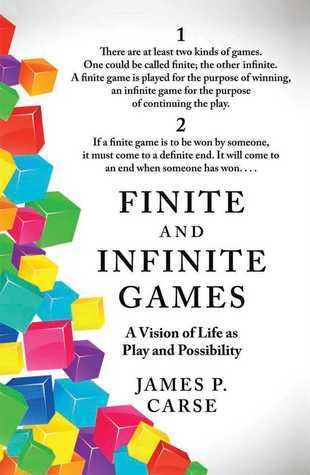
“There are at least two kinds of games,” states James P. Carse as he begins this extraordinary book. “One could be called finite; the other infinite. A finite game is played for the purpose of winning, an infinite game for the purpose of continuing the play.”Finite games are the familiar contests of everyday life; they are played in order to be won, which is when they end. But infinite games are more mysterious. Their object is not winning, but ensuring the continuation of play. The rules may change, the boundaries may change, even the participants may change—as long as the game is never allowed to come to an end.What are infinite games? How do they affect the ways we play our finite games? What are we doing when we play—finitely or infinitely? And how can infinite games affect the ways in which we live our lives?Carse explores these questions with stunning elegance, teasing out of his distinctions a universe of observation and insight, noting where and why and how we play, finitely and infinitely. He surveys our world—from the finite games of the playing field and playing board to the infinite games found in culture and religion—leaving all we think we know illuminated and transformed. Along the way, Carse finds new ways of understanding everything, from how an actress portrays a role to how we engage in sex, from the nature of evil to the nature of science. Finite games, he shows, may offer wealth and status, power and glory, but infinite games offer something far more subtle and far grander.Carse has written a book rich in insight and aphorism. Already an international literary event, Finite and Infinite Games is certain to be argued about and celebrated for years to come. Reading it is the first step in learning to play the infinite game.
Thinking in Time: The Uses of History for Decision-Makers
by Richard E. Neustadt
Rating: 3.8 ⭐
• 2 recommendations ❤️
Offers guidance on the use of historical analogies in clarifying a problem, defining basic objectives, and making a decision.

The Discoverers: A History of Man's Search to Know His World and Himself
by Daniel J. Boorstin
Rating: 4.1 ⭐
• 4 recommendations ❤️
An original history of man's greatest adventure: his search to discover the world around him.

The Story of Writing: Alphabets, Hieroglyphs, & Pictograms
by Andrew Robinson
Rating: 4.0 ⭐
• 2 recommendations ❤️
A survey of the world's major scripts, studied through sight, sound and symbol Andrew Robinson explains the interconnection between sound, symbol, and script in a succinct and absorbing text. He discusses each of the major writing systems in turn, from cuneiform and Egyptian and Mayan hieroglyphs to alphabets and the scripts of China and Japan, as well as topics such as the Cherokee “alphabet” and the writing of runes. Full coverage is given to the history of decipherment, and a provocative chapter devoted to undeciphered scripts challenges the can these codes ever be broken? In this revised edition, the author reveals the latest discoveries to have an impact on our knowledge of the history of writing, including the Tabula Cortonensis showing Etruscan symbols and a third millennium BC seal from Turkmenistan that could solve the mystery of how Chinese writing evolved. He also discusses how the digital revolution has not, despite gloomy predictions, spelled doom for the printed book. In addition, the table of Maya glyphs has been revised so that they are up-to-date with current research.

Powers of Ten: About the Relative Size of Things in the Universe
by Philip Morrison
Rating: 4.1 ⭐
• 2 recommendations ❤️
Book by Morrison, Philip, Morrison, Phylis

The King and the Corpse: Tales of the Soul's Conquest of Evil
by Heinrich Robert Zimmer
Rating: 4.3 ⭐
• 2 recommendations ❤️
Drawing from Eastern and Western literatures, Heinrich Zimmer presents a selection of stories linked together by their common concern for the problem of our eternal conflict with the forces of evil. Beginning with a tale from the Arabian Nights, this theme unfolds in legends from Irish paganism, medieval Christianity, the Arthurian cycle, and early Hinduism. In the retelling of these tales, Zimmer discloses the meanings within their seemingly unrelated symbols and suggests the philosophical wholeness of this assortment of myth.

The Landmark Thucydides: A Comprehensive Guide to the Peloponnesian War
by Thucydides
Rating: 4.4 ⭐
• 2 recommendations ❤️
Thucydides called his account of two decades of war between Athens and Sparta “a possession for all time,” and indeed it is the first and still the most famous work in the Western historical tradition.Considered essential reading for generals, statesmen, and liberally educated citizens for more than 2,000 years, The Peloponnesian War is a mine of military, moral, political, and philosophical wisdom.However, this classic book has long presented obstacles to the uninitiated reader. Written centuries before the rise of modern historiography, Thucydides' narrative is not continuous or linear. His authoritative chronicle of what he considered the greatest war of all time is rigorous and meticulous, yet omits the many aids to comprehension modern readers take for granted—such as brief biographies of the story's main characters, maps and other visual enhancements, and background on the military, cultural, and political traditions of ancient Greece.Robert Strassler's new edition amends these omissions, and not only provides a new coherence to the narrative overall but effectively reconstructs the lost cultural context that Thucydides shared with his original audience. Based on the venerable Richard Crawley translation, updated and revised for modern readers, The Landmark Thucydides includes a vast array of superbly designed and presented maps, brief informative appendices by outstanding classical scholars on subjects of special relevance to the text, explanatory marginal notes on each page, an index of unprecedented subtlety and depth, and numerous other useful features. Readers will find that with this edition they can dip into the text at any point and be immediately oriented with regard to the geography, season, date, and stage of the conflict.In any list of the Great Books of Western Civilization, The Peloponnesian War stands near the top. This handsome, elegant, and authoritative new edition will ensure that its greatness is appreciated by future generations.

The Long Summer: How Climate Changed Civilization
by Brian M. Fagan
Rating: 3.7 ⭐
• 2 recommendations ❤️
For more than a century we've known that much of human evolution occurred in an Ice Age. Starting about 15,000 years ago, temperatures began to rise, the glaciers receded, and sea levels rose. The rise of human civilization and all of recorded history occurred in this warm period, known as the Holocene.Until very recently we had no detailed record of climate changes during the Holocene. Now we do. In this engrossing and captivating look at the human effects of climate variability, Brian Fagan shows how climate functioned as what the historian Paul Kennedy described as one of the "deeper transformations" of history--a more important historical factor than we understand.

'Journey over all the universe in a map, without the expense and fatigue of traveling, without suffering the inconveniences of heat, cold, hunger, and thirst.' --Miguel de Cervantes, in Don Quixote From the earliest of times, maps have fired our imaginations and helped us make sense of our world, from the global to the very local. Head of Map Collections at the British Library, Peter Barber has here compiled an historic and lavish atlas, charting the progress of civilization as our knowledge of the world expanded. Simply organized as a progression through time, The Map Book collects some 175 maps that span four millennia - from the famed prehistoric Bedolina (Italy) incision in rock from around 1500 B.C. to the most modern, digitally enhanced rendering. Many of the maos are beautiful works of art in their own right. From Europe to the Americas, Africa to Asia, north to south, there are maps of oceans and continents charted by heroic adventurers sailing into the unknown, as accounts spread of new discoveries, shadowy continents begin to appear n the margins of the world, often labeled 'unknown lands.' Other maps had a more practical some demarcated national boundaries or individual plots of land; military plans depicted enemy positions; propaganda treatises showed one country or faction at an advantage over others. So much history resides in each map--cultural, mythological, navigational--expressing the unlimited extent of human imagination. This is captured in the accompanying texts--mini essays by leading map historians--that are as vivid and insightful as the maps themselves. They make The Map Book as much a volume to be read as to be visually admired.

The third edition of Geoffery Blainey’s highly acclaimed study on the causes of war has been expanded and updated to include a complete discussion of World War II and the road towards nuclear war.Analyzing all international wars since 1700, Causes of War solves the riddle of why some wars are long and some are short and demonstrates how the “outbreak of peace” offers insight into the outbreak of war.Proving that war and peace are alternating phases of a relationship between rival nations, this widely quoted work offers a crucial, new understanding of international armed conflict.

The governance of natural resources used by many individuals in common is an issue of increasing concern to policy analysts. Both state control and privatization of resources have been advocated, but neither the state nor the market have been uniformly successful in solving common pool resource problems. After critiquing the foundations of policy analysis as applied to natural resources, Elinor Ostrom here provides a unique body of empirical data to explore conditions under which common pool resource problems have been satisfactorily or unsatisfactorily solved. Dr Ostrom uses institutional analysis to explore different ways - both successful and unsuccessful - of governing the commons. In contrast to the proposition of the 'tragedy of the commons' argument, common pool problems sometimes are solved by voluntary organizations rather than by a coercive state. Among the cases considered are communal tenure in meadows and forests, irrigation communities and other water rights, and fisheries.

"Frederic Lane has achieved what is the often unfulfilled dream of every historian who has devoted his entire work to the exploration of partial aspects of a single broad he has given us a comprehensive, thoughtful, readable, beautifully illustrated general history of Venice from the origins to the beginning of decline." -- Speculum

Homo Ludens: A Study of the Play-Element in Culture
by Johan Huizinga
Rating: 4.0 ⭐
• 2 recommendations ❤️
2014 Reprint of 1955 Edition. Full facsimile of the original edition. Not reproduced with Optical Recognition Software. In "Homo Ludens," the classic evaluation of play that has become a "must-read" for those in game design, Dutch philosopher Johan Huizinga defines play as the central activity in flourishing societies. Like civilization, play requires structure and participants willing to create within limits. Starting with Plato, Huizinga traces the contribution of "Homo Ludens," or "Man the player" through Medieval Times, the Renaissance, and into our modern civilization. Huizinga defines play against a rich theoretical background, using cross-cultural examples from the humanities, business, and politics. "Homo Ludens" defines play for generations to come.

The Complete Guide to Trail Building and Maintenance, 3rd Edition
by Carl Demrow
Rating: 4.0 ⭐
• 2 recommendations ❤️
Used by both the U.S. Forest and Park Services, this manual explains how to plan, build, design, and maintain trails.

As a young Florentine envoy to the courts of France and the Italian principalities, Niccolò Machiavelli (1469–1527) was able to observe firsthand the lives of people strongly united under one powerful ruler. His fascination with that political rarity and his intense desire to see the Medici family assume a similar role in Italy provided the foundation for his "primer for princes." In this classic guide to acquiring and maintaining political power, Machiavelli used a rational approach to advise prospective rulers, developing logical arguments and alternatives for a number of potential problems, among them governing hereditary monarchies, dealing with colonies and the treatment of conquered peoples.Refreshing in its directness, yet often disturbing in its cold practicality, The Prince sets down a frighteningly pragmatic formula for political fortune. Starkly relevant to the political upheavals of the 20th century, this calculating prescription for power remains today, nearly 500 years after it was written, a timely and startling lesson in the practice of autocratic rule that continues to be much read and studied by students, scholars and general readers as well.Reprint of The Prince from Vol. 36 of the Harvard Classics series, translated by N. H. Thompson and published by P. F. Collier & Son Company, New York, 1910.

The Way Life Works: The Science Lover's Illustrated Guide to How Life Grows, Develops, Reproduces, and Gets Along
by Mahlon B. Hoagland
Rating: 4.3 ⭐
• 2 recommendations ❤️
In the tradition of David Macaulay's The Way Things Work, this popular-science book--a unique collaboration between a world-renowned molecular biologist and an equally talented artist--explains how life grows, develops, reproduces, and gets by. Full color.From the Hardcover edition.

One True God: Historical Consequences of Monotheism
by Rodney Stark
Rating: 3.6 ⭐
• 2 recommendations ❤️
Western history would be unrecognizable had it not been for people who believed in One True God. There would have been wars, but no religious wars. There would have been moral codes, but no Commandments. Had the Jews been polytheists, they would today be only another barely remembered people, less important, but just as extinct as the Babylonians. Had Christians presented Jesus to the Greco-Roman world as ''another'' God, their faith would long since have gone the way of Mithraism. And surely Islam would never have made it out of the desert had Muhammad not removed Allah from the context of Arab paganism and proclaimed him as the only God.The three great monotheisms changed everything. With his customary clarity and vigor, Rodney Stark explains how and why monotheism has such immense power both to unite and to divide. Why and how did Jews, Christians, and Muslims missionize, and when and why did their efforts falter? Why did both Christianity and Islam suddenly become less tolerant of Jews late in the eleventh century, prompting outbursts of mass murder? Why were the Jewish massacres by Christians concentrated in the cities along the Rhine River, and why did the pogroms by Muslims take place mainly in Granada? How could the Jews persist so long as a minority faith, able to withstand intense pressures to convert? Why did they sometimes assimilate? In the final chapter, Stark also examines the American experience to show that it is possible for committed monotheists to sustain norms of civility toward one another.A sweeping social history of religion, One True God shows how the great monotheisms shaped the past and created the modern world.

This 1937 successor to Last and First Men offers another entrancing speculative history of the future. Cited as a key influence by science-fiction masters such as Doris Lessing, its bold exploration of the cosmos ventures into intelligent star clusters and mingles among alien races for a memorable vision of infinity.

The Sleepwalkers: A History of Man's Changing Vision of the Universe
by Arthur Koestler
Rating: 4.3 ⭐
• 2 recommendations ❤️
An extraordinary history of humanity's changing vision of the universe. In this masterly synthesis, Arthur Koestler cuts through the sterile distinction between 'sciences' and 'humanities' to bring to life the whole history of cosmology from the Babylonians to Newton. He shows how the tragic split between science and religion arose and how, in particular, the modern world-view replaced the medieval world-view in the scientific revolution of the seventeenth century. He also provides vivid and judicious pen-portraits of a string of great scientists and makes clear the role that political bias and unconscious prejudice played in their creativity.

Thirty years ago, this best-selling book defined the "conceptual" approach to introductory physics. Today, the Ninth Edition shows how text and media can be integrated to bring physics to life for non-scientists. Hewitt's book engages readers with analogies and imagery from real-world situations to build a strong conceptual understanding of physical principles ranging from classical mechanics to modern physics. With this strong foundation, readers are better equipped to understand the equations and formulas of physics, and motivated to explore the thought-provoking exercises and fun projects in each chapter. Icons in this new edition direct readers to The Physics Place web site (www.physicsplace.com) where they will find interactive and animated tutorials, video demonstrations, and hundreds of problems and activities. This new text-media combination gives readers more of what they need -whether it's animated explanations or interactive exercises -to make the connections between the concepts of physics and their everyday world. For college instructors and students.

One of the world’s most important scientists, Edward O. Wilson is also an abundantly talented writer who has twice won the Pulitzer Prize. In this, his most personal and timely book to date, he assesses the precarious state of our environment, examining the mass extinctions occurring in our time and the natural treasures we are about to lose forever. Yet, rather than eschewing doomsday prophesies, he spells out a specific plan to save our world while there is still time. His vision is a hopeful one, as economically sound as it is environmentally necessary. Eloquent, practical and wise, this book should be read and studied by anyone concerned with the fate of the natural world.

The Rise of the West: A History of the Human Community; with a Retrospective Essay
by William H. McNeill
Rating: 4.1 ⭐
• 2 recommendations ❤️
The Rise of the West , winner of the National Book Award for history in 1964, is famous for its ambitious scope and intellectual rigor. In it, McNeill challenges the Spengler-Toynbee view that a number of separate civilizations pursued essentially independent careers, and argues instead that human cultures interacted at every stage of their history. The author suggests that from the Neolithic beginnings of grain agriculture to the present major social changes in all parts of the world were triggered by new or newly important foreign stimuli, and he presents a persuasive narrative of world history to support this claim.In a retrospective essay titled " The Rise of the West after Twenty-five Years," McNeill shows how his book was shaped by the time and place in which it was written (1954-63). He discusses how historiography subsequently developed and suggests how his portrait of the world's past in The Rise of the West should be revised to reflect these changes."This is not only the most learned and the most intelligent, it is also the most stimulating and fascinating book that has ever set out to recount and explain the whole history of mankind. . . . To read it is a great experience. It leaves echoes to reverberate, and seeds to germinate in the mind."—H. R. Trevor-Roper, New York Times Book Review

Guns, Germs, and Steel: The Fates of Human Societies
by Jared Diamond
Rating: 4.1 ⭐
• 24 recommendations ❤️
Winner of the Pulitzer Prize • New York Times Bestseller • Over Two Million Copies Sold“One of the most significant projects embarked upon by any intellectual of our generation” (Gregg Easterbrook, New York Times), Guns, Germs, and Steel presents a groundbreaking, unified narrative of human history.Why did Eurasians conquer, displace, or decimate Native Americans, Australians, and Africans, instead of the reverse? In this “artful, informative, and delightful” (William H. McNeill, New York Review of Books) book, a classic of our time, evolutionary biologist Jared Diamond dismantles racist theories of human history by revealing the environmental factors actually responsible for its broadest patterns.The story begins 13,000 years ago, when Stone Age hunter-gatherers constituted the entire human population. Around that time, the developmental paths of human societies on different continents began to diverge greatly. Early domestication of wild plants and animals in the Fertile Crescent, China, Mesoamerica, the Andes, and other areas gave peoples of those regions a head start at a new way of life. But the localized origins of farming and herding proved to be only part of the explanation for their differing fates. The unequal rates at which food production spread from those initial centers were influenced by other features of climate and geography, including the disparate sizes, locations, and even shapes of the continents. Only societies that moved away from the hunter-gatherer stage went on to develop writing, technology, government, and organized religions as well as deadly germs and potent weapons of war. It was those societies, adventuring on sea and land, that invaded others, decimating native inhabitants through slaughter and the spread of disease.A major landmark in our understanding of human societies, Guns, Germs, and Steel chronicles the way in which the modern world, and its inequalities, came to be.

'The intricately plotted progress of characters from near to farfuture...on an Earth which, like an abandon playground, has long ago been left behind by an evolving humanity...human-scale action within a vast canvas' The Excyclopedia of Science Fiction. Encompassing time-travel, powerful mystery and the future history of humanity to its last handful of survivors, Across Realtime spans millions of years and isan utterly engrossing SF classic. 'You can hardly turn the pages fast enough. As sheer entertainment, it's a winner' Locus

Bill Bryson describes himself as a reluctant traveller, but even when he stays safely at home he can't contain his curiosity about the world around him. "A Short History of Nearly Everything" is his quest to understand everything that has happened from the Big Bang to the rise of civilisation - how we got from there, being nothing at all, to here, being us. The ultimate eye-opening journey through time and space, revealing the world in a way most of us have never seen it before.

Historian Arthur Herman traces the roots of declinism and shows how major thinkers, past and present, have contributed to its development as a coherent ideology of cultural pessimism.From Nazism to the Sixties counterculture, from Britain's Fabian socialists to America's multiculturalists, and from Dracula and Freud to Robert Bly and Madonna, this work examines the idea of decline in Western history and sets out to explain how the conviction of civilization's inevitable end has become a fixed part of the modern Western imagination. Through a series of biographical portraits spanning the 19th and 20th centuries, the author traces the roots of declinism and aims to show how major thinkers of the past and present, including Nietzsche, DuBois, Sartre, and Foucault, have contributed to its development as a coherent ideology of cultural pessimism.

Our Bodies, Ourselves: A Book by and for Women: Reviesed and Expanded
by Boston Women's Health Book Collective
Rating: 4.3 ⭐
• 2 recommendations ❤️
This paperback book "Our Bodies, Ourselves" is preowned and is in good condition. It is a 2nd edition revised and expanded 1976. There is a black mark on the outside of the pages on the side of the book. Behind the front cover is some discoloring and a spot. The pages are yellowing from age. I do not see any markings in the book but I did not look at each page.

The Past From Above: Aerial Photographs of Archaeological Sites
by
Rating: 4.5 ⭐
• 2 recommendations ❤️
Now available in paperback, The Past From Above presents stunning aerial photographs of 250 of the world's foremost archaeological sites. The photographer, Georg Gerster, has been shooting ancient sites from the air for more than fifty years. In this current collection, his subjects range fromthe temple complex at Karnak to the Great Wall of China, and from the Acropolis in Athens to Aztec palaces in Mexico. Gerster's photographs are technical achievements--often produced under hair-raising circumstances--in their own right but at the same time offer a unique visual history of mankindstretching back to the dawn of civilization. Charlotte introduces the photographs with an overview of the critical role that aerial photography has played in archaeological research.

Hailed by The Washington Post as "a definitive synthesis of the best editions" and by The Times of London as "a monument to Shakespearean scholarship," The Oxford Shakespeare is the ultimate anthology of the Bard's work: the most authoritative edition of the plays and poems ever published.Now, almost two decades after the original volume, Oxford is proud to announce a thoroughly updated second edition, including for the first time the texts of The Reign of Edward III and Sir Thomas More, recognizing these two plays officially as authentic works by Shakespeare. This beautiful collection is the product of years of full-time research by a team of British and American scholars and represents the most thorough examination ever undertaken of the nature and authority of Shakespeare's work. The editors reconsidered every detail of the text in the light of modern scholarship and they thoroughly re-examined the earliest printed versions of the plays, firmly establishing the canon and chronological order of composition. All stage directions have been reconsidered in light of original staging, and many new directions for essential action have been added. This superb volume also features a brief introduction to each work as well as an illuminating General Introduction. Finally, the editors have added a wealth of secondary material, including an essay on language, a list of contemporary allusions to Shakespeare, an index of Shakespearean characters, a glossary, a consolidated bibliography, and an index of first lines of the Sonnets.Compiled by the world's leading authorities, packed with information, and attractively designed, The Oxford Shakespeare is the gold standard of Shakespearean anthologies.Table of ContentsIntroductionContemporary Allusions to ShakespeareCommendatory Poems and Prefaces (1599-1640)1. The Two Gentlemen of Verona2. The Taming of the Shrew3. The First Part of the Contention of the Two Famous Houses of York and Lancaster (2 Henry VI)4. The True Tragedy of Richard Duke of York and the Good King Henry the Sixth (3 Henry VI)5. The First Part of Henry the Sixth6. The Most Lamentable Tragedy of Titus Andronicus7. The Tragedy of King Richard the Third8. Venus and Adonis9. The Rape of Lucrece10. The Reign of King Edward the Third11. The Comedy of Errors12. Love's Labour's Lost13. Love's Labour's Won: A Brief Account14. The Tragedy of King Richard the Second15. The Most Excellent and Lamentable Tragedy of Romeo and Juliet16. A Midsummer Night's Dream17. The Life and Death of King John18. The Comical History of The Merchant of Venice, or Otherwise Called the Jew of Venice19. The History of Henry the Fourth (1 Henry IV)20. The Merry Wives of Windsor21. The Second Part of Henry the Fourth (2 Henry IV)22. Much Ado About Nothing23. The Life of Henry the Fifth24. The Tragedy of Julius Caesar25. As You Like It26. The Tragedy of Hamlet, Prince of Denmark27. Twelfth Night, or What You Will28. Troilus and Cressida29. Sonnets and 'A Lover's Complaint'30. Various Poems31. Sir Thomas More32. Measure for Measure33. The Tragedy of Othello, the Moor of Venice34. The Life of Timon of Athens35. The History of King Lear: The Quarto Text36. The Tragedy of Macbeth37. The Tragedy of Antony and Cleopatra38. All's Well That Ends Well39. Pericles, Prince of Tyre: A Reconstructed Text40. The Tragedy of Coriolanus41. The Winter's Tale42. The Tragedy of King Lear: The Folio Text43. Cymbeline, King of Britain44. The Tempest45. Cardenio: A Brief Account46. All Is True (Henry VIII)47. The Two Noble KinsmenSelect Glossary

Brave New World is a dystopian social science fiction novel by English author Aldous Huxley. Largely set in a futuristic World State, whose citizens are environmentally engineered into an intelligence-based social hierarchy, the novel anticipates huge scientific advancements in reproductive technology, sleep-learning, psychological manipulation and classical conditioning that are combined to make a dystopian society which is challenged by only a single individual: the story's protagonist.

The History of the Decline and Fall of the Roman Empire
by Edward Gibbon
Rating: 4.1 ⭐
• 6 recommendations ❤️
'Instead of inquiring why the Roman empire was destroyed, we should rather be surprised that it had subsisted so long'Edward Gibbon's Decline and Fall of the Roman Empire compresses thirteen turbulent centuries into an epic narrative shot through with insight, irony and incisive character analysis. Sceptical about Christianity, sympathetic to the barbarian invaders and the Byzantine Empire, constantly aware of how political leaders often achieve the exact opposite of what they intend, Gibbon was both alert to the broad pattern of events and significant revealing detail. The first of the six volumes, published in 1776, was attacked for its enlightened views on politics, sexuality and religion, yet it was an immediate bestseller and widely acclaimed for the elegance of its prose. Gripping, powerfully intelligent and wonderfully entertaining, this is among the greatest works of history in the English language and a literary masterpiece of its age.

Rage—Goddess, sing the rage of Peleus' son Achilles,murderous, doomed, that cost the Achaeans countless losses,hurling down to the House of Death so many sturdy souls …Thus begins the stirring story of the Trojan War and the rage of Achilles that has gripped listeners and readers for 2,700 years. This timeless poem still vividly conveys the horror and heroism of men and gods wrestling with towering emotions and battling amidst devastation and destruction, as it moves inexorably to its wrenching, tragic conclusion. Renowned classicist Bernard Knox observes in his superb Introduction that although the violence of the Iliad is grim and relentless, it coexists with both images of civilized life and a poignant yearning for peace.Combining the skills of a poet and scholar, Robert Fagles brings the energy of contemporary language to this enduring heroic epic. He maintains the drive and metric music of Homer's poetry, and evokes the impact and nuance of the Iliad's mesmerizing repeated phrases in what Peter Levi calls "an astonishing performance."

Sing to me of the man, Muse, the man of twists and turnsdriven time and again off course, once he had plunderedthe hallowed heights of Troy.If the Iliad is the world's greatest war epic, then the Odyssey is literature's grandest evocation of everyman's journey though life. Odysseus' reliance on his wit and wiliness for survival in his encounters with divine and natural forces, during his ten-year voyage home to Ithaca after the Trojan War, is at once a timeless human story and an individual test of moral endurance. In the myths and legends that are retold here, Fagles has captured the energy and poetry of Homer's original in a bold, contemporary idiom, and given us an Odyssey to read aloud, to savor, and to treasure for its sheer lyrical mastery.Renowned classicist Bernard Knox's superb Introduction and textual commentary provide new insights and background information for the general reader and scholar alike, intensifying the strength of Fagles' translation.This is an Odyssey to delight both the classicist and the public at large, and to captivate a new generation of Homer's students.--Robert Fagles, winner of the PEN/Ralph Manheim Medal for Translation and a 1996 Academy Award in Literature from the American Academy of Arts and Letters, presents us with Homer's best-loved and most accessible poem in a stunning new modern-verse translation.

This revised edition (1972) provides a prose rendering of The Epic of Gilgamesh, the cycle of poems preserved on clay tablets surviving from ancient Mesopotamia of the third millennium B.C. One of the best and most important pieces of epic poetry from human history, predating even Homer's Iliad by roughly 1,500 years, the Gilgamesh epic tells of the various adventures of that hero-king, including his quest for immortality, and an account of a great flood similar in many details to the Old Testament's story of Noah. The translator also provides an interesting and useful introduction explaining much about the historical context of the poem and the archeological discovery of the tablets.

The Encyclopedia of Earth: A Complete Visual Guide
by Michael Allaby
Rating: 4.6 ⭐
• 2 recommendations ❤️
This sumptuously illustrated, beautifully written encyclopedia, the best book available on the topic, presents the most up-to-date information about planet Earth in a style and format that will appeal to an extremely wide range of readers. With thousands of photographs, illustrations, diagrams, and maps and a text written by a team of international experts, it presents an impressive overview of our globe―beginning with the history of the universe and ending with today's conservation issues. A truly spectacular reference, The Encyclopedia of Earth offers new visual interpretations of many ideas, concepts, and facts, painting a fascinating picture of Earth today and across the ages.The encyclopedia is divided into six sections that are designed for either browsing or in-depth study. Birth gives an overview of Earth's 4.6-billion-year history, including the evolution of life. Fire explains the inner workings of our dynamic planet, its structure, and the tectonic forces that have molded its landscape. Land surveys rocks, minerals, and habitats. Air covers weather, including extreme weather events such as tornadoes and hurricanes. Water tours the oceans, rivers, and lakes of the world. The final section, Humans, provides a compelling portrait of our relationship with Earth, and of how the natural world has shaped social and political developments. Weldon Owen PublishingThe Encyclopedia of Earth * Some of the world's finest landscape photography and hundreds of detailed illustrations and diagrams, cross sections, cutaways, maps, and charts* Coverage of topics including volcanology, paleontology, geology, natural history, cosmology, and more* Simple, easy-to-understand explanations of complex phenomena* The most recent scientific information and conservation data* "Fact files" providing information at readers' fingertips* "Heritage Watch" boxes focusing on key conservation issues and World Heritage sites
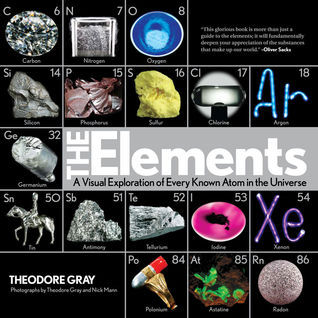
The Elements: A Visual Exploration of Every Known Atom in the Universe
by Theodore Gray
Rating: 4.4 ⭐
• 2 recommendations ❤️
With more than 1 million copies sold worldwide, The Elements is the most entertaining, comprehensive, and visually arresting book on all 118 elements in the periodic table.Includes a poster of Theodore Gray's iconic photographic periodic table of the elements!Based on seven years of research and photography by Theodore Gray and Nick Mann, The Elements presents the most complete and visually arresting representation available to the naked eye of every atom in the universe. Organized sequentially by atomic number, every element is visualized by a big beautiful photograph that most closely represents it in its purest form. Several additional photographs show each element in slightly altered forms or as used in various practical ways. Also included are fascinating stories of the elements, told in Theo Grays inimitable style, as well as data on the properties of each, including atomic number, atomic symbol, atomic weight, density, atomic radius, as well as scales for electron filling order, state of matter, and an atomic emission spectrum.This work of solid science and stunning artistic photographs is the perfect gift book for every sentient creature in the universe.

This comprehensive medical resource, The Merck Manual - - Third Home Edition , extensively covers health care for newborns, the elderly, and everyone in between. The new Third Home Edition provides the same authoritative information doctors have relied on in The Merck Manual, for more than a century, in easy-to-understand, everyday language. Previous editions have sold more than 3 million copies. Written by more than 200 internationally respected medical experts, this new edition of the world's bestselling reference presents in-depth information for medical situations, including:AgingGynecological DisordersHeart diseaseDigestive disordersCancerNutrition problemsAIDSHormonal problemsInfections and immunizationsNeurological DisordersPediatric DisordersMen's, women's and children's health issuesMental health disordersAccidents and injuriesCare for the dying And much more...

The Coming Population Crash: and Our Planet's Surprising Future
by Fred Pearce
Rating: 3.7 ⭐
• 2 recommendations ❤️
Demography is destiny. It underlies many of the issues that shake the world, from war and economics to immigration. No wonder, then, that fears of overpopulation flared regularly over the last century, a century that saw the world's population quadruple. Even today, baby booms are blamed for genocide and terrorism, and overpopulation is regularly cited as the primary factor driving global warming and other environmental issues.Yet, surprisingly, it appears that the explosion is past its peak. Around the world, in developing countries as well as in rich ones, today's women are having on average 2.6 children, half the number their mothers had. Within a generation, world fertility will likely follow Europe's to below replacement levels—and by 2040, the world's population will be declining for the first time since the Black Death, almost seven hundred years ago.In The Coming Population Crash , veteran environmental writer Fred Pearce reveals the dynamics behind this dramatic shift. Charting the demographic path of our species over two hundred years, he begins by chronicling the troubling history of authoritarian efforts to contain the twentieth century's population explosion, as well as the worldwide trend toward the empowerment of women that led to lower birthrates. And then, with vivid reporting from around the globe, he dives into the environmental, social, and economic effects of our surprising demographic future.Now is probably the last time in history that our world will hold more young people than elders. Most fear that an aging world population will put a serious drain on national resources, as a shrinking working population supports a growing number of retirees. But is this necessarily so? Might an older world population have an upside? Pearce also shows us why our demographic future holds increased migration rates, and reveals the hypocrisy at the heart of anti-immigrant rhetoric in the developed the simple fact is that countries with lower birthrates need workers and countries with higher birthrates need work. And he tackles the truism that population density always leads to environmental degradation, taking us from some of the world's most densely packed urban slums to rural Africa to argue that underpopulation can sometimes be the cause of environmental woes, while cities could hold the key to sustainable living.Pearce's provocative book is essential reading for anyone who wants to know what demographics tell us about our global future, and for all those who believe in learning from the mistakes of the past.

From the author of the New York Times bestseller The Inevitable — a sweeping vision of technology as a living force that can expand our individual potential In this provocative book, one of today's most respected thinkers turns the conversation about technology on its head by viewing technology as a natural system, an extension of biological evolution. By mapping the behavior of life, we paradoxically get a glimpse at where technology is headed-or "what it wants." Kevin Kelly offers a dozen trajectories in the coming decades for this near-living system. And as we align ourselves with technology's agenda, we can capture its colossal potential. This visionary and optimistic book explores how technology gives our lives greater meaning and is a must-read for anyone curious about the future.
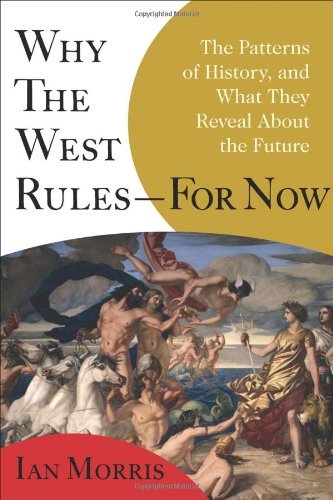
Why the West Rules-for Now: The Patterns of History & What They Reveal About the Future
by Ian Morris
Rating: 4.1 ⭐
• 2 recommendations ❤️
A New York Times Notable Book for 2011 Sometime around 1750, English entrepreneurs unleashed the astounding energies of steam and coal, and the world was forever changed. The emergence of factories, railroads, and gunboats propelled the West's rise to power in the nineteenth century, and the development of computers and nuclear weapons in the twentieth century secured its global supremacy. Now, at the beginning of the twenty-first century, many worry that the emerging economic power of China and India spells the end of the West as a superpower. In order to understand this possibility, we need to look back in time. Why has the West dominated the globe for the past two hundred years, and will its power last? Describing the patterns of human history, the archaeologist and historian Ian Morris offers surprising new answers to both questions. It is not, he reveals, differences of race or culture, or even the strivings of great individuals, that explain Western dominance. It is the effects of geography on the everyday efforts of ordinary people as they deal with crises of resources, disease, migration, and climate. As geography and human ingenuity continue to interact, the world will change in astonishing ways, transforming Western rule in the process. Deeply researched and brilliantly argued, Why the West Rules―for Now spans fifty thousand years of history and offers fresh insights on nearly every page. The book brings together the latest findings across disciplines―from ancient history to neuroscience―not only to explain why the West came to rule the world but also to predict what the future will bring in the next hundred years.
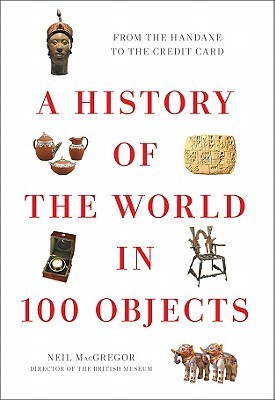
From the renowned director of the British Museum, a kaleidoscopic history of humanity told through things we have made. When did people first start to wear jewelry or play music? When were cows domesticated and why do we feed their milk to our children? Where were the first cities and what made them succeed? Who invented math-or came up with money?The history of humanity is a history of invention and innovation, as we have continually created new items to use, to admire, or to leave our mark on the world. In this original and thought-provoking book, Neil MacGregor, director of the British Museum, has selected one hundred man-made artifacts, each of which gives us an intimate glimpse of an unexpected turning point in human civilization. A History of the World in 100 Objects stretches back two million years and covers the globe. From the very first hand axe to the ubiquitous credit card, each item has a story to tell; together they relate the larger history of mankind-revealing who we are by looking at what we have made.Handsomely designed, with more than 150 color photographs throughout the text, A History of the World in 100 Objects is a gorgeous reading book and makes a great gift for anyone interested in history.

Triumph of the City: How Our Greatest Invention Makes Us Richer, Smarter, Greener, Healthier, and Happier
by Edward L. Glaeser
Rating: 3.9 ⭐
• 4 recommendations ❤️
A pioneering urban economist presents a myth-shattering look at the majesty and greatness of citiesAmerica is an urban nation, yet cities get a bad rap: they're dirty, poor, unhealthy, environmentally unfriendly . . . or are they? In this revelatory book, Edward Glaeser, a leading urban economist, declares that cities are actually the healthiest, greenest, and richest (in both cultural and economic terms) places to live. He travels through history and around the globe to reveal the hidden workings of cities and how they bring out the best in humankind. Using intrepid reportage, keen analysis, and cogent argument, Glaeser makes an urgent, eloquent case for the city's importance and splendor, offering inspiring proof that the city is humanity's greatest creation and our best hope for the future.

The Better Angels of Our Nature: Why Violence Has Declined
by Steven Pinker
Rating: 4.1 ⭐
• 28 recommendations ❤️
Selected by The New York Times Book Review as a Notable Book of the Year. The author of The New York Times bestseller The Stuff of Thought offers a controversial history of violence. Faced with the ceaseless stream of news about war, crime, and terrorism, one could easily think we live in the most violent age ever seen. Yet as New York Times bestselling author Steven Pinker shows in this startling and engaging new work, just the opposite is true: violence has been diminishing for millennia and we may be living in the most peaceful time in our species' existence. For most of history, war, slavery, infanticide, child abuse, assassinations, pogroms, gruesome punishments, deadly quarrels, and genocide were ordinary features of life. But today, Pinker shows (with the help of more than a hundred graphs and maps) all these forms of violence have dwindled and are widely condemned. How has this happened?This groundbreaking book continues Pinker's exploration of the essence of human nature, mixing psychology and history to provide a remarkable picture of an increasingly nonviolent world. The key, he explains, is to understand our intrinsic motives- the inner demons that incline us toward violence and the better angels that steer us away-and how changing circumstances have allowed our better angels to prevail. Exploding fatalist myths about humankind's inherent violence and the curse of modernity, this ambitious and provocative book is sure to be hotly debated in living rooms and the Pentagon alike, and will challenge and change the way we think about our society.

English, German (translation)
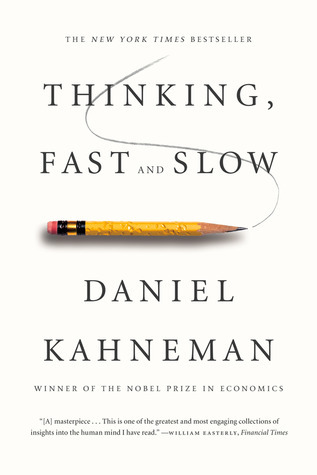
Major New York Times bestsellerWinner of the National Academy of Sciences Best Book Award in 2012Selected by the New York Times Book Review as one of the best books of 2011A Globe and Mail Best Books of the Year 2011 TitleOne of The Economist's 2011 Books of the Year One of The Wall Street Journal's Best Nonfiction Books of the Year 20112013 Presidential Medal of Freedom RecipientIn the international bestseller, Thinking, Fast and Slow, Daniel Kahneman, the renowned psychologist and winner of the Nobel Prize in Economics, takes us on a groundbreaking tour of the mind and explains the two systems that drive the way we think. System 1 is fast, intuitive, and emotional; System 2 is slower, more deliberative, and more logical. The impact of overconfidence on corporate strategies, the difficulties of predicting what will make us happy in the future, the profound effect of cognitive biases on everything from playing the stock market to planning our next vacation—each of these can be understood only by knowing how the two systems shape our judgments and decisions. Engaging the reader in a lively conversation about how we think, Kahneman reveals where we can and cannot trust our intuitions and how we can tap into the benefits of slow thinking. He offers practical and enlightening insights into how choices are made in both our business and our personal lives—and how we can use different techniques to guard against the mental glitches that often get us into trouble. Winner of the National Academy of Sciences Best Book Award and the Los Angeles Times Book Prize and selected by The New York Times Book Review as one of the ten best books of 2011, Thinking, Fast and Slow is destined to be a classic.

Turing's Cathedral: The Origins of the Digital Universe
by George Dyson
Rating: 3.6 ⭐
• 2 recommendations ❤️
“It is possible to invent a single machine which can be used to compute any computable sequence,” twenty-four-year-old Alan Turing announced in 1936. In Turing’s Cathedral , George Dyson focuses on a small group of men and women, led by John von Neumann at the Institute for Advanced Study in Princeton, New Jersey, who built one of the first computers to realize Alan Turing’s vision of a Universal Machine. Their work would break the distinction between numbers that mean things and numbers that do things—and our universe would never be the same. Using five kilobytes of memory (the amount allocated to displaying the cursor on a computer desktop of today), they achieved unprecedented success in both weather prediction and nuclear weapons design, while tackling, in their spare time, problems ranging from the evolution of viruses to the evolution of stars. Dyson’s account, both historic and prophetic, sheds important new light on how the digital universe exploded in the aftermath of World War II. The proliferation of both codes and machines was paralleled by two historic the decoding of self-replicating sequences in biology and the invention of the hydrogen bomb. It’s no coincidence that the most destructive and the most constructive of human inventions appeared at exactly the same time. How did code take over the world? In retracing how Alan Turing’s one-dimensional model became John von Neumann’s two-dimensional implementation, Turing’s Cathedral offers a series of provocative suggestions as to where the digital universe, now fully three-dimensional, may be heading next.

Memory of the World: The Treasures that Record Our History from 1700 BC to the Present Day
by UNESCO
Rating: 3.7 ⭐
• 2 recommendations ❤️
A new publication compiling documentary heritage items that are inscribed on the Memory of the World Register has been launched by UNESCO and HarperCollins. Documentary treasures from 1700 BC to the present day are accompanied by background information about their worldwide significance and illustrated by high quality photographic materials.Documentary heritage in archives, libraries and museums constitutes a major part of the memory of peoples, and reflects the diversity of languages and cultures. UNESCO, through its Memory of the World Programme, promotes the preservation of this heritage for future generations and encourages universal access to it.

Learning to Breathe Fire: The Rise of CrossFit and the Primal Future of Fitness
by J.C. Herz
Rating: 4.2 ⭐
• 2 recommendations ❤️
The absorbing, definitive account of CrossFit's origins, its explosive grassroots growth, and its emergence as a global phenomenon. One of the most illuminating books ever on a sports subculture, Learning to Breathe Fire combines vivid sports writing with a thoughtful meditation on what it means to be human. In the book, veteran journalist J.C. Herz explains the science of maximum effort, why the modern gym fails an obese society, and the psychic rewards of ending up on the floor feeling as though you're about to die. The story traces CrossFit’s rise, from a single underground gym in Santa Cruz to its adoption as the workout of choice for elite special forces, firefighters and cops, to its popularity as the go-to fitness routine for regular Joes and Janes. Especially riveting is Herz’s description of The CrossFit Games, which begin as an informal throw-down on a California ranch and evolve into a televised global proving ground for the fittest men and women on Earth, as well as hundreds of thousands of lesser mortals. In her portrayal of the sport's star athletes, its passionate coaches and its “chief armorer,” Rogue Fitness, Herz powerfully evokes the uniqueness of a fitness culture that cultivates primal fierceness in average people. And in the shared ordeal of an all-consuming workout, she unearths the ritual intensity that's been with us since humans invented sports, showing us how, on a deep level, we're all tribal hunters and first responders, waiting for the signal to go all-out. From the Hardcover edition.

As robots are increasingly integrated into modern society—on the battlefield and the road, in business, education, and health—Pulitzer-Prize-winning New York Times science writer John Markoff searches for an answer to one of the most important questions of our age: will these machines help us, or will they replace us?In the past decade alone, Google introduced us to driverless cars, Apple debuted a personal assistant that we keep in our pockets, and an Internet of Things connected the smaller tasks of everyday life to the farthest reaches of the internet. There is little doubt that robots are now an integral part of society, and cheap sensors and powerful computers will ensure that, in the coming years, these robots will soon act on their own. This new era offers the promise of immense computing power, but it also reframes a question first raised more than half a century ago, at the birth of the intelligent machine: Will we control these systems, or will they control us?In Machines of Loving Grace, New York Times reporter John Markoff, the first reporter to cover the World Wide Web, offers a sweeping history of the complicated and evolving relationship between humans and computers. Over the recent years, the pace of technological change has accelerated dramatically, reintroducing this difficult ethical quandary with newer and far weightier consequences. As Markoff chronicles the history of automation, from the birth of the artificial intelligence and intelligence augmentation communities in the 1950s, to the modern day brain trusts at Google and Apple in Silicon Valley, and on to the expanding tech corridor between Boston and New York, he traces the different ways developers have addressed this fundamental problem and urges them to carefully consider the consequences of their work.We are on the verge of a technological revolution, Markoff argues, and robots will profoundly transform the way our lives are organized. Developers must now draw a bright line between what is human and what is machine, or risk upsetting the delicate balance between them.

Connectography: Mapping the Future of Global Civilization
by Parag Khanna
Rating: 3.8 ⭐
• 2 recommendations ❤️
From the visionary bestselling author of The Second World and How to Run the World comes a bracing and authoritative guide to a future shaped less by national borders than by global supply chains, a world in which the most connected powers—and people—will win.Connectivity is the most revolutionary force of the twenty-first century. Mankind is reengineering the planet, investing up to ten trillion dollars per year in transportation, energy, and communications infrastructure linking the world’s burgeoning megacities together. This has profound consequences for geopolitics, economics, demographics, the environment, and social identity. Connectivity, not geography, is our destiny.In Connectography, visionary strategist Parag Khanna travels from Ukraine to Iran, Mongolia to North Korea, Pakistan to Nigeria, and across the Arctic Circle and the South China Sea to explain the rapid and unprecedented changes affecting every part of the planet. He shows how militaries are deployed to protect supply chains as much as borders, and how nations are less at war over territory than engaged in tugs-of-war over pipelines, railways, shipping lanes, and Internet cables. The new arms race is to connect to the most markets—a race China is now winning, having launched a wave of infrastructure investments to unite Eurasia around its new Silk Roads. The United States can only regain ground by fusing with its neighbors into a super-continental North American Union of shared resources and prosperity.Connectography offers a unique and hopeful vision for the future. Khanna argues that new energy discoveries and technologies have eliminated the need for resource wars; ambitious transport corridors and power grids are unscrambling Africa’s fraught colonial borders; even the Arab world is evolving a more peaceful map as it builds resource and trade routes across its war-torn landscape. At the same time, thriving hubs such as Singapore and Dubai are injecting dynamism into young and heavily populated regions, cyber-communities empower commerce across vast distances, and the world’s ballooning financial assets are being wisely invested into building an inclusive global society. Beneath the chaos of a world that appears to be falling apart is a new foundation of connectivity pulling it together.Praise for Connectography“Incredible . . . With the world rapidly changing and urbanizing, [Khanna’s] proposals might be the best way to confront a radically different future.” — The Washington Post“Clear and coherent . . . a well-researched account of how companies are weaving ever more complicated supply chains that pull the world together even as they squeeze out inefficiencies. . . . [He] has succeeded in demonstrating that the forces of globalization are winning.” —Adrian Woolridge, The Wall Street Journal“Bold . . . With an eye for vivid details, Khanna has . . . produced an engaging geopolitical travelogue.” — Foreign Affairs“For those who fear that the world is becoming too inward-looking, Connectography is a refreshing, optimistic vision.” — The Economist“Connectivity has become a basic human right, and gives everyone on the planet the opportunity to provide for their family and contribute to our shared future. Connectography charts the future of this connected world.” —Marc Andreessen, general partner, Andreessen Horowitz“Khanna’s scholarship and foresight are world-class. A must-read for the next president.” —Chuck Hagel, former U.S. secretary of defense

A time-jumping, head-tripping odyssey. The Millions A bracing swim in the waters of science, technology and fiction. Washington Post A thrilling journey of ideas. Boston Globe From the acclaimed author of The Information and Chaos, here is a mind-bending exploration of time travel: its subversive origins, its evolution in literature and science, and its influence on our understanding of time itself. The story begins at the turn of the previous century, with the young H. G. Wells writing and rewriting the fantastic tale that became his first book and an international sensation: The Time Machine. It was an era when a host of forces was converging to transmute the human understanding of time, some philosophical and some technological: the electric telegraph, the steam railroad, the discovery of buried civilizations, and the perfection of clocks. James Gleick tracks the evolution of time travel as an idea that becomes part of contemporary culture from Marcel Proust to Doctor Who, from Jorge Luis Borges to Woody Allen. He investigates the inevitable looping paradoxes and examines the porous boundary between pulp fiction and modern physics. Finally, he delves into a temporal shift that is unsettling our own moment: the instantaneous wired world, with its all-consuming present and vanishing future. (With a color frontispiece and black-and-white illustrations throughout)"
Scale: The Universal Laws of Growth, Innovation, Sustainability, and the Pace of Life in Organisms, Cities, Economies, and Companies
by Geoffrey B. West
Rating: 4.1 ⭐
• 10 recommendations ❤️
The former head of the Sante Fe Institute, visionary physicist Geoffrey West is a pioneer in the field of complexity science, the science of emergent systems and networks. The term “complexity” can be misleading, however, because what makes West’s discoveries so beautiful is that he has found an underlying simplicity that unites the seemingly complex and diverse phenomena of living systems, including our bodies, our cities and our businesses. Fascinated by issues of aging and mortality, West applied the rigor of a physicist to the biological question of why we live as long as we do and no longer. The result was astonishing, and changed science, creating a new understanding of energy use and metabolism: West found that despite the riotous diversity in the sizes of mammals, they are all, to a large degree, scaled versions of each other. If you know the size of a mammal, you can use scaling laws to learn everything from how much food it eats per day, what its heart-rate is, how long it will take to mature, its lifespan, and so on. Furthermore, the efficiency of the mammal’s circulatory systems scales up precisely based on weight: if you compare a mouse, a human and an elephant on a logarithmic graph, you find with every doubling of average weight, a species gets 25% more efficient—and lives 25% longer. This speaks to everything from how long we can expect to live to how many hours of sleep we need. Fundamentally, he has proven, the issue has to do with the fractal geometry of the networks that supply energy and remove waste from the organism's body. West's work has been game-changing for biologists, but then he made the even bolder move of exploring his work's applicability to cities. Cities, too, are constellations of networks and laws of scalability relate with eerie precision to them. For every doubling in a city's size, the city needs 15% less road, electrical wire, and gas stations to support the same population. More amazingly, for every doubling in size, cities produce 15% more patents and more wealth, as well as 15% more crime and disease. This broad pattern lays the groundwork for a new science of cities. Recently, West has applied his revolutionary work on cities and biological life to the business world. This investigation has led to powerful insights into why some companies thrive while others fail. The implications of these discoveries are far-reaching, and are just beginning to be explored. Scale is a thrilling scientific adventure story about the elemental natural laws that bind us together in simple but profound ways. Through the brilliant mind of Geoffrey West, we can envision how cities, companies and biological life alike are dancing to the same simple, powerful tune, however diverse and unrelated they are to each other.From the Hardcover edition.

Volume I - Aeschylus• The Oresteia (Agamemnon/The Libation Bearers/The Eumenides)• The Suppliant Maidens• The Persians• Seven Against Thebes• Prometheus BoundVolume II - Sophocles• 'The Theban Plays' (Oedipus The King/Oedipus At Colonus/Antigone)• Ajax• The Women Of Trachis• Electra• PhiloctetesVolume III - Euripides 1 • Alcestis• The Medea• The Heracleidae• Hippolytus• Cyclops• Heracles• Iphigenia In Tauris• Helen• Hecuba• Andromache• The Trojan WomenVolume IV - Euripides 2• Ion• Rhesus• The Suppliant Women• Orestes• Iphigenia In Aulis• Electra• The Phoenicians• The Bacchae"These authoritative translations consign all other complete collections to the wastebasket."—Robert Brustein, The New Republic"This is it. No qualifications. Go out and buy it everybody."—Kenneth Rexroth, The Nation"The translations deliberately avoid the highly wrought and affectedly poetic; their idiom is contemporary....They have life and speed and suppleness of phrase."—Times Education Supplement"These translations belong to our time. A keen poetic sensibility repeatedly quickens them; and without this inner fire the most academically flawless rendering is dead."—Warren D. Anderson, American Oxonian"The critical commentaries and the versions themselves...are fresh, unpretentious, above all, functional."—Commonweal"Grene is one of the great translators."—Conor Cruise O'Brien, London Sunday Times"Richmond Lattimore is that rara avis in our age, the classical scholar who is at the same time an accomplished poet."—Dudley Fitts, New York Times Book Review

The Water Will Come: Rising Seas, Sinking Cities, and the Remaking of the Civilized World
by Jeff Goodell
Rating: 4.1 ⭐
• 4 recommendations ❤️
What if Atlantis wasn't a myth but an early precursor to a new age of great flooding? Across the globe, scientists and civilians alike are noticing rapidly rising sea levels and higher and higher tides pushing more water directly into the places we live, from our most vibrant, historic cities to our last remaining traditional coastal villages. With each crack in the great ice sheets of the Arctic and Antarctica, and each tick upwards of Earth's thermometer, we are moving closer to the brink of broad disaster.By century's end, hundreds of millions of people will be retreating from the world's shores as our coasts become inundated and our landscapes transformed. From island nations to the world's major cities, coastal regions will disappear. Engineering projects to hold back the water are bold and may buy some time. Yet despite international efforts and tireless research, there is no permanent solution--no barriers to erect or walls to build--that will protect us in the end from the drowning of the world as we know it.The Water Will Come is the definitive account of the coming water, why and how this will happen, and what it will all mean. As he travels across twelve countries and reports from the front lines, acclaimed journalist Jeff Goodell employs fact, science, and first-person, on-the-ground journalism to show vivid scenes from what already is becoming a water world.