
Steven Pinker Recommended Books
Canadian-American cognitive psychologist, linguist, and author, an advocate of evolutionary psychology and the computational theory of the mind
12 Books Recommended
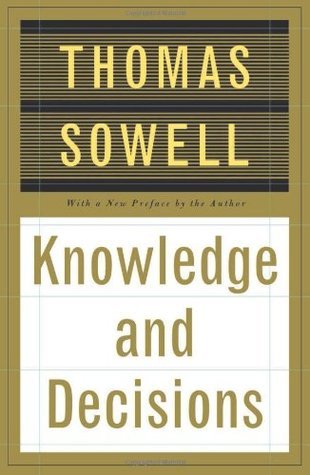
This reissue of Thomas Sowell's classic study of decision making, which includes a preface by the author, updates his seminal work in the context of The Vision of the Anointed. Sowell, one of America's most celebrated public intellectuals, describes in concrete detail how knowledge is shared and disseminated throughout modern society. He warns that society suffers from an ever-widening gap between firsthand knowledge and decision making--a gap that threatens not only our economic and political efficiency but our very freedom. This is because actual knowledge is being replaced by assumptions based on an abstract and elitist social vision of what ought to be. Knowledge and Decisions, a winner of the 1980 Law and Economics Center Prize, was heralded as a landmark work and selected for this prize "because of its cogent contribution to our understanding of the differences between the market process and the process of government." In announcing the award, the center acclaimed that the "contribution to our understanding of the process of regulation alone would make the book important, but in reemphasizing the diversity and efficiency that the market makes possible, [this] work goes deeper and becomes even more significant."
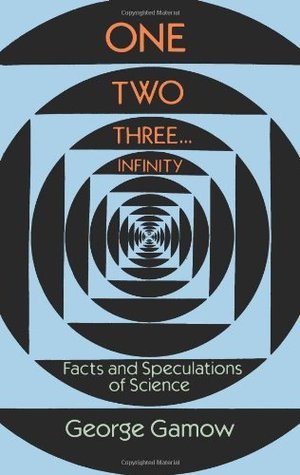
One, Two, Three...Infinity: Facts and Speculations of Science
by George Gamow
Rating: 4.2 ⭐
• 2 recommendations ❤️
Whatever your level of scientific expertise, chances are you'll derive a great deal of pleasure, stimulation, and information from this unusual and imaginative book. It belongs in the library of anyone curious about the wonders of the scientific universe.One of the world's foremost nuclear physicists (celebrated for his theory of radioactive decay, among other accomplishments), George Gamow possessed the unique ability of making the world of science accessible to the general reader. He brings that ability to bear in this delightful expedition through the problems, pleasures, and puzzles of modern science.In the pages of this book readers grapple with such crucial matters as whether it is possible to bend space , why a rocket shrinks , the " end of the world problem ," excursions into the fourth dimension , and a host of other tantalizing topics for the scientifically curious Brimming with amusing anecdotes and provocative problems, One Two Three . . . Infinity also includes over 120 delightful pen-and-ink illustrations by the author , adding another dimension of good-natured charm to these wide-ranging explorations.". . . full of intellectual treats and tricks, of whimsy and deep scientific philosophy. It is highbrow entertainment at its best, a teasing challenge to all who aspire to think about the universe." — New York Herald TribuneDover publishes an impressive collection of popular science books including technology and invention, space and time, basic machines and computers, forces and fields, chaos, biographies of Einstein and Newton, and much more.

The Blind Watchmaker: Why the Evidence of Evolution Reveals a Universe without Design
by Richard Dawkins
Rating: 4.2 ⭐
• 9 recommendations ❤️
Richard Dawkins’s classic remains the definitive argument for our modern understanding of evolution.The Blind Watchmaker is the seminal text for understanding evolution today. In the eighteenth century, theologian William Paley developed a famous metaphor for creationism: that of the skilled watchmaker. In The Blind Watchmaker, Richard Dawkins crafts an elegant riposte to show that the complex process of Darwinian natural selection is unconscious and automatic. If natural selection can be said to play the role of a watchmaker in nature, it is a blind one—working without foresight or purpose.In an eloquent, uniquely persuasive account of the theory of natural selection, Dawkins illustrates how simple organisms slowly change over time to create a world of enormous complexity, diversity, and beauty.
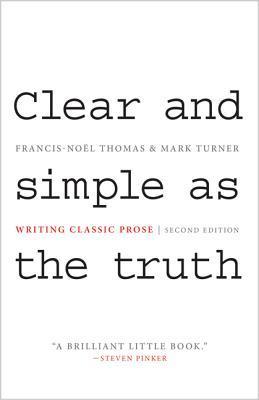
Clear and Simple as the Truth: Writing Classic Prose
by Francis-Noel Thomas
Rating: 4.3 ⭐
• 2 recommendations ❤️
For more than a decade, Clear and Simple as the Truth has guided readers to consider style not as an elegant accessory of effective prose but as its very heart. Francis-No�l Thomas and Mark Turner present writing as an intellectual activity, not a passive application of verbal skills. In classic style, the motive is truth, the purpose is presentation, the reader and writer are intellectual equals, and the occasion is informal. This general style of presentation is at home everywhere, from business memos to personal letters and from magazine articles to student essays. Everyone talks about style, but no one explains it. The authors of this book do; and in doing so, they provoke the reader to consider style, not as an elegant accessory of effective prose, but as its very heart.At a time when writing skills have virtually disappeared, what can be done? If only people learned the principles of verbal correctness, the essential rules, wouldn't good prose simply fall into place? Thomas and Turner say no. Attending to rules of grammar, sense, and sentence structure will no more lead to effective prose than knowing the mechanics of a golf swing will lead to a hole-in-one. Furthermore, ten-step programs to better writing exacerbate the problem by failing to recognize, as Thomas and Turner point out, that there are many styles with different standards.The book is divided into four parts. The first, Principles of Classic Style, defines the style and contrasts it with a number of others. The Museum is a guided tour through examples of writing, both exquisite and execrable. The Studio, new to this edition, presents a series of structured exercises. Finally, Further Readings in Classic Prose offers a list of additional examples drawn from a range of times, places, and subjects. A companion website, classicprose.com, offers supplementary examples, exhibits, and commentary, and features a selection of pieces written by students in courses that used Clear and Simple as the Truth as a textbook.

Almost before he knows it, Herman Broder, refugee and survivor of World War II, has three Yadwiga, the Polish peasant who hid him from the Nazis; Masha , his beautiful and neurotic true love; and Tamara, his first wife, miraculously returned from the dead. Astonished by each new complication, and yet resigned to a life of evasion, Herman navigates a crowded, Yiddish New York with a sense of perpetually impending doom.

A series of closely interrelated essays on game theory, this book deals with an area in which progress has been least satisfactory―the situations where there is a common interest as well as conflict between adversaries: negotiations, war and threats of war, criminal deterrence, extortion, tacit bargaining. It proposes enlightening similarities between, for instance, maneuvering in limited war and in a traffic jam; deterring the Russians and one’s own children; the modern strategy of terror and the ancient institution of hostages.

Nature versus nurture - nowhere is the debate more heated than in the areas of sex and sex differences. The Evolution of Human Sexuality adds fuel to the fire. Symons's thesis is that some of the typical differences between men and women in sexual behaviors, attitudes and feelings are innate: identical rearing of males and females will not result in identical sexualities.Anthropology, Sexual Studies, Psychology, Sociology, Gender and Cultural Studies

This text entertains and enlightens readers about the relations between words, languages, thought, and the human brain.

Despite large stockpiles of deadly arms and some significant ideological differences, the developed world has been at peace for a longer continuous period than ever before. Arguing that this state of affairs is no accident, this book offers a detailed history of public policies and attitudes to war in modern times. The author sets out to show that, in spite of two 20th-century world wars, major war as a policy option among developed nations has gradually passed out of favour. He also contends that nuclear weapons have not had an important impact on this trend, neither making a crucial contribution to nor severely threatening post-war stability. Tracing the major Cold War crises - Korea, Cuba, Vietnam - the book concludes that, despite their revolutionary and expansionist ideology, former Soviet leaders never visualized major war as a sensible tactic. Only in the Third World does war remain endemic, and even here the author is cautiously optimistic that the developed world's aversion to war might prove infectious.

Whole Earth Discipline: Why Dense Cities, Nuclear Power, Transgenic Crops, Restored Wildlands, and Geoengineering Are Necessary
by Stewart Brand
Rating: 4.2 ⭐
• 10 recommendations ❤️
“Incredible book . . . Best I’ve read this year.” —Jack Dorsey, via TwitterThis eye-opening book by the legendary author of the National Book Award-winning Whole Earth Catalog persuasively details a new approach to our stewardship of the planet. Lifelong ecologist and futurist Stewart Brand relies on scientific rigor to shatter myths concerning nuclear energy, urbanization, genetic engineering, and other controversial subjects, showing exactly where the sources of our dilemmas lie and offering a bold, inventive set of policies and design- based solutions for shaping a more sustainable society. Thought- provoking and passionately argued, this is a pioneering book on one of the hottest issues facing humanity today.

The New York Times bestseller: A provocative, imaginative exploration of the nature and progress of knowledge"Dazzling." - Steven Pinker, The GuardianIn this groundbreaking book, award-winning physicist David Deutsch argues that explanations have a fundamental place in the universe--and that improving them is the basic regulating principle of all successful human endeavor. Taking us on a journey through every fundamental field of science, as well as the history of civilization, art, moral values, and the theory of political institutions, Deutsch tracks how we form new explanations and drop bad ones, explaining the conditions under which progress--which he argues is potentially boundless--can and cannot happen. Hugely ambitious and highly original, The Beginning of Infinity explores and establishes deep connections between the laws of nature, the human condition, knowledge, and the possibility for progress.

The Mental Life of Modernism: Why Poetry, Painting, and Music Changed at the Turn of the Twentieth Century
by Samuel Jay Keyser
Rating: 4.3 ⭐
• 2 recommendations ❤️
An argument that Modernism is a cognitive phenomenon rather than a cultural one.At the beginning of the twentieth century, poetry, music, and painting all underwent a sea change. Poetry abandoned rhyme and meter; music ceased to be tonally centered; and painting no longer aimed at faithful representation. These artistic developments have been attributed to cultural factors ranging from the Industrial Revolution and the technical innovation of photography to Freudian psychoanalysis. In this book, Samuel Jay Keyser argues that the stylistic innovations of Western modernism reflect not a cultural shift but a cognitive one. Behind modernism is the same cognitive phenomenon that led to the scientific revolution of the seventeenth century: the brain coming up against its natural limitations.Keyser argues that the transformation in poetry, music, and painting (the so-called sister arts) is the result of the abandonment of a natural aesthetic based on a set of rules shared between artist and audience, and that this is virtually the same cognitive shift that occurred when scientists abandoned the mechanical philosophy of the Galilean revolution. The cultural explanations for Modernism may still be relevant, but they are epiphenomenal rather than causal. Artists felt that traditional forms of art had been exhausted, and they began to resort to private formats--Easter eggs with hidden and often inaccessible meaning. Keyser proposes that when artists discarded their natural rule-governed aesthetic, it marked a cognitive shift; general intelligence took over from hardwired proclivity. Artists used a different part of the brain to create, and audiences were forced to play catch up.