
Scott Adams Recommended Books
American cartoonist and author (born 1957)
14 Books Recommended
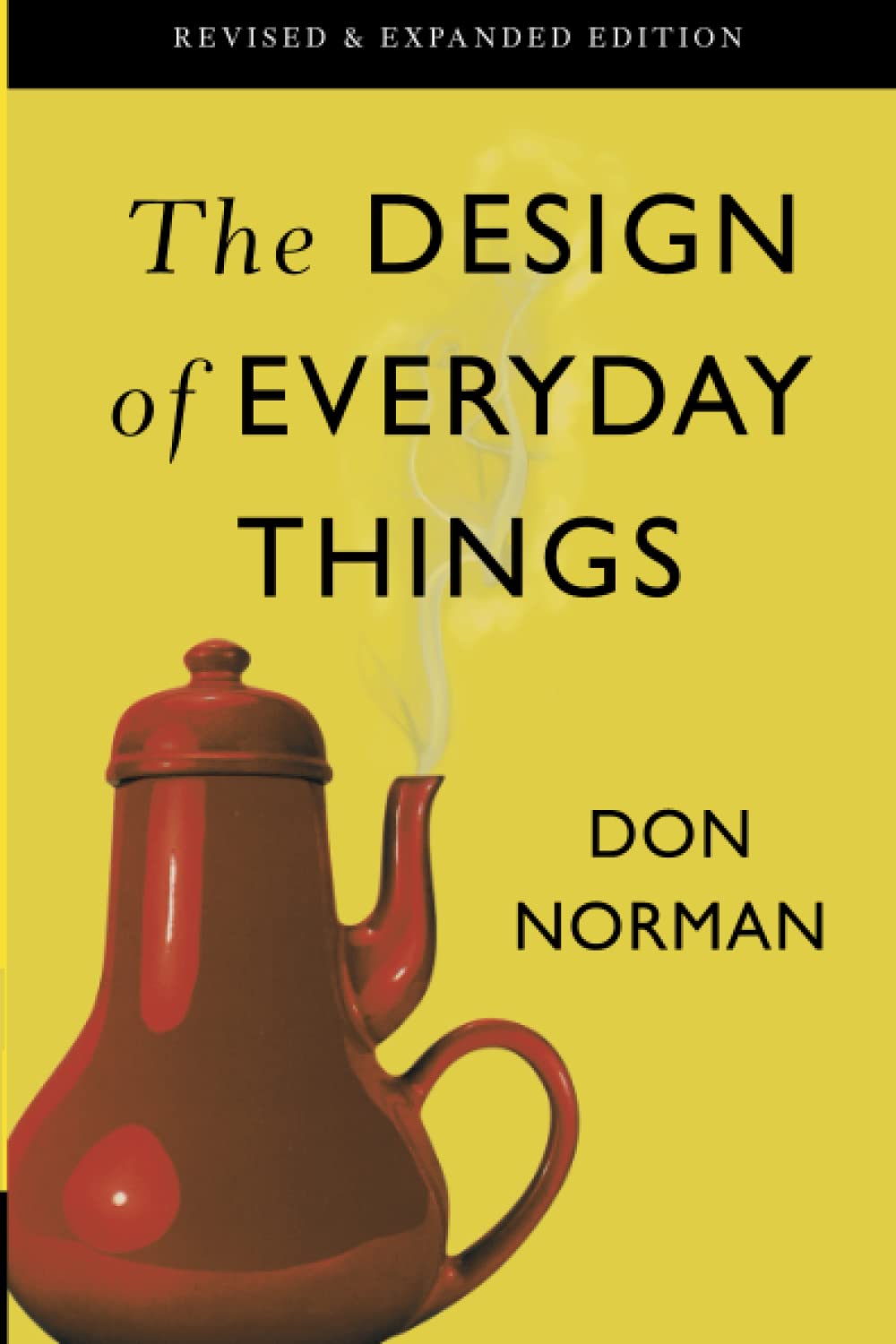
Even the smartest among us can feel inept as we fail to figure out which light switch or oven burner to turn on, or whether to push, pull, or slide a door. The fault, argues this ingenious—even liberating—book, lies not in ourselves, but in product design that ignores the needs of users and the principles of cognitive psychology. The problems range from ambiguous and hidden controls to arbitrary relationships between controls and functions, coupled with a lack of feedback or other assistance and unreasonable demands on memorization. The Design of Everyday Things shows that good, usable design is possible. The rules are simple: make things visible, exploit natural relationships that couple function and control, and make intelligent use of constraints. The goal: guide the user effortlessly to the right action on the right control at the right time.In this entertaining and insightful analysis, cognitive scientist Don Norman hails excellence of design as the most important key to regaining the competitive edge in influencing consumer behavior. Now fully expanded and updated, with a new introduction by the author, The Design of Everyday Things is a powerful primer on how—and why—some products satisfy customers while others only frustrate them.

Influence, the classic book on persuasion, explains the psychology of why people say "yes"—and how to apply these understandings. Dr. Robert Cialdini is the seminal expert in the rapidly expanding field of influence and persuasion. His thirty-five years of rigorous, evidence-based research along with a three-year program of study on what moves people to change behavior has resulted in this highly acclaimed book.You'll learn the six universal principles, how to use them to become a skilled persuader—and how to defend yourself against them. Perfect for people in all walks of life, the principles of Influence will move you toward profound personal change and act as a driving force for your success.

The Luck Factor: Changing Your Luck, Changing Your Life - The Four Essential Principles
by Richard Wiseman
Rating: 3.9 ⭐
• 4 recommendations ❤️
Is luck just fate, or can you change it? A groundbreaking new scientific study of the phenomenon of luck and the ways we can bring good luck into our lives. What is luck? A psychic gift or a question of intelligence? And what is it that lucky people have that unlucky people lack? Psychologist Dr. Richard Wiseman put luck under a scientific microscope for the very first time, examining the different ways in which lucky and unlucky people think and behave. After three years of intensive interviews and experiments with over 400 volunteers, Wiseman arrived at an astonishing Luck is something that can be learned. It is available to anyone willing to pay attention to the Four Essential Creating Chance Opportunities 2. Thinking Lucky 3. Feeling Lucky 4. Denying FateReaders can determine their capacity for luck as well as learn to change their luck through helpful exercises that appear throughout the book. Illustrated with anecdotes from the lives of the famous such as Harry Truman and Warren Buffett, The Luck Factor also richly portrays the lives of ordinary people who have been extraordinarily lucky or unlucky. Finally, Dr. Wiseman gives us a look into The Luck School where he instructs unlucky people and also teaches lucky people how to further enhance their luck. Smart, enlightening, fun to read, and easy to follow, The Luck Factor will give you revolutionary insight into the lucky mind and could, quite simply, change your life.About the AuthorDr. Richard Wiseman heads a research unit within the psychology department at the University of Herfordshire in Britain and was recently given the prestigious CSICOP Public Education in Science Award. This is his first book.
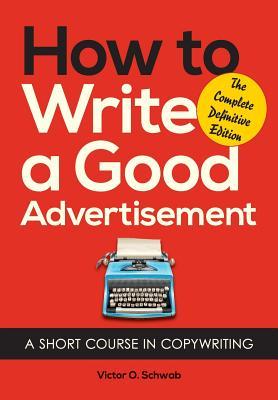
How to Write a Good Advertisement: A Short Course in Copywriting
by Victor O. Schwab
Rating: 4.2 ⭐
• 2 recommendations ❤️
Call it advertising, call it promotion, call it marketing, but whatever you call it, every business and organization depends on words with impact. You need to grab the attention of potential customers, clients, or supporters and call them to action. Few among us are born talented copywriters, that rare combination of both facile wordsmiths and natural salespeople. Most of us need some help, and even naturals can improve by studying the best. Victor O. Schwab was one of the greats. Considered a marketing master during his 44-year career, he was the copywriter who propelled Dale Carnegie's How to Win Friends and Influence People into a mega-seller. How to Write a Good Advertisement, Schwab's classic guide, has stood the test of time. In just over 200 pages, this book clearly explains the core elements of an effective advertisement. Schwab shows us how to How to Write a Good Advertisement gets you quickly up to speed with examples of powerful profitable headlines (with explanations of why those headlines work so well), and quick lesson reviews that help you turn what you've read into skills you own. Schwab provides us shortcuts without sacrificing long-term understanding. Fifty years after publication this book is still the standard bearer, sought after by a new generation of copy-writers and businesspeople. Read it, apply it, and watch your sales soar.

What Every Body Is Saying: An Ex-FBI Agent's Guide to Speed-Reading People
by Joe Navarro
Rating: 3.8 ⭐
• 4 recommendations ❤️
Read this book and send your nonverbal intelligence soaring. Joe Navarro, a former FBI counterintelligence officer and a recognized expert on nonverbal behavior, explains how to "speed read" people: decode sentiments and behaviours, avoid hidden pitfalls, and look for deceptive behaviors. You'll also learn how your body language can influence what your boss, family, friends, and strangers think of you. You will discover: The ancient survival instincts that drive body language Why the face is the least likely place to gauge a person's true feelings What thumbs, feet, and eyelids reveal about moods and motives The most powerful behaviors that reveal our confidence and true sentiments Simple nonverbals that instantly establish trust Simple nonverbals that instantly communicate authority Filled with examples from Navarro's professional experience, this definitive book offers a powerful new way to navigate your world.

President Donald J. Trump lays out his professional and personal worldview in this classic work—a firsthand account of the rise of America’s foremost deal-maker.“I like thinking big. I always have. To me it’s very simple: If you’re going to be thinking anyway, you might as well think big.”—Donald J. TrumpHere is Trump in action—how he runs his organization and how he runs his life—as he meets the people he needs to meet, chats with family and friends, clashes with enemies, and challenges conventional thinking. But even a maverick plays by rules, and Trump has formulated time-tested guidelines for success. He isolates the common elements in his greatest accomplishments; he shatters myths; he names names, spells out the zeros, and fully reveals the deal-maker’s art. And throughout, Trump talks—really talks—about how he does it. Trump: The Art of the Deal is an unguarded look at the mind of a brilliant entrepreneur—the ultimate read for anyone interested in the man behind the spotlight.Praise for Trump: The Art of the Deal“Trump makes one believe for a moment in the American dream again.” —The New York Times“Donald Trump is a deal maker. He is a deal maker the way lions are carnivores and water is wet.” —Chicago Tribune “Fascinating . . . wholly absorbing . . . conveys Trump’s larger-than-life demeanor so vibrantly that the reader’s attention is instantly and fully claimed.” —Boston Herald “A chatty, generous, chutzpa-filled autobiography.” —New York Post

You can go after the job you want—and get it! You can take the job you have—and improve it! You can take any situation—and make it work for you! Dale Carnegie’s rock-solid, time-tested advice has carried countless people up the ladder of success in their business and personal lives. One of the most groundbreaking and timeless bestsellers of all time, How to Win Friends & Influence People will teach you: -Six ways to make people like you -Twelve ways to win people to your way of thinking -Nine ways to change people without arousing resentment And much more! Achieve your maximum potential—a must-read for the twenty-first century with more than 15 million copies sold!

Win Your Case: How to Present, Persuade, and Prevail--Every Place, Every Time
by Gerry Spence
Rating: 3.7 ⭐
• 2 recommendations ❤️
Gerry Spence is perhaps America's most renowned and successful trial lawyer, a man known for his deep convictions and his powerful courtroom presentations when he argues on behalf of ordinary people. Frequently pitted against teams of lawyers thrown against him by major corporate or government interests, he has never lost a criminal case and has not lost a civil jury trial since l969.In Win Your Case , Spence shares a lifetime of experience teaching you how to win in any arena-the courtroom, the boardroom, the sales call, the salary review, the town council meeting-every venue where a case is to be made against adversaries who oppose the justice you seek. Relying on the successful courtroom methods he has developed over more than half a century, Spence shows both lawyers and laypersons how you can win your cases as he takes you step by step through the elements of a trial-from jury selection, the opening statement, the presentation of witnesses, their cross-examinations, and finally to the closing argument itself.Spence teaches you how to prepare yourselves for these wars. Then he leads you through the new, cutting-edge methods he uses in discovering the story in which you form the evidence into a compelling narrative, discover the point of view of the decision maker, anticipate and answer the counterarguments, and finally conclude the case with a winning final argument.To make a winning presentation, you are taught to prepare the power-person (the jury, the judge, the boss, the customer, the board) to hear your case. You are shown that your emotions, and theirs, are the source of your winning. You learn the power of your own fear, of honesty and caring and, yes, of love. You are instructed on how to role-play through the use of the psychodramatic technique, to both discover and tell the story of the case, and, at last, to pull it all together into the winning final argument.Whether you are presenting your case to a judge, a jury, a boss, a committee, or a customer, Win Your Case is an indispensable guide to success in every walk of life, in and out of the courtroom.

Walter Isaacson’s “enthralling” ( The New Yorker ) worldwide bestselling biography of Apple cofounder Steve Jobs.Based on more than forty interviews with Steve Jobs conducted over two years—as well as interviews with more than 100 family members, friends, adversaries, competitors, and colleagues—Walter Isaacson has written a riveting story of the roller-coaster life and searingly intense personality of a creative entrepreneur whose passion for perfection and ferocious drive revolutionized six personal computers, animated movies, music, phones, tablet computing, and digital publishing. Isaacson’s portrait touched millions of readers.At a time when America is seeking ways to sustain its innovative edge, Jobs stands as the ultimate icon of inventiveness and applied imagination. He knew that the best way to create value in the twenty-first century was to connect creativity with technology. He built a company where leaps of the imagination were combined with remarkable feats of engineering.Although Jobs cooperated with the author, he asked for no control over what was written. He put nothing off-limits. He encouraged the people he knew to speak honestly. He himself spoke candidly about the people he worked with and competed against.His friends, foes, and colleagues offer an unvarnished view of the passions, perfectionism, obsessions, artistry, devilry, and compulsion for control that shaped his approach to business and the innovative products that resulted.His tale is instructive and cautionary, filled with lessons about innovation, character, leadership, and values.Steve Jobs is the inspiration for the movie of the same name starring Michael Fassbender, Kate Winslet, Seth Rogen, and Jeff Daniels, directed by Danny Boyle with a screenplay by Aaron Sorkin.
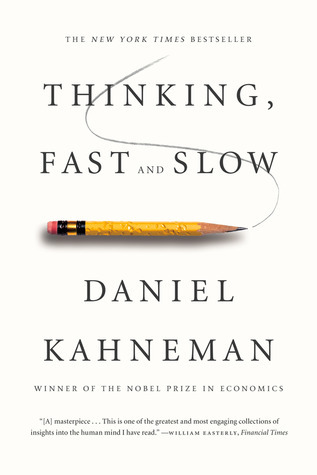
Major New York Times bestsellerWinner of the National Academy of Sciences Best Book Award in 2012Selected by the New York Times Book Review as one of the best books of 2011A Globe and Mail Best Books of the Year 2011 TitleOne of The Economist's 2011 Books of the Year One of The Wall Street Journal's Best Nonfiction Books of the Year 20112013 Presidential Medal of Freedom RecipientIn the international bestseller, Thinking, Fast and Slow, Daniel Kahneman, the renowned psychologist and winner of the Nobel Prize in Economics, takes us on a groundbreaking tour of the mind and explains the two systems that drive the way we think. System 1 is fast, intuitive, and emotional; System 2 is slower, more deliberative, and more logical. The impact of overconfidence on corporate strategies, the difficulties of predicting what will make us happy in the future, the profound effect of cognitive biases on everything from playing the stock market to planning our next vacation—each of these can be understood only by knowing how the two systems shape our judgments and decisions. Engaging the reader in a lively conversation about how we think, Kahneman reveals where we can and cannot trust our intuitions and how we can tap into the benefits of slow thinking. He offers practical and enlightening insights into how choices are made in both our business and our personal lives—and how we can use different techniques to guard against the mental glitches that often get us into trouble. Winner of the National Academy of Sciences Best Book Award and the Los Angeles Times Book Prize and selected by The New York Times Book Review as one of the ten best books of 2011, Thinking, Fast and Slow is destined to be a classic.

The Power of Habit: Why We Do What We Do in Life and Business
by Charles Duhigg
Rating: 4.3 ⭐
• 21 recommendations ❤️
NEW YORK TIMES BESTSELLER • This instant classic explores how we can change our lives by changing our habits.NAMED ONE OF THE BEST BOOKS OF THE YEAR BY The Wall Street Journal • Financial TimesIn The Power of Habit, award-winning business reporter Charles Duhigg takes us to the thrilling edge of scientific discoveries that explain why habits exist and how they can be changed. Distilling vast amounts of information into engrossing narratives that take us from the boardrooms of Procter & Gamble to the sidelines of the NFL to the front lines of the civil rights movement, Duhigg presents a whole new understanding of human nature and its potential. At its core, The Power of Habit contains an exhilarating argument: The key to exercising regularly, losing weight, being more productive, and achieving success is understanding how habits work. As Duhigg shows, by harnessing this new science, we can transform our businesses, our communities, and our lives.With a new Afterword by the author “Sharp, provocative, and useful.” —Jim Collins “Few [books] become essential manuals for business and living. The Power of Habit is an exception. Charles Duhigg not only explains how habits are formed but how to kick bad ones and hang on to the good.” — Financial Times “A flat-out great read.” —David Allen, bestselling author of Getting Things Done: The Art of Stress-Free Productivity“You’ll never look at yourself, your organization, or your world quite the same way.” —Daniel H. Pink, bestselling author of Drive and A Whole New Mind“Entertaining . . . enjoyable . . . fascinating . . . a serious look at the science of habit formation and change.” — The New York Times Book Review

Impossible to Ignore: Creating Memorable Content to Influence Decisions
by Carmen Simon
Rating: 3.7 ⭐
• 2 recommendations ❤️
A groundbreaking approach to creating memorable messages that are easy to process, hard to forget, and impossible to ignore using the latest in brain scienceAudiences forget up to 90 percent of what you communicate. But people make decisions and act based on what they remember, so a pragmatic approach for the effective communicator is to be deliberate about the 10 percent that audiences do retain. Otherwise, content recall is random and inconsistent.Many experts have offered techniques on how to improve your own memory, but not how to influence other people s memory. Drawing on the latest research in neuroscience and cognitive psychology, Impossible to Ignore is a practical step-by-step guide that will show you how to control the 10 percent that your audiences doremember by creating content that attracts attention, sharpens recall, and guides behavior toward a desired action."

Pre-Suasion: A Revolutionary Way to Influence and Persuade
by Robert B. Cialdini
Rating: 4.1 ⭐
• 10 recommendations ❤️
The acclaimed New York Times and Wall Street Journal bestseller from Robert Cialdini—“the foremost expert on effective persuasion” (Harvard Business Review)—explains how it’s not necessarily the message itself that changes minds, but the key moment before you deliver that message.What separates effective communicators from truly successful persuaders? With the same rigorous scientific research and accessibility that made his Influence an iconic bestseller, Robert Cialdini explains how to prepare people to be receptive to a message before they experience it. Optimal persuasion is achieved only through optimal pre-suasion. In other words, to change “minds” a pre-suader must also change “states of mind.” Named a “Best Business Books of 2016” by the Financial Times, and “compelling” by The Wall Street Journal, Cialdini’s Pre-Suasion draws on his extensive experience as the most cited social psychologist of our time and explains the techniques a person should implement to become a master persuader. Altering a listener’s attitudes, beliefs, or experiences isn’t necessary, says Cialdini—all that’s required is for a communicator to redirect the audience’s focus of attention before a relevant action. From studies on advertising imagery to treating opiate addiction, from the annual letters of Berkshire Hathaway to the annals of history, Cialdini outlines the specific techniques you can use on online marketing campaigns and even effective wartime propaganda. He illustrates how the artful diversion of attention leads to successful pre-suasion and gets your targeted audience primed and ready to say, “Yes.” His book is “an essential tool for anyone serious about science based business strategies…and is destined to be an instant classic. It belongs on the shelf of anyone in business, from the CEO to the newest salesperson” (Forbes).

Apocalypse Never: Why Environmental Alarmism Hurts Us All
by Michael Shellenberger
Rating: 4.4 ⭐
• 2 recommendations ❤️
Michael Shellenberger has been fighting for a greener planet for decades. He helped save the world’s last unprotected redwoods. He co-created the predecessor to today’s Green New Deal. And he led a successful effort by climate scientists and activists to keep nuclear plants operating, preventing a spike of emissions.But in 2019, as some claimed “billions of people are going to die,” contributing to rising anxiety, including among adolescents, Shellenberger decided that, as a lifelong environmental activist, leading energy expert, and father of a teenage daughter, he needed to speak out to separate science from fiction.Despite decades of news media attention, many remain ignorant of basic facts. Carbon emissions peaked and have been declining in most developed nations for over a decade. Deaths from extreme weather, even in poor nations, declined 80 percent over the last four decades. And the risk of Earth warming to very high temperatures is increasingly unlikely thanks to slowing population growth and abundant natural gas.Curiously, the people who are the most alarmist about the problems also tend to oppose the obvious solutions.What’s really behind the rise of apocalyptic environmentalism? There are powerful financial interests. There are desires for status and power. But most of all there is a desire among supposedly secular people for transcendence. This spiritual impulse can be natural and healthy. But in preaching fear without love, and guilt without redemption, the new religion is failing to satisfy our deepest psychological and existential needs.