
Richard Dawkins Recommended Books
English ethologist, evolutionary biologist and author (born 1941)
12 Books Recommended

One of the first-ever books on gender transition, this poignant memoir by a trans woman is “the best first-hand account ever written by a traveler across the boundaries of sex” ( Newsweek ).“A profoundly poetic story.” — The New York Times“An exquisite read.” —Maria Popova, The MarginalianThe great travel writer Jan Morris was born James Morris. James Morris distinguished himself in the British military, became a successful and physically daring reporter, climbed mountains, crossed deserts, and established a reputation as a historian of the British empire. He was happily married, with several children. To all appearances, he was not only a man, but a man’s man.Except that appearances, as James Morris had known from early childhood, can be deeply misleading. James Morris had known all his conscious life that at heart he was a woman.Conundrum , one of the earliest books to discuss transsexuality with honesty and without prurience, tells the story of James Morris’ hidden life and how he decided to bring it into the open, as he resolved first on a hormone treatment and, second, on risky experimental surgery that would turn him into the woman that he truly was.

The Good News Club: The Christian Right's Stealth Assault on America's Children
by Katherine Stewart
Rating: 4.3 ⭐
• 2 recommendations ❤️
In 2009, the Good News Club came to the public elementary school where journalist Katherine Stewart sent her children. The Club, which is sponsored by the Child Evangelism Fellowship, bills itself as an after-school program of "Bible study." But Stewart soon discovered that the Club's real mission is to convert children to fundamentalist Christianity and encourage them to proselytize to their "unchurched" peers, all the while promoting the natural but false impression among the children that its activities are endorsed by the school.Astonished to discover that the U.S. Supreme Court has deemed this -- and other forms of religious activity in public schools -- legal, Stewart set off on an investigative journey to dozens of cities and towns across the nation to document the impact. In this book she demonstrates that there is more religion in America's public schools today than there has been for the past 100 years. The movement driving this agenda is stealthy. It is aggressive. It has our children in its sights. And its ultimate aim is to destroy the system of public education as we know it.

What a Wonderful World: One Man's Attempt to Explain the Big Stuff
by Marcus Chown
Rating: 3.9 ⭐
• 2 recommendations ❤️
Why do we breathe? What is money? How does the brain work? Why did life invent sex? Does time really exist? How does capitalism work - or not, as the case may be? Where do mountains come from? How do computers work? How did humans get to dominate the Earth? Why is there something rather than nothing?In What a Wonderful World, Marcus Chown, bestselling author of Quantum Theory Cannot Hurt You and the Solar System app, uses his vast scientific knowledge and deep understanding of extremely complex processes to answer simple questions about the workings of our everyday lives. Lucid, witty and hugely entertaining, it explains the basics of our essential existence, stopping along the way to show us why the Atlantic is widening by a thumbs' length each year, how money permits trade to time travel why the crucial advantage humans had over Neanderthals was sewing and why we are all living in a giant hologram.

This is a surreal time for freedom of speech. While the legal protections of the First Amendment remain strong, the culture is obsessed with punishing individuals for allegedly offensive utterances. And academia – already an institution in which free speech is in decline – has grown still more intolerant, with high-profile “disinvitation” efforts against well-known speakers and demands for professors to provide “trigger warnings” in class.In this Broadside, Greg Lukianoff argues that the threats to free speech go well beyond political correctness or liberal groupthink. As global populations increasingly expect not just physical comfort but also intellectual comfort, threats to freedom of speech are only going to become more intense. To fight back, we must understand this trend and see how students and average citizens alike are increasingly demanding freedom from speech.

What is the nature of space and time? How do we fit within the universe? How does the universe fit within us? There’s no better guide through these mind-expanding questions than acclaimed astrophysicist and best-selling author Neil deGrasse Tyson.But today, few of us have time to contemplate the cosmos. So Tyson brings the universe down to Earth succinctly and clearly, with sparkling wit, in tasty chapters consumable anytime and anywhere in your busy day.
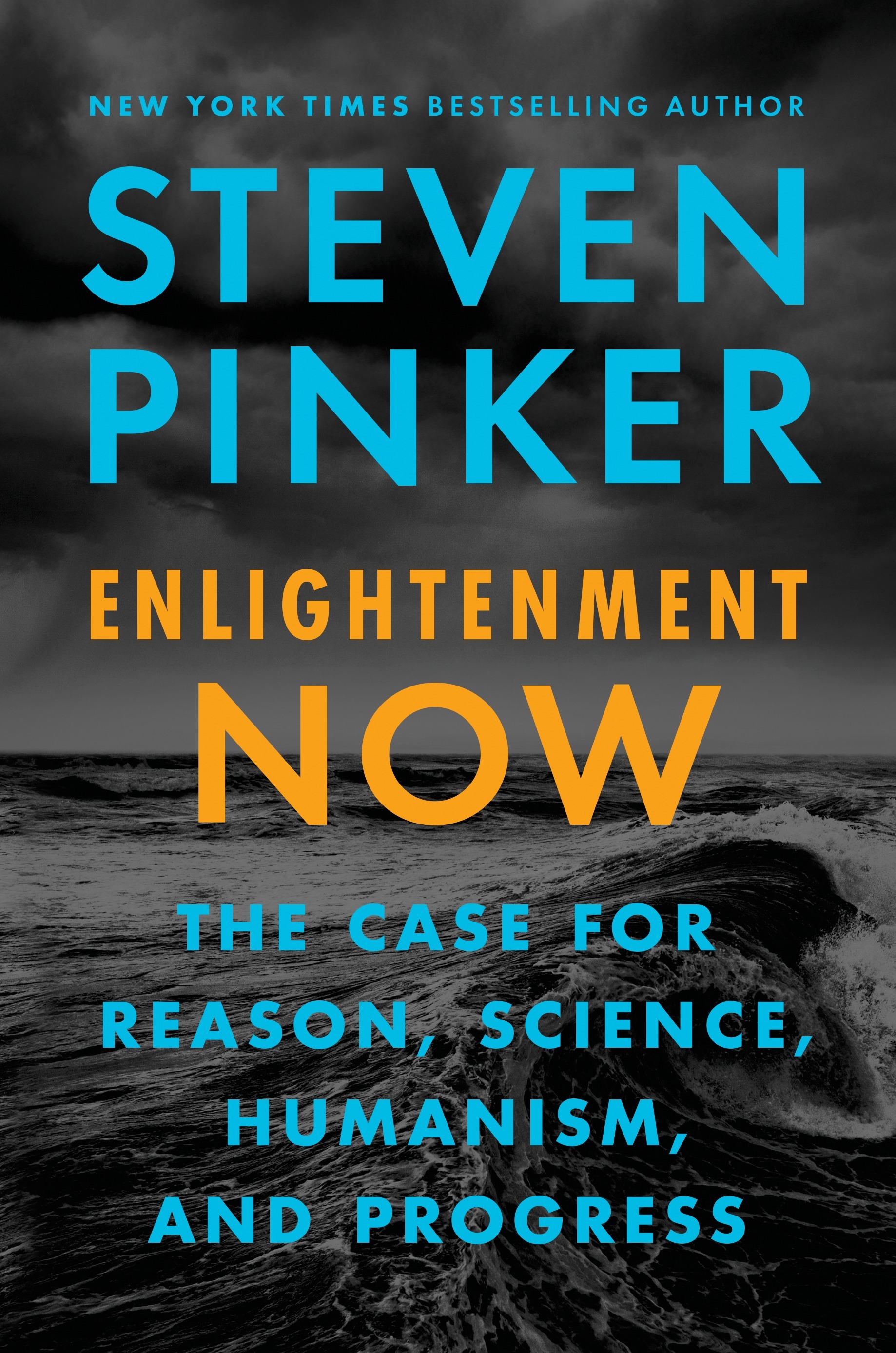
Enlightenment Now: The Case for Reason, Science, Humanism, and Progress
by Steven Pinker
Rating: 4.2 ⭐
• 18 recommendations ❤️
If you think the world is coming to an end, think again: people are living longer, healthier, freer, and happier lives, and while our problems are formidable, the solutions lie in the Enlightenment ideal of using reason and science.Is the world really falling apart? Is the ideal of progress obsolete? In this elegant assessment of the human condition in the third millennium, cognitive scientist and public intellectual Steven Pinker urges us to step back from the gory headlines and prophecies of doom, which play to our psychological biases. Instead, follow the data: In seventy-five jaw-dropping graphs, Pinker shows that life, health, prosperity, safety, peace, knowledge, and happiness are on the rise, not just in the West, but worldwide. This progress is not the result of some cosmic force. It is a gift of the Enlightenment: the conviction that reason and science can enhance human flourishing.Far from being a naïve hope, the Enlightenment, we now know, has worked. But more than ever, it needs a vigorous defense. The Enlightenment project swims against currents of human nature–tribalism, authoritarianism, demonization, magical thinking–which demagogues are all too willing to exploit. Many commentators, committed to political, religious, or romantic ideologies, fight a rearguard action against it. The result is a corrosive fatalism and a willingness to wreck the precious institutions of liberal democracy and global cooperation.With intellectual depth and literary flair, Enlightenment Now makes the case for reason, science, and humanism: the ideals we need to confront our problems and continue our progress.

Collusion: Secret Meetings, Dirty Money, and How Russia Helped Donald Trump Win
by Luke Harding
Rating: 4.2 ⭐
• 2 recommendations ❤️
#1 NEW YORK TIMES BESTSELLER • An explosive exposé that lays out the story behind the Steele Dossier, including Russia’s decades-in-the-making political game to upend American democracy and the Trump administration’s ties to Moscow.“Harding…presents a powerful case for Russian interference, and Trump campaign collusion, by collecting years of reporting on Trump’s connections to Russia and putting it all together in a coherent narrative.” — The NationDecember 2016. Luke Harding, the Guardian reporter and former Moscow bureau chief, quietly meets former MI6 officer Christopher Steele in a London pub to discuss President-elect Donald Trump’s Russia connections. A month later, Steele’s now-famous dossier sparks what may be the biggest scandal of the modern era. The names of the Americans involved are well-known—Paul Manafort, Michael Flynn, Jared Kushner, George Papadopoulos, Carter Page—but here Harding also shines a light on powerful Russian figures like Aras Agalarov, Natalia Veselnitskaya, and Sergey Kislyak, whose motivations and instructions may have been coming from the highest echelons of the Kremlin. Drawing on new material and his expert understanding of Moscow and its players, Harding takes the reader through every bizarre and disquieting detail of the “Trump-Russia” story—an event so huge it involves international espionage, off-shore banks, sketchy real estate deals, the Miss Universe pageant, mobsters, money laundering, poisoned dissidents, computer hacking, and the most shocking election in American history.

The Coddling of the American Mind: How Good Intentions and Bad Ideas Are Setting Up a Generation for Failure
by Greg Lukianoff
Rating: 4.3 ⭐
• 16 recommendations ❤️
A timely investigation into the campus assault on free speech and what it means for students, education, and our democracy.The generation now coming of age has been taught three Great Untruths: their feelings are always right; they should avoid pain and discomfort; and they should look for faults in others and not themselves. These three Great Untruths are part of a larger philosophy that sees young people as fragile creatures who must be protected and supervised by adults. But despite the good intentions of the adults who impart them, the Great Untruths are harming kids by teaching them the opposite of ancient wisdom and the opposite of modern psychological findings on grit, growth, and antifragility. The result is rising rates of depression and anxiety, along with endless stories of college campuses torn apart by moralistic divisions and mutual recriminations.This is a book about how we got here. First Amendment expert Greg Lukianoff and social psychologist Jonathan Haidt take us on a tour of the social trends stretching back to the 1980s that have produced the confusion and conflict on campus today, including the loss of unsupervised play time and the birth of social media, all during a time of rising political polarization.This is a book about how to fix the mess. The culture of "safety" and its intolerance of opposing viewpoints has left many young people anxious and unprepared for adult life, with devastating consequences for them, for their parents, for the companies that will soon hire them, and for a democracy that is already pushed to the brink of violence over its growing political divisions. Lukianoff and Haidt offer a comprehensive set of reforms that will strengthen young people and institutions, allowing us all to reap the benefits of diversity, including viewpoint diversity.This is a book for anyone who is confused by what's happening on college campuses today, or has children, or is concerned about the growing inability of Americans to live and work and cooperate across party lines.

The Book of Humans: A Brief History of Culture, Sex, War and the Evolution of Us
by Adam Rutherford
Rating: 3.8 ⭐
• 2 recommendations ❤️
We like to think of ourselves as exceptional beings, but is there really anything special about us that sets us apart from other animals? Humans are the slightest of twigs on a single family tree that encompasses four billion years, a lot of twists and turns, and a billion species. All of those organisms are rooted in a single origin, with a common code that underwrites our existence. This paradox - that our biology is indistinct from all life, yet we consider ourselves to be special - lies at the heart of who we are.In this original and entertaining tour of life on Earth, Adam Rutherford explores how many of the things once considered to be exclusively human are not: we are not the only species that communicates, makes tools, utilises fire, or has sex for reasons other than to make new versions of ourselves. Evolution has, however, allowed us to develop our culture to a level of complexity that outstrips any other observed in nature.THE BOOK OF HUMANS tells the story of how we became the creatures we are today, bestowed with the unique ability to investigate what makes us who we are. Illuminated by the latest scientific discoveries, it is a thrilling compendium of what unequivocally fixes us as animals, and reveals how we are extraordinary among them.
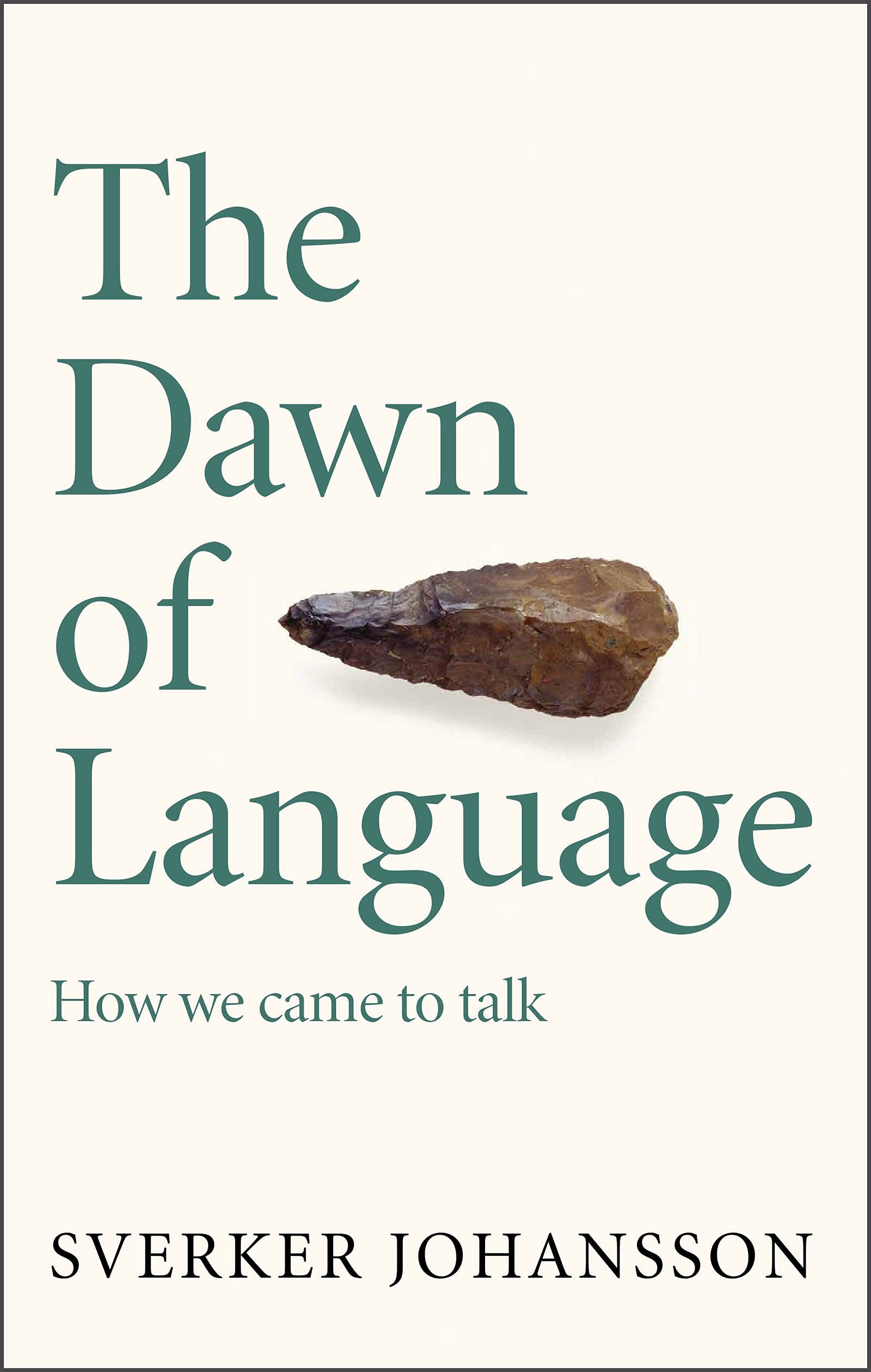
The Dawn of Language: Axes, lies, midwifery and how we came to talk
by Sverker Johansson
Rating: 4.2 ⭐
• 2 recommendations ❤️
Hur blev människan med språk? Var, när och varför började vi tala? Det är en av historiens stora gåtor. Än är vi långt ifrån en lösning, men med hjälp av så olika vetenskaper som arkeologi, neurologi, lingvistik och biologi kan vi numera dra några slutsatser, avfärda vissa äldre hypoteser och uppställa nya frågor.Med entusiasm och sakkunskap lotsar Sverker Johansson läsaren genom en djungel av ledtrådar och teorier. Sökandet efter språkets ursprung börjar många miljoner år tillbaka i tiden, då dagens apor och människor gick skilda evolutionära vägar. Det slutar vid den punkt dit det går att härleda förlagorna till de språk som talas i dag, det vill säga för omkring fem tusen år sedan. Däremellan får vi stifta bekantskap med Homo erectus och neandertalare, med Darwin och Chomsky, med delfiner och näktergalar, med syntax och interjektioner.Men hela tiden tycks spåren leda tillbaka den omvälvande period för omkring en och en halv miljon år sedan, då våra förfäder i Afrika ställdes inför nya situationer och alltmer började skilja sig från övriga djur – och där språket av allt att döma tycks ha spelat en nyckelroll.

The Little Book of Humanism: Universal Lessons on Finding Purpose, Meaning and Joy
by Andrew Copson
Rating: 4.1 ⭐
• 2 recommendations ❤️
We all want to lead a happy life. Traditionally, when in need of guidance, comfort or inspiration, many people turn to religion. But there has been another way to learn how to live well - the humanist way - and in today's more secular world, it is more relevant than ever.In The Little Book of Humanism, Alice Roberts and Andrew Copson share over two thousand years of humanist wisdom through an uplifting collection of stories, quotes and meditations on how to live an ethical and fulfilling life, grounded in reason and humanity.With universal insights and beautiful original illustrations, The Little Book of Humanism is a perfect introduction to and a timeless anthology of humanist thought from some of history and today's greatest thinkers.

Towards the end of the twentieth century, those who advocated what became known as 'Political Correctness' rightly identified the ways in which marginalised groups were often disparaged in everyday speech. Casual expressions of homophobia, racism and sexism went from being commonplace to being rejected by the vast majority of the public over the course of just two decades.Since then, the victories of Political Correctness have formed the basis for a new intolerant mindset, one that seeks to move beyond simply reassessing the social contract of shared discourse to actively policing speech that is deemed offensive or controversial. Rather than confront bad ideas through discussion, it has now become common to intimidate one's detractors into silence through 'cancel culture', a ritual of public humiliation and boycotting which can often lead to the target losing his or her means of income.Free Speech is a defence of our right to express ourselves as we see fit, and takes the form of a letter to those who are unpersuaded. Taking on board legitimate concerns about how speech can be harmful, Andrew Doyle argues that the alternative - an authoritarian world in which our freedoms are surrendered to those in power - has far worse consequences.