
Philip Goff Recommended Books
British Philosopher of mind, known for revitalizing Panpsychism
20 Books Recommended

Why I Am Not a Christian and Other Essays on Religion and Related Subjects
by Bertrand Russell
Rating: 3.9 ⭐
• 1 recommendation ❤️
While its tone is playful and frivolous, this book poses tough questions over the nature of religion and belief.Religion provides comfortable responses to the questions that have always beset humankind - why are we here, what is the point of being alive, how ought we to behave? Russell snatches that comfort away, leaving us instead with other, more troublesome alternatives: responsibility, autonomy, self-awareness. He tells us that the time to live is now, the place to live is here, and the way to be happy is to ensure others are happy.

The Analysis of Matter is the product of thirty years of thinking by one of the twentieth century's best-known philosophers. An inquiry into the philosophical foundations of physics, it was written against the background of stunning new developments in physics earlier in the century, above all relativity, as well as the excitement around quantum theory, which was just being developed. Concerned to place physics on a stable footing at a time of great theoretical change, Russell argues that the concept of matter itself can be replaced by a logical construction whose basic foundations are events. He is careful to point out that this does not prove that matter does not exist, but it does show that physicists can get on with their work without assuming that matter does exist. Russell argues that fundamental bits of ''matter'', such as electrons and protons, are simply groups of events connected in a certain way and their properties are all that are required for physics. This Routledge Classics edition includes the 1992 Introduction by John G. Slater.

The Angels Knocking on the Tavern Door: Thirty Poems of Hafez
by Hafiz
Rating: 4.3 ⭐
• 3 recommendations ❤️
One of our most acclaimed poets brings the work of the great Persian mystic and poet, Hafez, to a new audience. There is no poet in our tradition who carries the amount of admiration and devotion that the Persians have for Hafez. Children learn to sing Hafez poems in the third grade, and almost every family has a copy of the collected Hafez on the dining room table. Robert Bly and the great Islamic scholar Leonard Lewisohn have worked for 15 years on this book of Hafez, the first that carries into English his nimbleness, his outrageous humor, his defenses of the private life in the face of the fundamentalists, and the joy of his love poems. He writes in the ghazal form, one of the greatest inventions in the history of poetry. This is Rumi’s wild younger brother, now brought into an English that makes his genius visible.
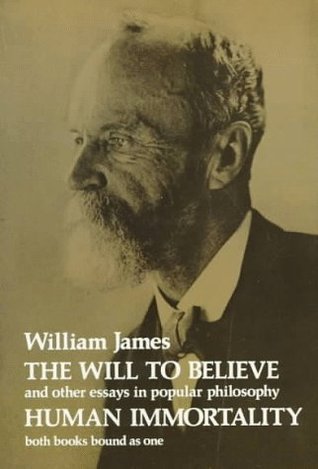
The Will to Believe, Human Immortality and Other Essays in Popular Philosophy
by William James
Rating: 4.1 ⭐
• 1 recommendation ❤️
The work of William James contributed greatly to the burgeoning fields of psychology, particularly in the areas of education, religion, mysticism and pragmatism. The brother of novelist Henry James and of diarist Alice James, William wrote several powerful essays expressing his ideas on the pragmatic theory of truth, sentience, and human beings' right to believe. In "The Will to Believe", James suggests that what a person holds to be true or attainable may exist through that person's belief in them, regardless of a lack of physical evidence. In a sense, he advocates the theory of self-fulfilling prophesies. "Human Immortality" was a speech delivered during the annual Ingersoll Lectureship, given in memory of George Goldthwait Ingersoll, in 1897 at Harvard University. These works are a prime example of the powerful influence William James has had on modern psychology, and are still recognized today for their brilliance and revolutionary impacts on the field.

"The Varieties of Religious Experience is certainly the most notable of all books in the field of the psychology of religion and probably destined to be the most influential [one] written on religion in the twentieth century", said Walter Houston Clark in Psychology Today. The book was an immediate bestseller upon its publication in June 1902. Reflecting the pluralistic views of psychologist-turned-philosopher William James, it posits that individual religious experiences, rather than the tenets of organized religions, form the backbone of religious life. James's discussion of conversion, repentance, mysticism, and hope of reward and fears of punishment in the hereafter--as well as his observations on the religious experiences of such diverse thinkers as Voltaire, Whitman, Emerson, Luther, Tolstoy, and others--all support his thesis. "James's characteristic humor, his ability to put down the pretentious and to be unpretentious, and his willingness to take some risks in his choices of ancedotal data or provocative theories are all apparent in the book", noted Professor Martin E. Marty. "A reader will come away with more reasons to raise new questions than to feel that old ones have been resolved".

A landmark volume in science writing by one of the great minds of our time, Stephen Hawking’s book explores such profound questions as: How did the universe begin—and what made its start possible? Does time always flow forward? Is the universe unending—or are there boundaries? Are there other dimensions in space? What will happen when it all ends?Told in language we all can understand, A Brief History of Time plunges into the exotic realms of black holes and quarks, of antimatter and “arrows of time,” of the big bang and a bigger God—where the possibilities are wondrous and unexpected. With exciting images and profound imagination, Stephen Hawking brings us closer to the ultimate secrets at the very heart of creation.

The Year of Living Biblically: One Man's Humble Quest to Follow the Bible as Literally as Possible
by A.J. Jacobs
Rating: 3.8 ⭐
• 1 recommendation ❤️
Avoiding shellfish was easy. The stoning of adulterers proved a little more difficult - and potentially controversial. Was it enough to walk up to an adulterer and gently touch them with a stone? Even that could be grounds for accusations of assault, especially with female adulterers in Manhattan. So what's a good Bible-reading boy to do?Raised in a secular family but increasingly interested in the relevance of faith in our modern world, A.J. Jacobs decides to dive in headfirst and attempt to obey the hundreds of less-publicised rules. The resulting spiritual journey is at once funny and profound, reverent and irreverent, personal and universal, and will make you see history's most influential book with new eyes.

Helena, a ward of the Countess of Rousillion, falls in love with the Countess's son, Bertram. Daughter of a famous doctor, and a skilled physician in her own right, Helena cures the King of France-who feared he was dying-and he grants her Bertram's hand as a reward. Bertram, however, offended by the inequality of the marriage, sets off for war, swearing he will not live with his wife until she can present him with a son, and with his own ring-two tasks which he believes impossible. However with the aid of a bed trick, Helena fulfils his tasks, Bertram realises the error of his ways, and they are reconciled. We are delighted to publish this classic book as part of our extensive Classic Library collection. Many of the books in our collection have been out of print for decades, and therefore have not been accessible to the general public. The aim of our publishing program is to facilitate rapid access to this vast reservoir of literature, and our view is that this is a significant literary work, which deserves to be brought back into print after many decades. The contents of the vast majority of titles in the Classic Library have been scanned from the original works. To ensure a high quality product, each title has been meticulously hand curated by our staff. Our philosophy has been guided by a desire to provide the reader with a book that is as close as possible to ownership of the original work. We hope that you will enjoy this wonderful classic work, and that for you it becomes an enriching experience.

Set on the desert planet Arrakis, Dune is the story of the boy Paul Atreides, heir to a noble family tasked with ruling an inhospitable world where the only thing of value is the “spice” melange, a drug capable of extending life and enhancing consciousness. Coveted across the known universe, melange is a prize worth killing for...When House Atreides is betrayed, the destruction of Paul’s family will set the boy on a journey toward a destiny greater than he could ever have imagined. And as he evolves into the mysterious man known as Muad’Dib, he will bring to fruition humankind’s most ancient and unattainable dream.

Moving from the Paleolithic age to the present, Karen Armstrong details the great lengths to which humankind has gone in order to experience a sacred reality that it called by many names, such as God, Brahman, Nirvana, Allah, or Dao. Focusing especially on Christianity but including Judaism, Islam, Buddhism, Hinduism, and Chinese spiritualities, Armstrong examines the diminished impulse toward religion in our own time, when a significant number of people either want nothing to do with God or question the efficacy of faith. Why has God become unbelievable? Why is it that atheists and theists alike now think and speak about God in a way that veers so profoundly from the thinking of our ancestors?Answering these questions with the same depth of knowledge and profound insight that have marked all her acclaimed books, Armstrong makes clear how the changing face of the world has necessarily changed the importance of religion at both the societal and the individual level. And she makes a powerful, convincing argument for drawing on the insights of the past in order to build a faith that speaks to the needs of our dangerously polarized age. Yet she cautions us that religion was never supposed to provide answers that lie within the competence of human reason; that, she says, is the role of logos. The task of religion is “to help us live creatively, peacefully, and even joyously with realities for which there are no easy explanations.” She emphasizes, too, that religion will not work automatically. It is, she says, a practical its insights are derived not from abstract speculation but from “dedicated intellectual endeavor” and a “compassionate lifestyle that enables us to break out of the prism of selfhood.”

Mind & Cosmos: Why the Materialist Neo-Darwinian Conception of Nature is Almost Certainly False
by Thomas Nagel
Rating: 3.6 ⭐
• 1 recommendation ❤️
العقل والنظام الكوني : يُخرجه (مركز تبصير مترجما إلى العربية تعاونا مع مطبعة جامعة أكسفورد، وهو من تأليف الفيلسوف الأمريكي توماس ناجل، لما سيأتي بيانه، وما قدمنا على هذه الخطوة مع علمنا بتوجهات وأيدلوجية المؤلف إلا من بابة وشهد شاهد من أهلها ففي الكتاب كلام واضح من كاتب وصف نفسه بين طيات الكتاب بأنه (ملحد) صراحة ودون موازية، ومع ذلك تجد في الكتاب نقدا للمادية الداروينية وخرافة نشأة الحياة والكائنات الحية المعقدة ذات الوعي والإرادة والتفكير العلمي النقدي، والتي تدرك بدورها وجود القيمة والأخلاق، من خلال محض التطور الدارويني. وذلك دون وجود تفسيرات واضحة من المادية الداروينية الحديثة توضح كيف نشأت كل هذه الصفات للكائن الحي من محض تفاعلات كيميائية صدقية في ظل وسط علمي يعلم جيدا أنها - أي : الداروينية الحديثة لم تجب أصلا عن سؤال نشأة الحياة المحضة في الكائنات أحادية الخلية !! في هذا الكتاب ترى الخيرة بادية في جميع صفحاته، نقدًا شديد اللهجة للمادية وبيان عوارها، ومع ذلك تجد أيضا من المؤلف رفضا للمنهج الألوهي بحجة أنه يبحث فقط عن منهج علمي تجربي فتجد المؤلف يصرح قائلا: حيث إنه من غير المعقول للوهلة الأولى أن تكون الحياة كما نعرفها - نتيجة سلسلة من الحوادث المادية مصحوبة بالية الانتخاب الطبيعي. ليعلم المسلم حقيقة الأمر من أفواه معتنقيه لا من مرتزقة الداروينية ومروجها.

The literary beauty of the King James Version and the most comfortable reading experience imaginable with Thomas Nelson’s custom KJV font in a super-giant-print format. Don’t miss anything God’s Word has to offer with the KJV Super Giant Print Reference Bible. With a generous type size, end-of-page references, a concordance, words of Christ in red, and full-color maps, this Bible is designed for readability and serious study.Features Include:Beauty and clarity of the new Thomas Nelson KJV FontEasy-to-read super giant printEnd-of-page referencesTranslation notesPresentation pageBible book introductionsMiracles and parables of JesusReading planWords of Christ in redConcordanceFull-color mapsDouble ribbon markers16-point print size

Mind Beyond Brain: Buddhism, Science, and the Paranormal
by David E. Presti
Rating: 4.0 ⭐
• 1 recommendation ❤️
Among the most profound questions we confront are the nature of what and who we are as conscious beings, and how the human mind relates to the rest of what we consider reality. For millennia, philosophers, scientists, and religious thinkers have attempted answers, perhaps none more meaningful today than those offered by neuroscience and by Buddhism. The encounter between these two worldviews has spurred ongoing conversations about what science and Buddhism can teach each other about mind and reality.In Mind Beyond Brain, the neuroscientist David E. Presti, with the assistance of other distinguished researchers, explores how evidence for anomalous phenomena--such as near-death experiences, apparent memories of past lives, apparitions, experiences associated with death, and other so-called psi or paranormal phenomena, including telepathy, clairvoyance, and precognition--can influence the Buddhism-science conversation. Presti describes the extensive but frequently unacknowledged history of scientific investigation into these phenomena, demonstrating its relevance to questions about consciousness and reality. The new perspectives opened up, if we are willing to take evidence of such often off-limits topics seriously, offer significant challenges to dominant explanatory paradigms and raise the prospect that we may be poised for truly revolutionary developments in the scientific investigation of mind. Mind Beyond Brain represents the next level in the science and Buddhism dialogue.

Galileo's Error: Foundations for a New Science of Consciousness
by Philip Goff
Rating: 3.9 ⭐
• 1 recommendation ❤️
From a leading philosopher of the mind comes this lucid, provocative argument that offers a radically new picture of human consciousness—panpsychism.Understanding how brains produce consciousness is one of the great scientific challenges of our age. Some philosophers argue that consciousness is something "extra," beyond the physical workings of the brain. Others think that if we persist in our standard scientific methods, our questions about consciousness will eventually be answered. And some even suggest that the mystery is so deep, it will never be solved. Decades have been spent trying to explain consciousness from within our current scientific paradigm, but little progress has been made.Now, Philip Goff offers an exciting alternative that could pave the way forward. Rooted in an analysis of the philosophical underpinnings of modern science and based on the early twentieth-century work of Arthur Eddington and Bertrand Russell, Goff makes the case for panpsychism, a theory which posits that consciousness is not confined to biological entities but is a fundamental feature of all physical matter—from subatomic particles to the human brain. In Galileo's Error, he has provided the first step on a new path to the final theory of human consciousness.

Dominion: How the Christian Revolution Remade the World
by Tom Holland
Rating: 4.3 ⭐
• 6 recommendations ❤️
A "marvelous" (Economist) account of how the Christian Revolution forged the Western imagination.Crucifixion, the Romans believed, was the worst fate imaginable, a punishment reserved for slaves. How astonishing it was, then, that people should have come to believe that one particular victim of crucifixion-an obscure provincial by the name of Jesus-was to be worshipped as a god. Dominion explores the implications of this shocking conviction as they have reverberated throughout history. Today, the West remains utterly saturated by Christian assumptions. As Tom Holland demonstrates, our morals and ethics are not universal but are instead the fruits of a very distinctive civilization. Concepts such as secularism, liberalism, science, and homosexuality are deeply rooted in a Christian seedbed. From Babylon to the Beatles, Saint Michael to #MeToo, Dominion tells the story of how Christianity transformed the modern world.

The Immortality Key: Uncovering the Secret History of the Religion with No Name
by Brian C. Muraresku
Rating: 4.2 ⭐
• 7 recommendations ❤️
A groundbreaking, controversial dive into the role psychedelics have played in the human experience of the Divine throughout Western history, and the answer to a 2,000 year old mystery that could shake the Church to its foundations.The Immortality Key connects the lost, psychedelic sacrament of Greek religion to early Christianity—exposing the true origins of Western Civilization. In the tradition of unsolved historical mysteries like David Grann's Killers of the Flower Moon and Douglas Preston's The Lost City of the Monkey God, Brian Muraresku’s 10-year investigation takes the reader through Greece, Germany, Spain, France and Italy, offering unprecedented access to the hidden archives of the Louvre and the Vatican along the way.In The Immortality Key, Muraresku explores a little-known connection between the best-kept secret in Ancient Greece and Christianity. This is the real story of the most famous human being who ever lived (Jesus) and the biggest religion the world has ever known. Today, 2.4 billion people are Christian. That's one third of the planet. But do any of them really know how it all started?Before Jerusalem, before Rome, before Mecca—there was Eleusis: the spiritual capital of the ancient world. It promised immortality to Plato and the rest of Athens's greatest minds with a very simple formula: drink this potion, see God. Shrouded in secrecy for millennia, the Ancient Greek sacrament was buried when the newly Christianized Roman Empire obliterated Eleusis in the fourth century AD.Renegade scholars in the 1970s claimed the Greek potion was psychedelic, just like the original Christian Eucharist that replaced it. In recent years, vindication for the disgraced theory has been quietly mounting in the laboratory. The rapidly growing field of archaeological chemistry has proven the ancient use of visionary drugs. And with a single dose of psilocybin, the psycho-pharmacologists at Johns Hopkins and NYU are now turning self-proclaimed atheists into instant believers. No one has ever found hard, scientific evidence of drugs connected to Eleusis, let alone early Christianity. Until now.Armed with key documents never before translated into English, convincing analysis, and a captivating spirit of quest, Muraresku mines science, classical literature, biblical scholarship and art to deliver the hidden key to eternal life, bringing us to what clinical psychologist William Richards calls "the edge of an awesomely vast frontier."Featuring a Foreword by Graham Hancock, the New York Times bestselling author of America Before: The Key to Earth's Lost Civilization.
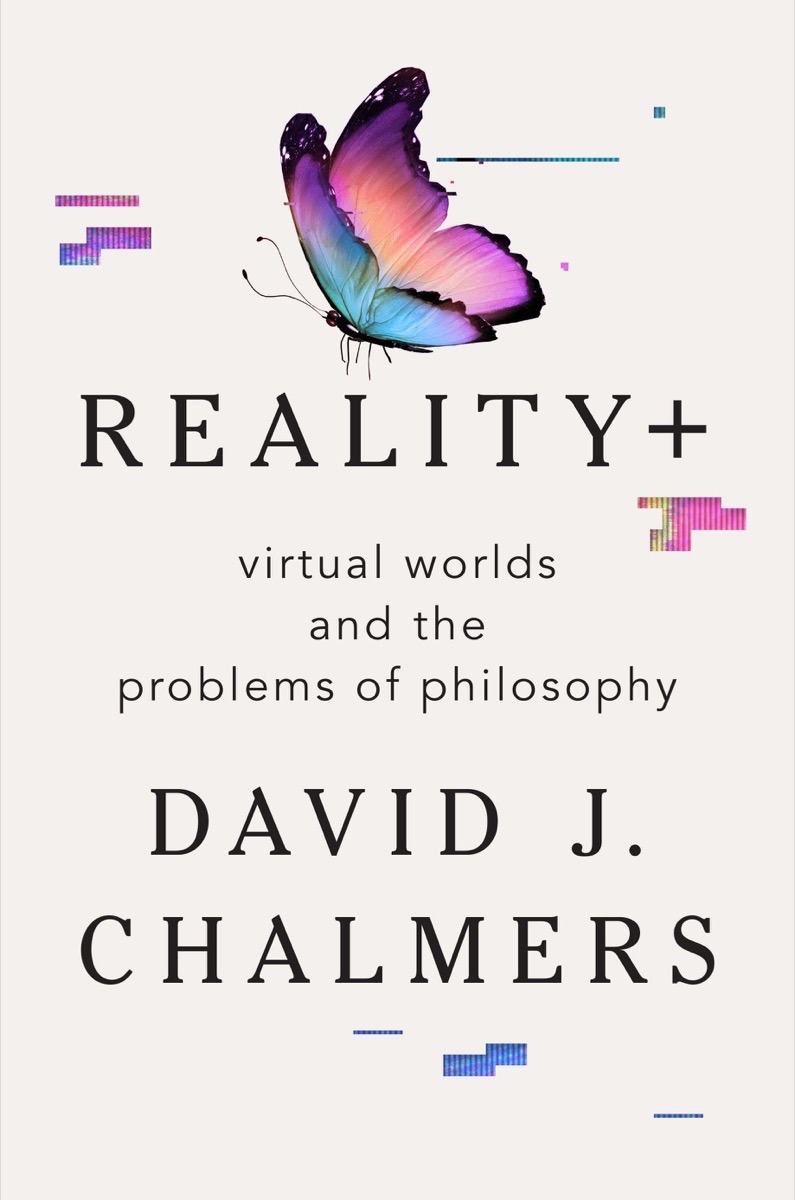
Reality+: Virtual Worlds and the Problems of Philosophy
by David J. Chalmers
Rating: 3.7 ⭐
• 1 recommendation ❤️
Virtual reality is genuine reality; that’s the central thesis of Reality+. In a highly original work of “technophilosophy,” David J. Chalmers gives a compelling analysis of our technological future. He argues that virtual worlds are not second-class worlds, and that we can live a meaningful life in virtual reality. We may even be in a virtual world already.Along the way, Chalmers conducts a grand tour of big ideas in philosophy and science. He uses virtual reality technology to offer a new perspective on long-established philosophical questions. How do we know that there’s an external world? Is there a god? What is the nature of reality? What’s the relation between mind and body? How can we lead a good life? All of these questions are illuminated or transformed by Chalmers’ mind-bending analysis.Studded with illustrations that bring philosophical issues to life, Reality+ is a major statement that will shape discussion of philosophy, science, and technology for years to come.

A vibrant selection of poems by the great Persian mystic with groundbreaking translations by an American poet of Persian descent.Rumi’s poems were meant to induce a sense of ecstatic illumination and liberation in his audience, bringing its members to a condition of serenity, compassion, and oneness with the divine. They remain masterpieces of world literature to which readers in many languages continually return for inspiration and succor, as wellas aesthetic delight. This new translation by Haleh Liza Gafori preserves the intelligence and the drama of the poems, which are as full of individual character as they are of visionary wisdom.

The Varieties of Spiritual Experience: 21st Century Research and Perspectives
by David B Yaden
Rating: 4.4 ⭐
• 1 recommendation ❤️
A cutting-edge guide to the psychology and neuroscience of spiritual experiencesSpiritual experiences have occurred within people around the world and throughout history, up to and including the present day. The founders of every major religion described them, philosophers since antiquity have pondered them, and according to recent polls, about 30% of people still report them. A century ago, philosopher and psychologist William James famously analyzed accounts of these experiences and raised questions for future scientific study. What triggers these events? How are the brain and body affected? How do these brief moments have such lasting effects? Now, modern science has some answers.This book invites readers into contemporary psychology and neuroscience laboratories around the world to learn about these elusive yet profound inner events. As it explores phenomena ranging from divine revelations to paranormal experiences to life-changing experiences of unity, findings from modern science are illustrated with a diverse set of personal accounts from believers and non-believers alike, plunging readers into deeply personal and sometimes transformative moments. Written by two renowned scientists in the field, this book is a deep exploration of the psychology and neuroscience of a range of profoundly meaningful experiences.
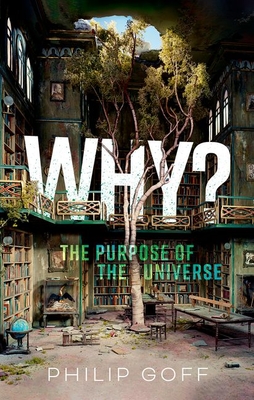
Why are we here? What's the point of existence? On the 'big questions' of meaning and purpose, Western thought has been dominated by the dichotomy of traditional religion and secular atheism. In this pioneering work, Philip Goff argues that it is time to move on from both God and atheism. Through an exploration of contemporary cosmology and cutting-edge philosophical research on consciousness, Goff argues for cosmic the idea that the universe is directed towards certain goals, such as the emergence of life.In contrast to religious thinkers, Goff argues that the traditional God is a bad explanation of cosmic purpose. Instead, he explores a range of alternative possibilities for accounting for cosmic purpose, from the speculation that we live in a computer simulation to the hypothesis that the universe itself is a conscious mind. Goff scrutinizes these options with analytical rigour, laying the foundations for a new paradigm of philosophical enquiry into the middle ground between God and atheism. Ultimately, Goff outlines a way of living in hope that cosmic purpose is still unfolding, involving political engagement and a non-literalist interpretation of traditional religion.