
41 Books Recommended

The Corner: A Year in the Life of an Inner-City Neighborhood
by David Simon
Rating: 4.5 ⭐
• 2 recommendations ❤️
The crime-infested intersection of West Fayette and Monroe Streets is well-known--and cautiously avoided--by most of Baltimore. But this notorious corner's 24-hour open-air drug market provides the economic fuel for a dying neighborhood. David Simon, an award-winning author and crime reporter, and Edward Burns, a 20-year veteran of the urban drug war, tell the chilling story of this desolate crossroad.Through the eyes of one broken family--two drug-addicted adults and their smart, vulnerable 15-year-old son, DeAndre McCollough, Simon and Burns examine the sinister realities of inner cities across the country and unflinchingly assess why law enforcement policies, moral crusades, and the welfare system have accomplished so little. This extraordinary book is a crucial look at the price of the drug culture and the poignant scenes of hope, caring, and love that astonishingly rise in the midst of a place America has abandoned.
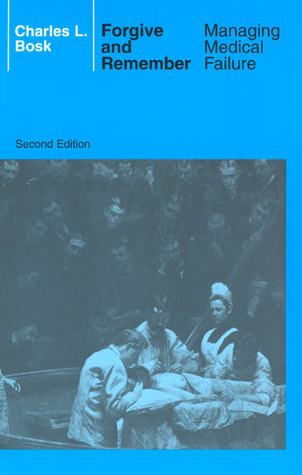
On its initial publication, Forgive and Remember emerged as the definitive study of the training and lives of young surgeons. Now with an extensive new preface, epilogue, and appendix by the author, reflecting on the changes that have taken place since the book's original publication, this updated second edition of Charles L. Bosk's classic study is as timely as ever.

If the Marines are “the few, the proud,” Recon Marines are the fewest and the proudest. Nathaniel Fick’s career begins with a hellish summer at Quantico, after his junior year at Dartmouth. He leads a platoon in Afghanistan just after 9/11 and advances to the pinnacle—Recon— two years later, on the eve of war with Iraq. His vast skill set puts him in front of the front lines, leading twenty-two Marines into the deadliest conflict since Vietnam. He vows to bring all his men home safely, and to do so he’ll need more than his top-flight education. Fick unveils the process that makes Marine officers such legendary leaders and shares his hard-won insights into the differences between military ideals and military practice, which can mock those ideals.In this deeply thoughtful account of what it’s like to fight on today’s front lines, Fick reveals the crushing pressure on young leaders in combat. Split-second decisions might have national consequences or horrible immediate repercussions, but hesitation isn’t an option. One Bullet Away never shrinks from blunt truths, but ultimately it is an inspiring account of mastering the art of war.

An essential collection of the wartime writings and diary of World War II German Field Marshal Erwin Rommel, edited with commentary by one of the great military theorists of our timeWhen Erwin Rommel died-by forced suicide at Hitler's command-he left behind in various ingenious hiding places the papers that recorded the story of his dramatic career and the exact details of his masterly campaigns. It was his custom to dictate each evening a running narrative of the day's events and, after each battle, to summarize its course and the lessons to be learned from it. He wrote, almost daily, intimate and outspoken letters to his wife in which his private feelings and-after the tide had turned-forebodings found expression. To this is added by Rommel's son Manfred the story of the field marshall's last weeks and the final day when he was given the choice of an honorable suicide or an ignominious trial for treason. An engrossing human document and a rare look at the mind of the "Desert Fox," The Rommel Papers throws an interesting light on the Axis alliance and on the inner workings of Hitler's high command.

I Don't Want to Talk About It: Overcoming the Secret Legacy of Male Depression
by Terrence Real
Rating: 4.3 ⭐
• 5 recommendations ❤️
Twenty years of experience treating men and their families has convinced psychotherapist Terrence Real that depression is a silent epidemic in men; that men hide their condition from family, friends, and themselves to avoid the stigma of depression's "un-manliness." Problems that we think of as typically male; difficulty with intimacy, workaholism, alcoholism, abusive behavior, and rage-are really attempts to escape depression. And these escape attempts only hurt the people men love and pass their condition on to their children.This ground breaking book is the "pathway out of darkness" that these men and their families seek. Real reveals how men can unearth their pain, heal themselves, restore relationships, and break the legacy of abuse. He mixes penetrating analysis with compelling tales of his patients and even his ownexperiences with depression as the son of a violent, depressed father and the father of two young sons.

"Surely You're Joking, Mr. Feynman!": Adventures of a Curious Character
by
Rating: 4.3 ⭐
• 25 recommendations ❤️
A New York Times bestseller—the outrageous exploits of one of this century's greatest scientific minds and a legendary American original.Richard Feynman, winner of the Nobel Prize in physics, thrived on outrageous adventures. Here he recounts in his inimitable voice his experience trading ideas on atomic physics with Einstein and Bohr and ideas on gambling with Nick the Greek; cracking the uncrackable safes guarding the most deeply held nuclear secrets; accompanying a ballet on his bongo drums; painting a naked female toreador. In short, here is Feynman's life in all its eccentric—a combustible mixture of high intelligence, unlimited curiosity, and raging chutzpah.
The Four Agreements: A Practical Guide to Personal Freedom
by Miguel Ruiz
Rating: 4.2 ⭐
• 25 recommendations ❤️
In The Four Agreements , bestselling author don Miguel Ruiz reveals the source of self-limiting beliefs that rob us of joy and create needless suffering. Based on ancient Toltec wisdom, The Four Agreements offer a powerful code of conduct that can rapidly transform our lives to a new experience of freedom, true happiness, and love.• A New York Times bestseller for over a decade• An international bestseller published in 52 languages worldwide“This book by don Miguel Ruiz, simple yet so powerful, has made a tremendous difference in how I think and act in every encounter.” — Oprah Winfrey“Don Miguel Ruiz’s book is a roadmap to enlightenment and freedom.” — Deepak Chopra, Author, The Seven Spiritual Laws of Success“An inspiring book with many great lessons.” — Wayne Dyer, Author, Real Magic“In the tradition of Castaneda, Ruiz distills essential Toltec wisdom, expressing with clarity and impeccability what it means for men and women to live as peaceful warriors in the modern world.” — Dan Millman, Author, Way of the Peaceful Warrior
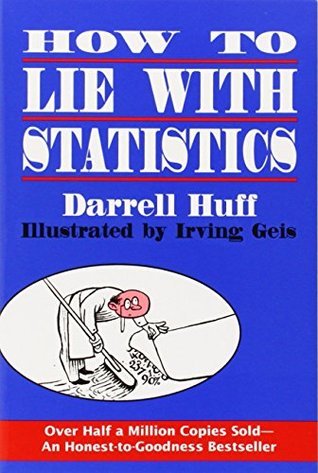
Darrell Huff runs the gamut of every popularly used type of statistic, probes such things as the sample study, the tabulation method, the interview technique, or the way the results are derived from the figures, and points up the countless number of dodges which are used to fool rather than to inform.

The Double Helix: A Personal Account of the Discovery of the Structure of DNA
by James D. Watson
Rating: 3.6 ⭐
• 7 recommendations ❤️
The classic personal account of Watson and Crick’s groundbreaking discovery of the structure of DNA, now with an introduction by Sylvia Nasar, author of A Beautiful Mind .By identifying the structure of DNA, the molecule of life, Francis Crick and James Watson revolutionized biochemistry and won themselves a Nobel Prize. At the time, Watson was only twenty-four, a young scientist hungry to make his mark. His uncompromisingly honest account of the heady days of their thrilling sprint against other world-class researchers to solve one of science’s greatest mysteries gives a dazzlingly clear picture of a world of brilliant scientists with great gifts, very human ambitions, and bitter rivalries.With humility unspoiled by false modesty, Watson relates his and Crick’s desperate efforts to beat Linus Pauling to the Holy Grail of life sciences, the identification of the basic building block of life. Never has a scientist been so truthful in capturing in words the flavor of his work.

King of the World: Muhammad Ali and the Rise of an American Hero
by David Remnick
Rating: 4.2 ⭐
• 2 recommendations ❤️
On the night in 1964 that Muhammad Ali (then known as Cassius Clay) stepped into the ring with Sonny Liston, he was widely regarded as an irritating freak who danced and talked way too much. Six rounds later Ali was not only the new world heavyweight boxing champion: He was "a new kind of black man" who would shortly transform America's racial politics, its popular culture, and its notions of heroism. No one has captured Ali--and the era that he exhilarated and sometimes infuriated--with greater vibrancy, drama, and astuteness than David Remnick, the Pulitzer Prize-winning author of Lenin's Tomb (and editor of The New Yorker). In charting Ali's rise from the gyms of Louisville, Kentucky, to his epochal fights against Liston and Floyd Patterson, Remnick creates a canvas of unparalleled richness. He gives us empathetic portraits of wisecracking sportswriters and bone-breaking mobsters; of the baleful Liston and the haunted Patterson; of an audacious Norman Mailer and an enigmatic Malcolm X. Most of all, King of the World does justice to the speed, grace, courage, humor, and ebullience of one of the greatest athletes and irresistibly dynamic personalities of our time.

The Puzzle People: Memoirs Of A Transplant Surgeon
by Thomas Starzl
Rating: 4.1 ⭐
• 2 recommendations ❤️
Given the tensions and demands of medicine, highly successful physicians and surgeons rarely achieve equal success as prose writers. It is truly extraordinary that a major, international pioneer in the controversial field of transplant surgery should have written a spellbinding, and heart-wrenching, autobiography. Thomas Starzl grew up in LeMars, Iowa, the son of a newspaper publisher and a nurse. His father also wrote science fiction and was acquainted with the writer Ray Bradbury. Starzl left the family business to enter Northwestern University Medical School where he earned both and M.D. and a PhD. While he was a student, and later during his surgical internship at the Johns Hopkins Hospital, he began the series of animal experiments that led eventually to the world’s first transplantation of the human liver in 1963. Throughout his career, first at the University of Colorado and then at the University of Pittsburgh, he has aroused both worldwide admiration and controversy. His technical innovations and medical genius have revolutionized the field, but Starzl has not hesitated to address the moral and ethical issues raised by transplantation. In this book he clearly states his position on many hotly debated issues including brain death, randomized trials for experimental drugs, the costs of transplant operations, and the system for selecting organ recipients from among scores of desperately ill patients. There are many heroes in the story of transplantation, and many “puzzle people,” the patients who, as one journalist suggested, might one day be made entirely of various transplanted parts. They are old and young, obscure and world famous. Some have been taken into the hearts of America, like Stormie Jones, the brave and beautiful child from Texas. Every patient who receives someone else’s organ - and Starzl remembers each one - is a puzzle. “It was not just the acquisition of a new part,” he writes. “The rest of the body had to change in many ways before the gift could be accepted. It was necessary for the mind to see the world in a different way.” The surgeons and physicians who pioneered transplantation were also they too became puzzle people. “Some were corroded or destroyed by the experience, some were sublimated, and none remained the same.”

King of Hearts: The True Story of the Maverick Who Pioneered Open Heart Surgery
by G. Wayne Miller
Rating: 4.3 ⭐
• 2 recommendations ❤️
Few of the great stories of medicine are as palpably dramatic as the invention of open-heart surgery, yet, until now, no journalist has ever brought all of the thrilling specifics of this triumph to life.This is the story of the surgeon many call the father of open-heart surgery, Dr. C. Walton Lillehei, who, along with colleagues at University Hospital in Minneapolis and a small band of pioneers elsewhere, accomplished what many experts considered to be an impossible feat: He opened the heart, repaired fatal defects, and made the miraculous routine.Acclaimed author G. Wayne Miller draws on archival research and exclusive interviews with Lillehei and legendary pioneers such as Michael DeBakey and Christiaan Barnard, taking readers into the lives of these doctors and their patients as they progress toward their landmark achievement. In the tradition of works by Richard Rhodes and Tracy Kidder, King of Hearts tells the story of an important and gripping piece of forgotten science history.

Don’t miss one of America’s top 100 most-loved novels, selected by PBS’s The Great American Read.This beloved book by E. B. White, author of Stuart Little and The Trumpet of the Swan, is a classic of children's literature that is "just about perfect." This paper-over-board edition includes a foreword by two-time Newbery winning author Kate DiCamillo. Some Pig. Humble. Radiant. These are the words in Charlotte's Web, high up in Zuckerman's barn. Charlotte's spiderweb tells of her feelings for a little pig named Wilbur, who simply wants a friend. They also express the love of a girl named Fern, who saved Wilbur's life when he was born the runt of his litter.E. B. White's Newbery Honor Book is a tender novel of friendship, love, life, and death that will continue to be enjoyed by generations to come. It contains illustrations by Garth Williams, the acclaimed illustrator of E. B. White's Stuart Little and Laura Ingalls Wilder's Little House series, among many other books.

Rosenberg's quest to unlock the secrets of cancer began when a patient's inoperable cancer mysteriously reversed itself--and his untiring efforts finally paid in recent years he has made headlines around the world for pioneering treatments that have proven to prolong and save lives.

Here is a multidimensional playland of ideas from the world's most eccentric Nobel-Prize winning scientist. Kary Mullis is legendary for his invention of PCR, which redefined the world of DNA, genetics, and forensic science. He is also a surfer, a veteran of Berkeley in the sixties, and perhaps the only Nobel laureate to describe a possible encounter with aliens. A scientist of boundless curiosity, he refuses to accept any proposition based on secondhand or hearsay evidence, and always looks for the "money trail" when scientists make announcements.Mullis writes with passion and humor about a wide range of from global warming to the O. J. Simpson trial, from poisonous spiders to HIV, from scientific method to astrology. Dancing Naked in the Mind Field challenges us to question the authority of scientific dogma even as it reveals the workings of an uncannily original scientific mind.

Wear on edges of covers and spine. Bookstore stamp on first page.

Mistakes Were Made (but Not by Me): Why We Justify Foolish Beliefs, Bad Decisions, and Hurtful Acts
by Carol Tavris
Rating: 4.2 ⭐
• 5 recommendations ❤️
“Entertaining, illuminating and—when you recognize yourself in the stories it tells—mortifying.” — Wall Street Journal“Every page sparkles with sharp insight and keen observation. Mistakes were made—but not in this book!” —Daniel Gilbert, author of Stumbling on Happiness Why is it so hard to say “I made a mistake”—and really believe it? When we make mistakes, cling to outdated attitudes, or mistreat other people, we must calm the cognitive dissonance that jars our feelings of self-worth. And so, unconsciously, we create fictions that absolve us of responsibility, restoring our belief that we are smart, moral, and right—a belief that often keeps us on a course that is dumb, immoral, and wrong. Backed by years of research, Mistakes Were Made (But Not by Me ) offers a fascinating explanation of self-justification—how it works, the damage it can cause, and how we can overcome it. This updated edition features new examples and concludes with an extended discussion of how we can live with dissonance, learn from it, and perhaps, eventually, forgive ourselves. “A revelatory study of how lovers, lawyers, doctors, politicians—and all of us—pull the wool over our own eyes . . . Reading it, we recognize the behavior of our leaders, our loved ones, and—if we’re honest—ourselves, and some of the more perplexing mysteries of human nature begin to seem a little clearer.” —Francine Prose, O, The Oprah Magazine

Challenging the Conventional Wisdom on Diet, Weight, and DiseaseIn this groundbreaking book, the result of seven years of research in every science connected with the impact of nutrition on health, award-winning science writer Gary Taubes shows us that almost everything we believe about the nature of a healthy diet is wrong.For decades we have been taught that fat is bad for us, carbohydrates better, and that the key to a healthy weight is eating less and exercising more. Yet with more and more people acting on this advice, we have seen unprecedented epidemics of obesity and diabetes. Taubes argues persuasively that the problem lies in refined carbohydrates (white flour, sugar, easily digested starches) and sugars–via their dramatic and longterm effects on insulin, the hormone that regulates fat accumulation–and that the key to good health is the kind of calories we take in, not the number. There are good calories, and bad ones.Good CaloriesThese are from foods without easily digestible carbohydrates and sugars. These foods can be eaten without restraint.Meat, fish, fowl, cheese, eggs, butter, and non-starchy vegetables. Bad CaloriesThese are from foods that stimulate excessive insulin secretion and so make us fat and increase our risk of chronic disease—all refined and easily digestible carbohydrates and sugars. The key is not how much vitamins and minerals they contain, but how quickly they are digested. (So apple juice or even green vegetable juices are not necessarily any healthier than soda.) Bread and other baked goods, potatoes, yams, rice, pasta, cereal grains, corn, sugar (sucrose and high fructose corn syrup), ice cream, candy, soft drinks, fruit juices, bananas and other tropical fruits, and beer. Taubes traces how the common assumption that carbohydrates are fattening was abandoned in the 1960s when fat and cholesterol were blamed for heart disease and then –wrongly–were seen as the causes of a host of other maladies, including cancer. He shows us how these unproven hypotheses were emphatically embraced by authorities in nutrition, public health, and clinical medicine, in spite of how well-conceived clinical trials have consistently refuted them. He also documents the dietary trials of carbohydrate-restriction, which consistently show that the fewer carbohydrates we consume, the leaner we will be. With precise references to the most significant existing clinical studies, he convinces us that there is no compelling scientific evidence demonstrating that saturated fat and cholesterol cause heart disease, that salt causes high blood pressure, and that fiber is a necessary part of a healthy diet. Based on the evidence that does exist, he leads us to conclude that the only healthy way to lose weight and remain lean is to eat fewer carbohydrates or to change the type of the carbohydrates we do eat, and, for some of us, perhaps to eat virtually none at all.The 11 Critical Conclusions of Good Calories, Bad Calories: 1. Dietary fat, whether saturated or not, does not cause heart disease. 2. Carbohydrates do, because of their effect on the hormone insulin. The more easily-digestible and refined the carbohydrates and the more fructose they contain, the greater the effect on our health, weight, and well-being. 3. Sugars—sucrose (table sugar) and high fructose corn syrup specifically—are particularly harmful. The glucose in these sugars raises insulin levels; the fructose they contain overloads the liver.4. Refined carbohydrates, starches, and sugars are also the most likely dietary causes of cancer, Alzheimer’s Disease, and the other common chronic diseases of modern times. 5. Obesity is a disorder of excess fat accumulation, not overeating and not sedentary behavior. 6. Consuming excess calories does not cause us to grow fatter any more than it causes a child to grow taller. 7. Exercise does not make us lose excess fat; it makes us hungry. 8. We get fat because of an imbalance—a disequilibrium—in the hormonal regulation of fat tissue and fat metabolism. More fat is stored in the fat tissue than is mobilized and used for fuel. We become leaner when the hormonal regulation of the fat tissue reverses this imbalance. 9. Insulin is the primary regulator of fat storage. When insulin levels are elevated, we stockpile calories as fat. When insulin levels fall, we release fat from our fat tissue and burn it for fuel. 10. By stimulating insulin secretion, carbohydrates make us fat and ultimately cause obesity. By driving fat accumulation, carbohydrates also increase hunger and decrease the amount of energy we expend in metabolism and physical activity.11. The fewer carbohydrates we eat, the leaner we will be. Good Calories, Bad Calories is a tour de force of scientific...

Where Men Win The Odyssey of Pat Tillman Paperback – July 27, 2010
A gargantuan, mind-altering comedy about the Pursuit of Happiness in America set in an addicts' halfway house and a tennis academy, and featuring the most endearingly screwed-up family to come along in recent fiction, Infinite Jest explores essential questions about what entertainment is and why it has come to so dominate our lives; about how our desire for entertainment affects our need to connect with other people; and about what the pleasures we choose say about who we are. Equal parts philosophical quest and screwball comedy, Infinite Jest bends every rule of fiction without sacrificing for a moment its own entertainment value. It is an exuberant, uniquely American exploration of the passions that make us human - and one of those rare books that renew the idea of what a novel can do.

Have you ever wondered how one day the media can assert that alcohol is bad for us and the next unashamedly run a story touting the benefits of daily alcohol consumption? Or how a drug that is pulled off the market for causing heart attacks ever got approved in the first place? How can average readers, who aren't medical doctors or Ph.D.s in biochemistry, tell what they should be paying attention to and what's, well, just more bullshit?Ben Goldacre has made a point of exposing quack doctors and nutritionists, bogus credentialing programs, and biased scientific studies. He has also taken the media to task for its willingness to throw facts and proof out the window. But he's not here just to tell you what's wrong. Goldacre is here to teach you how to evaluate placebo effects, double-blind studies, and sample sizes, so that you can recognize bad science when you see it. You're about to feel a whole lot better.
The Talent Code: Greatness Isn't Born. It's Grown. Here's How.
by Daniel Coyle
Rating: 4.2 ⭐
• 14 recommendations ❤️
What is the secret of talent? How do we unlock it? In this groundbreaking work, journalist and New York Times bestselling author Daniel Coyle provides parents, teachers, coaches, businesspeople—and everyone else—with tools they can use to maximize potential in themselves and others.Whether you’re coaching soccer or teaching a child to play the piano, writing a novel or trying to improve your golf swing, this revolutionary book shows you how to grow talent by tapping into a newly discovered brain mechanism.Drawing on cutting-edge neurology and firsthand research gathered on journeys to nine of the world’s talent hotbeds—from the baseball fields of the Caribbean to a classical-music academy in upstate New York—Coyle identifies the three key elements that will allow you to develop your gifts and optimize your performance in sports, art, music, math, or just about anything. • Deep Practice Everyone knows that practice is a key to success. What everyone doesn’t know is that specific kinds of practice can increase skill up to ten times faster than conventional practice.• Ignition We all need a little motivation to get started. But what separates truly high achievers from the rest of the pack? A higher level of commitment—call it passion—born out of our deepest unconscious desires and triggered by certain primal cues. Understanding how these signals work can help you ignite passion and catalyze skill development.• Master Coaching What are the secrets of the world’s most effective teachers, trainers, and coaches? Discover the four virtues that enable these “talent whisperers” to fuel passion, inspire deep practice, and bring out the best in their students.These three elements work together within your brain to form myelin, a microscopic neural substance that adds vast amounts of speed and accuracy to your movements and thoughts. Scientists have discovered that myelin might just be the holy grail: the foundation of all forms of greatness, from Michelangelo’s to Michael Jordan’s. The good news about myelin is that it isn’t fixed at birth; to the contrary, it grows, and like anything that grows, it can be cultivated and nourished. Combining revelatory analysis with illuminating examples of regular people who have achieved greatness, this book will not only change the way you think about talent, but equip you to reach your own highest potential.From the Hardcover edition.

This Is Water: Some Thoughts, Delivered on a Significant Occasion, about Living a Compassionate Life
by David Foster Wallace
Rating: 4.5 ⭐
• 9 recommendations ❤️
Only once did David Foster Wallace give a public talk on his views on life, during a commencement address given in 2005 at Kenyon College. The speech is reprinted for the first time in book form in THIS IS WATER. How does one keep from going through their comfortable, prosperous adult life unconsciously? How do we get ourselves out of the foreground of our thoughts and achieve compassion? The speech captures Wallace's electric intellect as well as his grace in attention to others. After his death, it became a treasured piece of writing reprinted in The Wall Street Journal and the London Times, commented on endlessly in blogs, and emailed from friend to friend.Writing with his one-of-a-kind blend of causal humor, exacting intellect, and practical philosophy, David Foster Wallace probes the challenges of daily living and offers advice that renews us with every reading.

The Emperor of All Maladies: A Biography of Cancer
by Siddhartha Mukherjee
Rating: 4.5 ⭐
• 6 recommendations ❤️
The Emperor of All Maladies is a magnificent, profoundly humane "biography" of cancer—from its first documented appearances thousands of years ago through the epic battles in the twentieth century to cure, control, and conquer it to a radical new understanding of its essence.The story of cancer is a story of human ingenuity, resilience, and perseverance, but also of hubris, paternalism, and misperception. Mukherjee recounts centuries of discoveries, setbacks, victories, and deaths, told through the eyes of his predecessors and peers, training their wits against an infinitely , resourceful adversary.Riveting, urgent, and surprising, The Emperor of All Maladies provides a fascinating glimpse into the future of cancer treatments. It is an illuminating book that offers hope and clarity to those seeking to demystify cancer.--back cover

The bestselling history of and investigation into human error by beloved New Yorker writer Kathryn Schulz“Both wise and clever, full of fun and surprise about a topic so central to our lives that we almost never even think about it.”—Bill McKibben, author of Earth: Making a Life on a Tough New PlanetIn the tradition of The Wisdom of Crowds and Predictably Irrational, Being Wrong explores what it means to be in error, and why homo sapiens tend to tacitly assume (or loudly insist) that they are right about most everything. Kathryn Schulz argues that error is the fundamental human condition and should be celebrated as such. Guiding the reader through the history and psychology of error, from Socrates to Alan Greenspan, Being Wrong will change the way you perceive screw-ups, both of the mammoth and daily variety, forever.

The Psychedelic Explorer's Guide: Safe, Therapeutic, and Sacred Journeys
by James Fadiman
Rating: 4.2 ⭐
• 4 recommendations ❤️
Psychedelics for spiritual, therapeutic, and problem-solving use - Presents practices for safe and successful psychedelic voyages, including the benefits of having a guide and how to be a guide - Reviews the value of psychedelics for healing and self-discovery as well as how LSD has facilitated scientific and technical problem-solving - Reveals how ultra-low doses improve cognitive functioning, emotional balance, and physical stamina This year 600,000 people in the U.S. alone will try LSD for the the first time, joining the 23 million who have already experimented with this substance. Called "America's wisest and most respected authority on psychedelics and their use," James Fadiman has been involved with psychedelic research since the 1960s. In this guide to the immediate and long-term effects of psychedelic use for spiritual (high dose), therapeutic (moderate dose), and problem-solving (low dose) purposes, Fadiman outlines best practices for safe, sacred entheogenic voyages learned through his more than 40 years of experience--from the benefits of having a sensitive guide during a session (and how to be one) to the importance of the setting and pre-session intention.Fadiman reviews the newest as well as the neglected research into the psychotherapeutic value of visionary drug use for increased personal awareness and a host of serious medical conditions, including his recent study of the reasons for and results of psychedelic use among hundreds of students and professionals. He reveals new uses for LSD and other psychedelics, including extremely low doses for improved cognitive functioning and emotional balance. Cautioning that psychedelics are not for everyone, he dispels the myths and misperceptions about psychedelics circulating in textbooks and clinics as well as on the internet. Exploring the life-changing experiences of Ram Dass, Timothy Leary, Aldous Huxley, and Huston Smith as well as Francis Crick and Steve Jobs, Fadiman shows how psychedelics, used wisely, can lead not only to healing but also to scientific breakthroughs and spiritual epiphanies.

The Most Important Thing: Uncommon Sense for the Thoughtful Investor
by Howard Marks
Rating: 4.3 ⭐
• 10 recommendations ❤️
"This is that rarity, a useful book."--Warren BuffettHoward Marks, the chairman and cofounder of Oaktree Capital Management, is renowned for his insightful assessments of market opportunity and risk. After four decades spent ascending to the top of the investment management profession, he is today sought out by the world's leading value investors, and his client memos brim with insightful commentary and a time-tested, fundamental philosophy. Now for the first time, all readers can benefit from Marks's wisdom, concentrated into a single volume that speaks to both the amateur and seasoned investor.Informed by a lifetime of experience and study, The Most Important Thing explains the keys to successful investment and the pitfalls that can destroy capital or ruin a career. Utilizing passages from his memos to illustrate his ideas, Marks teaches by example, detailing the development of an investment philosophy that fully acknowledges the complexities of investing and the perils of the financial world. Brilliantly applying insight to today's volatile markets, Marks offers a volume that is part memoir, part creed, with a number of broad takeaways.Marks expounds on such concepts as "second-level thinking," the price/value relationship, patient opportunism, and defensive investing. Frankly and honestly assessing his own decisions--and occasional missteps--he provides valuable lessons for critical thinking, risk assessment, and investment strategy. Encouraging investors to be "contrarian," Marks wisely judges market cycles and achieves returns through aggressive yet measured action. Which element is the most essential? Successful investing requires thoughtful attention to many separate aspects, and each of Marks's subjects proves to be the most important thing.

The Presidents Club: Inside the World's Most Exclusive Fraternity
by Nancy Gibbs
Rating: 4.3 ⭐
• 2 recommendations ❤️
The New York Times bestselling history of the private relationships among the last thirteen presidents—the partnerships, private deals, rescue missions, and rivalries of those select men who served as commander in chief.The Presidents Club, established at Dwight Eisenhower’s inauguration by Harry Truman and Herbert Hoover, is a complicated place: its members are bound forever by the experience of the Oval Office and yet are eternal rivals for history’s favor. Among their secrets: How Jack Kennedy tried to blame Ike for the Bay of Pigs. How Ike quietly helped Reagan win his first race in 1966. How Richard Nixon conspired with Lyndon Johnson to get elected and then betrayed him. How Jerry Ford and Jimmy Carter turned a deep enmity into an alliance. The unspoken pact between a father and son named Bush. And the roots of the rivalry between Clinton and Barack Obama. Time magazine editors and presidential historians Nancy Gibbs and Michael Duffy offer a new and revealing lens on the American presidency, exploring the club as a hidden instrument of power that has changed the course of history.

A Summer Reading Pick for President Barack Obama, Bill Gates, and Mark Zuckerberg From a renowned historian comes a groundbreaking narrative of humanity’s creation and evolution—a #1 international bestseller—that explores the ways in which biology and history have defined us and enhanced our understanding of what it means to be “human.”One hundred thousand years ago, at least six different species of humans inhabited Earth. Yet today there is only one—homo sapiens. What happened to the others? And what may happen to us?Most books about the history of humanity pursue either a historical or a biological approach, but Dr. Yuval Noah Harari breaks the mold with this highly original book that begins about 70,000 years ago with the appearance of modern cognition. From examining the role evolving humans have played in the global ecosystem to charting the rise of empires, Sapiens integrates history and science to reconsider accepted narratives, connect past developments with contemporary concerns, and examine specific events within the context of larger ideas.Dr. Harari also compels us to look ahead, because over the last few decades humans have begun to bend laws of natural selection that have governed life for the past four billion years. We are acquiring the ability to design not only the world around us, but also ourselves. Where is this leading us, and what do we want to become?Featuring 27 photographs, 6 maps, and 25 illustrations/diagrams.

This uniquely illustrated atlas and text explains the evolution of atherosclerosis from initially minimal lipid deposits in the arteries of children, through histologically advanced but clinically silent lesions present in most younger adults, to lesion types that obstruct the vascular lumen and produce symptoms. To physicians and researchers, the volume offers a standard framework of histological morphologies of atherosclerotic lesions, providing a basis for correlation with morphologies determined by a variety of clinical imaging techniques and for recognizing changes in lesion progression, stabilization, or regression.
Creativity, Inc.: Overcoming the Unseen Forces That Stand in the Way of True Inspiration
by Ed Catmull
Rating: 4.2 ⭐
• 2 recommendations ❤️
“What does it mean to manage well?”From Ed Catmull, co-founder (with Steve Jobs and John Lasseter) of Pixar Animation Studios, comes an incisive book about creativity in business—sure to appeal to readers of Daniel Pink, Tom Peters, and Chip and Dan Heath. Creativity, Inc. is a book for managers who want to lead their employees to new heights, a manual for anyone who strives for originality, and the first-ever, all-access trip into the nerve center of Pixar Animation—into the meetings, postmortems, and “Braintrust” sessions where some of the most successful films in history are made. It is, at heart, a book about how to build a creative culture—but it is also, as Pixar co-founder and president Ed Catmull writes, “an expression of the ideas that I believe make the best in us possible.” For nearly twenty years, Pixar has dominated the world of animation, producing such beloved films as the Toy Story trilogy, Monsters, Inc., Finding Nemo, The Incredibles, Up, and WALL-E, which have gone on to set box-office records and garner thirty Academy Awards. The joyousness of the storytelling, the inventive plots, the emotional authenticity: In some ways, Pixar movies are an object lesson in what creativity really is. Here, in this book, Catmull reveals the ideals and techniques that have made Pixar so widely admired—and so profitable. As a young man, Ed Catmull had a dream: to make the first computer-animated movie. He nurtured that dream as a Ph.D. student at the University of Utah, where many computer science pioneers got their start, and then forged a partnership with George Lucas that led, indirectly, to his founding Pixar with Steve Jobs and John Lasseter in 1986. Nine years later, Toy Story was released, changing animation forever. The essential ingredient in that movie’s success—and in the thirteen movies that followed—was the unique environment that Catmull and his colleagues built at Pixar, based on philosophies that protect the creative process and defy convention, such as: • Give a good idea to a mediocre team, and they will screw it up. But give a mediocre idea to a great team, and they will either fix it or come up with something better. • If you don’t strive to uncover what is unseen and understand its nature, you will be ill prepared to lead. • It’s not the manager’s job to prevent risks. It’s the manager’s job to make it safe for others to take them. • The cost of preventing errors is often far greater than the cost of fixing them. • A company’s communication structure should not mirror its organizational structure. Everybody should be able to talk to anybody. • Do not assume that general agreement will lead to change—it takes substantial energy to move a group, even when all are on board.

The Hard Thing About Hard Things: Building a Business When There Are No Easy Answers―Straight Talk on the Challenges of Entrepreneurship
by Ben Horowitz
Rating: 4.2 ⭐
• 60 recommendations ❤️
A lot of people talk about how great it is to start a business, but only Ben Horowitz is brutally honest about how hard it is to run one.In The Hard Thing About Hard Things, Ben Horowitz, cofounder of Andreessen Horowitz and one of Silicon Valley's most respected and experienced entrepreneurs, draws on his own story of founding, running, selling, buying, managing, and investing in technology companies to offer essential advice and practical wisdom for navigating the toughest problems business schools don't cover. His blog has garnered a devoted following of millions of readers who have come to rely on him to help them run their businesses. A lifelong rap fan, Horowitz amplifies business lessons with lyrics from his favorite songs and tells it straight about everything from firing friends to poaching competitors, from cultivating and sustaining a CEO mentality to knowing the right time to cash in.His advice is grounded in anecdotes from his own hard-earned rise—from cofounding the early cloud service provider Loudcloud to building the phenomenally successful Andreessen Horowitz venture capital firm, both with fellow tech superstar Marc Andreessen (inventor of Mosaic, the Internet's first popular Web browser). This is no polished victory lap; he analyzes issues with no easy answers through his trials, including demoting (or firing) a loyal friend;whether you should incorporate titles and promotions, and how to handle them;if it's OK to hire people from your friend's company; how to manage your own psychology, while the whole company is relying on you; what to do when smart people are bad employees; why Andreessen Horowitz prefers founder CEOs, and how to become one; whether you should sell your company, and how to do it.Filled with Horowitz's trademark humor and straight talk, and drawing from his personal and often humbling experiences, The Hard Thing About Hard Things is invaluable for veteran entrepreneurs as well as those aspiring to their own new ventures.

10% Happier: How I Tamed the Voice in My Head, Reduced Stress Without Losing My Edge, and Found Self-Help That Actually Works--A True Story
by Dan Harris
Rating: 4.2 ⭐
• 8 recommendations ❤️
After having a nationally televised panic attack, Dan Harris knew he had to make some changes. A lifelong nonbeliever, he found himself on a bizarre adventure involving a disgraced pastor, a mysterious self-help guru, and a gaggle of brain scientists. Eventually, Harris realized that the source of his problems was the very thing he always thought was his greatest asset: the incessant, insatiable voice in his head, which had propelled him through the ranks of a hypercompetitive business, but had also led him to make the profoundly stupid decisions that provoked his on-air freak-out.Finally, Harris stumbled upon an effective way to rein in that voice, something he always assumed to be either impossible or useless: meditation, a tool that research suggests can do everything from lower your blood pressure to essentially rewire your brain. 10% Happier takes readers on a ride from the outer reaches of neuroscience to the inner sanctum of network news to the bizarre fringes of America’s spiritual scene, and leaves them with a takeaway that could actually change their lives.

Becoming Steve Jobs: The Evolution of a Reckless Upstart into a Visionary Leader
by Brent Schlender
Rating: 4.4 ⭐
• 16 recommendations ❤️
The #1 New York Times bestselling biography of how Steve Jobs became the most visionary CEO in history. Becoming Steve Jobs breaks down the conventional, one-dimensional view of Steve Jobs that he was half-genius, half-jerk from youth, an irascible and selfish leader who slighted friends and family alike. Becoming Steve Jobs answers the central question about the life and career of the Apple cofounder and How did a young man so reckless and arrogant that he was exiled from the company he founded become the most effective visionary business leader of our time, ultimately transforming the daily life of billions of people?Drawing on incredible and sometimes exclusive access, Schlender and Tetzeli tell a different story of a real human being who wrestled with his failings and learned to maximize his strengths over time. Their rich, compelling narrative is filled with stories never told before from the people who knew Jobs best, including his family, former inner circle executives, and top people at Apple, Pixar and Disney, most notably Tim Cook, Jony Ive, Eddy Cue, Ed Catmull, John Lasseter, Robert Iger and many others. In addition, Schlender knew Jobs personally for 25 years and draws upon his many interviews with him, on and off the record, in writing the book. He and Tetzeli humanize the man and explain, rather than simply describe, his behavior. Along the way, the book provides rich context about the technology revolution we've all lived through, and the ways in which Jobs changed our world.A rich and revealing account, Becoming Steve Jobs shows us how one of the most colorful and compelling figures of our times was able to combine his unchanging, relentless passion with an evolution in management style to create one of the most valuable and beloved companies on the planet.

Red Notice: A True Story of High Finance, Murder, and One Man’s Fight for Justice
by Bill Browder
Rating: 4.6 ⭐
• 10 recommendations ❤️
A real-life political thriller about an American financier in the Wild East of Russia, the murder of his principled young tax attorney, and his dangerous mission to expose the Kremlin’s corruption.Bill Browder’s journey started on the South Side of Chicago and moved through Stanford Business School to the dog-eat-dog world of hedge fund investing in the 1990s. It continued in Moscow, where Browder made his fortune heading the largest investment fund in Russia after the Soviet Union’s collapse. But when he exposed the corrupt oligarchs who were robbing the companies in which he was investing, Vladimir Putin turned on him and, in 2005, had him expelled from Russia. In 2007, a group of law enforcement officers raided Browder’s offices in Moscow and stole $230 million of taxes that his fund’s companies had paid to the Russian government. Browder’s attorney Sergei Magnitsky investigated the incident and uncovered a sprawling criminal enterprise. A month after Sergei testified against the officials involved, he was arrested and thrown into pre-trial detention, where he was tortured for a year. On November 16, 2009, he was led to an isolation chamber, handcuffed to a bedrail, and beaten to death by eight guards in full riot gear. Browder glimpsed the heart of darkness, and it transformed his he embarked on an unrelenting quest for justice in Sergei’s name, exposing the towering cover-up that leads right up to Putin. A financial caper, a crime thriller, and a political crusade, Red Notice is the story of one man taking on overpowering odds to change the world

Mo Gawdat is the Vice President of Business Innovation at Google’s [X]. Applying his superior skills of logic and problem solving to the issue of happiness, he proposes an equation based on an understanding of how the brain takes in and processes joy and sadness. Then he solves for happy.In 2001, Mo Gawdat, a remarkable thinker and leading technology executive, realized that despite his incredible success, he was desperately unhappy. A lifelong learner, he attacked the problem as an engineer would, examining all the provable facts and scrupulously applying logic. Eventually, his countless hours of research and science proved successful, and he discovered the equation for permanent happiness.Thirteen years later, Mo’s algorithm would be put to the ultimate test. After the sudden death of his son, Ali, Mo and his family turned to his equation—and it saved him from despair. In dealing with the horrible loss, Mo found his mission: he would pull off the type of “moonshot” goal that he and his colleagues at Google’s “dream factory,” [X], were always aiming for—he would share his equation with the world and help as many people as possible become happier.In Solve for Happy Mo questions some of the most fundamental aspects of our existence, shares the underlying reasons for suffering, and plots out a step-by-step process for achieving lifelong happiness and enduring contentment. He shows us how to view life through a clear lens, teaching us how to dispel the illusions that cloud our thinking; overcome the brain’s deadly defects; and embrace five ultimate truths.The message in Solve for Happy is clear: humans are designed to be happy. No matter what obstacles we face, what burdens we bear, what trials we’ve experienced, we can all be content with our present situation and optimistic about the future.

Black Edge: Inside Information, Dirty Money, and the Quest to Bring Down the Most Wanted Man on Wall Street
by Sheelah Kolhatkar
Rating: 4.2 ⭐
• 4 recommendations ❤️
The story of billionaire trader Steven Cohen, the rise and fall of his hedge fund SAC Capital, and the largest insider trading investigation in history for readers of The Big Short, Den of Thieves, and Dark MoneySteven A. Cohen changed Wall Street. He and his fellow pioneers of the hedge fund industry didn't lay railroads, build factories, or invent new technologies. Rather, they made their billions through speculation, by placing bets in the market that turned out to be right more often than wrong and for this, they gained not only extreme personal wealth but formidable influence throughout society. Hedge funds now oversee more than $3 trillion in assets, and the competition between them is so fierce that traders will do whatever they can to get an edge.Cohen was one of the industry's biggest success stories, the person everyone else in the business wanted to be. Born into a middle-class family on Long Island, he longed from an early age to be a star on Wall Street. He mastered poker in high school, went off to Wharton, and in 1992 launched the hedge fund SAC Capital, which he built into a $15 billion empire, almost entirely on the basis of his wizard like stock trading. He cultivated an air of mystery, reclusiveness, and excess, building a 35,000-square-foot mansion in Greenwich, Connecticut, flying to work by helicopter, and amassing one of the largest private art collections in the world. On Wall Street, Cohen was revered as a genius: one of the greatest traders who ever lived.That image was shattered when SAC Capital became the target of a sprawling, seven-year investigation, led by a determined group of FBI agents, prosecutors, and SEC enforcement attorneys. Labeled by prosecutors as a magnet for market cheaters whose culture encouraged the relentless pursuit of edge and even black edge, which is inside information SAC Capital was ultimately indicted and pleaded guilty to charges of securities and wire fraud in connection with a vast insider trading scheme, even as Cohen himself was never charged.Black Edge offers a revelatory look at the gray zone in which so much of Wall Street functions. It's a riveting, true-life legal thriller that takes readers inside the government's pursuit of Cohen and his employees, and raises urgent and troubling questions about the power and wealth of those who sit at the pinnacle of modern Wall Street.

Shattered: Inside Hillary Clinton's Doomed Campaign
by Jonathan Allen
Rating: 3.8 ⭐
• 6 recommendations ❤️
#1 NEW YORK TIMES BESTSELLERIt was never supposed to be this close. And of course she was supposed to win. How Hillary Clinton lost the 2016 election to Donald Trump is the riveting story of a sure thing gone off the rails. For every Comey revelation or hindsight acknowledgment about the electorate, no explanation of defeat can begin with anything other than the core problem of Hillary's campaign--the candidate herself.Through deep access to insiders from the top to the bottom of the campaign, political writers Jonathan Allen and Amie Parnes have reconstructed the key decisions and unseized opportunities, the well-intentioned misfires and the hidden thorns that turned a winnable contest into a devastating loss. Drawing on the authors' deep knowledge of Hillary from their previous book, the acclaimed biography HRC, Shattered offers an object lesson in how Hillary herself made victory an uphill battle, how her difficulty articulating a vision irreparably hobbled her impact with voters, and how the campaign failed to internalize the lessons of populist fury from the hard-fought primary against Bernie Sanders.Moving blow-by-blow from the campaign's difficult birth through the bewildering terror of election night, Shattered tells an unforgettable story with urgent lessons both political and personal, filled with revelations that will change the way readers understand just what happened to America on November 8, 2016.

Altered Traits: Science Reveals How Meditation Changes Your Mind, Brain, and Body
by Daniel Goleman
Rating: 3.9 ⭐
• 2 recommendations ❤️
Two New York Times-bestselling authors unveil new research showing what meditation can really do for the brain.In the last twenty years, meditation and mindfulness have gone from being kind of cool to becoming an omnipresent Band-Aid for fixing everything from your weight to your relationship to your achievement level. Unveiling here the kind of cutting-edge research that has made them giants in their fields, Daniel Goleman and Richard Davidson show us the truth about what meditation can really do for us, as well as exactly how to get the most out of it.Sweeping away common misconceptions and neuromythology to open readers' eyes to the ways data has been distorted to sell mind-training methods, the authors demonstrate that beyond the pleasant states mental exercises can produce, the real payoffs are the lasting personality traits that can result. But short daily doses will not get us to the highest level of lasting positive change--even if we continue for years--without specific additions. More than sheer hours, we need smart practice, including crucial ingredients such as targeted feedback from a master teacher and a more spacious, less attached view of the self, all of which are missing in widespread versions of mind training. The authors also reveal the latest data from Davidson's own lab that point to a new methodology for developing a broader array of mind-training methods with larger implications for how we can derive the greatest benefits from the practice.Exciting, compelling, and grounded in new research, this is one of those rare books that has the power to change us at the deepest level.

The Comfort Crisis: Embrace Discomfort To Reclaim Your Wild, Happy, Healthy Self
by Michael Easter
Rating: 4.2 ⭐
• 1 recommendation ❤️
Discover the evolutionary mind and body benefits of living at the edges of your comfort zone and reconnecting with the wild. In many ways, we’re more comfortable than ever before. But could our sheltered, temperature-controlled, overfed, underchallenged lives actually be the leading cause of many our most urgent physical and mental health issues? In this gripping investigation, award-winning journalist Michael Easter seeks out off-the-grid visionaries, disruptive genius researchers, and mind-body conditioning trailblazers who are unlocking the life-enhancing secrets of a counterintuitive solution: discomfort. Easter’s journey to understand our evolutionary need to be challenged takes him to meet the NBA’s top exercise scientist, who uses an ancient Japanese practice to build championship athletes; to the mystical country of Bhutan, where an Oxford economist and Buddhist leader are showing the world what death can teach us about happiness; to the outdoor lab of a young neuroscientist who’s found that nature tests our physical and mental endurance in ways that expand creativity while taming burnout and anxiety; to the remote Alaskan backcountry on a demanding thirty-three-day hunting expedition to experience the rewilding secrets of one of the last rugged places on Earth; and more. Along the way, Easter uncovers a blueprint for leveraging the power of discomfort that will dramatically improve our health and happiness, and perhaps even help us understand what it means to be human. The Comfort Crisis is a bold call to break out of your comfort zone and explore the wild within yourself.
#1 NEW YORK TIMES BESTSELLER • A groundbreaking manifesto on living better and longer that challenges the conventional medical thinking on aging and reveals a new approach to preventing chronic disease and extending long-term health, from a visionary physician and leading longevity expert Wouldn’t you like to live longer? And better? In this operating manual for longevity, Dr. Peter Attia draws on the latest science to deliver innovative nutritional interventions, techniques for optimizing exercise and sleep, and tools for addressing emotional and mental health. For all its successes, mainstream medicine has failed to make much progress against the diseases of aging that kill most people: heart disease, cancer, Alzheimer’s disease, and type 2 diabetes. Too often, it intervenes with treatments too late to help, prolonging lifespan at the expense of healthspan, or quality of life. Dr. Attia believes we must replace this outdated framework with a personalized, proactive strategy for longevity, one where we take action now, rather than waiting. This is not “biohacking,” it’s science: a well-founded strategic and tactical approach to extending lifespan while also improving our physical, cognitive, and emotional health. Dr. Attia’s aim is less to tell you what to do and more to help you learn how to think about long-term health, in order to create the best plan for you as an individual. In Outlive, readers will discover: • Why the cholesterol test at your annual physical doesn’t tell you enough about your actual risk of dying from a heart attack.• That you may already suffer from an extremely common yet underdiagnosed liver condition that could be a precursor to the chronic diseases of aging.• Why exercise is the most potent pro-longevity “drug”—and how to begin training for the “Centenarian Decathlon.”• Why you should forget about diets, and focus instead on nutritional biochemistry, using technology and data to personalize your eating pattern.• Why striving for physical health and longevity, but ignoring emotional health, could be the ultimate curse of all. Aging and longevity are far more malleable than we think; our fate is not set in stone. With the right roadmap, you can plot a different path for your life, one that lets you outlive your genes to make each decade better than the one before.