
Paul Krugman Recommended Books
American economist (born 1953)
7 Books Recommended

WHAT LENGTHS WILL THEY GO TO TO ACHIEVE VICTORY? 330 BC: Alexander The Great launches his bloody and brutal campaign in the Afghan Kingdoms...Among the ranks of Macedonian infantry is Matthias. The youngest of three brothers, he is eager to prove himself, but as he joins the front-line, he comes to realise that warfare has changed. The Macedonians face a new kind of enemy, and must learn to fight a new kind of war.Experiencing fear, euphoria, horror and shame, Matthias and his comrades undergo a rite of passage as they, soldiers of a Western force whose code is secular and humanist, confront a proud Eastern warrior people who possess a fervent willingness to die for their cause.Just to survive, Alexander's men must shake off the trappings of 'civilization' and adopt the same unorthodox and barbaric tactics as their foe - but is that a price worth paying?
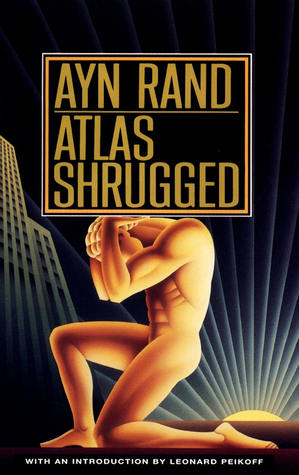
This is the story of a man who said that he would stop the motor of the world and did. Was he a destroyer or the greatest of liberators?Why did he have to fight his battle, not against his enemies, but against those who needed him most, and his hardest battle against the woman he loved? What is the world’s motor — and the motive power of every man? You will know the answer to these questions when you discover the reason behind the baffling events that play havoc with the lives of the characters in this story. Tremendous in its scope, this novel presents an astounding panorama of human life — from the productive genius who becomes a worthless playboy — to the great steel industrialist who does not know that he is working for his own destruction — to the philosopher who becomes a pirate — to the composer who gives up his career on the night of his triumph — to the woman who runs a transcontinental railroad — to the lowest track worker in her Terminal tunnels. You must be prepared, when you read this novel, to check every premise at the root of your convictions.This is a mystery story, not about the murder — and rebirth — of man’s spirit. It is a philosophical revolution, told in the form of an action thriller of violent events, a ruthlessly brilliant plot structure and an irresistible suspense. Do you say this is impossible? Well, that is the first of your premises to check.
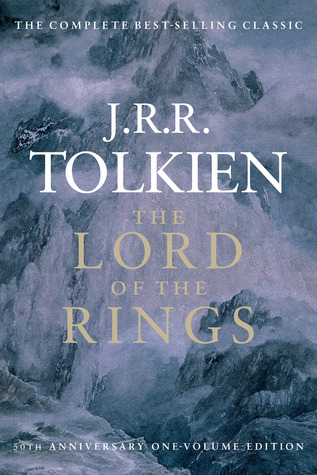
One Ring to rule them all, One Ring to find them, One Ring to bring them all and in the darkness bind themIn ancient times the Rings of Power were crafted by the Elven-smiths, and Sauron, the Dark Lord, forged the One Ring, filling it with his own power so that he could rule all others. But the One Ring was taken from him, and though he sought it throughout Middle-earth, it remained lost to him. After many ages it fell by chance into the hands of the hobbit Bilbo Baggins.From Sauron's fastness in the Dark Tower of Mordor, his power spread far and wide. Sauron gathered all the Great Rings to him, but always he searched for the One Ring that would complete his dominion.When Bilbo reached his eleventy-first birthday he disappeared, bequeathing to his young cousin Frodo the Ruling Ring and a perilous quest: to journey across Middle-earth, deep into the shadow of the Dark Lord, and destroy the Ring by casting it into the Cracks of Doom.The Lord of the Rings tells of the great quest undertaken by Frodo and the Fellowship of the Ring: Gandalf the Wizard; the hobbits Merry, Pippin, and Sam; Gimli the Dwarf; Legolas the Elf; Boromir of Gondor; and a tall, mysterious stranger called Strider.

Set on the desert planet Arrakis, Dune is the story of the boy Paul Atreides, heir to a noble family tasked with ruling an inhospitable world where the only thing of value is the “spice” melange, a drug capable of extending life and enhancing consciousness. Coveted across the known universe, melange is a prize worth killing for...When House Atreides is betrayed, the destruction of Paul’s family will set the boy on a journey toward a destiny greater than he could ever have imagined. And as he evolves into the mysterious man known as Muad’Dib, he will bring to fruition humankind’s most ancient and unattainable dream.

How the War Was Won: Air-Sea Power and Allied Victory in World War II
by Phillips Payson O'Brien
Rating: 4.3 ⭐
• 2 recommendations ❤️
World War II is usually seen as a titanic land battle, decided by mass armies, most importantly those on the Eastern Front. Phillips Payson O'Brien shows us the war in a completely different light. In this compelling new history of the Allied path to victory, he argues that in terms of production, technology and economic power, the war was far more a contest of air and sea than land supremacy. He shows how the Allies developed a predominance of air and sea power which put unbearable pressure on Germany and Japan's entire war-fighting machine from Europe and the Mediterranean to the Pacific. Air and sea power dramatically expanded the area of battle and allowed the Allies to destroy over half the Axis' equipment before it had even reached the traditional 'battlefield'. Battles such as El Alamein, Stalingrad and Kursk did not win World War II; air and sea power did.

Beige Book: Summary of Commentary on Current Economic Conditions by Federal Rese.
by Federal Reserve Districts
• 2 recommendations ❤️
Reports from the twelve Federal Reserve Districts suggest that national economic activity continued to expand at a modest to moderate pace during the reporting period of September through early October. Eight Districts reported similar growth rates in economic activity as during the previous reporting period, while growth slowed some in the Philadelphia, Richmond, Chicago, and Kansas City Districts. Contacts across Districts generally remained cautiously optimistic in their outlook for future economic activity, although many also noted an increase in uncertainty due largely to the federal government shutdown and debt ceiling debate.Consumer spending continued to increase and activity in the travel and tourism sector expanded in most Districts. Business spending and payrolls grew in many Districts. Demand for nonfinancial services rose, and manufacturing activity also expanded modestly. Residential construction continued to increase at a moderate pace. By comparison, nonresidential construction again expanded at a slower rate. Residential and commercial real estate activity varied across Districts, but largely continued to improve. Financial conditions were little changed on balance, with lending activity remaining modest in most Districts. There were mixed reports on agriculture, with excess precipitation and drought both impacting the sector. Energy and mining activity expanded or maintained high levels, with the exception of the coal industry in the eastern half of the nation. Price and wage pressures were again limited. Consumer Spending and TourismConsumer spending grew modestly in most Districts. Auto sales continued to be strong, particularly in the New York District where they were said to be increasingly robust. In contrast, Chicago, Kansas City, and Dallas indicated slower growth in auto sales in September. Growth in retail sales was steady in most of the Districts, but picked up some in Cleveland and Richmond and slowed in Chicago, Kansas City, and Dallas. Contacts in Chicago and Atlanta noted that back-to-school spending was lower than a year ago. However, retailers generally remained optimistic about the holiday shopping season, with contacts in Philadelphia and Chicago expecting this year’s holiday sales to be about equal to last year’s despite the traditional holiday period being six days shorter this year. In addition, Dallas noted strength in retail imports in advance of the holiday season, with growth stronger than a year ago.Activity in the travel and tourism sector also expanded in most areas, with the reports from the Atlanta, Boston, and New York Districts being particularly upbeat. Dallas indicated that airline passenger demand slowed seasonally, but was slightly stronger than year-ago levels. Tourism contacts in the Boston District were concerned about the potential impact of a protracted federal government shutdown; and Richmond noted that the shutdown had led to the closing of some tourist attractions, although hotel contacts indicated that these closures did not result in guest cancellations. In addition, Kansas City noted lower tourism activity due in part to the severe effects of recent flooding in Colorado. Business Spending and Hiring.

In 2016, when millions of Americans voted for Donald Trump, many believed his claims that personal wealth would free him from wealthy donors and allow him to “drain the swamp.” But then Trump appointed several billionaires and multimillionaires to high-level positions and pursued billionaire-friendly policies, such as cutting corporate income taxes. Why the change from his fiery campaign rhetoric and promises to the working class? This should not be surprising, argue Benjamin I. Page, Jason Seawright, and Matthew J. As the gap between the wealthiest and the rest of us has widened, the few who hold one billion dollars or more in net worth have begun to play a more and more active part in politics—with serious consequences for democracy in the United States.Page, Seawright, and Lacombe argue that while political contributions offer a window onto billionaires’ influence, especially on economic policy, they do not present a full picture of policy preferences and political actions. That is because on some of the most important issues, including taxation, immigration, and Social Security, billionaires have chosen to engage in “stealth politics.” They try hard to influence public policy, making large contributions to political parties and policy-focused causes, leading policy-advocacy organizations, holding political fundraisers, and bundling others’ contributions—all while rarely talking about public policy to the media. This means that their influence is not only unequal but also largely unaccountable to and unchallengeable by the American people. Stealth politics makes it difficult for ordinary citizens to know what billionaires are doing or mobilize against it. The book closes with remedies citizens can pursue if they wish to make wealthy Americans more politically accountable, such as public financing of political campaigns and easier voting procedures, and notes the broader types of reforms, such as a more progressive income tax system, that would be needed to increase political equality and reinvigorate majoritarian democracy in the United States.