
Paul Krugman
Paul Robin Krugman is an American economist, liberal columnist and author. He is Professor of Economics and International Affairs at the Woodrow Wilson School of Public and International Affairs, Princeton University, Centenary Professor at the London School of Economics, and an op-ed columnist for The New York Times. In 2008, Krugman won the Nobel Memorial Prize in Economics for his contributions to New Trade Theory and New Economic Geography.
30 Books Written

Peddling Prosperity: Economic Sense and Nonsense in an Age of Diminished Expectations
by Paul Krugman
Rating: 3.9 ⭐
• 2 recommendations ❤️
Newsweek hailed Paul Krugman as "a superstar among economists" and went on to praise Peddling Prosperity as "the best primer around on recent U.S. economic history." Others joined the chorus. This wonderfully received book finds him in top form, observing the years he's dubbed "the age of diminished expectations." The past twenty years have been an era of economic disappointment in the United States. They have also been a time of intense economic debate, as rival ideologies contend for policy influence. But strange things have happened to economic ideas on their way to power: they've been hijacked by policy entrepreneurs―economic snake-oil salesmen, right or left, who offer easy answers to hard problems. Supply-siders rose to power with Ronald Reagan and not only cured nothing but left behind a $3 trillion debt. Krugman finds an unhappy parallel in those who shape policy within the Clinton administration.

In 1999, in The Return of Depression Economics, Paul Krugman surveyed the economic crises that had swept across Asia and Latin America, and pointed out that those crises were a warning for all of us: like diseases that have become resistant to antibiotics, the economic maladies that caused the Great Depression were making a comeback. In the years that followed, as Wall Street boomed and financial wheeler-dealers made vast profits, the international crises of the 1990s faded from memory. But now depression economics has come to America: when the great housing bubble of the mid-2000s burst, the U.S. financial system proved as vulnerable as those of developing countries caught up in earlier crises and a replay of the 1930s seems all too possible. In this new, greatly updated edition of The Return of Depression Economics, Krugman shows how the failure of regulation to keep pace with an increasingly out-of-control financial system set the United States, and the world as a whole, up for the greatest financial crisis since the 1930s. He also lays out the steps that must be taken to contain the crisis, and turn around a world economy sliding into a deep recession. Brilliantly crafted in Krugman's trademark style--lucid, lively, and supremely informed--this new edition of The Return of Depression Economics will become an instant cornerstone of the debate over how to respond to the crisis.

This wholly original new work by the best-selling author of The Great Unraveling challenges America to reclaim the values that made it great. With this major new volume, Paul Krugman, today's most widely read economist, studies the past eighty years of American history, from the reforms that tamed the harsh inequality of the Gilded Age to the unraveling of that achievement and the reemergence of immense economic and political inequality since the 1970s. Seeking to understand both what happened to middle-class America and what it will take to achieve a "new New Deal," Krugman has created his finest book to date, a work that weaves together a nuanced account of three generations of history with sharp political, social, and economic analysis. This book, written with Krugman's trademark ability to explain complex issues simply, will transform the debate about American social policy in much the same way as did John Kenneth Galbraith's deeply influential book, The Affluent Society .

A call-to-arms from Nobel Prize?winning economist and best-selling author Paul Krugman. The Great Recession is more than four years old, and counting. Yet, as Paul Krugman points out in this powerful volley, "Nations rich in resources, talent, and knowledge, all the ingredients for prosperity and a decent standard of living for all, remain in a state of intense pain." How bad have things gotten? How did we get stuck in what now can only be called a depression? And above all, how do we free ourselves? Krugman pursues these questions with his characteristic lucidity and insight. He has a powerful message for anyone who has suffered over these past four years: a quick, strong recovery is just one step away, if our leaders can find the "intellectual clarity and political will" to end this depression now.
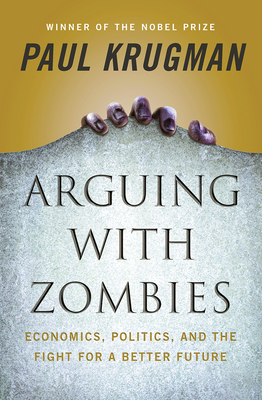
Arguing with Zombies: Economics, Politics, and the Fight for a Better Future
by Paul Krugman
Rating: 3.8 ⭐
There is no better guide than Paul Krugman to basic economics, the ideas that animate much of our public policy. Likewise, there is no stronger foe of zombie economics, the misunderstandings that just won’t die.In Arguing with Zombies, Krugman tackles many of these misunderstandings, taking stock of where the United States has come from and where it’s headed in a series of concise, digestible chapters. Drawn mainly from his popular New York Times column, they cover a wide range of issues, organized thematically and framed in the context of a wider debate. Explaining the complexities of health care, housing bubbles, tax reform, Social Security, and so much more with unrivaled clarity and precision, Arguing with Zombies is Krugman at the height of his powers.Arguing with Zombies puts Krugman at the front of the debate in the 2020 election year and is an indispensable guide to two decades’ worth of political and economic discourse in the United States and around the globe. With quick, vivid sketches, Krugman turns his readers into intelligent consumers of the daily news and hands them the keys to unlock the concepts behind the greatest economic policy issues of our time. In doing so, he delivers an instant classic that can serve as a reference point for this and future generations.

"Paul Krugman is a hero of mine. Read his book."―Al Franken No one has more authority to call the shots the way they really are than award-winning economist Paul Krugman, whose provocative New York Times columns are keenly followed by millions. One of the world's most respected economists, Krugman has been named America's most important columnist by the Washington Monthly and columnist of the year by Editor and Publisher magazine.A major bestseller, this influential and wide-ranging book has been praised by BusinessWeek as Krugman's "most provocative and compelling effort yet," the New York Review of Books as "refreshing," and Library Journal as "thought-provoking...even funny." The American Prospect put it in vivid terms: "In a time when too few tell it like it is...[Krugman] has taken on the battle of our time."Built from Paul Krugman's influential Op-Ed columns for the New York Times , this book galvanized the reading public. With wit, passion, and a unique ability to explain complex issues in plain English, Krugman describes how the nation has been misled by a dishonest administration.In this long-awaited work containing Krugman's most influential columns along with new commentary, he chronicles how the boom economy unraveled: how exuberance gave way to pessimism, how the age of corporate heroes gave way to corporate scandals, how fiscal responsibility collapsed. From his account of the secret history of the California energy crisis to his devastating dissections of dishonesty in the Bush administration, from the war in Iraq to the looting of California to the false pretenses used to sell an economic policy that benefits only a small elite, Krugman tells the uncomfortable truth like no one else. And he gives us the road map we will need to follow if we are to get the country back on track.The paperback edition features a new introduction as well as new writings.

In this wonderfully cohesive set of sharp and witty essays, Paul Krugman tackles bad economic ideas from across the political spectrum. In plain English, he enlightens us on the Asian crisis, corporate downsizing, and the globalization of the American economy, among other topics. The writing here brilliantly combines the acerbic style and clever analysis that has made Krugman famous. Imagine declaring New York its own country and you get a better picture of our trade balance with China and Hong Kong. Try reducing the economy to the production of hot dogs and buns and you’ll understand why common beliefs about the impact of production efficiency on labor demand are wrong. This is a collection that will amuse, provoke, and enlighten, in classic Paul Krugman style. "[Paul Krugman] writes better than any economist since John Maynard Keynes." — Rob Norton, Fortune "[Paul Krugman is] probably the most creative economist of his generation." — The Economist Winner of the John Bates Clark Medal

Renowned researchers Paul Krugman and Maurice Obstfeld set the standard for international economics courses with the text that remains the market leader in the U.S. and around the world. International Economics: Theory and Policy is a proven approach in which each half of the book leads with an intuitive introduction to theory and follows with self-contained chapters to cover key policy applications. The Eighth Edition integrates the latest research, data, and policy in hot topics such as outsourcing, economic geography, trade and environment, financial derivatives, the subprime crisis, and China's exchange rate policies.

"Everything Mr. Krugman has to say is smart, important and even fun to read. Paul Krugman is no household name, but probably should be . . . he is one of a handful of very bright, relatively young economists who do everything well." -- Peter Passell, "New York Times Book Review" "Pop internationalists" -- people who speak impressively about international trade while ignoring basic economics and misusing economic figures are the target of this collection of Paul Krugman's most recent essays. In the clear, readable, entertaining style that brought acclaim for his best-selling "Age of Diminished Expectations," Krugman explains what real economic analysis is. He discusses economic terms and measurements, like "value-added" and GDP, in simple language so that readers can understand how pop internationalists distort, and sometimes contradict, the most basic truths about world trade.

Krugman/Wells takes a story-driven approach that focuses on real-world economics at work. The book offers the hallmark clarity and engaging writing style that distinguish Paul Krugman's work, from his best-selling international economics text to his New York Times best-sellers.

Nobel-Prize-winning economist Paul Krugman argues that business leaders need to understand the differences between economic policy on the national and international scale and business strategy on the organizational scale. Economists deal with the closed system of a national economy, whereas executives live in the open-system world of business. Moreover, economists know that an economy must be run on the basis of general principles, but businesspeople are forever in search of the particular brilliant strategy. Krugman's article serves to elucidate the world of economics for businesspeople who are so close to it and yet are continually frustrated by what they see. Since 1922, Harvard Business Review has been a leading source of breakthrough management ideas-many of which still speak to and influence us today. The Harvard Business Review Classics series now offers readers the opportunity to make these seminal pieces a part of your permanent management library. Each highly readable volume contains a groundbreaking idea that continues to shape best practices and inspire countless managers around the world-and will have a direct impact on you today and for years to come.

European Edition is the ideal text for introductory economics, bringing together an international scope of real world examples and economic theory. The text is supported by a number of features to enhance student understanding as well as supplements to consolidate the learning process.

Paul Krugman's popular guide to the economic landscape of the 1990s has been revised and updated to take into account economic developments of the past three years. New material in the third edition A new chapter—complete with colorful examples from Lloyds of London and Sumitomo Metals—on how risky behavior can lead to disaster in private markets.- An evaluation of the Federal Reserves role in reining in economic growth to prevent inflation, and the debate over whether its growth targets are too low.- A look at the collapse of the Mexican peso and the burst of Japans bubble economy.- A revised discussion of the federal budget deficit, including the growing concern that Social Security and Medicare payments to retiring baby boomers will threaten the solvency of the government. Finally, in the updated concluding section, the author provides three possible scenarios for the American economy over the next decade. He warns that we live in an age of diminished expectations, in which the voting public is willing to settle for policy drift—but with the first of the baby boomers turning 65 in 2011, the U.S. economy will not be able to drift indefinitely.

This is a book that should be read by all economists." -- Roger E. Backhouse, "The Economic Journal" "A stimulating essay by one of the world's most thoughtful and innovative economists.

"I have spent my whole professional life as an international economist thinking and writing about economic geography, without being aware of it," begins Paul Krugman in the readable and anecdotal style that has become a hallmark of his writings. Krugman observes that his own shortcomings in ignoring economic geography have been shared by many professional economists, primarily because of the lack of explanatory models. In Geography and Trade he provides a stimulating synthesis of ideas in the literature and describes new models for implementing a study of economic geography that could change the nature of the field. Economic theory usually assumes away distance. Krugman argues that it is time to put it back - that the location of production in space is a key issue both within and between nations.

Essentials of Economics brings the same captivating writing and innovative features of Krugman/Wells to the one-term combined micro/macro course. Adapted by Martha Olney (coauthor of the Krugman/Wells study guide and overall coordinator of its media/supplements package), it is the ideal text for teaching basic economic principles in a real-world context to students who are not planning to continue up the economics curriculum.
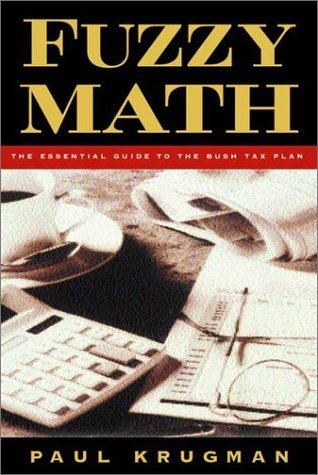
Wielding his widely recognized powers of explanation, Paul Krugman lays bare the hidden facts behind the $2 trillion tax cut. With huge budget surpluses just ahead, the question of whether to cut taxes has shifted to when? and by how much? With Fuzzy Math , Paul Krugman dissects the Bush tax proposal and shows us who wins, who loses, and how quickly the tax cuts will consume the surplus. Always the equal-opportunity critic when it comes to faulty economics, Krugman also tucks into the Democratic alternatives to the Bush plan.This little book packs a big wallop. Together with major media appearances, it puts Krugman's wisdom and steely-eyed analysis firmly at the center of the debate about how to spend upwards of $2 trillion. It may very well change the course of history.


As stock markets gyrate, Europe lurches from crisis to crisis, and recovery in the United States slows, the future of the North American economy is more uncertain than ever. Can individual entrepreneurship, corporate innovation, and governments create a new era of sustained economic growth? Or, will the ongoing financial crisis, political dysfunction in the United States, and the rise of emerging nations erode living standards in North America for the long term? In this edition of the Munk Debates -- Canada's premier international debate series -- Nobel Prize-winning economist Paul Krugman and Chief Economist and Strategist at Gluskin Sheff + Associates David Rosenberg square off against former director of President Obama’s National Economic Council Lawrence Summers and bestselling author Ian Bremmer to tackle the Be it resolved North America faces a Japan-style era of high unemployment and slow growth.

This new collection revolves around Krugman's work on international monetary economics from the late 1970s to the present in an effort to make sense of a turbulent period that "involved one surprise after another, most of them unpleasant." Paul Krugman's first collection of essays, Rethinking International Trade, mounted a spirited assault on established trade theory and proposed an alternative approach to account for increasing returns and imperfect competition. Less theoretical and more embedded in real-world experience, this new collection revolves around Krugman's work on international monetary economics from the late 1970s to the present in an effort to make sense of a turbulent period that "involved one surprise after another, most of them unpleasant." The eleven essays cover such key areas as the role of exchange rates in balance-of-payments adjustment policy, the role of speculation in the functioning of exchange rate regimes, Third World debt, and the construction of an international monetary system. They are unified by the same basic methodology and style the construction of a small theoretical model in order to simplify or clarify a puzzling or difficult world monetary problem.

Over the past decade, a small group of economists has challenged traditional wisdom about international trade. Rethinking International Trade provides a coherent account of this research program and traces the key steps in an exciting new trade theory that offers, among other possibilities, new arguments against free trade. Over the past decade a small group of economists has challenged traditional wisdom about international trade. Rethinking International Trade provides a coherent account of this research program and traces the key steps in an exciting new trade theory that offers, among other possibilities, new arguments against free trade. Krugman's introduction is a valuable guide to research that has delved anew into the causes of international trade and reopened basic questions about the international pattern of specialization, the effects of protectionism, and what constitutes an optimal trade policy. In the four sections that follow, he takes a revisionary look at the causes of international trade, and discusses growth and the role of history, technological change and trade, and strategic trade policy.

For courses in International Trade A balanced approach to theory and policy applications International Theory and Policy provides engaging, balanced coverage of the key concepts and practical applications of the discipline. An intuitive introduction to international trade theory is followed by detailed coverage of policy applications. With this new tenth edition, the author team of Nobel Prize-winning economist Paul Krugman, renowned researcher Maurice Obstfeld, and Marc Melitz of Harvard University continues to set the standard for International Trade courses. This program provides a better teaching and learning experience–for you and your students. It will help you • Personalize learning with MyEconLab: This online homework, tutorial, and assessment program fosters learning and provides tools that help instructors to keep students on track. • Reveal theory and applications of international trade: Balanced coverage of theory and applications aids student retention and highlights the relevance of course material. • Give students learning tools to master course material: Numerous in-text learning resources engage students and encourage further exploration of course topics. • Provide the most updated Thoroughly updated content ensures that students are up to date on key issues. If you are purchasing the standalone text or electronic version, MyEconLab does not come automatically packaged with the text. To purchase MyEconLab please visit www.myeconlab.com or you can purchase a package of the physical text + MyEconLab by searching for 0133827046 / 9780133827040. MyEconLab is not a self-paced technology and should only be purchased when required by an instructor.

For courses in International Finance A balanced approach to theory and policy applications International Theory and Policy provides engaging, balanced coverage of the key concepts and practical applications of the discipline. An intuitive introduction to international finance theory is followed by detailed coverage of policy applications. With this new tenth edition, the author team of Nobel Prize-winning economist Paul Krugman, renowned researcher Maurice Obstfeld, and Marc Melitz of Harvard University continues to set the standard for International Finance courses. This program provides a better teaching and learning experience—for you and your students. It will help you • Personalize learning with MyEconLab: This online homework, tutorial, and assessment program fosters learning and provides tools that help instructors to keep students on track. • Reveal theory and applications of international finance: Balanced coverage of theory and applications aids student retention and highlights the relevance of course material. • Give students learning tools to master course material: Numerous in-text learning resources engage students and encourage further exploration of course topics. • Provide the most updated Thoroughly updated content ensures that students are up to date on key issues. If you are purchasing the standalone text or electronic version, MyEconLab does not come automatically packaged with the text. To purchase MyEconLab please visit www.myeconlab.com or you can purchase a package of the physical text + MyEconLab by searching for 0133826678 / 9780133826678. MyEconLab is not a self-paced technology and should only be purchased when required by an instructor.

Market Structure and Foreign Trade: Increasing Returns, Imperfect Competition, and the International Economy
by Paul Krugman
Rating: 3.8 ⭐
Market Structure and Foreign Trade presents a coherent theory of trade in the presence of market structures other than perfect competition. The theory it develops explains trade patterns, especially of industrial countries, and provides an integration between trade and the role of multinational enterprises.Relating current theoretical work to the main body of trade theory, Helpman and Krugman review and restate known results and also offer entirely new material on contestable markets, oligopolies, welfare, and multinational corporations, and new insights on external economies, intermediate inputs, and trade composition.

Paul Krugman, winner of the 2008 Nobel Prize in economics, shows how today's crisis parallels the events that caused the Great Depression - and explains what it will take to avoid catastrophe.In 1999, in The Return of Depression Economics , Paul Krugman surveyed the economic crises that had swept across Asia and Latin America, and warned that those crises were a warning for all of like diseases that have become resistant to antibiotics, the economic maladies that caused the Great Depression were making a comeback.In the years that followed, as Wall Street boomed and financial wheeler-dealers made vast profits, the international crises of the 1990s faded from memory. But now depression economics has come to when the great housing bubble of the mid-2000s burst, the U.S. financial system proved as vulnerable as those of developing countries caught up in earlier crises - and a replay of the 1930s seems all too possible.In this new, greatly updated edition of The Return of Depression Economics , Krugman shows how the failure of regulation to keep pace with an increasingly out-of-control financial system set the United States, and the world as a whole, up for the greatest financial crisis since the 1930s. He also lays out the steps that must be taken to contain the crisis, and turn around a world economy sliding into a deep recession. Brilliantly crafted in Krugman's trademark style-lucid, lively, and supremely informed - this new edition of The Return of Depression Economics will become an instant cornerstone of the debate over how to respond to the crisis.

Adapted by Paul Krugman and Robin Wells from their bestselling macroeconomics textbook, Macroeconomics in Modules is the only text for the principles of macroeconomics course organized in the supremely accessible, highly effective modular format. Instead of chapters of standard length, the book covers the fundamentals of macroeconomics in 49 brief (4-10 page) modules divided into 14 sections. Macroeconomics in Modules offers the best of what makes Krugman/Wells a classroom favorite (story-telling approach, engaging writing, fascinating examples and cases), in a format students and instructors will love. Extensive educational research shows that students absorb more from shorter reading assignments than longer ones. And with coverage in self-contained modules, instructors can assign specific topics without asking students to read entire chapters.

The Theory of Interstellar Trade is a paper written in 1978 by the economist Paul Krugman. The paper was first published in March 2010 in the journal Economic Inquiry. He described the paper as something he wrote to cheer himself up when he was an "oppressed assistant professor" caught up in the academic rat race.Krugman analyzed the question of how should interest rates on goods in transit be computed when the goods travel at close to the speed of light. This is a problem because the time taken in transit will appear less to an observer traveling with the goods than to a stationary observer.Krugman emphasized that in spite of its farcical subject matter, the economic analysis in the paper is correctly done. In his own words:"while the subject of this paper is silly, the analysis actually does make sense. This paper, then, is a serious analysis of a ridiculous subject, which is of course the opposite of what is usual in economics."


Dans son livre, Krugman appelle « l’ultime idée-zombie » ce qui exprime le mieux la tromperie de Trump et des républicains. Il s’agit de l’idée de « baisser les impôts ».L’économiste se réjouit de voir que des progressistes, comme Elizabeth Warren, candidate à l’investiture démocrate à la présidence des États-Unis, proposent, à l’opposé, de taxer davantage les Américains très riches.À propos des soi-disant rêveurs qui souhaitent un taux d’imposition de 70 % à 80 % sur les revenus les plus élevés, Krugman, très au fait de l’histoire fiscale américaine, signale, avec un humour noir délicieux : « C’est une politique qu’aucun pays n’a jamais osé mettre en œuvre… à part les États-Unis, pendant les 35 années après la Seconde Guerre mondiale, la période de croissance économique la plus forte de notre histoire. »

인류는 지금 거대한 분기점에 서 있다!붕괴될 것인가, 더 번영할 것인가“인류는 지금 거대한 분기점에 서 있다! 붕괴될 것인가, 더 번영할 것인가?” 경제, 정치, 교육, 문화, 사회보장 시스템… 모든 것이 송두리째 흔들리는 거대한 분기점 앞에서 세계 석학 8인이 전망한 자본주의와 경제의 미래를 듣는다. 《거대한 분기점》은 세계에서 가장 영향력 있다고 인정받는 경제학의 권위자, 세계를 깜짝 놀라게 한 저술로 주목 받고 있는 신진 학자와 저널리스트 등이 자본주의와 경제의 미래를 전망한 논설집이다. 노벨 경제학상을 수상한 ‘폴 크루그먼’과 퓰리처상을 수상한 ‘토마스 프리드먼’을 비롯, 한국의 대표 경제학자 최배근 건국대 교수 등이 참여하여 거대한 분기점에 다다른 오늘날 시급히 논의해야 할 주제들을 다루고 있다.특히 더욱 빨라지고 있는 테크놀로지의 진화가 우리 삶과 직업을 어떻게 바꿀 것인지 논하며, 기울어진 사회 시스템 속에서 몰락하는 중산층과 소외되는 인간상에 대해 다각도로 논의한다. 그중 코로나19 이후 각국에서 시급히 논의 중인 ‘기본 소득’에 대해서도 심도 깊게 다루고 있어 현 시점에 시사하는 바가 크다. 한계점에 다다른 자본주의의 미래와 그 보완책에 대한 8인의 시각이 각기 다르다는 점 또한 특징적이다. 세계 석학들의 심도 깊은 메시지들에 귀 기울이다 보면, 더 나은 사회 시스템으로 나아가기 위해 전 세계적으로 활발히 논의 중인 굵직한 흐름에 대해 꿰뚫게 될 것이다.