
Paul Graham Recommended Books
English programmer, venture capitalist, and essayist
63 Books Recommended

One of the most salient features of our culture is that there is so much bullshit. Everyone knows this. Each of us contributes his share. But we tend to take the situation for granted. Most people are rather confident of their ability to recognize bullshit and to avoid being taken in by it. So the phenomenon has not aroused much deliberate concern. We have no clear understanding of what bullshit is, why there is so much of it, or what functions it serves. And we lack a conscientiously developed appreciation of what it means to us. In other words, as Harry Frankfurt writes, "we have no theory."Frankfurt, one of the world's most influential moral philosophers, attempts to build such a theory here. With his characteristic combination of philosophical acuity, psychological insight, and wry humor, Frankfurt proceeds by exploring how bullshit and the related concept of humbug are distinct from lying. He argues that bullshitters misrepresent themselves to their audience not as liars do, that is, by deliberately making false claims about what is true. In fact, bullshit need not be untrue at all.Rather, bullshitters seek to convey a certain impression of themselves without being concerned about whether anything at all is true. They quietly change the rules governing their end of the conversation so that claims about truth and falsity are irrelevant. Frankfurt concludes that although bullshit can take many innocent forms, excessive indulgence in it can eventually undermine the practitioner's capacity to tell the truth in a way that lying does not. Liars at least acknowledge that it matters what is true. By virtue of this, Frankfurt writes, bullshit is a greater enemy of the truth than lies are.

Whatever the cause of Bertie Wooster's consternation — Bobbie Wickham gives away fierce Aunt Agatha's dog; again in the bad books of Sir Roderick Glossop; Tuppy crushes on robust opera singer — Jeeves can untangle the most ferocious muddle. 1 Jeeves and the Impending Doom2 The Inferiority Complex of Old Sippy3 Jeeves and the Yule-Tide Spirit4 Jeeves and the Song of Songs5 Episode of the Dog McIntosh6 The Spot of Art7 Jeeves and the Kid Clementina8 The Love that Purifies9 Jeeves and the Old School Chum10 Indian Summer of an Uncle11 The Ordeal of Young Tuppy

This is Wodehouse's last, unfinished chronicle of Blandings and includes a treasure trove of detailed notes on the final stages of the plot, enabling us to watch over his shoulder to observe the master at work. The revels at Blandings Castle are now ended but, as Richard Usborne confirms delightedly, its cloud-capped towers shall not dissolve. Although written when Wodehouse was ninety-three, the pages of Sunset at Blandings remain 'funny, fresh, young in heart and full of hammocks, sunshine and four pairs of lovers headed for altars'.

[ Box Set | Book One | Book Two | Book Three ]Calvin and Hobbes is unquestionably one of the most popular comic strips of all time. The imaginative world of a boy and his real-only-to-him tiger was first syndicated in 1985 and appeared in more than 2,400 newspapers when Bill Watterson retired on January 1, 1996. The entire body of Calvin and Hobbes cartoons published in a truly noteworthy tribute to this singular cartoon in The Complete Calvin and Hobbes. Composed of three hardcover, four-color volumes in a sturdy slipcase, this New York Times best-selling edition includes all Calvin and Hobbes cartoons that ever appeared in syndication. This is the treasure that all Calvin and Hobbes fans seek.

A profile of the noted physicist and author of Surely You're Joking Mr. Feynman captures his wit, his genius, and his eccentricities and outlines his remarkable contributions to science.

The Copernican Revolution: Planetary Astronomy in the Development of Western Thought
by Thomas S. Kuhn
Rating: 4.1 ⭐
• 2 recommendations ❤️
For scientist and layman alike this book provides vivid evidence that the Copernican Revolution has by no means lost its significance today. Few episodes in the development of scientific theory show so clearly how the solution to a highly technical problem can alter our basic thought processes and attitudes. Understanding the processes which underlay the Revolution gives us a perspective, in this scientific age, from which to evaluate our own beliefs more intelligently. With a constant keen awareness of the inseparable mixture of its technical, philosophical, and humanistic elements, Mr. Kuhn displays the full scope of the Copernican Revolution as simultaneously an episode in the internal development of astronomy, a critical turning point in the evolution of scientific thought, and a crisis in Western man's concept of his relation to the universe and to God. The book begins with a description of the first scientific cosmology developed by the Greeks. Mr. Kuhn thus prepares the way for a continuing analysis of the relation between theory and observation and belief. He describes the many functions--astronomical, scientific, and nonscientific--of the Greek concept of the universe, concentrating especially on the religious implications. He then treats the intellectual, social, and economic developments which nurtured Copernicus' break with traditional astronomy. Although many of these developments, including scholastic criticism of Aristotle's theory of motion and the Renaissance revival of Neoplatonism, lie entirely outside of astronomy, they increased the flexibility of the astronomer's imagination. That new flexibility is apparent in the work of Copernicus, whose DE REVOLUTIONIBUS ORBIUM CAELESTIUM is discussed in detail both for its own significance and as a representative scientific innovation. With a final analysis of Copernicus' life work--its reception and its contribution to a new scientific concept of the universe--Mr. Kuhn illuminates both the researches that finally made the heliocentric arrangement work, and the achievements in physics and metaphysics that made the planetary earth an integral part of Newtonian science. These are the developments that once again provided man with a coherent and self-consistent conception of the universe and of his own place in it. This is a book for any reader interested in the evolution of ideas and, in particular, in the curious interplay of hypothesis and experiment which is the essence of modern science. Says James Bryant Conant in his "Professor Kuhn's handling of the subject merits attention, for... he points the way to the road which must be followed if science is to be assimilated into the culture of our times."

The inspiration behind hit family drama The Durrells.Part of the Macmillan Collector’s Library; a series of stunning, clothbound, pocket sized classics with gold foiled edges and ribbon markers. These beautiful books make perfect gifts or a treat for any book lover. This edition features an afterword by Peter Olney, former Keeper of Birds at the London Zoo, and a distinguished ornithologist who was awarded the Zoological Society of London's Silver Medal in 2003.My Family and Other Animals is Gerald Durrell's hilarious account of five years in his childhood spent living with his family on the island of Corfu. With snakes, scorpions, toads, owls and geckos competing for space with one bookworm brother and another who's gun-mad, as well as an obsessive sister, young Gerald has an awful lot of natural history to observe. This richly detailed, informative and riotously funny memoir of eccentric family life is a twentieth-century classic.

Founders at Work: Stories of Startups' Early Days
by Jessica Livingston
Rating: 4.1 ⭐
• 10 recommendations ❤️
Now available in paperback―with a new preface and interview with Jessica Livingston about Y Combinator! Founders at Work: Stories of Startups' Early Days is a collection of interviews with founders of famous technology companies about what happened in the very earliest days. These people are celebrities now. What was it like when they were just a couple friends with an idea? Founders like Steve Wozniak (Apple), Caterina Fake (Flickr), Mitch Kapor (Lotus), Max Levchin (PayPal), and Sabeer Bhatia (Hotmail) tell you in their own words about their surprising and often very funny discoveries as they learned how to build a company. Where did they get the ideas that made them rich? How did they convince investors to back them? What went wrong, and how did they recover? Nearly all technical people have thought of one day starting or working for a startup. For them, this book is the closest you can come to being a fly on the wall at a successful startup, to learn how it's done. But ultimately these interviews are required reading for anyone who wants to understand business, because startups are business reduced to its essence. The reason their founders become rich is that startups do what businesses do―create value―more intensively than almost any other part of the economy. How? What are the secrets that make successful startups so insanely productive? Read this book, and let the founders themselves tell you.

In Medieval Technology and Social Change, Lynn White considers the effects of technological innovation on the societies of medieval Europe: the slow collapse of feudalism with the development of machines and tools that introduced factories in place of cottage industries, and the development of the manorial system with the introduction of new kinds of plows and new methods of crop rotation. One invention of particular import, writes White, was the stirrup, which in turn introduced heavy, long-range cavalry to the medieval battlefield. The development thus escalated small-scale conflict to "shock combat." Cannons and flamethrowers followed, as did more peaceful inventions, such as watermills and reapers.

Zen and the Art of Motorcycle Maintenance: An Inquiry Into Values
by Robert M. Pirsig
Rating: 3.7 ⭐
• 18 recommendations ❤️
At its heart, the story is all too simple: a man and his son take a lengthy motorcycle trip through America. But this is not a simple trip at all, for around every corner, through mountain and desert, wind and rain, and searing heat and biting cold, their pilgrimage leads them to new vistas of self-discovery and renewal.Zen and the Art of Motorcycle Mantenance is an elemental work that has helped to shape and define the past twenty-five years of American culture. This special audio edition presents this adventure in a compelling way - for the millions who have already taken this journey and want to travel these roads again, and for the many more who will discover for the first time the wonders and challenges of a journey that will change the way they think and feel about their lives.

Green Lion Press has prepared a new one-volume edition of T.L. Heath's translation of the thirteen books of Euclid's Elements. In keeping with Green Lion's design commitment, diagrams have been placed on every spread for convenient reference while working through the proofs; running heads on every page indicate both Euclid's book number and proposition numbers for that page; and adequate space for notes is allowed between propositions and around diagrams. The all-new index has built into it a glossary of Euclid's Greek terms.Heath's translation has stood the test of time, and, as one done by a renowned scholar of ancient mathematics, it can be relied upon not to have inadvertantly introduced modern concepts or nomenclature. We have excised the voluminous historical and scholarly commentary that swells the Dover edition to three volumes and impedes classroom use of the original text. The single volume is not only more convenient, but less expensive as well.

A Sense of Where You Are: Bill Bradley at Princeton
by John McPhee
Rating: 4.1 ⭐
• 11 recommendations ❤️
The first book from the legendary New Yorker writer John McPhee, tells about Bill Bradley when he was the best basketball player Princeton had ever seen.When John McPhee met Bill Bradley, both were at the beginning of their careers. In A Sense of Where You Are ,McPhee delineates for the reader the training and techniques that made Bradley the extraordinary athlete he was, and this part of the book is a blueprint of superlative basketball. But athletic prowess alone would not explain Bradley's magnetism, which is in the quality of the man himself―his self-discipline, his rationality, and his sense of responsibility.Here is a portrait of Bradley as he was in college, before his time with the New York Knicks and his election to the U.S. Senate―a story that suggests the abundant beginnings of his professional careers in sport and politics.
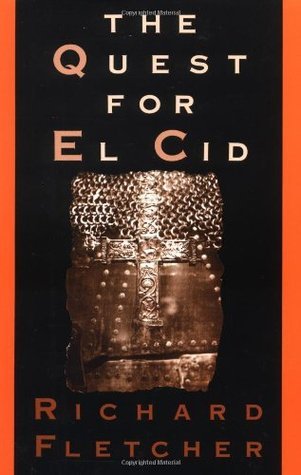
Rodrigo Diaz, the legendary warrior-knight of eleventh-century Castile known as El Cid, is remembered today as the Christian hero of the Spanish crusade who waged wars of re-conquest for the triumph of the Cross over the Crescent. He is still honored in Spain as a national hero for liberating the fatherland from the occupying Moors. Yet, as Richard Fletcher shows in this award-winning book, there are many contradictions between eleventh-century reality and the mythology that developed with the passing years.By placing El Cid in a fresh, historical context, Fletcher shows us an adventurous soldier of fortune who was of a type, one of a number of "cids," or "bosses," who flourished in eleventh-century Spain. But the El Cid of legend--the national hero--was unique in stature even in his lifetime. Before his death El Cid was already celebrated in a poem written in tribute of the conquest of Almería; posthumously he was immortalized in the great epic Poema de Mio Cid and became the centerpiece for countless other works of literature. When he died in Valencia in 1099, he was ruler of an independent principality he had carved for himself in Eastern Spain. Rather than the zealous Christian leader many believe him to have been, Rodrigo emerges in Fletcher's study as a mercenary equally at home in the feudal kingdoms of northern Spain and the exotic Moorish lands of the south, selling his martial skills to Christian and Muslim alike. Indeed, his very title derives from the Arabic word sayyidmeaning "lord" or "master." And as there was little if any sense of Spanish nationhood in the eleventh century, he can hardly be credited for uniting a medieval Spanish nation.In this ground-breaking inquiry into the life and times of El Cid, Fletcher disentangles fact from myth to create a striking portrait of an extraordinary man, clearly showing how and why legend transformed him into something he was not during his life. A fascinating journey through a turbulent epoch, The Quest for El Cid is filled with the excitement of discovery, and will delight readers interested not only in Spanish history and literature, but those who want to understand how myth can shape our perception of history.

First a story, and then a kiss from Mother Bear, and Father Bear carries Little Bear to bed. And that's when the fun begins. Father Bear gets to Little Bear's room, but Little Bear is missing! Little readers will see him hiding in the MOST obvious place but Father Bear cannot seem to find him. Is he under the stove? Is he in the garden? Is he in the woodbox? Only when Father Bear walks past the mirror does the silliness end, and in a very tasty way. With this, one of the most charming bedtime tales ever, Richard Scarry has once again proven his timeless appeal.

Kenneth Clark's sweeping narrative looks at how Western Europe evolved in the wake of the collapse of the Roman Empire, to produce the ideas, books, buildings, works of art and great individuals that make up our civilisation. The author takes us from Iona in the ninth century to France in the twelfth, from Florence to Urbino, from Germany to Rome, England, Holland and America. Against these historical backgrounds he sketches an extraordinary cast of characters -- the men and women who gave new energy to civilisation and expanded our understanding of the world and of ourselves. He also highlights the works of genius they produced -- in architecture, sculpture and painting, in philosophy, poetry and music, and in science and engineering, from Raphael's School of Athens to the bridges of Brunel.

The Golden Trade of the Moors: West African Kingdoms in the Fourteenth Century
by E.W. Bovill
Rating: 4.0 ⭐
• 2 recommendations ❤️
"This book is the liveliest account of African history ever written, covering over [one] thousand years of trans-Saharan trade. "Finely written and researched. ... This edition will no doubt whet the appetites of a fresh generation of scholars and students for greater knowledge of parts of Africa still surprisingly little-known to the outside world." -- Journal of Islamic Studies "A unique source book." - The New York Times "Utterly enthralling ... splendidly romantic." -- The New Yorker

Memoirs or Chronicle of the Fourth Crusade and the Conquest of Constantinople
by Geoffroi de Villehardouin
Rating: 4.0 ⭐
• 2 recommendations ❤️
Memoirs or Chronicle of the Fourth Crusade and the Conquest of Constantinople

All skools make some sort at teaching the pupils things and the headmaster pin up a huge timetable of lessons ect. which make the heart sink when you look at it. Nigel Molesworth is back, this time taking the tinies in hand and showing that they can survive the first term - as long as you avoid the prefects and show all due respect to Molesworth 1. Back to Skool might be particularly hard on Mater and Pater, but think of those poor new bugs, forced to be their best at Latin, English, foopball and French (Armand in his striped shirt and feeble questions). Just follow his timeless advice, however, and you too could be Topp.

The Double Helix: A Personal Account of the Discovery of the Structure of DNA
by James D. Watson
Rating: 3.6 ⭐
• 7 recommendations ❤️
The classic personal account of Watson and Crick’s groundbreaking discovery of the structure of DNA, now with an introduction by Sylvia Nasar, author of A Beautiful Mind .By identifying the structure of DNA, the molecule of life, Francis Crick and James Watson revolutionized biochemistry and won themselves a Nobel Prize. At the time, Watson was only twenty-four, a young scientist hungry to make his mark. His uncompromisingly honest account of the heady days of their thrilling sprint against other world-class researchers to solve one of science’s greatest mysteries gives a dazzlingly clear picture of a world of brilliant scientists with great gifts, very human ambitions, and bitter rivalries.With humility unspoiled by false modesty, Watson relates his and Crick’s desperate efforts to beat Linus Pauling to the Holy Grail of life sciences, the identification of the basic building block of life. Never has a scientist been so truthful in capturing in words the flavor of his work.
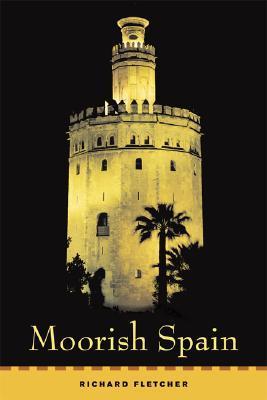
Beginning in the year 711 and continuing for nearly a thousand years, the Islamic presence survived in Spain, at times flourishing, and at other times dwindling into warring fiefdoms. But the culture and science thereby brought to Spain, including long-buried knowledge from Greece, largely forgotten during Europe’s Dark Ages, was to have an enduring impact on the country as it emerged into the modern era. In this gracefully written history, Richard Fletcher reveals the Moorish culture in all its fascinating disparity and gives us history at its best: here is vivid storytelling by a renowned scholar.

The classic that exploded into public controversy, revolutionized the course of science, and continues to transform our views of the world.Few other books have created such a lasting storm of controversy as The Origin of Species. Darwin's theory that species derive from other species by a gradual evolutionary process and that the average level of each species is heightened by the "survival of the fittest" stirred up popular debate to a fever pitch. Its acceptance revolutionized the course of science.As Sir Julian Huxley, the noted biologist, points out in his illuminating introduction, the importance of Darwin's contribution to modern scientific knowledge is almost impossible to evaluate: "a truly great book, one which after a century of scientific progress can still be read with profit by professional biologists.""Darwin was one of history's towering geniuses and ranks with the greatest heroes of man's intellectual progress." -George Gaylord Simpson in The Meaning of Evolution

“A study of primitive people which, for beauty of . . . style and concept, would be hard to match.” — The New York Times Book ReviewIn the 1950s Elizabeth Marshall Thomas became one of the first Westerners to live with the Bushmen of the Kalahari desert in Botswana and South-West Africa. Her account of these nomadic hunter-gatherers, whose way of life had remained unchanged for thousands of years, is a ground-breaking work of anthropology, remarkable not only for its scholarship but for its novelistic grasp of character. On the basis of field trips in the 1980s, Thomas has now updated her book to show what happened to the Bushmen as the tide of industrial civilization—with its flotsam of property rights, wage labor, and alcohol—swept over them. The result is a powerful, elegiac look at an endangered culture as well as a provocative critique of our own."The charm of this book is that the author can so truly convey the strangeness of the desert life in which we perceive human traits as familiar as our own. . . . The Harmless People is a model of the style very simple and precise, perfectly suited to the neat, even fastidious activities of a people who must make their world out of next to nothing." — The Atlantic

From the evolution of Homo sapiens to the exploration of space, the vast landscape of human history appears in J.M. Roberts's History of the World . Deftly written and evocatively illustrated, this book offers an outstanding one-volume survey of the major events, developments, and personalitiesof the known past.In a truly remarkable work of compression and synthesis, Roberts sweeps through thousands of years of history, weaving the stories of empires, arts, religion, economics, and science into his lucid narrative. Beginning with the early hominids, he swiftly and authoritatively brings the story upthrough the emergence of Mesopotamian civilizations and ancient Egypt. Here, too, is comprehensive coverage of the Indian and Chinese civilizations ("For two and a half thousand years," he points out, "there has been a Chinese nation using a Chinese language"), as well as developments in Africa andSouth America. Aided by photographs of key archaelogical finds (such as monumental Egyptian statues, Peruvian medallions, and Celtic jewelry), Roberts clearly explains the early arts, engineering, and religion. He also carefully ties in changing economics--such as trade routes and developments inagriculture and manufacturing--making clear their importance for the history of politics and changing societies. The story leaps ahead, through the Roman Empire, the explosive arrival of Islam, the rise and fall of samurai rule in Japan, the medieval kingdoms of sub-Saharan Africa, the Mongolconquests, and the early modern expansion of Europe across the globe. American independence, the French Revolution, the colonial empires, Japan's startling modernization, and the World Wars follow in turn, accompanied by discussions of scientific and technical breakthroughs.With informative maps, photographs, and reproductions of important artwork (some in full color), Roberts clearly explains the impact of the key individuals and the major influences on history the world over, down to the era of an integrated global economy and the fall of the U.S.S.R. Vividlywritten and beautifull illustrated, History of the World offers the finest, most readable one-volume survey available today.

Blankie: (A Comforting Story About Security Objects and Letting Go for Babies and Toddlers)
by Leslie Patricelli
Rating: 4.0 ⭐
• 2 recommendations ❤️
A comically expressive tot pays tribute to the all-important Blankie in a bright, playful board book sure to have instant toddler appeal.Anyone who's spent time with a toddler knows that few crises compare with the (even temporary) loss of a favorite blankie. Here, in her humorous, bold graphic style, Leslie Patricelli plays up this scenario, surely near and dear to every toddler's heart. Blankie is an affectionate ode to that special object that comforts many a child through the dramas of each day.

The Autobiography of Benjamin Franklin

The design of the book is to present a continuous history of Rome from the legendary beginnings to the age of Justinian drawing on the literary tradition as the ancients conceived and transmitted their history, so far as possible in their own words.

Born Red is an artistically wrought personal account, written very much from inside the experience, of the years 1966-1969, when the author was a young teenager at middle school. It was in the middle schools that much of the fury of the Cultural Revolution and Red Guard movement was spent, and Gao was caught up in very dramatic events, which he recounts as he understood them at the time. Gao's father was a county political official who was in and out of trouble during those years, and the intense interplay between father and son and the differing perceptions and impact of the Cultural Revolution for the two generations provide both an unusual perspective and some extraordinary moving moments. He also makes deft use of traditional mythology and proverbial wisdom to link, sometimes ironically, past and present. Gao relates in vivid fashion how students-turned-Red Guards held mass rallies against 'capitalist roader' teachers and administrators, marching them through the streets to the accompaniment of chants and jeers and driving some of them to suicide. Eventually the students divided into two factions, and school and town became armed camps. Gao tells of the exhilaration that he and his comrades experienced at their initial victories, of their deepening disillusionment as they utter defeat as the tumultuous first phase of the Cultural Revolution came to a close. The portraits of the persons to whom Gao introduces us - classmates, teachers, family members - gain weight and density as the story unfolds, so that in the end we see how they all became victims of the dynamics of a mass movement out of control.

"Eugene Sledge became more than a legend with his memoir, With The Old Breed. He became a chronicler, a historian, a storyteller who turns the extremes of the war in the Pacific--the terror, the camaraderie, the banal and the extraordinary--into terms we mortals can grasp."--Tom HanksNEW YORK TIMES BESTSELLERIn The Wall Street Journal, Victor Davis Hanson named With the Old Breed one of the top five books on epic twentieth-century battles. Studs Terkel interviewed the author for his definitive oral history, The Good War. Now E. B. Sledge's acclaimed first-person account of fighting at Peleliu and Okinawa returns to thrill, edify, and inspire a new generation.An Alabama boy steeped in American history and enamored of such heroes as George Washington and Daniel Boone, Eugene B. Sledge became part of the war's famous 1st Marine Division--3rd Battalion, 5th Marines. Even after intense training, he was shocked to be thrown into the battle of Peleliu, where "the world was a nightmare of flashes, explosions, and snapping bullets." By the time Sledge hit the hell of Okinawa, he was a combat vet, still filled with fear but no longer with panic.Based on notes Sledge secretly kept in a copy of the New Testament, With the Old Breed captures with utter simplicity and searing honesty the experience of a soldier in the fierce Pacific Theater. Here is what saved, threatened, and changed his life. Here, too, is the story of how he learned to hate and kill--and came to love--his fellow man."In all the literature on the Second World War, there is not a more honest, realistic or moving memoir than Eugene Sledge's. This is the real deal, the real war: unvarnished, brutal, without a shred of sentimentality or false patriotism, a profound primer on what it actually was like to be in that war. It is a classic that will outlive all the armchair generals' safe accounts of--not the 'good war'--but the worst war ever."--Ken Burns

The Ancient City: Life in Classical Athens and Rome
by Peter Connolly
Rating: 3.9 ⭐
• 2 recommendations ❤️
In this superbly illustrated volume, Athens and Rome, the two greatest cities of antiquity, spring to life through the masterful pen of Peter Connolly. For the first time ever, all the evidence has been painstakingly pieced together to reconstruct the architectural wonders of these mightycivilizations. By re-creating their public buildings, their temples, shops, and houses, Connolly reveals every aspect of a person's life in glorious detail, including religion, food, drama, games, and the baths.The first part of The Ancient City covers the development of Athens in the hundred years following the Persian Wars, which began in the 4th century B.C. These chapters encompass the Golden Years of Athens; the establishment of democracy; the building of the Parthenon, the Erechtheum, and themunicipal buildings of the Agora; a typical Athenian workday; and the construction of the Long Walls.Part II examines the development of Rome in the hundred years from Nero (emperor of Rome from A.D. 54 to 68) to Hadrian (emperor of Rome from A.D. 117 to 138)--the great building period of Rome. Visit Nero's Golden Palace and the buildings subsequently built over it, the Colosseum, the FlavianPalace, the Baths of Trajan, the Temple of Venus and Roma, as well as other buildings such as the Circus Maximus, the Theatre of Marcellus, and Trajan's Forum and Market.In addition to reading about the great monuments and moments of classical Greece and Rome, readers learn about a typical day in the life of an Athenian and a Roman. They read about--and see--the houses people inhabited; attend 5-day festivals and go to the theatre; fight great battles and witnessthe birth of Rome's navy; visit temples and spend a day at the races. The fascinating artwork and vivid descriptions provide a window into the great history of these two extraordinary cities and civilizations.The Ancient City is the crowning achievement of Peter Connolly's distinguished career. His illustrations and reconstructions have a unique authority, providing the starting point for a fascinating exploration of these cities and the lives of the people who inhabited them.

Painting and Experience in Fifteenth-Century Italy: A Primer in the Social History of Pictorial Style
by Michael Baxandall
Rating: 4.0 ⭐
• 2 recommendations ❤️
Painting and Experience in Fifteenth Century Italy An introduction to 15th century Italian painting and the social history behind it, arguing that the two are interlinked and that the conditions of the time helped fashion distinctive elements in the painter's style. Serving as both an introduction to fifteenth-century Italian painting and as a text on how to interpret social history from the style of pictures in a given historical period, this new edition to Baxandall's pre-eminent scholarly volume examines early Renaissance painting, and explains how the style of painting in any society reflects the visual skills and habits that evolve out of daily life. Renaissance painting, for example, mirrors the experience of such activities as preaching, dancing, and gauging barrels. The volume includes discussions of a wide variety of painters, including Filippo Lippi, Fra Angelico, Stefano di Giovanni, Sandro Botticelli, Masaccio, Luca Signorelli, Boccaccio, and countless others. Baxandall also defines and illustrates sixteen concepts used by a contemporary critic of painting, thereby assembling the basic equipment needed to explore fifteenth-century art.

The German Generals who survived Hitler's Reich talk over World War II with Capt. Liddell Hart, noted British miltary strategist and writer. They speak as professional soldiers to a man they know and respect. For the first time, answers are revealed to many questions raised during the war. Was Hitler the genius of strategy he seemed to be at first? Why did his Generals never overthrow him? Why did Hitler allow the Dunkirk evacuation? Current interest, of course, focuses on the German Generals' opinion of the Red Army as a fighting force. What did the Russians look like from the German side? How did we look? And what are the advantages and disadvantages under which dictator-controlled armies fight? In vivid, non-technical language, Capt. Liddell Hart reports these interviews and evaluates the vital military lessons of World War II.
Structure and Interpretation of Computer Programs
by Harold Abelson
Rating: 4.5 ⭐
• 6 recommendations ❤️
Structure and Interpretation of Computer Programs has had a dramatic impact on computer science curricula over the past decade. This long-awaited revision contains changes throughout the text. There are new implementations of most of the major programming systems in the book, including the interpreters and compilers, and the authors have incorporated many small changes that reflect their experience teaching the course at MIT since the first edition was published. A new theme has been introduced that emphasizes the central role played by different approaches to dealing with time in computational models: objects with state, concurrent programming, functional programming and lazy evaluation, and nondeterministic programming. There are new example sections on higher-order procedures in graphics and on applications of stream processing in numerical programming, and many new exercises. In addition, all the programs have been reworked to run in any Scheme implementation that adheres to the IEEE standard.

The computer revolution brought with it new methods of getting work done—just look at today's news for reports of hard-driven, highly-motivated young software and online commerce developers who sacrifice evenings and weekends to meet impossible deadlines. Tracy Kidder got a preview of this world in the late 1970s when he observed the engineers of Data General design and build a new 32-bit minicomputer in just one year. His thoughtful, prescient book, The Soul of a New Machine, tells stories of 35-year-old "veteran" engineers hiring recent college graduates and encouraging them to work harder and faster on complex and difficult projects, exploiting the youngsters' ignorance of normal scheduling processes while engendering a new kind of work ethic.These days, we are used to the "total commitment" philosophy of managing technical creation, but Kidder was surprised and even a little alarmed at the obsessions and compulsions he found. From in-house political struggles to workers being permitted to tease management to marathon 24-hour work sessions, The Soul of a New Machine explores concepts that already seem familiar, even old-hat, less than 20 years later. Kidder plainly admires his subjects; while he admits to hopeless confusion about their work, he finds their dedication heroic. The reader wonders, though, what will become of it all, now and in the future. —Rob Lightner

The history of the clock opens a window on how different cultures have viewed time and on Europe's path to industrialization. How did a time-keeping device affect the growth of crafts guilds and the scientific research that led to the Industrial Revolution? Clocks and Culture is a brief history of the changes wrought by and on Europe over four hundred years due to technological advances in timekeeping and the rise of a time-aware culture. In his introduction, Anthony Grafton, Henry Putnam University Professor of History at Princeton University, puts this classic book in perspective. 14 b/w illustrations

The Making of Europe: Conquest, Colonization and Cultural Change, 950 - 1350
by Robert Bartlett
Rating: 4.0 ⭐
• 2 recommendations ❤️
From our twentieth-century perspective, we tend to think of the Europe of the past as a colonizer, a series of empires that conquered lands beyond their borders and forced European cultural values on other peoples. This provocative book shows that Europe in the Middle Ages was as much a product of a process of conquest and colonization as it was later a colonizer.

Soon to be a major motion picture, the story of one of the most improbable and productive collaborations ever chronicled, between a young unschooled Indian prodigy and a great English mathematician.In 1913, a young unschooled Indian clerk wrote a letter to G H Hardy, begging the preeminent English mathematician's opinion on several ideas he had about numbers. Realizing the letter was the work of a genius, Hardy arranged for Srinivasa Ramanujan to come to England. Thus began one of the most improbable and productive collaborations ever chronicled. With a passion for rich and evocative detail, Robert Kanigel takes us from the temples and slums of Madras to the courts and chapels of Cambridge University, where the devout Hindu Ramanujan, "the Prince of Intuition," tested his brilliant theories alongside the sophisticated and eccentric Hardy, "the Apostle of Proof." In time, Ramanujan's creative intensity took its toll: he died at the age of thirty-two and left behind a magical and inspired legacy that is still being plumbed for its secrets today.

Robert A. Heinlein was the most influential science fiction writer of his era, an influence so large that, as Samuel R. Delany notes, "modern critics attempting to wrestle with that influence find themselves dealing with an object rather like the sky or an ocean." He won the Hugo Award for best novel four times, a record that still stands. The Moon is a Harsh Mistress was the last of these Hugo-winning novels, and it is widely considered his finest work.It is a tale of revolution, of the rebellion of the former Lunar penal colony against the Lunar Authority that controls it from Earth. It is the tale of the disparate people – a computer technician, a vigorous young female agitator, and an elderly academic – who become the rebel movement's leaders. And it is the story of Mike, the supercomputer whose sentience is known only to this inner circle, and who for reasons of his own is committed to the revolution's ultimate success.The Moon is a Harsh Mistress is one of the high points of modern science fiction, a novel bursting with politics, humanity, passion, innovative technical speculation, and a firm belief in the pursuit of human freedom.Cover illustration by Bob Eggleton

The Oxford History of Britain traces the story of Britain and its peoples from Roman times to the present day in five compact volumes. The dramatic narrative also explores the relationship between political, economic, social, and cultural aspects of history to provide a vivid and sometimessurprising picture of turmoil and change, which can be seen a pattern of continuity, and the special awareness of nationality and patriotism that has been such a distinctive feature of British society.

In My Forty Years with Ford, Charles Sorensen-sometimes known as "Henry Ford's man," sometimes as "Cast-iron Charlie"-tells his own story, and it is as challenging as it is historic. He emerges as a man who was not only one of the great production geniuses of the world but also a man who called the plays as he saw them. He was the only man who was able to stay with Ford for almost the full history of his empire, yet he never hesitated to go against Ford when he felt the interests of the company demanded it. When labor difficulties mounted and Edsel's fatal illness was upon him, Sorensen sided with Edsel against Henry Ford and Harry Bennett, and he insisted that Henry Ford II be brought in to direct the company despite the aging founder's determination that no one but he hold the presidential reins.First published in 1956, My Forty Years with Ford has now been reissued in paperback for the first time. The Ford story has often been discussed in print but has rarely been articulated by someone who was there. Here Sorensen provides an eyewitness account of the birth of the Model T, the early conflicts with the Dodge brothers, the revolutionary announcement of the five-dollar day, and Sorensen's development of the moving assembly line-a concept that changed our world. Although Sorensen conceived, designed, and built the giant Willow Run plant in nineteen months and then proceeded to turn out eight thousand giant bombers, his life's major work was to make possible the vision of Henry Ford and to postpone the personal misfortune with which it ended. My Forty Years with Ford is both a personal history of a business empire and a revelation that moves with excitement and the power of tragedy.

Upon its original publication, Plagues and Peoples was an immediate critical and popular success, offering a radically new interpretation of world history as seen through the extraordinary impact--political, demographic, ecological, and psychological--of disease on cultures. From the conquest of Mexico by smallpox as much as by the Spanish, to the bubonic plague in China, to the typhoid epidemic in Europe, the history of disease is the history of humankind. With the identification of AIDS in the early 1980s, another chapter has been added to this chronicle of events, which William McNeill explores in his new introduction to this updated editon.Thought-provoking, well-researched, and compulsively readable, Plagues and Peoples is that rare book that is as fascinating as it is scholarly, as intriguing as it is enlightening. "A brilliantly conceptualized and challenging achievement" (Kirkus Reviews), it is essential reading, offering a new perspective on human history.From the Trade Paperback edition.

Life in the English Country House: A Social and Architectural History
by Mark Girouard
Rating: 4.2 ⭐
• 2 recommendations ❤️
This best-selling book is a beautifully illustrated history of the English country house from the Middle Ages to the twentieth century. In it, renowned architectural historian Mark Girouard presents a rare and revealing glimpse of the English upper classes—their public and personal lives, their servants, and their homes."A deeply important book, one of the most interesting contributions to architectural history."—J. H. Plumb, The New York Review of Books"A survey of country houses through the past five centuries, from a broad range of materials: family archives, literature, plans and photographs.... The book itself is a physical artifact of surpassing beauty which could fit on the grandest table in the houses it describes."—David Hackett Fischer, The New Republic"Informative, balanced, knowledgeable, and witty."—The New Yorker"This enthralling and immensely informative book...tells with wit, scholarship, and lucidity how the country house evolved to meet the needs and reflect the social attitudes of the times."—Philip Ziegler, The Times"One of those very useful and very enjoyable books that the learned can seldom write, and the entertaining seldom achieve—clear, detailed, and witty."—Angus Wilson, The ObserverWinner of the 1978 Duff Cooper Memorial Prize and the W. H. Smith & Son Annual Literary Award for 1979.

The late J. D. Bernal's lectures given to first-year students in physics at Birkbeck College, University of London, are presented here in their entirety, tracing the history of physics up to the end of the classical era at the end of 19th century, just before the discoveries of the subatom and relativity were made. In view of the prestige and profundity of the newer discoveries, Bernal felt that the classical era was being largely forgotten. In this book, he attributes a greater relevance to the work of men from the distant past than is usually given. For instance, the idea of atom not only retains the language of the Greek, Democritus, who first postulated it, but there is also an absolutely unbroken connection between the atom of the Greek and that of the modern physicist. Bernal felt that the historical method would be a suitable introduction to the fundamental concepts of physics, and it is hoped that the readers of the book will be able to see something of the interplay between the theoretical and practical aspects of the subject.
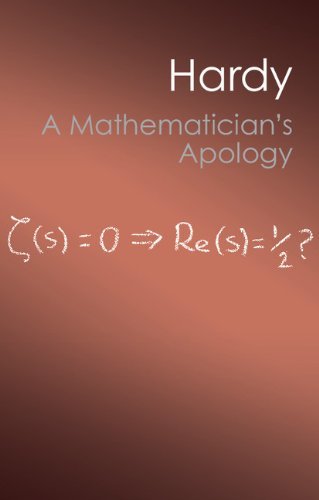
G. H. Hardy was one of this century's finest mathematical thinkers, renowned among his contemporaries as a 'real mathematician … the purest of the pure'. He was also, as C. P. Snow recounts in his Foreword, 'unorthodox, eccentric, radical, ready to talk about anything'. This 'apology', written in 1940, offers a brilliant and engaging account of mathematics as very much more than a science; when it was first published, Graham Greene hailed it alongside Henry James's notebooks as 'the best account of what it was like to be a creative artist'. C. P. Snow's Foreword gives sympathetic and witty insights into Hardy's life, with its rich store of anecdotes concerning his collaboration with the brilliant Indian mathematician Ramanujan, his idiosyncrasies and his passion for cricket. This is a unique account of the fascination of mathematics and of one of its most compelling exponents in modern times.

Hard Drive: Bill Gates and the Making of the Microsoft Empire
by James Wallace
Rating: 4.1 ⭐
• 6 recommendations ❤️
In this fascinating exposé, two investigative reporters trace the hugely successful career of Microsoft founder Bill Gates. Part entrepreneur, part enfant terrible, Gates has become the most powerful -- and feared -- player in the computer industry, and arguably the richest man in America. In Hard Drive, investigative reporters Wallace and Erickson follow Gates from his days as an unkempt thirteen-year-old computer hacker to his present-day status as a ruthless billionaire CEO. More than simply a "revenge of the nerds" story though, this is a balanced analysis of a business triumph, and a stunningly driven personality. The authors have spoken to everyone who knows anything about Bill Gates and Microsoft -- from childhood friends to employees and business rivals who reveal the heights, and limits, of his wizardry. From Gates's singular accomplishments to his equally extraordinary brattiness, arrogance, and hostility (the atmosphere is so intense at Microsoft that stressed-out programmers have been known to ease the tension of their eighty-hour workweeks by exploding homemade bombs), this is a uniquely revealing glimpse of the person who has emerged as the undisputed king of a notoriously brutal industry.

Guns, Sails, and Empires: Technological Innovation and the Early Phases of European Expansion, 1400- 1700
by Carlo M. Cipolla
Rating: 4.0 ⭐
• 4 recommendations ❤️
European expansion was essentially a commercial venture, and the fact that the colonial policies of the European powers had a very pronounced mercantile tone was the natural consequence of the basic motives behind that expansion. A wide range of opportunities magnetized the Europeans overseas. Religion supplied the pretext and gold was the motive.

The Penguin Atlas of Ancient History illustrates in a chronological series of maps, the evolution and flux of races in Europe, the Mediterranean area and the Near East. From 50,000 B.C. to the fourth century A.D., it is one of the most successful of the bestselling historical atlas series.

A good book may have the power to change the way we see the world, but a great book actually becomes part of our daily consciousness, pervading our thinking to the point that we take it for granted, and we forget how provocative and challenging its ideas once were—and still are. The Structure of Scientific Revolutions is that kind of book. When it was first published in 1962, it was a landmark event in the history and philosophy of science. Fifty years later, it still has many lessons to teach. With The Structure of Scientific Revolutions, Kuhn challenged long-standing linear notions of scientific progress, arguing that transformative ideas don’t arise from the day-to-day, gradual process of experimentation and data accumulation but that the revolutions in science, those breakthrough moments that disrupt accepted thinking and offer unanticipated ideas, occur outside of “normal science,” as he called it. Though Kuhn was writing when physics ruled the sciences, his ideas on how scientific revolutions bring order to the anomalies that amass over time in research experiments are still instructive in our biotech age. This new edition of Kuhn’s essential work in the history of science includes an insightful introduction by Ian Hacking, which clarifies terms popularized by Kuhn, including paradigm and incommensurability, and applies Kuhn’s ideas to the science of today. Usefully keyed to the separate sections of the book, Hacking’s introduction provides important background information as well as a contemporary context. Newly designed, with an expanded index, this edition will be eagerly welcomed by the next generation of readers seeking to understand the history of our perspectives on science.

The third in the Corfu trilogy that inspired the hit PBS Masterpiece Theater show, The Durrells in Corfu.Fauna and Family, also known as The Garden of the Gods, is the third in Durrell’s Corfu trilogy that begins with his beloved classic, My Family and Other Animals and continues with Birds, Beasts and Relatives. In his foreword to Fauna and Family, Durrell confessed that in the first two books, “I had left out a number of incidents and characters that I would have liked to have described, and I have attempted to repair this omission in this book . . . I hope that it might give the same pleasure to its readers as apparently its predecessors have done, as for me it portrays a very important part of my life . . . which is a truly happy and sunlit childhood.”

This classic account shows how the fall of Constantinople in May 1453, after a siege of several weeks, came as a bitter shock to Western Christendom. The city's plight had been neglected, and negligible help was sent in this crisis. To the Turks, victory not only brought a new imperial capital, but guaranteed that their empire would last. To the Greeks, the conquest meant the end of the civilisation of Byzantium, and led to the exodus of scholars stimulating the tremendous expansion of Greek studies in the European Renaissance.

Originally composed for propaganda purposes, Julius Caesar's war diary is one of the earliest examples of a military science manual, detailing arms technology, tactical maneuvers, battlefield politics, espionage, intelligence and even the role played by luck in ground and sea campaigns. This new 2017 print edition of The Gallic Wars includes a revised translation with modern spelling and punctuation. There is also an image gallery.

You can go after the job you want—and get it! You can take the job you have—and improve it! You can take any situation—and make it work for you! Dale Carnegie’s rock-solid, time-tested advice has carried countless people up the ladder of success in their business and personal lives. One of the most groundbreaking and timeless bestsellers of all time, How to Win Friends & Influence People will teach you: -Six ways to make people like you -Twelve ways to win people to your way of thinking -Nine ways to change people without arousing resentment And much more! Achieve your maximum potential—a must-read for the twenty-first century with more than 15 million copies sold!

Jane Austen revolutionized the literary romance, using it as a platform from which to address issues of gender politics and class consciousness among the British middle-class of the late eighteenth century. The novels included in the collection - Sense and Sensibility, Pride and Prejudice, Mansfield Park, Emma, Northanger Abbey, Persuasion, and Lady Susan - represent all of Austen's complete novels, and provide the reader with an entrance into the world she and her memorable characters inhabited.With witty, unflinching morality, Austen portrays English middle-class life as the eighteenth century came to a close and the nineteenth century began. Austen's heroines find happiness in many forms, each of the novels is a story of love and marriage -- marriage for love, financial security and for social status.In a publishing career that spanned less than ten years her work brought her little personal fame and only a few positive reviews during her lifetime. It wasn't until the 1940s that she became widely accepted in academia as a great English writer. The second half of the 20th century saw a proliferation of Austen scholarship and the emergence of a fan culture. Austen's works continue to influence the course of the novel even as they charm readers today.Complete and unabridged this beautiful volume is magnificent. Elegantly designed, this cloth bound hardcover edition is slip cased and features a ribbon marker and period styling. A must have for any "Janeite". Also included is an original introduction that provides the reader with enlightening information on Jane Austen's life and works.
![[(From Galileo to Newton )] [Author: A.Rupert Hall] [Jul-1982]](https://m.media-amazon.com/images/S/compressed.photo.goodreads.com/books/1698886852i/126193102.jpg)
[(From Galileo to Newton )] [Author: A.Rupert Hall] [Jul-1982]
by A. Rupert Hall
• 2 recommendations ❤️
Tracing the revolution in physics initiated by Galileo and culminating in Newton's achievements, this book surveys the work of Huygens, Leeuwenhoek, Boyle, Descartes, and others. 34 illustrations.

Rage—Goddess, sing the rage of Peleus' son Achilles,murderous, doomed, that cost the Achaeans countless losses,hurling down to the House of Death so many sturdy souls …Thus begins the stirring story of the Trojan War and the rage of Achilles that has gripped listeners and readers for 2,700 years. This timeless poem still vividly conveys the horror and heroism of men and gods wrestling with towering emotions and battling amidst devastation and destruction, as it moves inexorably to its wrenching, tragic conclusion. Renowned classicist Bernard Knox observes in his superb Introduction that although the violence of the Iliad is grim and relentless, it coexists with both images of civilized life and a poignant yearning for peace.Combining the skills of a poet and scholar, Robert Fagles brings the energy of contemporary language to this enduring heroic epic. He maintains the drive and metric music of Homer's poetry, and evokes the impact and nuance of the Iliad's mesmerizing repeated phrases in what Peter Levi calls "an astonishing performance."

Widely regarded as the first modern autobiography, The Confessions is an astonishing work of acute psychological insight. Jean-Jacques Rousseau (1712-78) argued passionately against the inequality he believed to be intrinsic to civilized society. In his Confessions he relives the first fifty-three years of his radical life with vivid immediacy - from his earliest years, where we can see the source of his belief in the innocence of childhood, through the development of his philosophical and political ideas, his struggle against the French authorities and exile from France following the publication of Émile. Depicting a life of adventure, persecution, paranoia, and brilliant achievement, The Confessions is a landmark work by one of the greatest thinkers of the Enlightenment, which was a direct influence upon the work of Proust, Goethe and Tolstoy among others.


The Old Way: A Story of the First People
by Elizabeth Marshall Thomas
Rating: 4.2 ⭐
• 6 recommendations ❤️
Elizabeth Marshall Thomas was nineteen when her father took his family to live among the Bushmen of the Kalahari. Fifty years later, after a life of writing and study, Thomas returns to her experiences with the Bushmen, one of the last hunter-gatherer societies on earth, and discovers among them an essential link to the origins of all human society.Humans lived for 1,500 centuries as roving clans, adapting daily to changes in environment and food supply, living for the most part like their animal ancestors. Those origins are not so easily abandoned, Thomas suggests, and our modern society has plenty still to learn from the Bushmen.Through her vivid, empathic account, Thomas reveals a template for the lives and societies of all humankind.

Writing with an exuberant love of language and detail, Anjelica Huston shares her enchanted childhood in Ireland, her teen years in London, and her coming-of-age as a model and nascent actress in New York.Living with her glamorous and artistic mother, educated by tutors and nuns, intrepid on a horse, Huston was raised on an Irish estate to which—between movies—her father brought his array of extraordinary friends, from Carson McCullers and John Steinbeck to Peter O’Toole and Marlon Brando. Every morning, Anjelica and her brother visited their father while he took his breakfast in bed. “What news?” he’d ask. “I’d seen him the night before,” Anjelica recalls. “There wasn’t much to report.” So she became a storyteller.In London, where she lives with her mother and brother in the early sixties when her parents separate, Huston encounters the Rolling Stones and Fleetwood Mac. She understudies Marianne Faithfull in Hamlet. Seventeen, striking, precocious, but still young and vulnerable, she is devastated when her mother dies in a car crash.Months later she moves to New York, falls in love with the much older, brilliant but disturbed photographer Bob Richardson, and becomes a model. Living in the Chelsea Hotel, working with Richard Avedon and other photographers, she navigates a volatile relationship and the dynamic cultural epicenter of New York in the seventies.A Story Lately Told ends as Huston launches her Hollywood life. The second part of her story—Watch Me—opens in Los Angeles in 1973 and will be published in Fall 2014. Beguiling and beautifully written, Huston’s memoir is a treasure.

**Winner of the 2016 Pulitzer Prize for Autobiography**Included in President Obama’s 2016 Summer Reading List“Without a doubt, the finest surf book I’ve ever read . . . ” —The New York Times MagazineBarbarian Days is William Finnegan’s memoir of an obsession, a complex enchantment. Surfing only looks like a sport. To initiates, it is something else: a beautiful addiction, a demanding course of study, a morally dangerous pastime, a way of life. Raised in California and Hawaii, Finnegan started surfing as a child. He has chased waves all over the world, wandering for years through the South Pacific, Australia, Asia, Africa. A bookish boy, and then an excessively adventurous young man, he went on to become a distinguished writer and war reporter. Barbarian Days takes us deep into unfamiliar worlds, some of them right under our noses—off the coasts of New York and San Francisco. It immerses the reader in the edgy camaraderie of close male friendships forged in challenging waves. Finnegan shares stories of life in a whites-only gang in a tough school in Honolulu. He shows us a world turned upside down for kids and adults alike by the social upheavals of the 1960s. He details the intricacies of famous waves and his own apprenticeships to them. Youthful folly—he drops LSD while riding huge Honolua Bay, on Maui—is served up with rueful humor. As Finnegan’s travels take him ever farther afield, he discovers the picturesque simplicity of a Samoan fishing village, dissects the sexual politics of Tongan interactions with Americans and Japanese, and navigates the Indonesian black market while nearly succumbing to malaria. Throughout, he surfs, carrying readers with him on rides of harrowing, unprecedented lucidity. Barbarian Days is an old-school adventure story, an intellectual autobiography, a social history, a literary road movie, and an extraordinary exploration of the gradual mastering of an exacting, little-understood art.

Maisy Mouse Collection 10 Books Set Series 2 Lucy Cousins Early Learner Children
by Lucy Cousins
Rating: 4.0 ⭐
• 2 recommendations ❤️
A story of visiting the bookshop for the first time from the multi-award-winning Lucy Cousins. Maisy goes to the bookshop to buy a new book, and she also wants to get one as a present for her friend Tallulah. Titles in this Set Includes Maisy goes to Bookshop, Maisy Goes by Plane, Maisy Sports Day, Maisy Plays Football, Maisy Goes To The Cinema, Maisy Goes To Nursery, Maisy Goes To Hospital, Maisy Goes To The Library, Maisy Goes on a Sleepover, Maisy Charley and The Wobbly Tooth.

The Power Law: Venture Capital and the Making of the New Future
by Sebastian Mallaby
Rating: 4.4 ⭐
• 12 recommendations ❤️
Shortlisted for the Financial Times Business Book of the Year Named a Best Book of 2022 by The Economist“A gripping fly-on-the-wall story of the rise of this unique and important industry based on extensive interviews with some of the most successful venture capitalists.” - Daniel Rasmussen, Wall Street Journal“A must-read for anyone seeking to understand modern-day Silicon Valley and even our economy writ large.” -Bethany McLean, The Washington Post"A rare and unsettling look inside a subculture of unparalleled influence.” —Jane Mayer"A classic...A book of exceptional reporting, analysis and storytelling.” —Charles DuhiggFrom the New York Times bestselling author of More Money Than God comes the astonishingly frank and intimate story of Silicon Valley’s dominant venture-capital firms—and how their strategies and fates have shaped the path of innovation and the global economyInnovations rarely come from “experts.” Elon Musk was not an “electric car person” before he started Tesla. When it comes to improbable innovations, a legendary tech VC told Sebastian Mallaby, the future cannot be predicted , it can only be discovered . It is the nature of the venture-capital game that most attempts at discovery fail, but a very few succeed at such a scale that they more than make up for everything else. That extreme ratio of success and failure is the power law that drives the VC business, all of Silicon Valley, the wider tech sector, and, by extension, the world. In The Power Law , Sebastian Mallaby has parlayed unprecedented access to the most celebrated venture capitalists of all time—the key figures at Sequoia, Kleiner Perkins, Accel, Benchmark, and Andreessen Horowitz, as well as Chinese partnerships such as Qiming and Capital Today—into a riveting blend of storytelling and analysis that unfurls the history of tech incubation, in the Valley and ultimately worldwide. We learn the unvarnished truth, often for the first time, about some of the most iconic triumphs and infamous disasters in Valley history, from the comedy of errors at the birth of Apple to the avalanche of venture money that fostered hubris at WeWork and Uber. VCs’ relentless search for grand slams brews an obsession with the ideal of the lone entrepreneur-genius, and companies seen as potential “unicorns” are given intoxicating amounts of power, with sometimes disastrous results. On a more systemic level, the need to make outsized bets on unproven talent reinforces bias, with women and minorities still represented at woefully low levels. This does not just have social justice as Mallaby relates, China’s homegrown VC sector, having learned at the Valley’s feet, is exploding and now has more women VC luminaries than America has ever had. Still, Silicon Valley VC remains the top incubator of business innovation anywhere—it is not where ideas come from so much as where they go to become the products and companies that create the future. By taking us so deeply into the VCs’ game, The Power Law helps us think about our own future through their eyes.

Wing Leader: The Top Scoring Allied Fighter Pilot of WWII
by J.E. Johnson
Rating: 4.2 ⭐
• 2 recommendations ❤️
Johnnie Johnson joined the Royal Air Force Volunteer Reserve in 1939 as a week-end flier, and finished the war as the top-scoring Allied fighter pilot with 38 confirmed victories. WING LEADER is his account of the Battle of Britain, of the bitter fighting over Dieppe, and of the final battle across the skies of France and over the Rhine when, as a group captain, he commanded a British wing of the latest and most powerful Spitfires. "WING LEADER is a magnificent story of fighter pilots--so graphic in its description of aerial combat, so sympathetic in its portraits of fighting men that it will rank with the finest books which have come out of the war." (B-O-T Editorial Review Board)